‘Iranian Mothers for Peace’ Alert the World on Sanctions and Shortage of Medicines

“The right to health and access to medical treatment and medication is one of the fundamental human rights anywhere in the world. Please do not allow the killing of our sick children, beloved families, and fellow Iranians from the lack of medicine, caught in instrumental policies of coercion and power.”

“Iranian women for Peace”, a human rights organisation in Iran have written an open letter to Ban Ki-moon, the UN Secretary General, and Dr Margaret Chan, the Director General of the World Health Organisation alerting them to the humanitarian crisis unfolding in Iran as a result of the shortage of vital medication due to US/EU led sanctions. In this letter by Farid Marjai and Mehrnaz Shahabi, the intentions of Iranian Mothers for Peace are explained as well as the plea to the UN to respond.

by Farid Marjai and Mehrnaz Shahabi, 4th February 2013. Continue reading

Lifting the Curtain

This week marks the 40th anniversary of Roe vs. Wade, the landmark decision by the US Supreme Court on the issue of abortion. Claire Beckenstein, a political consultant in Washington DC, looks at the political culture surrounding the issue to discuss how far American women have come and how far they still have to go.


By Claire Beckenstein, 22nd January, 2013

Abortion is an issue that evokes visceral responses from people at both ends of the spectrum.  This issue has the ability to divide a nation and separate a family.  It is so powerful that people will even kill in the name of the cause.  On the 40th anniversary of Roe v. Wade, one could exhaust themselves for days thinking of the questions and assumptions around what America would be like without legalised abortion.  If we continue to fight the issues from our past we cannot move forward.  Therefore, it is best to focus on the present and note how monumental this decision has been for women and their health, especially to those women who view abortion as a choice, a freedom and as a right to take control of their future.

Continue reading

Deja vu: The French Intervention in Mali

On January 11, 2013, French President François Hollande sent a military expedition to rescue Dioncounda Traoré’s government from the “imminent terrorist threat”. Camille Maubert, a security analyst, explores this turn of events. 


By Camille Maubert, 16th January, 2013

Five days after the French “surprise” intervention in Mali, it is – to say the least – not clear what operation Serval is all about. Brandishing UN Article 51 (which proclaims the individual and collective right to protect a member subjected to armed aggression), French President François Hollande sent a military expedition to rescue Dioncounda Traoré’s government from the “imminent terrorist threat”.  750 ground troops, 30 tanks and several Rafale combat planes have thus been mobilised to strike Islamist strongholds in the North and West of Malian territory, making, according to “security sources”, important damage to the groups’ bases and leadership.

However, doubts are rising as to what the ins and outs of the intervention are in a context where reliable information is scarce. Indeed, most of the information publically available relies on two sources. On the one hand there are the official communiqués published by the various actors’ communication outlets which are often politically biased, and which are therefore unreliable and/or contradictory. For instance, while French defence spokesperson announces 60 terrorist casualties, the Malian army increases their number to “hundreds” and Islamic groups refuse to make any statements. On the other hand, the local press predominantly relies on witness accounts from the population and “local officials”. The weakness of such sources is patent, as they are based on what people saw, or think they saw, and therefore produces subjective and incomplete interpretations.

Continue reading

Photoessay: Delhi Rape Protests

On the 16th of December, 2012, a 23 year old paramedical student was gang raped in a moving bus in India’s capital city of Delhi. The girl has since been in a critical condition in a government hospital. Delhi has a reputation of being notoriously unsafe for women. Owing to a perceived lack of appropriate response by the government, protesters – ranging from university students to political parties and civil society groups – turned up at the centre of the government setup in Delhi. Many were demanding the capital punishment for this case as well as a new legislation that would bring the capital punishment to all rapists. This photoessay by Raghu Karla documents the protests that took place on the 22nd of December, 2012. The police used tear gas shells, water cannons and lathicharge (a term used to describe a charge with batons against protesters) when the crowds began to storm the Raisina Hill, on which the main ministry office buildings (including the Prime Minister’s Office) and the Presidential Estate are situated.


By Raghu Kalra, 22nd December, 2012

Raghu Kalra writes,

“The situation was tense. Most of the crowd comprised of school and college students demanding justice for the 23 year old rape victim. This protest was not guided by any leaders. It was a spontaneous gathering of a lot of people who were angered and shaken up by what had happened in the capital only a few days ago. The protest was peaceful for most part of the day until a few tried to go over the weak barricading put up by the police, which ultimately led to the tear gassing and use of water cannons. This made the situation worse. It is expected that the crowds of protesters will grow on Sunday.”

Continue reading

Infographic: Literacy in India

Upon tasking himself with creating an infographic on primary education in India, Akshan Ish found that while India’s literacy rate is steadily growing, and the country boasts of having one of the largest workforces in the world by 2020, the education system fails to equip students with fundamental skills at the elmentary level – leaving a huge chunk incompetent to contribute to the fast growing economy. 

In this post, InPEC has also included Akshan’s background notes, which gives the reader a look into the process of infographic design.


By Akshan Ish, 19th December, 2012

Continue reading

The Impact of Sanctions on Iranian Society and Artists

Economic sanctions are not only shattering the lives of the Iranian people but also strangling Iran’s social and cultural development. Iran is headed for a humanitarian catastrophe unless steps are taken to avert it.

[This article is based on a talk presented by independent researcher Mehrnaz Shahabi on November 17 at the Nour Festival of Arts in London, which seeks to celebrate, explore and promote culture and arts in the Middle East and North Africa.]


By Mehrnaz Shahabi, 17th December, 2012

For 33 years now, since the 1979 Iranian Revolution, Iran has been the target of US economic sanctions, which have increased in scope and severity over time. The impact of sanctions on populations is not always quantifiable and can be contradictory. Despite their negative impact in isolating and hindering Iran’s economic progress, and the tragic loss of life due to the boycott of spare parts for the aging Iranian airline, in so far as necessity is the mother of invention, sanctions in many instances have acted as an impetus for technological progress; and the experience of success and survival through adversity has infused a collective sense of empowerment and self-confidence.

When I was asked in July to talk about the impact of sanctions on Iranian society, the idea was to place some emphasis on the arts and artists. Since then, the reality of the humanitarian catastrophe unfolding as a result of the economic warfare on Iran has shifted the emphasis, by necessity, from the artists to their audience, since it is inconceivable to think of arts separately from the audience at which it is directed. Continue reading

Feminicidio: la cara oculta de la guerra contra las drogas

En esta entrevista, la abogada chilena Patsilí Toledo nos presenta sus perspectivas en torno a los feminicidios en América Latina, después de haber investigado sobre estos fenómenos durante algunos años. La abogada comparte con nosotros su visión sobre la actual política anti-drogas que, lejos de disminuir el conflicto que existe con el narcotráfico, contribuye a aumentarlo.


Alba Franco, 10 de diciembre de 2012

Patsilí Toledo nace en Chile en 1976. Es Licenciada en Derecho por la Universidad de Barcelona y Doctorada en Derecho Público por la Universidad Autónoma de Barcelona. Su tesis está dedicada a la investigación de la tipificación del feminicidio-femicidio en países latinoamericanos, haciendo investigación de campo en Costa Rica, Guatemala, Colombia y Chile.

Entrevista concedida en fecha 10 de octubre 2012 en el bar “La candela”, Barcelona. Continue reading

“Global warming and climate change is a bigger security issue than military war”

The world has the money needed to address climate change; it is the will that is lacking, says the Rafto winner Nnimmo Bassey in this interview with Karina Reigstad. He believes renewable energy in small-scale energy systems will play an important role in Africa – and is strongly opposed to oil exploration in the Arctic.

Nnimmo Bassey was last Sunday awarded the Rafto Prize of 2012 for his longstanding commitment to the environment and human rights in Nigeria. Bassey is also chairman of the organization Friends of the Earth International. I met him for an interview in connection with his visit to Bergen, Norway, to receive the prize at an event at the National Theatre. The winner was also honored with a torchlight parade through the city.


By Karina Reigstad, 12th November, 2012. Continue reading

InPEC Anniversary: Today is InPEC’s First Birthday

One year ago on an October morning InPEC went live. What began as a forum for discussing international politics evolved into a platform for bringing contributors together from across the world. During this period we have published 128 articles from 33 different authors. Thank-you all for making this possible and for your continued participation in the InPEC project. We have reached our first milestone and hope to have many more.

The InPEC Editors, 8th October, 2012 Continue reading

InPEC Exclusive: Latest US Presidential Debate Polling Data

InPEC has obtained the first polling data from the host of the first US Presidential debate, the University of Denver.  This is the first website outside of the US to break this polling data.

NEW UNIVERSITY OF DENVER POLL:

OBAMA HOLDS NARROW LEAD IN COLORADO; VOTERS OVERWHELMINGLY SAY ROMNEY WON FIRST DEBATE

Strong Debate Performance Improves Voters’ Impressions of GOP Nominee

DENVER – The University of Denver, host of the first Presidential debate on Oct. 3, today released poll results that found President Barack Obama leading Governor Mitt Romney among likely voters in Colorado, 47-43. Four percent said that they would vote for someone else, and five percent noted that they remain undecided. The poll also found that President Obama is currently leading among independent voters, 48-31.

Despite President Obama’s current lead in Colorado, respondents have improving impressions of Gov. Romney. Those who said that they watched or heard about the debate believe that Gov. Romney won by a huge margin, 68-19. That includes almost half of Obama supporters (47 percent), with just 37 percent of the President’s supporters saying he did the better job. In addition, 38 percent of likely Colorado voters said their impression of Gov. Romney is improving, while 18 percent of respondents felt the same way about President Obama.

Continue reading

Can Money Solve India’s Education Woes?

In this essay, Rithika Nair looks at the under-performing education sector in India. She exaplains that sheer finance alone will be unable to rectify the structural problems of the system and that development will need to play a larger role in the future of India if it is to become a true world power for decades to come.


By Rithika Nair, 5th October, 2012

“Can an increase in allocation in the education budget, guarantee better quality of education?”

India is under-performing in education.  Earlier this year, when the then Finance Minister, Pranab Mukherjee (who is now India’s President) declared the budget for the year 2012-2013, there rose a tumultuous wave of applause, and with that a tirade of  criticism, as he allocated a budget of $11.9 billion (Rs. 61,407 crore) to education – an increase of 18% when compared to last year’s budget.1 The better part of the budget was in favour of primary education, with a relatively meagre amount of $2.9 billion (Rs. 15,438 crore) for the benefit of higher education.

Continue reading

Photo Essay: Tradition and the Sahel

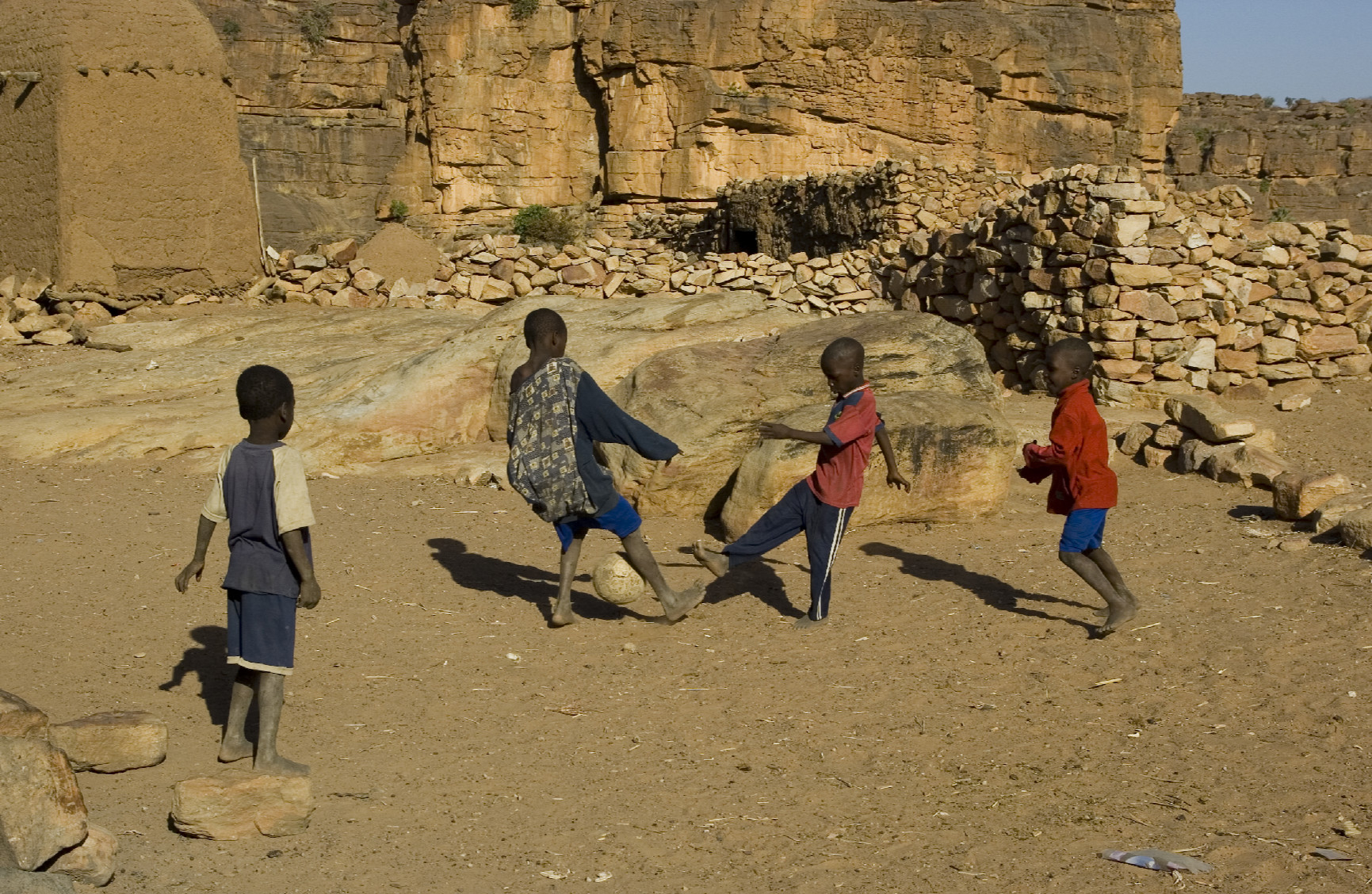
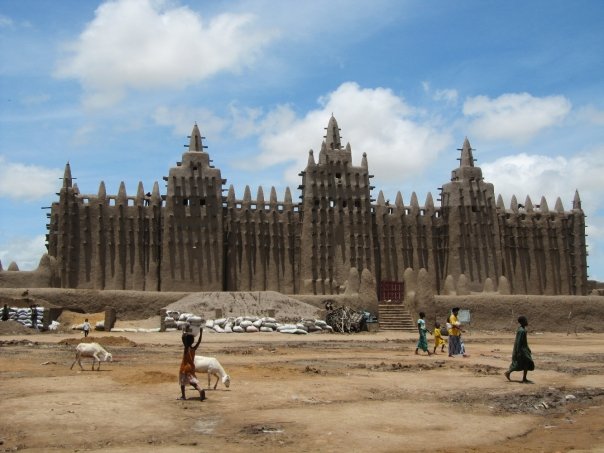
The Sahel is in the headlines.  As the death of US Ambassador Chris Stevens in Libya is linked to pan-Sahelian terrorist organisations and terrorism in Nigeria and Mali drifts further towards the front pages of western newspapers there is a need to look at some of the stories emerging from the region.  This collection of photos, taken by Jack Hamilton, looks at the changing nature of tradition in Mali, Nigeria and Senegal.

By Jack Hamilton, 4th October, 2012 Continue reading

Libya, the Arab Winter?

In this essay, the author explores the fragile security situation and the rise of Islamist groups in post-revolution Libya. 


By Camille Maubert, 3rd October, 2012

Libya, through the persisting instability and violence ten months after the demise of Colonel Gadhafi, illustrates how fragile revolutionary gains can be. Indeed, the fall of the regime led to the disintegration of the status quo, the polarisation of the political scene and the assertion of new power relations. As the regime fell, so did the unity that the tyrant coercively insured over the great multiplicity of groups in the country, and this political break up resulted in the (re)-emergence of voices and groups with diverging agendas, interests and allegiances. The fight against the repressive regime united a multiplicity of actors from various tribal and socio-economic backgrounds into a strong, inclusive, but leaderless movement which disintegrated after the fall of the dictator. The uprising lost its unity at the moment when it lost its enemy. As a result, the constituents of this heterogeneous movement reorganised themselves in various groups with different – and sometimes competing – agendas. Among them are Islamists, which are the focus of this study because of their central role in the on-going violence. The security vacuum which stemmed from such a sudden change gave rise to instability, violence, and the empowerment of un-democratic actors – armed militias, terrorist groups, and so on – and increased insecurity in the wider Sahel region.

Accordingly, this paper aims to address the security consequences of the Libyan uprising by asking ‘How did the popular revolution impact on the regional security environment?’ In other words, it seeks to analyse the repercussion of the instability intrinsic to the post-revolutionary transitional period on Islamist activities in order to assess the shape and extent of the terror threat in the region. It argues that the security landscape is characterised by an increased Islamist presence which feeds on the instability, weak governance and widespread violence to expand its activities and audience.

Continue reading

Energy Security: Concepts and Concerns in India

This essay is a literature review of the conceptual framework of ‘energy security’ in the international and Indian contexts. 


By Siddharth Singh, 24th September, 2012

The globalisation of energy markets has increased interdependence across the regions of the world. The access to energy today depends on international networks of infrastructure and transport. This has heightened the risks of major supply disruptions which result from of political conflicts, wars, technical system failures, accidents, sabotage, extreme weather events and financial market turmoil. Additionally, the global energy market is characterised by the reliance by energy importing economies on an ever-smaller group of countries (Chester, 2010).

Continue reading

Risks and Possibilities: The role of the OSCE in the democratic transition in Tunisia

Tunisia has expressed its preference to work with the OSCE in its democratic transition rather than the EU. This organization started a program of support to the civil society in this country. But is it enough to foster democratization? Is the OSCE still capable to apply in Tunisia the same policies than in Eastern Europe after 1989?


By Alejandro Marx, 19th September, 2012

The Arab Spring has unleashed the hope that home-grown democracies will be created in the region. However, after the revolution comes the time for stabilization and democracy-building. The failure of democracy-building or the start of chaos would be used by authoritarian governments to maintain their power or advocated controlled “democratization” to their population. The legitimacy of the revolution in Tunisia is based on popular support, placing the leadership and the civil society in a new situation. In addition, the uprising has changed the relations that the Tunisian government shared with the ex-colonial power in the region, France. The Tunisian leaders want to follow the path they decide for their country, not the one dictated by other countries. The Arab countries can share their experience of the democratic transition, and exchange advices with countries with longer-established democracies or recent transitions to democracy. However, when a country asks for advice and support to another one, it risks to be in a position of dependency. How to keep the same level of exchange between countries without a country becoming dependent from the support of another?

Continue reading

What the Global Financial Crisis Has to Say About the State of Macroeconomics Today

In this essay, the author shows that the current global financial crisis sheds more light on macroeconomics as a subject than the other way around.


By Neha Bandi, 16th September 2012

The 2008 global financial crisis was an outcome of certain major aspects of macroeconomics. Low interest rates prevailed for almost a decade and spawned a huge surge in mortgage lending, led by a long record of growth with lower inflation in the pre-crisis period. These conditions led financial institutions to expand the realm of structured financing and securitisation to boost revenue sources, resulting in huge growth in the alternative instruments functioning outside the rigour of formal regulation. Extremely easy monetary policy led to the global macroeconomic imbalances with developed markets facing deficits and emerging markets accumulating huge forex resources. Deregulation of financial markets reduced the distance between commercial and investment banking, sizeably relaxing norms for leverage quality applicable to financial institutions and intermediaries. Relaxed leverage ratios expanded the risk exposure of institutions.

Continue reading

Angola’s Election Day – An interview with MC Carbono

A note on the run-up to the Angolon elections that were held on August 31st, 2012.


By Roberto Valussi, 4th September, 2012

The 31st August 2012 marks the day of the Angolan presidential elections; the second one after the 27 years of civil war of 1975-2002. The last time the Angolan population went to the poll was in 2008, when the People’s Movement for the Liberation of Angola (MPLA) – which emerged victorious in the conflict – obtained an enviable 82%.

The transparency of the electoral process was a concern then and it has only grown on this occasion. Many  have denounced the irregularities, some of which has already hit the international news. The main opposition party, UNITA – which lost the war – organised a rally last Saturday calling a postponement  of the elections until a decent standard of transparency is met.

Continue reading

Are transnational socioeconomic trends trumping Zionist ideology in the Occupied Palestinian Territories?

In this essay, the author explores how globalization of Israeli capital has undermined the ideological thrust of Zionism in constructing policies towards Occupied Palestinian Territories. 


By Kanchi Gupta, 27th August, 2012

This essay demonstrates that while Zionist ideology is predicated on the expansion and territorial integrity of ‘Eretz Israel’, the nature of its administrative regime was steered by Israel’s internal socioeconomic dynamics. Israel’s sui generis ‘instrumentalization’ for the ingathering of global Jewish diaspora and resulting ethnic make-up, as well as social democratic, secular and religio-national ideological preferences are inclusive of Israeli political structure. However, as Israel’s economy opened to global capital, neoliberal capital interests spilled across borders and determined the construction of Israel’s policies in Occupied Palestinian Territories. Therefore, the essay determines that Israeli policy outlined below must not be viewed solely through the lens of ideologically driven military conflict. Rather, Israel’s military policy is an amalgamation of its economic and political strategies, which have further created transnational neoliberal economic imperatives. Continue reading

Resolving Iran’s nuclear stand-off with the west

By Alireza Ahmadian, 7th August, 2012

The two days of talks in Moscow between the representative of P5+1 (US, UK, China, France, Russia and Germany) led by Catherine Ashton, the European Union High Representative and Dr. Saeed Jalili, Iran’s chief nuclear negotiator, ended with no major breakthrough and the possibility of further negotiations in Istanbul in July. “It remains clear that there are significant gaps between the substance of the two positions,” commented Ashton.

Concerned about uranium enrichment in Iran and the possibility of weaponization of its nuclear programme, the United Nations Security Council has imposed four sets of sanctions, resolutions 1737, 1747, 1803 and 1929 on Iran asking the country to “suspend all enrichment-related and reprocessing activities.” Moreover, The US House of Representative passed a resolution on May 11, 2012  asking for “the full and sustained suspension of all uranium enrichment-related and reprocessing activities.” Jalili, on the other hand, has repeatedly stated  that “enrichment of uranium for peaceful purposes in all levels is an inalienable right.”

Continue reading

Religion and Diplomacy: Do Religious Actors Have to Conform to Secular Norms?

In this essay, the author explores whether religious (non-state) actors, must conform to secular norms in order to have influence in diplomacy. 


By Alireza Ahmadian, 30th July 2012

Azza Karam, the Senior Advisor on Culture at the United Nations Population Fund (UNFPA), made the assertion at the roundtable discussion on Shared Sovereignty: Rights, Religion and the Problem of Authority (SSRRPA) at the School of Oriental and African Studies that religious actors have always played an important role in community-based projects all over the world: they invariably stay in areas of conflict even after secular organizations, such as the UN, withdraw their staff; and they provide between 40 to 70 percent of healthcare and education for the people. Karam also argued that with the financial crisis hitting all major donors to the UN, the religious actors that had not heavily relied on financial help from states and secular organizations would take over many projects that were traditionally implemented by secular UN agencies and other organizations. She was concerned that religious actors’ conservative stance on gender-related issues might jeopardize the attempts to promote gender equality in the world (2011).

The preceding examples illustrate the power of religious actors and how influential they are. This paper argues that the presumption that we live in a secularized world is false; therefore, the overwhelming majority of religious actors do not have to conform to secular norms. Moreover, since religion has remained an important factor in many people’s life, we have to facilitate religious actors and their religiosity in diplomacy. We start with a review of why religion has traditionally been marginalized in International Relations (IR) and diplomacy. After reviewing the concept of secularism, this paper addresses the prevalence of religion and religiosity. Thereafter, we investigate the assertion that religious actors must conform to secular norms. Finally, after problematizing the religion-secular binary, this paper illustrates how religion and religious actors can play pivotal roles in diplomacy.

Continue reading