Securing Emptiness: The Sahara Desert and the Global War on Terror

“So Geographers in Afric-maps With Savage-Pictures fill their Gaps” – Jonathan Swift

This article is the introduction to a series of pieces on the Sahara Desert. In this piece the author assesses the idea of emptiness and how this has come to be seen as a threat in international politics. In the words of Jonathan Swift, “So Geographers in Afric-maps With Savage-Pictures fill their Gaps”

______________________________________________________________________________________________________________________

By Jack Hamilton, 23 Dec, 2011

Emptiness is both romanticised and feared.  In this sense deserts serve as a geographical blank canvas upon which cultural and political views can be painted.  It is this fear of the unknown that ebbs into contemporary political and cultural tropes on the Sahara Desert.

Grazing from Mauritania in the West through the hinterlands of Mali, Algeria and Niger, to the Tibesti mountains of Chad towards the northern states of Nigeria, this is the land which has been described as the ‘swamp of terror’: the Sahara-Sahel.  The narrative of this terrain has drifted from romantic imaginings of nomadic caravans and peaceful Sufism towards depictions of drug smuggling routes and sandy bastions of violent Islamism threatening the West.  When did the ‘nomads’ become ‘terrorists’?

Security for the Insecure

The increased militarisation of the region makes it important to question how this shift in language has come about since the relatively brief introduction of the Global War on Terror (GWoT) to the area and the reasons as to why this occurred.  The current rhetoric used to describe the threat of Al-Qaeda in the Islamic Maghreb (AQIM) is predicated upon previous linguistic constructions of the Sahara as well as the more recent tropes of the GWoT to create a threat far surpassing the capabilities of the small group in the desert.

That is not to say that AQIM does not exist and is not a threat.  It is instead the assertion that the Sahara should be viewed as a diverse region in itself and not merely lumped into the cartography of insecurity put forward under the GWoT.

The Blank Canvas of the Desert

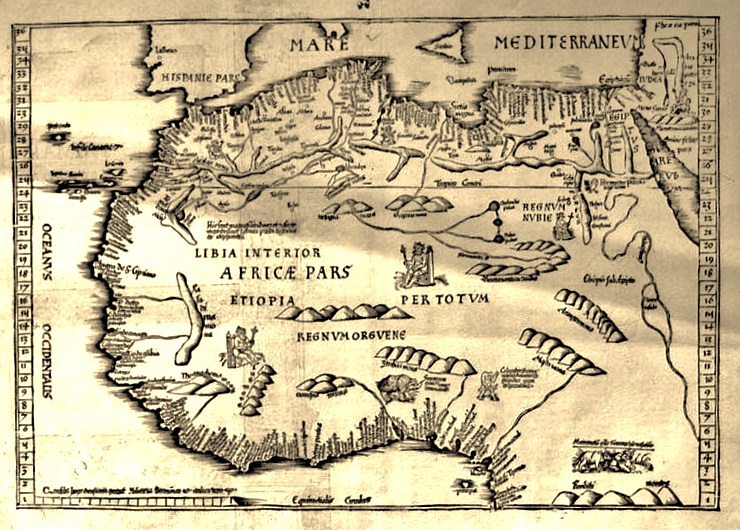
For centuries the unknown hinterlands of the Sahara have been imagined with colourful representations of nomads riding exotic beasts and African kings holding up the famed golden wealth of Africa in their hands.[i]

Defined by its emptiness, religion, wealth and potential threat, the lands to the south of the Mediterranean existed not as a discrete entity but an ebbing shore (or in Arabic, a Sahel) to other civilisations.  Such images have faded but the narratives remain.  The ‘shore’ now borders a ‘swamp of terror’[ii] that is perceived to traverse the globe, sustained by religion and poverty, to create the cartography of insecurity.

The decision to undertake a war in the Sahara may have been inherently political but the success of the messages of the Global War on Terror have relied on pre-existing tropes synonymous with Africa and the Sahara in particular.  The historian, E. Ann McDougall claims that ‘the Sahara has served the West as a canvas on which to paint its greed, fears and ambitions’[iii].  It is upon this cartographic canvas that a small group in the Sahara-Sahel has been constructed as a direct threat to the West.

Geographical Emptiness

Depictions of the Sahara centre on the notion of emptiness.  Maps show a land derelict of flora and fauna that isn’t delineated as being ‘North Africa’ nor can it be ‘Sub-Saharan Africa’ by definition.  It exists in the margins as it is seen as a margin in itself: a geographical ‘other’.  This drought of definitions has been extended into the narratives surrounding the Sahara-Sahel in the GWoT.

Deprived of distinguishing characteristics it has come to be defined by associations, geographical and rhetorical, to explain a region that is simultaneously devoid of life but teeming with insecurity.  It is therefore necessary to locate the Sahara-Sahel within the narratives of the GWoT to see where they interact with the ‘Savage-pictures’ to fill this geographical and rhetorical gap.

In this series the ‘emptiness’ of the Sahara will be evaluated by assessing the threat of al-Qaeda in the Islamic Maghreb in comparison to the forces being deployed to fight against them.  The next article will assess the position of the Sahara in the Global War on Terror and place the region within the global cartography of insecurity.

_________________________________________________________________________________________________________________


[i] This most famous of these pictures is in the Catalan Atlas published in 1356, drawn by Abraham Cresques.  The original is in the Bibliotheque Nationale, Paris and can be also found on the internet at: http://www.georgeglazer.com/maps/world/catalanenane.html. accessed on 28 August 2011.

[ii] Powell, ‘Swamp of Terror in the Sahara’.

[iii] E. Ann McDougall, ‘Constructing Emptiness: Islam, Violence and Terror in the Historical Making of the Sahara’, Journal of Contemporary African Studies, 25 (1: 2007), p. 17.
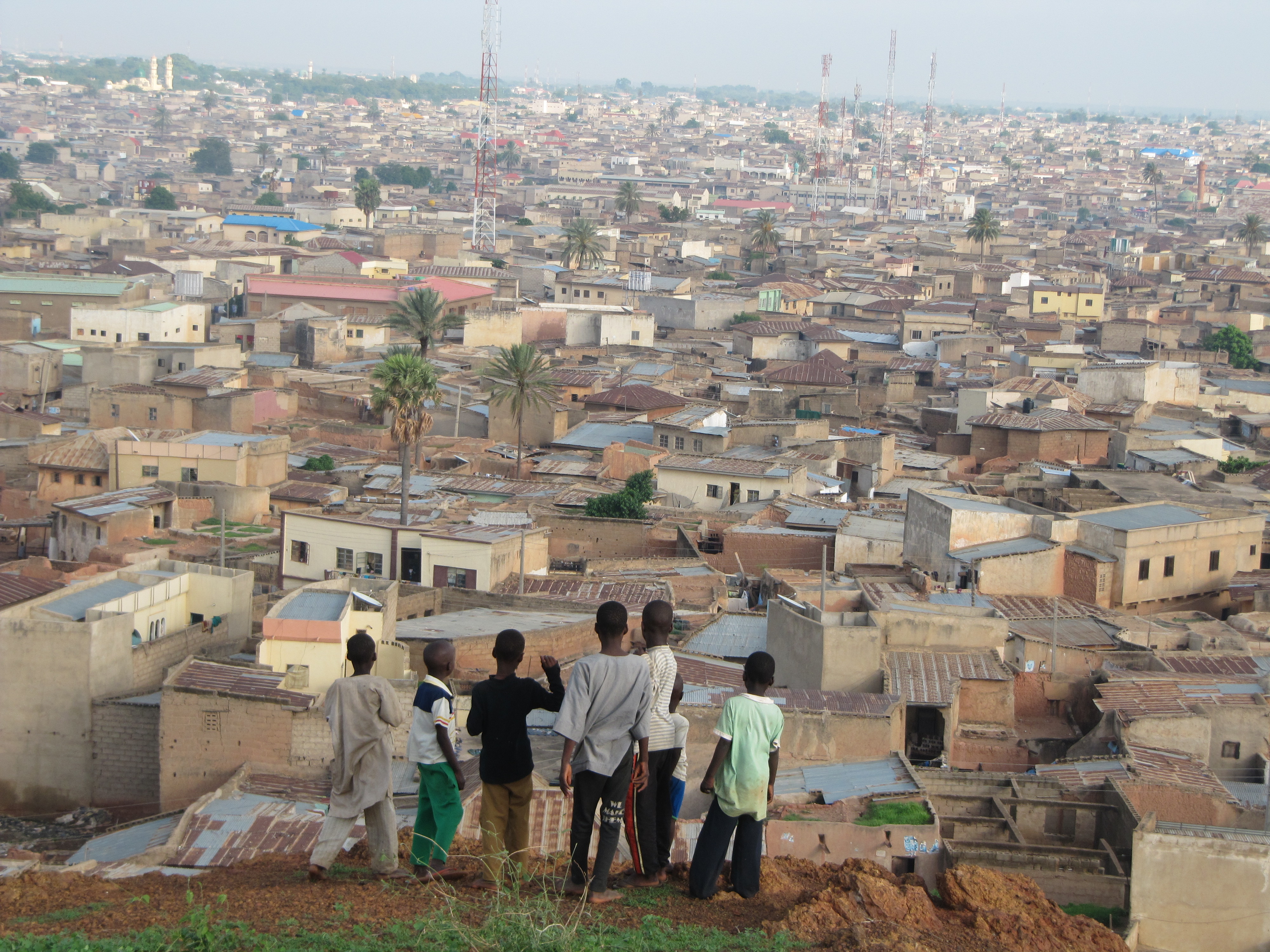
Photo Essay: 6 Reasons Why Terror is Gaining Momentum in Northern Nigeria

Looking for a Future

The state of Nigeria is facing its largest crisis in over a decade.  As the ferocity and popularity of the Islamist terrorist group Boko Haram rises, the very unity of the state is being challenged. This collection of photos assesses the reasons why the group is becoming increasingly attractive to the disaffected population in the north despite their gruesome tactics.

For more on Boko Haram see ‘The State of Terrorism in Nigeria’


By Jack Hamilton, 14 Dec 2011

1. The Lost Generation

The 'Lost' Generation

Northern Nigeria is a youthful place. Having maintained a high birth rate for decades, over half of the population is now under the age of 30. The average fertility rate in Nigeria is 5.7. In the northern states it is 7.3. This demographic shift has arrived at a time in which unemployment is rife and the perception of victimisation by the federal government is strengthening. There is now a generation of young, unemployed northern Nigerians who feel alienated from the central government and see flagrant displays of wealth in Nollywood films depicting the southern cities of Lagos and Port Harcourt. This sentiment of marginalisation has been utilised effectively in the propaganda of Boko Haram.


2. Religion

A Sign of the Times

The use of religion as a political tool goes back to the pre-colonial era of Nigerian history.  Now a democratic state, in theory one religion should not take precedence over another (a notion enshrined in the Nigerian Constitution).  Despite this, religious disputes consume much of Nigeria  in an ongoing conflict which has claimed thousands of lives.  Politics, especially in electoral cycles, so often comes down to religion.

Boko Haram is a religious actor whose primary goal is to implement Sharia law across the entire state of Nigeria.  They claim that the 50.5% population of Muslims is underrepresented at a Federal level and advocate extreme violence to achieve their objectives.  It is clear that the vast majority of Muslims in Nigeria do not support the religious stance of the group but the popularity of Sharia law since its institution in the twelve northern states shows the strength of faith in the region.

The complexity of the ethno-religious conflicts engulfing the Middle Belt and the north of Nigeria is difficult to summarise here.  While the attacks of Boko Haram are frequently framed as solely religious actions the reality is a more complex conflagration of ethnicity, alienation, fear and insecurity.


3. Urban Planning

Street Politics

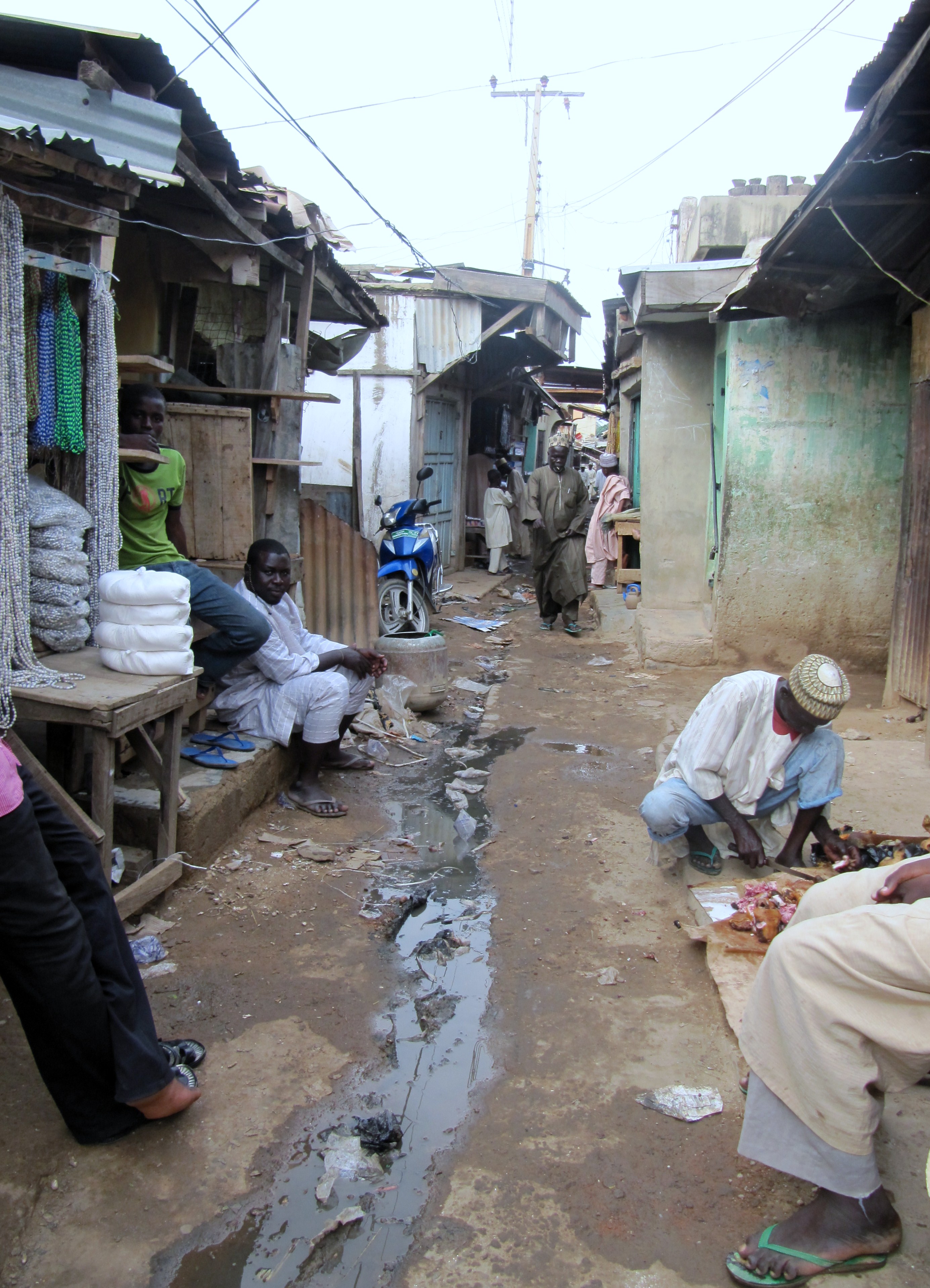
Islamic design resonates in the street networks of Kano. To ensure privacy and the seclusion of women the city does not have a regularized street network and instead seeks to avoid long lines of sight and open vantage points. A consequence of this urban planning has been that non-Muslim migrants to the city have been taken up residence in the non-Muslim enclave, ‘Sabon Gari’ (colloquially: ‘Sabo’). This has meant that the cities of the north have grown from having a single core to being polynucleated with conflicting parties living side by side but not together. When conflict erupts in urban areas, it can be explosive. Boko Haram attacks frequently target the ‘Sabo’ districts.


4. Mistrust

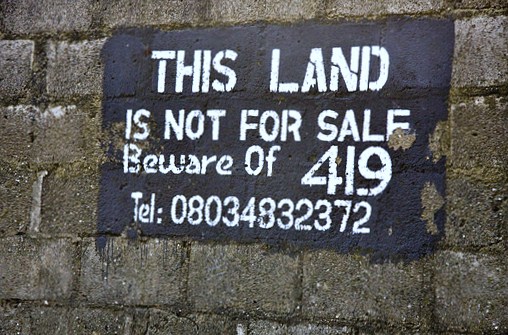
Beware 419

The mere mention of Nigeria often conjures the phrase ‘419’. While popularly known as an internet scam, the number is derived from the property laws in Nigeria in which Law 419 outlines property ownership. The phrase ‘Beware 419’ litters walls across the country to alert ‘potential buyers’ that the house is in fact inhabited and not for sale. After asking for a deposit up front the criminal will flee the scene leaving the ‘new owners’ to confront the current occupants. Mutual distrust is rife.


5. The Security Vacuum

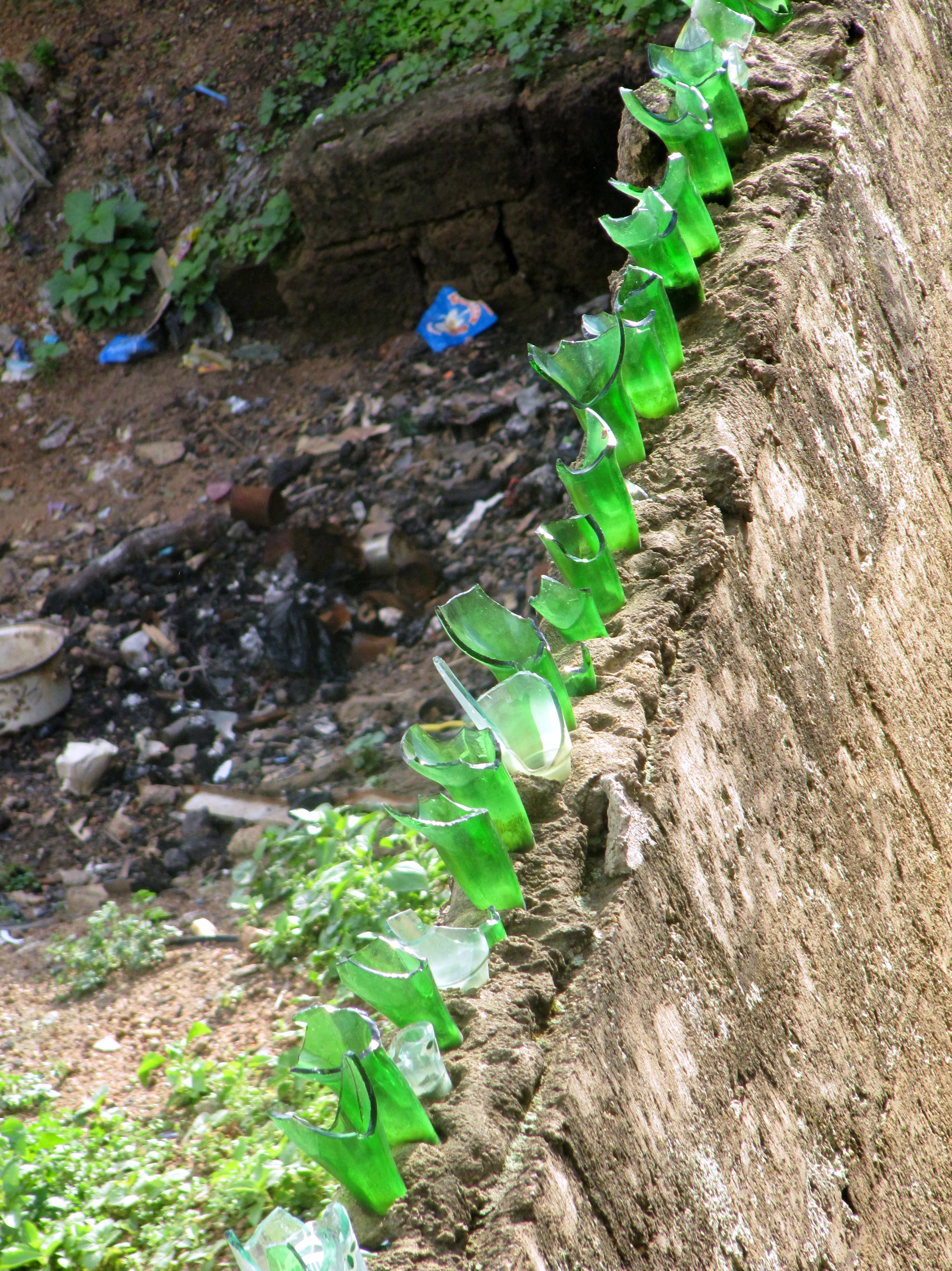
And if one green bottle should accidently fall...

Personal security takes primacy in the north of Nigeria. A lack of trust in the central authority of the state manifests itself in personal security measures. This picture shows the rows of broken glass bottles cemented into the top of a wall to deter intruders. Such walls surround houses in both high and low income areas as violent crime and theft is endemic. Disdain towards the Nigerian security forces have meant that the horrific bomb attacks of Boko Haram on police stations and international organisations have helped to garner support for the terrorist group.


6. Health

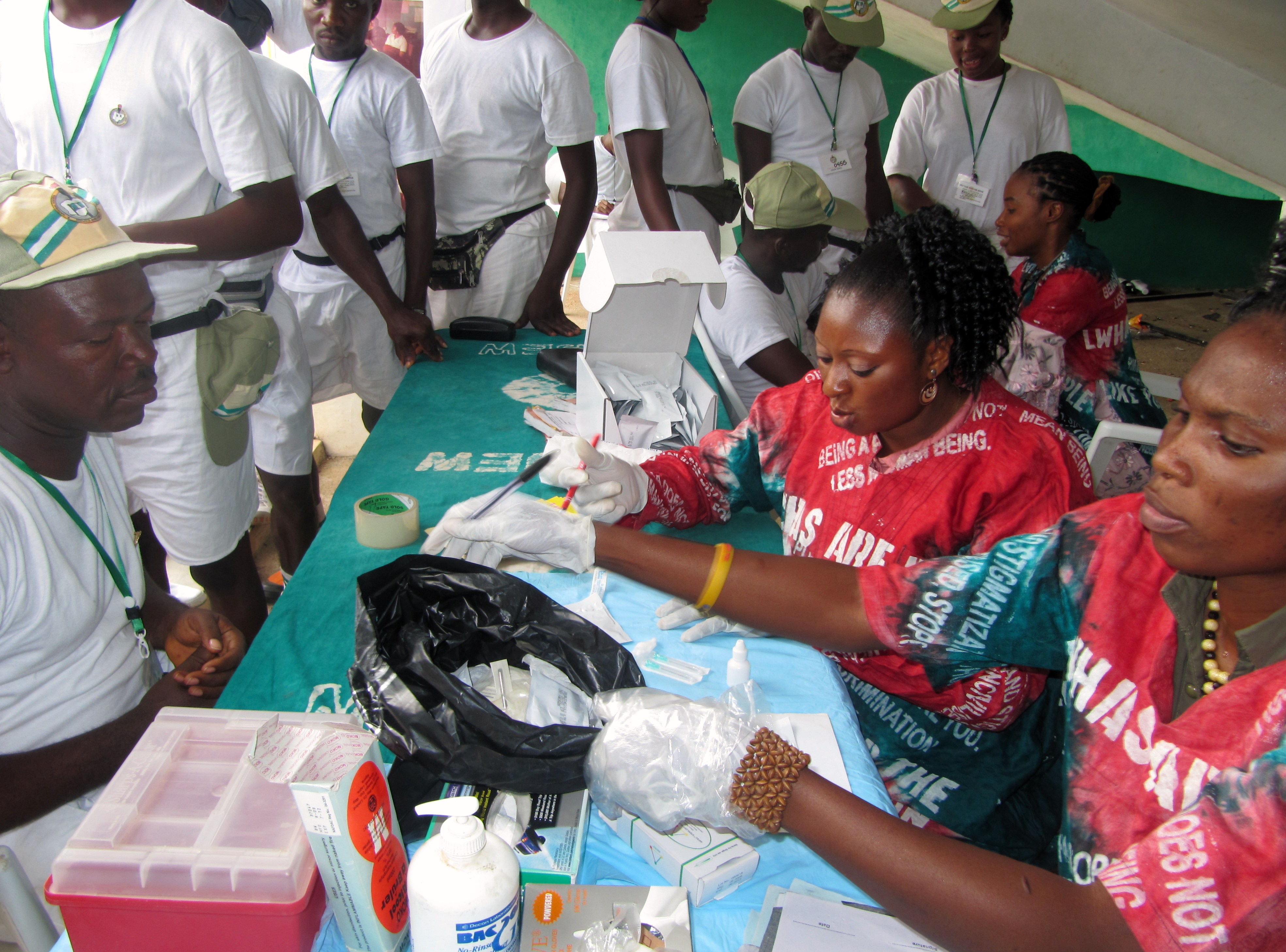
Testing Times

Northern Nigeria continuously faces a shortage of doctors known as a ‘brain drain’: doctors migrate to higher paying positions in the south of the country or further afield in Europe and North America. The issues of malnutrition and water shortages are taking their toll as the climate of the arid northern regions becomes increasingly inhospitable. Medicinal supplies are insufficient at current levels as malaria and HIV/AIDS remain at constant levels and when aid does arrive it has on occasion been mismanaged. In 2009 alone 84 children in the northern states died after ingesting a batch of contaminated teething medication.

The Lighthouse in the Desert


By Jack Hamilton, 9 Oct, 2011

Folklore spills across time creating and undoing history as it ebbs. Whole identities can be constructed and deconstructed in these stories but it is rare in these ages that entire maps can be reimagined due to a single small tree. The old addage “so geographers in Afric maps, with savage pictures fill their gaps” has long since faded but this is a story about one such ‘gap’, the one piece of life within it and the price of life that goes with it.

The Sahara Desert is awash with a sandstorm of whispers and this particular spec is the lonely Tree of Ténéré. It is a story which entails trust amidst gossip as well as the dangers of blind trust in a terrain in which one can see for miles. Upon first hearing the story I didn’t believe that such a tree could ever have existed. In recent weeks a terrorist cell linked to al-Qaeda was undone by their belief that the tree still existed. However, I must start by describing the story of the tree.

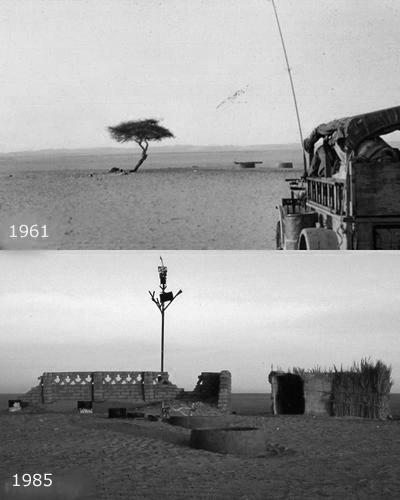
There was once a solitary tree standing in the centre of the Sahara Desert. Between the Baobabs of Senegal and the Olive Trees of Tunisia remained one sole survivor of a bygone era. Millenia ago the tree had been part of a great forest which had gradually died off as the Sahara became the inhospitable mother she is today. One tree remained to guide all those who dared to traverse the barren lands. It was a beacon: the lighthouse in the desert.

The nomads of the desert alone knew of this tree and used it as a tracking mechanism when traversing the most desolate depths of enduring beige. When these Tuareg would encounter the Fulani in north east Mali they would recount their tracks in order to let the Fulani know of their passage, including the waypoint of the tree in the middle of the desert. Having listened politely to the detailed directions the Fulani would thank the Tuareg and see them on their way providing that no disagreements had been reached.

At this stage the Fulani would all agree never to follow the route of the Tuareg. These men had seemingly been driven dangerously insane by the desert. Of course, there is no chance for a tree to exist in such a place. There are no trees for hundreds of miles in the Sahel (the shoreline of the desert), let alone the Sahara. If this route had a proclivity for perverting the minds of the fearsome Tuareg, it was no place for men.

This story circulated until the times when modern technology made it possible for mere mortals to take the route. Safe inside the machinery that would be used to fight the Second World War, Europeans were able to cross the desert here in hopes of cutting off a rival. It was at this time that they too believed themselves to have gone insane too as in the horizon the withered spectre of an acacia tree loomed. They had not been in the desert long enough to have reached the Libyan coast and had not crossed the Italian lines that would have inevitably preceded the water. It could not be Algeria as there had been no sign of the southern Air mountains. The story was true. They had discovered the Tree of Ténéré. The most isolated life on Earth.

It is here that a part of the mystery ends. Confused and in search of the truth the Europeans (a French division) decided to dig underneath the tree and discovered a well 35 metres down. While the fairytale of the tree was slightly depleted the beacon took on a new significance as not only being the only life but suddenly becoming a redeemer of life in the harsh conditions of the Sahara. The tree was not a mirage but the literal symbol of water in the desert.

However, as with all of these stories of the desert, it ends in tragedy. In the 1970s a Libyan truck driver somehow careered into the tree, allegedly drunk. Upon hearing this part of the story I was always interested to hear how the driver could explain this to his boss. He had somehow managed to hit the only tree in a 400km radius.

The reason I was reminded of this story was due to reading intelligence reports from the security forces tracking al-Qaeda in the Islamic Maghreb (the Saharan branch of the terrorist organisation). One of the Algerian trackers claimed that they had an intimate knowledge of the desert and in the pursuit they had passed the Tree of Ténéré. Today in the place of the tree stands a simple metal sculpture representing the optimism of the tree. Unfortunately the tracker described in great detail the tree as it looked before the 1970s, exactly the description that was recounted to me. It was clear that the ‘trackers’ did not know the desert and had possibly never crossed into Niger where the tree used to stand. They were found out immediately.

The idea of the Tree of Ténéré had always seemed to me like one of the lies which whispers around the desert. It brought a smile to my face that the myth was actually the truth and it was this fact that unveiled the fiction.


Jack Hamilton can be followed on Twitter @jmhamilton