By Matthias Pauwels, 7 Oct, 2011
When an uneasy coalition of religious leaders, secular intellectuals, and bazaar merchants spearheaded the anti-Shah movement in Iran, the Iranian revolution would cause ripples well beyond the Middle East as the new regime began alienating once close western allies, mainly the United States. In the Khomeini era, US foreign policy toward Iran would shift from one of total commitment to one on the defence, embedded in Iran’s rampant anti-Americanism.
As Khomeini’s triumph was a blow to America’s credibility, it encompassed a boost to Soviet diplomacy in the region, especially in the early days of a nascent revolution. However, Iran’s bilateral relations with the Soviet Union would prove to be extremely bipolar, ranging from Moscovian hopes of fruitful development of good neighbourliness to large-looming mistrust in the Moscow-Tehran relationship.
Moreover, at the time of the 1979 revolution, and repeatedly since, political analysts have argued that Western Europe would enjoy a better, privileged, and more stable relationship with Tehran. But as the course of history proved, normalisation – or even reconciliation – with the Iranian government did not eventuate as hoped. On the contrary, the dream of a reasonable Iran and a compliant Western Europe has not been realised (Halliday, 1994: 309).
In this essay, I will discuss how the Iranian revolution and the Khomeini era have influenced Iran’s bilateral ties with the United States, the Soviet Union and Western Europe. Drawing back upon the pre-revolutionary foreign policies of the aforementioned, the revolution has caused a considerable tension, not to mention alteration, in the international community’s foreign policy track record toward Iran. As the Carter administration had the greatest difficulties manoeuvring its way around the Khomeinist ideological view of America and as the political hot potato of the American embassy hostage crisis unfolded, the United States found itself simultaneously confronted with a massive brain drain from Iran, where the departure of a large number of highly educated elite was embedded in the political impetus of the revolution and its aftermath. Consequently, I will not only address the impact of the revolution on Iran’s bilateral ties with the United States, the Soviet Union and Western Europe, but I will additionally discuss the socio-economic impact of the extent of brain drain from Iran to the United States.
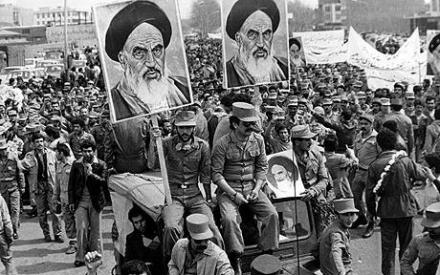
The end of American geopolitical determinism toward Iran
The triumph of the Khomeini forces and of the Iranian revolution in February 1979 marked the beginning of a highly critical period in American-Iranian relations. For the United States, the Iranian crisis was a wasteful diversion, conflicting with real American interests and intentions. For both the Shah and the US, a decade-long embryonic American involvement in Iran had paid off handsomely in the initial stages (Ramazani, 1982: 9). By making security and military ties with the United States the centrepiece of his American policy, the Shah had successfully projected himself as a full-fledged American ally, hoping to resolve basic problems of political legitimacy and authority of his regime partly with the aid of the United States. But just as the Shah’s wooing and winning of American support for his regime was anchored in his domestic policy of strengthening his security forces and boosting economic modernisation, the US had its own reasons for involvement in Iran. The imagery that prevailed among US policy makers was a classic Cold War one and the Shah, in this view, was a major regional surrogate of American policy and could be counted on to ‘stem a red tide sweeping the Horn of Africa, South Yemen, and Afghanistan.’ (Cottam, 1980: 298). Drawing back upon the Shah’s anti-communist stance, the American prevailing view of Iran was one of a stable, progressive, and anti-communist regime.
When it became clear to Washington that the Shah’s regime was on the verge of toppling in 1978-1979, American policy toward Iran became enmeshed in ambiguity. Although the Carter administration was initially hesitant to publicly denounce the Shah, Washington was more than convinced by the beginning of 1979 that the Shah’s regime was finished.In the early stages, relations between the United States and the Khomeini regime were cool but not hostile (Snyder, 1999: 277). When the United States accepted the downfall of the stabilised Bakhtiyar government and his replacement by the moderate Bazargan cabinet, appointed by Khomeini himself, US policy toward Iran was still embedded in a Cold War thought pattern where Iran remained a pivotal state in America’s anti-communist crusade. Since Washington’s main global and even regional problem was not Iran but the Soviet Union and its influence, a stable and united Iran was an American objective no matter who ruled in Tehran. Therefore, US post-revolution policy was premised on the assumption that ‘the emerging Islamic Republic was an established fact and the Department of State was prepared to establish correct formal relations with the new regime.’ (Snyder, 1999: 277) Since Washington’s greatest fear during the first months of the revolutionary government was of a leftist takeover with possible Soviet assistance, a consideration which was further sharpened by the Soviet invasion of Afghanistan in December 1979, the Carter administration had every intention to show the new regime its friendly intentions through various gestures, including face-to-face meetings, rapid recognition of the Bazargan regime, and material cooperation (Rubin, 1980: 311). However, US-Iranian relations gradually turned sour, finally leading to Iran’s rabid anti-Americanism. The idea that President Carter sought to build a new and friendly relationship with Iran never penetrated the radical fraction of the revolution, who cleverly manipulated the hostage crisis to their advantage in order to weed out the liberal fractions of the revolution. The idea that the global hegemon was still keen on dictating events within Iran and Iranian political culture was a crucial aspect of the Khomeinist ideological view of the United States. Even when Khomeini called for an unapologetic isolationism, thus breaking away from the omnipotence of American influence, the Reagan administration still attempted to befriend Tehran for years in spite of the hostility it demonstrated toward the United States, and this because of Iran’s anti-Soviet foreign policy. Geo-political considerations remained a pivotal part of US post-revolution foreign policy toward Iran, anchored in wishful thinking that the more radical ardour of the revolution would gradually cool and moderates, pragmatists, and technocrats would emerge as dominant in Tehran.
However, the hostage issue proved to be a critical stage in the alteration of Washington’s foreign policy toward Iran. As Rubin (1980: 316) notes, the frustrating spectacle of over fifty American representatives being held as prisoners month after month in the face of seeming US impotence had a tremendous psychological effect on America’s relationship with Iran. In the early Spring of 1980, Carter radically changed his policy of rapprochement after the Iranians had failed to comply with various agreements with Algerian third-party mediators. Moreover, as Tehran adopted a policy of complete isolationism, declaring to default on its foreign commitments in the autumn of 1979, including loans by American banks with a total capital exposure of $2.2 billion in Iran, Carter made the inevitable but wise decision of freezing the assets of the Iranian government in the US. Had it not been for this decision, the unilateral action by Tehran could have had serious repercussions for some US banks, vis-à-vis possibly triggering a severe financial crisis.
Within the United States, the hostage issue had its own impact on domestic politics and the Presidential election campaign. The high visibility of the question in the closing days of the campaign brought into vivid focus Carter’s inability to secure the hostages’ freedom (Rubin, 1980: 320). The Carter administration’s emphasis on human rights and reform and its stress on regional approaches rather than on a globalist geopolitical strategy – a policy often mentioned by right-wing globalists as the main culprit for the fall of the Shah’s regime – seemed to become the likely victim of a new era that was ushered into American diplomacy. As stated earlier, the Republican view concerning Iran did not push Reagan toward an antagonistic Iranian foreign policy initially, but the ongoing hostage crisis did accelerate the breakdown in relations between the two countries. The combination of Khomeini’s anti-Americanism and the hostage dilemma played a pivotal role in altering the mood in Washington, moving away from attempting to achieve détente and instead adopting a knee-jerk, hard-line policy toward Tehran. Blunt policy instruments such as economic embargoes and military threats in seeking to pressure the regime to change its ideological perspectives have only strengthened the Khomeinist anti-American push for isolationism. Perhaps Rubin (1980; 323) summarises the policy paradox of US-Iranian relations in the post-shah era in the most spot-on manner: ‘never before have cordial relations with a stable regime in Iran seemed more important to American geopolitical interests; never before has such a state of affairs seemed more unlikely.’
Impact of Iranian brain drain on American civil society
Not only Washtingon’s geopolitical interests toward Iran suffered a blow in the post-revolution era. The United States found itself additionally confronted with a considerable brain drain from Iran to the United States, measured by the migration rates of Iranian nationals to the US with tertiary education, including physicians and professors. Whilst economic-related factors are normally the main driving force for migration, in the case of Iran, political factors are found to be the main push force. With Khomeini on a mission to de-Westoxicate the higher education system in Iran, universities were officially closed from April 1980 for about three years under the banner of the so-called Cultural Revolution. Consequently, secular students and professors who opposed the remodelling of Iran’s education system according to Islamic ideals and beliefs, were purged and the newly established regime began a large-scale crackdown against any oppositional forces. In the 1981-1996 period, Iran was ranked fifth among countries with the highest numbers of refugees admitted to the US (Torbat, 2002: 276). Moreover, in the 1979-1980 period, at the hight of the revolution, the number of Iranian students enrolled in the United States reached its peak of 51,310, leaving Iran to be the country with the highest number of students in the United States at the time compared to any other country (Torbat, 2002: 277). The purging of the educated elite who left Iran and the new graduates abroad who chose not to return home created a large pool of highly educated and skilled Iranian professionals in the United States, causing Iran to experience a huge amount of human and financial capital flight. Whilst the departure of highly educated elite and university students from Iran caused a social loss to the country, it has provided the United States – a country that was built on immigrant human capital – with an unbridled opportunity to incorporate the Iranian educated elite in American global civil society, since they are the medium for transferring technology and know-how. In this light, Torbat (2002: 273) mentions Bozorghmehr, Sabagh and Ansari, who all agree that Iranians are one of the high status immigrant groups, whose educational achievements trump those of others, thus leaving them to achieve rapid success in the American global civil society. Almost half of the educated elite who left Iran after the revolution reside in California (Torbat, 2002: 278), with a brain drain percentage of roughly twenty percent of Iranian medical doctors in the years after the revolution (Torbat, 2002: 283). As the brain drain caused a significant national loss for Iran due to the fact that education is a public good, for the United States the pool of educated, high-skilled Iranians surely must have contributed to the society’s well-being and knowledge, and as such it is enmeshed in the frame of side-effects in post-revolution, vis-à-vis deteriorating US-Iranian relations.
The Soviet Union and post-revolutionary Iran: memories of a failed rapprochement
As Rubinstein (1981: 599) mentions, Moscow watched the toppling of the Shah and the unfolding of the Iranian Revolution with mingled anticipation and anxiety: no other internal upheaval and political turnabout had brought such immediate gain and promising opportunity. Whilst Khomeini’s triumph was a blow to America’s influence in the region, it seemed promising for the Soviet Union as the Ayatollah began the process of de-Westernisation and thus de-capitalisation. Moscow regarded the Iranian situation as complex but promising, hoping to bend it to its advantage in the bipolar power struggle frame of the Cold War.
In the early days of the revolution, the unfolding of the new government appeared to be fruitful for Moscovian Cold War politics. As two American-manned electronic intelligence collection stations on Iranian soil, adjacent to the Soviet border, were shut down, politicians in the Kremlin surely must have gloated. Additionally, in an early post-revolutionary phase and the confusion that accompanied the move from Iran’s alignment to non-alignment in regard to the United States, Moscow learnt a great deal about some of the most advanced military hardware in the American arsenal (Rubinstein, 1981: 601). And with the communist and pro-Moscow Tudeh party back on the political horizon in Iran, the Soviet Union cherished high hopes that it would manipulate post-revolution developments to its advantage.
Alas, the Soviet Union was not able to push through a harmonious rapprochement with the Khomeini regime and Moscow had largely itself to blame. As the Kremlin became troubled by the chaotic environment surrounding the turbulent post-revolutionary year, Iran grew more wary of the Soviet Union’s true intentions. Many in Khomeini’s entourage were deeply suspicious of the Soviet Union, mainly due to ingrained anti-communism, a remnant from the Shah era, and the communist coup in Afghanistan in April 1978. As Brezhnev tried to push his luck by insisting on reaffirming Articles 5 and 6 of the 1921 Soviet-Iranian defence treaty, bilateral relations took a turn for the worse. The treaty claimed that if a third country threatened to attack the Soviet Union from Iranian territory, Soviet forces would be able to intervene in Iranian affairs in the interest of self-defence. With US-Iranian relations suddenly deteriorating due to the hostage crisis, the Soviet Union was suddenly provided with a rare opportunity to demonstrate its support for Iran’s revolutionary regime, diverting attention away from its involvement in Afghanistan. But as Moscow immediately moved to exploit the mounting tension, hoping to win the trust of the Khomeini government, Brezhnev and his policy advisers were only too clever by half: their transparent pro-Iranian position on the hostage issue failed to ingratiate itself with Tehran, thus deflecting Iranian criticism away from the Soviet intervention in Afghanistan (Rubinstein, 1981: 605). As Soviet occupation of Afghanistan became a major impediment to improved relations between Moscow and Tehran, anti-communist slurs began to emanate themselves from the Khomeini regime. Despite Moscow’s assurance that it would stand by Iran and not tolerate outside, hence American, interference in Iran’s internal affairs, and its veto on a Security Council resolution calling for ratcheting up economic sanctions against Iran, Tehran sharply denounced Russia’s military intervention in Afghanistan. Moreover, its insistence on the validity of the 1921 Soviet-Iranian treaty served as an ever-present reminder of Russian imperial ambitions, validating Khomeini’s claim for an unapologetic isolationism. In many ways, the Kremlin was its own worst enemy on the matter of normalisation (Rubinstein, 1981: 603) and thus was not able to benefit fully from the Iranian Revolution and the breakdown of US-Iranian relations.
Western Europe during and after the Khomeini period
At the time of the revolution and shortly after, political analysts shared the expectation that Iran’s relations with Western Europe would be better than those with the United States or even the Soviet Union. Not caught in the middle of an all-consuming Cold War struggle, Europe had adopted a policy of “neither West nor East” (Halliday, 1994: 312), resulting in the fact that European countries – such as Germany – had become Iran’s major trading partners. Therefore it seemed reasonable that a post-revolutionary Iran would not take any drastic measures to offset its relationship with Western Europe, since the Khomeini regime had opted for a strict non-alignment with the United States and therefore had limited the direct importation of as many US products into Iran as possible.
Whilst Britain had been associated by the Khomeini regime with the external domination of Iran in the preceding decades, this was not true of for instance Germany or France. In the commercial realm, Germany’s percentage of the total Iranian import market went up gradually to reach a staggering 26 percent share in the post-revolutionary years (Halliday, 1994: 313). And perhaps France was the country that might have been expected to establish the most favourable relations with Iran, given Khomeini’s residence in Neuphle-le-Chateau from October 1978 to February 1979 in exile (Halliday, 1994: 313).
Illusions about harmonious post-revolutionary relations with Iran remained a stubborn element in West-European foreign policy towards the Khomeini regime. Although Germany’s Genscher became the first Western foreign minister to visit the Iranian nation in 1984 after the revolution of 1979, improving bilateral relations proved to be a shaky endeavour for both France and Germany. Factors such as breaching diplomatic immunity during the hostage crisis at the American embassy in Iran and Tehran’s revolutionary foreign policy, shifting away from cooperation towards unapologetic isolationism, made the West take a more critical stance toward the Khomeini regime. Therefore, the querulous history of Iran’s relations with Western Europe in the post-revolutionary period were not the result of accident or aberration on the Western European side, but reflected deeper incompatibilities on both sides (Halliday, 1994: 315).
Conclusion
The Iranian revolution has impacted the world beyond the Middle East on numerous levels. Diplomatic relations with both the United States and the Soviet Union have suffered. The Shah’s downfall drastically altered Iran’s international posture vis-à-vis other nations and most notably the United States. Iran’s fierce independence and unapologetic non-alignment has annoyed the United States because of the Islamic Republic’s geostrategic significance as well as its refusal to compromise its national sovereignty and dignity in any way, thus popularising the view of Iran as a rogue state, refusing to abide by the global hegemon’s dictates. In the post-revolutionary years, diplomatic efforts have not been successful in hemming in the fringes of fanaticism and militancy, leaving a possible US-Iran détente to be nothing but a far-flung utopian dream. The Soviet Union tried wooing and winning Ayatollah Khomeini in the post-revolutionary years but ultimately lost Iran as a trump card in the Cold War struggle with the United States, mainly due to Moscow’s transparent policies and greediness in reeling Iran in as an ally against the Americans.
List of references
- Bill, J. A., 1999. Iran and the United States: A Clash of Hegemonies. Middle East Report, No. 212, Pushing the Limits: Iran’s Islamic Revolution at Twenty (Autumn 1999), p. 44-46
- Ramazani, R. K., 1982. Who lost America? The case of Iran. Middle East Journal, Vol. 36, No. 1 (Winter 1982), p. 5-21
- Cottam, R. W., 1980. American Policy and the Iranian Crisis. Iranian Studies, Vol. 13, No. ¼, Iranian Revolution in Perspective (1980), p. 279-305
- Fatemin, K., 1980. The Iranian Revolution: Its Impact on Economic Relations with the United States. International Journal of Middle East Studies, Vol. 12, No. 3 (Nov. 1980), p. 303-317
- Halliday, F., 1994. An Elusive Normalization: Western Europe and the Iranian Revolution. Middle East Journal, Vol. 48, No. 2 (Spring 1994), p. 309-326
- Panah, M. H., 2002. Social Revolution: The Elusive Emergence of an Agenda in International Relations. Review of International Studies, Vol. 28, No. 2 (April 2002), p. 271-291
- Ramazani, R. K., 1982. The U.S. role in the Iranian Revolution and the collapse of U.S. influence. In: Ramazani, R. K., 1982. The United States and Iran: The Patterns of Influence (New York: Praeger Publishers, 1982), Ch. 7
- Rubin, B., 1980. American Relations with the Islamic Republic of Iran, 1979-1981. Iranian Studies, Vol. 13, No. ¼, Iranian Revolution in Perspective (1980), p. 307-326
- Rubinstein, A. Z., 1981. The Soviet Union and Iran under Khomeini. International Affairs (Royal Institute of International Affairs 1944-), Vol. 57, No. 4 (Autumn 1981), p. 599-617
- Snyder, R. S., 1999. The U.S. and Third World Revolutionary States: Understanding the Breakdown in Relations. International Studies Quarterly, Vol. 43, No. 2 (Jun. 1999), p. 265-290
- Torbat, A. E., 2002. The Brain Drain from Iran to the United States. Middle East Journal, Vol. 56, No.2 (Spring 2002), p. 272-295


 InPEC Magazine