In this article, the author assesses the precedent of Libya in foreign intervention after the death of Muammar Gaddafi. In a world in which there are now increased calls for intervention and isolationism the case of Libya is being presented as both an example of a successful intrusion and a reason to reform the UN Security Council. Military capabilities and the tensions within NATO may act as a check to the boisterous rhetoric in the wake of Gaddafi’s death but the key lesson may be the message it has sent to those who are still clinging to power.
By Jack Hamilton, 23 Oct, 2011
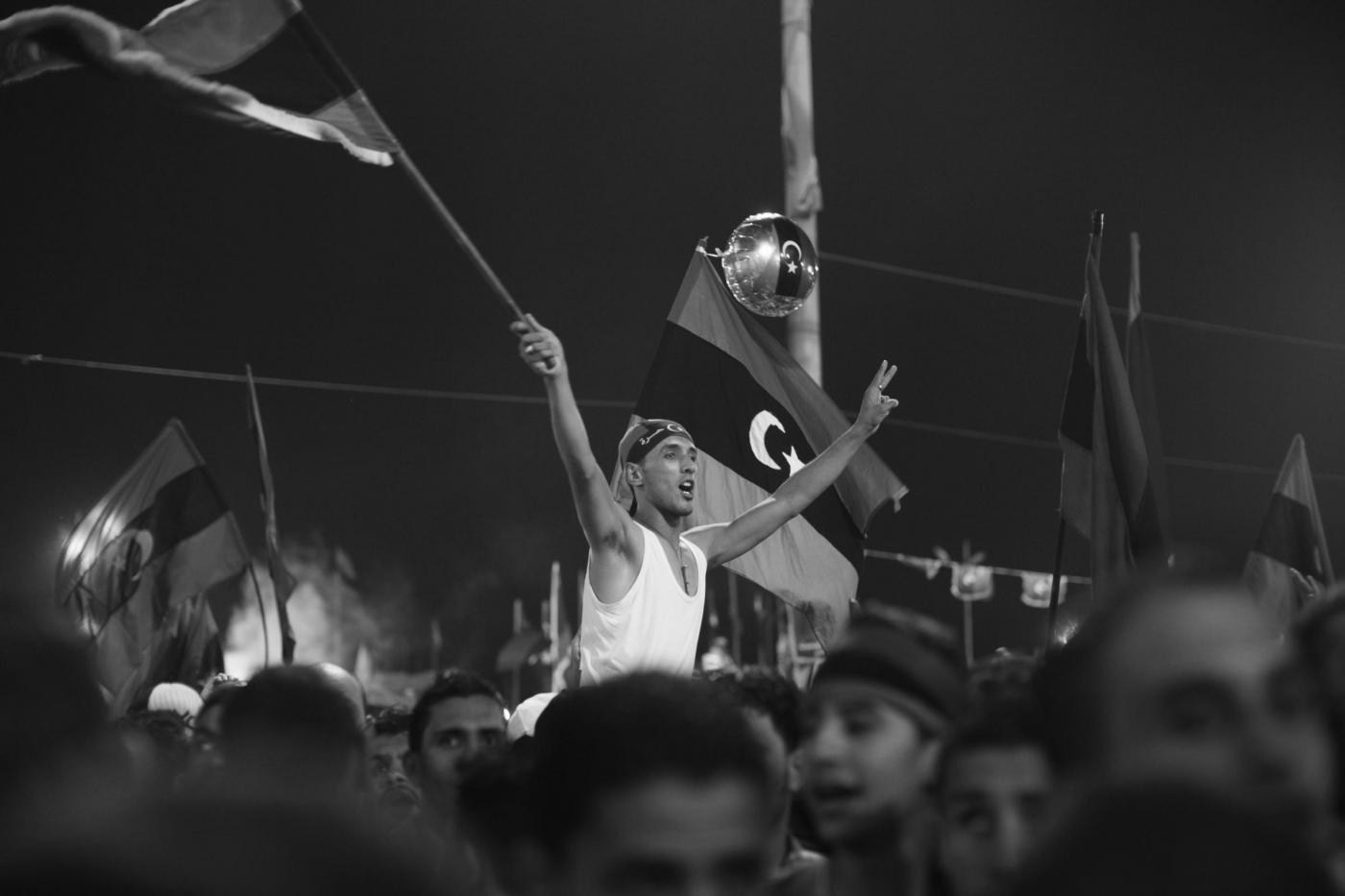
Today the Libyan transnational government has declared national liberation before a triumphant crowd in Benghazi, the city where the fight against Gaddafi began.
There are scenes of jubilation in Libya and NATO offices around the world. Muammar Gaddafi is dead and attentions are now turning to the future of the Maghreb state and the implications of NATO’s intervention in the broader Arab Spring. In such a celebratory atmosphere what will be the future response to rebellious populations rising up against murderous rulers?
Libya and the Future of Intervention
Nicolas Sarkozy has already made a direct comparison between the conflict in Libya and the plight of the people of Syria in facing down the armies of Bashar al-Assad. He mused that “The best thing I can do is dedicate our visit to Tripoli to those who hope that Syria can one day also be a free country”. The Obama Administration has toed a similar line in their policy of ‘Leading from Behind’ by touting the example of Libya as a framework for future interventions.
Deputy National Security Advisor for Communications Ben Rhodes stated that the Libya experience would provide the basis for future interventions with emphasis placed on the need for regime change to be based upon “indigenous political movements” rather than the ambitions of the United States and the importance of “burden sharing” amongst other nations. The problem is that this does not fit into the model for preventing atrocities which the United States advocated so heavily in the 1990s. In London and Paris there is talk of prevention and the need to take the lead while the US, perhaps due to domestic constraints, is taking up a more isolationist tone. The question must therefore be asked if the example of Libya may hinder rather than assist future responses.
Military Capability
The first issue that must be addressed is military capability. Don’t be distracted by the rhetoric of ‘no boots on the ground’, Libya was a huge military intervention. The British and the French with help from the Norwegians and Danes, carried out the bulk of the airstrikes and provided the machinery to carry out the naval blockade. This does not mean that the US should be discounted. It was American air and sea forces that opened the intervention with decisive attacks on Libyan air bases allowing the European forces to act with greater freedom. Specific American military capabilities in intelligence, surveillance and reconnaissance were key to the success to say nothing of the supplies of munitions that were supplied to the European forces. The lasting images of the war will be of the final rebel push on Tripoli but it is the heavy NATO influence which will resonate in international relations.
A Frayed Alliance
The second impact is the increased tensions between the NATO powers. Germany’s foreign minister hinted at an early stage that the country would refuse to take sides and eventually abstained from the vote on Security Council Resolution 1973. The French have long advocated a reform of NATO and the obvious north/south European divide in capabilities has intensified this call. Whether the military alliance is now in a position to oversee another campaign is debatable.
‘You Break It, You Own It’
NATO leaders have frequently referenced the ‘lessons of Iraq’ when discussing Libya. The opposition of the National Transitional Council to any foreign troops in a post-war Libya has been welcomed by Western powers hesitant to adopt an increased military role in a time of economic uncertainty. In this sense there has been a strong adherence to Colin Powell’s Pottery Barn mantra: ‘You Break It, You Own It’.
The Future of Intervention
So what will the lasting impact of the Libyan intervention be? Crucially, both Britain and France seem to perceive the situation to have been an anomaly. A nation with a small population and a weak military on the doorstep of Europe with regional actors who were unlikely to support the dictator. It was seen as an easy case. Additionally, the Western powers insisted on gaining the support of both the Arab League and the Security Council before intervening. It is difficult to see such a situation emerging elsewhere in the Arab Spring and Russia has already blocked tentative discussions regarding Syria.
The question of Syria has been largely ignored in Washington. Syrian opposition is increasingly turning to armed response with army defections burgeoning and calls for international intervention increasing. People are being gunned down in the streets as the ‘liberators’ of Libya struggle to find the words to escape the precedent they have set. It is unimaginable that international forces would enter Syria for a variety of reasons. For that reason Libya must be viewed as an anomaly, not a precedent.
Reforming the Security Council?
Another impact of the intervention has been the rallying of non-interventionist states. China, Brazil, South Africa and India have not been slow to point out the hypocrisy of the Security Council in elevating its own role while using the mandate of protecting civilians. Perhaps the lasting message of Libya in international relations will be the claim these nations have demanded for many years: a reform of the Security Council.
Bloody Sheet, Noose, Cage or Condo?
The final message of the conflict in Libya is to those clinging to power in other nations. It is a message to the Assads and Salehs of the world. Like Gaddafi or Hussein they can go out on a bloody sheet or at the end of a rope. Mubarak and Milosevic wound up in cages. Ben Ali stepped aside amid violent persuasion and now resides comfortably in a condo in Saudi Arabia. The bloody sheet, the rope, the cage or the condo?

 InPEC Magazine