
Deck the Halls with Boughs of Homophobia: the 2012 Republican Presidential Primaries and the Evangelical Connection


GOP Candidates

In this article, the author looks at the evangelical presence in the 2012 Republican presidential primaries and how the issue of gender equality has resurfaced in the civil rights debate.

_____________________________________________________________________________

By Matthias Pauwels, 9 Jan, 2012

With the United States Republican Party presidential primaries in full swing, the issue of marriage equality has regained considerable momentum over the past weeks in American national politics. In early December, it was beginning to look a lot like Christmas – until Rick Perry decided to deck the halls with rabid homophobia rather than holly. In a bizarre ad, Perry equated the repeal of “Don’t Ask, Don’t Tell[1]” to a blatant attack on people of faith. Michele Bachman, perhaps one of the most extreme and contested anti-gay candidates in the GOP presidential contest, has an impressive anti-gay track record, including likening being gay to being a “part of Satan”.  However, Bachman has suspended her campaign following a poor result in the Iowa caucus of January 3rd, 2012.

When the Iowa votes were in on that first Tuesday of 2012, Mitt Romney won the caucuses after publicly promising to support an amendment to the United States constitution barring same-sex couples from marriage. But perhaps the one to watch on the marriage equality front is Rick Santorum, who came in a close second to Romney and continues to court the support of extremist organizations and has strong ties to many anti-gay groups. Santorum has a long track record of trying to score political points by bashing the LGBT community. In Iowa, his anti-gay stance almost led him to victory. In New Hampshire however, Santorum’s anti-gay rhetoric got an icy reception as he got booed off stage after comparing marriage equality to polygamy.
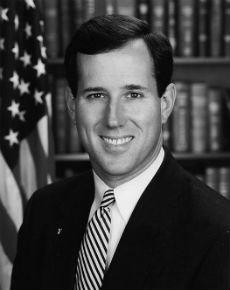
Rick Santorum

Rick Santorum

Santorum and the Anti-Gay Lobbyist Force

Religious Right activists are positively giddy over the new momentum behind Rick Santorum’s candidacy for presidency, praising his appeal to women and evangelical centers on a desire for authenticity. In many ways, the conflict over marriage equality and gay rights represents what is arguably one of the dominant cultural cleavages of the post-material era in the United States. The specific battle over gay marriage represents a cultural cleavage between religious traditionalism on the one hand and progressivism on the other. In a similar fashion to the highly contested Proposition 8[2] vote in California and the legislative battle of the Marriage Equality Act[3] in New York, the evangelical movement was quick to jump on the anti-gay bandwagon in the presidential primaries. But Rick Santorum isn’t just close to traditional Religious Right organizations and activists: the former Pennsylvania senator even has ties to the most fringe parts of the movement. Santorum, for example, is a heavy supporter of Ron Luce’s cult-like group “Teen Mania”, which focuses on challenging a youth-culture that, in Luce’s words, promotes homosexuality. Luce’s organization Teen Mania, which hosts teen-oriented prayer rallies, was recently featured in the MSNBC documentary Mind Over Mania, where former interns described Teen Mania’s cult-like practices, such as faith healings and enduring verbal abuse and extreme sleep deprivation.

Last month Santorum attended the Presidential Pro-Life Forum hosted by Personhood USA, accompanied by fellow Republican presidential candidates Michelle Bachman and Newt Gingrich. As a radical anti-choice activist group, Personhood USA’s ultimate goal is to ban abortion and even common forms of birth control without exception. Earlier the group launched unsuccessful referenda in Colorado and Mississippi on the matter, characterizing President Obama as “the Angel of Death” and likening opponents of the proposed abortion ban to Nazis.

But perhaps there are three other organizations whose connection to Santorum is more worrisome, especially on the LGBT-front. For the Presidential Pro-Life Forum, Santorum was in close contact with Lou Engle’s The Call, also a host of the forum. In 2009, Engle used his The Call prayer rally to bolster Ugandan legislation that would criminalize and in some cases give the death penalty for homosexuals. The other organization is the highly evangelical Oak Initiative, a project of South Carolina pastor Rick Joyner. Joyner has previously argued that hurricane Katrina was God’s punishment for the advancement of gay rights. And last but certainly not least, there is Focus on the Family, a non-profit group that, despite its warm and fuzzy name, is in tenor and in practice an anti-gay hate group. Focus on the Family is a recurrent factor in the evangelical ability to create powerful networks and was instrumental in gearing up to endorse Proposition 8 in California. Santorum has been a regular guest on Focus on the Family radio broadcasts, engaging in topics such as gay marriage and the repeal of “Don’t Ask, Don’t Tell”, stating that injecting social policies into the military weakens its morale and that there is no place for “any type of sexual activity in the military”. Additionally, Santorum has found support in the Family Research Council, Focus on the Family’s political lobbying arm.

Santorum’s sentiments on homosexuality have often contradicted his own statements. He has spoken ardently in favor of personal freedoms, opposing the McCain-Feingold campaign finance bill[4] in 2002 on the grounds that it was an “affront to personal freedom and liberty.” But at the same time, Santorum argues that states do have a right to “limit individuals’ wants and passions” – striking an eerie resemblance to his comparison of marriage equality to polygamy and the need to curtail “any type of sexual activity” in the military and reinstate “Don’t Ask, Don’t Tell.”

Evangelicals and Politics: Hit or Miss?

Santorum’s views didn’t affect him negatively in Iowa, where evangelical Christians make up a large part of the Republican electorate. The religious groups voted heavily in his favor and helped propel him to top status just days before the Iowa caucus. But the story is different in New Hampshire, a state where gay marriage is legal and which boasts a much more moderate set of Republicans. So while Santorum’s views on traditional marriage and the sanctity of life might serve him well with certain constituencies, he is also alienating and bashing an entire community of his fellow Americans. Santorum’s views could be problematic for him in less conservative states – hence the icy reception he got in New Hampshire, which is next on the list in the 2012 Republican Party presidential primaries.

Santorum is likely to receive a more friendly welcome in South Carolina, but nationally, his views could come back to haunt him. But Santorum is no fool – enter the PR machine. One of his former aides who is openly gay recently jumped to Santorum’s defense, saying the former senator is not homophobic but simply opposes gay marriage.

It remains to be seen, however, whether or not an intricate set of evangelical lobbying networks can create a favorable power momentum for either Rick Santorum or Mitt Romney when focusing on social issues such as marriage equality. In Lobbying Against Progressivism: The Evangelical Power of Mobilization Against LBGT Rights in the United States I have previously argued that it is highly debatable whether the approval of Proposition 8 in California was exclusively enmeshed in evangelical lobbyist efforts. The legislative struggle for gender-neutral marriage in both California and New York testifies to the fact that it is still a deeply divisive and emotional issue on both sides of the fence. California’s highly contested approval of a ban on gender-neutral marriage and New York’s legislation of marriage equality – taken into account its long legislative struggle – still echo the growing pains of equality. For many Christian Right groups, opposition to gay rights has been a major agenda item for the past 30 years and in many ways, it has been their rallying cry.

But does having the support of American Evangelicals as a grassroots movement create any real political power, or is any outspoken religious affiliation more of an obstacle rather than an asset in the Republican presidential primaries? Many political observers in the Republican camp have been adamant on de-emphasizing Mitt Romney’s Mormon conviction as a member of the Church of Jesus Christ of Latter-Day Saints. For many Republicans, Romney is an appealing candidate with compassionate conservative allure. Moreover, we would all like to believe that a politician’s religious affiliation is not an obstacle to higher office. Americans have indeed become more religiously tolerant, but Romney – as the first Mormon to run for President – will clearly have to change some minds. In the late 1960s, the percentage of Americans who said they would not vote for a Jewish or Catholic presidential candidate was in the double digits; by 1999, those numbers had fallen to 6 and 4 percent, respectively. Compare that to the 17 percent of Americans who currently say they would have qualms electing a Mormon to the White House. That number has not changed one bit since 1967, the year that Romney’s father considered a presidential run.
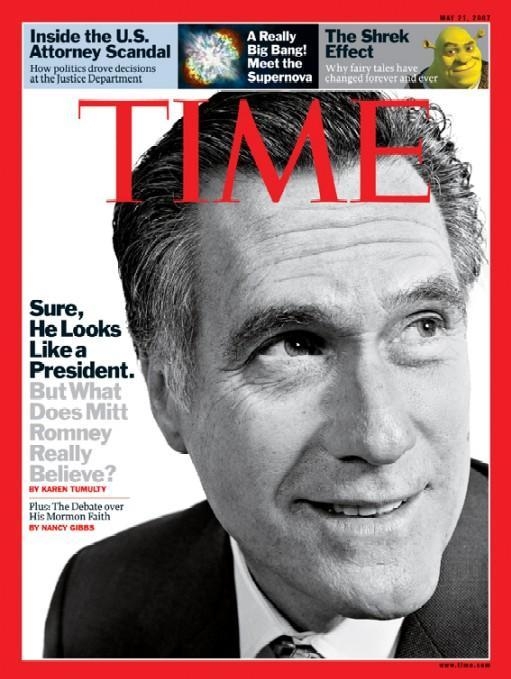
Mitt Romney

Mitt Romney

In the end, it remains to be seen how both Romney and Santorum will wield their newly gained status as the Republican answer to Obama, and whether or not Santorum is looking to further intensify his relationship with evangelical movements.


[1] “Don’t Ask, Don’t Tell” was a controversial military policy barring openly gay, lesbian, and bisexual soldiers from military service. It was only recently, under the Obama administration, that a congressional bill to repeal the aformentioned military policy was enacted, setting the official end date of “Don’t Ask, Don’t Tell” for September 20, 2011.

[2] Proposition 8, also known under its ballot title “Eliminates Rights of Same Sex Couples to Marry: Initiative Constitutional Amendment” was a 2008 ballot proposition and constitutional amendment which added a new provision to the California Constitution. This initiative measure, additionally cited as the California Marriage Protection Act, aimed to add section 7.5 to the California Constitution, stating that “only marriage between a man and women is valid or recognized in California.” The ballot proposition passed in the California state elections on November 4, 2008 but was later overturned by a federal judge on grounds of unconstitutionality.

[3] The Marriage Equality Act was a senatorial bill in the state of New York legalizing same-sex marriage. The law took effect on July 24, 2011.

[4] The McCain-Feingold Bill was a bill which was introduced to the United States Senate in 2002 in an attempt to reform campaign financing in the United States.

The Neo-conservatives and Al Qaeda: More Similar than Different?


By Abdulaziz Khalefa, 27 Aug, 2011

Introduction

This article is about two groups, Al Qaeda (AQ) and the American Neo-conservatives.  Before comparing and contrasting their ideological worldviews, I look at their antecedents separately.  I then analyze their worldviews in terms of these antecedents to show the similarities, which I identify as (1) the concern with decadence (2) the premodern epistemology (3) irrationalism; and differences, where one groups is exclusive and backwards looking, the other is more open and forward looking.  I argue that their ideological world views are more similar than different.

Al Qaeda

The evidence supporting AQ as a global organized network of Islamic fundamentalists run by some puppet master is flimsy.  How this evidence was propagated will be discussed in another section below.  There is no real evidence that such an organized network of Islamists with global terrorist cells exists.  Jason Burke more accurately describes AQ as a “tripartite” consisting of around a dozen core members, a network of co-opted (most of which remained autonomous) groups and an ideology.  In the following sections as I look at the group’s ideological antecedents, I also analyze this tripartite and its dynamics.

A Typology of Islamists

It is useful to set up a framework for Islamism to accurately understand where any Islamist group would fit among the numerous others.  Hrair Dekmejian in his book Islam in Revolution typifies Islamists into three categories (1) gradual pragmatic (2) revolutionary (3) puritanicals.

The first two groups can be distinguished based on their legal harmony with the state – both groups accept the nation-state as a useful notion for governance.  Dekmejian describes the gradual pragmatic Islamists as “[Operating] within the confines of legality as defined by governments.”  The revolutionaries in contrast would “advocate the resort to jihad as a means to establish Islamic rule.”  Open confrontation with the effective governments is the characteristic placing Islamists in this category.

The puritanical Islamists are distinguished by their fundamental understanding of their faith.  It is not merely the open confrontation with governments that places them in this category, but their parochial interpretation of Islam which rejects pluralism.  Dekmejian explains “…puritanism centers on the quest to emulate strictly the Prophet’s example and life-styles of the first Islamic community… They aim to recreate the Prophet’s Ummah, and oppose innovation or efforts to adapt to modern conditions.”  It is useful to regard them as the Salaf who aim to emulate the three generations after the prophet’s lifetime; however it is important to understand that not all Salaf are puritanical, such as those in Saudi Arabia who turn a blind eye to the un-Salafist character of the Kingdom.

Al Qaeda’s Ideological Antecedents

It is in the puritanical category that AQ is placed.  The group is the product of Qutbist thought which reintroduced the concepts of jahiliya (literal translation is ignorance) and Islam.  These terms were used by Mohamed in spreading his message in the 7th century, and are applied by Qutb to current day Muslim communities.  According to Qutb the jahili society and its leadership are aggressive towards Muslims, because they trust in other humans instead of “the lordship of God.”   He goes on to say that Muslims must defend themselves against the jahili people and their leaders.  The jahili society and the leaders they sustain comprise the near enemy.  The far enemy is however comprised of “the US, Israel and other non-Muslim powers.”

What inspired Qutb to write about these concepts, to have them apply to current Muslim society, is tied to his perceived decadence of western society.  John Calvert explains “all of Qutb’s politically oriented writings… point either directly or indirectly, to the presence of a moral flaw planted in the heart of the Western character.”  For example, he showed disdain to the “animal like” mixing of the sexes, and the immodesty of woman when he was in the United States.  It is the Islamic orientation to the decedent western society and form of governance which made jahiliya applicable to the Muslim public.

Abul Ala-Maududi has also contributed to Qutbist thought.  Dale Eikmeir notes a few ideas in Maududi’s books which would certainly have interesting global implications, conjuring the idea of clashing civilizations.  He quotes Maududi as saying in his book Jihad in the Name of Allah, that “Islam wishes to destroy all States and Governments anywhere on the face of the earth which are [sic] opposed to the ideology and program of Islam regardless of the country or the Nation which rules it.”  In his other book, Jihad in Islam, Maududi explains “Islam does not intend to confine this revolution to a single State or a few countries; the aim of Islam is to bring about a universal revolution.”

Going back to Qutb, in Milestones, he writes “…wherever an Islamic community exists… it has a God-given right to step forward and take control of the political authority so that it may establish the divine system on earth….”  Ayman Al Zawaheri, the AQ number 2 and mentor to Osama Bin Laden, in his book Knights Under the Prophet’s Banner explains that the Nasserist regime thought it dealt a decisive blow to the Islamic movement in Egypt when it “executed Qutb and arrested thousands from the Islamic movement.”

Al Zawaheri rebuffs this and claims that the execution of Qutb, and the arrests of the Islamic movement’s members, involved igniting the dissemination of his thought in the Islamic movement.  More importantly Al Zawaheri states after these events Qutbism “has shaped the objectives of the person writing these lines.”  Lawrence Wright also notes that Ayman Al Zawaheri aims “to put Qutb’s vision into action.”

Eikmeir explains that AQ has however, for strategic reasons, decided to abandon the traditional sequence which first sought defense against the near enemy followed by the far enemy.  Instead Eikmeir explains that

It is only natural to assume that [Bin Laden and Al Zawaheri] compared the failures of the Muslim Brotherhood, al-Jamaa al-Islamiya, Egyptian Jihad, and other organizations to prevail over the “near enemy,” to the successes of the Afghan mujahideen in their victory over the Soviets.   They reasonably concluded that the “far enemy” strategy was the wiser course of action.

By focusing on the far enemy AQ was no longer a domestic concern for the Taliban’s Islamic Emirate of Afghanistan (IEA) (1996-2001) to deal with, but a global concern.

The global terrorist attacks (such as 9/11) attributed to AQ implied that the organization was run by a puppet master who could attack at any given order.  Burke however explains that “when it came to terrorist attacks, it was more often al-Qaeda that was approached with ideas or plans for an attack than groups or individuals approached by al-Qaeda.”

The Neo-conservatives

            John Mearsheimer explains that most Neo-conservatives “believe that U.S. power should be used to encourage the spread of democracy and discourage potential rivals from even trying to compete with the United States.”  Current Neo-conservative ideology unites around three common themes (1) “the human condition being defined as a choice between good and evil” (2) Power politics (3) a focus on the Middle East and Islam as the theater for American overseas interests.

As for who is a Neo-conservative, Halper Clarke explains that “their movement is not a card-carrying organization.  They do not hold meeting or conventions.  There is no absolute dividing line between who is and is not a Neo-conservative.”  In the following section I look at the moral concern and its implications, and then the theoretical influences.

Morality, Liberalism and the American Interest

Michael Williams explains that Neo-Conservatives “view the idea that individuals have interests… as an important moral principle.”  Neo-conservatives view this individual interest, while essential for the operation of modern societies, as “an insufficient basis for a healthy and viable polity.”  Neo-conservatives explain that at the individual level, pursuing nothing but self interest leads to “hedonism and despair.”  These sentiments are expressed by Irving Kristol, the so called “godfather of Neo-conservatives.”

A main reason why the Neo-conservatives hold this view is because of the social impact they think it will have; where the excessive individualism becomes “destructive of the communal ties and values.”  Williams succinctly summarizes the Neo-conservative view of liberalism’s impact on society saying “Individual liberty and self-realization may be the honestly held and even well-intentioned goals of this form of liberalism, but its consequences are anomie and degradation.”  Williams, in addition to the individual and social aspects of experiencing this particular “form” liberalism, also looks the political aspect.

The political aspect is important because it shows that the negative individualism in society is transferred to the state level, which would turn politics into “nothing more than the pursuit of individual or group interests” eliminating any sense of higher values and destroying what is in the interest of the public.  It is from there Neo-conservatives conclude that the “main threat confronting modern liberal society… is decadence.”

Yet Neo-conservatives extol the liberal values abroad, and have gone to war for them.  This is explained by the Neo-conservative distinction of two types of liberalisms.  The first is liberal modernity which Kristol points out would have the bourgeois “live off the accumulated moral capital, traditional religion and traditional moral philosophy….”   The second type is the liberalism of the Scottish Enlightenment which compounded ‘virtue’ with self interest, to have “the economic and political enquires of the Scottish Enlightenment also be moral.”

In embracing the second type of liberalism, Neo-conservatives adopt a two-fold strategy (1) they seek to rekindle their view of liberalism within American society (2) they adopt a forward-looking form of American nationalism aimed at extending America’s values outward.  Here the Neo-conservatives talk of ‘benevolent hegemony’, and how ‘American foreign policy should be informed with a clear moral purpose, based on the understanding that its moral goals and fundamental national interests are always in harmony.’

Theoretical Influences

Jesus Valesco identifies Leo Strauss and Samuel Huntington as theoretical influences to Neo-conservatism.  He associates Huntington with the first (Reagan) generation of Neo-Conservatives and Strauss with the second (Bush junior); however he notes that the second generation “undeniably” has promoted ideas from both Huntington and Strauss.

Strauss’s affiliation with the Neo-conservatives is controversial, with less evidence of a direct link between him and both generations.  While Huntington’s contributions to Neoconservative thought is more apparent, Valesco explains that “the best way to evaluate the influence of Strauss is to understand that the implications of his ‘teachings were almost always indirect’.”  Valesco identifies Strauss’s contributions to be (1) Communism and fascism, and ultimately Islam are evil (2) democracies are fundamentally different from tyrannies (3) America needs “[a] leader, especially strong  in his actions, firm in his beliefs and willing to go against the grain to combat tyranny.”

Strauss’s esotericism is also linked to a peculiar method of intelligence analysis.  Abram Shulsky, a student of Strauss and a Neo-conservative directly involved in the Bush administration’s information gathering and analysis about Iraq prior to the 2003 invasion, explains that the conventional “mirror imaging” (to see others as fundamentally similar to one’s own)  in intelligence analysis “is misleading.”  He advocates the use of Strauss’s political philosophy as a solution instead of the social scientific analysis of information, so to pick up on the deception of political life (which has become the norm).  This would go on to mean that if the available intelligence “doesn’t fit their theory, they don’t… accept it.”

I found it interesting how this method of intelligence analysis is tied to the moral concern mentioned above.  Patricia Owens explains that it is possible to argue that Strauss advocated the use of the “noble lie.”  In quoting Strauss she states “the morally and intellectually inferior must believe in noble lies, ‘statements which, while being useful for the political community, are nevertheless lies.’” In the introduction I mentioned that the evidence supporting AQ as an organized network run by a puppet master is flimsy, this method of intelligence analysis can best explain how this evidence came about.

Huntington is directly affiliated with the Neo-conservatives.  His ideas are explicit unlike the esoteric Strauss.  Valesco highlights that Huntington contributed the idea of “…a general clash of civilizations” to Neo-conservative thought.  In his article The Clash of Civilizations? Huntington states that the new source of conflict will not be “ideological or economical.”  Instead he describes an Islamic civilization as well as a Western one among others, who contest each other.  He explains that Islam “has bloody borders” and it is the Western and Islamic civilizations where the conflict will be the most intense.  Huntington also contributes the idea of “Americans buil[ding] their identity according to an unacceptable other.


Comparing and Contrasting

I identified the similarities in ideological world views (IWV) between AQ and the Neo-conservatives as (1) concerns about moral decadence (2) the premodern good vs. evil epistemology (3) and irrationalism.  The differences however is that while the AQ IWV is parochial, exclusive and maintains backwards looking (anti-globalization) rule sets; the Neo-conservatives are more open, inclusive of others on the international scene and operate with forward looking (globalized) rule sets.

Similarities: Nihilism, Irrationalism and the Moral Choice

The BBC documentary The Power of Nightmares in its introduction states that “both [AQ and the Neo-conservatives] were idealists who were born out of the failure of the liberal dream to build a better world, and both had a very similar explanation to what caused that failure.”  A good starting point to understanding this similarity in their explanations is perhaps the German philosopher Friedrich Nietzsche – who famously remarked “God is dead.”

The word decadence is used by Nietzsche to define “modern progress.”  The reason why Nietzsche would define progress with a seemingly antithetical term has to do with morality; with the modern notion of the death of God, the person would become increasingly nihilistic.  Nihilism is therefore the reason why progress is defined as decedent – progress is associated with declining morality.  The ideological antecedents of both AQ and the Neo-conservatives acknowledge that progress can lead society to nihilism (or jahiliya in Qutb’s case).  How the two groups picked up on this decadence in society is evident with their concern on how unrestrained individualism can corrupt society.

As for the Zoroastrian concept of good vs. evil; the Neo-conservative choice to advocate a world view of liberalism vs. illiberalism is not very different from AQ’s choice (or existential obligation from God) to perceiving a struggle between Islam vs. jahiliya.  The similarity can be noted in the epistemologies the two groups adopt, which is the premodern epistemology.  This epistemology does not see shades of grey, or a middle ground, but absolutes of right and wrong, good and evil, with us or against us, and so on.  Further to this, pre-modernism involves an additional variable which is value judgments.  These value judgments are best reflected in how both groups claim to hold the higher moral ground while decrying the other.

In the Neo-conservative case, I mentioned above that they speak of benevolent hegemony and “altruistic imperialism.”  The reason why they think it is altruistic is because it will “bring the benefits of progress to benighted regions of the world.”  This can explain why the Bush administration decried “conquer” and “invasion” as terms employed in their actions against Iraq in 2003, and instead used “liberation.”  This stance cannot be maintained without the conviction that what they propagate (liberalism) is superior in some sense to what they view as benighted.  In simple terms, it is the good vs. the evil.

In AQ’s case in December of 1998 Bin Laden, who pursues the Qutbist idea of “taking control of the political authority to establish a divine system on earth”, said that the Islamic Emirate of Afghanistan (IEA) has realized the desired form of governance.  A few months after Mulla Omar, the de-facto head of state of the IEA at the time, murdered Iranian diplomats Bin Laden explained

[Mulla Omar] is the only legitimate ruler of the state of Afghanistan, where Allah, praise and glory be to him, has guided the steps of Muslims so that an Islamic country can be ruled by Allah’s Sharia for the first time in tens of years.

This is significant because it shows that as a puritanical group AQ is not aspiring for impossible dreams, but a kind of polity they helped bring about which they have considered acceptable by their own standards. To them, Islam has finally defeated jahiliya in Afghanistan.

Another similarity is the irrationalism in constructing IWVs.  The Neo-conservative selective intelligence approach born out of Strauss’s esotericism, as shown above, is peculiar; the intelligence had to fit the theory they already had.  It was not empirical and they clearly spoke out against social science. This peculiar method of analyzing intelligence can be seen at work in the lead up to the Iraq war, when the United States government tied the 9/11 attacks to Saddam Hussein.  Similarly, Ana Soage notes the shift Qutbism took from the apologetic path Islam was heading towards (as with the Church in the face of the enlightenment), to the characteristic fundamentalism of AQ.  She states

…independent observers have indicated that al-Banna and his followers had a radically different approach to reform: as mentioned above, Moussalli considers al-Afghani and ‘Abduh “modernists,” and al-Banna and Qutb, “fundamentalists.” The crucial difference between them is that the former tried to prove that religion and reason were in harmony, whilst the latter distrusted the human mind.

Differences: Rule Sets and Globalization

AQ has in its antecedents and own announcements called for the revolt against the heads of state of Muslim countries as well as a call for jihad against the enemies of God.  It has considered the Sunni Muslims themselves to be infected with jahiliya, while the Shia are khawarej (those who left Islam) who are just as bad, if not worse, than the enemies of God.  In contrast, the Neo-conservative desire for liberal democracy is not as difficult to sustain by a third party as it is AQ’s Puritanism.

Despite the skepticism of rationality the two groups share – I must point out that to the rest of the international community the Neo-conservatives seem to better appreciate empiricism than a puritanical group.  The Neo-conservatives can (relatively speaking) operate empirically and rationally within the realm of liberalism.  The same cannot be said of AQ which is wholly faith based, and maintains a “distrust of the human mind” even within the realm of Islam.

This leads to the issue of rule sets between AQ and the Neo-conservatives.  While the AQ rule sets are revisionist and endogenous to Islam, the Neo-conservative rule sets are forward looking and pro-globalization.  AQ seeks to emulate the Salaf of the 7th and 8th centuries, and are obsessed with land, blood and creed (Jerusalem and the Arabian Peninsula, Muslims and Sharia).  They are revisionist about how the world conducts itself, resisting globalization.  This makes it disconnected from the rest of the developed world, especially with regards to diplomacy; the Iranian diplomats murdered by IEA remain a testament to that.

The Neo-conservative rule sets however are shared with the rest of the modern world.  The status quo diplomatic protocol between states is not an issue.  While there will always be cultural differences and preferences from one state to another, they realize that principally they will be dealing with the representatives of nation states; not representatives of a 7th century concept of a religion and empire.  They maintain an unprecedented IWV where it is not blood and land that concern them, but the prospects for a liberal peace.

Conclusion

The ideological world views of AQ and the Neo-conservatives are reactionary to moral decadence.  Both maintain premodern epistemologies.  They share the conviction of holding the moral high ground and seem to distrust rationality.  However there are also some notable differences between them in that the Neo-conservatives are “more marketable” than AQ to the rest of the international community.  While AQ is obsessed with the past, the Neo-conservatives are forward looking.