Hostage Crisis in Nigeria: Did the Terrorists Win?

In this article the author addresses the prevailing narrative that Boko Haram carried out the kidnapping and executions of two Europeans in northern Nigeria yesterday. By taking all of the evidence into account, the involvement of Boko Haram is one of several possibilities and to immediately place the blame on this group could be playing into the hands of the terrorists.


By Jack Hamilton, 9 March, 2012

In May 2011 two European construction workers were kidnapped in Kebbi, north-west Nigeria.  Yesterday both of these men were killed in a botched rescue mission in Sokoto, northern Nigeria.  Despite some bold assertions by the British and Nigerian governments, what exactly happened to the 28 year old Englishman, Christopher McManus and the 47 year old Italian engineer, Franco Lamolinara, and who they were taken by remains unclear.

First of all, regardless of who was responsible for the kidnapping and the rescue mission, the deaths of these two men is a tragedy.  The decision of the British Government to intervene in such a way must have had the primary objective of getting the hostages out alive.  Whether they were executed by the hostage takers or they were victims of crossfire in the ‘seven hour shootout’, their deaths represent a disastrous failure of British intelligence.

Now we must turn to the evidence of what happened to Mr. McManus and Mr. Lamolinara.  It is important that the narrative of ‘this was Boko Haram’ does not take hold as at this time it remains speculation.  As we will see, it is tenuous speculation.

In a statement today, a Boko Haram spokesperson announced: “We have never taken anyone hostage. We always claim responsibility for our acts”.  Boko Haram certainly have blood all over their hands but they also like to brag about it.  The fact that they have not done so in this case is revealing.

Sequence of Events Leading up to March 8

While kidnappings are common in the Niger Delta region of the country, they are not frequent in northern Nigeria and unheard of in the case of Boko Haram.  The kidnapping of the two Europeans was not accompanied by any ransom demand and the State Police Commissioner has reiterated that the terrorists never attempted to make contact with local security forces.

The kidnapping itself was amateurish for two reasons.  Firstly they allowed for some of their victims to escape and secondly they left a bag of money behind.

Nothing was heard from the kidnappers of their victims until a video was released in August of last year.  In this one-minute video the terrorists claim that they are members of al-Qaeda and show the hostages blindfolded and on their knees in front of their armed captors.

The video raises several possibilities.  Using such a technique is characteristic of al-Qaeda, as the group claim to be, and would provide the first evidence that the group is operating on Nigerian soil.  However, this does not mean that it was indeed al-Qaeda as there are several irregularities.

Firstly, the video did not come from the al-Qaeda in the Islamic Maghreb broadcasting centre, al-Andalus.  Seeing as the terrorists were so willing to prove that they are affiliated with al-Qaeda, it would make sense to go through the processes that the group tends to use.  Sending an amateurish video to AFP in Abidjan does not fall within this process.  AQIM tend to broadcast their kidnapping videos on jihadist websites with their al-Andalus watermark.

The second irregularity, pointed out by an expert on AQIM, Andrew Lebovich, is that they are not wearing the traditional attire of Salafis.  No Salafi organisation, with the exception of al-Qaeda in Iraq, dresses in the casual way the terrorists present themselves in the video.

This opens up the possibility that the organisation in question wishes to be seen as AQIM or Boko Haram to increase their bargaining stance.  Such a claim is pure speculation until the demands of the organisation are released but the lack of attention to detail is incongruous with the moniker they claim.  If they turn out to be pretenders, the media coverage reporting on the ‘Boko Haram’ kidnapping has fed directly into their hands.

What Happened on 8 March, 2012?

Location

The location of the hostages in Sokoto is highly significant.  If they had been taken to Kano or Maiduguri there would be little doubt that Boko Haram carried out the attacks.  Reporting from top news sources, including Sky News, is incorrect in implying that Sokoto is a Boko Haram base.

It is worth looking at Andrew Walker’s map of the instances of Boko Haram terrorism in comparison to the location of the Kebbi kidnapping and the shootout in Sokoto.  The operations of the organisation have not come anywhere near this part of Nigeria.

This is not to excuse Boko Haram.  There are two ominous possibilities.  Firstly, that Boko Haram has significantly expanded its geographical reach across Nigeria and has begun to undertake tactics that resemble those of al-Qaeda in the Islamic Maghreb.  Secondly, that there are now two of these groups in Nigeria.

What was the reason for the sudden raid? 

The Foreign Office has reported that they received intelligence saying that the hostages were about to be executed or moved.  This has been taken further by an article in The Guardian stating that the intelligence came following the arrest of a top Boko Haram official in Kaduna, northern Nigeria.  It also credits the British intelligence forces for training the Nigerian officials who were able to uncover this crucial information.  It remains unclear whether the arrest of these men in Kaduna was the trigger for the execution of the hostages.

For such a decision to have been taken it is clear that the lives of the men were in imminent danger.  A factor emphasised by David Cameron in his apologetic speech yesterday afternoon.

Cameron gave the go-ahead following meetings of the government emergency committee, Cobra.  The Italian Prime Minister, Mario Monti, was only made aware of the rescue operation after it had begun.  He was informed that “an unpredicted acceleration of events took place over the last hours. While fearing an imminent danger for the hostages, Nigerian authorities activated the rescue” by Cameron.

Various Italian MPs have demanded clarification for why Monti was not alerted earlier but this is not the big story.  It is clear that it was a rushed rescue operation conducted on a short time scale.  It is highly unlikely that the wisdom of the Italian Parliament, no matter how well versed they all were on the intricate security politics of north-western Nigeria, could have remedied this situation.

The events of the raid on the compound yesterday remain sketchy, hence the Italian demands for clarity on exactly what happened and why they were consulted so late in the day.

There are conflicting stories of how events unfolded.  The BBC states that “the British were the first at the door” while local sources, such as The World Today, state that the Nigerian state forces used a tank to break down the wall of the compound where the terrorists were holed up.  The lack of coherent information is most likely a result of journalists being kept one kilometre away from the shootout.

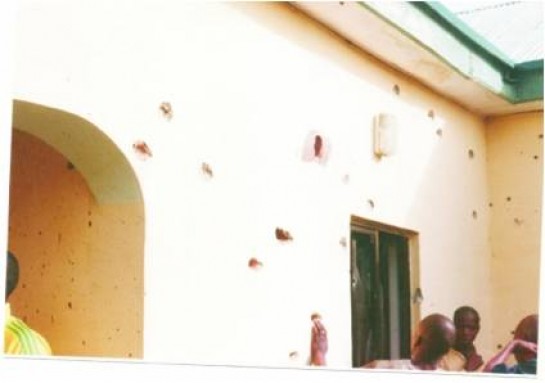
Sahara Reporters have released pictures of the compound after the attack.  WARNING: some of the pictures contain spatters of blood on the walls.  [pictures]

It is unclear how it came to be that the two hostages were killed but most sources agree that they were whisked deep inside of the compound as soon as the raid began and executed them immediately.  This would imply that the intervention had little chance of success to begin with if true.  It begs the question: why did foreign forces get involved?

The intervention of British forces on Nigerian soil seems now like a strange decision to have taken.  It is a clear sign that Britain did not trust the Nigerian forces, who they themselves had trained, to carry out the operation.  Instead it was led by the Special Boat Squadron (SBS) including Royal Marines in a mission which may have numbered twenty British personnel.

The Role of Nigerian State

Nigerian intelligence, according to President Goodluck Jonathan, has arrived at the definite conclusion that Boko Haram were behind the kidnappings and the attack.  This claim must be taken with a pinch of salt given the recent record of Nigerian intelligence, especially in dealing with Boko Haram.  It is in the interests of the Nigerian state to put forward a message that they are taking control of the deteriorating security situation in northern Nigeria.

If the narrative of the tragedy takes the form of ‘Nigerian forces kill eight members of Boko Haram following intelligence success’, it will reflect well.  If this was not Boko Haram, the intelligence reports from Kaduna must be looked at again to see if the tragedy was a result of a Nigerian intelligence failure.  For many in the north of Nigeria, the success and popularity of Boko Haram is down to the failings of the Nigerian State’s security.

Did the Terrorists Win?

The demands of the terrorists have not been stated.  If the intelligence reports from Kaduna are to be believed there must have been some hint at the ambitions of the organisation when these men were revealing the location of the hostages to the security services.  It has been reported that in the initial kidnapping, a large bag of money was left behind.  Perhaps the perpetrators believed that the ransom payout would be swift and bountiful.  Perhaps the kidnapping was for political rather than economic motivations.  To state a case for either based upon the bag of money would be pure speculation.  It is therefore more useful to look at the previous actions of Boko Haram to see if the terrorists were following a pattern.

The kidnapping of foreign nationals does not fit with the previous actions of Boko Haram.  Their demands have tended to be on religious institutions and local government with little violence reserved for international bodies (with the exception of the bombing of the UN in Abuja).  If the desire was, as with the UN, to gain international attention, the actions of British and Nigerian intelligence played straight into their hands by attempting what would be a futile rescue operation if it was carried out by Boko Haram.  The organisation could undoubtedly gain more attention from killing the hostages which begs the question: if British intelligence sources truly believe the aggressors to be Boko Haram, why did they play straight into their hands?

Below is my interview on Sky News as the news broke
Stop Kony and Stopping Joseph Kony – Relationship Status: It’s Complicated

In this article, the author addresses the criticisms of Invisible Children and the Kony 2012 campaign to highlight the success of the project as an advocacy movement.  Sharing a video on Facebook is not tantamount to donating to Invisible Children. Equally, discrediting a video on Facebook is not tantamount to providing a solution. The primary ambition of advocacy must be to highlight the issue. Invisible Children, and their detractors, have been successful in this respect.


By Jack Hamilton, 8th March, 2012

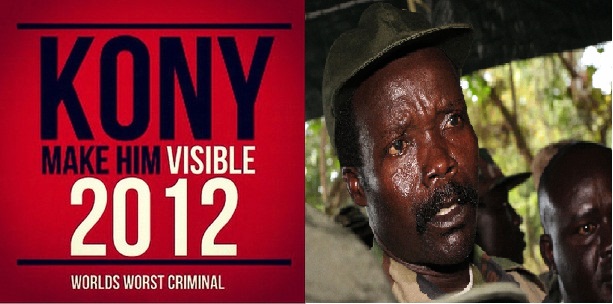
A new human rights campaign has spread across the internet with a solitary aim: make Joseph Kony famous. The idea is that fame will enable Kony, the leader of the brutal Lord’s Resistance Army (LRA) in Uganda, to be brought to justice.

The film was created by the group, Invisible Children, a charity set up to combat the use of child soldiers by raising awareness of the issue and making slick videos fit for popular consumption. This method, as well as the background of charity, has been questioned by other activists following the unprecedented social media success of the #Kony2012 and #StopKony campaign.

StopKony has been trending worldwide since Tuesday and to date ‘Kony 2012’ has over 32 million views on Youtube and Vimeo combined. This article outlines the intentions of the campaign before looking at the ripostes. The key message is, whatever the failings of Invisible Children and their campaign, the ‘tipping point’ of hope and inspiration rings true.

Here is the video for those who have somehow avoided it.

What was the intention?

In order to make sense of the criticism, the key aim of the campaign must be evaluated: make Kony famous. This is the mantra repeated throughout the film. From the reaction on social media sites, to say nothing of the news coverage, this has been a resounding success. It is a viral hit. Kony is famous.

The second aim of the video is to inspire. It is an attempt to arrange collective action on an issue which does not directly impact upon the viewers. Responding to the waves of criticism, Jedediah Jenkins, the director of idea development for Independent Children, called the film a ‘tipping point’ in this regard. It is difficult to refute that. The visceral impact of Kony 2012 and the message that social media can be used a catalyst for good help to explain the sensation that the video has become.

The third aim was to promote Invisible Children. This is where problems abound.

Responses to Invisible Children

There have been three waves of responses to the #Kony2012 campaign. First, there was the initial flood of admiration for the video: the viral success which made this thirty minute video about Uganda a global phenomenon. Second came the IR students flaunting their ‘early adapter’ credentials by pointing out that many had already heard of Joseph Kony long before now and that the campaign, while well presented, is now anachronistic. The third wave has been characterised by direct attacks on Invisible Children and the overt ‘White Man’s Burden’ overtones of the video. Having established that video is a viral success it is necessary to deal with the criticisms of the second and third waves.

1. It is already too late

The argument that the viral assault on Kony is too late carries some weight. As rightly pointed out in a Foreign Policy article, he has already been pushed out of Uganda and may be on his last legs. The fact that ‘Uganda’ is trending on Twitter demonstrates that Kony 2012 does indeed deal in misleading oversimplifications which have now been popularised. However, this does not detract from the power of the video to highlight the plight of child soldiers as well as the blight of the LRA across Central Africa rather than merely northern Uganda. Just because the worst of the atrocities were missed between 1999 and 2004 does not mean that the continued suffering should be ignored.

2. Sanitising Militarism

Direct attacks on Invisible Children carry more weight. Firstly, their proposed solutions sanitise foreign intervention through a viral marketing campaign. There was something a little uncomfortable about watching the scenes of unbridled celebration when Barack Obama announced that US military advisors would be sent into Uganda. It would not be conducive to a slick marketing campaign to evaluate the pros and cons of AFRICOM but the flagrant celebration seemed a little off. It cements the argument that the people of Uganda are portrayed as passive victims with little agency over their own voice, will or power. The support shown for local armies is not paralleled by support for local initiatives. Just ask Betty Bigombe.

The support for local armed forces is also complicated. Many detractors of Invisible Children point to the now famous (and idiotic) picture in which the leaders of the charity pose with Sudan People’s Liberation Army soldiers carrying weapons (see below).

The Last Kings of San Diego?

Critics have eviscerated the Invisible Children campaign on the basis that they support local forces that have also carried out atrocities. This is a failure of logic on two levels. Firstly, while it is clear that Ugandan forces have been guilty of rape and looting they are not on the same scale or systematic nature as the crimes of the LRA. Secondly, if foreign intervention is not the solution and local forces are not the solution then what is?

If the key aim of IC was militarisation, then they had already achieved it with the passing of the bill to send 100 US military advisors to find Kony. The mission, led by the Ugandan military, is not restrained by borders as it was in the past (allowing Kony to flee) but can now move into north-east Democratic Republic of Congo, southern Central African Republic and south-west South Sudan to find the LRA and their leader. That being said, the military commercialism of the UPDF remains a concern.

3. They are smug

Kony 2012 is sickeningly smug and self-congratulatory. There is no doubting this. It is about them and their role in stopping Kony with ‘your support’. In the words of the now viral riposte to IC, Visible Children, “it hints uncomfortably at the White Man’s Burden. Worse, sometimes it does more than hint”.

The movie is certainly more about the film-makers than the cause but it is a film which sets out to inspire people to action who would otherwise be wasting time on social networking sites. One only has to look at the snappy editing and photography to see the target audience and in this sense the video is a monumental success. It sets out to inspire and the response of the social networking community has been breathtaking.

4. Finances

The figures on the funding and expenses of IC have started to waver. There has been intense criticism of the way the charity spends vast amounts on salaries and filmmaking for an NGO. The organisation offers full disclosure of this in addition to positive ratings from Charity Navigator. However, the failure to submit to a full audit remains suspicious.  Until this is done the finances will continue to be questioned.

Solutions

The contrarian nature of the anti-Invisible Children articles frequently fail to outline a solution of their own. Attacking Invisible Children for their failings is necessary but it should come with the BBC-style qualification that other charities and solutions are available.

The pursuit of Kony may be anachronistic and many of the criticisms of IC are valid but do not let that detract from the inspirational nature of Kony 2012 and what it has achieved. People are discussing the LRA. People are discussing the pros and cons of intervention. People are discussing charity.

Sharing a video on Facebook is not tantamount to donating to Invisible Children. Equally, discrediting a video on Facebook is not tantamount to providing a solution. The primary ambition of advocacy must be to highlight the issue. Invisible Children, and their detractors, have been successful in this respect.

Securing Emptiness: The Sahara Desert and the Global War on Terror

“So Geographers in Afric-maps With Savage-Pictures fill their Gaps” – Jonathan Swift

This article is the introduction to a series of pieces on the Sahara Desert. In this piece the author assesses the idea of emptiness and how this has come to be seen as a threat in international politics. In the words of Jonathan Swift, “So Geographers in Afric-maps With Savage-Pictures fill their Gaps”

______________________________________________________________________________________________________________________

By Jack Hamilton, 23 Dec, 2011

Emptiness is both romanticised and feared.  In this sense deserts serve as a geographical blank canvas upon which cultural and political views can be painted.  It is this fear of the unknown that ebbs into contemporary political and cultural tropes on the Sahara Desert.

Grazing from Mauritania in the West through the hinterlands of Mali, Algeria and Niger, to the Tibesti mountains of Chad towards the northern states of Nigeria, this is the land which has been described as the ‘swamp of terror’: the Sahara-Sahel.  The narrative of this terrain has drifted from romantic imaginings of nomadic caravans and peaceful Sufism towards depictions of drug smuggling routes and sandy bastions of violent Islamism threatening the West.  When did the ‘nomads’ become ‘terrorists’?

Security for the Insecure

The increased militarisation of the region makes it important to question how this shift in language has come about since the relatively brief introduction of the Global War on Terror (GWoT) to the area and the reasons as to why this occurred.  The current rhetoric used to describe the threat of Al-Qaeda in the Islamic Maghreb (AQIM) is predicated upon previous linguistic constructions of the Sahara as well as the more recent tropes of the GWoT to create a threat far surpassing the capabilities of the small group in the desert.

That is not to say that AQIM does not exist and is not a threat.  It is instead the assertion that the Sahara should be viewed as a diverse region in itself and not merely lumped into the cartography of insecurity put forward under the GWoT.

The Blank Canvas of the Desert

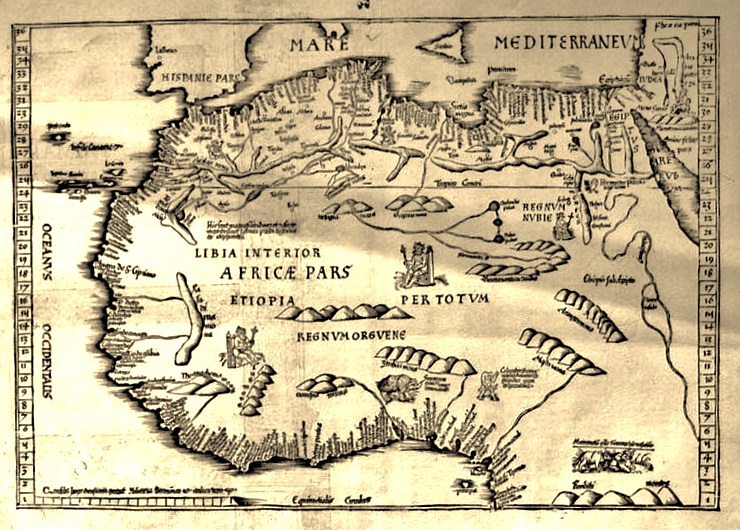
For centuries the unknown hinterlands of the Sahara have been imagined with colourful representations of nomads riding exotic beasts and African kings holding up the famed golden wealth of Africa in their hands.[i]

Defined by its emptiness, religion, wealth and potential threat, the lands to the south of the Mediterranean existed not as a discrete entity but an ebbing shore (or in Arabic, a Sahel) to other civilisations.  Such images have faded but the narratives remain.  The ‘shore’ now borders a ‘swamp of terror’[ii] that is perceived to traverse the globe, sustained by religion and poverty, to create the cartography of insecurity.

The decision to undertake a war in the Sahara may have been inherently political but the success of the messages of the Global War on Terror have relied on pre-existing tropes synonymous with Africa and the Sahara in particular.  The historian, E. Ann McDougall claims that ‘the Sahara has served the West as a canvas on which to paint its greed, fears and ambitions’[iii].  It is upon this cartographic canvas that a small group in the Sahara-Sahel has been constructed as a direct threat to the West.

Geographical Emptiness

Depictions of the Sahara centre on the notion of emptiness.  Maps show a land derelict of flora and fauna that isn’t delineated as being ‘North Africa’ nor can it be ‘Sub-Saharan Africa’ by definition.  It exists in the margins as it is seen as a margin in itself: a geographical ‘other’.  This drought of definitions has been extended into the narratives surrounding the Sahara-Sahel in the GWoT.

Deprived of distinguishing characteristics it has come to be defined by associations, geographical and rhetorical, to explain a region that is simultaneously devoid of life but teeming with insecurity.  It is therefore necessary to locate the Sahara-Sahel within the narratives of the GWoT to see where they interact with the ‘Savage-pictures’ to fill this geographical and rhetorical gap.

In this series the ‘emptiness’ of the Sahara will be evaluated by assessing the threat of al-Qaeda in the Islamic Maghreb in comparison to the forces being deployed to fight against them.  The next article will assess the position of the Sahara in the Global War on Terror and place the region within the global cartography of insecurity.

_________________________________________________________________________________________________________________


[i] This most famous of these pictures is in the Catalan Atlas published in 1356, drawn by Abraham Cresques.  The original is in the Bibliotheque Nationale, Paris and can be also found on the internet at: http://www.georgeglazer.com/maps/world/catalanenane.html. accessed on 28 August 2011.

[ii] Powell, ‘Swamp of Terror in the Sahara’.

[iii] E. Ann McDougall, ‘Constructing Emptiness: Islam, Violence and Terror in the Historical Making of the Sahara’, Journal of Contemporary African Studies, 25 (1: 2007), p. 17.