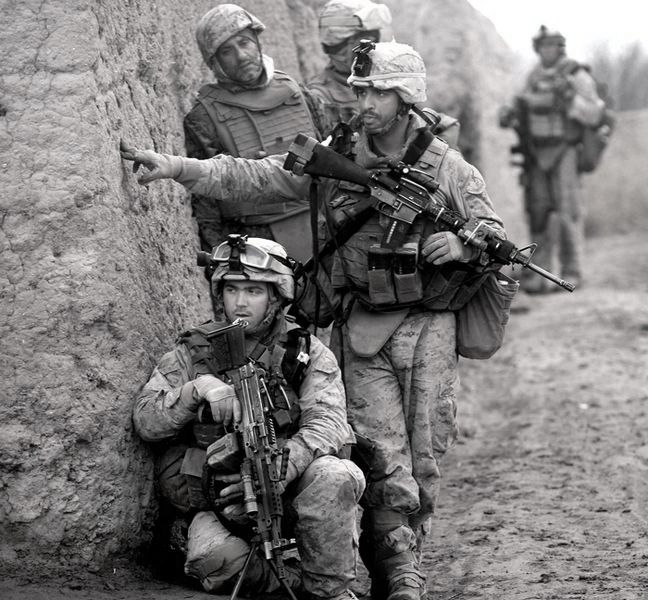
Should the ‘new wars’ be seen as a continuation of economics by other means?

In this essay the author attacks the idea that modern conflicts are more driven by economic motivations than those in the past. Romantic ideals of gentlemanly European conflicts have masked the harsh realities of war. Even in the most egregious cases of greed and ‘warlording’, the political motivations can never be fully amputated from the criminal behaviour.

If modern conflict is to be understood the language of ‘new wars’ must be avoided. In the case of the Lomé Peace Agreement, the concept of economic determinism was taken to the extreme and led to the subsequent collapse of the peace. Future peacemakers must keep this simple message in mind: money is not the only form of power.


By Jack Hamilton, 4th May, 2012

In 2007 the Former U.S. Treasury Secretary Lawrence Summers described the links between economics and politics in conflict regions as ‘something out of Dickens: you talk to international relations experts and it’s the worst of times. Then you talk to potential investors and it’s one of the best of all times’ . This idea that modern warfare has evolved into a new era in which economic motivations have overtaken political ambitions has become popularised in the post-Cold War era. The notion has led Carl von Clausewitz’s aphorism to be rephrased to claim that ‘war has increasingly become the continuation of economics by other means’ . This substitution of ‘politics’ in favour of ‘economics’ poses the question: have economic incentives created a situation in which there is now more to war than winning?

Continue reading

Democracy is for Losers: Why Do Democratic Counterinsurgencies Fail?

In this article the author assesses the view that democracies can never be successful in fighting a counterinsurgency.  Taking the case studies of Afghanistan and Northern Ireland it is clear that the power of the propaganda war inhibits the capacities of democracies to act freely and that every military leader must understand that their actions will be perceived as an act of political warfare.


By Jack Hamilton, 16 Nov, 2011

General Sir Gerald Templer claimed of counterinsurgency that “the shooting side of this business is only twenty five percent of the trouble”[i].  Due to the nature of democracies and modern warfare, counterinsurgency may well now be one hundred percent political.

The political vulnerability of accountable democratic leaders, omniscient media presence and the potential propaganda exploitation of all combat actions mean that military officials at every level now need to understand that their every action can be construed as an act of political warfare in which political outcomes are more important than battlefield success.  This issue creates huge problems for democracies when engaging in counterinsurgencies but can also open up opportunities.

This essay will posit that the inherent challenges that democracies face when engaging in counterinsurgencies can be turned into opportunities by using the democratic nature of the state, the local population and the open media to their advantage.  However, these practices have their limits and the overemphasis on any one of these factors has the potential to seriously undermine the counterinsurgency effort.

Counter-Insurgency On the Fly

The notion of counterinsurgency is logically contingent on the concept of insurgency.  If counterinsurgency includes all of the measures used to put down an insurgency it must be a pragmatic position that is not fixed but shifting in response to the changes in the insurgency.  An insurgency is an attempt to control a contested political space.  This means that changes in the state, its functions or the international system change the nature of the insurgency.

The constantly changing nature of insurgency means that no single doctrine is able to explain counterinsurgency, despite the popularity of the US COIN Manual.  The British Manual reflects this ethos: “Reflection suggests that, where particular organisations or methods have been exported to other theatres, their success lies in the extent to which they are adapted to local conditions’[ii].

The specific nature of counterinsurgency means that drawing broad conclusions may not be the most useful analytical technique.  Instead, this essay will use case studies of Afghanistan and Northern Ireland to outline some of the challenges and opportunities that democracies face when engaging in counterinsurgency both internally and externally.

Democracies and War: Conventional Success and Unconventional Failure?

Counterinsurgency has enjoyed a recent level of academic attention unseen since the U.S. campaign in Vietnam[iii].  The assumption that small wars were irrelevant to politics has been dismissed due to the increasingly influential role that asymmetrical conflicts take on the world stage[iv].  Since the end of the Second World War insurgents appear to have been relatively successful in these small wars, especially when fighting against a democracy.  This is despite the fact that the democratic protagonists were among the most experienced, successful and resilient states to have been fighting in conventional wars at the time.

The question must therefore be asked, why do democracies seem to be successful in conventional forms of warfare but unsuccessful in carrying out counterinsurgencies?

Are Democracies Losers?

The notion that democracies are systematically more prone to defeat when engaging in counterinsurgency is predicated upon three claims according to Gil Merom[v].  First, the importance of accountability in leaders makes it difficult for a democracy to engage in a sustained campaign.  Second, democracies are restricted from using overt forms of coercion by international and domestic public opinion.  The concerns over human rights abuses and the desire to maintain a good reputation curtail the use of force when fighting insurgencies.  The US COIN Manual begins with the overt statement that insurgents “will try to exhaust U.S. national will, aiming to win by undermining and outlasting public opinion”[vi].   It also warns against excessive violence (“the more force you use, the less effective it is”) since the images of such for can be presented in the media to erode public support at home and prolong the war[vii].  The third factor that can undermine the effectiveness of counterinsurgency efforts by democracies is the freedom of the media which is seen to relay certain images of war, such as the overuse of force, to the domestic and international audience and helps to shape popular opinion.

These same features that appear to restrict the effectiveness of democracies engaging in counterinsurgencies seem to be responsible for their success in conventional forms of warfare.  Democracies have succeeded in ninety three percent of the interstate wars they have initiated since 1815 largely as a consequence of democratic leaders participating in wars where the chances of victory were high[viii].

Are Democracies Winners?

There are several reasons as to why democracies have been successful in conventional forms of warfare.  The first explanation for this stems from the combination of the openness of democratic governance and the political vulnerability of democratic leaders.  This process of freer decision making and the high risk of failure make democracies less prone to start wars they cannot win.  Democracies are more selective in choosing their battles therefore explaining the higher winning percentage.

The second explanation claims that democracies fight more effectively in wars.  This can be due to high levels of cohesion allowing the force to overwhelm the opposition with sheer numbers or due to the advantage of democratic decision making when deciding strategy.

A third reason is that democracies tend to treat their captives more leniently meaning that enemies are more likely to surrender rather than fighting to the last bullet[ix].  The challenges and opportunities for democracies in warfare can be seen as interchangeable depending on the context and the ability of the democracy to frame the conflict to project itself in the best light on the world stage.  A good example of a democracy fostering a favourable narrative in a counterinsurgency was the experience of the British Army in Northern Ireland.

Internal Counterinsurgency – The British Army in Northern Ireland

According to the British Army report on the counterinsurgency effort in Northern Ireland, the intervention was ‘one of the very few ever brought to a successful conclusion by the armed forces of a developed nation against an irregular force’[x].  The Army were perceived to have removed the sting from the violence in the province and allow for a peace process to take shape.  Whether or not this was reality was not the most important factor as the perception of the effort was more significant than the military activities.  This is made explicit in the report following the conflict which frames the conflict as a ‘propaganda war’ in which ‘information is the currency, not firepower’[xi].

When the British Army[xii] was deployed onto the streets of Northern Ireland it sought to draw on the model of counterinsurgency which had been developed for the withdrawal from the Empire[xiii].  This entailed overcoming three of the challenges of counterinsurgency:

  1. The demonstration of ‘political will’ to defeat the insurgents
  2. The battle for ‘hearts and minds’
  3. ‘Police primacy’ in defeating insurgents[xiv]

1.      Political Will

The importance of political will was especially prescient in the case of Northern Ireland following the disunity in the US over the Vietnam conflict.  The British solution to this was for the political parties to graft a bipartisan approach to promote a consistent policy towards the Northern Irish situation[xv].  This undermined the attempts of the insurgents to divide British politics and meant that one party would not offer more favourable terms to one of the parties within Northern Ireland.  It also helped to minimise the public debate over the bigger questions within Great Britain as an inter-party conflict had the potential to stimulate debate over not only the question of withdrawal but over the ‘Irish Question’ in general[xvi].

The apparent fractured nature of democracies was therefore overcome by this act of bipartisanship.  While the inherent threat of fracturing remained the two leading parties used the democratic system to cooperate and thus remove a potential advantage for the insurgents.

2.      ‘Hearts and Minds’

The battle for ‘hearts and minds’ is always crucial to any counterinsurgency effort.  In the case of Northern Ireland this battle would be fought using the weapons of minimal force and psychological operations.  The use of minimal force has been disputed in Northern Ireland due to the ambiguities of counterinsurgency theory.  While the early activities of the Army in Northern Ireland may not have used overt force, small scale efforts such as the Falls Road Curfew meant that the Army was no longer seen as the protector of both the Catholic and the Protestant community.

By isolating only the Catholic community in the use of curfews and internment, those in communities more closely tied to the insurgent efforts felt that the security forces were no longer there to protect them.  It is no coincidence that during the period of curfews and internment in the early years of the 1970s recruitment to the IRA accelerated[xvii].  Large swathes of the Catholic population that were not involved with the IRA were treated as if they were, and this caused widespread resentment of the security forces that were purportedly there to protect them.

Minimal force was also necessary due to the increased role of the media during the conflict.  The internal nature of the conflict meant that the mainstream news in Britain was also being transmitted directly to those engaged in the conflict subjecting the British army to dual scrutiny.  British counterinsurgency therefore had the problem of simultaneously winning the hearts and minds of both the ‘local’ and the ‘domestic’ public.  The British Army manual on counterinsurgency correctly ascertained that the press, if handled well, is ‘one of the Government’s strongest weapons’.  This was backed up by the claim from the British Army press representative in 1972: ‘Northern Ireland is basically a propaganda battle…It’s a propaganda battle backed up by military action’[xviii].

Opinion polls in Great Britain show that the general public was not behind the counterinsurgency campaign in Northern Ireland.  In September 1971 a Daily Mail poll showed that 59 percent of British public opinion favoured withdrawal[xix].  This negative attitude to the conflict was consistent throughout but failed to have an impact on the activities of the counterinsurgency project.  Public opinion in Britain supported more extreme uses of force such as internment and during the punitive years of the Army presence in the province only 7 percent of respondents to a Gallup poll said that the army were being ‘too tough’.  In fact, 90 percent thought that the plans to deal with the IRA were ‘not tough enough’ and 88 percent supported the reintroduction of the death penalty in Britain to combat the insurgency[xx].

Merom assumes that democracies will be restricted by public opinion that will call for less force to be used in counterinsurgency.  In the case of the internal conflict in Northern Ireland the opposite was true due to the perceived costs of the engagement in both human and financial terms.  The response of the British Army was to conduct a propaganda war through the use of ‘black propaganda’ through which they attempted to control the information that was available to the media[xxi].  This permitted the Army to circumvent many of the challenges of the free media and public opinion by removing the fundamental issues such as the ‘Irish Question’ from the debate[xxii].

3.      Police Primacy

The ‘police primacy’ entailed a more expansive role for the local police and a more restricted role for the British Army.  The reason for this was the advantage of the local police in gathering regional intelligence and the increased likelihood that they would be sensitive to local opinions[xxiii].  It would also decrease the costs to the British Army both in terms of the financial and human cost of fighting the insurgents.  The reasoning behind this logic was the success of the policy in Malaya[xxiv] but this failed to take into account the idiosyncrasies of the internal counterinsurgency effort.

The discrediting of the local police force, the RUC, following violent crackdowns on civil rights marches had isolated them from the nationalist community meaning that they would not be able to capture the ‘hearts and minds’ of those most likely to join the insurgency.  Republican paramilitaries also targeted Catholic members of the security forces and reinforced a pre-existing bias in recruitment (under 4 percent Catholic by 1973)[xxv].

The democratic nature of the British state helped to re-establish the trust in the local security forces.  The reformation of the police from the distrusted RUC into the slightly more popular PSNI was part of the peace process that helped to take the sting out of the violence in Northern Ireland.  This process was made possible by providing political concessions to the insurgents.

Entry Concession

The counterinsurgency effort in Northern Ireland put huge amounts of pressure on the democracy of the United Kingdom.  Public opinion and large swathes of the media supported a more coercive approach to counterinsurgency that would have had a hugely detrimental impact on the attempts to win hearts and minds.  Despite this, the use of bipartisanship meant that political unity was maintained despite calls for repression from Great Britain and Unionists within Northern Ireland.  The solution to this potential fracturing was facilitated by the internal nature of the conflict plus the democratic state.  The British government accepted that it could not defeat the IRA in a military battle and accepted that the goal of a united Ireland was legitimate provided that it was pursued through the existing democratic process.

In a study of 267 cases of opposition to state authority Stephan and Chenoweth found that regimes become more democratic as they are more likely to offer concessions to the campaigns that challenge their authority[xxvi].  This was to be the case in Northern Ireland.  The operations in the province can be seen as a success as the counterinsurgency effort helped to take the sting out of the political violence.  In the words of the Banner Report, the reflection of the British Army on the effort in Northern Ireland, the counterinsurgency was a success as it was able to ‘suppress the level of violence to a level which the population could live with, and with which the RUC and later the PSNI could cope’[xxvii].  The statement summarises the success of the British effort to demonstrate a political will to capture the hearts and minds of the population and promote policy primacy.


Installing Democracy from Outside: External Counterinsurgency in Afghanistan

Stable democracies are much less likely to face the challenge of internal war than other regimes types[xxviii].  The consequence of this is that democracies are more likely to be engaging in counterinsurgencies on foreign territory as external occupiers.

The opportunities that exist for counterinsurgency campaigns internally do not necessarily translate to the same form of combat outside of the state.  The most important difference is that achieving a political solution is much more complicated when it is outside the political system, especially in an area of weak governance.  Secondly, the intelligence gathering that was so crucial to the ‘police primacy’ effort in Northern Ireland is more difficult externally as the ‘locals’ are likely to speak a different language.  Third, the ability to use the media to frame the conflict is much more difficult in an external counterinsurgency as the sources are more diffuse.  It is therefore important to assess the different challenges that democracies face when fighting a counterinsurgency abroad.  These can be broken down into four categories:

  1. Weak governance
  2. No ‘buy-in’
  3. The need to maintain momentum
  4. Law and Order

In the example of Northern Ireland the counterinsurgent effort was an attempt to maintain the political status quo in the nation whereas in Afghanistan international forces attempted to change it.  The opportunity for the democracies was to frame the conflict in such a way that their humanitarian objectives would be the key issue and thus help in garnering the support of the local population and the media.  However, the four issues outlined above provided challenges to this narrative of the conflict.  It is therefore necessary to elaborate on these factors to explain how the opportunities for the democracies became challenges.

Weak Governance

Weak central governments made insurgencies more feasible and therefore more of a challenge to democracies attempting to engage in counterinsurgencies abroad.  The need to establish functioning governance presents a further challenge.  Governance includes the ability to establish law and order, manage resources and implement policies[xxix].  This poses a significant problem for a democracy as it is forced to provide the enforcement of justice and policing from outside the state which means that it is enforcing its own doctrine upon a foreign political body.

‘Top Down’ Democracy

Since the invasion of Afghanistan the state has become an experiment in installing democracy from the outside and from the ‘top down’.  This is a complete diversification from the status quo in the country as it is an attempt to implement a new set of institutions which are not rooted in the traditional institutions of Afghanistan.  Not only are Afghans not the driving force behind the democratic push but the lack of economic development since the process began may have actually contributed to the insurgency and undermined the counterinsurgent efforts[xxx].

The gap between the vision of democracy and the domestic realities in Afghanistan are constantly widening as evidenced by the spike in insurgent attacks in 2010[xxxi] and development figures show that basic indicators such as life expectancy and adult literacy have also fallen in recent years[xxxii].  All of these factors play into the hands of the insurgents who wish to prevent ‘Western’ democracy taking root in Afghanistan.

Inclusivity?

Inclusivity was a vital goal in the attempt to develop a national debate and the election of former warlords and Taliban members to parliamentary seats gave hope to this process[xxxiii].  This inclusivity has inevitably been a key factor in the disunity of the government as the executive and the legislative have repeatedly clashed.  The executive was deemed to be dominated by Western-back ‘liberals’ while the National Assembly became the stronghold of dissent without the ability to raise questions about sovereignty[xxxiv].  Such a lack of coherence meant that the governance that was so crucial to the ambitions of security and counterinsurgency could not be achieved.  The inherent threat of the new institutions becoming negatively associated with the counterinsurgent force was realised in the perceptions of the Karzai administration.

Legitimacy?

Poor governance also causes problems for security as a lack of legitimacy undermines the ability to provide law and order.  This problem is at its most acute when the security problem is spread over a vast geographical expanse such as Afghanistan.  In the words of Robert Rotberg, ‘failed states cannot control their peripheral regions. Especially those regions occupied by out-groups.  They lose authority over large sections of territory’[xxxv].  Insurgency itself is a form of state-building as the insurgents seek to provide the same security to the population.  In an area of weak governance insurgents can then assume state-like functions and set up administrative structures.  In the rural areas of Afghanistan the beneficiaries of the Karzai government were seen to benefit only the ‘urban elite’ which caused widespread resentment[xxxvi].  Such grievances accompanied by the inability of the U.S. government to build competent Afghan security forces meant that there was no monopoly of the legitimate use of force within the state.  As noted by President Karzai, ‘The Taliban are not strong…It is not them that causes the trouble.  It is our weakness that is causing trouble”[xxxvii]

Bottoms Up?

The alternative to democracy emerging from in a top-down manner is attempting to foster it ‘bottom-up’.  This however contains the inherent challenge of making the imported democracy something worth fighting pursuing for the Afghan people.  The Bonn Agreement placed too much emphasis on the process and not enough on the substance of the transfer to a democratic state in Afghanistan.  It failed to take account of the daily realities for the Afghan people who were suffering in a sea of underdevelopment, corruption and insecurity.  The counterinsurgency needs to maintain the initiative at all times, including in the development field.  If it is perceived that limited improvements have been made it may lead to the local population questioning whether the costs of democratization are a price worth paying.  In Afghanistan the lack of tangible development in the everyday lives of Afghans at a time when it was public knowledge that the international community was spending vast sums of money there fuelled mistrust.  The cumulative impact of corruption was that forty percent of the aid to Afghanistan in 2008 flowed back out of the country[xxxviii].  The essentials for social functioning such as school systems, courts and welfare systems were crippled by this[xxxix].  Corruption disproportionately burdens the most vulnerable section of society, undermines the rule of law and damages government legitimacy.  All of these factors benefit the insurgents and provide a challenge for the intervening democracy.

Peace is not the Absence of War

When engaging in an external counterinsurgency it is a misguided assumption that peace is merely an absence of war.  The democratization process that follows needs to ensure that the anti-democratic forces are deprived of political authority that they had maintained through the use of strategic violence.  In an external case it is not as simple as merely removing the sting from the political violence to allow for political concessions to slowly take shape, as it was in Northern Ireland.  Public opinion at home will be less permissive of using human and financial capital in a foreign country than in an internal insurgency crisis.

In Afghanistan the new political institutions were put in place at a time when the Taliban had not been pacified causing the military campaign in the country to metamorphose into a counterinsurgency.  The growing dissatisfaction of Afghans with the democratization process and the tactics used in the military side of counterinsurgency has led some theorists to claim that violence and insecurity in the nation are now a direct result of the international intervention[xl].  If this is the case then the international forces are stuck in a vicious cycle in which the harder they try, the worse the situation will get.

Counterinsurgency by democracies abroad always carries the political dimension of the exportation of democracy for the purposes of international security.  The attempt to implement this system, itself the result of a specific historical evolution in a specific context, into a new environment ignores the socio-political and cultural circumstances that are vital to the security of the people.  Democratization from outside therefore carries the threat of isolating those hearts and minds which the counterinsurgency seeks to protect.  So far in Afghanistan the democratic project lacks the ‘buy-in’ that it needs to succeed.  The legitimacy of the governing organisation must come from the population rather than a timetable such as the Bonn Agreement.


Democracies and Counterinsurgencies: The Challenge of Opportunism

There are huge challenges to fighting a counterinsurgency both internally and externally but it is dangerous to generalise the issues.  Counterinsurgency must always be a pragmatic and rapid response to events on the ground.  To use a set theory contains several key flaws when attempting to conduct a counterinsurgency.  Firstly, the rejection of a purely military solution and the emphasis on the role of the government does not draw attention to the tensions that can arise from the relationship between the military and the political elites.  Secondly, the aims of counterinsurgency are seen to be so ambiguous that they are open to hugely divergent interpretations, particularly on the use of force.  Third, the attempt to apply the lessons of previous counterinsurgency efforts ignores the complex political environment and creates a problem when ‘lessons’ from previous campaigns are applied out of context.

Internal Success?

The apparent success of the counterinsurgency effort in Northern Ireland was a consequence of the democratic system and the internal nature of the conflict.  Following a failed initial ‘surge’ in the early years of the Troubles, the British Army assumed a more withdrawn role that was designed to bolster the local security forces and attempt to repair relationships with those communities which were more inclined to support the insurgency campaigns.

Bipartisanship and successful propaganda campaigns permitted for the potential weaknesses of the democratic state to be overcome as a verisimilitude of unity was fostered until a time when security was able to be devolved and the ‘hearts and minds’ of the majority of the population bought in to the idea of a legitimate democratic solution.

External Failure?

Engaging in an external counterinsurgency poses further challenges for a democracy which cannot be overcome in the same way.  The case of Afghanistan demonstrates the problem of attempting to achieve a ‘buy in’ while trying to implement democracy from the outside.  The failure to make democracy seem like a desirable alternative to the status quo means that the effort fails to win the ‘hearts and minds’ of the local population while the inevitable drawing out of the conflict leads to the same result at home due to the burgeoning costs.

The solution cannot be the use of the political system as in Northern Ireland if the local population do not accept the authority of the institutions and instead place priority on their security.  Security is the one element that the Taliban could provide the Afghan population with.

The opportunities of counterinsurgency have been demonstrated by the activities of the British Army in Northern Ireland while the limitations can be seen in the ongoing efforts of international forces in Afghanistan.  These statements should not be taken to be absolute but rather a reflection of the fluid nature of counterinsurgency and how challenges can rapidly become opportunities and vice versa as every element of conflict is politicised.

Every Individual Counts: The Lesson of Lynndie England

Stalin famously remarked that ‘the death of one man is a tragedy, the death of millions is a statistic’.  In the case of counter-insurgency every individual counts.  Even Privates can now take on a political and strategic role as a result of the saturation of media in warzones.  The photographs of Lynndie England in a smiling pose besides abused detainees at Abu Ghraib made her the face of the scandal[xli].  The actions of any individual soldier can alter the narrative and the effectiveness of the campaign more than any public information operation.  The opportunities available to a counterinsurgency campaign are therefore contingent on their ability to dictate the popular narrative of the war to both the population at home and to the local people.


[i] Quoted in Simon Smith, ‘General Templer and Counterinsurgency in Malaya: Hearts and Minds, Intelligence and Propaganda’, Intelligence and National Security, 16 (3:2001), p. 65.

[ii] British Army, Operation Banner, Army Code 71842, An Analysis of Military Operations in Northern Ireland, Accessed at http://www.vilaweb.cat/media/attach/vwedts/docs/op_banner_analysis_released.pdf, on 26/2/2011 at 13:44, p. 85.

[iii] David Kilcullen, ‘Counterinsurgency Redux’, Small Wars Journal, accessible at: http://smallwarsjournal.com/documents/kilcullen1.pdf, Accessed on 26/02/2011 at 13:41, p. 1.

[iv] Kenneth Waltz, Theory of International Politics, Addison-Wesley Publishing (Reading, MA: 1979), pp. 190-191.

[v] Gil Merom, How Democracies Lose Small Wars, Cambridge University Press (Cambridge: 2003), p. 15.

[vi] U.S. Army, Field Manual No. 3-24, University of Chicago Press (Chicago: 2007), p. ix.

[vii] U.S. Army, p. 252.

[viii] Dan Reiter and Allan C. Stam, Democracies at War, Princeton University Press (Princeton, New Jersey: 2002), p. 29.

[ix] Stephen Biddle and Stephen Long, ‘Democracy and Military Effectiveness: A Deeper Look’, The Journal of Conflict Resolution, 48 (4: 2004), p. 531.

[x] British Army, Operation Banner, p. 83.

[xi] Ibid., p. 85.

[xii] I am using the term ‘British’ to refer to those people living in Great Britain and it should not be taken to assume that there are not British people living in Northern Ireland.

[xiii] T.R. Mockaitis, British Counter-Insurgency, 1919-1960, Macmillan (London:1990).

[xiv] Paul Dixon, ‘Hearts and Minds? British Counterinsurgency Strategy in Northern Ireland’, Journal of Strategic Studies, 32 (3: 2009), p. 446.

[xv] Paul Dixon, ‘A House Divided Cannot Stand: Britain, Bipartisanship and Northern Ireland’, Contemporary Record, 9 (1: 1995), pp. 147-87.

[xvi] Paul Dixon, ‘Britain’s Vietnam Syndrome? Public Opinion and British Military Intervention from Palestine to Yugoslavia’, Review of International Studies, 26 (1: 2000), pp. 99-121.

[xvii] Sunday Times Insight Team, Ulster, Penguin (Harmondsworth: 1972), p. 221.

[xviii] Dixon, ‘Hearts and Minds?’, p. 461.

[xix] Ibid., p. 462.

[xx] Ibid., p. 463.

[xxi] Paul Foot, ‘Colin Wallace and the Propaganda War’, in Bill Rolston and David Miller (Eds.), War and Words. The Northern Ireland Media Reader, Beyond the Pale Publications (Belfast: 1996).

[xxii]Simon Hoggart, ‘The Army PR Men of Northern Ireland’ in Bill Rolston and David Miller (Eds.), War and Words. The Northern Ireland Media Reader, Beyond the Pale Publications (Belfast: 1996).

[xxiii] Brian A. Jackson, ‘Counterinsurgency Intelligence in a Long War.  The British Experience in Northern Ireland’, Military Review, January-February (2007), p. 75.

[xxiv] Robert Thompson, Defeating Communist Insurgency, Chatto and Windus (London: 1967), p. 103.

[xxv] D. Anderson and D. Killingray, Policing and Decolonisation: Nationalism, Politics and the Police, 1917-1975, Manchester (Manchester: 1992), p. 6.

[xxvi] Maria Stephan and Erica Chenoweth, ‘Why Civil Resistance Works: The Strategic Logic of Nonviolent Conflict’, International Security, 33 (1:2008), p. 23.

[xxvii] British Army, Operation Banner, p. 94.

[xxviii] James D. Fearon and David D. Laitin, ‘Ethnicity, Insurgency and Civil War’, American Political Science Review, 97 (1: 2003), p. 84.

[xxix] World Bank, Governance Matters, 2006: Worldwide Governance Indicators, World Bank (Washington DC: 2006), p. 2.

[xxx] Shahrbanou Tadjbakhsh and Michael Schoiswohl, ‘Playing with Fire? The International Community’s Democratization Experiment in Afghanistan’, International Peacekeeping, 15 (2:2008), p. 252.

[xxxi] ‘One More Please Sir’, The Economist, 26 February 2011.

[xxxii] Tadjbakhsh and Schoiswohl, ‘Playing with Fire?’, p. 253.

[xxxiii] Antonio Giustozzi, ‘War and Peace Economies of Afghanistan’s Strongmen’, International Security, 14 (1:2007), pp. 75-89.

[xxxiv] Tadjbakhsh and Schoiswohl, ‘Playing with Fire?’, p. 257.

[xxxv] Robert Rotberg, ‘The Failure and Collapse of Nation-States: Breakdown, Prevention, and Repair’ in Robert Rotberg (ed.), When States Fail: Causes and Consequences, Princeton University Press (Princeton, NJ: 2004), p. 6.

[xxxvi] World Bank, Afghanistan: State Building, Sustaining Growth, and Reducing Poverty, Report No. 29551-AF, World Bank (Washington DC: 2005), p. xxvi.

[xxxvii] C.J. Chivers, ‘Karzai Cites Taliban Shift to Terror Attacks’, New York Times, June 20, 2007.

[xxxviii] Oxfam, ‘Afghanistan: Development and Humanitarian Priorities’, Jan. 2008, accessed at www.oxfam.org.uk/resources/policy/conflict-disasters/downloads/afghanistan_priorities.pdf , 09:15 on 26 February 2011.

[xxxix] Ann Hironaka, Neverending Wars: The International Community, Weak States, and the Perpetuation of Civil War, Harvard University Press (Cambridge, Mass.: 2005), pp. 42-46.

[xl] Tadjbakhsh and Schoiswohl, ‘Playing with Fire?’, p. 263.

[xli] ‘Lynndie English Convicted in Abu Ghraib Trial’, USA Today, 26 September 2005.

ETA says it will kill no more but the Basque conflict isn’t over

In this essay, the author analyses the last conflict in Western Europe as the Basque clandestine group ETA declared on October 20 a permanent cessation of all armed action.


By David J. Franco, 5 Nov, 2011

On October 20th the Basque group ETA (Euskadi ta Askatasuna – Basque Country and Freedom) declared the complete cessation of all armed action. This essay analyses the process leading up to such declaration, the questionable participation of international groups and stakeholders in the so called peace process, and the road ahead. The first section provides an overview of the historical background of the conflict. The second section continues with an account of the latest developments since ETA unilaterally broke negotiations in 2007. The closing section is a critical analysis of the conflict as it stands today.

Historical background

The fifties saw the emergence of a new armed group in Europe. In Spain, under the military dictatorship of General Franco no languages other than Spanish were allowed, no more than three people could gather in public spaces, and anybody who opined different than the powers that be faced deer consequences including execution. Political parties were banned and in historical regions such as the Basque Country the traditional and conservative Basque Nationalist Party (Partido Nacionalista Vasco (PNV)) was left with no political representation. Prison or exile was to be the fate of non-Spanish nationalists.

Against that background, a group of Basques formed a new coalition. Soon after, they held their first series of clandestine meetings and in 1959 ETA was born. Instead of Sabino Arana’s traditional nationalism based on race, ETA chose Krutwig’s nationalism based on language. Against conservatism and Catholicism, it chose Socialism. Against political debate, it chose to imitate the movements of liberation in the Third World. Against political paralysis and the gradualist approach of traditional nationalists initiated towards the end of the XIXth century, ETA chose armed action. Independence was the goal and the means justified the end. Euskadi (also known as the Basque Country and Euskal Herria), which spans across seven territories in Spain (the three provinces of the Spanish Basque Country –Bizkaia, Guipuzkoa, and Álava– plus Navarra) and France (the three provinces of Lapurdi, Nafarroa Beherea, and Zuberoa), ought to be liberated from the two imperial invaders. ETA’s first declared victim dates back to 1968. In 1975 they killed Franco’s successor to power, Carrero Blanco, and the Basque National Liberation Movement, a coalition of political forces and civil society in the far-left also known as the left abertzale (the radical Basque left), was formed. Herri Batasuna, composed of radical abertzales, became ETA’s political wing.

Both parties have travelled a long way since those days. Spain turned into a Parliamentary Monarchy following the adoption of the 1978 Constitution. Spaniards chose to constitute themselves as a semi-federal state in which regions would be given a fair degree of autonomy and self-governance under the unity of the Spanish Monarchy and the partial rule of the Central Government. In the Basque Country only, abstention in the vote for a new Constitution rose to 45% (data varies according to the source). Catalonia and the Basque Country were the first two historical regions to constitute themselves in autonomous communities with significant legislative and executive powers –the judicial power remains to this day part of the unity of Spain (or, in the words of Basque radicals, part of Spain’s oppressive apparatus). Languages other than Spanish were again part of people’s public daily lives and debate and political parties were again allowed.

On the other hand, ETA and its radical nationalist allies saw no real change on the ground. Independence and self-determination, not autonomy, was their condition for peace. Despite a long record of splits and internal divisions, ETA’s hardliners took control of the agenda and intensified their violence against targets in the military –the same military that held the country together under Franco and which was now under civilian command. In the years from 1978 to 1981, some 230 people, mostly military servicemen, were killed almost costing the country the return to the old regime as some units in the military and the semi-military police Guardia Civil attempted a frustrated coup.

In the following years Spain joined NATO, then the EEC, and some positive steps were taken towards resolving the conflict –ETA had by then suffered a number of splits as a group of their members view armed action no longer necessary in the face of democratic change. A general amnesty was granted to those who abandoned violence yet in reality ETA’s military branch prevailed. In the backstage, a shadow war was fought as Spain practiced State terrorism and several para-military groups in the far-right carried out clandestine counter operations against ETA and their allies. Those were the years of the “dirty war”. In 1987 the central government approved a new penitentiary policy aimed exclusively at prisoners of ETA. The policy, which lasts to this day and has been the subject of severe criticism from human rights organisations, establishes that condemned etarras (members of ETA) be dispersed throughout prisons spread in the Spanish territory. In 1989 Spanish officials initiated peace talks with ETA in Algiers but despite a 60-day ceasefire negotiations failed and violence resumed.

The nineties saw a change in ETA’s strategy following the detention of their leaders in the South of France as a result of Franco-Spanish police co-operation. Under a new leadership, the clandestine group turned to a new strategy based on a socialization of terror similar to that of the IRA in Northern Ireland. Targets no longer were limited to the military or the police but were officially extended to all the population including innocent civilians. Street protests were massive with people from all conditions and political affiliations demanding the end of violence. In 1996 Jose María Aznar of the right-wing conservative Partido Popular (PP) won Spain’s general elections putting an end to fourteen years of Socialist rule. His approach to ETA and its radical allies was to be tougher –Aznar had previously escaped a bombing attempt in 1995. The Basque Country lived in terror and large numbers of youth turned violent practicing street violence (kale borroka). All social strata were filled with fear.

Between 1996 and 1998 police and judicial pressure mounted on ETA’s entourage and Herri Batasuna suffered many arrests leading the party to change its constitution and name to Euskal Herritarrok (EH). Arnaldo Otegi, one of the active members of ETA amnestied in the early eighties, became the party’s leader. In 1998 EH was the third political party to win more votes in the Basque Elections and that same year the principal political forces in the Basque Country, including the traditional nationalists (PNV) and EH, reached a polemic pact (known as the Pacto de Estella or the Pacto de Lizarra) aimed at putting pressure on the Spanish Government to initiate a dialogue free of pre-conditions of any sort. In the meantime, the peace process in Northern Ireland seemed to advance in the right direction with the adoption of the Good Friday Agreement. This led the PP to initiate peace talks with ETA in 1999 but again ETA’s demands for independence were deemed too high and dialogue failed.

In the following years the two largest central political parties, the PP and the Socialists, decided to unite against ETA and its political wing. In 2002, they passed the Political Parties Act (Ley de Partidos) aimed at banning political parties and coalitions with links to terrorism. Batasuna, known previously as Herri Batasuna and EH, was banned with the backing of Spain’s Supreme Court and Constitutional Tribunal. So were several newspapers closely related to ETA. In 2003 ETA, its associated political parties, sindicates, juvenile associations, newspapers, and individual activists and members were added to the European Union list of terrorist organisations and individuals. In 2004 an Al Qaeda cell exploded several bombs in a train nearing Madrid’s train station, Atocha, killing approximately two hundred civilians. The then ruling party PP first pointed the finger to ETA to avoid being blamed for the killings only days before general elections –the killings were in fact motivated by Spain’s role in the 2003 invasion of Iraq. ETA had nothing to do with those killings and this was very well exploited by the Socialists who, under the new leadership of José Luis Rodríguez Zapatero, won the March 2004 elections with the promise to initiate talks with ETA. That same year Arnaldo Otegi, whose party had been banned but whose individual rights had not been affected by the prohibition, made the so called Declaration of Anoeta inviting all political forces to initiate a new democratic process free of violence of any nature. In July 2005 the IRA announced the end of the armed struggle in Northern Ireland.

Against this positive scenario and following the implementation of some confidence building measures, negotiations between Zapatero’s Government and ETA then took place and on 22March 2006 ETA announced a permanent ceasefire aimed at advancing a democratic process in Euskal Herria. But just as the peace process seemed to be moving in the right direction, on 30 December 2006 ETA detonated a car bomb in the Madrid-Barajas airport adding two civilians to their long list of victims. One day earlier Zapatero had addressed the nation and promised a future free of violence and terror.

Latest developments

Two major developments took place in 2007. First, ETA’s unilateral action and refusal of Zapatero’s ultimatum was a blow to the President’s bet for dialogue, and to his credibility as the right interlocutor. This led the central government to shut the door to future negotiations. The conflict entered an impasse and again Spain opted to address the conflict merely from a judicial and military perspective: the conflict was again to be denied its political dimension until ETA was defeated. Between 2008 and 2010 security forces dismantled ETA’s organization and violent entourage on several occasions. Arnaldo Otegi had several pending trials for his alleged links to ETA.

Further, the Basque political scenario changed radically. With the support of the votes obtained by the Basque PP, the Basque Socialist Party took power ousting the historic conservative Nationalists (PNV) for the first time since the Basque Country became an autonomous community. With some of its members having been directly involved in the 2006 negotiations with ETA, the new regional government adopted a ‘tolerance zero’ attitude towards ETA and its violent supporters. This then led to pressure on ETA’s political wing and to the demand that it splits with ETA as the only way to regain political life. Politics and the ballot box, not violence, were their only chance to advance their cause of independence; ETA ought to abandon violence as a pre-condition for the radicals to be re-allowed in the political life of the country.

There were reasons to believe that the left abertzale was prepared to take steps in that direction but several factors played against this: first, having played the democratic card previously, a new declaration in this direction risked being seen as just another trick in a long history of deception and lies. Second, ETA could turn even more violent if it felt abandoned by its historical supporters who, this time, risked not being exempted from further armed operations. Third, many of the abertzale leaders were in prison or in exile and there were fears that they may demand a general amnesty before taking any such steps.

But all the odds were against them and in practice they had very little choice. Hence, historical supporters such as Arnaldo Otegi, who in 2009 was again arrested and accused of belonging to ETA’s political apparatus, reiterated their desire to launch a new democratic process free of any expression of violence. This was no minor thing: their proposal implied readiness to take steps towards ultimately breaking ties with ETA. Simultaneously, against the will of Spain’s principal political forces (who have always avoided external interference) the conflict reached international dimension as members of the left abertzale asked Brian Currin, a South African lawyer and expert in conflict resolution, to step in as facilitator. In 2010 Currin asked ETA to declare a permanent and verifiable ceasefire –Currin consecutive calls for the parties to take steps towards resolving the conflict have generally been welcomed by the international community. In September 2010 ETA declared it had been operating a de facto ceasefire since January of the same year but demanded that further steps be taken towards reaching a political solution to the conflict. ETA also confirmed its willingness to allow for an international committee to verify the truce as proposed by Currin with the backing of the abertzales and part of the international community.

The next twelve months saw several developments. In May 2011 Bildu, a new political coalition of abertzales and leaders with no official links to ETA or its consecutive banned political parties (a previous coalition, Sortu, had also been banned and Bildu, despite being taken to court, was finally allowed to take part in the elections), obtained more than 25% of the total votes in the local elections –they even won the top sit in San Sebastian, a historic socialist feud. Meanwhile, security forces and the judicial apparatus continued to close in on ETA and their violent entourage. In September 2011 Arnaldo Otegi and other abertzales were condemned to ten years of prison for seeking to reorganise Batasuna under the direct orders of ETA. Many criticised these measures as counter-productive to the climate of confidence that Otegi himself had helped construct. Others, including Spanish political forces, are of the view that after more than forty years of violence peace must be achieved at no political price. Be that as it may, truth is that by now violence has in fact dropped considerably: ETA is weaker than ever before and street violence has almost disappeared for the first time in more than a decade.

Against this background, a coalition of social platforms and human rights organisations including Currin’s work group called for an International Peace Conference to be held in San Sebastian with the aim of advancing towards a resolution of the Basque conflict. The Conference went finally ahead on October 17th 2011 and reached a five-point Final Declaration calling for ETA to declare a definitive cessation of all armed action and for Spain and France to hold talks about the consequences of the conflict and the political road ahead. The international delegation to the conference was composed by former UN Secretary General Kofi Annan, Tony Blair’s former advisor for Northern Ireland Jonathan Powell, Ireland’s former Prime Minister Berti Ahern, Sinn Fein’s President Gerry Adams, France’s former Ministry of Interior Pierre Joxe, and Norway’s former Prime Minister Gro Harlem Brundtland. Tony Blair failed to attend the conference due to commitments in the Middle East and former US President Jimmy Carter and former US Senator Mitchells, who had a prominent role in the Northern Ireland peace process, both backed the resulting declaration.

Three days after the Conference and forty three years after its first appearance ETA announced the complete cessation of all armed action leading international personalities and domestic leaders to declare the triumph of democracy and reason. Total figures of the conflict vary according to the source but some associations point to some 1300 mortal victims (with approximately 850 attributable to ETA and 450 attributable to Spanish forces, official and unofficial) and hundreds more injured. At least 700 members of ETA are still in prisons spread throughout the Spanish territory, France, the UK, Northern Ireland and Mexico. Many others are in exile particularly in Latin American countries. Very few of the existing estimates take into consideration the conflict’s psychological effects amongst the population.

Analysis

Initial thoughts

ETA’s cessation of all armed action has been hailed a triumph. Yet euphoria and adrenaline should not blind us from past, present, and future realities. ETA was never welcome by Spanish democrats but like it or not their existence to this day has been made possible thanks amongst other to the unconditional support of a segment of the Basque population. That it has decided to abandon violence is not so much based on a change of rationale but rather on a Darwinian need for survival. ETA has simply been defeated militarily but the hearts and minds of its leadership and members have not all been conquered. In a clear, symbolic indication of where they stand, the three members that appeared on television to announce the end of hostilities on October 20 did not reveal their identity. The conflict is very much still alive.

ETA’s historical allies have decided to abandon their rhetorical support for armed struggle and physical violence yet again their willingness to take such steps may be more the result of police and judicial persecution, as well as political ostracism, than a change in the way they see things. Independence continues to be their ultimate goal but they have finally come to realize, or so it seems, that ETA cannot win this war and that the ballot box, not guns, is the only accepted channel in twenty first century European politics. This is no minor thing and they should be praised for that. Yet statements affirming that peace has been achieved without concessions of any sort are inaccurate and dangerous. Although there appear to have been no concessions, ETA’s communiqué, with its usual Machiavellian language, hides numerous key messages and petitions.

Several personalities from the Spanish political and social strata have been quick to tame the level of euphoria seen in political and media circles. Fernando Savater, a philosopher, political activist and writer that for many years was a target of ETA, wrote an article on October 20th in which he ironically referred to the clandestine group as both pyromaniacs and fire-fighters. He stated that it is terribly ironic that those that initiated the terror are now the same ones that present themselves as the saviours of democracy and peace. In a similar line, Spain’s most renowned political analyst Antonio Elorza also criticized politicians and journalists for not being more critical with ETA’s latest declaration as in a sense the clandestine group is emerging as the ultimate interlocutor between Spain and France. He also strongly criticized the interference of Brian Currin in Spain’s internal affairs and even mocked the International Peace Conference of San Sebastian. Both Savater and Elorza have their points, but their analyses are evidently influenced by years of fear of being the next one in ETA’s long list of killings.

Brian Currin: mediator, negotiator, facilitator?

The role that Currin and his team of mediators have played in this affair is questionable to say the least. Despite appearing relatively late in the chronology of the conflict his role is worth examining in some degree of detail. Currin has on occasions presented himself as mediator or facilitator in the peace process yet Spanish officials have always been quick to reject such statements. For example, on 12 August 2010 Spain’s delegate to the Basque Country, Miguel Cabieces, stated that if anything Currin could only be considered a negotiator between ETA and the left abertzale because he never established direct contact with the Spanish Government and because the peace process ended the day ETA unilaterally broke negotiations with Zapatero’s Government. Moreover, Spain’s Ministry of Interior Antonio Camacho reiterated in September 2011 that neither Spain’s central government nor the Basque regional government have ever recognised Currin as mediator in the conflict. He also refused Currin’s proposal to allow an international committee to verify and oversee the de facto truce declared by ETA in September 2010. This is nothing new. Spain has always rejected external interference in this matter.

In an article entitled Peace or Victory (Paz o Victoria) of October 21st, Elorza analyses what in his judgement ETA’s declaration truly means for the peace process in the Basque Country. According to Elorza, ETA’s decision to abandon armed action represents not so much the triumph of democracy but the culmination of a synchronised strategy co-designed by Currin, the abertzales, and ETA, with the ultimate support of a blinded international community that ignores the particularities of the conflict. As per the contents of such strategy, Elorza points to the specifics of Currin’s letter published in Le Monde Diplomatique in June 2011. What can ETA’s phrase the “consequences of the conflict” possibly mean, asks Elorza?. Very simple: nothing shorter than the independence of the Basque Country. Associations of victims go even further to denounce that Currin’s wages derive directly from the suffering of the victims of the conflict.

Officially, Currin was never a facilitator or a mediator in the conflict yet in practice he has become one –both in his individual capacity and as representative of an international community that was/is supposedly actively watching. But has he become a de facto third party facilitator or is he/has he become embedded with one of the parties to the conflict? Currin never stepped in voluntarily despite the fact that he has often introduced himself and his team as impartial interlocutors seeking peace and justice in Euskadi. His first appearance in 2005 is likely to have taken place following the petition of the abertzales. In fact, Currin seems to have erected himself first as a de facto chief negotiator between ETA and the Government on behalf of the abertzales and, second, as the abertzale’s best strategist thinker with a clear mandate of bringing them back to politics. His often innocent calls for the adoption and implementation of confidence building measures addressed both to ETA, the left abertzale, and Spanish and French political forces are not reflective of the true, obscure nature of his role.

No doubt Elorza and all those denouncing Currin’s intromission in this affair have a point. But so does Currin and those who back him including the participants of the International Peace Conference of San Sebastian. They have reminded Spanish society and political forces of something of crucial importance in this matter: that ETA is just an element in a larger political conflict and that ETA’s military defeat cannot lead anybody to believe, lest conclude, that the conflict was never political in the first instance. The parties certainly need to deal with the consequences of the conflict including the belief by many in the Basque Country that Basques have the right to decide their own future away from Spain and France. A different matter, and one very serious, is whether the participants of the Conference would like to be subjected to a similar intromission in the internal affairs of their respective countries.

What next?

In a previous analysis of the Basque conflict (prepared in April 2010) I designed a step-by-step roadmap to peace that had as first objective the complete cessation of violence. No political action or steps should be taken before that objective was achieved. To that end, I stated that police and judicial action against ETA and the kale borroka should continue but that parallel dialogue should always prevail since cutting all channels of communication could result in ETA seeking broader participation by way of a sudden increase of violence. This strategy, I suggested, would ultimately lead to ETA’s defeat and to either a permanent ceasefire or a cessation of all armed action. Ultimately, I added, it could lead to the self-disintegration of the clandestine group.

Further, I also stressed that Spanish and Basque political forces should not make any pre-concessions to ETA. However, I noted that if the latter declared the end of hostilities, and only after this had been verified by a newly formed independent commission perhaps of an international nature, the central government should seek to implement confidence building measures such as for example a relocation of condemned etarras (members of ETA) to prisons located in the Basque Country. This, I noted, would contribute to an atmosphere of renewed trust and confidence. No general amnesties should be granted to members of ETA charged with blood crimes and the abertzales ought to express openly and publicly their desire to break up with ETA, both politically and financially.

So what are the next steps now that the abertzales have seemingly divorced ETA, now that the kale borroka has been reduced almost to zero, and now that ETA has declared complete cessation of armed action? Following ETA’s declaration of October 20 the leader of the conservative PP and Spain’s likely next Prime Minister, Mariano Rajoy, stated that most importantly no concessions have been made to ETA. In a similar line, Zapatero’s successor and former Ministry of Interior, Alfredo Pérez-Rubalcaba, expressed that ETA’s declaration represents a triumph and that he is convinced that ETA will not kill again. But as stated above, ETA’s declaration is Machiavellian and partially, only partially, convincing.

In an online article of 21st October Ana Martín Plaza analyses ETA’s communiqué and contrasts it with that made by the IRA in 2005. Like the IRA ETA has announced the end of the armed struggle but has not renounced to the ultimate goal of independence. It just considers that another ‘way’ is now available and implies that this has been made possible thanks to the armed struggle. Likewise, neither the IRA nor ETA apologized for their (often indiscriminate) killings although the IRA included a reference to the deer consequences of the conflict in the lives of peoples from both sides of the fence. But the two declarations bear some differences too. For example, unlike leaders of the IRA, ETA’s interlocutors appeared hidden behind their traditional gudari masks (masks worn by members of the Basque rural resistance during Franco’s dictatorship). They also remained silent around a possible disintegration and handing in of their military arsenals. In this regard, a recent poll carried out by Spanish newspaper La Vanguardia resulted in a clear majority of the participants answering ‘no’ to the question of whether they trusted ETA’s declaration of a cessation of armed action. The key question, then, is whether as Mariano Rajoy says peace has been achieved without conceding anything to ETA or whether on the contrary ETA needs something in exchange before dissolving and giving up arms.

The answer, I argue, could not be simpler. ETA is unlikely to be willing to take steps in that direction until Spanish and Basque political forces, and to a certain extent French forces too, publicly recognise the political dimension of the conflict and the willingness to address such dimension in a constructive and effective manner. Such is the meaning of the words “consequences of the conflict” in their communiqué, much in line with Currin’s letter of June 2011 and the second point in the final five-point declaration of the International Peace Conference. ETA, as noted by Elorza, does not have in mind just the implementation of confidence building measures such as the rapprochement of detainees; they are after a political solution to the conflict which, they believe, can only translate into independence. “Batasuna has been quick to explain what the price is for the ‘cessation’ of all armed action: to initiate ‘without further due’ the negotiations for the ‘recognition of Euskal Herria and the right to decide’. They are the same ones and they still want victory” (Elorza in El País, translation is mine).

Many in Spain portray ETA as a terrorist group with links to clandestine criminal activities such as arms trade and drug trafficking. They often argue that it has travelled a long way since the ETA of the sixties, seventies, and early eighties. I do agree with some of this analysis, the facts often speak for themselves, but I cannot agree with analyses that reject the political dimension of the conflict. ETA may not be nice to nobody’s eyes in a democratic age but the existence of the group finds its origin in a political conflict that goes a long way back in time and history. The last local elections showed that 25% of the Basque population wants independence. A similar, possibly higher percentage can be found in Catalonia, the other historical region. Once ETA will be gone further negotiations will be necessary and all political parties need to be included in a holistic democratic process that excludes no one and that establishes no pre-conditions. Spain celebrates elections on November 20th; let’s hope that the resulting new government handles this situation effectively and justly for all the parties. And although I believe that victims and relatives of victims of ETA’s terror must have a say in all this process I do nonetheless believe that they cannot hold the whole process hostage. That applies to the PP who often coalesces with associations of victims in order to refuse taking any further steps to address the political dimension of the conflict.

The seeds of violence must be grounded but for that to happen politics need to replace a culture of violence that has lasted too long and therefore penetrated the minds of many people. If Spain fails to address the political dimension of the conflict there could be a return to violence, either through a return to arms by ETA or through a split of the organisation.

Transforming the conflict

Theoretical approaches to conflict tend to differentiate between conflict prevention, conflict management, conflict resolution, post-conflict stabilization, and conflict transformation. This often gives the wrong impression that conflicts are like structured novels which include a clear beginning, a development, and an end. There is some truth in that, but often these processes overlap as is particularly the case with the phases of conflict resolution and conflict transformation.

The Basque conflict, although not as violent as other existing conflicts, has had a tremendous impact on Spanish population in general and Basque population in particular especially since ETA sought to involve all social strata and institutions in the early nineties. Politics in the Basque Country, to make it clear, has for decades not been business as usual and this has had very negative effects on the core of the population. This is well illustrated in a study published under the title “The Night of the Victims” which finds its inspiration in a similar study undertaken in Northern Ireland and published under the title “The Cost of the Troubles”. The study gathers statements of victims and witnesses of violence and concludes that political violence generates continued suffering and health problems that last for decades. It adds that collective violence bears not only physical effects but also consequences of a psychological, economic, professional, and social nature. Applying this to the Basque conflict, public institutions ought to deal with the long lasting effects of direct and indirect, visible and non visible violence.

As stated above, usually work towards transforming a conflict initiates after peace has been achieved. However, in practice steps can be taken in that direction even before the conflict is definitely solved. In fact, implementing a culture of peace may indeed become to be seen and felt by the population as confidence building measures preparing the terrain for a brighter future. Some sectors of the Basque civil society including religious congregations have called this a process of pre-reconciliation and have started to form groups of work with the aim of “disarming collective memories of violence”. The Basque conflict has had a significant toll in the lives of Basques and in the rest of the Spanish population. That is why public institutions, regional and central, but also civil society including in particular Basque women, have the responsibility and the historic opportunity to rebuild trust and generate public goods for the entire population.