
Should the ‘new wars’ be seen as a continuation of economics by other means?

In this essay the author attacks the idea that modern conflicts are more driven by economic motivations than those in the past. Romantic ideals of gentlemanly European conflicts have masked the harsh realities of war. Even in the most egregious cases of greed and ‘warlording’, the political motivations can never be fully amputated from the criminal behaviour.

If modern conflict is to be understood the language of ‘new wars’ must be avoided. In the case of the Lomé Peace Agreement, the concept of economic determinism was taken to the extreme and led to the subsequent collapse of the peace. Future peacemakers must keep this simple message in mind: money is not the only form of power.


By Jack Hamilton, 4th May, 2012

In 2007 the Former U.S. Treasury Secretary Lawrence Summers described the links between economics and politics in conflict regions as ‘something out of Dickens: you talk to international relations experts and it’s the worst of times. Then you talk to potential investors and it’s one of the best of all times’ . This idea that modern warfare has evolved into a new era in which economic motivations have overtaken political ambitions has become popularised in the post-Cold War era. The notion has led Carl von Clausewitz’s aphorism to be rephrased to claim that ‘war has increasingly become the continuation of economics by other means’ . This substitution of ‘politics’ in favour of ‘economics’ poses the question: have economic incentives created a situation in which there is now more to war than winning?

Continue reading

Can China’s Growing Demand for Energy be Satisfied Without Conflict?

In this essay, the author assess the threat of China’s increasing demand of energy and whether conflict is imminent. The author analyzes the cases of potential conflict, particularly in the East China Sea and the Middle East. The probability of conflict is then assessed in each of these cases in accordance with recent developments.  


By Abd Al-Aziz Abu Al-Huda, 20th April, 2012

Access to energy resources is a vital ingredient to the economic and military development of any state in the international system. Yet, within the past two decades, China’s quest for energy resources has particularly generated much debate and criticism. The commonly held opinion is that China’s pursuit for energy resources is a prelude to conflict with the International community because China poses a long term threat on energy supplies. However, such observations have been criticized by scholars such as Kung-wing Au and Hongyi Harry Lai, who emphasize that China’s growing demand for energy has in fact increased its vulnerability resulting in gradual cooperation.

This paper then attempts to assess the threat of China’s increasing demand of energy and whether conflict is imminent. The paper will begin by looking at cases of potential conflict particularly in the East China Sea and the Middle East. The paper will then attempt to assess the probability of conflict in each of these cases according to recent developments. The discussion will then conclude by examining the level of cooperation in each of the cases and the probability of its persistence. Following an examination of the literature, one can argue that conflict will highly depend on developments in internal state policies, perceptions and more importantly the development of negotiations which can be hindered by historical and political factors.

East China Sea

Development and dependency on imported oil is not restricted to China alone, but is shared by the wider Asian region as states seek to expand production, electricity generation, and energy access to their military. The East China Sea is said to hold 60-70% of the regions oil and natural gas resources which creates conditions for conflictual foreign policy due to uncertainty in the global supply of energy resources (Lai, 2007). The most conflictual competition is that between China and Japan due to the unresolved sea border dilemma between the two countries. This is followed by Chinese fears over U.S presence in the Straits of Malacca, the key energy supply route for China. With Chinese and Japanese case particularly, the fundamental cause of the conflict is not just competition over resources but the conflict also results from political distrust resulting from historical grievances (Liao, 2008).

Sino-Japan Relations

Despite conflicting claims over the demarcation of the East China Sea, Japan and China continued to negotiate joint development in the disputed area (Au, 2008). Both sides proposed solutions to finalize the conflict particularly Japan which tried to come up with an equitable solution by coming up with the Median line. The Median line according to Au “runs from the north to the south and separates the sea with equal distances from the shores of the two countries”  (Au, 2008, p. 224). While this may seem like a fair solution, China still has not acknowledged the median line highlighting that it was unilaterally drawn by Japan without consulting China (Buszynski & Sazlan, 2007).

Alternatively, China argues that it has the right to develop the “subterranean resources on its continental shelf” which go past the median line creating overlapping claims with Japan  (Au, 2008, p. 224). Japan despite having proposed the Median line, is also concerned that many oil and gas deposits in Chinese waters are situated in close proximity to the Japanese side allowing Japanese reserves to be tapped by Chinese operations (Au, 2008). In return, Japan aimed at limiting Chinese operations by blocked joint development in the Diaoyu and Senkaku islands (Buszynski & Sazlan, 2007). The islands remain subject to territorial dispute despite being under current Japanese control. However, Japan feared that cooperation with China over the Islands would, according to the Law of the Sea, enhance China’s share in regional waters.

The UN convention on the Law of the Sea specifies that coastal countries can “claim 200 nautical miles from their shores as their Exclusive economic zones (EEZ)” (Au, 2008, p. 225). In regards to the East China Sea, the widest point is only 360 nautical miles barely permitting Japan and China to demarcate territorial waters without conflicting claims (Liao, 2008). Coupled with historical animosity, China has considered investing in a naval defense force to guard Chinese seaborne energy imports going through the Straits of Malacca and territorial claims (Kennedy, 2010).  The Japanese air force near the Median line have identified the presence of Chinese military warships on a few occasions and considered this a ‘Show of force’ by China (Liao, 2008, p. 66).

“The Malacca Dilemma”

Around 80% of China’s oil and gas imports pass through the Straits of Malacca (Bustelo, 2005). Being dependent on energy imports, the Straits of Malacca is particularly problematic for China because the United States navy patrols the straits. Initially, the U.S naval presence is beneficial to China because it wards off piracy. However, U.S naval presence also risks the U.S blocking the flow of energy due to China’s criticized increasing role in the Middle East and Africa. The U.S naval forces also pose a threat to China should they interfere in Taiwan by using their bases in the Philippines or Kyrgyzstan (Kennedy, 2010). Even without U.S naval presence, China seeks to diversity its land based imports because they lack a developed navy to challenge the U.S (Downs, 2004). China has specifically looked at Russia to build  the Tayshet-Skovorodino-Nakhodka oil pipeline but was challenged and beaten by Japan over the route (Lai, 2007).

The Middle East

Like the Straits of Malacca, China’s energy dependency also increases concern over the Straits of Hormuz in the Arabian Gulf where most of the Middle East’s energy passes (Calabrese, 1998). Despite heavy presence of U.S influence in the Middle East, China’s foreign policy gradually developed into building closer diplomatic relations with the Arab world and Iran in order to secure access to energy deposits. From the U.S standpoint, China’s ties with the Middle East poses several challenges because it goes against the U.S’s policy of containment (Calabrese, 1998). However, China views U.S policies as a unilateral initiative which doesn’t involve them because China’s ties in region are free from ideological or historical hostilities (Yetiv & Lu, 2007).

The Middle Eastern perspective holds positive views of China particularly after the U.S campaign on the ‘War on Terror’ which alienated most of the region increasing anti-Americanism (Garrison, 2009, p. 13). As sales to the U.S declined, The Middle East, particularly Saudi Arabia, began a series of ‘loans for oil’ deals creating new investments (Kennedy, 2010, p. 140). Saudi Arabia, as a result of increasing political and economic cooperation, also allowed the Chinese oil company SINOPEC to extract natural gas from one of Saudi Arabia’s basin’s (Lai, 2007).

With the wider Arab world, China has devised an agreement with the 15 members of the Arab League to establish a forum on politics and economy. The agreement specifically targeted concessions for mutual market access and cooperation in investment especially in oil and gas (Lai, 2007). Unlike the U.S, China has been successful in dealing with the Middle East because it sympathizes with the Arab world’s stance on Palestine. Since the ‘War on Terror’, China has been active in voicing Arab concerns calling for an end to regional violence and support for the ‘Land for peace’ and ‘Nuclear free Middle East’ initiatives (Yetiv & Lu, 2007). Additionally, Arabs prefer dealing with China because they share China’s policy of non-interference regardless Human rights issues unlike the U.S which seeks to impose democratization on authoritarian regimes (Ziegler, 2006).

Iran, like the Arab world favours Chinese energy involvement. China’s relationship with Iran also includes military cooperation which the US particularly criticizes even though reports confirmed that China is not involved in selling sensitive military technology to Iran (Calabrese, 1998). A more pressing concern for the U.S has also been China’s assistance in developing Iran’s oil extracting capabilities and purchasing it which violates U.N Security Council sanctions (Yetiv & Lu, 2007). The U.S perceives this action as assistance to the rogue Iranian regime as well as irresponsibility on China’s part for violating International norms.

Assessment

There is no doubt that China’s increasing presence in the field of energy security creates an ‘Energy security dilemma’ (Kambara, 1984). As China develops into a prominent power on the international scene, emphasis is focused on the fact that China is currently the second largest consumer of oil globally and rising (Downs, 2004). However, what crucially matters is not how much energy resources China consumes, but whether it’s increasing consumption will alter its foreign policy. Estimations of China by 2030 tell us that it will remain dominated by coal because of difficulties in increasing the domestic use of natural gas coupled with lacking infrastructure (Kambara, 1992). Even should demand for oil increase, conflict to ensure supplies will depend on policy makers at the time and how they perceive national interests and threats (Garrison, 2009)

While China is a growing power, it largely remains dependent negotiating deals with Oil producing countries that ultimately control supplies (Garrison, 2009).  One must point out that only a small share of oil actually goes back to China. Around 85% of imported oil and gas reserves are actually sold and injected into the open market (Garrison, 2009). In fact, one can argue that China’s oil deal with Iran actually increases the supply of energy in the global market restricting prices from increasing (Kambara, 1984). Additionally, regardless whether China sold its imports or not, the U.S would still not be affected because its oil imports from the Arab states are minuscule compared to the “1011.6 and 590.3 million tons of oil annually” purchased from Canada and Mexico (Lai, 2007, p. 531). China on the other hand only imports “51.7 million tons roughly 8.8% of the U.S imports” which are not large enough to upset the U.S (Lai, 2007, p. 531).

Arguably, one can also claim that China contributes to global energy security because until recently, they had a high degree of self-reliance of around 90% of energy being generated in China (Garrison, 2009, p. 144).  Now, China actually produces 10% of the world’s oil and so it is likely that no conflict on behalf of China, the U.S, or the region will be imminent because China lacks military capabilities and the U.S and the region, particularly Japan favour increased energy output which decreases the prices of oil and gas. As previously stated, any actual conflict will most likely be due to a political fallout rather than energy scarcity (Yergin, 2006).

Furthermore, China’s current economy is only a fraction compared to the U.S economy and slightly stronger compared to its Asian neighbours. In per capita, Zheng Bijian argues that “China remains a low income country and China faces constraints to get its 1.3 billion population out of poverty” (Bijian, 2005, p. 19). Taking this into consideration, it is likely that China would view continuing oil diplomacy as much more cost effective and successful compared to using its limited military means (Ziegler, 2006, p. 8). China also considers its dependence for supplies of oil products like “gasoline, diesel oil, kerosene and fuel which come from its neighbours in South Korea, Russia, and Singapore as well as Japan and Malaysia and the Philippines” which, with the exception of Russia, has U.S military presence (Lai, 2007, p. 528).

Cooperation

With increasing interdependence, states gradually come to share numerous challenges. China like other states shares the consequences to its economic development if there is a disruption in energy supplies. Additionally, with its continuing use of coal and fossil fuels, China is also affected by the transboundry environmental consequences that emerge (Garrison, 2009).So has China been cooperating? And will the U.S and its neighbours cooperate back? Economically, neighbouring countries according to Jean Garrison actually think that deepening economic ties with China would be beneficial for them in the long run (Garrison, 2009).  Chinese officials have also highlighted the importance of integration with its neighbours as part of their oil diplomacy to provide opportunities to develop economic and military relations (Ziegler, 2006).

Concerning China’s anxiety about U.S presence in the Straits of Malacca, it is highly unlikely that China would increase its naval capability or move them away from the Taiwanese Strait. The cost of forming a defense navy actually makes the idea more of a concept than a reality (Downs, 2004). Even if China should disrupt sea lanes in order to ensure energy demands, the action would provoke numerous lethal moves by the U.S, Japan, and its neighbours. Instead, from the current situation we can assume that China understands the necessary need for strong U.S naval protection to ensure the safety of sea lanes for its oil (Ziegler, 2006).

Logically, China is focusing on improving its diplomatic relations with its neighbours to provide alternate land routes, despite its dependence on seaborne energy imports  (Lai, 2007). One way has been through the “Strings of pearls strategy” which aims at building close ties along coastal countries from the Middle East to the East China Sea in order to defend sea routes from terrorist attacks. (Lai, 2007, p. 528). An example of these close ties is with Pakistan where both countries agreed to build an oil pipeline going from the Port of Gwadar near the straits of Hormuz to the Chinese region Xinjiang which bypasses the Straits of Malacca and the East China Sea (Calabrese, 1998).

On the international level, China has also been quite accommodating to the U.S and the international community despite criticisms of its involvement with authoritarian regimes. In 2002, China voted in favour of the U.S proposed resolution 1441 at the U.N Security Council which stipulated that Iraq, a Chinese energy partner till 2003, was in “material breach of disarmament obligations”  (Lai, 2007, p. 530). While the decision clearly affected China’s ability to extract Iraqi oil under Saddam Hussein, China did not veto the resolution which allowed the U.S to wage war against Iraq in 2003 (Yetiv & Lu, 2007).

As for Iran, when Iranian-U.S relations were deteriorating over Iran’s nuclear programme, it was widely held that China would support Iran considering the Iranian concessions made to Iran for joint development. But China in fact supported a proposal initiated by the U.S and the European Union to refer Iran’s nuclear programme to the U.N Security Council should Iran fail to cooperate with inspections  (Lai, 2007). Also, China agreed with the international community that Iran should not develop nuclear weapons (Calabrese, 1998).

In its own continent, China has been making gradual progress in cooperating over oil and gas. In 2002, China and ASEAN members assured that they will aim to resolve territorial disputes through peaceful means (Bijian, 2005). In 2005, China agreed to initiate joint exploration programmes of oil and gas with Vietnam and the Philippines including an agreement of cooperation on gas with Indonesia (Liao, 2008). China and India have also attempted to cooperate by signing a memorandum of understanding for enhancing cooperation in the field of oil and natural gas (Kennedy, 2010). Both agreed to cooperate on “energy exploration, production, storage, and stockpiling, research and development, and conservation” which would bring down energy prices in Asia (Lai, 2007, p. 533). Lastly, China was successful in building cooperation between India and Pakistan by proposing an Iran-Pakistan- India “Peace pipeline” (Lai, 2007, p. 533).

As for unstable relations with its Japanese neighbour, both governments have actually been making contributions since 1970 and expressed a willingness to assist each other and Asian states in utilizing non-oil energy like wind and solar power (Liao, 2008). Cooperation between both governments also extends to the East China Sea where Japan has refrained from drilling in disputed waters while offering China technological assistance for joint development (Manicom, 2008). In 2007, both Japan and china advanced dialogue pledging their commitment to peacefully settle territorial issues (Au, 2008).

In 2008, the ‘Cooperation Consensus’ highlighted considerable improvement between China and Japan. Both parties agreed to jointly explore the Northern part of the East China Sea and jointly exploit the Chinese Chunxiao oil and gas fields (Jianjun, 2009). In return for joint cooperation, Japanese energy firms even agreed to follow Chinese national laws and supply assistance for existing oil and gas projects (Jianjun, 2009). This cooperation was the result of, what Goa Jianjun describes as the “Disputed area approach” which allows for development while maintaining consultation about other parts of the East China Sea (Jianjun, 2009, p. 294).

The problem however is that the consensus is not singed but only a verbal agreement between both parties until a finalized territorial settlement (Manicom, 2008). Yet, both states agreed not to take independent decisions which would harm joint development and both states agreed that “no side is to interpret the consensus in way to prejudice the maritime delimitation” in order to maintain stability in the region. (Jianjun, 2009, p. 297). It is likely that if Japan assists China technologically by providing hydro and solar power, then China would be able to maintain its part of the agreement and not venture into further exploration in the East China Sea (Ziegler, 2006).

In conclusion, China’s increasing demand for energy does not have to be met with conflict. Competition does exist but has been exaggerated without highlighting the progress of cooperation. Any conflict, should there be one, will depend on future government policies and how China and the International community interpret energy security. From what we can tell, cooperation is still an option because China has taken international and regional steps not to jeopardize its future development into a world power. Countries like the U.S need to pay greater attention to China’s struggles and China as well. Good will gestures on both sides will help deter conflict. Overall, there is a powerful incentive for a productive, accommodating Chinese Foreign Policy.


Bibliography:

  • Au, K.-w. (2008). The East China Sea issue: Japan-China Talks for Oil and Gas. East Asia , 25, 223-241.
  • Bijian, Z. (2005). China’s “Peaceful Rise” to great power status. Foreign Affairs , 84 (5), 18-24.
  • Bustelo, P. (2005). China and oil in the Asian Pacific region: Rising demand for oil. New England Journal of Public Policy , 171-201.
  • Buszynski, L., & Sazlan, I. (2007). Maritime claims and energy cooperation in the South China Sea. Contemporary Southeast Asia , 29 (1), 143-171.
  • Calabrese, J. (1998). China and the Persian Gulf: Energy and Security. Middle East Journal , 52 (3), 351-366.
  • Downs, E. S. (2004). The Chinese energy security debate. The China Quarterly , 177, 21-41.
  • Garrison, J. (2009). China’s search for Energy Security. In China and the Energy Equation in Asia: The determinants of policy choice (pp. 1-14). Firstforumpress.
  • Garrison, J. (2009). Implications of China’s Quest for Energy Security. In China and the Energy Equation in Asia : The determinants of policy choice (pp. 141-151). Firstforumpress.
  • Jianjun, G. (2009). A note on the 2008 Cooperation concensus between China and Japan in the East China Sea. Ocean development & International Law , 40, 291-303.
  • Kambara, T. (1984). China’s energy development during the readjustment and prospects for the future. The China Quarterly , 100, 762-782.
  • Kambara, T. (1992). The energy situation in China. The China Quarterly , 131 (The Chinese Economy in the 1990s ), 608-636.
  • Kennedy, A. B. (2010). China’s New Energy-Security Debate. Survival , 52 (3), 137-158.
  • Lai, H. H. (2007). China’s oil diplomacy: Is it a global security threat? Third World Quarterly , 28 (3), 519-537.
  • Liao, J. X. (2008). Sino-Japanese Energy security and regional stability: The case of the East China Sea gas exploration. East Asia , 25, 57-78.
  • Manicom, J. (2008). Sino-Japanese Cooperation in the East China Sea: Limitations and prospects. Contemporary Southeast Asia , 30 (3), 455-478.
  • Yergin, D. (2006). Ensuring energy security. Foreign Affairs , 85 (2), 69-82.
  • Yetiv, S. A., & Lu, C. (2007). China, Global Energy, and the Middle East. Middle East Journal , 61 (2), 199-218.
  • Ziegler, C. E. (2006). The energy factor in China’s Foreign Policy. Journal of Chinese Political Science , 11 (1), 1-23.
  • Zweig, D., & Jianhai, B. (2005). China’s global hunt for Energy. Foreign Affairs , 84 (5), 25-38.
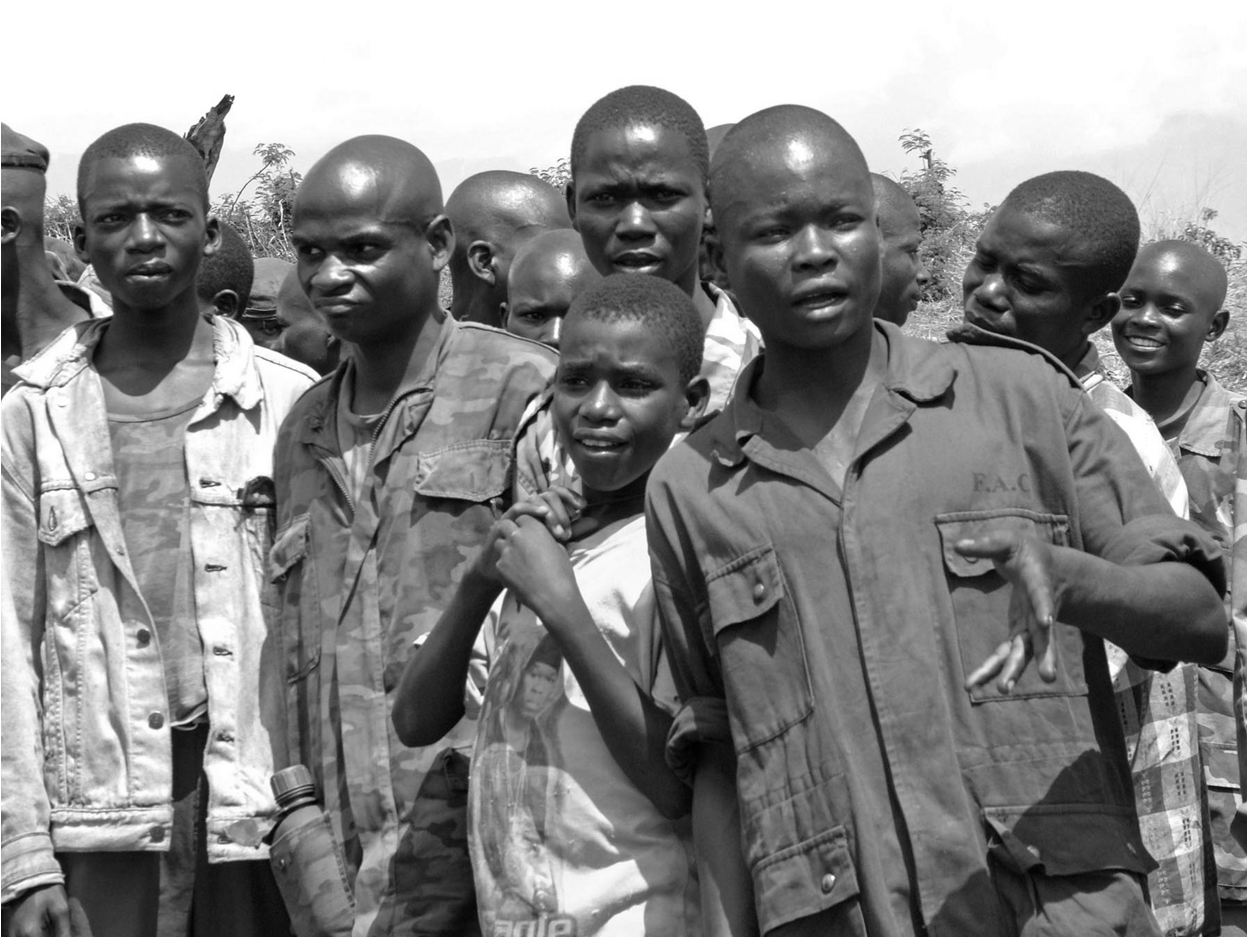
Should new wars be seen as a continuation of economics by other means?

Child Soldiers in the Democratic Republic of Congo – Source: USAID

In this essay, the author critically analyses Mary Kaldor’s new wars theory and challenges views that portray new wars as a continuation of economics by other means. Drawing on the writings of Mats Berdal and Stathis Kalyvas, as well as theories of peace and conflict, the author dismisses Paul Collier’s greed thesis and concludes that it is necessary to move beyond reductionist theories and adopt holistic approaches to conflict.


By David J. Franco, 17 Nov, 2011

Some scholars claim that war has shifted from a classical model to a new mode of intra-state warfare[1] in which ‘states have given up their the facto monopoly of war’[2] to groups and actors driven by greed. This, in turn, has led some to propose a reformulation of Clausewitz’ dictum of war[3] by defining the so called new wars a continuation of economics by other means[4]. In this regard, if we accept that new wars are driven only by economic motives then surely these should be seen as the continuation of economics by other means. In other words, defining new wars as wars driven by greed or defining these as the continuation of economics by other means is the same. Therefore, the answer to the actual question lies in the same definition of new wars and, in particular, on whether these can be defined as wars driven only by private, greedy motives or economics. This essay looks into this issue with a critical view. My argument is that the so called new wars are not so new and that, even if we accept some of the alleged new elements of these wars, economics is generally not the only motive driving conflict. Hence, I contend that no general theory of war based on economics can be drawn from these so called new wars and that a holistic approach is always necessary if we want to translate theory into effective policy.

This essay is organized as follows: The first part is a broad critical analysis of the new wars thesis. This is important because before focusing on the actual question it is first necessary to define what new wars are really about. In this section I point to the weaknesses of the claimed newness and demonstrate that the changing dynamics of conflict must not be confused with a change in the nature of war. In the second part I narrow the analysis and focus on thesis based on greed. In this section I critically analyse the works of Paul Collier and David Keen and seek to prove that reductionist explanations based on economic motivations are incomplete. Finally, the third part of this essay is a reflection on the nature of war and whether it is possible to formulate a general theory of war or whether every war is sui generis[5].

Defining New Wars

According to Mary Kaldor, new wars find their origin in the context of the globalization of the 1980s and 1990s which she defines as ‘the intensification of global interconnectedness – political, economic, military and cultural’[6]. Kaldor further stresses the relation between global interconnectedness and the erosion of the principle of territorially based sovereignty, as a result of which states would be experiencing an erosion of their monopoly of legitimized violence[7]. But Kaldor’s definition of globalization is insufficient, too vague and incomplete to explain why it has brought about, if it has, changes to the nature of war. As Mats Berdal notes, ‘much of the writings on the so-called New Wars of the 1990s typically proceed from a loose understanding of globalization as “the widening and deepening of economic, political, social and cultural interdependence and interconnectedness”’[8]. In this regard, Berdal denounces the ‘term’s “totalizing pretensions”’[9] in the sense that its vagueness is very distorting when trying to explain the particularities of one conflict or another[10].  Despite the attempts of other authors to clarify and expand on Kaldor’s definition of globalization[11], from an analytical viewpoint her explanation of the origins of the so called new wars remains incomplete[12]. But, leaving aside the issue of globalization, what are the so called new wars? Broadly, new wars are characterised as ‘criminal, depoliticized, private, and predatory’[13], while old wars are usually portrayed as ‘ideological, political, collective, and even noble’[14]. In the following paragraphs I critically analyse the so called new wars by disaggregating the new wars thesis along three clusters: goals and motivations; the means of warfare; and the means of funding war.

The first claimed distinction relates to the causes and motivations driving new wars. Among the competing thesis, two are worth exploring[15]: First, Kaldor claims that with the advent of globalization and the end of the Cold War[16] identity politics[17] have replaced ideology as the principal raison d’être of conflicts. Although she agrees with the fact that there may still be background ideas, she argues that these are merely an ‘idealized nostalgic representation of the past’[18]. In other words, Kaldor claims that the end of the clash of ideologies and the superpower rivalry of the Cold War unleashed ancient latent hatreds[19]. However, historical accounts prove Kaldor wrong. Indeed, two good examples are the French Revolutionary wars of Napoleon, where French grandeur might have been at the core of the revolutionary idea of “liberté, égalité, fraternité”, and the total wars of the twentieth century, which were as much about ideas as they were about nationalism[20]. Not to mention many of the wars of the second half of the twentieth century, where rebels were usually able to successfully mix Marxist ideology with nationalism[21]. The second competing interpretation stresses, with varying degrees, that new wars are driven primarily by greed or economic motives[22]. According to this, defenders of the greed thesis argue that the principal goal in new wars is to loot and to seek profit-maximizing, especially through the exportation of valuable commodities. But this view of old wars as wars of grievance while new wars are fought merely for greed reasons is too naïve and simplistic. It attaches too much weight to ideological or other motives in old wars, while it underestimates the weight of these motives in new wars. Further, it must also be observed that the greed argument is problematic as it is not clear whether it refers to the causes of war or to the motivations of the combatants, or both[23]. It is also unclear whether it refers to greed as a result of the need to finance war or to greed as the cause for war. This particular issue will be looked at in more detail in the next section; let us then continue with the other two main claimed distinctions between old and new wars.

The second alleged distinction refers to the methods of warfare. Here Kaldor points to the shift towards a culture of ‘fear and hatred’[24] implying a sort of new gratuitous violence where non-combatants take the worst part. In this regard, the literature often compares new wars with classic inter-state wars of the sort defined by Carl von Clausewitz[25]. The argument is often one that compares Clausewitz’s trinity of people, government, and armies with the blurred situation of new wars where combatants and non-combatants get mixed and the state’s structures are torn down[26]. This seems to imply that order, albeit one in situations of war, has given way to chaos, and that public interest, represented by the state, has given way to private interest(s). However, none of these claimed features are new in war. Historical accounts again portray situations in which war was not always like the sort defined by Clausewitz[27]. Further, to a greater or lesser extent, brutality among warring parties and against the population has always been, and continues to be, a common feature of war; not to mention rape as an extended practice in both old and new wars[28]. In this regard, it is often argued that in new wars the ratio of deaths among non-combatants has significantly increased[29]. But historians suggest that some forms of people’s war were fought in early Modern Europe, during modern Europe, and again in the twentieth century total wars[30]. Further, it is often also argued that a feature of new wars is the increase in the number of refugees and internally displaced people[31]. Indeed, such an increase in numbers cannot be denied per se but it may be due more to the fact that intra-state conflicts increased significantly in the early nineties than to other more obscure reasons[32]. Hence, when faced with what seems to be the absence of one or more features of old classic wars, scholars tend to argue that we are witnessing the emergence of a new type of war. The issue, I would suggest, is not whether the wars of the post-Cold War era are new, but whether the particularities of accounts such as those of Clausewitz are universal or confined to a particular spatiotemporal context.

Last but not least, a third claimed characteristic of new wars is that these are founded on what Kaldor calls the ‘new “globalized” war economy’[33]. In essence, new wars would no longer be ‘centralized, totalizing, and autarchic’[34] but decentralized, with high levels of unemployment, and dependent on external resources[35]. In addition, as opposed to classic warfare the new wars would be fought by different units of war that would ‘finance themselves through plunder and the black market or through external assistance’[36], including ‘remittances from the diaspora, “taxation” of humanitarian assistance, support from neighbouring governments or illegal trade in arms, drugs or valuable commodities such as oil or diamonds’[37]. But Kaldor’s argument is, again, misleading. One can agree that some of these features are applicable to a few of the wars of the developing world or to wars fought in para-states or states in transition, but to argue that these are common features of all intra-state wars in the post-Cold War era is incorrect. For instance, based on the works of Zeeuw and Frerks, and the studies of David Shearer, Mats Berdal argues that ‘the actual importance of diaspora income remains unclear and underresearched’[38] and that ‘[b]eyond the case of Sudan, however, the impact of relief aid on the course of civil wars, especially in prolonging them, appears to be exaggerated’[39]. With regards to the funding of wars through illegal practices such as the extraction and trade of commodities, scholars are unclear as to whether such practices are a means to an end or an end in itself. Indeed, while initially Kaldor seems to suggest that looting takes place in order to finance war, she then seems to confuse her own argument by suggesting that war is waged in order to loot[40].

Therefore, according to the above the so called new wars are not as new as it is often claimed. However, while this is true mostly with regards to the form (i.e. the methods of warfare and the funding of war), can the same conclusion be reached with regards to substance (i.e. the goals and motivations of new wars)? In this regard, since it is not form but substance what ultimately determines the nature of war, it is the causes and motivations of new wars, especially the claim that these are driven by greed, that needs to be analysed in more detail. It is to this particular debate I now turn.

Are new wars driven by greed?

While it is commonly agreed that economics are relevant to conflicts, ‘there remains considerable disagreement as to how it matters and how much it matters relative to other political, socio-cultural, and identity factors’[41]. As a starting point, Mats Berdal and David M. Malone point out that ‘what is usually considered to be the most basic of military objectives in war—that is, defeating the enemy in battle—has been replaced by economically driven interests in continued fighting’[42]. Further, Berdal and Malone note that ‘much of the violence (…) in the post–Cold War era has been driven not by a Clausewitzian logic of forwarding a set of political aims, but rather by powerful economic motives and agendas’[43]. Therefore, the question is whether private economic agendas outperform politics as the main cause driving wars since, as explained above, this inevitably would lead to a reformulation of Clausewitz’ definition of war as a continuation of economics by other means.

Studies based on new functional approaches to conflicts in the nineties demonstrated that ‘far from being irrational or dysfunctional, violence and instability often serve a range of political, social and economic functions for individuals’[44]. However, Paul Collier disagrees with this holistic approach and argues that ‘civil wars are far more likely to be caused by economic opportunities than by grievance’[45]. Collier’s main argument is that resources and commodities are the principal cause of intra-state conflict in the post-Cold War era. Indeed, as one scholar puts it, ‘[a]ccording to his controversial “greed thesis”, economic motivations and opportunities (“loot-seeking”) are more highly correlated with the onset of conflict than ethnic, socio-economic, or political grievances (“justice-seeking”)’[46]. But Collier’s thesis is too reductionist thus posing serious problems when translating theory into actual effective policy. Indeed, just as theories based solely on grievance are incomplete and may therefore fail to translate into effective policy, any explanation of conflict that focuses only on greed suffers from the same weakness. As noted by Ballentine and Nitzschke, ‘explanations of conflict should avoid “resource reductionist” models in favour of more comprehensive approaches that focus on the wider range of political and economic interactions that drive conflict’[47]. In this regard, the work of David Keen seems to offer a more appropriate approach. Keen highlights the ‘importance of investigating how violence is generated by particular political economies’[48] and, based on his analysis of the economic functions of violence, notes that ‘particularly where chains of command are weak, war may be a continuation of economics by other means’[49]. In fact, ‘”where there is more to war than winning”, those benefiting from violence may have a vested economic interest in conflict continuation’[50]. But Keen’s words should not be taken as the formulation of a general theory of war based on private economic goals. Instead, my suggestion is that Keen’s reformulation of Clausewitz’ famous dictum of war is one which he sees applicable only to particular situations where the monopoly on the means of violence lies neither with the state nor with rebel groups but with other groups or individuals willing to take advantage of the situation. This then raises the question of whether in new wars the chains of command are always weak. But Keen’s choice of verb and tense (i.e. that war may be a continuation of economics by other means), suggests the contrary (i.e. that chains of command are not necessarily always weak or inexistent and/ or that even in those instances greed may not be the only element driving conflict). Hence, Keen’s thesis should be seen more as an attempt to address the problematic of existing theories of conflict constructed solely on political causes or grievance than a general theory of war based solely on economics. In fact, Keen clarifies his position in the following paragraph:

‘Paul Collier has emphasized the importance of greed rather than grievance in driving civil wars. My own work gives a good deal of importance to economic motivations. However, this process of falling below the law underlines the continuing importance of grievances and not greed in contemporary conflicts. Indeed, we need to understand how the two interact.’[51]

Similarly, Herfried Münkler notes that while special attention must be paid to the ‘economics of war and force, this does not at all mean that ideological factors should be neglected’[52]. Indeed, as noted by Frances Stewart, while economics played a very important role in initiating and sustaining the conflicts in Liberia, Sierra Leone, and Sudan, grievance also played an important role alongside greed[53]. For example, in Sierra Leone one could find both elements of ‘class conflict as well as short-term benefit maximization’[54], whereas in Liberia ‘ethnic inequalities combine with profit maximizing’[55]. Likewise, Christopher Cramer’s account of the civil war in Angola shows that it was as much a new war as it was an old war and that both greed and grievance played key roles in initiating and sustaining the conflict[56].

Accordingly, new wars are not solely or mainly about economics but about a wide range of issues encompassing politics, economics, development, ethnicity, religion, ideology, and identity[57]. While it is agreed that the wars of the late twentieth/ early twenty-first centuries have certain common new features, this cannot lead to the conclusion that the nature of war has changed and that new wars should be seen, as a matter of principle, as a continuation of economics by other means. Therefore, as Cramer points, have wars really changed or is it that we have changed the way we understand them?; and ‘is it possible to find a convincing general theory of war or is instead every war sui generis?’[58]

A final reflection

An approximation to these questions can be found in the works of Stathis N. Kalyvas. Indeed, Kalyvas notes that ‘the distinction drawn between post-Cold War conflicts and their predecessors may be attributable more to the demise of readily available categories than to the existence of profound differences’[59]. What these conceptual categories are, Kalyvas does not say. Maybe he had in mind the western, realist idea or concept of the state as the only unit legally entitled to hold the monopoly of organised violence. If so, the demise of this realist conception may have driven some scholars, too enthusiastically, to denounce the appearance of new wars where warlords fight driven by private interests. Be it as it may, in his conclusion Kalyvas refers to ‘the constraints of externally imposed lenses’[60] and warns about the risks of building theories founded on ‘conceptual categories grounded in current events rather than good theory’[61]. In a more recent work, Kalyvas notes that a ‘twin historical myopia’[62], affecting both actors and observers, has produced an undesired outcome: ‘the domination of the empirical and conceptual association of insurgency, civil war, and revolution’[63]. In his opinion, the problem is that this merger is ‘often understood as a universal constant when, in fact, it is a historically contingent’[64]. In other words, war and conflict are dynamic, not static, and so a good theory of war is one which leaves aside historical contingencies and draws a series of premises applicable to conflict throughout space and time. This point is illustrated in Kalyvas’ critique of Paul Collier’s “greed thesis”:

‘In a way, Collier (2007) was not necessarily wrong when he described all rebels as greedy looters rather than justice seekers; he just had in mind a subset of civil wars that happened to be particularly visible in Sub-Saharan Africa during the post-Cold War era. His error was to generalize what was, once more, a historically and geographically confined phenomenon’[65].

Indeed, David Keen was more prudent when he noted that under certain conditions war may be a continuation of economics by other means. Had Keen wanted to draw a theory of war based on economics applicable through space and time, he would have made a stronger case. But to do so would have been unwise and misleading for, as suggested by Kalivas, no good theory should be grounded on historical contingencies. In this regard, anything that bears the adjective “new” is inevitably based on historical contingencies and so runs the risk of being bad theory. Paul Collier’s greed thesis may be just that, a thesis, but his critique of discourses based on grievance and his conclusions reached on econometric models reflect higher ambitions. Accordingly, it may not be that the nature of war has changed (if anything, war is in constant evolution) but that we have changed the way we understand it or even that we never understood it in the first place. In this regard, it is important to note that the types of wars that we see in the Middle East are not like those of the nineties in Africa, or like those of the Balkans. The question, therefore, remains open: is it really possible to find a convincing theory of war through which to study war across space and time? This, I suggest, is something to explore in a separate study. For now, let it just be said that, more likely than not, any such theory risks leaving aside important elements of causality.

Conclusion

The end of the Cold War and the acclaimed advent of globalisation shifted the attention of scholars to the intra-state wars that developed during the nineties in the Balkans and Africa. This led many to label these conflicts as new wars in the sense that they presented features unknown or unseen in past eras. Among these, the most problematic is the claim that new wars are driven by private, greedy motives.

However, a close analysis of the new wars thesis shows that the new is not so new, and the old has not been entirely relegated to the past. In addition, while economics plays an important and sometimes decisive role in many of these so called new wars, it is generally not the only motivation driving conflict and so a reformulation of Clausewitz’ definition of war grounded on economics is not appropriate. In this regard, it is necessary to move beyond reductionist theories based on grief or greed and adopt holistic approaches if we want to both understand the dynamics of intra-state conflict and produce effective policies.


[1] Herfried Münkler, The New Wars (Cambridge Polity Press, 2005), p.1

[2] Ibid

[3] Clausewtiz defines war as the ‘continuation of policy by other means’. Carl von Clausewitz, On War, trans. Michael Howard & Peter Paret (Princeton University Press, 1976), Book 1, ch.1: ‘What is War?’, p. 99

[4] This question was first raised by David Keen in his work ‘Incentives and Disincentives for Violence’, in Mats Berdal & David M. Malone (eds.), Greed and Grievance: Economic Agendas in Civil Wars (Lynne Rienner, 2000), ch.2. Available at http://www.idrc.ca/openebooks/421-5/#page_19.

[5] These questions are raised by Christopher Cramer in Civil War Is Not a Stupid Thing: Accounting for Violence in Developing Countries (Hurst, 2006), p. 144

[6] Mary Kaldor, New and Old Wars: Organized Violence in a Global Era (Polity Press, 1999), p. 3

[7] Ibid, p. 4

[8] Mats Berdal, ‘How “New” are “New Wars”? Global Economic Change and the Study of Civil War’, Global Governance 9:4 (2003),p. 480. Here Berdal quotes an extract from the work of Willett, “Globalization and Insecurity” but in his endnote he also refers to Kaldor’s definition of globalisation as noted above.

[9] Ibid

[10] Notwithstanding this, Berdal notes that Kaldor points to distinctive aspects worth exploring under the common rubric of ‘economic globalization’ (Ibid, p. 481)

[11] See for example Martin Shaw’s Review Essay ‘The Contemporary Mode of Warfare? Mary Kaldor’s Theory of New Wars’, Review of International Political Economy 7:1 (2000) pages 171-80, where Shaw points to a ‘new political economy of war: globalised arms markets (analysed by Schméder in Military Fordism), transnational ethnicities and internationalised western-global interventions are all integral to new wars’ (page 172).  See also Mark Duffield, Global Governance and the New Wars: The Merging of Development and Security (Zed Books, London; 2001).

[12] Christopher Cramer has argued that globalization is not an explanation for the conflict in Angola where, he notes, ‘[i]nternational interdependence is not new… Nor is it a simple matter of the most recent, post-Cold War phases of war being different and especially “globalised”’. Cramer further dismisses Duffield’s argument that new wars are tied to a new phase of globalisation by contending that ‘[t]his is a misleading distinction to impose on Angola’ (Christopher Cramer (fn.5), p. 147)

[13] Stathis N. Kalyvas, “’New’ and ‘Old’ Civil Wars: A Valid Distinction?`, World Politics 54:1 (2001), p. 100

[14] Ibid

[15] These two competing views form the basis of the so called greed versus grievance debate. A third or residual view would be the claim that new wars may be seen as wars ‘about nothing at all’ (Hans Magnus Enzensberger, Civil Wars: From L.A. to Bosnia (New York, The New Press, 1994), as quoted in Stathis N. Kalyvas (fn.13), p. 103).

[16] Whether globalisation was the cause of the end to the Cold War or whether the end of the Cold War accelerated the process of globalisation is far from clear in the literature. In her introductory chapter of New and Old Wars, Mary Kaldor suggests that the end of the Cold War could be viewed as the way in which ‘the Eastern Bloc succumbed to the inevitable encroachment of globalisation’ (Mary Kaldor, (fn.6), pp. 3-4).

[17] Kaldor defines identity politics as ‘the claim to power on the basis of a particular identity – be it national, clan, religious or linguistic’ (Ibid, p. 6).

[18] Ibid, p. 7

[19] Kaldor’s usual example is the wars of the former Yugoslavia (Ibid, p. 1).

[20] Martin Shaw contends that there is a continuity with the total wars of the twentieth century (see Mary Kaldor (fn.6), p. 2. Also in Martin Shaw (fn.11), pp. 171-80)

[21] Stathis N. Kalyvas, ‘The Changing Character of Civil Wars, 1800-2009’, in Hew Strachan and Sibylle Scheipers (eds.), The Changing Character of War (Oxford; Oxford University Press; forthcoming), available at http://faculty.virginia.edu/spandya/kalyvas.pdf, p. 15

[22] For example, Kofi Annan, “Facing the Humanitarian Challenge: Towards a Culture of Prevention”, UNDPI (New York, 1999), as quoted in Stathis N. Kalyvas (fn.13), pp. 102-3; David Keen (fn.4); Paul Collier, ‘Doing Well out of War: An Economic Perspective’, in Mats Berdal & David M. Malone (fn.4), ch.5; or Herfried Münkler (fn.1).

[23] Stathis N. Kalyvas (fn.13), p. 103.

[24] Mary Kaldor (fn.6), p. 8

[25] See for example, Herfried Münkler (fn.1), pp. 32-50

[26] Bart Schuurman, ‘Clausewitz and the “New Scholars”’, Parameters (2010), pp. 89-100

[27] Mats Berdal points to ‘war in early modern Europe’, ‘the various wars and phases of imperial and colonial conquest from the sixteenth through to the twentieth century’, the conditions of warfare…at the edge of borderlands of empires’, or the ‘Thirty Years’ Wars’ (Mats Berdal (fn. 8), p. 493)

[28] For an account and analysis of the functionality of rape in old and new wars see Herfried Münkler (fn.1), pp. 83-5.

[29] Mary Kaldor (fn.6), p. 8; and Herfried Münkler (fn.1), p. 14

[30] Herfried Münkler (fn.1), pp. 42 and 67. Münkler refers to the Thirty Year’s War, the Spanish Guerrilla War against Napoleon, the Russian partisan war of the autumn and winter of 1812 and to some extent the South Tyrol uprising of 1809. Münkler also admits that while not the dominant form, this form of asymmetrical warfare was also present in the anti-Napoleonic War of Liberation (1813) and the Franco-Prussian War of 1870-1 (p. 67).

[31] Mary Kaldor (fn.6), p.8

[32] As Kalyvas suggests, ‘mass population displacements is nothing new–as suggested by such classic wars as the Russian, Spanish, and Chinese Civil wars’ (Stathis N. Kalyvas (fn.13), p. 110).

[33] Mary Kaldor (fn.6), p. 9

[34] Ibid

[35] Ibid

[36] Ibid

[37] Ibid

[38] Mats Berdal (fn. 8), p. 496

[39] Ibid

[40] Mary Kaldor (fn.6), p. 9. Similarly, Herfried Münkler (fn.1), pp. 1-4

[41] Karen Ballentine and Heiko Nitzschke, ‘The Political Economy of Civil War and Conflict Transformation’, Research Centre for Constructive Conflict Management, p. 3 (available at http://www.berghof-handbook.net/documents/publications/dialogue3_ballentine_nitzschke.pdf)

[42] Mats Berdal & David M. Malone (fn.4), ch.1

[43] Ibid

[44] Karen Ballentine and Heiko Nitzschke (fn.41), p. 3

[45] Paul Collier (fn. 22), ch.5

[46] Karen Ballentine and Heiko Nitzschke (fn.41), p.4

[47] Karen Ballentine and Heiko Nitzschke (fn.41), p.4

[48] David Keen (fn.4), ch.2

[49] Ibid

[50] Karen Ballentine and Heiko Nitzschke (fn.41), p. 3

[51] David Keen (fn.4), ch.2

[52] Herfried Münkler (fn.1), p. 1

[53] Frances Stewart, ‘Development and Security’, Conflict, Security & Development 4:3 (2004), p.275

[54] Ibid

[55] Ibid

[56] Christopher Cramer (fn.5), pp. 139-69

[57] This is not a closed list as in fact any element or factor affecting conflict can be added to the list.

[58] Christopher Cramer, (fn.5), p. 144

[59] Stathis N. Kalyvas (fn.13), p. 99

[60] Ibid, p. 117

[61] Ibid

[62] Stathis N. Kalyvas (fn.21), p.2.

[63] Ibid

[64] Ibid

[65] Ibid, p. 23