
Khawaja Complex and the International Political Order

By: A. Almuslem
March 1st 2024

The Khawaja complex might be understood by some as mere favoritism towards European ethnic groups with neutrality towards other groups. Such an assumption, however, is difficult to sustain when it becomes apparent the European favoritism can also be coupled with in-group derogation where the middle easterner would be inclined to associating members of his own group, along with others from the postcolonial world, with negative traits at first glance all the while maintaining a less cooperative attitude with them. Continue reading

Oil and the Arabian Peninsula: Blessing or Curse?

In this article, the author assesses the success rate of how oil-rich countries in the Arabian peninsula and beyond have tackled the challenge of increased oil revenues and how they have handled their newly established wealth. For many, oil has been a curse in disguise, with mismanagement of oil revenues, unequal distribution of wealth and the Machiavellian power of the rentier state – which in the case of Libya proved to be fatal.


By Matthias Pauwels, 26 Oct, 2011

Roughly a century ago, nobody would have imagined that a complex mixture of hydrocarbons of various molecular weights and other liquid organic compounds would become the most contested, sought-after commodity in the world. Oil-rich countries in the Middle East have been the scene of epic battlegrounds to gain control over the black gold. As a crafty tool to conduct psychological warfare, petrodiplomacy has become an important diplomatic weapon to the Arab nations against the West and, in particular, Israel. When crude oil found its way to the international market during World War II, the world became increasingly dependent on Arab oil. For over half a century, the oil industry of the world outside North America and the Soviet Union had been dominated by seven great international oil companies, exercising control over output and off-take prices. However, the tide was turning. By the 1960s-1970s control over Middle Eastern oil was rapidly passing into the hands of governments in the area and out of the hands of the heretofore dominant Western companies. International oil companies, once the beneficiaries of lucrative concessions and tax arrangements, slowly lost the control they traditionally exercised over Middle East oil production and pricing and had to accept policies determined unilaterally by the producing nations.

Consequently, a sudden increase in the rate of revenue flows to the Middle East simultaneously presented the economic planners of the region with an unprecedented opportunity and challenge. Over the past decades, very large increases in the revenues accruing to the oil-exporting countries have given rise to extravagant hopes of a swift acceleration in their economic development.

At the dawn of the twenty-first century, we are able to assess the success rate of how these countries have tackled the challenge of increased oil revenues and how they have handled their newly established wealth. Here I am arguing that for countries of the Arabian peninsula, oil, paradoxically, is a curse in disguise. Although the possibilities of oil revenue flows appeared unbridled, these governments have largely crumbled under the huge pressure to properly utilise this wealth.

Firstly, the mismanagement of large proportions of oil revenues is embedded in the asymmetry of economic, political, and cultural perspectives. Practices such as unwise spending policies and loose budgetary controls have produced the caricature – so popular in the West – of the rich Arab with dark glasses and his Rolls Royce. Secondly, unequal leaps of development in the Middle East, often based on oil revenues, have accentuated multilateral social and economic inequalities. As a result, Pan-Arabism has declined. Thirdly, the sole concentration on oil revenues has proved to be a slippery slope: declining oil revenues in an undiversified economy leave young people with reduced changes and disappointment, creating a breeding ground for Islamism to firmly nestle itself in the consciousness of the common Arab youth. And finally, the most desirable course for relations between consumers and producers of oil remains the issue of heated argument. Over the past decades, the world has witnessed several oil crises, the establishment of OPEC and severe fluctuations in oil prices, directly affecting the world economy. Rather than moderating with time, the debate of optimising the relationship between consumers and producers of oil remains volatile.

1.      The paradox of oil: a financial curse in disguise

The actual utilisation of oil as a strategic commodity of great political potency as well as developmental power has left the Middle East faced with numerous challenges. When Saudi Arabia imposed the first income tax on oil companies in 1950, the law was specifically designed to capture fifty percent of the profits attributed to crude oil. As a result of these arrangements, the revenues of oil-producing countries of the Arabian peninsula soared, and their governments seemed satisfied. As time moved on, a final transfer of power of petroleum from companies to governments in the 1973-1974 period created the opportunity to fully gain control over oil revenues. Although there was a realisation that oil resources of the region would ultimately be depletable and the development of more diversified domestic economies, capable of generating their own funds for investment, should be made a “first priority goal”, the Middle East has received considerable criticism for the way they have handled their new wealth. In this context, authors such as Sayigh allude to the misdirection of an inordinately large proportion of oil revenues into the private accounts of rulers, continuing wastefulness, loose budgetary controls and unwise spending policies which permitted overconsumption and the formation of private “princely fortunes” in Saudi Arabia, Kuwait, and the Gulf sheikhdoms.
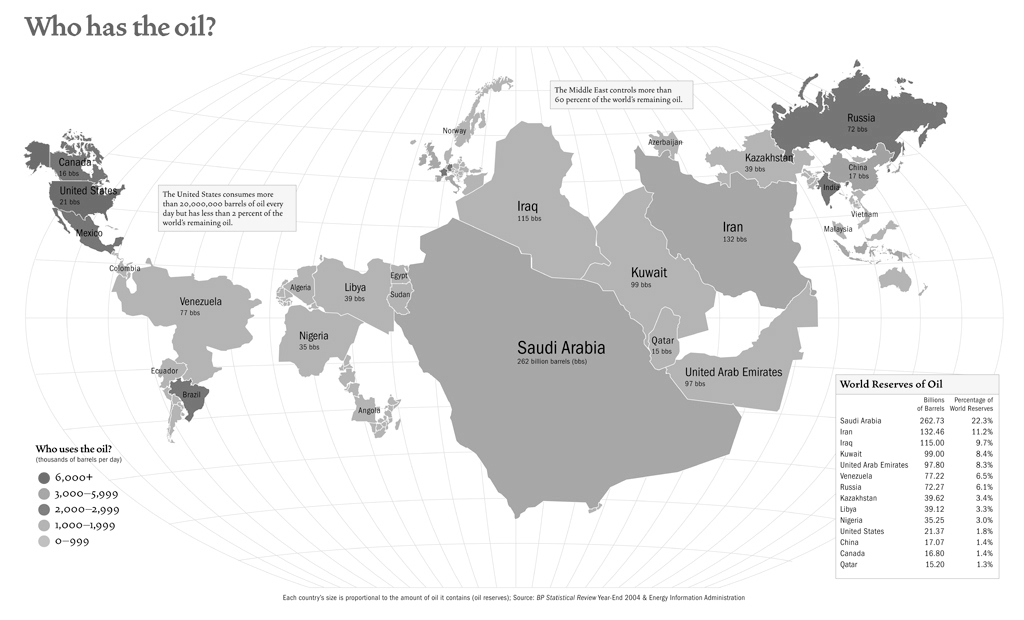
 (Click to enlarge image)

It is certainly true that the construction of superhighways and the building of stadiums that will only be filled sporadically fully testify to the folly of oil revenue investments. The real estate investment bubble of Dubai has burst, a process which was accelerated by the financial crisis of 2008. Additionally, Qatar has recently invested an unprecedented oil revenue budget in bringing the World Championship Football to the small Arab emirate in 2022.

Although many do not deny the existence of the concept of “conspicuous investment”, one can argue that the comic, Orientalist figure of the wealthy oil sheikh, with his thousand-and-one night palaces and lavish cars, has disappeared. In this context, Sayigh notes that after a few years of wasteful confusion in the oil countries, careful procedures were developed for assigning revenues to capital and current expenditures. Huge infrastructural projects have been undertaken in transport, communications, power, irrigation, land reclamation, housing, urban facilities, education and health – all of which have helped to consolidate the economic base.

While I do not contest that attempts have been made to create more diversified domestic economies in the realisation that oil resources may ultimately be depletable and to cope with the changing panorama of energy sources, Sayigh’s observation should by no means be generalised. Although efforts have been made by governments to sensibly manage the impressive flow of oil revenues, problems of misspending, overspending and overconsumption are not a manifestation of the past. True, Kuwait has been blazing a trail for sensible domestic oil revenue investment through the Kuwait Fund for Arab Economic Development (KFAED). During the past three decades, the country has more or less found a balance in allocating equal portions of its income to three areas: domestic development, regional development and foreign investment. Dubai, on the other hand, has played the role of the golden child of the Emirates for the past two decades, massively investing in urban development, the expansion of industry, infrastructure, and the modernisation of transportation. The government’s decision to diversify from a trade-based, oil-reliant economy to one that is service and tourism-orientated has made property more valuable. A longer-term assessment of Dubai’s property market, however, showed depreciation. Some properties lost as much as 64% of their value from 2001 to November 2008.

Dubai’s property market experienced a major downturn in 2008 and 2009 as a result of the slowing economic climate and when by early 2009 the situation had worsened due to the global economic crisis, the emirate was faced with an $80 billion debt due to overspending, and was forced to seek financial help from other emirates. Although Dubai’s intentions are noble to invest in creating a diversified economy, not solely reliant on oil, unwise spending policies are not a manifestation of the past.

2.      Political consequences of the oil effect

Aside from the financial challenges oil extraction has brought countries of the Arabian peninsula, one can put this in the perspective of two extremes: on one hand, the Arab oil states have enjoyed stability, continuity and wealth to a degree unknown since the 1950s. On the other hand, the glaringly uneven distribution of resources among the various sectors of the population has provoked anger and frustration. Furthermore the rising social status and self-awareness of the middle class and its low political status, combined with unemployment, has created a breeding ground for Islamism, although there is by no means an exclusive link between oil exports and the rise of militant Islam.

The one significant political development noticeable during the oil decade is the decline of the ideal of Arab unity and Pan-Arab solidarity. Since the 1950s, Pan-Arabism is on the decline, with the occasional flicker of revival during the Arab-Israeli conflict. In general, revenues from oil have exacerbated the differences in the economic conditions of the Arab states, particularly between the sparsely inhabited oil states of the Arabian peninsula and the densely populated countries of the Nile Valley.

By the late 1970s, a deepening economic gap had opened between the populations on either side of the Red Sea – that of the Nile Valley and that of the Arabian Peninsula. Its impact was considerable, and meant among other things a weakening of the forces calling for Arab unity while it favoured the territorial Arab nation-states. In addition, the failure of Nasserism and its view on Pan-Arabism weakened Egypt’s ideological opposition to the existence of separate Arab states. Unwillingly, Egypt was forced to turn to Arab oil producers for aid.

However, the decline of Pan-Arabism is no exclusive international phenomenon. Even domestically it can be disruptive to a harmonious feeling of unity. Despite the United Arab Emirates’ increased sharing of the oil wealth with the poorer, non-oil sheikhdoms through the confederation government, the contrasts in wealth have continued to underscore the urgent hope of the have-not rulers of Ajman, Fujayrah, Ra’s al-Khaymah, and Umm al-Qaywayn that it would be only a matter of time before they, too, became oil producers. Alledgedly these contrasts have been the root of many political differences between the rulers. In this light, the hope that an oil discovery on its territory was imminent was the main reason for Ra’s al-Khaymah to delay joining the U.A.E. until February 1972. And so, oil and the hope of prospective oil wealth became an obstacle for Pan-Arabism, both internationally and domestically.

3.      Oil and Islam: a breeding ground for political polarisation?

Islamism today is a universal phenomenon in the Muslim world. Therefore the mere hypothesis of a strict connection between oil and Islamism is too far-fetched. It is by no means an exclusive phenomenon of oil exporting countries. Even the study of potential links between oil exports and the rise of Islam remains empirically difficult.

When we do shine a light on Islamist movements in oil exporting countries, it becomes clear that they represent both a social revolt as well as an assertion of cultural and national identity in the wake of an unsuccessful or incomplete modernisation based on oil. Rapid population growth, immature and unstructured political systems where ageing leaders stay in power without accountability to the public, and the autocratic nature of these political systems have been known to create social and generational tensions. Many Muslim countries have old rulers, who control the government and have a firm grip on the economic surplus. Often they also tend to represent Western ideas and lifestyles to a considerable extent. Opposition to them is a frustrated middle generation and especially an impoverished, unemployed youth – no surprise there in context of the recent Arab Spring. They want influence, prosperity and to assert cultural traditions against Western influence. Such a stereotype may be particularly relevant to the oil exporting Muslim countries. After the 9/11 terrorist attacks on the United States, the United Arab Emirates was identified as a major financial center used by al-Qaeda in transferring money to the hijackers. Moreover, two of the 9/11 hijackers who were part of the group that crashed United Flight 175 into the South Tower of the World Trade Center, were UAE citizens.

Unequal leaps of development in the Middle East, often based on oil revenues, have accentuated social and economic inequalities, as I have mentioned earlier. The issue here can be described as being three-fold: it is social, concerning the distribution of income, wealth and power; cultural and national, concerning political and personal identity; and generational, affecting conflicts of power between age groups with different experiences and expectations.

However, oil exports appear to be neither a necessary nor a sufficient condition for the rise of Islamism. If they were a necessary condition, Islamism would not have been present in non-exporting oil countries such as Sudan, Lebanon or Palestine. If they were a sufficient condition, oil exports alone would have provoked a strong surge of Islamism in, for instance, Kuwait. When it comes to the 9/11 hijackers, it probably was a mere coincidence that both men had the UAE nationality, although al-Qaeda has been known to frown upon the “ emerati wastefulness” and splurging lifestyle. But a direct causal link between oil exports and Islamism would be indirect and highly complex. As an alternative, authors such as Noreng suggest three sensible reasons for possible links between oil and Islamism. First of all, when oil revenues decline, the public sector suffers from diminishing resources and a frustrated private sector emerges. Secondly, declining oil revenues in an undiversified economy leave young people with reduced changes and disappointment. And thirdly, there is a ripple effect from the oil exporters to the non-oil exporters. When oil revenues rise, the rich oil exporters employ labour from the non-oil exporting countries of the region. They in turn remit money home and increase the GNP of their home country. When oil revenues decline, foreign workers lose jobs, go home and remittances diminish. This way, religion creates an escape and an outlet for frustrations. It is however important to mention that the sole combination of misery and mosques does not by itself produce Islamist movements. Islam’s social promise has to be elaborated, interpreted and presented by a conscious elite able to influence the masses and propagate Islamism to the people.

The social task of Islam focuses precisely on an equal distribution of wealth through the zakat, the wealth tax, which has become an imperative duty for devout Muslims. The specific purpose of the wealth tax is to prevent the rise of any rentier class in the economic system. The specific problem of oil is that it creates an influx of rentier income. Oil provides much money without much effort. In a Middle Eastern context, oil seems to have produced a special political system, based on the centralisation of petroleum revenues within the state. Here, the state is the distributor of economic rent and favours instead of being a tax collector and redistributor. Rulers tend to hand out selective privileges, financed by oil revenues, against loyalty and support from a large private sector. This way, political loyalty is exchanged for economic favours. This is the basis of a classic rentier state. Islamic economic principles can be used to fight or prevent the rise of a rentier class within a state. The problem with oil revenues for Islam is that they differ qualitatively from productive income, because they have their origin in the extraction of a finite resource, not in human labour and productivity: it is “easy” money. When wasteful consumption above reasonable needs goes hand in hand with mismanagement of income distribution and wealth, Islamism may once again find a breeding ground in these rentier states, drawing back upon Islamic economic principles, such as the zakat.

 4.      What role has oil played in the Libyan crisis?

Libya’s petroleum sector has been critical in shaping its political economy. Although Libya ranks 17th among global oil exporters, its 46.4 billion proven oil reserves are the largest in Africa – practically the size of Nigeria and Algeria combined. Over the decades this sector has provided significant resource inflows for Gaddafi. Oil revenues laid the foundation for the establishment of the Libyan rentier state, where rents from natural resources rather than domestic productivity were the backbone for economic growth. The rentier state in Libya was responsible for mass unemployment and poverty since the vast majority of Libyans without access to oil rents hardly benefitted from the country’s wealth, while Gaddafi and his cronies distributed oil wealth via a highly exclusive patronage network and the “republic of the people” effectively eviscerated opposition politicians.
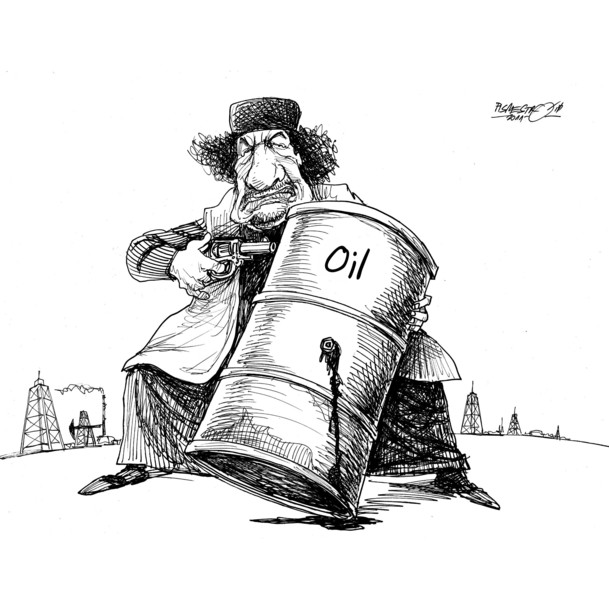
As the dominoes started falling across North Africa, it was only a matter of time before unrest spilled over in Libya. However, Libya was different from Tunisia and Egypt. Without a history of opposition activity, the rebellion has been poorly coordinated and clear leaders were hard to identify. The patronage system appeared to be strong and those benefitting from Gaddafi’s largesse were quick to rally to his side in the initial stages. Moreover, Libya’s patronage system was highly liquid, as evidenced by the more than $60 billion government deposits in local banks – an astounding 99% of Libya’s GDP. By comparison, lending to the private sector only accounted for 11% of its GDP, underlying the rentier characteristics of Libya’s political economy.

5.      Arab petrodiplomacy: a double-edged weapon

The concept of oil as a diplomatic weapon and means for psychological warfare is as old as the Arab-Israeli conflict itself. Especially during the 1967 six-day Arab-Israeli war, Middle East oil became even more important as a diplomatic weapon to the oil-exporting Arab nations due to the fact that oil had almost entirely replaced the use of coal since 1965. However, the use of oil as a diplomatic weapon by the Arab nations against the West has its pitfalls. Applying diplomatic pressure through oil embargoes has mainly missed its primary target, since the United States has remained virtually unaffected by them.  Before the oil weapon could cause irreparable damage to the American economy in the 1973 oil crisis, the oil embargo was quickly eased. The early lifting of the embargo was driven by economic impulses that a major recession in America would affect the entire world adversely. Moreover, the oil embargo of 1973 has paradoxically strengthened the American position in the Middle East, especially in Saudi Arabia. American oil companies, such as Aramco, are still making high profits and continue to operate in the region.

6.      Conclusion

Whether we are discussing the pitfalls of Arab petrodiplomacy,  the intricate task of sensibly managing oil revenues, the dangers of becoming a breeding ground for Islamist groups or the rise of the rentier state, oil-rich nations of the Arabian peninsula and beyond have been confronted with numerous challenges. Although the possibilities oil and its revenues can provide seem endless, they are nothing but a curse in disguise. There are still huge challenges to face when it comes to creating sensible spending policies, managing budgetary controls, keeping overconsumption in check but above all, an equal distribution of wealth. Still too often oil revenues are used solely to aggrandise private fortunes. More efforts should be made to create diversified economies, expand the private sector and ensure that oil revenues are reinvested in domestic development programmes. Development, to mean anything at all, must include the development of the productive capacities of the people themselves, and this is only partly promoted by the provision of transport facilities, factories, buildings and other infrastructure. The receipt of foreign revenues – money – does not in itself improve the capacities of people, a common mistake which oil-rich Middle Eastern countries have often made. This is what we can call absorptive capacity: beyond a certain level, no increase in the availability of capital or other direct inputs can influence the rate of development if a country lacks the social, institutional, and political capacities to utilise increased capital, labour, and natural resources.


References

  • Ali, Sheikh R., 1987. Oil and Power: Political Dynamics in the Middle East. London: Pinter Publishers
  • Anthony, John Duke, 1975. The Impact of Oil on Political and Socioeconomic Change in the United Arab Emirates. In J.D. Anthony, ed. 1975. The Middle East: Oil, Politics and Development. Washington: American Enterprise Institute for Policy Research, Ch. 4.
  • Armitstead, Louise, 2008. Dubai’s Palm Jumeirah sees prices fall as crunch moves in. London: The Daily Telegraph (20 November 2008).
  • Gilbar, Gad G., 1997. The Middle East Oil Decade and Beyond: Essays in Political Economy. London: Frank Cass & Co LTD.
  • Licklider, Roy, 1988. The Oil Weapon in Theoretical Context. In R. Licklider, ed. 1988. Political Power and the Arab Oil Weapon. London: University of California Press, Ch. 1
  • Licklider, Roy, 1988. The “Lessons” of the Oil Weapon for Theory and Policy. In R. Licklider, ed. 1988. Political Power and the Arab Oil Weapon. London: University of California Press, Ch. 7
  • Loutfi, Muhammed, 1975. Prospects for Development and Investment For Oil Producing Countries. In J.D. Anthony, ed. 1975. The Middle East: Oil, Politics and Development. Washington: American Enterprise Institute for Policy Research, Ch. 4.
  •  Noreng, Øystein, 1997. Oil and Islam: Social and Economic Issues. Chichester, West Sussex (UK): John Wiley & Sons LTD
  • Penrose, Edith, 1975. International Oil Companies and Governments in the Middle East. In J.D. Anthony, ed. 1975. The Middle East: Oil, Politics and Development. Washington: American Enterprise Institute for Policy Research, Ch. 1.
  • Said Zahlan, Rosemarie, 1999. The Making of Modern Gulf States: Kuwait, Bahrain, Qatar, the United Arab Emirates and Oman. New York: Ithaca Press
  • Sayigh, Yusif A., 1975. Oil in Arab Developmental and Political Strategy: an Arab View. In J.D. Anthony, ed. 1975. The Middle East: Oil, Politics and Development. Washington: American Enterprise Institute for Policy Research, Ch. 2.
  •  Stocking, George W., 1970. The Economics of Middle East Oil Pricing: Costs, Prices, Profits and Revenues. In G.W. Stocking, 1970. Middle East Oil. Tennessee: Kingsport Press, Inc., Ch. 21
  • Tempest, Paul, 1993. The Politics of Middle East Oil. London: Graham & Trotman Limited
 

Assessing the impact of the Iranian revolution on the world beyond the Middle East


By Matthias Pauwels, 7 Oct, 2011

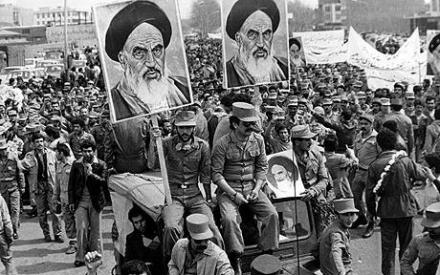
When an uneasy coalition of religious leaders, secular intellectuals, and bazaar merchants spearheaded the anti-Shah movement in Iran, the Iranian revolution would cause ripples well beyond the Middle East as the new regime began alienating once close western allies, mainly the United States. In the Khomeini era, US foreign policy toward Iran would shift from one of total commitment to one on the defence, embedded in Iran’s rampant anti-Americanism.

As Khomeini’s triumph was a blow to America’s credibility, it encompassed a boost to Soviet diplomacy in the region, especially in the early days of a nascent revolution. However, Iran’s bilateral relations with the Soviet Union would prove to be extremely bipolar, ranging from Moscovian hopes of fruitful development of good neighbourliness to large-looming mistrust in the Moscow-Tehran relationship.

Moreover, at the time of the 1979 revolution, and repeatedly since, political analysts have argued that Western Europe would enjoy a better, privileged, and more stable relationship with Tehran. But as the course of history proved, normalisation – or even reconciliation – with the Iranian government did not eventuate as hoped. On the contrary, the dream of a reasonable Iran and a compliant Western Europe has not been realised (Halliday, 1994: 309).

In this essay, I will discuss how the Iranian revolution and the Khomeini era have influenced Iran’s bilateral ties with the United States, the Soviet Union and Western Europe. Drawing back upon the pre-revolutionary foreign policies of the aforementioned, the revolution has caused a considerable tension, not to mention alteration, in the international community’s foreign policy track record toward Iran. As the Carter administration had the greatest difficulties manoeuvring its way around the Khomeinist ideological view of America and as the political hot potato of the American embassy hostage crisis unfolded, the United States found itself simultaneously confronted with a massive brain drain from Iran, where the departure of a large number of highly educated elite was embedded in the political impetus of the revolution and its aftermath. Consequently, I will not only address the impact of the revolution on Iran’s bilateral ties with the United States, the Soviet Union and Western Europe, but I will additionally discuss the socio-economic impact of the extent of brain drain from Iran to the United States.

The end of American geopolitical determinism toward Iran

The triumph of the Khomeini forces and of the Iranian revolution in February 1979 marked the beginning of a highly critical period in American-Iranian relations. For the United States, the Iranian crisis was a wasteful diversion, conflicting with real American interests and intentions. For both the Shah and the US, a decade-long embryonic American involvement in Iran had paid off handsomely in the initial stages (Ramazani, 1982: 9). By making security and military ties with the United States the centrepiece of his American policy, the Shah had successfully projected himself as a full-fledged American ally, hoping to resolve basic problems of political legitimacy and authority of his regime partly with the aid of the United States. But just as the Shah’s wooing and winning of American support for his regime was anchored in his domestic policy of strengthening his security forces and boosting economic modernisation, the US had its own reasons for involvement in Iran. The imagery that prevailed among US policy makers was a classic Cold War one and the Shah, in this view, was a major regional surrogate of American policy and could be counted on to ‘stem a red tide sweeping the Horn of Africa, South Yemen, and Afghanistan.’ (Cottam, 1980: 298). Drawing back upon the Shah’s anti-communist stance, the American prevailing view of Iran was one of a stable, progressive, and anti-communist regime.

When it became clear to Washington that the Shah’s regime was on the verge of toppling in 1978-1979, American policy toward Iran became enmeshed in ambiguity. Although the Carter administration was initially hesitant to publicly denounce the Shah, Washington was more than convinced by the beginning of 1979 that the Shah’s regime was finished.In the early stages, relations between the United States and the Khomeini regime were cool but not hostile (Snyder, 1999: 277). When the United States accepted the downfall of the stabilised Bakhtiyar government and his replacement by the moderate Bazargan cabinet, appointed by Khomeini himself, US policy toward Iran was still embedded in a Cold War thought pattern where Iran remained a pivotal state in America’s anti-communist crusade. Since Washington’s main global and even regional problem was not Iran but the Soviet Union and its influence, a stable and united Iran was an American objective no matter who ruled in Tehran. Therefore, US post-revolution policy was premised on the assumption that ‘the emerging Islamic Republic was an established fact and the Department of State was prepared to establish correct formal relations with the new regime.’ (Snyder, 1999: 277) Since Washington’s greatest fear during the first months of the revolutionary government was of a leftist takeover with possible Soviet assistance, a consideration which was further sharpened by the Soviet invasion of Afghanistan in December 1979,  the Carter administration had every intention to show the new regime its friendly intentions through various gestures, including face-to-face meetings, rapid recognition of the Bazargan regime, and material cooperation (Rubin, 1980: 311). However, US-Iranian relations gradually turned sour, finally leading to Iran’s rabid anti-Americanism. The idea that President Carter sought to build a new and friendly relationship with Iran never penetrated the radical fraction of the revolution, who cleverly manipulated the hostage crisis to their advantage in order to weed out the liberal fractions of the revolution. The idea that the global hegemon was still keen on dictating events within Iran and Iranian political culture was a crucial aspect of the Khomeinist ideological view of the United States. Even when Khomeini called for an unapologetic isolationism, thus breaking away from the omnipotence of American influence, the Reagan administration still attempted to befriend Tehran for years in spite of the hostility it demonstrated toward the United States, and this because of Iran’s anti-Soviet foreign policy. Geo-political considerations remained a pivotal part of US post-revolution foreign policy toward Iran, anchored in wishful thinking that the more radical ardour of the revolution would gradually cool and moderates, pragmatists, and technocrats would emerge as dominant in Tehran.

However, the hostage issue proved to be a critical stage in the alteration of Washington’s foreign policy toward Iran. As Rubin (1980: 316) notes, the frustrating spectacle of over fifty American representatives being held as prisoners month after month in the face of seeming US impotence had a tremendous psychological effect on America’s relationship with Iran. In the early Spring of 1980, Carter radically changed his policy of rapprochement after the Iranians had failed to comply with various agreements with Algerian third-party mediators. Moreover, as Tehran adopted a policy of complete isolationism, declaring to default on its foreign commitments in the autumn of 1979, including loans by American banks with a total capital exposure of $2.2 billion in Iran, Carter made the inevitable but wise decision of freezing the assets of the Iranian government in the US. Had it not been for this decision, the unilateral action by Tehran could have had serious repercussions for some US banks, vis-à-vis possibly triggering a severe financial crisis.

Within the United States, the hostage issue had its own impact on domestic politics and the Presidential election campaign. The high visibility of the question in the closing days of the campaign brought into vivid focus Carter’s inability to secure the hostages’ freedom (Rubin, 1980: 320). The Carter administration’s emphasis on human rights and reform and its stress on regional approaches rather than on a globalist geopolitical strategy – a policy often mentioned by right-wing globalists as the main culprit for the fall of the Shah’s regime – seemed to become the likely victim of a new era that was ushered into American diplomacy. As stated earlier, the Republican view concerning Iran did not push Reagan toward an antagonistic Iranian foreign policy initially, but the ongoing hostage crisis did accelerate the breakdown in relations between the two countries. The combination of Khomeini’s anti-Americanism and the hostage dilemma played a pivotal role in altering the mood in Washington, moving away from attempting to achieve détente and instead adopting a knee-jerk, hard-line policy toward Tehran. Blunt policy instruments such as economic embargoes and military threats in seeking to pressure the regime to change its ideological perspectives have only strengthened the Khomeinist anti-American push for isolationism. Perhaps Rubin (1980; 323) summarises the policy paradox of US-Iranian relations in the post-shah era in the most spot-on manner: ‘never before have cordial relations with a stable regime in Iran seemed more important to American geopolitical interests; never before has such a state of affairs seemed more unlikely.’

Impact of Iranian brain drain on American civil society

Not only Washtingon’s geopolitical interests toward Iran suffered a blow in the post-revolution era. The United States found itself additionally confronted with a considerable brain drain from Iran to the United States, measured by the migration rates of Iranian nationals to the US with tertiary education, including physicians and professors. Whilst economic-related factors are normally the main driving force for migration, in the case of Iran, political factors are found to be the main push force. With Khomeini on a mission to de-Westoxicate the higher education system in Iran, universities were officially closed from April 1980 for about three years under the banner of the so-called Cultural Revolution. Consequently, secular students and professors who opposed the remodelling of Iran’s education system according to Islamic ideals and beliefs, were purged and the newly established regime began a large-scale crackdown against any oppositional forces. In the 1981-1996 period, Iran was ranked fifth among countries with the highest numbers of refugees admitted to the US (Torbat, 2002: 276). Moreover, in the 1979-1980 period, at the hight of the revolution, the number of Iranian students enrolled in the United States reached its peak of 51,310, leaving Iran to be the country with the highest number of students in the United States at the time compared to any other country (Torbat, 2002: 277). The purging of the educated elite who left Iran and the new graduates abroad who chose not to return home created a large pool of highly educated and skilled Iranian professionals in the United States, causing Iran to experience a huge amount of human and financial capital flight. Whilst the departure of highly educated elite and university students from Iran caused a social loss to the country, it has provided the United States – a country that was built on immigrant human capital – with an unbridled opportunity to incorporate the Iranian educated elite in American global civil society, since they are the medium for transferring technology and know-how.  In this light, Torbat (2002: 273) mentions Bozorghmehr, Sabagh and Ansari, who all agree that Iranians are one of the high status immigrant groups, whose educational achievements trump those of others, thus leaving them to achieve rapid success in the American global civil society. Almost half of the educated elite who left Iran after the revolution reside in California (Torbat, 2002: 278), with a brain drain percentage of roughly twenty percent of Iranian medical doctors in the years after the revolution (Torbat, 2002: 283). As the brain drain caused a significant national loss for Iran due to the fact that education is a public good, for the United States the pool of educated, high-skilled Iranians  surely must have contributed to the society’s well-being and knowledge, and as such it is enmeshed in the frame of side-effects in post-revolution, vis-à-vis deteriorating US-Iranian relations.

The Soviet Union and post-revolutionary Iran: memories of a failed rapprochement

As Rubinstein (1981: 599) mentions, Moscow watched the toppling of the Shah and the unfolding of the Iranian Revolution with mingled anticipation and anxiety: no other internal upheaval and political turnabout had brought such immediate gain and promising opportunity. Whilst Khomeini’s triumph was a blow to America’s influence in the region, it seemed promising for the Soviet Union as the Ayatollah began the process of de-Westernisation and thus de-capitalisation. Moscow regarded the Iranian situation as complex but promising, hoping to bend it to its advantage in the bipolar power struggle frame of the Cold War.

In the early days of the revolution, the unfolding of the new government appeared to be fruitful for Moscovian Cold War politics. As two American-manned electronic intelligence collection stations on Iranian soil, adjacent to the Soviet border, were shut down, politicians in the Kremlin surely must have gloated. Additionally, in an early post-revolutionary phase and the confusion that accompanied the move from Iran’s alignment to non-alignment in regard to the United States, Moscow learnt a great deal about some of the most advanced military hardware in the American arsenal (Rubinstein, 1981: 601). And with the communist and pro-Moscow Tudeh party back on the political horizon in Iran, the Soviet Union cherished high hopes that it would manipulate post-revolution developments to its advantage.

Alas, the Soviet Union was not able to push through a harmonious rapprochement with the Khomeini regime and Moscow had largely itself to blame. As the Kremlin became troubled by the chaotic environment surrounding the turbulent post-revolutionary year, Iran grew more wary of the Soviet Union’s true intentions. Many in Khomeini’s entourage were deeply suspicious of the Soviet Union, mainly due to ingrained anti-communism, a remnant from the Shah era, and the communist coup in Afghanistan in April 1978. As Brezhnev tried to push his luck by insisting on reaffirming Articles 5 and 6 of the 1921 Soviet-Iranian defence treaty, bilateral relations took a turn for the worse. The treaty claimed that if a third country threatened to attack the Soviet Union from Iranian territory, Soviet forces would be able to intervene in Iranian affairs in the interest of self-defence. With US-Iranian relations suddenly deteriorating due to the hostage crisis, the Soviet Union was suddenly provided with a rare opportunity to demonstrate its support for Iran’s revolutionary regime, diverting attention away from its involvement in Afghanistan. But as Moscow immediately moved to exploit the mounting tension, hoping to win the trust of the Khomeini government, Brezhnev and his policy advisers were only too clever by half: their transparent pro-Iranian position on the hostage issue failed to ingratiate itself with Tehran, thus deflecting Iranian criticism away from the Soviet intervention in Afghanistan (Rubinstein, 1981: 605). As Soviet occupation of Afghanistan became a major impediment to improved relations between Moscow and Tehran, anti-communist slurs began to emanate themselves from the Khomeini regime. Despite Moscow’s assurance that it would stand by Iran and not tolerate outside, hence American, interference in Iran’s internal affairs, and its veto on a Security Council resolution calling for ratcheting up economic sanctions against Iran, Tehran sharply denounced Russia’s military intervention in Afghanistan. Moreover, its insistence on the validity of the 1921 Soviet-Iranian treaty served as an ever-present reminder of Russian imperial ambitions, validating Khomeini’s claim for an unapologetic isolationism. In many ways, the Kremlin was its own worst enemy on the matter of normalisation (Rubinstein, 1981: 603) and thus was not able to benefit fully from the Iranian Revolution and the breakdown of US-Iranian relations.

Western Europe during and after the Khomeini period

At the time of the revolution and shortly after, political analysts shared the expectation that Iran’s relations with Western Europe would be better than those with the United States or even the Soviet Union. Not caught in the middle of an all-consuming Cold War struggle, Europe had adopted a policy of “neither West nor East” (Halliday, 1994: 312), resulting in the fact that European countries – such as Germany – had become Iran’s major trading partners. Therefore it seemed reasonable that a post-revolutionary Iran would not take any drastic measures to offset its relationship with Western Europe, since the Khomeini regime had opted for a strict non-alignment with the United States and therefore had limited the direct importation of as many US products into Iran as possible.

Whilst Britain had been associated by the Khomeini regime with the external domination of Iran in the preceding decades, this was not true of for instance Germany or France. In the commercial realm, Germany’s percentage of the total Iranian import market went up gradually to reach a staggering 26 percent share in the post-revolutionary years (Halliday, 1994: 313). And perhaps France was the country that might have been expected to establish the most favourable relations with Iran, given Khomeini’s residence in Neuphle-le-Chateau from October 1978 to February 1979 in exile (Halliday, 1994: 313).

Illusions about harmonious post-revolutionary relations with Iran remained a stubborn element in West-European foreign policy towards the Khomeini regime. Although Germany’s Genscher became the first Western foreign minister to visit the Iranian nation in 1984 after the revolution of 1979, improving bilateral relations proved to be a shaky endeavour for both France and Germany. Factors such as breaching diplomatic immunity during the hostage crisis at the American embassy in Iran and Tehran’s revolutionary foreign policy, shifting away from cooperation towards unapologetic isolationism, made the West take a more critical stance toward the Khomeini regime. Therefore, the querulous history of Iran’s relations with Western Europe in the post-revolutionary period were not the result of accident or aberration on the Western European side, but reflected deeper incompatibilities on both sides (Halliday, 1994: 315).

Conclusion

The Iranian revolution has impacted the world beyond the Middle East on numerous levels. Diplomatic relations with both the United States and the Soviet Union have suffered. The Shah’s downfall drastically altered Iran’s international posture vis-à-vis other nations and most notably the United States. Iran’s fierce independence and unapologetic non-alignment has annoyed the United States because of the Islamic Republic’s geostrategic significance as well as its refusal to compromise its national sovereignty and dignity in any way, thus popularising the view of Iran as a rogue state, refusing to abide by the global hegemon’s dictates. In the post-revolutionary years, diplomatic efforts have not been successful in hemming in the fringes of fanaticism and militancy, leaving a possible US-Iran détente to be nothing but a far-flung utopian dream. The Soviet Union tried wooing and winning Ayatollah Khomeini in the post-revolutionary years but ultimately lost Iran as a trump card in the Cold War struggle with the United States, mainly due to Moscow’s transparent policies and greediness in reeling Iran in as an ally against the Americans.


List of references

  • Bill, J. A., 1999. Iran and the United States: A Clash of Hegemonies. Middle East Report, No. 212, Pushing the Limits: Iran’s Islamic Revolution at Twenty (Autumn 1999), p. 44-46
  • Ramazani, R. K., 1982. Who lost America? The case of Iran. Middle East Journal, Vol. 36, No. 1 (Winter 1982), p. 5-21
  • Cottam, R. W., 1980. American Policy and the Iranian Crisis. Iranian Studies, Vol. 13, No. ¼, Iranian Revolution in Perspective (1980), p. 279-305
  • Fatemin, K., 1980. The Iranian Revolution: Its Impact on Economic Relations with the United States. International Journal of Middle East Studies, Vol. 12, No. 3 (Nov. 1980), p. 303-317
  • Halliday, F., 1994. An Elusive Normalization: Western Europe and the Iranian Revolution. Middle East Journal, Vol. 48, No. 2 (Spring 1994), p. 309-326
  • Panah, M. H., 2002. Social Revolution: The Elusive Emergence of an Agenda in International Relations. Review of International Studies, Vol. 28, No. 2 (April 2002), p. 271-291
  • Ramazani, R. K., 1982. The U.S. role in the Iranian Revolution and the collapse of U.S. influence. In: Ramazani, R. K., 1982. The United States and Iran: The Patterns of Influence (New York: Praeger Publishers, 1982), Ch. 7
  • Rubin, B., 1980. American Relations with the Islamic Republic of Iran, 1979-1981. Iranian Studies, Vol. 13, No. ¼, Iranian Revolution in Perspective (1980), p. 307-326
  • Rubinstein, A. Z., 1981. The Soviet Union and Iran under Khomeini. International Affairs (Royal Institute of International Affairs 1944-), Vol. 57, No. 4 (Autumn 1981), p. 599-617
  • Snyder, R. S., 1999. The U.S. and Third World Revolutionary States: Understanding the Breakdown in Relations. International Studies Quarterly, Vol. 43, No. 2 (Jun. 1999), p. 265-290
  • Torbat, A. E., 2002. The Brain Drain from Iran to the United States. Middle East Journal, Vol. 56, No.2 (Spring 2002), p. 272-295

The Neo-conservatives and Al Qaeda: More Similar than Different?


By Abdulaziz Khalefa, 27 Aug, 2011

Introduction

This article is about two groups, Al Qaeda (AQ) and the American Neo-conservatives.  Before comparing and contrasting their ideological worldviews, I look at their antecedents separately.  I then analyze their worldviews in terms of these antecedents to show the similarities, which I identify as (1) the concern with decadence (2) the premodern epistemology (3) irrationalism; and differences, where one groups is exclusive and backwards looking, the other is more open and forward looking.  I argue that their ideological world views are more similar than different.

Al Qaeda

The evidence supporting AQ as a global organized network of Islamic fundamentalists run by some puppet master is flimsy.  How this evidence was propagated will be discussed in another section below.  There is no real evidence that such an organized network of Islamists with global terrorist cells exists.  Jason Burke more accurately describes AQ as a “tripartite” consisting of around a dozen core members, a network of co-opted (most of which remained autonomous) groups and an ideology.  In the following sections as I look at the group’s ideological antecedents, I also analyze this tripartite and its dynamics.

A Typology of Islamists

It is useful to set up a framework for Islamism to accurately understand where any Islamist group would fit among the numerous others.  Hrair Dekmejian in his book Islam in Revolution typifies Islamists into three categories (1) gradual pragmatic (2) revolutionary (3) puritanicals.

The first two groups can be distinguished based on their legal harmony with the state – both groups accept the nation-state as a useful notion for governance.  Dekmejian describes the gradual pragmatic Islamists as “[Operating] within the confines of legality as defined by governments.”  The revolutionaries in contrast would “advocate the resort to jihad as a means to establish Islamic rule.”  Open confrontation with the effective governments is the characteristic placing Islamists in this category.

The puritanical Islamists are distinguished by their fundamental understanding of their faith.  It is not merely the open confrontation with governments that places them in this category, but their parochial interpretation of Islam which rejects pluralism.  Dekmejian explains “…puritanism centers on the quest to emulate strictly the Prophet’s example and life-styles of the first Islamic community… They aim to recreate the Prophet’s Ummah, and oppose innovation or efforts to adapt to modern conditions.”  It is useful to regard them as the Salaf who aim to emulate the three generations after the prophet’s lifetime; however it is important to understand that not all Salaf are puritanical, such as those in Saudi Arabia who turn a blind eye to the un-Salafist character of the Kingdom.

Al Qaeda’s Ideological Antecedents

It is in the puritanical category that AQ is placed.  The group is the product of Qutbist thought which reintroduced the concepts of jahiliya (literal translation is ignorance) and Islam.  These terms were used by Mohamed in spreading his message in the 7th century, and are applied by Qutb to current day Muslim communities.  According to Qutb the jahili society and its leadership are aggressive towards Muslims, because they trust in other humans instead of “the lordship of God.”   He goes on to say that Muslims must defend themselves against the jahili people and their leaders.  The jahili society and the leaders they sustain comprise the near enemy.  The far enemy is however comprised of “the US, Israel and other non-Muslim powers.”

What inspired Qutb to write about these concepts, to have them apply to current Muslim society, is tied to his perceived decadence of western society.  John Calvert explains “all of Qutb’s politically oriented writings… point either directly or indirectly, to the presence of a moral flaw planted in the heart of the Western character.”  For example, he showed disdain to the “animal like” mixing of the sexes, and the immodesty of woman when he was in the United States.  It is the Islamic orientation to the decedent western society and form of governance which made jahiliya applicable to the Muslim public.

Abul Ala-Maududi has also contributed to Qutbist thought.  Dale Eikmeir notes a few ideas in Maududi’s books which would certainly have interesting global implications, conjuring the idea of clashing civilizations.  He quotes Maududi as saying in his book Jihad in the Name of Allah, that “Islam wishes to destroy all States and Governments anywhere on the face of the earth which are [sic] opposed to the ideology and program of Islam regardless of the country or the Nation which rules it.”  In his other book, Jihad in Islam, Maududi explains “Islam does not intend to confine this revolution to a single State or a few countries; the aim of Islam is to bring about a universal revolution.”

Going back to Qutb, in Milestones, he writes “…wherever an Islamic community exists… it has a God-given right to step forward and take control of the political authority so that it may establish the divine system on earth….”  Ayman Al Zawaheri, the AQ number 2 and mentor to Osama Bin Laden, in his book Knights Under the Prophet’s Banner explains that the Nasserist regime thought it dealt a decisive blow to the Islamic movement in Egypt when it “executed Qutb and arrested thousands from the Islamic movement.”

Al Zawaheri rebuffs this and claims that the execution of Qutb, and the arrests of the Islamic movement’s members, involved igniting the dissemination of his thought in the Islamic movement.  More importantly Al Zawaheri states after these events Qutbism “has shaped the objectives of the person writing these lines.”  Lawrence Wright also notes that Ayman Al Zawaheri aims “to put Qutb’s vision into action.”

Eikmeir explains that AQ has however, for strategic reasons, decided to abandon the traditional sequence which first sought defense against the near enemy followed by the far enemy.  Instead Eikmeir explains that

It is only natural to assume that [Bin Laden and Al Zawaheri] compared the failures of the Muslim Brotherhood, al-Jamaa al-Islamiya, Egyptian Jihad, and other organizations to prevail over the “near enemy,” to the successes of the Afghan mujahideen in their victory over the Soviets.   They reasonably concluded that the “far enemy” strategy was the wiser course of action.

By focusing on the far enemy AQ was no longer a domestic concern for the Taliban’s Islamic Emirate of Afghanistan (IEA) (1996-2001) to deal with, but a global concern.

The global terrorist attacks (such as 9/11) attributed to AQ implied that the organization was run by a puppet master who could attack at any given order.  Burke however explains that “when it came to terrorist attacks, it was more often al-Qaeda that was approached with ideas or plans for an attack than groups or individuals approached by al-Qaeda.”

The Neo-conservatives

            John Mearsheimer explains that most Neo-conservatives “believe that U.S. power should be used to encourage the spread of democracy and discourage potential rivals from even trying to compete with the United States.”  Current Neo-conservative ideology unites around three common themes (1) “the human condition being defined as a choice between good and evil” (2) Power politics (3) a focus on the Middle East and Islam as the theater for American overseas interests.

As for who is a Neo-conservative, Halper Clarke explains that “their movement is not a card-carrying organization.  They do not hold meeting or conventions.  There is no absolute dividing line between who is and is not a Neo-conservative.”  In the following section I look at the moral concern and its implications, and then the theoretical influences.

Morality, Liberalism and the American Interest

Michael Williams explains that Neo-Conservatives “view the idea that individuals have interests… as an important moral principle.”  Neo-conservatives view this individual interest, while essential for the operation of modern societies, as “an insufficient basis for a healthy and viable polity.”  Neo-conservatives explain that at the individual level, pursuing nothing but self interest leads to “hedonism and despair.”  These sentiments are expressed by Irving Kristol, the so called “godfather of Neo-conservatives.”

A main reason why the Neo-conservatives hold this view is because of the social impact they think it will have; where the excessive individualism becomes “destructive of the communal ties and values.”  Williams succinctly summarizes the Neo-conservative view of liberalism’s impact on society saying “Individual liberty and self-realization may be the honestly held and even well-intentioned goals of this form of liberalism, but its consequences are anomie and degradation.”  Williams, in addition to the individual and social aspects of experiencing this particular “form” liberalism, also looks the political aspect.

The political aspect is important because it shows that the negative individualism in society is transferred to the state level, which would turn politics into “nothing more than the pursuit of individual or group interests” eliminating any sense of higher values and destroying what is in the interest of the public.  It is from there Neo-conservatives conclude that the “main threat confronting modern liberal society… is decadence.”

Yet Neo-conservatives extol the liberal values abroad, and have gone to war for them.  This is explained by the Neo-conservative distinction of two types of liberalisms.  The first is liberal modernity which Kristol points out would have the bourgeois “live off the accumulated moral capital, traditional religion and traditional moral philosophy….”   The second type is the liberalism of the Scottish Enlightenment which compounded ‘virtue’ with self interest, to have “the economic and political enquires of the Scottish Enlightenment also be moral.”

In embracing the second type of liberalism, Neo-conservatives adopt a two-fold strategy (1) they seek to rekindle their view of liberalism within American society (2) they adopt a forward-looking form of American nationalism aimed at extending America’s values outward.  Here the Neo-conservatives talk of ‘benevolent hegemony’, and how ‘American foreign policy should be informed with a clear moral purpose, based on the understanding that its moral goals and fundamental national interests are always in harmony.’

Theoretical Influences

Jesus Valesco identifies Leo Strauss and Samuel Huntington as theoretical influences to Neo-conservatism.  He associates Huntington with the first (Reagan) generation of Neo-Conservatives and Strauss with the second (Bush junior); however he notes that the second generation “undeniably” has promoted ideas from both Huntington and Strauss.

Strauss’s affiliation with the Neo-conservatives is controversial, with less evidence of a direct link between him and both generations.  While Huntington’s contributions to Neoconservative thought is more apparent, Valesco explains that “the best way to evaluate the influence of Strauss is to understand that the implications of his ‘teachings were almost always indirect’.”  Valesco identifies Strauss’s contributions to be (1) Communism and fascism, and ultimately Islam are evil (2) democracies are fundamentally different from tyrannies (3) America needs “[a] leader, especially strong  in his actions, firm in his beliefs and willing to go against the grain to combat tyranny.”

Strauss’s esotericism is also linked to a peculiar method of intelligence analysis.  Abram Shulsky, a student of Strauss and a Neo-conservative directly involved in the Bush administration’s information gathering and analysis about Iraq prior to the 2003 invasion, explains that the conventional “mirror imaging” (to see others as fundamentally similar to one’s own)  in intelligence analysis “is misleading.”  He advocates the use of Strauss’s political philosophy as a solution instead of the social scientific analysis of information, so to pick up on the deception of political life (which has become the norm).  This would go on to mean that if the available intelligence “doesn’t fit their theory, they don’t… accept it.”

I found it interesting how this method of intelligence analysis is tied to the moral concern mentioned above.  Patricia Owens explains that it is possible to argue that Strauss advocated the use of the “noble lie.”  In quoting Strauss she states “the morally and intellectually inferior must believe in noble lies, ‘statements which, while being useful for the political community, are nevertheless lies.’” In the introduction I mentioned that the evidence supporting AQ as an organized network run by a puppet master is flimsy, this method of intelligence analysis can best explain how this evidence came about.

Huntington is directly affiliated with the Neo-conservatives.  His ideas are explicit unlike the esoteric Strauss.  Valesco highlights that Huntington contributed the idea of “…a general clash of civilizations” to Neo-conservative thought.  In his article The Clash of Civilizations? Huntington states that the new source of conflict will not be “ideological or economical.”  Instead he describes an Islamic civilization as well as a Western one among others, who contest each other.  He explains that Islam “has bloody borders” and it is the Western and Islamic civilizations where the conflict will be the most intense.  Huntington also contributes the idea of “Americans buil[ding] their identity according to an unacceptable other.


Comparing and Contrasting

I identified the similarities in ideological world views (IWV) between AQ and the Neo-conservatives as (1) concerns about moral decadence (2) the premodern good vs. evil epistemology (3) and irrationalism.  The differences however is that while the AQ IWV is parochial, exclusive and maintains backwards looking (anti-globalization) rule sets; the Neo-conservatives are more open, inclusive of others on the international scene and operate with forward looking (globalized) rule sets.

Similarities: Nihilism, Irrationalism and the Moral Choice

The BBC documentary The Power of Nightmares in its introduction states that “both [AQ and the Neo-conservatives] were idealists who were born out of the failure of the liberal dream to build a better world, and both had a very similar explanation to what caused that failure.”  A good starting point to understanding this similarity in their explanations is perhaps the German philosopher Friedrich Nietzsche – who famously remarked “God is dead.”

The word decadence is used by Nietzsche to define “modern progress.”  The reason why Nietzsche would define progress with a seemingly antithetical term has to do with morality; with the modern notion of the death of God, the person would become increasingly nihilistic.  Nihilism is therefore the reason why progress is defined as decedent – progress is associated with declining morality.  The ideological antecedents of both AQ and the Neo-conservatives acknowledge that progress can lead society to nihilism (or jahiliya in Qutb’s case).  How the two groups picked up on this decadence in society is evident with their concern on how unrestrained individualism can corrupt society.

As for the Zoroastrian concept of good vs. evil; the Neo-conservative choice to advocate a world view of liberalism vs. illiberalism is not very different from AQ’s choice (or existential obligation from God) to perceiving a struggle between Islam vs. jahiliya.  The similarity can be noted in the epistemologies the two groups adopt, which is the premodern epistemology.  This epistemology does not see shades of grey, or a middle ground, but absolutes of right and wrong, good and evil, with us or against us, and so on.  Further to this, pre-modernism involves an additional variable which is value judgments.  These value judgments are best reflected in how both groups claim to hold the higher moral ground while decrying the other.

In the Neo-conservative case, I mentioned above that they speak of benevolent hegemony and “altruistic imperialism.”  The reason why they think it is altruistic is because it will “bring the benefits of progress to benighted regions of the world.”  This can explain why the Bush administration decried “conquer” and “invasion” as terms employed in their actions against Iraq in 2003, and instead used “liberation.”  This stance cannot be maintained without the conviction that what they propagate (liberalism) is superior in some sense to what they view as benighted.  In simple terms, it is the good vs. the evil.

In AQ’s case in December of 1998 Bin Laden, who pursues the Qutbist idea of “taking control of the political authority to establish a divine system on earth”, said that the Islamic Emirate of Afghanistan (IEA) has realized the desired form of governance.  A few months after Mulla Omar, the de-facto head of state of the IEA at the time, murdered Iranian diplomats Bin Laden explained

[Mulla Omar] is the only legitimate ruler of the state of Afghanistan, where Allah, praise and glory be to him, has guided the steps of Muslims so that an Islamic country can be ruled by Allah’s Sharia for the first time in tens of years.

This is significant because it shows that as a puritanical group AQ is not aspiring for impossible dreams, but a kind of polity they helped bring about which they have considered acceptable by their own standards. To them, Islam has finally defeated jahiliya in Afghanistan.

Another similarity is the irrationalism in constructing IWVs.  The Neo-conservative selective intelligence approach born out of Strauss’s esotericism, as shown above, is peculiar; the intelligence had to fit the theory they already had.  It was not empirical and they clearly spoke out against social science. This peculiar method of analyzing intelligence can be seen at work in the lead up to the Iraq war, when the United States government tied the 9/11 attacks to Saddam Hussein.  Similarly, Ana Soage notes the shift Qutbism took from the apologetic path Islam was heading towards (as with the Church in the face of the enlightenment), to the characteristic fundamentalism of AQ.  She states

…independent observers have indicated that al-Banna and his followers had a radically different approach to reform: as mentioned above, Moussalli considers al-Afghani and ‘Abduh “modernists,” and al-Banna and Qutb, “fundamentalists.” The crucial difference between them is that the former tried to prove that religion and reason were in harmony, whilst the latter distrusted the human mind.

Differences: Rule Sets and Globalization

AQ has in its antecedents and own announcements called for the revolt against the heads of state of Muslim countries as well as a call for jihad against the enemies of God.  It has considered the Sunni Muslims themselves to be infected with jahiliya, while the Shia are khawarej (those who left Islam) who are just as bad, if not worse, than the enemies of God.  In contrast, the Neo-conservative desire for liberal democracy is not as difficult to sustain by a third party as it is AQ’s Puritanism.

Despite the skepticism of rationality the two groups share – I must point out that to the rest of the international community the Neo-conservatives seem to better appreciate empiricism than a puritanical group.  The Neo-conservatives can (relatively speaking) operate empirically and rationally within the realm of liberalism.  The same cannot be said of AQ which is wholly faith based, and maintains a “distrust of the human mind” even within the realm of Islam.

This leads to the issue of rule sets between AQ and the Neo-conservatives.  While the AQ rule sets are revisionist and endogenous to Islam, the Neo-conservative rule sets are forward looking and pro-globalization.  AQ seeks to emulate the Salaf of the 7th and 8th centuries, and are obsessed with land, blood and creed (Jerusalem and the Arabian Peninsula, Muslims and Sharia).  They are revisionist about how the world conducts itself, resisting globalization.  This makes it disconnected from the rest of the developed world, especially with regards to diplomacy; the Iranian diplomats murdered by IEA remain a testament to that.

The Neo-conservative rule sets however are shared with the rest of the modern world.  The status quo diplomatic protocol between states is not an issue.  While there will always be cultural differences and preferences from one state to another, they realize that principally they will be dealing with the representatives of nation states; not representatives of a 7th century concept of a religion and empire.  They maintain an unprecedented IWV where it is not blood and land that concern them, but the prospects for a liberal peace.

Conclusion

The ideological world views of AQ and the Neo-conservatives are reactionary to moral decadence.  Both maintain premodern epistemologies.  They share the conviction of holding the moral high ground and seem to distrust rationality.  However there are also some notable differences between them in that the Neo-conservatives are “more marketable” than AQ to the rest of the international community.  While AQ is obsessed with the past, the Neo-conservatives are forward looking.