The North-East in India’s Look East Policy

India’s Look East Policy seems to offer huge potential and developmental scope for India’s North Eastern Region. However, there is an absence of sincere dialogue between the northeastern states and the center, resulting in an obvious gap between policy and implementation.

Editorial Note: While this paper was originally written in 2010, it brings about important perspectives on the developments of India’s internal and foreign relations. For this reason, we found merit in publishing this previously unpublished paper, even though it does not account for developments post 2010.


By Sabina Yasmin Rahman, 15th May 2013 

In the year 1991-92, under the then Prime Minister, P.V. Narasimha Rao, India launched its “Look East” Policy (LEP), an active economic policy of engagement with Southeast Asia to be implemented as an official initiative in achieving two objectives: the encouragement of trade links with individual partners and to provide foreign employment for India’s own expanding work force. This paper is an attempt to critically analyze the various underpinnings of this policy and study the impact it has been able to make so far with special reference to the context of the North-east of India.

Backdrop of the Policy:

With the collapse of the Soviet Union at the end of the Cold War and the onset of the era of globalization and economic liberalization, the need to secure international trade and encourage foreign investments was felt strongly by nations all over the world. The 1990s was a period seeing rapid economic development and growth of Asian countries, especially in Southeast Asia. Southeast Asia came to be recognized a region with vast economic potential and the Indian sub-continent was fast emerging as an economic and political force to be reckoned with. This is when the Indian leadership came up with the concept of “Look East”. India sought to create and expand regional markets for trade, investments and industrial development. It also began strategic and military cooperation with nations concerned by the expansion of China’s economic and strategic influence. Thus, from the very start, India’s strategy has focused on forging close economic and commercial ties, increasing strategic and security cooperation with emphasis on historic cultural and ideological links.

Continue reading

Are transnational socioeconomic trends trumping Zionist ideology in the Occupied Palestinian Territories?

In this essay, the author explores how globalization of Israeli capital has undermined the ideological thrust of Zionism in constructing policies towards Occupied Palestinian Territories. 


By Kanchi Gupta, 27th August, 2012

This essay demonstrates that while Zionist ideology is predicated on the expansion and territorial integrity of ‘Eretz Israel’, the nature of its administrative regime was steered by Israel’s internal socioeconomic dynamics. Israel’s sui generis ‘instrumentalization’ for the ingathering of global Jewish diaspora and resulting ethnic make-up, as well as social democratic, secular and religio-national ideological preferences are inclusive of Israeli political structure. However, as Israel’s economy opened to global capital, neoliberal capital interests spilled across borders and determined the construction of Israel’s policies in Occupied Palestinian Territories. Therefore, the essay determines that Israeli policy outlined below must not be viewed solely through the lens of ideologically driven military conflict. Rather, Israel’s military policy is an amalgamation of its economic and political strategies, which have further created transnational neoliberal economic imperatives. Continue reading

The Role that War plays in Nation Building

In this essay, the author attempts to assess whether war assists in constructing or deconstructing state and nation building. An example of constructive war and deconstructive war is given by assessing Afghanistan and Vietnam and the role of the three causal mechanisms‘Capital, Coercion, and Nation building’ . The author concludes by examining Syria and Lebanon as case studies to see if the causal mechanisms could also be extended to explain state and nation formation in the Middle East.


By Abd Al-Aziz Abu Al-Huda, 29th May, 2012

Throughout history, war has often been portrayed and remembered for its capability as a destructive force. Yet looking at the beginning of many states in early modern Europe, we tend to find war as the means by which independence was acquired. Such observations, analysed by Charles Tilly and Brian Taylor and Roxana Botea, has then led to the interpretation that war can also be a constructive force, particularly in aiding the formation of states or nations. The opposite is equally accurate, for war historically has also proven to create conditions for the demise of many states. We can then understand and assume that war is a highly ambiguous instrument requiring specific settings and conditions to promote state and nation formation or lead to state destruction.

Continue reading

Are Advances in Technology the Only Force for Tackling Climate Change?

This essay puts forward the argument that without several revolutionary ‘black swan’ innovations, technological advances will need to be supported by strategic planning and a restructured energy market to tackle climate change.  The current market ‘lock in’ of high-carbon energies and high cost of low-carbon technologies mean that the potential for new technologies to gain widespread adoption are highly restricted.


by Jack Hamilton, 24th March, 2012

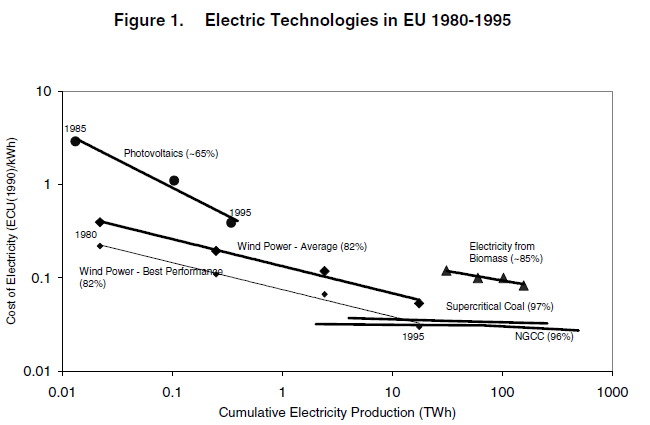
‘Environmentalists are fiddling while Rome burns’.  This is the claim of Vinod Khosla, the founder of Khosla Ventures, a venture-capital firm that is currently investing over $1 billion into low-carbon technologies in the hope that a ‘black swan’ innovation will be a key to tackling climate change.  In Khosla’s estimations the green technologies of electric cars, wind turbines and smart grids will not be enough and rather there needs to be a ‘1000%’ change if the whole world is to enjoy the energy-rich lifestyle of the Western world.  Until the green technologies are available at a price which is affordable in the developing world, ‘everything is a toy’[i].  Others maintain that existing technology will be sufficient if market factors facilitate its widespread adoption.  Joseph Romm, the editor of Climate Progress, argues that the way to tackle climate change is through the ‘accelerated deployment of existing technologies’ in order to move down the cost curve more rapidly than a breakthrough[ii].  These two opposing views set up two fundamental questions: are advances in technology alone able to tackle climate change and if this technology exists why has it not been adopted?

Continue reading

Should the ‘new wars’ be seen as a continuation of economics by other means?

In this essay the author attacks the idea that modern conflicts are more driven by economic motivations than those in the past. Romantic ideals of gentlemanly European conflicts have masked the harsh realities of war. Even in the most egregious cases of greed and ‘warlording’, the political motivations can never be fully amputated from the criminal behaviour.

If modern conflict is to be understood the language of ‘new wars’ must be avoided. In the case of the Lomé Peace Agreement, the concept of economic determinism was taken to the extreme and led to the subsequent collapse of the peace. Future peacemakers must keep this simple message in mind: money is not the only form of power.


By Jack Hamilton, 4th May, 2012

In 2007 the Former U.S. Treasury Secretary Lawrence Summers described the links between economics and politics in conflict regions as ‘something out of Dickens: you talk to international relations experts and it’s the worst of times. Then you talk to potential investors and it’s one of the best of all times’ . This idea that modern warfare has evolved into a new era in which economic motivations have overtaken political ambitions has become popularised in the post-Cold War era. The notion has led Carl von Clausewitz’s aphorism to be rephrased to claim that ‘war has increasingly become the continuation of economics by other means’ . This substitution of ‘politics’ in favour of ‘economics’ poses the question: have economic incentives created a situation in which there is now more to war than winning?

Continue reading

Democracy is for Losers: Why Do Democratic Counterinsurgencies Fail?

In this article the author assesses the view that democracies can never be successful in fighting a counterinsurgency.  Taking the case studies of Afghanistan and Northern Ireland it is clear that the power of the propaganda war inhibits the capacities of democracies to act freely and that every military leader must understand that their actions will be perceived as an act of political warfare.


By Jack Hamilton, 16 Nov, 2011

General Sir Gerald Templer claimed of counterinsurgency that “the shooting side of this business is only twenty five percent of the trouble”[i].  Due to the nature of democracies and modern warfare, counterinsurgency may well now be one hundred percent political.

The political vulnerability of accountable democratic leaders, omniscient media presence and the potential propaganda exploitation of all combat actions mean that military officials at every level now need to understand that their every action can be construed as an act of political warfare in which political outcomes are more important than battlefield success.  This issue creates huge problems for democracies when engaging in counterinsurgencies but can also open up opportunities.

This essay will posit that the inherent challenges that democracies face when engaging in counterinsurgencies can be turned into opportunities by using the democratic nature of the state, the local population and the open media to their advantage.  However, these practices have their limits and the overemphasis on any one of these factors has the potential to seriously undermine the counterinsurgency effort.

Counter-Insurgency On the Fly

The notion of counterinsurgency is logically contingent on the concept of insurgency.  If counterinsurgency includes all of the measures used to put down an insurgency it must be a pragmatic position that is not fixed but shifting in response to the changes in the insurgency.  An insurgency is an attempt to control a contested political space.  This means that changes in the state, its functions or the international system change the nature of the insurgency.

The constantly changing nature of insurgency means that no single doctrine is able to explain counterinsurgency, despite the popularity of the US COIN Manual.  The British Manual reflects this ethos: “Reflection suggests that, where particular organisations or methods have been exported to other theatres, their success lies in the extent to which they are adapted to local conditions’[ii].

The specific nature of counterinsurgency means that drawing broad conclusions may not be the most useful analytical technique.  Instead, this essay will use case studies of Afghanistan and Northern Ireland to outline some of the challenges and opportunities that democracies face when engaging in counterinsurgency both internally and externally.

Democracies and War: Conventional Success and Unconventional Failure?

Counterinsurgency has enjoyed a recent level of academic attention unseen since the U.S. campaign in Vietnam[iii].  The assumption that small wars were irrelevant to politics has been dismissed due to the increasingly influential role that asymmetrical conflicts take on the world stage[iv].  Since the end of the Second World War insurgents appear to have been relatively successful in these small wars, especially when fighting against a democracy.  This is despite the fact that the democratic protagonists were among the most experienced, successful and resilient states to have been fighting in conventional wars at the time.

The question must therefore be asked, why do democracies seem to be successful in conventional forms of warfare but unsuccessful in carrying out counterinsurgencies?

Are Democracies Losers?

The notion that democracies are systematically more prone to defeat when engaging in counterinsurgency is predicated upon three claims according to Gil Merom[v].  First, the importance of accountability in leaders makes it difficult for a democracy to engage in a sustained campaign.  Second, democracies are restricted from using overt forms of coercion by international and domestic public opinion.  The concerns over human rights abuses and the desire to maintain a good reputation curtail the use of force when fighting insurgencies.  The US COIN Manual begins with the overt statement that insurgents “will try to exhaust U.S. national will, aiming to win by undermining and outlasting public opinion”[vi].   It also warns against excessive violence (“the more force you use, the less effective it is”) since the images of such for can be presented in the media to erode public support at home and prolong the war[vii].  The third factor that can undermine the effectiveness of counterinsurgency efforts by democracies is the freedom of the media which is seen to relay certain images of war, such as the overuse of force, to the domestic and international audience and helps to shape popular opinion.

These same features that appear to restrict the effectiveness of democracies engaging in counterinsurgencies seem to be responsible for their success in conventional forms of warfare.  Democracies have succeeded in ninety three percent of the interstate wars they have initiated since 1815 largely as a consequence of democratic leaders participating in wars where the chances of victory were high[viii].

Are Democracies Winners?

There are several reasons as to why democracies have been successful in conventional forms of warfare.  The first explanation for this stems from the combination of the openness of democratic governance and the political vulnerability of democratic leaders.  This process of freer decision making and the high risk of failure make democracies less prone to start wars they cannot win.  Democracies are more selective in choosing their battles therefore explaining the higher winning percentage.

The second explanation claims that democracies fight more effectively in wars.  This can be due to high levels of cohesion allowing the force to overwhelm the opposition with sheer numbers or due to the advantage of democratic decision making when deciding strategy.

A third reason is that democracies tend to treat their captives more leniently meaning that enemies are more likely to surrender rather than fighting to the last bullet[ix].  The challenges and opportunities for democracies in warfare can be seen as interchangeable depending on the context and the ability of the democracy to frame the conflict to project itself in the best light on the world stage.  A good example of a democracy fostering a favourable narrative in a counterinsurgency was the experience of the British Army in Northern Ireland.

Internal Counterinsurgency – The British Army in Northern Ireland

According to the British Army report on the counterinsurgency effort in Northern Ireland, the intervention was ‘one of the very few ever brought to a successful conclusion by the armed forces of a developed nation against an irregular force’[x].  The Army were perceived to have removed the sting from the violence in the province and allow for a peace process to take shape.  Whether or not this was reality was not the most important factor as the perception of the effort was more significant than the military activities.  This is made explicit in the report following the conflict which frames the conflict as a ‘propaganda war’ in which ‘information is the currency, not firepower’[xi].

When the British Army[xii] was deployed onto the streets of Northern Ireland it sought to draw on the model of counterinsurgency which had been developed for the withdrawal from the Empire[xiii].  This entailed overcoming three of the challenges of counterinsurgency:

  1. The demonstration of ‘political will’ to defeat the insurgents
  2. The battle for ‘hearts and minds’
  3. ‘Police primacy’ in defeating insurgents[xiv]

1.      Political Will

The importance of political will was especially prescient in the case of Northern Ireland following the disunity in the US over the Vietnam conflict.  The British solution to this was for the political parties to graft a bipartisan approach to promote a consistent policy towards the Northern Irish situation[xv].  This undermined the attempts of the insurgents to divide British politics and meant that one party would not offer more favourable terms to one of the parties within Northern Ireland.  It also helped to minimise the public debate over the bigger questions within Great Britain as an inter-party conflict had the potential to stimulate debate over not only the question of withdrawal but over the ‘Irish Question’ in general[xvi].

The apparent fractured nature of democracies was therefore overcome by this act of bipartisanship.  While the inherent threat of fracturing remained the two leading parties used the democratic system to cooperate and thus remove a potential advantage for the insurgents.

2.      ‘Hearts and Minds’

The battle for ‘hearts and minds’ is always crucial to any counterinsurgency effort.  In the case of Northern Ireland this battle would be fought using the weapons of minimal force and psychological operations.  The use of minimal force has been disputed in Northern Ireland due to the ambiguities of counterinsurgency theory.  While the early activities of the Army in Northern Ireland may not have used overt force, small scale efforts such as the Falls Road Curfew meant that the Army was no longer seen as the protector of both the Catholic and the Protestant community.

By isolating only the Catholic community in the use of curfews and internment, those in communities more closely tied to the insurgent efforts felt that the security forces were no longer there to protect them.  It is no coincidence that during the period of curfews and internment in the early years of the 1970s recruitment to the IRA accelerated[xvii].  Large swathes of the Catholic population that were not involved with the IRA were treated as if they were, and this caused widespread resentment of the security forces that were purportedly there to protect them.

Minimal force was also necessary due to the increased role of the media during the conflict.  The internal nature of the conflict meant that the mainstream news in Britain was also being transmitted directly to those engaged in the conflict subjecting the British army to dual scrutiny.  British counterinsurgency therefore had the problem of simultaneously winning the hearts and minds of both the ‘local’ and the ‘domestic’ public.  The British Army manual on counterinsurgency correctly ascertained that the press, if handled well, is ‘one of the Government’s strongest weapons’.  This was backed up by the claim from the British Army press representative in 1972: ‘Northern Ireland is basically a propaganda battle…It’s a propaganda battle backed up by military action’[xviii].

Opinion polls in Great Britain show that the general public was not behind the counterinsurgency campaign in Northern Ireland.  In September 1971 a Daily Mail poll showed that 59 percent of British public opinion favoured withdrawal[xix].  This negative attitude to the conflict was consistent throughout but failed to have an impact on the activities of the counterinsurgency project.  Public opinion in Britain supported more extreme uses of force such as internment and during the punitive years of the Army presence in the province only 7 percent of respondents to a Gallup poll said that the army were being ‘too tough’.  In fact, 90 percent thought that the plans to deal with the IRA were ‘not tough enough’ and 88 percent supported the reintroduction of the death penalty in Britain to combat the insurgency[xx].

Merom assumes that democracies will be restricted by public opinion that will call for less force to be used in counterinsurgency.  In the case of the internal conflict in Northern Ireland the opposite was true due to the perceived costs of the engagement in both human and financial terms.  The response of the British Army was to conduct a propaganda war through the use of ‘black propaganda’ through which they attempted to control the information that was available to the media[xxi].  This permitted the Army to circumvent many of the challenges of the free media and public opinion by removing the fundamental issues such as the ‘Irish Question’ from the debate[xxii].

3.      Police Primacy

The ‘police primacy’ entailed a more expansive role for the local police and a more restricted role for the British Army.  The reason for this was the advantage of the local police in gathering regional intelligence and the increased likelihood that they would be sensitive to local opinions[xxiii].  It would also decrease the costs to the British Army both in terms of the financial and human cost of fighting the insurgents.  The reasoning behind this logic was the success of the policy in Malaya[xxiv] but this failed to take into account the idiosyncrasies of the internal counterinsurgency effort.

The discrediting of the local police force, the RUC, following violent crackdowns on civil rights marches had isolated them from the nationalist community meaning that they would not be able to capture the ‘hearts and minds’ of those most likely to join the insurgency.  Republican paramilitaries also targeted Catholic members of the security forces and reinforced a pre-existing bias in recruitment (under 4 percent Catholic by 1973)[xxv].

The democratic nature of the British state helped to re-establish the trust in the local security forces.  The reformation of the police from the distrusted RUC into the slightly more popular PSNI was part of the peace process that helped to take the sting out of the violence in Northern Ireland.  This process was made possible by providing political concessions to the insurgents.

Entry Concession

The counterinsurgency effort in Northern Ireland put huge amounts of pressure on the democracy of the United Kingdom.  Public opinion and large swathes of the media supported a more coercive approach to counterinsurgency that would have had a hugely detrimental impact on the attempts to win hearts and minds.  Despite this, the use of bipartisanship meant that political unity was maintained despite calls for repression from Great Britain and Unionists within Northern Ireland.  The solution to this potential fracturing was facilitated by the internal nature of the conflict plus the democratic state.  The British government accepted that it could not defeat the IRA in a military battle and accepted that the goal of a united Ireland was legitimate provided that it was pursued through the existing democratic process.

In a study of 267 cases of opposition to state authority Stephan and Chenoweth found that regimes become more democratic as they are more likely to offer concessions to the campaigns that challenge their authority[xxvi].  This was to be the case in Northern Ireland.  The operations in the province can be seen as a success as the counterinsurgency effort helped to take the sting out of the political violence.  In the words of the Banner Report, the reflection of the British Army on the effort in Northern Ireland, the counterinsurgency was a success as it was able to ‘suppress the level of violence to a level which the population could live with, and with which the RUC and later the PSNI could cope’[xxvii].  The statement summarises the success of the British effort to demonstrate a political will to capture the hearts and minds of the population and promote policy primacy.


Installing Democracy from Outside: External Counterinsurgency in Afghanistan

Stable democracies are much less likely to face the challenge of internal war than other regimes types[xxviii].  The consequence of this is that democracies are more likely to be engaging in counterinsurgencies on foreign territory as external occupiers.

The opportunities that exist for counterinsurgency campaigns internally do not necessarily translate to the same form of combat outside of the state.  The most important difference is that achieving a political solution is much more complicated when it is outside the political system, especially in an area of weak governance.  Secondly, the intelligence gathering that was so crucial to the ‘police primacy’ effort in Northern Ireland is more difficult externally as the ‘locals’ are likely to speak a different language.  Third, the ability to use the media to frame the conflict is much more difficult in an external counterinsurgency as the sources are more diffuse.  It is therefore important to assess the different challenges that democracies face when fighting a counterinsurgency abroad.  These can be broken down into four categories:

  1. Weak governance
  2. No ‘buy-in’
  3. The need to maintain momentum
  4. Law and Order

In the example of Northern Ireland the counterinsurgent effort was an attempt to maintain the political status quo in the nation whereas in Afghanistan international forces attempted to change it.  The opportunity for the democracies was to frame the conflict in such a way that their humanitarian objectives would be the key issue and thus help in garnering the support of the local population and the media.  However, the four issues outlined above provided challenges to this narrative of the conflict.  It is therefore necessary to elaborate on these factors to explain how the opportunities for the democracies became challenges.

Weak Governance

Weak central governments made insurgencies more feasible and therefore more of a challenge to democracies attempting to engage in counterinsurgencies abroad.  The need to establish functioning governance presents a further challenge.  Governance includes the ability to establish law and order, manage resources and implement policies[xxix].  This poses a significant problem for a democracy as it is forced to provide the enforcement of justice and policing from outside the state which means that it is enforcing its own doctrine upon a foreign political body.

‘Top Down’ Democracy

Since the invasion of Afghanistan the state has become an experiment in installing democracy from the outside and from the ‘top down’.  This is a complete diversification from the status quo in the country as it is an attempt to implement a new set of institutions which are not rooted in the traditional institutions of Afghanistan.  Not only are Afghans not the driving force behind the democratic push but the lack of economic development since the process began may have actually contributed to the insurgency and undermined the counterinsurgent efforts[xxx].

The gap between the vision of democracy and the domestic realities in Afghanistan are constantly widening as evidenced by the spike in insurgent attacks in 2010[xxxi] and development figures show that basic indicators such as life expectancy and adult literacy have also fallen in recent years[xxxii].  All of these factors play into the hands of the insurgents who wish to prevent ‘Western’ democracy taking root in Afghanistan.

Inclusivity?

Inclusivity was a vital goal in the attempt to develop a national debate and the election of former warlords and Taliban members to parliamentary seats gave hope to this process[xxxiii].  This inclusivity has inevitably been a key factor in the disunity of the government as the executive and the legislative have repeatedly clashed.  The executive was deemed to be dominated by Western-back ‘liberals’ while the National Assembly became the stronghold of dissent without the ability to raise questions about sovereignty[xxxiv].  Such a lack of coherence meant that the governance that was so crucial to the ambitions of security and counterinsurgency could not be achieved.  The inherent threat of the new institutions becoming negatively associated with the counterinsurgent force was realised in the perceptions of the Karzai administration.

Legitimacy?

Poor governance also causes problems for security as a lack of legitimacy undermines the ability to provide law and order.  This problem is at its most acute when the security problem is spread over a vast geographical expanse such as Afghanistan.  In the words of Robert Rotberg, ‘failed states cannot control their peripheral regions. Especially those regions occupied by out-groups.  They lose authority over large sections of territory’[xxxv].  Insurgency itself is a form of state-building as the insurgents seek to provide the same security to the population.  In an area of weak governance insurgents can then assume state-like functions and set up administrative structures.  In the rural areas of Afghanistan the beneficiaries of the Karzai government were seen to benefit only the ‘urban elite’ which caused widespread resentment[xxxvi].  Such grievances accompanied by the inability of the U.S. government to build competent Afghan security forces meant that there was no monopoly of the legitimate use of force within the state.  As noted by President Karzai, ‘The Taliban are not strong…It is not them that causes the trouble.  It is our weakness that is causing trouble”[xxxvii]

Bottoms Up?

The alternative to democracy emerging from in a top-down manner is attempting to foster it ‘bottom-up’.  This however contains the inherent challenge of making the imported democracy something worth fighting pursuing for the Afghan people.  The Bonn Agreement placed too much emphasis on the process and not enough on the substance of the transfer to a democratic state in Afghanistan.  It failed to take account of the daily realities for the Afghan people who were suffering in a sea of underdevelopment, corruption and insecurity.  The counterinsurgency needs to maintain the initiative at all times, including in the development field.  If it is perceived that limited improvements have been made it may lead to the local population questioning whether the costs of democratization are a price worth paying.  In Afghanistan the lack of tangible development in the everyday lives of Afghans at a time when it was public knowledge that the international community was spending vast sums of money there fuelled mistrust.  The cumulative impact of corruption was that forty percent of the aid to Afghanistan in 2008 flowed back out of the country[xxxviii].  The essentials for social functioning such as school systems, courts and welfare systems were crippled by this[xxxix].  Corruption disproportionately burdens the most vulnerable section of society, undermines the rule of law and damages government legitimacy.  All of these factors benefit the insurgents and provide a challenge for the intervening democracy.

Peace is not the Absence of War

When engaging in an external counterinsurgency it is a misguided assumption that peace is merely an absence of war.  The democratization process that follows needs to ensure that the anti-democratic forces are deprived of political authority that they had maintained through the use of strategic violence.  In an external case it is not as simple as merely removing the sting from the political violence to allow for political concessions to slowly take shape, as it was in Northern Ireland.  Public opinion at home will be less permissive of using human and financial capital in a foreign country than in an internal insurgency crisis.

In Afghanistan the new political institutions were put in place at a time when the Taliban had not been pacified causing the military campaign in the country to metamorphose into a counterinsurgency.  The growing dissatisfaction of Afghans with the democratization process and the tactics used in the military side of counterinsurgency has led some theorists to claim that violence and insecurity in the nation are now a direct result of the international intervention[xl].  If this is the case then the international forces are stuck in a vicious cycle in which the harder they try, the worse the situation will get.

Counterinsurgency by democracies abroad always carries the political dimension of the exportation of democracy for the purposes of international security.  The attempt to implement this system, itself the result of a specific historical evolution in a specific context, into a new environment ignores the socio-political and cultural circumstances that are vital to the security of the people.  Democratization from outside therefore carries the threat of isolating those hearts and minds which the counterinsurgency seeks to protect.  So far in Afghanistan the democratic project lacks the ‘buy-in’ that it needs to succeed.  The legitimacy of the governing organisation must come from the population rather than a timetable such as the Bonn Agreement.


Democracies and Counterinsurgencies: The Challenge of Opportunism

There are huge challenges to fighting a counterinsurgency both internally and externally but it is dangerous to generalise the issues.  Counterinsurgency must always be a pragmatic and rapid response to events on the ground.  To use a set theory contains several key flaws when attempting to conduct a counterinsurgency.  Firstly, the rejection of a purely military solution and the emphasis on the role of the government does not draw attention to the tensions that can arise from the relationship between the military and the political elites.  Secondly, the aims of counterinsurgency are seen to be so ambiguous that they are open to hugely divergent interpretations, particularly on the use of force.  Third, the attempt to apply the lessons of previous counterinsurgency efforts ignores the complex political environment and creates a problem when ‘lessons’ from previous campaigns are applied out of context.

Internal Success?

The apparent success of the counterinsurgency effort in Northern Ireland was a consequence of the democratic system and the internal nature of the conflict.  Following a failed initial ‘surge’ in the early years of the Troubles, the British Army assumed a more withdrawn role that was designed to bolster the local security forces and attempt to repair relationships with those communities which were more inclined to support the insurgency campaigns.

Bipartisanship and successful propaganda campaigns permitted for the potential weaknesses of the democratic state to be overcome as a verisimilitude of unity was fostered until a time when security was able to be devolved and the ‘hearts and minds’ of the majority of the population bought in to the idea of a legitimate democratic solution.

External Failure?

Engaging in an external counterinsurgency poses further challenges for a democracy which cannot be overcome in the same way.  The case of Afghanistan demonstrates the problem of attempting to achieve a ‘buy in’ while trying to implement democracy from the outside.  The failure to make democracy seem like a desirable alternative to the status quo means that the effort fails to win the ‘hearts and minds’ of the local population while the inevitable drawing out of the conflict leads to the same result at home due to the burgeoning costs.

The solution cannot be the use of the political system as in Northern Ireland if the local population do not accept the authority of the institutions and instead place priority on their security.  Security is the one element that the Taliban could provide the Afghan population with.

The opportunities of counterinsurgency have been demonstrated by the activities of the British Army in Northern Ireland while the limitations can be seen in the ongoing efforts of international forces in Afghanistan.  These statements should not be taken to be absolute but rather a reflection of the fluid nature of counterinsurgency and how challenges can rapidly become opportunities and vice versa as every element of conflict is politicised.

Every Individual Counts: The Lesson of Lynndie England

Stalin famously remarked that ‘the death of one man is a tragedy, the death of millions is a statistic’.  In the case of counter-insurgency every individual counts.  Even Privates can now take on a political and strategic role as a result of the saturation of media in warzones.  The photographs of Lynndie England in a smiling pose besides abused detainees at Abu Ghraib made her the face of the scandal[xli].  The actions of any individual soldier can alter the narrative and the effectiveness of the campaign more than any public information operation.  The opportunities available to a counterinsurgency campaign are therefore contingent on their ability to dictate the popular narrative of the war to both the population at home and to the local people.


[i] Quoted in Simon Smith, ‘General Templer and Counterinsurgency in Malaya: Hearts and Minds, Intelligence and Propaganda’, Intelligence and National Security, 16 (3:2001), p. 65.

[ii] British Army, Operation Banner, Army Code 71842, An Analysis of Military Operations in Northern Ireland, Accessed at http://www.vilaweb.cat/media/attach/vwedts/docs/op_banner_analysis_released.pdf, on 26/2/2011 at 13:44, p. 85.

[iii] David Kilcullen, ‘Counterinsurgency Redux’, Small Wars Journal, accessible at: http://smallwarsjournal.com/documents/kilcullen1.pdf, Accessed on 26/02/2011 at 13:41, p. 1.

[iv] Kenneth Waltz, Theory of International Politics, Addison-Wesley Publishing (Reading, MA: 1979), pp. 190-191.

[v] Gil Merom, How Democracies Lose Small Wars, Cambridge University Press (Cambridge: 2003), p. 15.

[vi] U.S. Army, Field Manual No. 3-24, University of Chicago Press (Chicago: 2007), p. ix.

[vii] U.S. Army, p. 252.

[viii] Dan Reiter and Allan C. Stam, Democracies at War, Princeton University Press (Princeton, New Jersey: 2002), p. 29.

[ix] Stephen Biddle and Stephen Long, ‘Democracy and Military Effectiveness: A Deeper Look’, The Journal of Conflict Resolution, 48 (4: 2004), p. 531.

[x] British Army, Operation Banner, p. 83.

[xi] Ibid., p. 85.

[xii] I am using the term ‘British’ to refer to those people living in Great Britain and it should not be taken to assume that there are not British people living in Northern Ireland.

[xiii] T.R. Mockaitis, British Counter-Insurgency, 1919-1960, Macmillan (London:1990).

[xiv] Paul Dixon, ‘Hearts and Minds? British Counterinsurgency Strategy in Northern Ireland’, Journal of Strategic Studies, 32 (3: 2009), p. 446.

[xv] Paul Dixon, ‘A House Divided Cannot Stand: Britain, Bipartisanship and Northern Ireland’, Contemporary Record, 9 (1: 1995), pp. 147-87.

[xvi] Paul Dixon, ‘Britain’s Vietnam Syndrome? Public Opinion and British Military Intervention from Palestine to Yugoslavia’, Review of International Studies, 26 (1: 2000), pp. 99-121.

[xvii] Sunday Times Insight Team, Ulster, Penguin (Harmondsworth: 1972), p. 221.

[xviii] Dixon, ‘Hearts and Minds?’, p. 461.

[xix] Ibid., p. 462.

[xx] Ibid., p. 463.

[xxi] Paul Foot, ‘Colin Wallace and the Propaganda War’, in Bill Rolston and David Miller (Eds.), War and Words. The Northern Ireland Media Reader, Beyond the Pale Publications (Belfast: 1996).

[xxii]Simon Hoggart, ‘The Army PR Men of Northern Ireland’ in Bill Rolston and David Miller (Eds.), War and Words. The Northern Ireland Media Reader, Beyond the Pale Publications (Belfast: 1996).

[xxiii] Brian A. Jackson, ‘Counterinsurgency Intelligence in a Long War.  The British Experience in Northern Ireland’, Military Review, January-February (2007), p. 75.

[xxiv] Robert Thompson, Defeating Communist Insurgency, Chatto and Windus (London: 1967), p. 103.

[xxv] D. Anderson and D. Killingray, Policing and Decolonisation: Nationalism, Politics and the Police, 1917-1975, Manchester (Manchester: 1992), p. 6.

[xxvi] Maria Stephan and Erica Chenoweth, ‘Why Civil Resistance Works: The Strategic Logic of Nonviolent Conflict’, International Security, 33 (1:2008), p. 23.

[xxvii] British Army, Operation Banner, p. 94.

[xxviii] James D. Fearon and David D. Laitin, ‘Ethnicity, Insurgency and Civil War’, American Political Science Review, 97 (1: 2003), p. 84.

[xxix] World Bank, Governance Matters, 2006: Worldwide Governance Indicators, World Bank (Washington DC: 2006), p. 2.

[xxx] Shahrbanou Tadjbakhsh and Michael Schoiswohl, ‘Playing with Fire? The International Community’s Democratization Experiment in Afghanistan’, International Peacekeeping, 15 (2:2008), p. 252.

[xxxi] ‘One More Please Sir’, The Economist, 26 February 2011.

[xxxii] Tadjbakhsh and Schoiswohl, ‘Playing with Fire?’, p. 253.

[xxxiii] Antonio Giustozzi, ‘War and Peace Economies of Afghanistan’s Strongmen’, International Security, 14 (1:2007), pp. 75-89.

[xxxiv] Tadjbakhsh and Schoiswohl, ‘Playing with Fire?’, p. 257.

[xxxv] Robert Rotberg, ‘The Failure and Collapse of Nation-States: Breakdown, Prevention, and Repair’ in Robert Rotberg (ed.), When States Fail: Causes and Consequences, Princeton University Press (Princeton, NJ: 2004), p. 6.

[xxxvi] World Bank, Afghanistan: State Building, Sustaining Growth, and Reducing Poverty, Report No. 29551-AF, World Bank (Washington DC: 2005), p. xxvi.

[xxxvii] C.J. Chivers, ‘Karzai Cites Taliban Shift to Terror Attacks’, New York Times, June 20, 2007.

[xxxviii] Oxfam, ‘Afghanistan: Development and Humanitarian Priorities’, Jan. 2008, accessed at www.oxfam.org.uk/resources/policy/conflict-disasters/downloads/afghanistan_priorities.pdf , 09:15 on 26 February 2011.

[xxxix] Ann Hironaka, Neverending Wars: The International Community, Weak States, and the Perpetuation of Civil War, Harvard University Press (Cambridge, Mass.: 2005), pp. 42-46.

[xl] Tadjbakhsh and Schoiswohl, ‘Playing with Fire?’, p. 263.

[xli] ‘Lynndie English Convicted in Abu Ghraib Trial’, USA Today, 26 September 2005.

Durban COP-17: the end of the global climate regime?

In this article, the author explores the world of climate change diplomacy and the international efforts, or lack thereof, in fighting climate change. 


By Ugo Ribet, 1 Nov, 2011

From the 28 November – 9 December, the 17th Conference of the Parties (COP-17) of the United Nations Framework Convention on Climate Change (UNFCCC) will be meeting in Durban, South Africa, for the next round of climate change talks and negotiations.

The COP were set up nearly twenty years ago as meetings which would refine, improve and extend climate protection beyond the initial principles established in the UNFCCC in 1992. They form the basis of what is now known as the state led global climate regime: “a system of principles, norms, rules, operating procedures and institutions that authors agree or accept to regulate and coordinate actions” in climate protection[i]. The idea behind the regime is that the atmosphere is a global common and the effects of climate change go beyond state borders, thus requiring collective action. It provides a global solution to a global problem.

Progress was made in the early years, especially at COP-3 where the Kyoto protocol set out emissions targets for developed countries as well as mechanisms and funds to help developing countries to participate. However, since then it has achieved very little. The regime increasingly seems unable limit the global temperature rise under 2ºC (relative to 1980-1999) as the International Panel on Climate Change (IPCC) recommends to prevent the risks of abrupt or irreversible changes.  Following the disappointments of COP-15 in Copenhagen and COP-16 in Cancun, the Durban meeting is already seen as a ‘last chance’ to take concrete action and support global climate change mitigation. Indeed, very little has been achieved in terms of setting effective binding targets on green house gas emissions (GHG), and more importantly no realistic agreement has been reached for post 2012 when the Kyoto protocol first commitment period runs out.

Thus, it is fair to say COP-17 will either extend or end the current climate change framework. While progress on new institutions should be welcomed, it must be highlighted that only an ambitious global agreement could deliver the deep emissions cuts called for by the scientific community. Anything less will certainly commit the world to dangerous change. Sadly, the second outcome is the most likely given that countries such as Japan, Russia and Canada have already warned they will not be in favor of an extension of the Kyoto protocol. This brings us to wonder what alternatives exist today to mitigate climate change. What happens if Durban ‘fails’?  Is the global regime the only long term solution?

What went wrong since Kyoto?

As mentioned, the global climate regime seems incapable of properly dealing with climate change, and even more so as time advances. What is even more worrying is that while certainty about anthropogenic climate change has increased, chances of reaching an efficient global agreement have fallen. Even though most variables of climate change (atmospheric science, demography, economic growth, technology progress, political context, vulnerability and adaptive capacity) have strong uncertainties attached to them, it is now widely recognized that GHG emissions need to be regulated and cut down globally. The UNFCCC framework has not succeeded in bringing states to agree on effective legally binding targets despite scientific warnings, and as Giddens highlights “just at the time when the world needs more effective governance, international institutions look weaker than they have been for some years”[ii].

The main reason for the failure of the Kyoto protocol is certainly due to a lack of political commitment and enforcement mechanisms. Putting aside the fact that its objectives were not good enough, we can see that even the weak goals were not achieved. As Helm notes:“the trends are in the wrong direction, the timescale is short and a Kyoto style new agreement from 2012 is unlikely to make much difference to the underlying (upward) trend in emissions”[iii].

The reasons states have not met their targets is linked to the main reason the global climate regime is struggling to move forward: the fact that cutting GHG emissions is linked to economic and political interests. Indeed, climate change is produced as an externality of states, corporations and individuals pursuing their economic and political interests (energy production for example). Therefore, tackling climate change requires radical changes and efforts which states are not always willing to make if they consider that the costs are too high compared to the benefits. Adjustment costs are different for each country, those which have economic interests attached to a polluting energy industry like coal will incur more costs and be more reluctant to tackle climate change.

These economic implications of climate change are the main reason for what is known as the ‘North/South divide’. Developing countries claim developed countries should act first as they are historically more responsible for GHG emissions and climate change. Developing countries feel that being imposed climate regulations will slow their development. This is a relatively fair point which was recognized as the ‘common but differentiated responsibility of states’ in the UNFCCC and the Kyoto Protocol. However, countries like the US feel this leads to a competitive disadvantage for them with countries like the China, India and Brazil who are major emerging economies and remain free of emission targets. This is why it pulled out of Kyoto.

In twenty years of existence the global climate regime has therefore been unable to solve the disagreements between the major economies of the world and create the necessary incentives for an efficient global agreement. The costs and complexity make many countries hesitant to participate. In the meantime, GHG emissions are increasing and the timeframe to solve the problem is reducing. The institutional architecture in place seems rather incapable of affectively addressing climate change. The only ‘success’ of the regime has probably been in raising awareness about climate change. Indeed regular international meetings have served to spread knowledge, interest and concern about the climate change problem.

What alternatives to an international regime?

The increasing certainty and awareness of climate change along with the inability of the regime to find global solutions has led to the development of initiatives outside the regime to try to address the causes and symptoms of climate change. This has created a parallel, more flexible, fragmented and decentralized system which many have seen as an alternative to the international, top-down regime approach.

The first actors of this system are some of the few countries which have decided to act even without a global agreement. The most common example is the regional approach of the EU which is the only actor likely to meet its targets under Kyoto. It even wants to go further than the international agreement, by proposing to cut emissions by more than the protocol requires them to, going from 20% reduction compared to 1990 levels to 30% by 2020 if the conditions are right. It is clearly acting beyond the regime and trying to lead others by example, by showing that projects such as EU-ETS can be effective. Other countries have also decided to act voluntarily, without being bound by any treaty. Brazil for example, which sees itself as a vulnerable territory to climate change due to the Amazon forest, has adopted measures on deforestation and put carbon emissions targets into national law. Even though they know individual action will not solve the problem, these countries have acted voluntarily to encourage and influence others into doing the same thing.

Apart from States acting outside their international obligations, another important phenomenon is due to the increasing importance of non state actors (NSAs) in the global arena. Here I do not mean the increasing role and influence NGOs or MNCs may have on environmental regimes, rather the actions NSAs undertake on their own to reduce CO2 emissions, based and on their own principles, rules, norms and procedures, independently of the performance of the evolving climate regime (not to be confused with mechanisms such as the CDM or JI which involve actions by NSA but were put in place by the regime under Kyoto).

The failure of the international system in finding a realistic solution to regulating GHG emissions has left room for others to act, at many different levels. In the past ten years, many independent voluntary projects have appeared, going from the local to the global level and across the private and public sectors. Bellow the state level, actors such as regions or cities have been putting in place mechanisms to tackle CO2 emissions. In the US for example, despite that the federal government has been reluctant to adopt any emissions binding targets in climate negotiations, various initiatives have appeared at states level. This has led to inter-regional transnational cooperation efforts. The Western Climate Initiative (WCI) for example, which regroups American, Canadian and Mexican states and provinces has set the goal of reducing emissions by 15% below 2005 levels by 2020 and put in place a cap-and-trade program. Cities have also taken initiatives and created partnership networks. Some like the C40 cities encourage GHG emissions reduction through a range of efficiency and clean energy programs as well as information and technology sharing. Public non state actors have started to act at their own level, regardless of the climate regime.

The private sector has also made efforts. The most basic types of initiatives are CO2 reduction programs adopted by individual companies. Today, more that 100 US companies, such as Procter and Gamble, Coca-Cola, DuPont and Alcoa, have set or already reached voluntary targets. In some cases they have also decided to work with NGO’s or public actors. The most interesting initiative which has appeared outside the regime has been the voluntary carbon offset market, as opposed to the regime’s compliance market. It allows actors (companies, individuals, events) who are not bound by any caps or regulations to voluntarily buy emissions reductions by investing in projects to offset their carbon footprint. It is new and remains small compared to compliance sector but it possesses significant potential for growth. The Chicago Carbon Exchange is an example (CCX) where private members commit to emissions reduction targets. What is interesting is that it is voluntary but legally binding. Those who meet targets can sell their surplus allowance and those who do not can purchase an extra allowance.

Many other programs have arisen in the past years. The progress in governing climate change has resulted not just in the participation of a wide range of actors – from individuals through local communities to transnational organizations – but in the emergence of relatively new governance arrangements at all levels of social organization. Some have even advocated abandoning the climate regime as a solution to climate change, and concentrating on efforts which are working. Pattberg and Stripple highlight that while some nations hope to maintain a universal approach towards climate governance, others seemingly work towards new forms of a more fragmented and flexible order that places emphasis on hybrid and private mitigation policies[iv]. The failure of the current climate regime has led to divergent polities and principles on how the overall architecture of climate governance should be structured.

No one in favor of mitigating climate change will say these multilevel voluntary initiatives are no good, they are. However, an increasingly fragmented and flexible governance of climate change does present some problems. A decentralized, multi-level governance system cannot be an effective alternative to the global climate regime.

The need for a top-down approach

As explained earlier on, climate change is a global problem. Multilevel, transnational initiatives do have positive impacts, but if they are not acting within a globally set framework they will only have a limited impact. The problem of relying on a decentralized voluntary governance system is the absence of commonly defined objectives. Even though the main goal is to mitigate climate change, because there is a scientifically determined limit to how much CO2 we can emit before we reach an irreversible stage, actions must be coordinated globally to stay within that limit. Moreover, since the time-frame to remain within that limit is relatively short according to IPCC projections, actions must be organized and targets imposed from the global level.

If actions to reduce GHG emissions remain voluntary, some countries, regions, states or companies which have economic interests tied to a polluting energy or industry may simply not act and cancel out efforts made by others. To work, international environmental cooperation must rely on the legitimate coercion over private actors which only states and their organizations can do.  A global climate regime is necessary to prevent a collective action problem. Moreover, without an international regime some states may be willing to free-ride or even take advantage of uneven emissions controls to gain a competitive advantage on others.

Another problem with voluntary multi-level and multi-actor initiatives is that they create a complex web of different regulations and verification standards. Each actor decides on its own rules and ways of controlling and measuring efforts. This can lead to competing or even conflicting definitions or principles. Authors who write about the emergence of transnational governance recognize this problem of coordination and the need for policy coordination vertically, horizontally and across sectors.

These points clearly support the idea of having top-down regulations to coordinate efforts and allow multilevel initiatives to develop within an organized framework. Thus, a state led regime is a necessary condition for long term climate mitigation because only intergovernmental organizations can wield political power and public authority to provide an institutional infrastructure within which private activity and private governance can occur.  Only states have the power and legitimacy to regulate the actions of disparate actors who, in their pursuit of individual gain, might otherwise destroy the common objective.

Through intergovernmental organizations, states have played an important role in forming the climate regime and setting the international agenda. However, as mentioned earlier on, it has not been able to reduce GHG emissions and foster real international cooperation. This does not mean that an international state led approach is not the solution. It simply means the current regime is not the solution. We have also seen that a decentralized, fragmented and flexible system cannot work on its own.

A regime can work; it has in the past for other environmental issues. The most similar one to the climate regime also happens to be the most successful example of international cooperation up to date. The ozone protection regime has managed to deal with ozone depletion and the ozone layer is expected to recover by 2050. It is true that eliminating ozone depleting substances is probably a simpler task than limiting CO2 emissions which are widespread in our societies. However, the Montreal protocol is an example of efficient international cooperation and could inspire a future climate agreement. It did have an effect the Kyoto protocol in terms setting up funding and technology transfer for developing countries as well as the idea of ‘common but differentiated responsibility’. Unfortunately, mechanisms such as trade control with non parties, to encourage non parties to get involved or parties to meet their commitments, were not taken on board.

However, the point of this paper is not to discuss the structure of a new regime. What is clear is that the existing state led structure must be changed. The collective gains from cooperation are high but incentives for participation are low. An effective international treaty can change this prisoner’s dilemma by increasing incentives to act, especially for strong polluters. Moreover, it must be clear that international agreements on their own will not solve the problem. Ultimately climate change will require a transition to a low carbon economy; therefore an effective global climate regime will need to encourage initiatives from the global to the local level and mobilize resources and creativity at all levels.

What is missing to the UNFCCC regime?

The main missing ingredient is political will.  Climate change is produced as an externality of states, corporations and individuals pursuing their interests, therefore the struggle to cut down GHG emissions is linked to their economic and political interests. The interests of the hydrocarbon industry are at stake for example. Because this industry is large and powerful, it also has strong influences over politics (energy and job provider). Because it is a powerful lobby, policy and regulation has not facilitated the transition into the new system as much as it could have. It is up to governments to commit to the low carbon economy. Giddens points out that subsidies for fossil fuels have been estimated at $20-30 billion in OECD countries[v]. Unless this money is directly turned towards CO2 reductions and the transition into the green economy, the problems will remain. If scientists are right about the urgency of the problem, and if politicians believe them as they say they do, why has little been done to stop it? If policymakers where committed to prevent this disaster they would act like it.

I will conclude from the discussion above that the prospect of mitigating climate change seems weak. As we have seen, the current regime has been hitting a wall and unable to provide the necessary direction towards a positive outcome. The current regime has increased awareness on climate change, and by its failures left space for actors from outside the regime to take initiatives. This has created a multi-actor, multi-level system of climate change mitigation and adaptation projects. It was seen that these initiatives are encouraging and will be critical for the future, but that they cannot be a solution on their own. Climate change mitigation consists in meeting strict goals in a short time-frame, thus requiring organized collective efforts. Only a top-down, state led process can provide this on a global scale.

Due to a lack of political will and commitment to limiting GHG emissions and global warming, this top-down process has not sufficiently developed. The only hope for tackling climate change lies in a change in political commitment, policy and behavior. In Durban, the (unlikely) commitment to tackling the problem can be assessed by looking at three topics:

  • Agreement of developed countries on a second commitment period of the Kyoto Protocol


  • Progress on a broader, comprehensive agreement which includes all major emitters


  • Progress in putting in place new institutions such as the Green Climate Fund and technical mechanisms


Without a renewed commitment to the UNFCCC regime in Durban, as the International Energy Agency (IEA) warns, the world is on a path for a rise in global temperature of up to 6C, with catastrophic consequences for our climate.


[i] [i] Downie, D. (2011) ‘Global Environmental Policy: Governance through Regimes’ in Axelrod, R., VanDeever, S. and Downie, D. (Eds),  The Global Environment: Institutions, Law and Policy, 3rd Ed, Washington: CQ Press, p. 70.

[ii] Giddens, A. (2009), The Politics of Climate Change, Cambridge: Polity Press, p. 207.

[iii] Helm, D. (2009) ‘Climate-change Policy: Why has so Little been Achieved?’ in Helm, D. and Hepburn, C. (Eds) The Economics and Politics of Climate Change, Oxford: Oxford University Press, p.34.

[iv] Pattberg, P. and Stripple J. (2008) ‘Beyond the public and private divide:remapping transnational climate governance in the 21st century’, International Environmental Agreements: Politics, Law and Economics 8(4), p.368.

[v]  Giddens (2009), p. 140.

Special Economic Zones in India: The law and the experience

In this paper, the author analyses the motivation, framework and the socio-economic impact of India’s Special Economic Zones (SEZ) Act of 2005.


By Siddharth Singh, 16 Oct, 2011

Special Economic Zones (SEZs) have been touted to be magic pills for nations to kick-start exports, develop infrastructure, and increase employment by adhering to the principles of free markets and minimum distortions caused by effective administration and low or no taxes (Tantri, 2010, p26). Owing to the success of China and other countries, India took up the development SEZs with much enthusiasm, but the outcome has not entirely been as desired. On the one hand, the Ministry of Commerce and Industry reports impressive figures to show how SEZs have “worked” (discussed below), but on the other hand, there are cases such as that of Nandigram, West Bengal (The Telegraph, 2007) where 14 people died in March, 2007 while protesting against the establishment of a chemicals hub SEZ by an Indonesian developer (Manoj, 2009, p355 and Dohrmann, 2008, p75).

In an attempt to understand India’s experience with SEZs, this essay will first look into the motivations of setting up SEZs. It will then assess the framework the SEZ Act of 2005, and finally, move on to scrutinise the social and economic impact of this policy.

The Rationale of the SEZ

An SEZ is a geographically delimited area administered by a single body, offering a certain incentive regime to businesses which physically locate within the zone (The World Bank Group, 2008, p2). An Export Processing Zone (EPZ) is a type of SEZ which is legally defined as a “policy enclave” within the host state territory, to which distinct regime of custom and trade regulations apply (Muchlinski, 2007, p226). These policy enclaves are instruments to realise micro and macro-economic, and political objectives. Microeconomic issues include employment generation, while political objectives include implementing regional economic development strategies (Guangwen, 2003, p20).

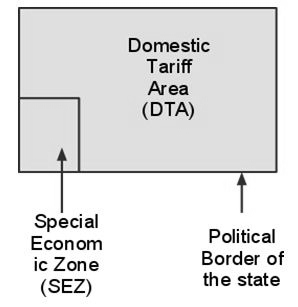
The SEZ is a subset within the geographical boundaries of the state. The rest of the host state is legally referred to as the Domestic Tariff Area or the DTA (Muchlinski, 2007, p229). Effectively, the SEZ is “outside” the territory of the host state with respect to trade and investment. Figure 1 below explains this relationship.

 Figure 1

The host states can expect inter alia to earn increased export earnings, benefit from increased employment opportunities, improved training and skills, and transfer of modern technology (Muchlinski, 2007, p227). In return, foreign investors are offered incentives such as tax exemptions, duty free imports, exemptions from import quotas, capital mobility to remit profits, export allowances and subsidised interest rates within the SEZ. A significant incentive offered by the host state involves the legal control of labour relations. Specifically, the right to establish trade unions or take industrial action may be limited within the SEZ (Muchlinski, 2007, p229).

Political and economic stability, reliable infrastructure, inexpensive labour, market access, and efficient bureaucracy are factors that determine not only how attractive investors will find the SEZ, but are factors that eventually determine the success of the SEZ (UNIDO, n.d., p27).

Keeping in mind these objectives and demands, India embarked on a journey to use SEZs as engines of economic growth. India set up Asia’s first EPZ set up in Kandla in 1965. The government announced the SEZ policy in April 2000, claiming to “to overcome the shortcomings experienced on account of the multiplicity of controls and clearances; absence of world-class infrastructure, and an unstable fiscal regime and with a view to attract larger foreign investments in India” (SEZ India, 2011a, Introduction). The Foreign Trade Policy provisions governed SEZs in India prior to the implementation of the SEZ Act, 2005 in February, 2006 (Chandrasekhar and Ghosh, 2007).

Salient Features of the SEZ Act (2005)

‘The Special Economic Zones Act, 2005’ was passed on the 23rd June, 2005, in an attempt to give a framework to the implementation of SEZs in India. It includes several regulatory and investment fostering mechanisms.

i. Creation of SEZs and general administration:

The Act explicitly mentions a few guiding principles for the Central Government regarding the creation of SEZs. The objectives of the government, as stated by the Act, must be to generate additional economic activity, promote exports of goods and services, create employment opportunities, and develop infrastructure, all while maintaining the “sovereignty and integrity” of India

(SEZ Act, 2005, p8). Thus, SEZs have thus come to be justified as an engine of growth and employment generation, and not in terms of exports expansion alone (Sharma, 2009, p18).

The Act calls for the creation of the “Board of Approval”, which, as the name suggests, looks into applications to set up SEZs and gives approval to them if they meet the required criteria. This acts as a single-stop-shop for investors (called ‘developers’) to get the required regulatory permission to set up an SEZ. SEZs may be established under this Act either jointly or severally by the Central Government, State Government of any legal person. The Central Government, however, can suo moto set up SEZs, and can prescribe other requirements at a later stage (SEZ Act, 2005, p1-6).

The position of a Development Commissioner is established (p14), and this position is responsible for the general overview of the SEZ, from presiding over the Approval Committee (p17-18) to running the SEZ Authority, which is in charge of provision of infrastructure, promoting exports. reviewing the functioning and performance of the SEZ, and other such functions (p28-29).

ii. Tax Exemptions, Finance and Banking

By definition, SEZs are so-called “tax havens”. The Act specifies all those taxes and duties that the developers would be exempted from in the SEZs. There is exemption from Custom Tariff Act, 1975, Central Excise Act, 1944, Central Excise Tariff Act, 1985 and other similar laws (p24). 100% Income Tax exemption on export income for the first 5 years, and 50% for the next 5 years is offered (SEZ India, 2011a, Facilities and Incentives).

Attention is also given to the trade between the SEZ and the DTA. The Act (SEZ Act, 2005, p8) prescribes the exemption from the payment of duties, taxes or cess under all enactments of the First Schedule for trade between DTA to SEZ. However, any goods moved from the SEZ to the DTA would be subject to safeguarding duties, anti-dumping regulations and other instruments (p26).

The Act also specifies the financial governance structure of the SEZ. Bank branches in SEZs, for example, are defined as ‘Offshore Banking Units’ (SEZ Act, 2005, p3-4), and can be set up after the approval of the Reserve Bank of India (RBI), which is India’s central bank (p20). Other financial activities in the SEZ would be monitored by the relevant regulatory authorities in the DTA (p21).

iii. Law Enforcement

Were illegal activities to take place, the Act states that the Development Commissioner would have the cases investigated, and the cases would be heard at the court(s) appointed by the State Government and the Chief Justice of the state High Court (SEZ Act, 2005, p22). The Act also explicitly states that in case there is any inconsistency of this law with other laws, than this Act would have an overriding effect over others (p34).

iv. Amendments

Over the years, several amendments have been made to the Act. They have primarily revolved around specifying the provision of infrastructure and requirements for establishment of SEZs. The minimum area requirements vary across industries and regions. As an example, a multi-product SEZ has to be between 1000 and 5000 hectares, and at least 50% of the area needs to be earmarked for developing the processing area (SEZ India, 2010, ch II sec. 5, sub-sec 2 a).

Amendments also allow for the generation, transmission and distribution of power within an SEZ (sec. 5, sub-sec 5 c). Importantly, in the case of an information technology related SEZ, 24 hours of uninterrupted power supply is to be provided, apart from reliable connectivity (sec. 5, sub-sec 5A).

Importantly, a stated objective is the generation of positive net foreign exchange earnings, as it is specified that a unit would achieve positive net foreign exchange, calculated cumulatively for a period of five years from production (ch VI sec 53).

The Act is clear in specifying the framework regarding the implementation of an SEZ promotion strategy. The Act however, remains conspicuous in its silence on land acquisition and labour laws, which has become the bone of contention on the implementation of the policy.

A Brief Overview of SEZs in India

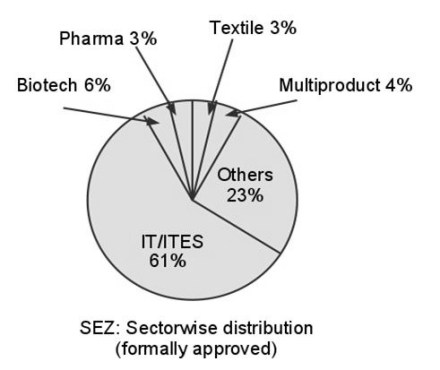
Prior to the enactment of the SEZ Act, 2005, there were 19 SEZs across India. The government has now approved 581 SEZs (SEZ India, 2011b) with a further 154 with in-principle approvals (SEZ India, 2011c). 130 of these SEZs are operational today. 283 of the 581 approved SEZs are in the three states if Andhra Pradesh, Maharashtra and Tamil Nadu (SEZ India, 2011d). Of the sectors, the Information Technology and IT enabled services sector has a 61% share of SEZs, while the biotech, pharma, textile sector and multi-product SEZs have less than 10% share each. Apart from these, there are three airport based multi-product, and eight port-based multi-product SEZs (SEZ India, 2011e).

Source: SEZ India, 2011e

The Indian experience in the implementation of SEZs has brought to light major areas of concern in the economic and social spheres. In the economic sphere, these are related to fiscal costs, net employment generation and exports. The social experience of SEZs has brought up issues of worker rights, and those of land transfer, dispossession and displacement. The next two sections of the paper will look into these briefly.

The Economic Experience

i Fiscal issues and investment:

Tax holidays in the SEZ are generous, and provide 100% exemption for Income Tax on profits for the first 5 years of production and 50% for the next five years, apart from the tax breaks discussed above. In addition to this, land is given by the government to developers at low rates (Dutta, 2009, p23). Estimates by the Finance Ministry show that the losses to the state exchequer in terms of forgone revenue would be £24billion for an investment of £50billion (Chandrasekhar and Ghosh, 2007).

Owing to the perceived lost revenue, the Finance Ministry announced a Minimum Alternate Tax on the book profits of developers and units operating in SEZs in the 2011-12 Budget. The Commerce Ministry, however, wants to see a roll back of this tax and sees SEZs as “engines of growth” (Pannu, 2011). This points to differences between the Finance Ministry and the Commerce Ministry on the issue of SEZs.

In fact, Arunachalam (2010, p25) shows that the investment as of 2009 in approved SEZs stood at £416million, and not the figures cited by the Finance Ministry. He argues (2010, p20) that Indian SEZs failed to attract FDI as it would have liked because firstly, India has not used SEZ policies to test reforms which would later be adopted nationwide; secondly, Indian SEZs are small in size (especially when compared to their Chinese equivalents), and finally, because of the lack of labour market flexibility.

ii. Exports:

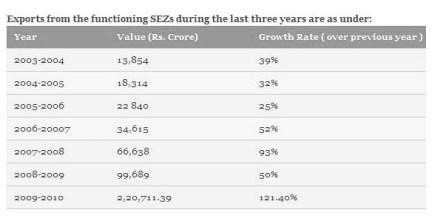
The Ministry of Commerce and Industry claimed that the value of exports from functioning SEZs increased from £1.9billion in 2003-04 to £30.6billion in 2009-10 (exchange rate £1 = INR72 as of 16th March, 2011). The growth rate of exports over the previous years increased from 25% before the SEZ Act, 2005 to 52% after its implementation, and it stands at 121.40% in 2009-2010 (SEZ India, 2011a, Export Performances). Note that these figures are inconsistent with the estimates of
losses by the Finance Ministry.

An example of a successful SEZ in this regard would be the Mundra SEZ. This SEZ houses India’s largest private port, has been most successful in seeing an increase in exports. It is expected to handle 100m tonnes of exports by 2013, with a growth rate of 40% in these years (Thakkar, 2008).

However, the Comptroller and Auditor General of India has pointed out that most of the SEZs sell goods within the country as “deemed exports” rather than actually exporting them overseas. This seems plausible as the exponential rise of exports from SEZs corresponds with stagnant national exports. The Finance Ministry speculates that some units have merely shifted to these zones from the DTA to avail tax benefits (Pannu, 2011).

Source: SEZ India, 2011a, Export Performances

iii. Employment generation (or the lack thereof):

Proponents of SEZs have claimed that SEZs lead to employment generation, in addition to exports. While the total employment by all types of SEZs across India as of 2008 was about 370,000 (Reddy, Prasad and Kumar, 2010, p87), Mahanta (2010, p199) shows that acquisition of agricultural land by SEZs lead to a fall in food-grain output and agricultural employment. Importantly, he shows that this fall in agricultural employment is not offset by the increase in employment in SEZs.

Another point to note is that compared to countries around the world, Indian SEZs have not seen a high proportion of female workers. In 2003, only 37% of the workforce was female (Varma, Prasad and Krishna, 2010, p320-322). The claims of benefits of the generation of employment by SEZs are hence called into question.

The Social Experience

i. Land acquisition and displacement

Land acquisition is the ‘hot topic’ of India’s SEZ policy. The SEZ Act, 2005 makes no mention of it. The out-dated Land Acquisition Act, 1894, is applicable in this regard. Even the Land Acquisition (Amendment) Bill, 1998 has come under fire from for several shortcomings. For instance, land losers could have their land acquired even if a stated compensation isn’t paid (Asif, 1999, p1564).

Land acquisition is especially contentious and problematic when the land being acquired is populated with people living off the land, which is often the case with agricultural land, as was the case in Nandigram, West Bengal. In addition to this, Chandrasekhar and Ghosh (2007) argue that real-estate developers can engage in major land grab in the guise of setting up SEZs as the SEZ rules require only 25 per cent of the land to be used for industrial processing purposes.

While approved SEZs are to consume 95,000 hectares of land, (Balasubramanian, 2010, p53), the Ministry of Commerce stated that as of 2008, the land allocated to SEZs was about 0.070% of the total land area and 0.128% of the total agricultural area of the country (Reddy, Prasad and Kumar, 2010, p87). While this may seem low, it is has proven to be problematic because of the high population density in some of these areas.

An illustration of the flawed acquisition mechanism by the government would be the case of the state of Andhra Pradesh, where land is being acquired from the poorest people who had been earlier allocated land by the government in “land-for-the-poor schemes”. Legally, this land belongs to the government, so the government takes it back often without compensation on the behalf of SEZ developers (Oskarrsson, 2010, p368).

On the other hand, the Commerce Ministry has cited examples of how rise in land rates in barren, unproductive land has brought wealth to the poor and SEZs have brought infrastructure to the hinterland, as is the case with Mundra in the state of Gujarat (Bhatt, 2007). The wastelands in the coastal regions of Gujarat are mostly owned by the government, hence leaving out land acquisition out of the picture. Moreover, states like Tamil Nadu have seen the rural population welcome SEZs, because several years of social upliftment by the government has made the populace less dependent on agriculture for their livelihood (Murugesan and Bandgar, 2010).

ii. Labour relations

While the SEZ Act, 2005 makes no mention of changes in labour law, Tanwar (2010, p231) writes that changes to the prevailing pattern of application of labour laws have been made in SEZs. All units operating in SEZs are categorised as “Public Utility Service”, meaning that many labour laws become irrelevant. A Public Utility Service is defined to be a service that is of great value to the society, and the lack of provision of which can affect the life of everyone. In this case, employees have to give a 14 day notice before going on strike. Additionally, employees in SEZs don’t have protection in the form of a notice period or compensation against retrenchment. It follows that employees will be reluctant to raise a voice against their employers when the need arises. Moreover, employers in SEZs have the right to change the terms and conditions of service at any point of time. Mahanta (2010, p200) raises concern regarding the lack of labour unions, stating that the possibility of fall in real wages is high, although experience shows that SEZ wages are at par with non-zone wages (Varma, Prasad and Krishna, 2010, p326).

Conclusion

This essay has dealt briefly into a few contentious issues that arise with the establishment of SEZs in India. With significant employment not being generated, and with no real rise in national exports has taken place, the rationale of this establishment is called into question. The issue remains volatile, as was seen in the case of Nandigram, where the conflict continued to simmer after the scrapped its plans to establish the SEZ there (Dohrmann, 2008, p76).

However, governments are unlikely to give up on establishing SEZs, and it is imperative that laws are amended in order to make trade and investment flourish without disempowering the people who are displaced or the workforce in SEZs. The Land Acquisition Act of 1894 need to be looked into, and a transparent rehabilitation law needs to be put in place (Dohrmann, 2008, p79). In fact, the people need to be made stakeholders in the progress of the nation. Failure to do so may further prove former Indian Prime Minister VP Singh correct in his assessment of the SEZ policy of India, when he said (Dohrmann, 2008, p1), “the current promotion of SEZs is unjust”, and that it acts as a “trigger for massive social unrest, which may even take the form of armed struggle.”

__________________________________________________________________________________

References

  • Arunachalam, P., 2010. “Special Economic Zones and Foriegn Direct Investment in India and China”. In: Arunachalam, ed. Special Economic Zones in India. Serials Publications, New Delhi. ISBN 978-81-8387-336-9
  • Asif, M., 1999. “Land Acquisition Act: Need for an Alternative Paradigm”. Economic and Political Weekly June 19, 1999 Balasubramaniyan, R., 2010. “An Econometric Analysis of Special Economic Zones in India”. In: Arunachalam, ed. Special Economic Zones in India. Serials Publications, New Delhi. ISBN 978-81-8387-336-9
  • Bhatt, S., 2007. “Rivalry Between Business Houses has blown up the SEZ issue”. Rediff News 21st Feb, 2007. [online] Available at: http://www.rediff.com/money/2007/feb/21sez.htm [accessed 18th March, 2011]
  • Chandrasekhar, C.P., and Ghosh, J., 2007. “SEZs in India: The Record So Far”. Business Line, 27th November, 2007. [online] Available at http://www.thehindubusinessline.in/2007/1/27/stories/2007112750070900.htm [accessed 15th March, 2011]
  • Dohrmann, J. A., 2008. “Special Economic Zones in India – An Introduction”. ASIEN 106 (January, 2008) p60-80 [online] Available at http://www.asienkunde.de/articles/a106_asien_aktuell_dohrmann.pdf [Accessed 16th March, 2011]
  • Dutta, M., 2009. “Nokia SEZ: Public Price of Success”. The Economic and Political Weekly, 3rd October, 2009. Vol XLIV no. 40
  • Guangwen, M., 2003. The Theory and Practice of Free Economic Zones: A Case Study of Tinajin/People’s Republic of China. Peter Lang ISBN 0-8204-6508-9
  • Mahanta, A., 2010. “Special Economic Zones and its Impact on Agriculture and Employment in India”. In: Arunachalam, ed. Special Economic Zones in India. Serials Publications, New Delhi. ISBN 978-81-8387-336-9
  • Manoj, P. K., 2009. Special Economic Zones in India: Financial Inclusion: Challenges and Opportunities. Serials Publications, New Delhi. ISBN 978-81-8387-275-1
  • Muchlinski, P., 2007. Multinational Enterprises and the Law 2nd Ed. Oxford University Press
  • Murugesan, P., and Bandgar, P. K., 2010. “Land Acquisition for SEZs in India: Theoretical Perspective”. Southern Economist, 1st August, 2010 [online] Available at:  http://www.vesasc.org/Economics_-_Murugeshan_Sir.pdf [Accessed 19th March, 2011]
  • Nagayya, D., and Rao, T. V., 2010. “Special Economic Zones For Raid Insutrlization and Regional Development: Progress and Concerns”. In: Arunachalam, ed. Special Economic Zones in India. Serials Publications, New Delhi. ISBN 978-81-8387-336-9
  • Oskarsson, P., 2010. “Zoning Andhra Pradesh: Land for SEZs via tha Land for the Poor Program”. In: Arunachalam, ed. Special Economic Zones in India. Serials Publications, New Delhi. ISBN 978-81-8387-336-9
  • Pannu, S.P.S, 2011. “Ministries in a tug of war over tax on SEZs”. Business Today, 14th March, 2011 [online] Available at: http://businesstoday.intoday.in/bt/story/ministriesfightovertaxonspecialeconomiczones-(sezs)/1/13883.html [accessed 14th March, 2011]
  • Reddy, P., Prasad, A., and Kumar, P., 2010. “Generation of employment by Special Economic Zones in India”. In: Arunachalam, ed. Special Economic Zones in India. Serials Publications, New Delhi. ISBN 978-81-8387-336-9
  • Sharma, N. K., 2009. “Special Economic Zones: Socio-Economic Implications.” Economic and Political Weekly 16th, May, 2009 vol. XLIV no. 20
  • SEZ India, 2010, “SEZ Rules incorporating amendments upto July, 2010”. Ministry of Commerce and Industry (Department of Commerce), Government of India  [online] Available at: http://sezindia.nic.in/goipoliciessra.asp [Accessed 14th March, 2011]
  • SEZ India, 2011a. Special Economic Zones in India, Ministry of Commerce & Industry (Department of Commerce) [online] Available at http://sezindia.nic.in/ [Accessed 15th March, 2011]
  • SEZ India, 2011b. “ListofFormalApprovalsgrantedundertheSEZAct,2005, 2011”. Ministry of Commerce and Industry (Department of Commerce), Government of India  [online] Available at: http://sezindia.nic.in/writereaddata/pdf/ListofFormalapprovals.pdf [Accessed 14th March, 2011]
  • SEZ India, 2011c. “In Principle approvals granted under the SEZ Act, 2005”. Ministry of Commerce and Industry (Department of Commerce), Government of India [online] Available at: http://sezindia.nic.in/writereaddata/pdf/Listofinprincipleapprovals.pdf [Accessed 14th March, 2011]
  • SEZ India, 2011d. “SEZ: Statewise Distribution”. Ministry of Commerce and Industry (Department of Commerce), Government of India  [online] Available at: http://sezindia.nic.in/writereaddata/pdf/StatewiseDistributionSEZ.pdf [Accessed 14th March, 2011]
  • SEZ India, 2011e. “SEZ: Sectorwise Distribution”. Ministry of Commerce and Industry (Department of Commerce), Government of India  [online] Available at: http://sezindia.nic.in/writereaddata/pdf/Sectorwise%20distributionSEZ.pdf [Accessed 14th March, 2011]
  • Tanwar, S., 2010. “Relevance of Labour Laws in Special Economic Zones”. In: Arunachalam, ed. Special Economic Zones in India. Serials Publications, New Delhi. ISBN 978-81-8387-336-9
  • Thakkar, M., 2008. “Mundra Port: Anchored to Success”. The Economic Times 12th Nov, 2008 [online] Available at: http://articles.economictimes.indiatimes.com/2008-11-12/news/28448158_1_mundraportsezadanisbiggestport [Accessed 19th March, 2011]
  • Tantri, M. L., 2010. “Import Dependency of Special Economic Zones”. The Economic and Political Weekly 4th September, 2010 Vol. XLV no. 36
  • The Telegraph, 2007. “Red-hand Buddha 14 killed in Nandigram re-entry bid”. The Telegraph, 15th March, 2007 [online] Available at http://www.telegraphindia.com/1070315/asp/frontpage/story_7519166.asp [accessed 14th March, 2011]
  • The World Bank Group, 2008. “Special Economic Zones: Performance, Lessons Learned, and Implications for Zone Development”. The World Bank Group, April, 2008 [online] Available at: http://www.ifc.org/ifcext/fias.nsf/AttachmentsByTitle/SEZpaperdiscussion/$FILE/SEZs+report_April2008.pdf [accessed 14th March, 2011]
  • The Land Acquisition Act, 1894. Ministry of Law and Justice, Government of India, 1st Spetember, 1895 [online] Available at: http://dolr.nic.in/hyperlink/acq.htm [accessed 16th March, 2011]
  • The Special Economic Zones (SEZ) Act, 2005. Ministry of Law and Justice, Government of India. 23rd June 2005 [online] Available at http://sezindia.nic.in/goipolicies.asp [Accessed 13th March, 2011]
  • UNIDO, n.d. “Export Processing Zones: Principles and Practice”, United Nations Industrial Development Organisation. [accessed from the British Library of Political and Economic Science, LSE]
  • Varma, A. V. N., Prasad, J. C., and Krishna Y. R., 2010. “Special Economic Zones – The Socio Economic Dimensions and Challenges.” In: Arunachalam, ed. Special Economic Zones in India.
    Serials Publications, New Delhi. ISBN 978-81-8387-336-9

The Aryan Debate in the Indian Context

In this essay, the author analyses the debate surrounding the origin of the Indo-Aryan people who constitute a majority of the population in Northern India. While the traditional view is that the Aryans migrated from outside the subcontinent, a more recent view holds that they were indigenous to the region.


By Rebecca Aranha, 13 Oct, 2011

“The truth of ancient history is indifferent to our wishes, our politics, our religion… the idea of truth in history involves the idea that exists independent of our will, and is therefore difficult to know, because our interpretations are will-bound and our facts are never independent of our theories”  -Thomas R. Trautmann

The Aryan debate, ancient Indian history’s very own case of ‘whodunit’, has been raging in books, newspapers, and public forums of India for the last decade or so. It examines the following question: did the Sanskrit-speaking Aryans enter from the north-west in about 1500 BC, or were they indigenous to India and identical to the people of the Indus Civilization of 2600-1900 BC? This question is central to the debate that has shaped Indian history writing, and has been strongly contested in public discussions for over a decade.

The first position, the immigrant Aryan position that the Aryans came to India from outside in about 1500 BC, is called the standard view because it is the interpretation that has prevailed in schools and university textbooks and in academic journals and books. The second position, the indigenous Aryan position that the Aryans were the makers of Indus Civilisation, is called the alternate view, because it is challenging the established, standard view.

The resolution to the Indo-European controversy has been one of the most consuming intellectual projects for historians of Ancient India of the last two centuries. It has captivated the imagination and dedication of generations of archaeologists, linguists, anthropologists, historians, and many scholarly, and not so scholarly, dilettantes. In modern India, the discussion of Indo-Aryan migration is charged politically and religiously, with the debate having produced a lot of polemics on both sides.

Thus, apart from just being a historical debate, the Aryan debate has now acquired a political and social colour. Moreover, what used to be a debate among scholars has boiled and spilled over into the public arena, and the sober works of academicians are now swamped by the often heated writings of those who are not scholars trained in the history, linguistics and archaeology of ancient India. With such heated debates it becomes easier to be thrown off the track of historical truth in favour of political or religious objectives, thus allowing partisan politics to enter the debate. As may be questioned by many, why has this debate become so highly charged and contentious? In a general manner we may say that the past often becomes very important and debatable as ancient history serves as a character for society and marks its growth and continuance. When there are various visions about the future, it is the past, that sets precedence so to speak, that is looked upon to judge the ‘righteousness’ of the path. It also brings to light the matter of who were the ‘foreigners’ and who were the ‘natives’ and, as can obviously be seen, these matters are highly sensitive and lead to extremely charged debates!

It is extremely difficult to discover the truth behind the Aryan debate, because, as Trautmann rightly says, “the truth of ancient history is indifferent to our wishes, our politics, our religion… the idea of truth in history involves the idea that exists independent of our will, and is therefore difficult to know, because our interpretations are will-bound and our facts are never independent of our theories”.

I shall now attempt to contextualise this debate, to put it into today’s perspective. The relevance of the Aryan debate can be seen from the influence of the colonial period on India’s present to our current political scenario and, right up to controversial comments of certain Right-wing politicians in the very recent past. The present volatile situation in India has made Western, and many Indian, scholars particularly concerned about the repercussions of communal interpretations of history.

The theory of the Aryan race is not limited to historical reconstruction and is an example of how historical perceptions of the past can be related to conflictual situations of the present. This debate is intensely relevant to the constructions of several very different sets of competing identities: associations of coloniser and colonised, neo-colonial and Hindu fundamentalist, indigenous and foreigner, Hindu communal and Marxist secularist etc.

The conquest of the ‘fair-skinned Aryans’ over the ‘dark-skinned aborigines’ became the mechanism by which caste came to be viewed as a form of racial segregation and was central to Indian social institutions.

The debate over how ‘Aryanism’ was to be interpreted provides us insight into the political agendas of the groups who used it. These groups were involved in seeking identities from the past and in countering each other’s claims to these identities as well as choosing a homeland and working out a national culture. The interpretation therefore hinged on specific ideological needs. The primary concern in establishing an Indian identity was the need to define the rightful inheritors of the land. Here the question of origins and affirmations of common descent was central to nation-building. It is thus important to consider modern ideological underpinnings of this debate in India as different forces compete over the construction of national identity.

The Aryan invasion theory also has a genesis in colonial attempts to ‘discover’ the Indian past, a discovery which was rooted in the colonial present.

During the earlier phase of the ‘homeland of the Aryans’ quest, when India was still a popular candidate, many scholars were uncomfortable about moving the Indo-Europeans too far from their biblical origins somewhere in the Near East. There were those among the British, in particular, whose colonial sensibilities made them reluctant to acknowledge any potential cultural indebtedness to the forefathers of the rickshaw pullers of Calcutta, and who preferred to hang on to the biblical Adam for longer than their European contemporaries. Even well after Adam was no longer in the picture, there was a very cool reception in some circles to the “late Prof. Max Muller who had blurted forth to a not over-grateful world the news that we and our revolted sepoys were of the same human family”.  Muller noted, “They would not have it, they would not believe that there could be any community of origin between the people of Athens and Rome, and the so-called Niggers of India…”

The Indomania of the early British Orientalists was replaced by an Indophobia initiated by Evangelicalism. Charles Grant epitomised this by stressing the absolute difference, in all respects, between the British and the despicable natives of the subcontinent. Grant was by no means the first or sole Christian leader to engage in extreme denunciations against Hinduism – these continued throughout the colonial period. Christian evangelists, in fact, found advantages in discourses of Aryan kinship. For instance, Samuel Laing held that the “two races so long separated meet once more… the younger brother has become the stronger, and takes his place as the head and protector of the family… we are here… on a sacred mission, to stretch out the right hand of aid to our weaker brother, who once far outstripped us, but has now fallen behind in the race”.

Devendraswarup, a historian of the colonial period, finds the scholarly work of missionary intellectuals to be readily presenting the Brahmins as foreigners who had imposed their Vedic language and texts onto the aboriginals of India. The idea in this case was to create a sense of alienation from Brahmanical religion among the lower castes, thereby preparing them for exposure and conversion to Christianity.

Clearly, the developing pressure to justify the colonial and missionary presence in India prompted the denigration of Indian civilisation, and the shunning of embarrassing cultural and linguistic ties. Trautmann suggests that such considerations also explain why the British, despite having primary access to Sanskrit source material, did not pursue the study of comparative philology. Racial theorists paved the way for the postulate that the Aryans were an autonomous white race who brought civilisation and the Sanskrit language to the different races of India– a development Trautmann holds as pivotal to the political construction of Aryan identity developing in Germany.

The colonial view would endorse the idea that the progress of India was dependent on the return of the Aryan in the guise of the British. The British presence in the subcontinent could now be cast as a rerun several millennia later of a similar script, but a script that hoped to have a different ending. The British could now present themselves as a second wave of Aryans, again bringing a superior language and civilisation to the racial descendants of the same natives their forefathers had attempted to elevate so many centuries earlier. Devendraswarup argues that after the British were shaken by the Great Revolt of 1857, certain individuals suddenly found reason to stress their common Aryan bond with the Brahmins where others had previously shunned it. The Aryan connection was thus simply manipulated at will.

This view was partially responsible for the extreme nationalist rejection of the theory that Aryans were anything other than indigenous. Rajaram stated that the Aryan invasion theory is “the fabrication of a version of ancient history and tradition that was highly advantageous to missionary and colonial interests”. This discourse is also attacked as some claim that it attempts to promote disunity between Dravidians and northerners. Shankaracharya believed that “the Indologists and Orientalists introduced the till then unheard of concept of Aryans and Dravidians, which created mutual hatred”. Supporters of the migration theory are now faced with several accusations. The major one is that the British Raj from the 19th century to the present day promoted the Aryan invasion hypothesis in support of Euro-centric notions of white supremacy. Assertions that the highly advanced proto-Hindu Vedic culture could not have had its roots in India are seen as attempts to bolster European ideas of dominance.

I have earlier discussed how the discourse of Aryanism affected religious and political identities in post-Enlightenment Europe. I shall now go on to examine how the same theme has been utilized to support a variety of agendas on the Indian subcontinent in the modern period. It should however be kept in mind that not all scholars who have written for or against the Aryan invasion theory are politically motivated.

In this context, there are essentially two opposing interpretations, the Dalit one pioneered by Jyotiba Phule, and the Hindutva one pioneered by Veer Savarkar.

Let us begin with Hindutva, since this is the element of most pressing concern. The Hindutva interpretation follows a strong imperative to stress the racial unity of the Indian people prior to the coming of Islam and the solidarity of the Brahmins and non-Brahmins within Hinduism as well as the differences of Hindus from Muslims and Christians. It tends to reject an Aryan homeland outside of India, and to identify Vedic civilisation with the Indus Civilisation.

Savarkar’s Hindutva, literally ‘Hinduness’, or the essential quality of being a Hindu, has been a very influential expression of Hindu self-identity. Savarkar’s book on Hindutva was eventually adopted by the Hindu Mahasabha, and is still a seminal text of Hindu nationalist groups such as the RSS (Rashtriya Svayamsevak Sangh). Savarkar’s writings clearly reveal the crux of Hindutva – to be considered a native of Hindustan, a person’s religious faith must have an indigenous origin. What, then, of other Indians – those whose religious beliefs blossomed in other lands – where do they fit into such a scheme of things? Savarkar writes on – “That is why in the case of some of our Mohammedan or Christian countrymen who had originally been forcibly converted to a non-Hindu religion and who consequently have inherited, along with the Hindus, a common fatherland and a greater part of the wealth of a common culture are not and cannot be recognised as Hindus. For though Hindusthan to them is Fatherland, as it is to any other Hindu, yet it is not to them a holy land too. Their holy land is far off in Arabia or Palestine. Their mythology and godmen, ideas and heroes are not the children of this soil. They must set their holy land above their Fatherland…” Savarkar believes that the Muslims and Christians can never participate in the benefits (whatever they might be) of Hindutva because their prophet was born on the wrong side of the Arabian Sea!

Returning to the Aryan theme, it should be evident how the basis of Savarkar’s Hindutva is undermined if the Vedic Aryans came from central Asia. If that were the case, then the followers of Vedic religion would have to be disqualified from being Hindus, since the original founders of their faith were not born and bred in Bharat. Acceptance of the Aryan invasion theory according to Savarkar’s logic would then imply that the forefathers of the Vedic Aryans are undoubtedly foreigners and their followers essentially no different from those revering other “foreigners” such as Muhammad or Christ. Also, if the Aryans came from somewhere near the Caspian Sea area, adjacent to Persia, they would actually share close blood links with the proto-Iranians, thereby making the Vedic Aryans much closer relatives in language, proto-religion and blood with the Muslims who came to India from these areas.

Therefore, the opposition of other RSS leaders, such as M.S. Golwalkar, to the Aryan invasion theory was extremely aggressive. He said, “It was the wily foreigner, the Britisher, who to achieve his ulterior motives, set afloat all such mischievous notions among our people so that the sense of patriotism and duty towards the integrated personality of our motherland was corroded. He carried on the insidious propaganda that we were never one nation, that we were never the children of the soil but mere upstarts having no better claims than the foreign hordes of Muslims or the British over this country”. This brand of Hindu nationalism, which seems determined to alienate the Muslim community on the grounds of its lack of religious pedigree, is obliged to refute the Aryan invasion theory or risk logical absurdity.

Where Savarkar specifies the importance of India as the geographic land of religious revelation in his criteria for Hindutva, Shrikant Talageri considers the psychological bond to be more significant. He argues that while Indian culture absorbs and assimilates newcomers, Islam and Christianity do not; the leaders, founders, saints, sacred languages, scripts, holy places, traditional attire etc all owe allegiance to cultures outside India. He essentially requires that the Muslims, if not convert completely, at least accept Hindu concepts and beliefs, even those that might completely jar with their own religious sensibilities. He categorically stated, “The non-Hindu people in Hindusthan must either adopt the Hindu culture and language, must learn to respect and hold in reverence the Hindu religion, must entertain no idea but those of glorification of the Hindu race and culture… or may stay in the country, wholly subordinated to the Hindu nation, claiming nothing, deserving no privileges, not even citizen’s rights”.

There can be no doubt that Hindutva is easily pressed into service in alienating and targeting the Muslim minority in communally volatile, modern-day India. Irfan Habib said in a newspaper interview: “I would like to cite the example of the Nazis, of how a particular perception of history held by a respectable section of the German intelligentsia, which was not racist at least outwardly and certainly was not anti-Jewish, was so easily utilised by the Nazis… so, here you have an example of how a historical theory is created by someone who had no idea of what use it can be put to… before 1947 the idea that Aryans went out of India was hardly espoused by any serious historian… but now, while some people deny that they espouse the Nazi race theory, they have in fact espoused it”. Not surprisingly, the various Hindutva versions either deny the validity of the linguistic analyses or else ignore them. From this perspective, archaeology is now viewed as important to the identity of the Aryans, but not so linguistics.

The Dalit interpretation, on the other hand, maintained that the lower castes were the indigenous inhabitants who had been conquered and oppressed by Brahmins who represented the Aryan conquest. This view was expounded initially by Jyotiba Phule. Writing in the latter half of the nineteenth century, Phule argued that the original inhabitants of India were the Adivasis, among whom he included the Sudras, the ati-Sudras and the untouchables, who were descendants of the heroic peoples led by the Daitya king, Bali. The indigenous peoples under the leadership of Bali, fought the arrival of the Brahmins who for Phule represented the Aryan invasion, but the Adivasis were conquered and subordinated. Phule’s ‘golden age’ was the period prior to the Aryan invasion when Sudras were cultivators, landowners and warriors, and had their own culture. The Brahmins are said to have deliberately invented caste so that the Sudras would be kept permanently servile and divided among themselves. He argued that the rightful inheritors of the land were the lower castes, not the Brahmins.

Phule was not merely concerned with the indigenous origins of the lower castes but he was also a ‘social reformer’ working towards educating Sudras and women with the intention of providing them with a sense of relative independence. In the colonial-nationalist divide, his views were not entirely supportive of either.

The dichotomy between Brahmin and non-Brahmin was seen to provide a rational expression for the pattern of history and the suppression of the non-Brahmin by the Brahmin. Brahmins were seen as Sanskrit-educated Aryans and the other castes using Dravidian languages were the non-Aryans. The use of language for demarcation was perhaps one reason for the non-Brahmin movement being more influential in peninsular India (the heartland of Dravidian languages) than elsewhere.

There are others who support the Aryan invasion theory, but do not necessarily share Phule’s ideas, including Romila Thapar. She remarks: “The theory of the Aryans being a people has been seen as fundamental to the understanding of the identity of modern Indians and the question of identity is central to the change in Indian society from caste to class. The upholding of a false theory is dangerous. The next step can be to move from the indigenous origin of ‘the Aryans’ to propagating the notion of an ‘Aryan nation’”.

This ‘school’ of scholars is often branded ‘Left-liberal’ or ‘secular Marxist’ by opponents of the invasion theory, because its model of invasion and subordination corresponded to Marxist concepts of class struggle and ideology. Secular Marxists are accused of maintaining a defunct theory in order to insist that the arrival of the Aryans is analogous to the arrival of the Muslims, Christians, and other groups of newcomers to the subcontinent. In such an amalgamation of immigrants, no one has more claims to indigenous pedigree or cultural hegemony than anyone else.

Chakrabarti, an Indigenous Aryanist, has nothing but scorn for the Indian intellectual elite who “fail to see the need of going beyond the dimensions of colonial Indology, because these dimensions suit them fine and keep them in power”. The most maligned figureheads are precisely those who have most publicly opposed the Indigenous Aryan position, particularly R.S. Sharma and Romila Thapar. She, in turn, holds that “indigenism is intellectually and historiographically barren with no nuances or subtleties of thought and interpretation”. In India, some Indigenous Aryanists, being branded communal, then label their detractors either “colonial stooges” or “secular Marxists” who are motivated by their own political agendas.

The question of Aryanism and the beginnings of Indian history remains a complex problem because it still carries, at the popular level, the baggage of nineteenth century European preconceptions, even if in the European context it has now been rejected as a nineteenth century myth. It has overwhelmed Indian history, but is now less important to a nationalist reconstruction of the past, although the Hindutva version claims to derive from a nationalist cause and accuses those who disagree of being anti-national. Its real function in their hands is political, in that it is used to separate the supposedly indigenous Hindu Aryan from the alien, the Muslim and the Christian; or, in the case of the Dalit interpretation, the indigenous lower castes from the alien upper castes.

The crux of the debate is the crisis of identity and status in the claims to political and social power and a contestation over what is viewed as alternative forms of national culture and ethnic homogeneity. Though the debate itself may never truly be resolved for a lack of concrete evidence it continues to be relevant today not only in its controversial content but also because it shows us how misguided perceptions, narrow-mindedness and political agendas can be detrimental to the development of a nation and its international relations, the peaceful co-existence of its people as well as the analysis of its history.

________________________________________________________________________________

The views expressed in this article are the author’s own and do not necessarily reflect InPEC’s editorial position.

The Democratic Peace Thesis: Not a Force for Peace After All


By Aryaman Bhatnagar, 10 Oct, 2011

The attempts to establish a strong symbiotic relationship between Liberalism and peace can be traced back to the times of writers like Kant, Montesquieu and Rousseau. They proposed that liberal domestic constitutional and institutional mechanisms would make liberal states inherently more peaceful (Macmillan, 1978, p.278). It is the legacy of such works that has continued down till this day to influence a number of theorists, many of whom perceive liberalism to be a force for absolute pacifism. It has, in fact, provided the basis for the “Democratic Peace Thesis”, which argues that liberal democratic states never wage war against each other.

This pacification of foreign relations among liberal states is said to be a direct product of their shared legitimate political orders based on democratic principles and institutions. The reciprocal recognition of these common principles leads liberal democracies to share a feeling of mutual trust and respect towards each other reducing the possibility of war. Moreover, democratic institutions such as public opinion, legislatures and the electoral process make leaders more accountable making the possibility of large-scale war nearly impossible. Finally, the commercial ties between the liberal states also foster a spirit of interdependence and cooperation, further, reinforcing the ‘zone of peace’ between them. It is these transnational ties, liberal institutions and ideas, which together can account for sustained peace among the liberal states. It is also argued that liberal states are as war-prone or as aggressive in their approach to non-liberal states like other states and that they wage wars only for liberal or humanitarian purposes (Doyle, 2005).

The Democratic Peace thesis has found considerable support among a number of theorists. Jack S. Levy stated “absence of war between democracies comes as close as anything we have to an empirical law in international relations (Levy, cited in Chan, 1997, p.60).” However, it has been heavily criticised on the grounds that it oversimplifies the explanation of the existence of peace. Moreover, they believe that this thesis itself may be used by some nations as intellectual justification for the belief that spreading democracy abroad will perform the dual task of enhancing their national security and promoting world peace (Rosato, 2003, p.585).

This essay will attempt to evaluate liberalism as a force for peace in light of criticism against the Democratic Peace Thesis. My main argument is that liberalism by itself is not enough to create, preserve or explain the existence of peace between nations. While liberal states themselves do not always stay away from conflict, there are also other factors that play an important role in creating peace. Moreover, I will also show how the belief of liberalism as a force of peace can create war.

Democracies and the Use of Force

Do democratic states stay at peace with each other when their interests clash? If one looks at empirical examples then it can be said that democracies are still willing to use force in order to achieve their ends even against democracies (Macmillan, 1996, p.281). When interests clash even liberal states tend to behave like any other states, bargaining hard, issuing threats and, at times, using military force. In such situations, the nature of the adversary regime is of very little value as vested interests tend to outweigh the liberal principles. The US intervention in the developing world during the Cold War period testifies this fact as the containment of Communism took precedence over respect for fellow democracies. The CIA helped in overthrowing democratic governments in Chile, Iran, Guatemala and Nicaragua replacing them with more authoritarian regimes (Rosato, 2003, p.590).

Wars between democracies have also taken place due to the fixity in the definition of democracy. As a result, a “hegemonic liberalism” defines out other historically valid democratic claims and may license violence against them (Barkawi and Laffey, 1999, p.409). This is how the invasions of a number of democracies, as stated above, during the Cold War were justified by the US. Moreover, the mutual respect and trust between democracies can be maintained only if they consider each other to be liberal. But in the absence of any coherent mechanism to categorise democracies, the perceptions of states regarding the regime type of another state comes into picture. They often get another state’s regime type wrong, thereby, lessening our confidence in the fact that objectively democratic states will not fight one another (Rosato, 2003, p.592).

It should also be noted that democratic norms and institutions do not cause democracies to behave differently from non-democracies in systematic ways (Rosato, 2005, p.467). The public constrain, for instance, acts as a very small deterrent on the state’s decision to go to war. If it was a major constraint then it would be able to prevent them from going to war even against the non-democracies (Rosato, 2003, p.594) as the public should feel sensitive about the human and material cost of war with any state. At times, the public may actually welcome war as was seen during WW1, which was welcomed by the public in all participating countries of Europe, even though, some of them were fighting other liberal states.

Moreover, these democratic structures are as likely to drive states to war as to restrain them from it. Cabinets, legislatures and public were often more belligerent than the government heads they were supposed to constrain (Owen, 1994, p.91). These can be belligerent towards democracies as well. This was evident during the build up to WW1.

Apart from looking at such constraints that could prevent war between democracies, it is also important to investigate the deepening of a democratic ethos within specific countries (Chan, 1997, p.66). While stable, well established democracies may not fight one another, a nascent democracy or rocky transition towards a fragile democracy may not necessarily imply that countries become immediately more peaceful. The transition phase of democracies is supposed to be quite dangerous and the nascent democracies are more likely to be caught up in wars (Ward and Gleditsch, 1998, p.53). The transition in Eastern Europe, for instance, had left the population “free to hate” (Ward and Gleditsch, 1998, p.54) resulting in large-scale ethnic cleansing of minority groups.

The instability in such new regimes can hardly create a spirit of mutual trust and respect that may prevent war between nations. In fact, at times, stable autocratic regimes are less prone to conflict and escalation to war. This can be seen with a number of non-liberal states like Cuba, Belarus and more recently, China that is emerging as a potential superpower through the use of its “soft power”.

Along with chaos in new democracies, the existence of civil wars and insurgencies in liberal states create obstacles in viewing them as symbols of pacifism. If democratic norms and culture fail to prevent the outbreak of civil war or insurgency within democracies, what reason is there to believe that they will prevent the out-break of interstate wars between democracies (Layne, 1994, p.41). Moreover, the states may use coercive and violent means to put an end to these movements and if they can resort to such methods against their own people then there is no guarantee that they would be not resort to such methods in the context of international relations. The independent history of some democratic nations like Sri Lanka, Algeria, Nepal, Lebanon among others have been seriously affected by such violent movements, which tend to seriously undermine the claim that democratic nations are inherently more peaceful.

The failure to recognise the changing nature of ‘war’ and the various implications of the word ‘peace’ have also strengthened this belief of peace among nations. The perception of war being a sustained violent conflict fought by organised armed forces, which are directed by a governmental authority (Starr, 1997, p.154) cannot hold in light of the changing nature of warfare. The liberal states may not confront each other through conventional warfare but through proxies or the armed units of the indigenous nations, who were armed by the superpowers themselves. Thus, while, the occurrence of overt conflict maybe extremely rare, states- even the liberal ones- have started to confront each other through covert means (Barkawi and Laffey, 1999, p.412).  In recent times, India and Pakistan are said to confront each other through such means. It is alleged that they try to destabilise each other by arming insurgent or militant groups in each other’s territories rather than confront each other through conventional means.

It is for this reason that the absence of war should not be equated with peace as the two phenomena are conceptually different (Chan, 1997, p.66). The absence of violence may be replaced by hostile diplomatic relations and constant threats of war. The Indo-Pak relations have followed such a pattern for the last sixty years, wherein, the threat of war or use of force has generally overshadowed all other forms of conflict resolution. This situation of ‘negative peace’ that creates a war like atmosphere can hardly be conducive to a more literal form of peace and harmony.

Why are Democracies Peaceful Towards Each Other?

If we were to accept the hypothesis that liberal states may actually be more peaceful towards each other than with a non-liberal state, it is unlikely that this can be explained by their liberal democratic norms or political institutions alone. Liberal states employ factors other than liberalism in deciding questions of peace and war (Macmillan, 1996, p.280).

These factors could be borne out of a common culture that tends to bind states together irrespective of the nature of their regime. The states are often caught up in geo-strategic and socio-economic relations because of which they tend to maintain the equilibrium through peaceful non-violent means (Barkawi and Laffey, 1999, p.421). This is highly evident in case of International bodies like the European Union, NATO, SAARC and ASEAN. It is the shared interests of the member nations of these bodies that prevent them from going to war against each other as the maintenance of peace is imperative for the cultural and economic development in this region. Moreover, in case of ASEAN, the member states are not always democratic in nature, yet, wars are avoided between the member nations clearly showing that states are motivated by factors other than liberal norms.

The existence of the democratic zone of peace can also be achieved by the presence of a local hegemon, which imposes a peaceful order in the concerned region and satisfaction of the states with territorial status quo. The existence of the ‘zone of peace’ in North America can be explained through this idea. The countries of this region are satisfied with the existing balance of power in which the US is the leading nation and have no territorial ambitions of their own. This has helped in maintaining peace between the concerned nations (Kaeowicz, 1995).

One also needs to realise that wars are so rare that random chance could account for the democratic peace (Owen, 1994, p.88). A dyad of nations becomes significant only if there is a real possibility of two states going to war (Layne, 1994, p.39). If motives, means and opportunities are absent then it is only natural that there would be no war between those nations. For instance, Senegal and Costa Rica both are liberal nations but the lack of warfare between them should be understood more in terms of the lack of any significant external relations between them (Macmillan, 1996,p.281).

Liberalism: A Barrier for Peace   

We can, finally, turn our attention to some of the practical implications of this thesis, which act as serious obstacles in the attainment of world peace. The belief that democratic nations do not go to war against one another has become an important aspect of the western policy. The logic of this discourse is that if democratic nations alone do not go to war against each other then it is important to create more of them, thereby, creating a more peaceful world (Barkawi and Laffey, 1999, p.423). This can fuel a spirit of democratic crusade and be used to justify covert or overt interventions against others (Chan, 1997, p.59).

According to many observers, the spread of democracy to different parts of the world has become the central focus of the American foreign policy post the Cold War and especially post-9/11. The US has taken up the moral responsibility of ensuring that a global liberal order is created, which is crucially linked not only to its own security but also to that of its allies. For this they will not hesitate to use their military power in a more aggressive and pre-emptive manner (Rhodes, 2003, p.134). The war against Iraq was also justified on these grounds.

This liberal interventionist role can have serious repercussions for world peace. It can be viewed as efforts to create an empire that would naturally offset a reaction against it. In the mid-90s, the attempts to create liberal states in Central and Eastern Europe to facilitate the expansion of NATO had seriously strained the US-Russian relations (Layne, 1994, p.47). Such extension into “Russia’s backyard” can also lay the foundation for future conflicts.  The deterioration of relations between Russia and Georgia, which ultimately resulted in the outbreak of war between the two in 2008 can be said to be rooted in the US efforts to include Georgia in NATO.  Similarly, the US image has taken a severe beating among the Arab states following its invasion of Iraq. The efforts to set up liberal institutions in Iraq and Afghanistan have acted as a catalyst for a number of non-state entities to carry out acts of terror in the region against the American presence and her backed regime.

Conclusion

The Democratic Peace Thesis seems to be based on hope and on the image of an idealised notion of what the world ought to be like. In reality, nations tend to maintain peace with other nations- irrespective of the regime type- as long as their own vested interests are not being compromised. The normative and institutional mechanisms that are meant to constraint the liberal nations from waging war can hardly override the pursuit of national interests. Even when peace is maintained it is probably explained more by these vested interests than commonality of a political culture.
Finally, it is important to note that peace is not the sole prerogative of democracies alone. Peaceful relations have also characterised many non-democratic polities throughout history and authoritarian regimes, at times, are more likely to maintain peace as compared to nascent democracies.

The essay hence establishes that the link between peace and liberalism has been over glorified by the Democratic Peace thesis. Peace is a complex issue that only a complex web of factors can explain and Liberalism maybe just one aspect of it.

_____________________________________________________________________________
Bibliography

  • Barkawi, T and M. Laffey, 1999.The Imperial Peace: Democracy, Force and Globalization. European Journal of International Relations, 5(4), pp.403-34
  • Chan, S., 1997. In Search of Democratic Peace: Problems and Promise. Mershon International Studies Review, 41(1), pp.59-91
  • Doyle, M.D., 2005. Three Pillars of the Liberal Peace. The American Political Science Review, 99 (3), pp.463-66
  • Kaeowicz, A.M., 1995. Explaining Zones of Peace: Democracies as Satisfied Powers?. Journal of Peace Research, 32 (3), pp. 265-76
  • Layne, C., 1994. Kant or Cant: The Myth of the Democratic Peace. International Security, 19 (2), pp.5-49
  • Macmillan, J., 1996. Democracies Don’t Fight: A Case of the Wrong Research Agenda?. Review of International Studies, 22(3), pp. 275-99
  • Owen, J.M., 1994. How Liberalism Produces Democratic Peace. International Security, 19(2), pp. 87-125
  • Rhodes, E., 2003. The Imperial Logic of Bush’s Liberal Agenda. Survival, 45 (1), pp.131-52
  • Rosato, S., 2003. The Flawed Logic of the Democratic Peace Theory. The American Political Science Review, 97 (4), pp.585-602
  • Rosato, S.,2005. Explaining the Democratic Peace. The American Political Science Review, 99 (3), pp. 467-72
  • Starr, H., 1997. Democracy and Integration: Why Democracies Don’t Fight Each Other. Journal of Peace Research, 34 (2), pp.153-62
  • Ward, M. D. and K.S. Gleditsch, 1998. “Democratizing for Peace”. The American Political Science Review, 92 (1),pp.51-61

Responsibility to Protect: A rebranding of Imperial Intervention


By Aditya Sakorkar, 8 Oct, 2011

Introduction

Humanitarianism or Humanitarian intervention has attracted immense controversy and popularity since the end of the Cold War. Humanitarian intervention is usually employed to deliver a country and its people from war crimes, genocide and so forth. As Kuperman opines, humanitarian intervention is based in the altruistic desire to protect others (Kuperman, 2008, p.49). This essay examines the Responsibility to Protect (R2P) doctrine, one of the most controversial ideas in modern times, from the perspective of John Stuart Mill’s ideas on intervention and non-intervention. The primary objective of this comparison is to identify if the R2P doctrine amount to a rebranding of imperial intervention. The essay begins with a brief discussion on Mill’s notions of intervention and non intervention; followed by an examination of the R2P doctrine and a conclusion that sums up the findings.

Mill’s Notion of Intervention/Non-intervention

John Stuart Mill, a philosopher and politician from Great Britain spoke on the notion of intervention/non-intervention, in his essay titled ‘A few words on Non-intervention.’ Mill, of course, wrote this essay in the context of the Suez Canal crisis and the Crimean War. However, the ideas he has proposed transcend these two scenarios and can easily be applied to other similar contexts. This section discusses Mill’s ideas on intervention and non-intervention in detail.

Mill wrote this text at a time when imperial rivalries were really getting more and more aggressive. He starts the article by describing Great Britain’s place in the world. In many ways, most people would agree, the opening section looks like a eulogy for Great Britain. It must be noted that he is candid about his views on this subject and intervention/non-intervention.

Mill puts forward the distinction between civilised and barbaric lands through three very clear points. In fact, he’s so specific about these distinctions that, together, they could easily pass as a model of some kind and could be used to justify interventions in the so called barbaric lands. It’s really not possible to incorporate the whole section of the text that distinguishes between barbaric and civilised lands. However, I will provide a short summary of the same.

Firstly, Mill speaks about the level of civilisation in a country. According to him, there is a big difference between 2 countries on par with each other in terms of their civilisation and one country which is highly civilised and the other one is low (Mill, 1859). Mill’s idea, however, of civilised nation is largely vague. That said, in one of the paragraphs he refers ‘Christian Europe as an equal community of nations.’ Christianity is what Mill had in mind when he was assessing the level of civilisation in a country, most likely. However, I would think that Christianity was only one of the parameters to assess the level of civilisation in a country.

Depending on how civilised a nation was, Mill assessed if the rules of international morality could be applied to it. If the nation is civilised, any rules that constitute international morality would be applicable. If the nation is not civilised or barbaric, these rules cannot be applied (Mill, 1859). Once again, what constitutes the rules of international morality is mostly not clear. However, sections of the opening paragraph could be used to formulate rules of international morality#.

Finally, Mill argues, if the rules of international morality are to be applied, the capacity of a country to reciprocate accordingly is essential. Civilised nations have the ability to reciprocate so they can be subjected to such rules. However, barbarians are in no position to reciprocate and consequently can’t be depended on to observe such rules. According to Mill, the barbarians’ minds are just not fit to perform a task of this kind (Mill, 1859). This argument or distinction is clearly stated by Mill as compared to the previous ones. However, this distinction in some ways reflects the prejudice that many Europeans had in this period that it was down to them to civilise the world.

Based on these distinctions, Mill creates three scenarios where intervention would be justified. Firstly, according to Mill, intervention is justified if the concerned nation is still barbarous. This is because invasion and subjugation by foreigners will only benefit such a nation. Also, Mill says that barbarians have no rights as nations except a right to be made fit to become a nation (Mill, 1859). This idea has a very strong racial basis to it. In fact, this justification, in many ways, echoes Hobson’s justification of imperialism: It is desirable that the earth should be peopled, governed, and developed, as far as possible, by the races which can do this work best, i.e. by the races of highest social efficiency (Hobson, 1902, p.154).

Secondly, Mill says that intervention by a civilised nation in a barbaric nation is justified if they share boundaries. Mill argues that the civilised nation cannot continue to have a defensive stance against a barbaric nation for too long. Eventually, the former will have to act so that the latter gets completely conquered or is so subdued that it becomes dependent on the civilised nation (Mill, 1859). This argument is applicable in other places as well. Meaning, a civilised state could intervene in a barbaric land anywhere in the world.

Thirdly, Mill argues that intervention is justified, if one nation calls another nation to assist in the suppression of its own population (Mill, 1859). It could be argued that this justification for intervention has, in some ways, a resonance of humanitarian intervention. An appropriate example of this scenario would be how General Franco came to power in Spain with Hitler’s and Mussolini’s assistance. On the basis of what Mill says, it would not have been a violation of the rules of international morality if the other European powers had intervened to prevent these developments. In fact, as Walzer argues, some military response is probably required at such moments if the values of independence and community are to be sustained (Walzer, 1977, 97).

For Mill, intervention is also justified in a country which subjugates its own people with the help of foreign arms and especially if they have what it takes to use and free institutions effectively (Mill, 1859). Like the previous condition, this also has a strong resonance of humanitarian intervention. A good example of this would be the Indian intervention in East Pakistan in the early 1970s.

Non-intervention

Mill also spoke about non-intervention just as candidly as he did on intervention. Like most liberals, Mill was very much for self-determination and self-help. In fact, he clearly says that in case a civil war is happening within a state, it should be left alone. For Mill, intervening in such situations, even to assist the citizens, would be violation of their right of self-determination. Mill also says that any group of people wanting use popular institutions need to brave the labours and peril of a revolution to become free. In essence, passing such a test would make them worthy of any popular institutions (Mill, 1859).

It could be argued that self-determination is something very close to Mill’s heart. Though he doesn’t mention it clearly, Mill may have been talking of democratic form of government and everything that is associated with it when he refers to popular institution. Also, he’s willing to let people take their own chances to reach such a stage, irrespective of the possible failure that they might encounter while they are at it. As Walzer argues, there is no right to be protected against the consequences failure, even if it means repression (Walzer, 1977, p.88).

One example of such a scenario would be the protests and the Tiananmen Square massacre in the People’s Republic of China (PRC) in 1989. The people who participated in the protest endured the perils and labours of revolution for the sake of liberty. However, their success never materialised because of massive repression by the government. Most importantly, as negative it might seem, there was no intervention by any other country. This however, was also because of the fact that the PRC is a force to reckon with militarily and no country would want to antagonise it by initiating intervention.

Also, at first sight, this idea looks highly idealistic and, for Mill, this is the only foolproof way to do it (Mill, 1859). However, not everyone would share this view. According to Walzer, there is no shortage of revolutionaries who have demanded external help for their causes (Walzer, 1977, p.88).

Mill says that countries should have the love of liberty to maintain their freedom. However, such feelings may not arise if the country is ruled in ways that does not permit it. Such a government may be tyrannical or may have some other way of keeping its population from getting such thoughts; Mill does not clarify this. However, he says to develop such sentiments, the country needs to undertake an arduous struggle to gain freedom (Mill, 1859).

Mill’s argument about non-intervention in states having revolutions is a little problematic. What happens if the concerned state is, as Mill classifies it, barbaric? In that case, he would probably support and even highlight how important it is to intervene and subjugate the populace in order to make them fit to have popular institutions or democracy.

The Responsibility to Protect

The debate on humanitarian interventions came to the fore in the post Cold War period. The 1990s saw a range of conflicts within states which involved large scale genocide and ethnic cleansing and similar crimes. In some cases, these acts went to such an extent that the international community had to step in to put a stop to them. Certain cases such as Bosnia (1991-92) required full scale military action to stop the conflict. Ironically though, the international community did not intervene in Rwanda, where a large genocide began a little later than the Bosnian crisis. These problems fuelled the debate surrounding humanitarian intervention which paved way for the doctrine of R2P. This section takes a close look at the doctrine of (R2P) to assess if it is different from Mill’s notion of intervention. Also, this section explains concepts like failed states, rogue states and states that violate human rights because these almost form the core of the R2P discourse.

The idea of having a broad consensus on humanitarian interventions came to the fore in 1999 and 2000 in the UN General Assembly. It was the then Secretary General, Kofi Annan who posed a question to the international community (ICISS, 2001, p.VII):

…if humanitarian intervention is, indeed, an unacceptable assault on sovereignty, how should we respond to a Rwanda, to a Srebrenica – to gross and systematic violations of human rights that affect every precept of our common humanity?

This resulted in the establishment of the International Commission on Intervention and State Sovereignty (ICISS) under the auspices of the Canadian government and a group of major foundations. The sole objective of the commission was to prepare a report that addressed the moral, legal, operational and political questions associated with humanitarian interventions (ICISS, 2001, p.VII).

The report presented by the ICISS was titled “The Responsibility to Protect.” It recognises and reiterates the fact that a state has a legal identity in international law and that all states are equal irrespective of their size or capabilities. Each of these states has the right to make decisions within their territories regarding people and resources, as enshrined in the UN charter (ICISS, 2001, p.12). However, this right also brings certain responsibilities. Firstly, states have to protect their citizens and strive for their welfare. Secondly, states are responsible to their citizens and the international community through the UN. Thirdly, states or their agents are accountable for their actions (ICISS, 2001, p.13).

Under R2P, the state has three more responsibilities. The first one, the responsibility to prevent, expects states to address the direct and root causes of a conflict which may occur within its boundaries. The second one is the responsibility to react under which the states need to respond to situations of compelling human need with appropriate measures (including military action). The third one is the responsibility to rebuild which asks states to provide the necessary assistance for recovery, reconstruction and reconciliation; especially after a military intervention (ICISS, 2001, p.XI).

Besides, in case of interventions, issues need to be assessed from the perspective of the ones seeking support or help and not the interveners. The primary responsibility to protect lies with the concerned state. However, if the state can’t fulfil this responsibility for whatever reasons or is the perpetrator, the international community can step in. There are three responsibilities that need to be embraced by states under R2P doctrine (ICISS, 2001, p.17).

Similarly, the report of the UN Secretary-General, Implementing the Responsibility to Protect, of January 2009, reiterated 2005 World Summit Outcome: Operationalisation of the R2P. The participating Heads of State mandated a three pillar strategy. Pillar one outlined the protection responsibilities of the states to protect its citizens from genocides, ethnic cleansing, war crimes etc. Pillar two called for international assistance and capacity building so that states can carry out their responsibilities. Pillar three calls for timely and decisive response to crisis scenarios if the state has failed to provide the necessary protection (Ban Ki-moon, 2009, p.8 & 9).

So, where is the R2P doctrine applicable? To put it simply, the R2P doctrine is most applicable in failed states, rogue states and in states where there is gross violation of human rights. Let’s take a look at these categories more closely.

Failed States

The Failed States Index explains that a state has failed when its government has lost control of its territory or its monopoly on the legitimate use of force (Foreign Policy, 2005, p.57). However, this may not be the only cause why a state comes to be known as failed state. According to Rotberg, state failure can also be caused by a nation’s geographical, physical, historical and political circumstances, which include colonial errors and Cold War policy mistakes (Rotberg, 2002, p.127). There is also the human element that may result in state failure. As Rotberg argues, destructive decisions by leaders may also pave way for state failure (Rotberg, 2002, p.128).

Rogue States

Rogue States has become quite a common term in international politics. The most regular user of this term is the US. In fact, the term Rogue States, as Litwak argues, is efficient political shorthand that leaves no doubt any country’s place in the world of nations (Litwak, 2000). In essence, a rogue state is one, according to Litwak, that has violated accepted international norms (Litwak, 2000). George Bush’s famous ‘Axis of Evil’ comprising Iraq, Iran, North Korea, Libya and other states could also be referred to as rogue states.

States that violate Human Rights

As the name suggests, this category constitutes states which have been involved in human rights violation at a considerable magnitude. The violation could be through a number of ways. For instance, it could be genocide at varying degrees or setting up and sending people to labour and concentration camps or war crimes which include unjustified destruction of cities. Basically, any breach of humanitarian law would amount to violation of human rights.

Analysis: Responsibility to Protect or Right of Intervention   

This section directly compares R2P, and the three categories of states mentioned above and where it could be applied, with Mill’s idea of intervention/non-intervention in barbaric and civilised lands. In other words, I attempt to find out if the doctrine of R2P amounts to a rebranding of imperial intervention. For reasons of simplicity I would like to refer to Mill’s notion of intervention/non-intervention as Mill’s doctrine through the rest of this section. Also, for organisational purposes, I have included sub-headings in this section in the hope that they will make reading this section easier.

Most Important Differences and Additions

The first strikingly visible difference between the two doctrines is their clarity. As elaborate as the doctrine of R2P is, I would argue that Mill’s ideas are more profound and clearer simply because his core context is of imperialism. Also, his doctrine largely reflected the leading ideas of his time and was not as controversial as the R2P. In terms of the ideas, I would argue that the R2P and Mill’s idea of intervention are largely similar. One major difference between the two doctrines is the introduction of the “Responsibility to Prevent” through an “Early warning capability” (Ban Ki-moon, 2009, p.4) under R2P.

I would argue that this idea is not new one per se but it reflects the notion in Mill’s doctrine that if civilised states have barbaric neighbours, the former cannot and should not hold back for too long, but just intervene and take over from that government or make it militarily dependent. The only difference is that under R2P, states should try to address the root cause and prevent any conflict within the state. This, however, is easier said than done. As the ICISS observed in its report, prevention of a conflict is tough because strong support of the international community is needed almost at all times (ICISS, 2001, p.19).

This was the case in the Kenyan crisis that began in 2007. Thanks to the intervention of the Kofi Annan, mandated by the AU (African Union) and the support of the Secretary General of the UN (United Nations), a power sharing argument was concluded between the warring parties thereby preventing the conflict from escalating into any crimes against humanity.  Having said that, the Responsibility to Prevent is an important inclusion in R2P especially against the backdrop of the intra-state conflicts in Yugoslavia, Rwanda etc. through the 1990s, whose root causes were never addressed.

Rebranding of Imperial Intervention?

This brings us to the more important issue of whether the modern doctrine of R2P is a rebranding of imperial intervention or the kind of intervention Mill spoke of? My answer to this question is yes, the doctrine of R2P is, largely, a rebranding of imperial intervention as proposed by Mill.

However, R2P is not as overt as the Mill doctrine. For instance, Mill supported intervention in the so called barbaric states and non-intervention in the so called civilised ones. The reasons: intervention would benefit of the natives of the so called barbaric state and that annexing another civilised nation would be immoral, unless the nation chooses to do so willingly (Mill, 1859). On this note, it would be interesting to have a look at the current situation. In the current scenario, terms like civilised and barbaric may not be used anymore, at least not overtly. They have been replaced by terms like failed states, rogue states and states that violate humanitarian rights. The characteristics of such states (as highlighted in the previous section) could easily replace Mill’s notion of barbaric states (even though he did not really elaborate on what constitutes a barbaric state). This kind of state branding has become more popular since the end of the Cold War.

Mill also spoke about a vague notion of international morality. Though he did not elaborate on its principles, it’s not very difficult to guess what these might have been. The world, for Mill, was divided into civilised Christian nations and barbaric states completely unfit to have rights as nations. So, international morality would have comprised of the principles and beliefs (probably based on Christianity) of the so called civilised nations.

On a similar note, it could be argued that the new international morality is global peace and security. Any violations of the same would first result first in the state getting branded as a failed state or rogue state and followed by sanctions and other punitive actions. In essence, intervening states might carry out their Responsibility to React and even the Responsibility to Rebuild, if military action is undertaken. This, however, can be slightly problematic. As Finnemore argues, if the situation warrants military intervention it usually means a change of government (Finnemore, 2004, 136).

What’s more, the R2P doctrine also sanctions the use of military force (ICISS, 2001, p.32). It’s perfectly possible that a state or group of states might use this as a licence. As Finnemore points out, intervention and change of government is not undertaken for altruistic reasons but sheerly because the states believe it’s the best solution (Finnemore, 2004. p.136). A good example here could be the global war on terror which began after 9/11 attacks under US leadership. The other problem with regard to the R2P doctrine is that it is definitely prone to abuse by the powerful states. For instance, Russia justified its intervention in South Ossetia, against Georgia, through R2P. The Russian leadership maintained that atrocities committed by the Georgian troops amounted to genocide. The Russian claim was rejected by almost everyone who witnessed this episode (Bellamy, 2010, p.151). To sum up, the doctrine of R2P does amounts rebranding of imperial intervention or the Mill doctrine and because of the creation of the R2P doctrine, classical imperial intervention has become more institutionalised than it was during 19th century and the 1st half of the 20th century.

Conclusion

This essay compared and examined Mill’s notion of intervention/non-intervention and the doctrine of R2P to assess if the latter is a rebranding of imperial intervention. This was demonstrated by first presenting Mill’s ideas on intervention and non-intervention which included his distinction between civilised and barbaric states and the scenarios where interventions would be justified. The next section covered the R2P doctrine by explaining its main points as conceived in the ICISS report and their implementation by the UN. This section also examined the notions of failed states, rogue states and states that violate human rights.

________________________________________________________________________________

  • Ban Ki-moon. (2009). Implementing the Responsibility to Protect: Report of the Secretary General. 12 January, 2009. http://globalr2p.org/pdf/SGR2PEng.pdf
  • Bellamy, A, J. (2010). The Responsibility to Protect: Five Years On. Ethics and International Affairs. Vol No.: 24. No.: 2. 2010: 143-169
  • Foreign Policy. (2005). The Failed States Index. Foreign Policy. No.: 149. Jul-Aug 2005: 55-65.
  • Finnemore, M. (2004). The Purpose of Intervention: Changing Beliefs about the Use of Force. Cornell University Press, New York. 2004
  • Hobson, J, A. (1902). Imperialism: A Study. George Allen & Unwin, London. August 1902.
  • ICISS (International Commission on Intervention and State Sovereignty). (2001). The Responsibility to Protect. International Development Research Centre. 2001. http://www.iciss.ca/pdf/Commission-Report.pdf
  • Kuperman, A. (2008). The Moral Hazards of Humanitarian Intervention: Lessons from the Balkans. International Studies Quarterly. 2008. 52: 49-80.
  • Litwak, R, S. (2000). A look at Rogue States a Handy Label but a Lousy Policy. The Washington Post. February 20, 2000. http://www.nucnews.net/nucnews/2000nn/0002nn/000220nn.htm
  • N.B: There are plenty of reports on this link. Please use the find feature (Ctrl+F) and search using author’s name or the topic.
  • Rotberg, R, I. (2002). Failed States in a World of Terror. Foreign Policy. Vol No.: 81. No.: 4: 127-140.
  • Walzer, M. (1977). Just and Unjust Wars: A Moral Argument with Historical Illustrations. Penguin. 1977.

Assessing the impact of the Iranian revolution on the world beyond the Middle East


By Matthias Pauwels, 7 Oct, 2011

When an uneasy coalition of religious leaders, secular intellectuals, and bazaar merchants spearheaded the anti-Shah movement in Iran, the Iranian revolution would cause ripples well beyond the Middle East as the new regime began alienating once close western allies, mainly the United States. In the Khomeini era, US foreign policy toward Iran would shift from one of total commitment to one on the defence, embedded in Iran’s rampant anti-Americanism.

As Khomeini’s triumph was a blow to America’s credibility, it encompassed a boost to Soviet diplomacy in the region, especially in the early days of a nascent revolution. However, Iran’s bilateral relations with the Soviet Union would prove to be extremely bipolar, ranging from Moscovian hopes of fruitful development of good neighbourliness to large-looming mistrust in the Moscow-Tehran relationship.

Moreover, at the time of the 1979 revolution, and repeatedly since, political analysts have argued that Western Europe would enjoy a better, privileged, and more stable relationship with Tehran. But as the course of history proved, normalisation – or even reconciliation – with the Iranian government did not eventuate as hoped. On the contrary, the dream of a reasonable Iran and a compliant Western Europe has not been realised (Halliday, 1994: 309).

In this essay, I will discuss how the Iranian revolution and the Khomeini era have influenced Iran’s bilateral ties with the United States, the Soviet Union and Western Europe. Drawing back upon the pre-revolutionary foreign policies of the aforementioned, the revolution has caused a considerable tension, not to mention alteration, in the international community’s foreign policy track record toward Iran. As the Carter administration had the greatest difficulties manoeuvring its way around the Khomeinist ideological view of America and as the political hot potato of the American embassy hostage crisis unfolded, the United States found itself simultaneously confronted with a massive brain drain from Iran, where the departure of a large number of highly educated elite was embedded in the political impetus of the revolution and its aftermath. Consequently, I will not only address the impact of the revolution on Iran’s bilateral ties with the United States, the Soviet Union and Western Europe, but I will additionally discuss the socio-economic impact of the extent of brain drain from Iran to the United States.

The end of American geopolitical determinism toward Iran

The triumph of the Khomeini forces and of the Iranian revolution in February 1979 marked the beginning of a highly critical period in American-Iranian relations. For the United States, the Iranian crisis was a wasteful diversion, conflicting with real American interests and intentions. For both the Shah and the US, a decade-long embryonic American involvement in Iran had paid off handsomely in the initial stages (Ramazani, 1982: 9). By making security and military ties with the United States the centrepiece of his American policy, the Shah had successfully projected himself as a full-fledged American ally, hoping to resolve basic problems of political legitimacy and authority of his regime partly with the aid of the United States. But just as the Shah’s wooing and winning of American support for his regime was anchored in his domestic policy of strengthening his security forces and boosting economic modernisation, the US had its own reasons for involvement in Iran. The imagery that prevailed among US policy makers was a classic Cold War one and the Shah, in this view, was a major regional surrogate of American policy and could be counted on to ‘stem a red tide sweeping the Horn of Africa, South Yemen, and Afghanistan.’ (Cottam, 1980: 298). Drawing back upon the Shah’s anti-communist stance, the American prevailing view of Iran was one of a stable, progressive, and anti-communist regime.

When it became clear to Washington that the Shah’s regime was on the verge of toppling in 1978-1979, American policy toward Iran became enmeshed in ambiguity. Although the Carter administration was initially hesitant to publicly denounce the Shah, Washington was more than convinced by the beginning of 1979 that the Shah’s regime was finished.In the early stages, relations between the United States and the Khomeini regime were cool but not hostile (Snyder, 1999: 277). When the United States accepted the downfall of the stabilised Bakhtiyar government and his replacement by the moderate Bazargan cabinet, appointed by Khomeini himself, US policy toward Iran was still embedded in a Cold War thought pattern where Iran remained a pivotal state in America’s anti-communist crusade. Since Washington’s main global and even regional problem was not Iran but the Soviet Union and its influence, a stable and united Iran was an American objective no matter who ruled in Tehran. Therefore, US post-revolution policy was premised on the assumption that ‘the emerging Islamic Republic was an established fact and the Department of State was prepared to establish correct formal relations with the new regime.’ (Snyder, 1999: 277) Since Washington’s greatest fear during the first months of the revolutionary government was of a leftist takeover with possible Soviet assistance, a consideration which was further sharpened by the Soviet invasion of Afghanistan in December 1979,  the Carter administration had every intention to show the new regime its friendly intentions through various gestures, including face-to-face meetings, rapid recognition of the Bazargan regime, and material cooperation (Rubin, 1980: 311). However, US-Iranian relations gradually turned sour, finally leading to Iran’s rabid anti-Americanism. The idea that President Carter sought to build a new and friendly relationship with Iran never penetrated the radical fraction of the revolution, who cleverly manipulated the hostage crisis to their advantage in order to weed out the liberal fractions of the revolution. The idea that the global hegemon was still keen on dictating events within Iran and Iranian political culture was a crucial aspect of the Khomeinist ideological view of the United States. Even when Khomeini called for an unapologetic isolationism, thus breaking away from the omnipotence of American influence, the Reagan administration still attempted to befriend Tehran for years in spite of the hostility it demonstrated toward the United States, and this because of Iran’s anti-Soviet foreign policy. Geo-political considerations remained a pivotal part of US post-revolution foreign policy toward Iran, anchored in wishful thinking that the more radical ardour of the revolution would gradually cool and moderates, pragmatists, and technocrats would emerge as dominant in Tehran.

However, the hostage issue proved to be a critical stage in the alteration of Washington’s foreign policy toward Iran. As Rubin (1980: 316) notes, the frustrating spectacle of over fifty American representatives being held as prisoners month after month in the face of seeming US impotence had a tremendous psychological effect on America’s relationship with Iran. In the early Spring of 1980, Carter radically changed his policy of rapprochement after the Iranians had failed to comply with various agreements with Algerian third-party mediators. Moreover, as Tehran adopted a policy of complete isolationism, declaring to default on its foreign commitments in the autumn of 1979, including loans by American banks with a total capital exposure of $2.2 billion in Iran, Carter made the inevitable but wise decision of freezing the assets of the Iranian government in the US. Had it not been for this decision, the unilateral action by Tehran could have had serious repercussions for some US banks, vis-à-vis possibly triggering a severe financial crisis.

Within the United States, the hostage issue had its own impact on domestic politics and the Presidential election campaign. The high visibility of the question in the closing days of the campaign brought into vivid focus Carter’s inability to secure the hostages’ freedom (Rubin, 1980: 320). The Carter administration’s emphasis on human rights and reform and its stress on regional approaches rather than on a globalist geopolitical strategy – a policy often mentioned by right-wing globalists as the main culprit for the fall of the Shah’s regime – seemed to become the likely victim of a new era that was ushered into American diplomacy. As stated earlier, the Republican view concerning Iran did not push Reagan toward an antagonistic Iranian foreign policy initially, but the ongoing hostage crisis did accelerate the breakdown in relations between the two countries. The combination of Khomeini’s anti-Americanism and the hostage dilemma played a pivotal role in altering the mood in Washington, moving away from attempting to achieve détente and instead adopting a knee-jerk, hard-line policy toward Tehran. Blunt policy instruments such as economic embargoes and military threats in seeking to pressure the regime to change its ideological perspectives have only strengthened the Khomeinist anti-American push for isolationism. Perhaps Rubin (1980; 323) summarises the policy paradox of US-Iranian relations in the post-shah era in the most spot-on manner: ‘never before have cordial relations with a stable regime in Iran seemed more important to American geopolitical interests; never before has such a state of affairs seemed more unlikely.’

Impact of Iranian brain drain on American civil society

Not only Washtingon’s geopolitical interests toward Iran suffered a blow in the post-revolution era. The United States found itself additionally confronted with a considerable brain drain from Iran to the United States, measured by the migration rates of Iranian nationals to the US with tertiary education, including physicians and professors. Whilst economic-related factors are normally the main driving force for migration, in the case of Iran, political factors are found to be the main push force. With Khomeini on a mission to de-Westoxicate the higher education system in Iran, universities were officially closed from April 1980 for about three years under the banner of the so-called Cultural Revolution. Consequently, secular students and professors who opposed the remodelling of Iran’s education system according to Islamic ideals and beliefs, were purged and the newly established regime began a large-scale crackdown against any oppositional forces. In the 1981-1996 period, Iran was ranked fifth among countries with the highest numbers of refugees admitted to the US (Torbat, 2002: 276). Moreover, in the 1979-1980 period, at the hight of the revolution, the number of Iranian students enrolled in the United States reached its peak of 51,310, leaving Iran to be the country with the highest number of students in the United States at the time compared to any other country (Torbat, 2002: 277). The purging of the educated elite who left Iran and the new graduates abroad who chose not to return home created a large pool of highly educated and skilled Iranian professionals in the United States, causing Iran to experience a huge amount of human and financial capital flight. Whilst the departure of highly educated elite and university students from Iran caused a social loss to the country, it has provided the United States – a country that was built on immigrant human capital – with an unbridled opportunity to incorporate the Iranian educated elite in American global civil society, since they are the medium for transferring technology and know-how.  In this light, Torbat (2002: 273) mentions Bozorghmehr, Sabagh and Ansari, who all agree that Iranians are one of the high status immigrant groups, whose educational achievements trump those of others, thus leaving them to achieve rapid success in the American global civil society. Almost half of the educated elite who left Iran after the revolution reside in California (Torbat, 2002: 278), with a brain drain percentage of roughly twenty percent of Iranian medical doctors in the years after the revolution (Torbat, 2002: 283). As the brain drain caused a significant national loss for Iran due to the fact that education is a public good, for the United States the pool of educated, high-skilled Iranians  surely must have contributed to the society’s well-being and knowledge, and as such it is enmeshed in the frame of side-effects in post-revolution, vis-à-vis deteriorating US-Iranian relations.

The Soviet Union and post-revolutionary Iran: memories of a failed rapprochement

As Rubinstein (1981: 599) mentions, Moscow watched the toppling of the Shah and the unfolding of the Iranian Revolution with mingled anticipation and anxiety: no other internal upheaval and political turnabout had brought such immediate gain and promising opportunity. Whilst Khomeini’s triumph was a blow to America’s influence in the region, it seemed promising for the Soviet Union as the Ayatollah began the process of de-Westernisation and thus de-capitalisation. Moscow regarded the Iranian situation as complex but promising, hoping to bend it to its advantage in the bipolar power struggle frame of the Cold War.

In the early days of the revolution, the unfolding of the new government appeared to be fruitful for Moscovian Cold War politics. As two American-manned electronic intelligence collection stations on Iranian soil, adjacent to the Soviet border, were shut down, politicians in the Kremlin surely must have gloated. Additionally, in an early post-revolutionary phase and the confusion that accompanied the move from Iran’s alignment to non-alignment in regard to the United States, Moscow learnt a great deal about some of the most advanced military hardware in the American arsenal (Rubinstein, 1981: 601). And with the communist and pro-Moscow Tudeh party back on the political horizon in Iran, the Soviet Union cherished high hopes that it would manipulate post-revolution developments to its advantage.

Alas, the Soviet Union was not able to push through a harmonious rapprochement with the Khomeini regime and Moscow had largely itself to blame. As the Kremlin became troubled by the chaotic environment surrounding the turbulent post-revolutionary year, Iran grew more wary of the Soviet Union’s true intentions. Many in Khomeini’s entourage were deeply suspicious of the Soviet Union, mainly due to ingrained anti-communism, a remnant from the Shah era, and the communist coup in Afghanistan in April 1978. As Brezhnev tried to push his luck by insisting on reaffirming Articles 5 and 6 of the 1921 Soviet-Iranian defence treaty, bilateral relations took a turn for the worse. The treaty claimed that if a third country threatened to attack the Soviet Union from Iranian territory, Soviet forces would be able to intervene in Iranian affairs in the interest of self-defence. With US-Iranian relations suddenly deteriorating due to the hostage crisis, the Soviet Union was suddenly provided with a rare opportunity to demonstrate its support for Iran’s revolutionary regime, diverting attention away from its involvement in Afghanistan. But as Moscow immediately moved to exploit the mounting tension, hoping to win the trust of the Khomeini government, Brezhnev and his policy advisers were only too clever by half: their transparent pro-Iranian position on the hostage issue failed to ingratiate itself with Tehran, thus deflecting Iranian criticism away from the Soviet intervention in Afghanistan (Rubinstein, 1981: 605). As Soviet occupation of Afghanistan became a major impediment to improved relations between Moscow and Tehran, anti-communist slurs began to emanate themselves from the Khomeini regime. Despite Moscow’s assurance that it would stand by Iran and not tolerate outside, hence American, interference in Iran’s internal affairs, and its veto on a Security Council resolution calling for ratcheting up economic sanctions against Iran, Tehran sharply denounced Russia’s military intervention in Afghanistan. Moreover, its insistence on the validity of the 1921 Soviet-Iranian treaty served as an ever-present reminder of Russian imperial ambitions, validating Khomeini’s claim for an unapologetic isolationism. In many ways, the Kremlin was its own worst enemy on the matter of normalisation (Rubinstein, 1981: 603) and thus was not able to benefit fully from the Iranian Revolution and the breakdown of US-Iranian relations.

Western Europe during and after the Khomeini period

At the time of the revolution and shortly after, political analysts shared the expectation that Iran’s relations with Western Europe would be better than those with the United States or even the Soviet Union. Not caught in the middle of an all-consuming Cold War struggle, Europe had adopted a policy of “neither West nor East” (Halliday, 1994: 312), resulting in the fact that European countries – such as Germany – had become Iran’s major trading partners. Therefore it seemed reasonable that a post-revolutionary Iran would not take any drastic measures to offset its relationship with Western Europe, since the Khomeini regime had opted for a strict non-alignment with the United States and therefore had limited the direct importation of as many US products into Iran as possible.

Whilst Britain had been associated by the Khomeini regime with the external domination of Iran in the preceding decades, this was not true of for instance Germany or France. In the commercial realm, Germany’s percentage of the total Iranian import market went up gradually to reach a staggering 26 percent share in the post-revolutionary years (Halliday, 1994: 313). And perhaps France was the country that might have been expected to establish the most favourable relations with Iran, given Khomeini’s residence in Neuphle-le-Chateau from October 1978 to February 1979 in exile (Halliday, 1994: 313).

Illusions about harmonious post-revolutionary relations with Iran remained a stubborn element in West-European foreign policy towards the Khomeini regime. Although Germany’s Genscher became the first Western foreign minister to visit the Iranian nation in 1984 after the revolution of 1979, improving bilateral relations proved to be a shaky endeavour for both France and Germany. Factors such as breaching diplomatic immunity during the hostage crisis at the American embassy in Iran and Tehran’s revolutionary foreign policy, shifting away from cooperation towards unapologetic isolationism, made the West take a more critical stance toward the Khomeini regime. Therefore, the querulous history of Iran’s relations with Western Europe in the post-revolutionary period were not the result of accident or aberration on the Western European side, but reflected deeper incompatibilities on both sides (Halliday, 1994: 315).

Conclusion

The Iranian revolution has impacted the world beyond the Middle East on numerous levels. Diplomatic relations with both the United States and the Soviet Union have suffered. The Shah’s downfall drastically altered Iran’s international posture vis-à-vis other nations and most notably the United States. Iran’s fierce independence and unapologetic non-alignment has annoyed the United States because of the Islamic Republic’s geostrategic significance as well as its refusal to compromise its national sovereignty and dignity in any way, thus popularising the view of Iran as a rogue state, refusing to abide by the global hegemon’s dictates. In the post-revolutionary years, diplomatic efforts have not been successful in hemming in the fringes of fanaticism and militancy, leaving a possible US-Iran détente to be nothing but a far-flung utopian dream. The Soviet Union tried wooing and winning Ayatollah Khomeini in the post-revolutionary years but ultimately lost Iran as a trump card in the Cold War struggle with the United States, mainly due to Moscow’s transparent policies and greediness in reeling Iran in as an ally against the Americans.


List of references

  • Bill, J. A., 1999. Iran and the United States: A Clash of Hegemonies. Middle East Report, No. 212, Pushing the Limits: Iran’s Islamic Revolution at Twenty (Autumn 1999), p. 44-46
  • Ramazani, R. K., 1982. Who lost America? The case of Iran. Middle East Journal, Vol. 36, No. 1 (Winter 1982), p. 5-21
  • Cottam, R. W., 1980. American Policy and the Iranian Crisis. Iranian Studies, Vol. 13, No. ¼, Iranian Revolution in Perspective (1980), p. 279-305
  • Fatemin, K., 1980. The Iranian Revolution: Its Impact on Economic Relations with the United States. International Journal of Middle East Studies, Vol. 12, No. 3 (Nov. 1980), p. 303-317
  • Halliday, F., 1994. An Elusive Normalization: Western Europe and the Iranian Revolution. Middle East Journal, Vol. 48, No. 2 (Spring 1994), p. 309-326
  • Panah, M. H., 2002. Social Revolution: The Elusive Emergence of an Agenda in International Relations. Review of International Studies, Vol. 28, No. 2 (April 2002), p. 271-291
  • Ramazani, R. K., 1982. The U.S. role in the Iranian Revolution and the collapse of U.S. influence. In: Ramazani, R. K., 1982. The United States and Iran: The Patterns of Influence (New York: Praeger Publishers, 1982), Ch. 7
  • Rubin, B., 1980. American Relations with the Islamic Republic of Iran, 1979-1981. Iranian Studies, Vol. 13, No. ¼, Iranian Revolution in Perspective (1980), p. 307-326
  • Rubinstein, A. Z., 1981. The Soviet Union and Iran under Khomeini. International Affairs (Royal Institute of International Affairs 1944-), Vol. 57, No. 4 (Autumn 1981), p. 599-617
  • Snyder, R. S., 1999. The U.S. and Third World Revolutionary States: Understanding the Breakdown in Relations. International Studies Quarterly, Vol. 43, No. 2 (Jun. 1999), p. 265-290
  • Torbat, A. E., 2002. The Brain Drain from Iran to the United States. Middle East Journal, Vol. 56, No.2 (Spring 2002), p. 272-295

The Neo-conservatives and Al Qaeda: More Similar than Different?


By Abdulaziz Khalefa, 27 Aug, 2011

Introduction

This article is about two groups, Al Qaeda (AQ) and the American Neo-conservatives.  Before comparing and contrasting their ideological worldviews, I look at their antecedents separately.  I then analyze their worldviews in terms of these antecedents to show the similarities, which I identify as (1) the concern with decadence (2) the premodern epistemology (3) irrationalism; and differences, where one groups is exclusive and backwards looking, the other is more open and forward looking.  I argue that their ideological world views are more similar than different.

Al Qaeda

The evidence supporting AQ as a global organized network of Islamic fundamentalists run by some puppet master is flimsy.  How this evidence was propagated will be discussed in another section below.  There is no real evidence that such an organized network of Islamists with global terrorist cells exists.  Jason Burke more accurately describes AQ as a “tripartite” consisting of around a dozen core members, a network of co-opted (most of which remained autonomous) groups and an ideology.  In the following sections as I look at the group’s ideological antecedents, I also analyze this tripartite and its dynamics.

A Typology of Islamists

It is useful to set up a framework for Islamism to accurately understand where any Islamist group would fit among the numerous others.  Hrair Dekmejian in his book Islam in Revolution typifies Islamists into three categories (1) gradual pragmatic (2) revolutionary (3) puritanicals.

The first two groups can be distinguished based on their legal harmony with the state – both groups accept the nation-state as a useful notion for governance.  Dekmejian describes the gradual pragmatic Islamists as “[Operating] within the confines of legality as defined by governments.”  The revolutionaries in contrast would “advocate the resort to jihad as a means to establish Islamic rule.”  Open confrontation with the effective governments is the characteristic placing Islamists in this category.

The puritanical Islamists are distinguished by their fundamental understanding of their faith.  It is not merely the open confrontation with governments that places them in this category, but their parochial interpretation of Islam which rejects pluralism.  Dekmejian explains “…puritanism centers on the quest to emulate strictly the Prophet’s example and life-styles of the first Islamic community… They aim to recreate the Prophet’s Ummah, and oppose innovation or efforts to adapt to modern conditions.”  It is useful to regard them as the Salaf who aim to emulate the three generations after the prophet’s lifetime; however it is important to understand that not all Salaf are puritanical, such as those in Saudi Arabia who turn a blind eye to the un-Salafist character of the Kingdom.

Al Qaeda’s Ideological Antecedents

It is in the puritanical category that AQ is placed.  The group is the product of Qutbist thought which reintroduced the concepts of jahiliya (literal translation is ignorance) and Islam.  These terms were used by Mohamed in spreading his message in the 7th century, and are applied by Qutb to current day Muslim communities.  According to Qutb the jahili society and its leadership are aggressive towards Muslims, because they trust in other humans instead of “the lordship of God.”   He goes on to say that Muslims must defend themselves against the jahili people and their leaders.  The jahili society and the leaders they sustain comprise the near enemy.  The far enemy is however comprised of “the US, Israel and other non-Muslim powers.”

What inspired Qutb to write about these concepts, to have them apply to current Muslim society, is tied to his perceived decadence of western society.  John Calvert explains “all of Qutb’s politically oriented writings… point either directly or indirectly, to the presence of a moral flaw planted in the heart of the Western character.”  For example, he showed disdain to the “animal like” mixing of the sexes, and the immodesty of woman when he was in the United States.  It is the Islamic orientation to the decedent western society and form of governance which made jahiliya applicable to the Muslim public.

Abul Ala-Maududi has also contributed to Qutbist thought.  Dale Eikmeir notes a few ideas in Maududi’s books which would certainly have interesting global implications, conjuring the idea of clashing civilizations.  He quotes Maududi as saying in his book Jihad in the Name of Allah, that “Islam wishes to destroy all States and Governments anywhere on the face of the earth which are [sic] opposed to the ideology and program of Islam regardless of the country or the Nation which rules it.”  In his other book, Jihad in Islam, Maududi explains “Islam does not intend to confine this revolution to a single State or a few countries; the aim of Islam is to bring about a universal revolution.”

Going back to Qutb, in Milestones, he writes “…wherever an Islamic community exists… it has a God-given right to step forward and take control of the political authority so that it may establish the divine system on earth….”  Ayman Al Zawaheri, the AQ number 2 and mentor to Osama Bin Laden, in his book Knights Under the Prophet’s Banner explains that the Nasserist regime thought it dealt a decisive blow to the Islamic movement in Egypt when it “executed Qutb and arrested thousands from the Islamic movement.”

Al Zawaheri rebuffs this and claims that the execution of Qutb, and the arrests of the Islamic movement’s members, involved igniting the dissemination of his thought in the Islamic movement.  More importantly Al Zawaheri states after these events Qutbism “has shaped the objectives of the person writing these lines.”  Lawrence Wright also notes that Ayman Al Zawaheri aims “to put Qutb’s vision into action.”

Eikmeir explains that AQ has however, for strategic reasons, decided to abandon the traditional sequence which first sought defense against the near enemy followed by the far enemy.  Instead Eikmeir explains that

It is only natural to assume that [Bin Laden and Al Zawaheri] compared the failures of the Muslim Brotherhood, al-Jamaa al-Islamiya, Egyptian Jihad, and other organizations to prevail over the “near enemy,” to the successes of the Afghan mujahideen in their victory over the Soviets.   They reasonably concluded that the “far enemy” strategy was the wiser course of action.

By focusing on the far enemy AQ was no longer a domestic concern for the Taliban’s Islamic Emirate of Afghanistan (IEA) (1996-2001) to deal with, but a global concern.

The global terrorist attacks (such as 9/11) attributed to AQ implied that the organization was run by a puppet master who could attack at any given order.  Burke however explains that “when it came to terrorist attacks, it was more often al-Qaeda that was approached with ideas or plans for an attack than groups or individuals approached by al-Qaeda.”

The Neo-conservatives

            John Mearsheimer explains that most Neo-conservatives “believe that U.S. power should be used to encourage the spread of democracy and discourage potential rivals from even trying to compete with the United States.”  Current Neo-conservative ideology unites around three common themes (1) “the human condition being defined as a choice between good and evil” (2) Power politics (3) a focus on the Middle East and Islam as the theater for American overseas interests.

As for who is a Neo-conservative, Halper Clarke explains that “their movement is not a card-carrying organization.  They do not hold meeting or conventions.  There is no absolute dividing line between who is and is not a Neo-conservative.”  In the following section I look at the moral concern and its implications, and then the theoretical influences.

Morality, Liberalism and the American Interest

Michael Williams explains that Neo-Conservatives “view the idea that individuals have interests… as an important moral principle.”  Neo-conservatives view this individual interest, while essential for the operation of modern societies, as “an insufficient basis for a healthy and viable polity.”  Neo-conservatives explain that at the individual level, pursuing nothing but self interest leads to “hedonism and despair.”  These sentiments are expressed by Irving Kristol, the so called “godfather of Neo-conservatives.”

A main reason why the Neo-conservatives hold this view is because of the social impact they think it will have; where the excessive individualism becomes “destructive of the communal ties and values.”  Williams succinctly summarizes the Neo-conservative view of liberalism’s impact on society saying “Individual liberty and self-realization may be the honestly held and even well-intentioned goals of this form of liberalism, but its consequences are anomie and degradation.”  Williams, in addition to the individual and social aspects of experiencing this particular “form” liberalism, also looks the political aspect.

The political aspect is important because it shows that the negative individualism in society is transferred to the state level, which would turn politics into “nothing more than the pursuit of individual or group interests” eliminating any sense of higher values and destroying what is in the interest of the public.  It is from there Neo-conservatives conclude that the “main threat confronting modern liberal society… is decadence.”

Yet Neo-conservatives extol the liberal values abroad, and have gone to war for them.  This is explained by the Neo-conservative distinction of two types of liberalisms.  The first is liberal modernity which Kristol points out would have the bourgeois “live off the accumulated moral capital, traditional religion and traditional moral philosophy….”   The second type is the liberalism of the Scottish Enlightenment which compounded ‘virtue’ with self interest, to have “the economic and political enquires of the Scottish Enlightenment also be moral.”

In embracing the second type of liberalism, Neo-conservatives adopt a two-fold strategy (1) they seek to rekindle their view of liberalism within American society (2) they adopt a forward-looking form of American nationalism aimed at extending America’s values outward.  Here the Neo-conservatives talk of ‘benevolent hegemony’, and how ‘American foreign policy should be informed with a clear moral purpose, based on the understanding that its moral goals and fundamental national interests are always in harmony.’

Theoretical Influences

Jesus Valesco identifies Leo Strauss and Samuel Huntington as theoretical influences to Neo-conservatism.  He associates Huntington with the first (Reagan) generation of Neo-Conservatives and Strauss with the second (Bush junior); however he notes that the second generation “undeniably” has promoted ideas from both Huntington and Strauss.

Strauss’s affiliation with the Neo-conservatives is controversial, with less evidence of a direct link between him and both generations.  While Huntington’s contributions to Neoconservative thought is more apparent, Valesco explains that “the best way to evaluate the influence of Strauss is to understand that the implications of his ‘teachings were almost always indirect’.”  Valesco identifies Strauss’s contributions to be (1) Communism and fascism, and ultimately Islam are evil (2) democracies are fundamentally different from tyrannies (3) America needs “[a] leader, especially strong  in his actions, firm in his beliefs and willing to go against the grain to combat tyranny.”

Strauss’s esotericism is also linked to a peculiar method of intelligence analysis.  Abram Shulsky, a student of Strauss and a Neo-conservative directly involved in the Bush administration’s information gathering and analysis about Iraq prior to the 2003 invasion, explains that the conventional “mirror imaging” (to see others as fundamentally similar to one’s own)  in intelligence analysis “is misleading.”  He advocates the use of Strauss’s political philosophy as a solution instead of the social scientific analysis of information, so to pick up on the deception of political life (which has become the norm).  This would go on to mean that if the available intelligence “doesn’t fit their theory, they don’t… accept it.”

I found it interesting how this method of intelligence analysis is tied to the moral concern mentioned above.  Patricia Owens explains that it is possible to argue that Strauss advocated the use of the “noble lie.”  In quoting Strauss she states “the morally and intellectually inferior must believe in noble lies, ‘statements which, while being useful for the political community, are nevertheless lies.’” In the introduction I mentioned that the evidence supporting AQ as an organized network run by a puppet master is flimsy, this method of intelligence analysis can best explain how this evidence came about.

Huntington is directly affiliated with the Neo-conservatives.  His ideas are explicit unlike the esoteric Strauss.  Valesco highlights that Huntington contributed the idea of “…a general clash of civilizations” to Neo-conservative thought.  In his article The Clash of Civilizations? Huntington states that the new source of conflict will not be “ideological or economical.”  Instead he describes an Islamic civilization as well as a Western one among others, who contest each other.  He explains that Islam “has bloody borders” and it is the Western and Islamic civilizations where the conflict will be the most intense.  Huntington also contributes the idea of “Americans buil[ding] their identity according to an unacceptable other.


Comparing and Contrasting

I identified the similarities in ideological world views (IWV) between AQ and the Neo-conservatives as (1) concerns about moral decadence (2) the premodern good vs. evil epistemology (3) and irrationalism.  The differences however is that while the AQ IWV is parochial, exclusive and maintains backwards looking (anti-globalization) rule sets; the Neo-conservatives are more open, inclusive of others on the international scene and operate with forward looking (globalized) rule sets.

Similarities: Nihilism, Irrationalism and the Moral Choice

The BBC documentary The Power of Nightmares in its introduction states that “both [AQ and the Neo-conservatives] were idealists who were born out of the failure of the liberal dream to build a better world, and both had a very similar explanation to what caused that failure.”  A good starting point to understanding this similarity in their explanations is perhaps the German philosopher Friedrich Nietzsche – who famously remarked “God is dead.”

The word decadence is used by Nietzsche to define “modern progress.”  The reason why Nietzsche would define progress with a seemingly antithetical term has to do with morality; with the modern notion of the death of God, the person would become increasingly nihilistic.  Nihilism is therefore the reason why progress is defined as decedent – progress is associated with declining morality.  The ideological antecedents of both AQ and the Neo-conservatives acknowledge that progress can lead society to nihilism (or jahiliya in Qutb’s case).  How the two groups picked up on this decadence in society is evident with their concern on how unrestrained individualism can corrupt society.

As for the Zoroastrian concept of good vs. evil; the Neo-conservative choice to advocate a world view of liberalism vs. illiberalism is not very different from AQ’s choice (or existential obligation from God) to perceiving a struggle between Islam vs. jahiliya.  The similarity can be noted in the epistemologies the two groups adopt, which is the premodern epistemology.  This epistemology does not see shades of grey, or a middle ground, but absolutes of right and wrong, good and evil, with us or against us, and so on.  Further to this, pre-modernism involves an additional variable which is value judgments.  These value judgments are best reflected in how both groups claim to hold the higher moral ground while decrying the other.

In the Neo-conservative case, I mentioned above that they speak of benevolent hegemony and “altruistic imperialism.”  The reason why they think it is altruistic is because it will “bring the benefits of progress to benighted regions of the world.”  This can explain why the Bush administration decried “conquer” and “invasion” as terms employed in their actions against Iraq in 2003, and instead used “liberation.”  This stance cannot be maintained without the conviction that what they propagate (liberalism) is superior in some sense to what they view as benighted.  In simple terms, it is the good vs. the evil.

In AQ’s case in December of 1998 Bin Laden, who pursues the Qutbist idea of “taking control of the political authority to establish a divine system on earth”, said that the Islamic Emirate of Afghanistan (IEA) has realized the desired form of governance.  A few months after Mulla Omar, the de-facto head of state of the IEA at the time, murdered Iranian diplomats Bin Laden explained

[Mulla Omar] is the only legitimate ruler of the state of Afghanistan, where Allah, praise and glory be to him, has guided the steps of Muslims so that an Islamic country can be ruled by Allah’s Sharia for the first time in tens of years.

This is significant because it shows that as a puritanical group AQ is not aspiring for impossible dreams, but a kind of polity they helped bring about which they have considered acceptable by their own standards. To them, Islam has finally defeated jahiliya in Afghanistan.

Another similarity is the irrationalism in constructing IWVs.  The Neo-conservative selective intelligence approach born out of Strauss’s esotericism, as shown above, is peculiar; the intelligence had to fit the theory they already had.  It was not empirical and they clearly spoke out against social science. This peculiar method of analyzing intelligence can be seen at work in the lead up to the Iraq war, when the United States government tied the 9/11 attacks to Saddam Hussein.  Similarly, Ana Soage notes the shift Qutbism took from the apologetic path Islam was heading towards (as with the Church in the face of the enlightenment), to the characteristic fundamentalism of AQ.  She states

…independent observers have indicated that al-Banna and his followers had a radically different approach to reform: as mentioned above, Moussalli considers al-Afghani and ‘Abduh “modernists,” and al-Banna and Qutb, “fundamentalists.” The crucial difference between them is that the former tried to prove that religion and reason were in harmony, whilst the latter distrusted the human mind.

Differences: Rule Sets and Globalization

AQ has in its antecedents and own announcements called for the revolt against the heads of state of Muslim countries as well as a call for jihad against the enemies of God.  It has considered the Sunni Muslims themselves to be infected with jahiliya, while the Shia are khawarej (those who left Islam) who are just as bad, if not worse, than the enemies of God.  In contrast, the Neo-conservative desire for liberal democracy is not as difficult to sustain by a third party as it is AQ’s Puritanism.

Despite the skepticism of rationality the two groups share – I must point out that to the rest of the international community the Neo-conservatives seem to better appreciate empiricism than a puritanical group.  The Neo-conservatives can (relatively speaking) operate empirically and rationally within the realm of liberalism.  The same cannot be said of AQ which is wholly faith based, and maintains a “distrust of the human mind” even within the realm of Islam.

This leads to the issue of rule sets between AQ and the Neo-conservatives.  While the AQ rule sets are revisionist and endogenous to Islam, the Neo-conservative rule sets are forward looking and pro-globalization.  AQ seeks to emulate the Salaf of the 7th and 8th centuries, and are obsessed with land, blood and creed (Jerusalem and the Arabian Peninsula, Muslims and Sharia).  They are revisionist about how the world conducts itself, resisting globalization.  This makes it disconnected from the rest of the developed world, especially with regards to diplomacy; the Iranian diplomats murdered by IEA remain a testament to that.

The Neo-conservative rule sets however are shared with the rest of the modern world.  The status quo diplomatic protocol between states is not an issue.  While there will always be cultural differences and preferences from one state to another, they realize that principally they will be dealing with the representatives of nation states; not representatives of a 7th century concept of a religion and empire.  They maintain an unprecedented IWV where it is not blood and land that concern them, but the prospects for a liberal peace.

Conclusion

The ideological world views of AQ and the Neo-conservatives are reactionary to moral decadence.  Both maintain premodern epistemologies.  They share the conviction of holding the moral high ground and seem to distrust rationality.  However there are also some notable differences between them in that the Neo-conservatives are “more marketable” than AQ to the rest of the international community.  While AQ is obsessed with the past, the Neo-conservatives are forward looking.

Technological Advancements Cannot Tackle Climate Change on their Own. Here’s why.


By Siddharth Singh, 26 May, 2011

Cornucopians have never been shy in dismissing what they call the “environmentalist hysteria” of climate change and resource crunch. In his article, Julian Simon once wrote that the “bad news” presented by several scientists and environmentalists about the environment and natural resources are contrary to available evidence. The claim made by all those who hold that view is that natural advances in technology can adequately tackle environmental issues such as climate change.

The IPCC argued in 2007 that greenhouse gas (GHG) emissions from industrialized countries must fall by 25-40% by 2020 compared with the 1990 levels to keep global warming to a maximum of 2 degrees Celsius. If technology alone cannot deal with climate change, the thrust by policymakers on technology alone could be detrimental. Indeed, prominent leaders such as the former US President, George W. Bush and the former Chief Scientific Adviser to the UK government, David King have held this view. Lawmakers in the US House of Representatives such as Sensenbrenner continue to actively propagate it.

In an attempt to analyse the role of technology in fighting climate change, this essay will first briefly look into the Cornucopian argument. It will then analyse the potential and readiness of technology in the near future to fight climate change. The essay will then describe the supporting policy infrastructure needed for such technology to flourish. Next, government policies that cut carbon emissions will be scrutinised, with focus on international climate change governance. Finally, a brief comment would be made on the issue of behavioural change.

The Cornucopian Argument

Proponents of the Cornucopian view include Matt Ridley and Bjorn Lomborg, who followed the footsteps of Julian Simon. Ridley writes that Lomborg exposed the “litany of environmental gloom” by showing how claims of climate change are grossly exaggerated in his book, ‘The Skeptical Economist’. Lomborg’s prediction of the indefinite improvement of the environment is based on a premise which is independent of human agency.

Ridley hence proposes that technological development will be able to deal with these issues adequately and that our concerns should instead be to “spread affluence” around the globe. It is important to note here that the basic premise of the “technology-only” argument in these cases comes from the claim that climate change isn’t as grave as it is made out to be, and the environment may in fact be improving.

The Potential and Competitiveness Of New Technology

Would markets be able to push out fossil fuel-based energy systems and replace them with renewables, as and when they become competitive? Reports by OECD (2003) have argued that it would be a grave error to believe that technical progress by itself can reduce Carbon dioxide (CO2) and other GHG emissions. In fact, technical progress can prolong emissions as there have been significant cost reductions in oil and gas explorations in the past few decades. This can be attributed to the research and development (R&D) and technical improvements in the fossil fuel sector. For instance, the cost of oil from deep-water platforms has fallen from US$25/bbl in the 1980s to US$10/bbl today.

CO2 emissions caused by energy-production can be reduced by technological improvements at different levels. These include end-use technologies in all sectors, fuel switching from coal to oil to gas, efficiency increases of energy conservation, phasing in non-carbon energy sources and CO2 capture and storage.

In particular, renewable sources of energy are a force to reckon with. Life cycle emissions of GHG are markedly low. Wind and solar GHG emission is 9 and 32 g CO2/kWh, as compared to a figure of approximately 1000 for coal. Solar and wind energy have the realisable potential of contributing around 40% by 2020 and by 2050 around 90% to the global energy mix.

In reference of the above, views on the readiness of low-carbon technology vary. The IPCC (2001) in its third Assessment Report asserts that technologies exist in pilot plant stage and these can be implemented successfully at a larger scale. In the USA for example, academic Makhijani has shown that it is possible to have a zero-CO2 producing electricity generation system within the next 30-50 years. A contrasting view held by Hoffert and others, who claim that low-carbon technologies aren’t ready to be implemented at a large scale and there is a need to intensify research on such technologies.

However, there is a widespread agreement that known technological options exist that could help reduce emissions significantly. The problem, however, isn’t of development but the dissemination of these technologies. Apart from solar and wind options discussed above, smart grid systems, also have the capacity to reduce GHG emissions. Automated distribution which match supply and demand reduces energy wastage, as does the use of super conducting materials. These and other features of smart grids make them an important innovation in the fight against climate change.

It needs to be borne in mind that the time frame to bring about meaningful cuts to fight climate change is only a few decades as per IPCCs recommendations. Hence, it is not only vital that the technology exists, but that it is successfully implemented around the world.

The costs of implementing non-carbon technologies are high, and often the underlying assumption is that these technologies will sooner or later become competitive on their own merits. This in turn will crowd out fossil fuel intensive technology.

The idea that R&D spending is the only form of intervention required is a form of the “technology-only” view, and it rests on an incorrect perception of the dynamics of markets and technology. To understand these dynamics, the next section will describe the evolution of technology, the concept of path dependence, and technology market creation.

The Process of Technological Change

Technological change is not a linear process but a cyclical one. The Schumpetarian theory of invention, innovation, diffusion and permeation of technology into the market place may not fully describe the mechanism of change. The process is cyclical because there is a feedback mechanism between the market experience and further technical development. Market development and technology development hence complement each other. In regard to this, Grubb has stated that endogenous (market induced) change in technology does accelerate development of low-cost solutions to CO2 emission abatement.

IEA (2000) illustrates that the costs of technologies fall as total unit volume rises. Technologies also learn faster from market experiences when they are new rather than when they are mature . Hence, new technologies become cost-effective over time if they benefit from dissemination. This can be seen in Figure 1 below, which shows the relationship between cost of electricity and cumulative production in electrical technology in the EU between 1980 and 1995.


Source: OECD, 2003

Projections have revealed that a break-even point would be reached by photovoltaics (PV) with fossil fuels by 2025 if historical growth of PV implementation continues at 15% a year. Such a break-even point may be reached even sooner for wind power, given how countries such as Denmark, Germany, Spain and India have been investing in it over the past several years.

The feedback from markets to technological improvements has several consequences. Technologies tend to get “locked-in” or “locked-out”. This happens not because an efficient technology has been adopted, but because it becomes efficient once it is adopted. This follows from the phenomena of increasing returns to scale (the more a technology is applied, the more it improves and widens its market potential). Hence, it is the very selection of technology which determines how competitive it becomes in the marketplace. Thus, Nakicenovic has taken the view that postponing investment decisions will not bring about technological change required to reduce CO2 emissions in a cost-effective manner.

Technological development is a multi-phase process that requires appropriate institutional framework, intellectual property rights protection, market-based licencing of those rights, innovative funding mechanisms and the removal of trade and investment barriers.

Figure 2 below shows how the phases of R&D, deployment and commercialisation are not linear. To induce private sector investment in innovation in the field of technology, governments will need to create a framework that will value the public benefits accrued.


Figure 2: Adapted from: CEE, 2008

Figure 3 below shows the framework conditions that influence successful technology development and deployment. Apart from the supporting infrastructure discussed above, governments also need to develop human capital and infrastructure in order to facilitate technical change.

Figure 3: Adapted from CEE, 2008

There are two important policy implications on account of this. First, R&D efforts are unlikely to be sufficient to produce sufficient progress. The second implication is that investment decisions in the energy sector over the next 2-3 decades will determine long-term technological options. This will impact how successfully climate change can be impacted.

Tools for Policy

The dynamics of the technological change discussed above give room to governments to facilitate the speed of technical change. There are five specific policy paths that can be taken. Importantly, these policy tools are most effective when used in unison rather than in isolation.

First, R&D can be funded or subsidised. This is the traditional area of government intervention. One of the primary reasons for under-investment in R&D is “spillovers”, i.e. firms aren’t able to appropriate adequate benefits from their investments. However, Clarke and Weyant show that in the case of environmental control technologies, international spillovers might be positive for R&D.

Governments can support research by, 1) cooperating with the private sector to develop and diffuse technology, 2) by facilitating public-private and inter-firm collaboration for cleaner technologies, and 3) by seeking greater international collaboration. Unfortunately, OECD (2003) claims that current levels of energy R&D investments are unlikely to be adequate given the magnitude of climate change. Furthermore, Fischer and Newell (2004) show that R&D subsidies may be inefficient since they postpone the majority of the effort to displace fossil fuel generation until after costs are brought down, thus requiring huge investments to reduce emissions.

Second, governments can put in place technology and performance standards as they prove to be effective tool to disseminate environmentally friendly technologies. A softer kind of standard is making it mandatory to give information to consumers about the efficiency of the product or service, and these have proven to be effective tools. However, imposing standards are often considered more costly than market-based solutions, and hence are scorned by the industry. One way around this issue is the creation of markets through performance-based standards. This can be done by making the performance obligations tradable. However, OECD (2003) states that they are ‘ill-suited’ to stimulate technical innovation on their own.

A third policy path would be subsidising technological dissemination. In the past, several approaches such as earmarked taxes to straightforward government subsidies have been taken up. Some of the instruments used include fixed feed-in tariffs (used by US, Germany, India), bidding process (Ireland, France, UK), and tradable green certificate schemes (Italy, UK). Governments however are increasingly looking at making consumers rather than taxpayers subsidise renewable energy technologies. One issue that crops up regarding the funding of new technologies is the picking of winner. Jacoby states that picking winners has proved to be difficult and daunting.

Fourth, Pigouvian taxes and cap-and-trade systems may be used as policy instruments. Even though they aren’t specifically designed to foster technical change, they do have innovation effects, as both systems modify the price of using the commodity that creates the externality. Fischer and Newell show that emission price is the most efficient at reducing emissions as it simultaneously gives incentives for fossil fuel energy producers to reduce emissions intensity, for consumers to conserve and for renewable energy producers to expand production and invest in R&D.

Finally, voluntary agreements including non-binding agreements on reporting emissions and progress to legally binding self-defined targets to negotiated agreements can be put in place. Although there is limited evidence of their effectiveness, they have effects on the dissemination of information and awareness among the public.

International Governance

This essay has so far described the dynamics of technology and markets, their interrelationship, and the policy tools that can be used to foster them at a national level. This section will assess the role of international collaboration in facilitating this process.

Low or no carbon intensive energy technologies have characteristics that make it a public good. It is for this reason that they are likely to be provided in greater quantities through international collaboration. Moreover, countries are more likely to provide subsidies when there is a global agreement to do so. This is because innovations have a tendency to spillover to competitors and thus there is little incentive for any nation to move first. Additionally, international collaboration avoids the duplication of efforts. Barrett suggests an international agreement on R&D must be put in place which would eventually replace the Kyoto Protocol.

Over the past years, the primary tool for the promotion of technology in developing countries has been financial assistance by the means of preferential loans. The Climate Technology Initiative and the Global Environment Facility (GEF) have played important roles in this regard. GEF has given out $1 billion for climate change projects and has further assisted to an amount of $5 billion in co-financing. The programme funds technologies including photovoltaics for grid-connected bulk power, for advanced biomass power, solar thermal-electric technologies, wind power and fuel cells for mass transportation.

In addition to this, the Clean Development Mechanism (CDM) as proposed in the Kyoto Protocol is intended to facilitate the financing of emission reductions in developing countries and technology transfer from the private sector. However, the jury is still out on how effectively the CDM works, with CEE claiming that it hasn’t lived up to its expectations in bringing investments and technologies to developing countries.

Social and Behavioural Change

CO2 concentrations need to stabilise at or below 450 ppm by 2100 in case climate change is to be limited. This would require global per capita emissions to reduce to around 0.6tC from the current average of around 1.2tC. Rajan states that it is difficult to expect that incremental technological changes aided by policy framework alone would bring about major reductions in emissions relative to today’s levels.

Contrary to the technological-determination view as held by Hoffert and others, Rajan propagates a change in behaviour and consumption patterns to reduce emissions. This entails a social change leading to lifestyle and land-use changes.

It has been argued that gasoline or Pigouvian taxes would encourage people to take public transport and this would help reduce GHG emissions. However, such carbon taxes have been politically unviable, as there is great public resistance against them.

The willingness of people to transform their behaviour towards environment-friendly choices hinges on factors including availability of alternative modes, personal capabilities or skills, and attitudinal ones such as beliefs and values. These are not independent and indeed reinforce one another. In this regard, suggestions involving “push” and “pull” measures that provide behavioural incentives have been proposed, apart from cognitive-motivational ones which attempt to change people’s understanding. The former two involve having economic and legal frameworks to encourage people to cut down on carbon use, and the latter involves information provision and learning.

Conclusion

It can thus be concluded that policy making directed at curbing climate change must incorporate the development of technology markets, creating a framework for international cooperation, and bringing about behavioural change in consumers. In recent years, even Bjorn Lomborg has recognised the need for a low carbon tax to fund innovation in order to fight climate change.

Alternative sources of energy could provide a solution to curtailing CO2 emissions in the longer run. In the short run however, behavioural and structural changes need to be made together. The innovation of new technology alone will not be able to overcome the market inertia that prolongs the use of less effective technology.  As this essay has shown, technological improvements result from a basket of policies which include market transformation. It is thus vital that the dynamics of technological development are well understood among policy makers in order to be successful in containing climate change to manageable levels.

_____________________________________________________________________________

Citations available on request.

By Siddharth Singh, who can be followed on Twitter @siddharth3