
By Matthias Pauwels, 18 Oct, 2011
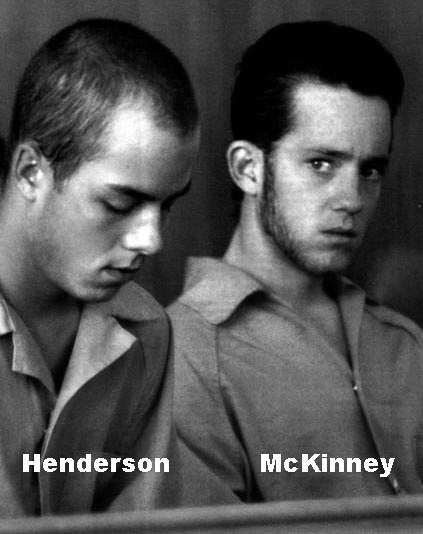
The year 1998 was not only dominated by the saga of Bill Clinton and Monica Lewinsky, but also saw the horrific hate crime murder of University of Wyoming student Matthew Shephard on grounds of his sexual orientation. On the night of October 6-7, Shephard got offered a ride home by Aaron McKinney and Russell Henderson. In sharp contrast to their good Samaritan offer, McKinney and Henderson subsequently drove the car to a remote, rural area in Laramie, Wyoming. Shephard was allegedly tortured for several hours and was finally tied to a fence, leaving him to die. Still alive but in a coma, Matthew Shephard was discovered 18 hours later by a cyclist. Having experienced severe brain-stem damage, Shephard never regained consciousness and passed away on October 12, 1998.
At trail, McKinney offered various rationales to justify his actions, ranging from the gay panic defense embedded in alleged sexual advances made by Shephard to involuntary manslaughter. The prosecution alleged that both men had pretended to be gay to gain Shephard’s trust. The testimony of Chastity Pasley and Kristen Price, girlfriends of McKinney and Henderson, came as a judicial drive-by-shooting for the two, claiming that both perpetrators had plotted beforehand to rob a gay man. In 1999 McKinney and Henderson received two consecutive life terms without the possibility of parole.
The Legislative Struggle of the Hate Crimes Protection Act
The United States 1969 federal hate-crime law encompassed crimes motivated by actual or perceived race, color, religion, or national origin, and only applicable when the victim is engaging in a federally-protected activity. In 1990, United States Congress passed the Hate Crimes Statistics Act, allowing the government to count the incidence of hate crimes based on religion, race, national origin, and sexual orientation. However, a clause was added to the end of the bill stating that federal funds should not be used to “promote or encourage homosexuality”.
However, the murders of Matthew Shephard and 15-year-old Lawrence King – who was shot and killed in February 2008 by 14-year-old Brandon McInerney who he’d asked to be his Valentine – , and the endless string of gay teenagers committing suicide was living proof that gay and lesbian youth are particularly prone to physical and mental victimization. There was a dire need of expanding the 1969 federal hate-crime law to include crimes motivated by a victim’s actual or perceived gender, sexual orientation, gender identity, or disability.
The passing of the Matthew Shephard and James Byrd, Jr. Hate Crimes Prevention Act proved to be an epic legislative battle in the American Congress. The bill, first introduced in the 107 Congress’s House of Representatives in 2001, drew specific criticism from American Evangelicals, with the evangelical off-shoot lobbying group Focus on the Family as a prominent force against strengthening federal hate-crimes legislation, stating that “it would muzzle people of faith who dared to express their moral and biblical concerns about homosexuality”.
After having died in Congress three consecutive times, the bill was reintroduced in 2007, this time with a clause adding gender identity to the list of suspect classes for prosecution of hate crimes. When the bill finally passed in Congress and proceeded to the United States Senate, many Republicans got in gear to make sure the Matthew Shephard Act never saw the legislative light of day. After having met its match a first time in the Senate, the bill was reintroduced as an amendment to the Senate Defense Reauthorization Bill (H.R.1585). Although the vote had been put briefly on hold after Republicans staged a filibuster on a possible troop-withdrawal amendment to the Defense Bill, the Matthew Shephard Act did finally pass in the Senate in September 2007 after a six-year-long legislative tour de force. However, as a dispiriting deus ex machina President Bush indicated that he would veto the Defense Bill if it reached the Oval Office with the hate-crimes legislation attached. Ultimately the amendment was dropped, nullifying six years of legislative struggle to expand the federal hate-crimes law incorporating gender identity and sexual orientation.
The Obama administration brought new hopes to those on the barricades for expanding the existing federal hate-crimes law. In a post-Bush era, President Obama communicated that one of the goals of his new administration was to see the Matthew Shephard Act pass. After it was reintroduced in Congress in April 2009, it sparked a feisty debate amongst Representatives, with Rep. Virginia Foxx stating that Matthew Shephard’s death was merely a hoax to further the gay agenda. Despite Republican claims that federal law was already sufficient to prevent hate crimes, the bill reached the Senate in the same month. The Matthew Shephard Act was adopted as an amendment to the National Defense Authorization Act and passed in the Senate in July 2009. Eleven years after the brutal murder of Matthew Shephard, the bill was signed into law on October 28, 2009 by President Obama.
Efficacy of the Matthew Shephard Act
In May 2011, a man in Arkansas pled guilty under the Act for running a car containing five Hispanic men off the road. As a result, he became the first person ever convicted under the new Act. In August 2011, one man pled guilty to branding a swastika into the arm of a developmentally disabled man of Navajo descent. The aforementioned crimes were framed under the Matthew Shephard Act on grounds of hate crimes based on race.
The expansion of the 1969 United States federal hate-crimes law was framed under the empirical observation that hate crimes are worse than regular crimes without a prejudiced motivation from a psychological perspective. The time it takes to mentally recover from a hate crime is almost twice as long than it is for a regular crime. Especially gay and lesbian people often feel as if they are being punished for their sexuality, which leads to higher incidence of depression, anxiety, and Post Traumatic Stress Disorder. In the aftermath of the Matthew Shephard murder, many gay youth reported going “back into the closet”, fearing for their safety and experiencing a strong sense of self-loathing embedded in their sexual orientation.
Earlier aformentioned examples of the Act’s implementation refer to hate crimes based on race. The legislation’s efficacy regarding hate crimes based on sexual orientation has a much lower public exposure rate, and this is exactly where part of the problem still lies. For many gay youth, there is still is huge threshold in reporting victimization based on sexual orientation, embedded in fear of being labeled with a social stigma. Secondly, mental victimization is often suffered alone in silence, and its lack of visibility or understanding can be attributed to the recent suicide death of Buffalo, N.Y., 14-year-old Jamey Rodemeyer, who was bullied online with gay slurs for over a year. Marking a somber beginning to LGBT History Month this October, Rodemeyer’s death is a tragic reminder of the existing vulnerability and marginalization of gay teens. And while a legislative framework such as the Matthew Shephard Act incorporates the corporality of hate crimes, the mental aspect of these crimes based on ethnicity, gender identity, or sexual orientation have proven to be a silent killer which no piece of legislation can easily remedy. The ultimate responsibility here lies with educational systems by installing a protective framework for bullied LGBT students to prevent ostracization.

When the message that is out there claims that being gay equals being a second-class citizen, that message needs to be changed. Matthew Shephard was not a second-class citizen. Lawrence King and Jamey Rodemeyer were not second-class citizens. The Matthew Shephard Act may have given a new dimension to federal hate-crimes law, but doing the same to a social message stating that being gay is threatening, is not something that is easily remedied by any senatorial bill.
In May 2011, after coming out to friends, Jamey Rodemeyer posted a YouTube video on the new online site, It Gets Better Project, which provides testimony from adults and celebrities to reassure victimized and potentially suicidal LGBT youth that life improves as they get older. Jamey wrote: “Love yourself and you’re set… I promise you, it will get better.”



 InPEC Magazine