The UN Human Rights Council Resolution on Sri Lanka’s Alleged War Crimes

In this article, the author explores the resolution’s impact on Sri Lanka, and its probable implications with reference to Sri Lanka.


By Rithika Nair, 3rd April, 2012

The United Nations Human Rights Council’s (UNHRC) judgment on Sri Lanka’s efforts at post-conflict reconstruction, invited an abundance of opinions and debate globally. Newspapers cried out country decisions to the US sponsored resolution with regard to their foreign policies, domestic policies and moral policies. In lending an ear to all the global justifications and rationalizations, the importance shifted away from what Sri Lanka had to say with regard to the resolution and its possible impact on the island.

In 2010, the Government of Sri Lanka created the Lessons Learnt and Reconciliation Commission (LLRC) suo moto, to look into the causes of the conflict, its consequences on the people, and to promote national unity and reconciliation. The LLRC, though criticized for overlooking the violations of human rights and humanitarian law committed by the Sri Lankan army, stated that there were “considerable” civilian casualties. This was opposed to the government claims, which insisted on a zero-casualty rate.

The international community had already begun to push Sri Lanka to begin its post-conflict reconstruction agenda.  The LLRC report increased this demand for the Sri Lankan government to act – prosecute those who were accountable for civilian massacres, and bring relief to those displaced and devastated by the war.

This never happened.

The disappointing LLRC report largely exonerating the government, and the subsequent government inaction to suggested accountability procedures encouraged the international community to act.

In March 2012, the US submitted a resolution at the 19th session of the UNHRC, urging the Sri Lankan government “to address serious allegations of violations of international law by initiating credible and independent investigations and prosecutions of those responsible for such violations.” The resolution, after being slightly amended to word that the implementation of any external advice or investigation by the Human Rights Commissioner or Special Procedures must unfold only “in consultation with and the concurrence of ” the Sri Lankan government, was passed with 24 votes in favour, 15 against, and 8 abstentions.

The closing of Sri Lankan embassies in Europe, the threats to human rights defenders and the anti-Americanism in Sri Lanka are some of the immediate effects of the resolution. But it’s long-term implications – constructive and destructive, are nothing but analytical renderings as of now.

The resolution with its honorouble intentions could be a possible check on the quasi-dictatorship of Mahinda Rajapaksa. It could be the warning hand on the back, reminding Sri Lanka of what it had promised to deliver three years ago, a paternal gesture offering assistance if needed. It could imply that dialogue and soft diplomacy may harden, and the whispers of a ‘South Asian Spring’ may jump to reality with an international demand for the removal of Rajapaksa from his throne. With the Sri Lankan Tamils still dissatisfied with their government’s empty promises of reconciliation, and Sinhalese human rights activists being called traitors if they stood up for the Tamils, it would not be long before Sri Lanka could walk the line with Maldives, Libya, Egypt and Tunisia. If such a future be predicted, then the precautionary resolution – a very fair and balanced one, has been passed at a very appropriate juncture.

The resolution may have been a UN step to avoid being blamed for not taking action. Perhaps the UN was guilty of its own lack of action while the crisis unfolded over 26 years. Then, the resolution is but a ticking pendulum, softly but notably reminding Sri Lanka of its obligations and responsibility – and in doing so, delivering rehabilitation and hopeful justice to the victims of the war – the people of Sri Lanka.

On the other hand, the resolution placed the ball back in the Lankan court, and it ordered the multi-faced Lankan king to finish what he had promised to do. It asked him to submit an action plan detailing what he had done, and will do to implement the LLRC recommendations, and to address all matters that violated international law.

The king, with all ten heads, rejected the resolution.

Neither he nor his court thought that it added any value to the humanitarian and justice implementation process in Sri Lanka. They felt the resolution was ‘counterproductive’, ‘ill-timed’, and ‘an unwarranted initiative’. They perceived the supporters and sponsors of the resolution to be LTTE sympathizers – those who underestimated the violence and trauma that the LTTE had unleashed upon them. They felt that the unpunished situations in Afghanistan, Iraq and India removed the moral legitimacy of the resolution.  Lobbying against the vote in Geneva transcended into anti-America lobbying, and human rights activists and defenders of the resolution were threatened in Sri Lanka. In such circumstances, the significance of the resolution is undermined.

This resolution should not and cannot be rejected by comparing them to conflict situations where deeds committed by the sponsors and supporters go unchecked. This matter pertains to and reflects on Sri Lanka, and Sri Lanka alone. This does not mean that this case supersedes any of the other situations, but the current context is Sri Lanka, and that should be respected. If the world and its leaders were to act and re-act following the policy of every eye for an eye, and every tooth for a tooth, the vicious cycle of blame and revenge would never stop spinning.

However, as the ambassador for Bangladesh very prudently stated at the Council session, if Sri Lanka is not on board, then the resolution will have a very limited impact. Without the Sri Lankan nod to implement efficient rehabilitation and accountability measures, the resolution is but an empty bell with no sound.

10 Reasons why India is not the Next Superpower

In this article, the author presents ten issues that are holding India back and have crippled India to some extent. He makes the case that if these problems are not overcome, India will not be a future “superpower”, as some claim it will be.  

_____________________________________________________________________________

By Mikael Santelli-Bensouda, 4 Jan, 2012

There is an increasing vigour with which international observers speak of the rise of India. According to many, it seems that those who placed bets on China becoming the next dominant power are wrong and in fact India was the right choice. This is based upon the assumption that India is destined to become the next real global player by virtue of three integral factors: it is the world’s largest democracy; it has an absurdly large and predominantly young population, and its ascension into the global elite of power economies is inevitable.

However, have we asked ourselves enough questions about the so-called emerging power? What is the reality of the Indian condition? Has hyperbolic economic growth planted the seeds for a truly gregarious society? Is democracy moving the masses forward or fostering a residue of stagnation? With the dawning of a new year, it is an appropriate time to dispel the romanticised image of the emerging Indian powerhouse by identifying 10 key areas that prevent India from being considered as a global superpower.

  1. Democracy

Democracy is the right and only form of governance. This is a concept that nations of the West are familiar with and in recent years India has become a part of that democratic axis. For reasons that may appear obvious to most, it is rare that questions are asked about the validity or potency of democracy’s utility. Essentially, the assumption stands that; if democracy is in place then there is no better system that can improve the lot of that nation. Therefore, if a democratic government is failing to address the concerns of its people; it is not the fault of the system but the fault of a group of ‘bad apples’ within society. There are no two ways about it, the Indian government over the last couple decades has not been addressing the most essential needs of its people (explored below).

Yet, despite the seemingly under-productive governance system, Indian’s are ferociously proud of their democracy. However, they are less than impressed with the manner in which it currently operates. Admissions of corruption, hypocrisy, elitism and nepotism are ever-present when discussing national politics with any Indian. Despite democracy’s ability to represent the average person’s wishes (which is in itself an illusion in a country as diverse and populated as India) there has been a distinct lack of meaningful progress across the board. It is relevant, given the feats achieved by India’s tumultuous neighbour China, to question whether a democratic system is to be blindly accepted as ‘the only way’. History tells us quite bluntly that authoritarian regimes (of varying degrees) have had as much, if not more, success in establishing functioning societies than democratic nations. In fact, a true expression of democracy has yet to engender a world power. Controversial, I hear you cry. All of the European powers, a segregated United States, Imperial Japan, the coming of China and all ancient empires share one simple fact; they did not represent all of their citizens in their decision making processes, instead they took decisions on their behalf. Democratic regimes tend to be election wary and in doing so lack a long-term vision that a country like India is desperate for. I am not arguing for a Chinese-style authoritarian leadership but I pose this simple question: do you think it is possible for India to emulate what the Chinese have done in terms of infrastructure, poverty, energy needs and generally safeguarding the future of its population on a centralised five-year electoral cycle? It seems highly improbable given the current state of affairs.

  1. Corruption

A large part of the reason democracy in India seems impotent is the fact that corruption is interwoven into the very fabric of Indian governance. The country suffers from corruption on a scale that would make Nigeria’s late dictator, General Sani Abacha, roll over in his grave. Corruption stifles the country in a number of ways. It siphons off necessary funding for: essential development, anti-poverty initiatives, energy security and many, many more. It has become synonymous with politics in India.

Perhaps one of the worst features of India’s endemic corruption is that it is unashamedly present. Like a plot from a Bollywood movie, it seems that factions within society extol their ability to command such devious power. This of course has created a backlash. Like most of the world, India has not escaped the ‘year of protests’ unscathed. The Anna Hazare anti-corruption movement has captured the imagination of millions and, rightly or wrongly, seems to be a voice for a discontented underbelly of unrepresented lower classes and the aspirant middle-classes. Despite the downturn in the intensity for the Hazare movement in recent weeks it does not signal that the Indian people are happy with the current status of the Lokpal Bill and corruption is no longer an important issue. Far from it. Corruptions synonymy with the political establishment not only affects the legitimacy of the current Singh government and his National Congress Party, but also engenders a twofold reaction as it dangerously erodes faith in the political establishment (which could lead to protest votes for extreme parties) whilst neglecting the responsibility to address the problems of tomorrow.

  1. Infrastructure

India is soon to find herself in the midst of a golden opportunity to signal to the world, and more importantly her own people, that the country is upgrading its infrastructure inline with the 21st Century. The current transport system is largely a continuation of what the British left behind. Despite the age and condition of much of the national train network and roads systems, they continue to defy logical explanation by servicing the burgeoning population. However, this system is slowly reaching its tipping point and will not last forever. Rather than waiting for the system to fail, it is time to ensure India keeps moving into the next century.

Mumbai is a perfect example to demonstrate the state and nations wanton disregard for the transportation issue. It is India’s most densly populated city, it is the financial and entertainment capital, it plays host to Asia’s busiest train terminus and houses some of the world’s most expensive hotels. Also consider that the city is a logistical nightmare were a one-way commute can take hours, trains are beyond overcrowded and the Chhatrapati Shivaji airport, located in the middle of the city, is serviced to death. After ten years of political wrangling planning permission has been given for another airport located in a more sensible location. Bets are off on guessing which decade the building will be completed in.

Talk to any Indian with some affiliation to Mumbai and the response is always the same: it is too crowded! A unfortunate coincidence of geography prohibits outward expansion, self-interest and political stubbornness prevents relocation to a more appropriate northwardly location. This should not stop the authorities from implementing strategies to alleviate the congestion, especially for the hellish commute. The Delhi Metro can offer double-edged inspiration in this regard. Whilst its emergence has been a great success for India’s capital it highlights the uninspiring nature of the Indian government’s perspective on infrastructure. Why the Mumbai phase of the metro was not ‘ready to roll’ as soon as Delhi was finished is simply baffling. If any city in the world was in need of a metro its certainly Mumbai, yet it seems more effort is being placed in the construction of the Jaipur metro.

  1. Bureaucracy

The generic accusation aimed at bureaucracies is that it is detrimental to efficiency. Speed it seems is the sacrificial lamb. At present, India can do without extra delays, it would benefit much more from swift and rational decisions. The justice system in India is painfully slow and complicated much like its political decision-making. As a political risk and consultancy group, based in Hong Kong, announced in last year’s report India’s bureaucracy is one of the most stifling in the world. This derives from too much political interference in a less than transparent system. It also translates into difficult foreign business ventures that carry excessive ‘administration fees’.

  1. Ethnicity & Religion

An obvious fact: India is an ethnically and religiously diverse concoction. What is less obvious is that no previous global super power has been heterogeneous. Yes, many have included diverse peoples but they were not founded upon the notion of equality amongst men. Even the United States was founded and unified around its white northern European immigration. Historically, it seems, homogeneity is a staple ingredient for a superpower status. As such, India faces a monumental challenge from its internal divisions that more than occasionally lead to fractious tendencies.

Difficulties have arisen and will continue to arise given the deep seeded tensions between Hindus and Muslims, people and state, and caste against caste. Unfortunately, in recent years religious violence against Muslims in the state of Gujarat can attest that diversity is not being used in a positive force. The most troubling factor is the construction and reinforcement of an ‘other’ within and across Indian society. A notion that is readily intensified by the perpetual antagonisms with Pakistan and it is for this reason it is not difficult to understand modern manifestations of religious tensions across society. The nation must come to terms with its own skin before it can even begin to project power externally.

  1. Energy

India is an energy dependent nation. The majority of its energy needs are satisfied from imports. With the relentless rise in oil prices and perpetual instability across global commodity markets, energy dependency in the near future represents a highly volatile arena wherein states compete to satisfy their own needs. And therein lies the problem, India cannot outspend cash-rich nations like neighbouring China, India cannot match the physical capabilities to ensure energy security like the US and India currently lacks the international influence that European nations are desperately clinging on to. There is a necessity to make substantial moves now to ensure some semblance of imported energy guarantees for the coming decades. For without any energy how can India modernise?

What of the possibility for turning to domestic green energy? You could be forgiven for muttering ‘fat chance’, you really could. India aligns itself with the majority of the world in this regard, it makes the right noises about such endeavours yet does little to enact them. However, with a spot of forward planning (and a gigantic amount of political will and a substantial stack of rupees), India could move towards a sustainable energy system that services transport needs as well as business and personal consumption.

  1. Hypercapitalism

However, investment in green solutions holds little hope due to the monopolistic nature of capitalism. Power derives from those with financial capabilities and if the green option does not align with the interests of the powerful utility and energy companies you can be sure neo-liberal India will not rock the boat. The most disturbing facet of the Indian paradox is the extent to which capitalism operates. Akin to a bodybuilder on steroids, it severely distorts India’s natural economic potential, exposes her labour force to the ruthless desires of the world market and encourages oligopoly.

People will point to the fact that India has one of the highest number of millionaires on the planet, but in contrast India’s poverty index is as bad, if not worse than sub-Saharan Africa. Perhaps its most abhorrent feature is that it provides an excuse for overlooking or condemning the masses under the poverty line, as capitalism assumes your own financial situation is in your own hands.

  1. Poverty

Simply put, before India can even dream of becoming a influential player in international affairs it must lift over half a billion of its own people out of poverty.

  1. The Caste System

Even though the caste system was officially abolished with the creation of the Indian constitution, it is still prevalent in the minds of millions. Its existence reinforces differences. Much in the same way that ethnic and religious differences impede India’s development as a truly gregarious nation, the caste system also inhibits development. When divisions amongst people constitute a significant part of societal interactions (or there lack of) yet the society itself advocates equality for all, it is possible to see that these contradictions can provide internal backlash if caste consciousness emerges.

  1. Attitude to Foreigners

Another trait that has been a prevalent feature of ‘superpowers’ of yester year is the manner in which they see themselves in relation to others. There is a strong sense of exceptionalism that underpins the ability to rise above, one which usually comes at the expense of other people. The Indian condition seems to be largely different to this. Rather than adopt an exceptionalist identity with regards to foreigners (surrounding nations such as Pakistan and Bangladesh are the exception) they reinforce their superiority internally amongst their own people.

In many respects skin colour is an integral factor within Indian society. That translates into a strange psychological relationship between the fairer Indians who, by no coincidence of history, find themselves in the higher echelons of society, white Europeans, especially Anglo-Saxons and the large mass of darker skinned Indians. In essence, India still holds psychological baggage from its colonial history. It is something that sections of society are unwilling to relinquish due to the associated benefits of power and prestige supplemented by the international bombardment of the ‘white is right’ paradigm. However, to overcome this is a prerequisite in a country where peoples skin colours vary as widely as the colours of India’s magnificent saaris.

In no way are these ten categories impossible problems that condemn India to mediocrity and chaos indefinitely. Each category can (and should) be transformed into a positive attribute of the Indian experience. In fact, should a solid amount of foresight and vision be employed then each of these obstacles will either become a source of strength or goal to be achieved. Yet, for the time being these represent very real challenges that are in serious need of address before they escalate. Furthermore, each is intertwined with the other. No one obstacle will be overcome alone. A holistic approach is the order of the day and I harbour my doubts that the Indian ruling elite is currently prepared to meet the requirements of its people and thus ensure the prosperity of India’s future.
What’s in a Name? Everything, if your name is Nakoshi

In this article, the author explores a regressive custom in rural India, where parents give unwanted names to their children because of the prevalent sexism, misogyny and castesim.


By Siddharth Singh, 23 Oct, 2011

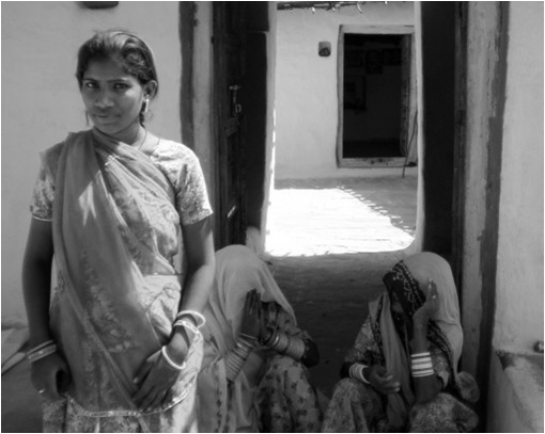
22nd October, 2011 is an important date for the 265 girls from the rural Indian province of Satara. This was the day they were given a new name, a new identity, and hopefully a new life of dignity.

In 2007, the health officials in this region discovered a rampant practice in Satara where parents would name their girl children ‘Nakoshi’, which means ‘unwanted’, in the hope that their next child would be a boy. Consequentially, these girls would grow to live in a world where they would be stigmatized and discriminated against, more often than women already are.

On 22nd October this year, the administration organised a public event and renamed the girls. The girls were allowed to choose any name they wished, or select one from a list provided. The girls went ahead and chose names such as Aishwaria (meaning ‘wealth’). The Indian Express reported that these girls claimed that for the first time in their lives felt ‘loved and accepted’. They recounted how they were previously treated with disdain, and would often return from their schools crying because they were bullied.

Such practices, however, are not localised to the district of Satara. This happens to be symptomatic of the preference of the girl child by parents across most regions of India. While the average sex ratio of the world is 101 males to 100 females, it stands at 112 males to 100 females in India.  In certain areas, such as the city of Chandigarh, it stands at 123 to every 100. Such a skewed sex ratio has resulted from the practice of female foeticide (the abortion of the female foetus), which is rampant in India.

What is important to note, however, is that female foeticide is not a rural-poor phenomenon only. Studies show that this practice is relatively more rampant in urban areas and in the middle and upper class wealthy families rather than the poorer ones. One of the possible causes of this is that the poor cannot afford the sex determinatation tests and abortion procedures.

The poor are hence left with venting their frustration of not having a male child by adopting practices such as naming and shaming the girls who are already born.

However, the practice of giving children such names is not only determined by gender: such practices are common along caste lines too. In fact, it may well be the case that it is more prevalent by caste.

In rural India, casteism is expressed in a more violent and unabashed way than in urban India. Every year, hundreds, if not thousands of people from the ‘lowest’ castes are killed by the ‘higher’ castes. While accurate statistics of this are not readily available, evidence of such a high number can be observed in the daily reports of such killings in national and regional newspapers. The triggers of such violence is usually the ‘lowest’ castes ‘daring’ to assert their equality in the society, such as by entering temples where the ‘highest’ castes frequent, or using communal wells for water which the ‘lowest’ castes are forbidden to do.

An example of such brutality can be seen in this short documentary.

One of the outcomes of such violence is the naming of children of the ‘lowest’ castes as the regional-language equivalents of ‘dirt’, ‘garbage’, ‘filth’, ‘fool’, ‘stupid’, etc. Some parents do so willingly in order to prevent their children or the parents themselves from being beaten up or killed by the ‘upper’ castes for having names that they use on their own children.

This results in these children getting discriminated at every turn in their lives. It becomes difficult to find meaningful employment or be treated as equals. Their caste becomes apparent the moment they introduce themselves, so they aren’t even given an opportunity to prove themselves anywhere.

I have personally witnessed such a case in rural Rajasthan. A young man in his twenties who had good bachelors and masters degrees could not find employment in any private company in his district in spite of being more qualified than most other people across castes. This man had, after all, committed the ‘crime’ of being born in the ‘wrong’ family.

It is time regional administrations from around India made serious attempts to identify such cases and reverse this trend just as the Satara administration did in the case of the ‘Nakoshis’. Importantly, these children must be given caste-neutral surnames too. In doing so, they would be doing a lot to reduce the inequalities and injustices that have been thrust upon them.

The Shakespearean quote from Romeo and Juliet, ‘What’s in a name? That which we call a rose by any other name would smell as sweet’ unfortunately does not hold true everywhere.


The author can be followed on Twitter @siddharth3 

The Strange Politics of Anna Hazare

By Siddharth Singh, 12 Oct, 2011

Anna Hazare’s recent threat to campaign against the Congress party in case they don’t help pass his version of the Jan Lokpal Bill in the Uttar Pradesh (UP) elections is an artful move. Much as the Congress would like to dismiss this threat citing the non-existent political roots of Anna, it needs to tread with caution given it draws substantial support from the Middle-class in UP.  The Congress has pinned its re-election prospects, as well as the political prospects of Rahul Gandhi, to its performance in UP.  By threatening to strike the Congress where it would hurt the most, Anna has been very strategic.

However, while this move by him may see an initial success in Hisar’s by-polls (which is a constituency that wasn’t leaning towards the Congress in the first place),  it risks becoming a cause for the downfall of this movement. Political fault-lines in Uttar Pradesh lie – unfortunately – on issues of caste and religion, and to an extent – fortunately – on  the governance (or mis-governance) records of the respective parties. While the general call of ending corruption may resonate with the society, the electorate may not swing their votes in favour of parties that promise to implement certain legislation over others in the future. Especially not if the record of such parties on corruption and graft is equally if not more suspect than that of the Congress. In case they choose to do so, it may still not work towards meeting Anna’s goals.

Anna’s call may be further diluted in case the Congress manages to pass some version of the  Lokpal Bill before the UP elections. The Congress’ announcement that the Lokpal Bill envisages the body to be a Constitutional authority may work to dilute Team Anna’s position.

Realistically, two results can be expected from such an anti-Congress ploy in UP:  either Anna turns out to be successful in wooing the people away from the Congress, or he doesn’t. In the case of the first eventuality, if the result is the election of individuals and parties with a record of graft and corruption, then the purpose of the agitation would be lost. If the idea was to kick out the corrupt, then it makes no sense to work towards replacing one set of corrupt with another. This may lead to substantial disillusionment with the public. More so because a fractured mandate which includes the corrupt would diminish the chances of the passage of the Jan Lokpal Bill.

In the case of the second eventuality, the Congress  would claim popular victory and support for its policy on corruption and the popular rejection of Team Anna.  Either way, this movement would only lose out on the popular support it has garnered.

Annaji, as he is known by the public, may well be advised to not go ahead with such a simplistic call which may well prove to be counterproductive. If he wishes to hold on to the legitimacy he has earned in the past few months, he ought not to alienate his core constituency by aiding – indirectly – the victory of parties that are no less, if not worse, than the Indian National Congress when it comes to the issue of graft.

Look East, Prime Minister Singh


By Siddharth Singh, 7 Aug, 2010

In his second term, Indian Prime Minister Dr. Manmohan Singh has taken up the challenge of improving India-Pakistan relations in line with his conviction that a nation which wishes to see itself as a global power must move beyond regional rivalries with a small neighbour. Consequentially, the Government of India has spent considerable time and effort into building this relationship in the face of public skepticism at home following the 26/11 attacks in Mumbai.

While this effort is laudable, evidence does not seem point towards a possible success in this initiative. The recently leaked Afghanistan war dossier confirmed what was long known in the policy circles: there is no unified face of the Pakistani leadership as groups and individuals within the administration are working towards different goals. These goals include helping jihadi groups that intend to establish control of Afghanistan once the NATO – ISAF forces led by the USA leave the region, and those that intend to fight India in Kashmir.

The popular opinion among Indians after 26/11 has not been accommodative of any dialogue with Pakistan, at least not until action is taken against the perpetrators of the attacks in Mumbai. Such a single minded focus of Indian foreign policy on terrorism is not acceptable to Pakistan, as it wishes to see issues – particularly Kashmir – to be discussed and resolved too. As a result of this mismatch, a rather ugly public falling out took place in Islamabad recently between India’s foreign minister Krishna and his counterpart Shah Mehmood Qureshi. Furthermore, it is unlikely that popular opinion in Pakistan will become receptive of any concessions made by their government towards India.

The memories of the bitter history between the two nations cannot be undone easily; at least not at the current juncture when the uncertainties of the Afghanistan war are encouraging the Pakistani administration to keep its options open. This hasn’t stopped Dr. Singh from insisting on the continuance of the talks even in the face of strong political opposition in India.

On the other hand, the Indian government is missing out on a golden opportunity to once and for all bury a petty regional rivalry between Bangladesh and India. The circumstances surrounding this relationship are such that if proper time and effort are invested, India and Bangladesh could bury the hatchet and move towards a stable South Asia.

Only recently, a military led caretaker government in Bangladesh was replaced by a coalition led by Sheikh Hasina’s Awami League. This government has shown the will to have strong relations with India. Bangladesh is the 7th most populated nation and has shown larger increases in the HDI index than Pakistan has in the past few years. It is expected to show a real GDP per capita growth rate of 6.8% in 2010. The Grameen Bank is playing a great role in poverty reduction in the country. They have also shown a steady improvement in the Corruption Perception Index.

Most importantly, the Supreme Court of Bangladesh recently reinstated a ban on religion in politics, implying that Islamist parties can no longer use religion to garner votes. The unifying identity in Bangladesh isn’t religious; it is linguistic and cultural.

India’s relationship with Bangladesh hasn’t been great historically for a variety of reasons, and this is holding back both countries to varying degrees. Bangladesh blames India of faulty water management (principally, the building of the Farakka Dam) on India’s sides of the borders that causes flooding and water shortages at different times of the year in Bangladesh. Additionally, The Border Security Force (BSF) of India is blamed for killing ‘innocent cattle traders’ from across the border frequently (The BSF maintains that they only fire in retaliation to the cattle ‘smugglers’, as cattle trade isn’t legal between the two nations). India is also accused of treating Bangladesh as an inferior state that is supposed to be obliged and indebted to India for the help that India gave during her freedom struggle.

India’s principal issue of conflict is a result of Bangladesh’s ‘sheltering of anti-India insurgents’. This claim is being countered as the new government has shown resolve to readily arrest and hand over anti-India insurgents to Indian authorities. The political right wing of India also speaks out against illegal immigrants from Bangladesh who cross over and do paltry jobs. Additionally, one incident that won’t be easily forgotten in India is the case where 16 BSF soldiers were killed by rogue Bangladesh Rifles (BDR) soldiers in 2001 (2 BDR soldiers were killed too).

However, India needs Bangladesh as much as Bangladesh needs India. For one, states and regions in India’s North East get completely cut off from the rest of the country in the face of local agitations, as was seen recently. This gives China a strategic advantage in the region, and this is critical given China’s claim over the Indian state of Arunachal Pradesh. India needs Bangladesh as a transit route to easily access its North Eastern states. Bangladesh needs peace with India to keep its focus on development and political stability rather than be distracted by military concerns.

There exist several advantages in the scenario surrounding India and Bangladesh that simply don’t exist in the case of India and Pakistan. For one, India’s opposition leaders are in favor of having better relations with Bangladesh, while they have a hawkish stance against Pakistan. Secondly, there is no ‘natural’ flashpoint such as Kashmir in the case of India and Bangladesh which could independently derail talks. Thirdly, Bangladesh shows the potential of having economic and political stability in the decade to come and the government has a united face.

Hard work will be needed by India to woo Bangladesh’s opposition, however. This is where Dr. Singh’s task is cut out. He has to go the extra length to bury the bitter history between the two nations. India must start treating Bangladesh as an equal in the region and must unilaterally offer economic concessions and access to its markets. Being in a better position economically, India can afford to do this. Bangladesh might eventually trust India enough to reciprocate. India must also resolve the water management issues that affect the average Bangladeshi. In turn, India must demand transit to its North Eastern states.

Dr. Singh also needs to convince the opposition in India to support the development of Bangladesh, for only a prosperous Bangladesh will lead to a fall in illegal immigration. The Prime Minister can also mull over immigration reforms to allow Bangladeshis to legally work in labour deficit regions in India.

China continues to woo Bangladesh in its attempt to create a chain of China-friendly states around India’s border for obvious strategic purposes. It is time India swallows its pride and get real by engaging Bangladesh. Proactiveness and conviction by Dr. Singh will get India much more than what Pakistan feigns to offer. Finance Minister Pranab Mukherjee’s recent trip to Bangladesh is a good start, but a lot more is required.  The time and effort being expedited on Pakistan must be replicated and overshadowed by India’s effort on Bangladesh. The timing for such an endeavor couldn’t be better.

__________________________________________________________________________________

The author can be followed on Twitter @siddharth3