What about Belgium?

In this article, the author assesses the record-breaking government formation crisis in Belgium and addresses why a complete deadlock in government formation negotiations has a detrimental effect on Belgium’s economy and its international reputation. 


By Matthias Pauwels, 22 Nov, 2011

Ten thousand thundering typhoons! Filibusters! If the insults of Belgian King Albert II strike any resemblance to those of his fellow compatriot, Tintin’s Captain Haddock, this perhaps would be the best of times to hear them in the corridors of the Royal Palace in Laken. When Belgium’s federal elections took place on Sunday 13th June 2010, no one could have imagined that the country would end up in political limbo due to a record-breaking political crisis.

As Belgium hit a crippling 526 days without a government on 21st November 2011, the man tasked with ending Belgium’s political crisis, Francophone Socialist leader Elio di Rupo, offered his resignation to King Albert II for the second time in five months on Monday night after talks collapsed over budget cuts to counter the Eurozone’s debt crisis. And after an endless string of appointing mediators, negotiators, and government formation specialists, even the palace’s inspiration to come out with a strong statement appeared rather stale when the king urged to “recall the gravity of the current situation and underlined that the defence of the general interest of all Belgians and European deadlines require a very quick resolution to the political crisis.”

Quo Vadis, Belgica?

In the 1830s, the artificial construct that is Belgium found its unified strength, as the Southern Provinces from the United Kingdom of the Netherlands – albeit linguistically divided but united as Roman Catholics – tore away from the overwhelmingly Dutch Protestants. William I, the Dutch King, rightly believed that the separation of the Southern Provinces of the rest of the Netherlands would be detrimental to his country’s economy. In many ways, the Belgian Revolution had several causes; mainly, the treatment of the French-speaking Catholic Walloons in the Dutch-dominated United Kingdom of the Netherlands, the difference of religion between the Belgians and their Dutch King, and the domination of the Dutch over the economic, political, and social institutions of the Kingdom.

Two centuries later, the power of religion that once unified Belgium as a whole has traded places with the finer Burgundian things in life the country is internationally renowned for, such as trappist beers, mussels and fries, and chocolates. But as apathic as Belgians seemed to be about their deepening political crisis, is the savoury of the country’s cuisine strong enough to keep the Dutch and French-speaking centres united?

In a striking resemblance to the Dutch King’s woes and sorrows regarding the separation of the Southern Provinces in 1830, Belgium’s current political squabbles are heavily embedded in the country’s unequal regional economic growth, combined with the intractable problem of revenue flow to the different regions. Flanders – not to be confused with the Simpsons’ sometimes sickeningly cheerful Hi-didly ho next-door neighbour – accuses the Walloon region of being too dependent on economic subsidies from the Flemish region. Wallonia, once the shining beacon of Belgium’s industrial revolution, capitalised heavily on its extensive deposits of coal and iron from the beginning of the 19th to the middle of the 20th century. This brought the region wealth, making Wallonia undoubtedly the more prosperous half of Belgium.

Since World War II, however, the importance of heavy industry has greatly declined, and the Flemish Region gradually surpassed Wallonia in wealth as this region economically declined while the former specialised in IT, engineering, pharmaceuticals, and shipping. Wallonia, making up 55% of Belgium’s territory but with only a third of its population, now suffers from high unemployment and a significantly lower GDP per capita than Flanders, leaving the region to rely heavily on economic subsidies from the Flemish region. It is this fact exactly that has led Bart De Wever, leader of the right-wing New-Flemish Alliance and winner of the previous general elections in Flanders, to quote that “Belgium is the sick man of Europe, with unbridled money flows to Wallonia, a junkie on a Flemish drip.”

The most recent elections were fought mainly on the failure to resolve the conflict over the electoral arrondissement of Brussels-Halle-Vilvoorde. The conflict centered on the political and linguistic differences in the arrondissement and exacerbated tensions between Dutch- and French speaking Belgians, with the Flemish desiring to split the arrondissement into two separate areas, while the Walloons wish to keep it together. Belgium’s latest marathon government formation talks collapsed after Flemish and French centre-right parties rejected formateur di Rupo’s plan to curb the public deficit, saying it relied too much on tax hikes and not enough on cuts. Hopes of an end to the crisis had risen last month after the feuding Flemish and French-speaking parties at the negiotiating table reached a deal on the thorniest issues, such as giving the regions more power and reforming the status of bilingual Brussels. The New-Flemish Alliance however, winner of the election in the northern part of Belgium and the largest political party in Flanders, had by then long left the negiotiating table, claiming that the reforms outlined by di Rupo still catered too much to the needs of Wallonia. The remaining negotiating parties, now deeply divided over how to slash the Belgian debt, leave the country without any hopes of a government before the new year.

Impact of Belgium’s deadlock government formation

The impact of Belgium’s political woes affect the country both on a domestic and international level. On a domestic level, Belgium’s growth prospects, like the rest of the debt-saddled 17-nation Eurozone, have deteriorated in recent months. In the second trimester of 2011, the economy of the EU grew by 0.2 %, according to Eurostat. In the same period Belgium, paradoxically enough, registered a comparative high growth rate of 0.7 %, leaving many analysts baffled on how to explain “the Belgian wonder”. A government-less country that hadn’t dare to introduce anything remotely resembling austerity measures surpassed Germany and France in economic growth. The absence of a government seemed to make little difference to day-to-day life in the small kingdom. Many state functions, from education to welfare, have already been ceded over the years to regional and community governments. Belgium deftly helmed the presidency of the European Union in the second half of 2010, and the caretaker government headed off market jitters over its debt levels in January 2011 by quickly agreeing on a tighter budget.

The Belgian wonder, however, seems to be over. Belgium’s borrowing costs have spiked in recent months, but so far the nation has fended off the type of market pressure that has already toppled the Spanish, Italian, Greek, Irish, and Portuguese governments and forced the latter three to take out multi-billion-euro EU-IMF bail-out loans. Moreover, the European Commission published new growth figures this month showing that Belgium’s economy would expand by only 0.9 % next year, as against the 2.2 % previously predicted by the EU six months ago. Additionally, EU economic affairs commissioner Olli Rehn warned Belgium and four other EU states earlier this month that they could face fines if they failed to get their public finances back in order. In order to remain financially feasible, Belgium would have to slice 11.3 billion euros off the deficit next year and some 20 billion in all by 2015. Caretaker Belgian premier Yves Leterme and the European Commission have repeatedly called for a deal that would bring the country’s public deficit below 3 % of gross domestic product by 2012 – rather than the 4.6 % now forecast. In October of this year, Moody’s put Belgium’s Aa1 government bond ratings on review for possible downgrade, a decision that was heavily influenced by troubled Franco-Belgian Dexia bank. The nationalisation of Dexia was one of the only major tour de forces the Belgian caretaker government was capable of. The approval of new legislature on Belgium’s federal level, the expansion of new development aid plans, and a clearly outlined federal approach to implement austerity measures tackling the current economic crisis have been put on hold for a painful 527 days in the absence of a new government. And while Belgians initially celebrated breaking the Iraqi world record of government formation in February of this year – an event which was whimsically dubbed the “Fries Revolution” – at this point, the party is long over. And Belgians are undoubtedly left to wonder: is there still a party planner left that can fix this mess?

Furthermore Belgium’s international reputation is at stake. As the heart of Europe and hub to the European Union and NATO, the country’s political struggles have left many international politicians to wonder whether or not Belgian politicians can rise above their differences. The partition of Belgium has been deemed not viable by many leading political analysts and would leave the intractable problem of bilingual Brussels, home to many domestic and international political institutions.

End of Belgium?

For some in Belgium, the question is not if, but when the divorce of Flanders and Wallonia will be consummated. But the partition of Belgium has been deemed not viable by many as well. You wind up with the intractable problem of bilingual Brussels and, more worryingly, the demise of Belgium – a sticking plaster over the fault-line between Europe’s Protestant north and Catholic south – could potentially make Europe a more dangerous place.
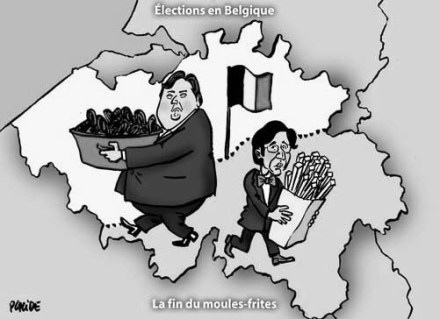
According to many Walloons, Flanders has systematically organised its independence over 35 years, taking away responsibilities from Belgium’s federal level and transferring them to local community governments, such as education and welfare. French-speaking Brussels – whose cultural and linguistic affinity is with Wallonia to the South – sits like an island in Flemish speaking Flanders, courtesy of the newly established linguistic frontier that was drawn southwards in 1962.
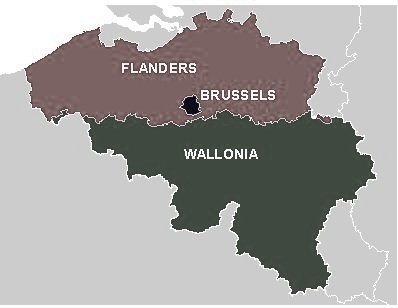
In the 45 years since, Belgium as a state, steered by the economically and numerically superior Flemish, has effectively devolved itself out of existence. ”Now Flanders with six million people makes the rules and four million French-speakers adapt,’” said Myriam Delacroix-Rolin in an interview with the Guardian in 2007. Delacroix-Rolin is the mayor of Rhode Saint-Genese, a small town 9 miles south of Brussels, who is banned from speaking French at council meetings or official functions. ”The Flemish are very clever. My council does not use language criteria to allocate housing, but the region does. In this way Flanders is ensuring that more Flemish-speakers settle in my municipality. The region also imposes a language test on teachers seeking to work here or parents wishing to adopt children. One way or another, your route is barred unless you have Dutch language diplomas.”

It used to be the opposite. During centuries of Walloon prosperity – including 200 years as Europe’s most productive mining and steel basin – the Flemish were looked down on and their language banned. Recently they have gained the economic upper hand, and now see post-industrial Wallonia as a costly passenger. Increasingly, Flemish politicians speak of the ‘Czechoslovakia option’ and point to the fact that the ‘velvet’ break-up in 1993 was a success for both sides. But economically it is hard to imagine what the wastelands of Wallonia would stand to gain.

Most observers believe the break-up is just a matter of time; Flemish nationalist support will grow every time there is a local or national election. But nothing will happen without the EU, to which an independent Flanders, would have to apply for membership. Flanders believes that Brussels will be its new capital, but with the capital’s linguistic and cultural affinity to Wallonia, this is highly contentious. Flanders could be pushing for a messy divorce.
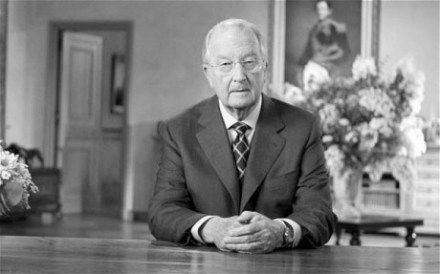
For the time being, Belgian King Albert II has not yet accepted the resignation of formateur di Rupo. While the King deliberates on where to go from here and Belgians await his next move with bated breath, the tricolor Belgian flag remains to wave stately at the royal palace. For Belgium and Europe’s sake, let’s hope it’s not the last time.
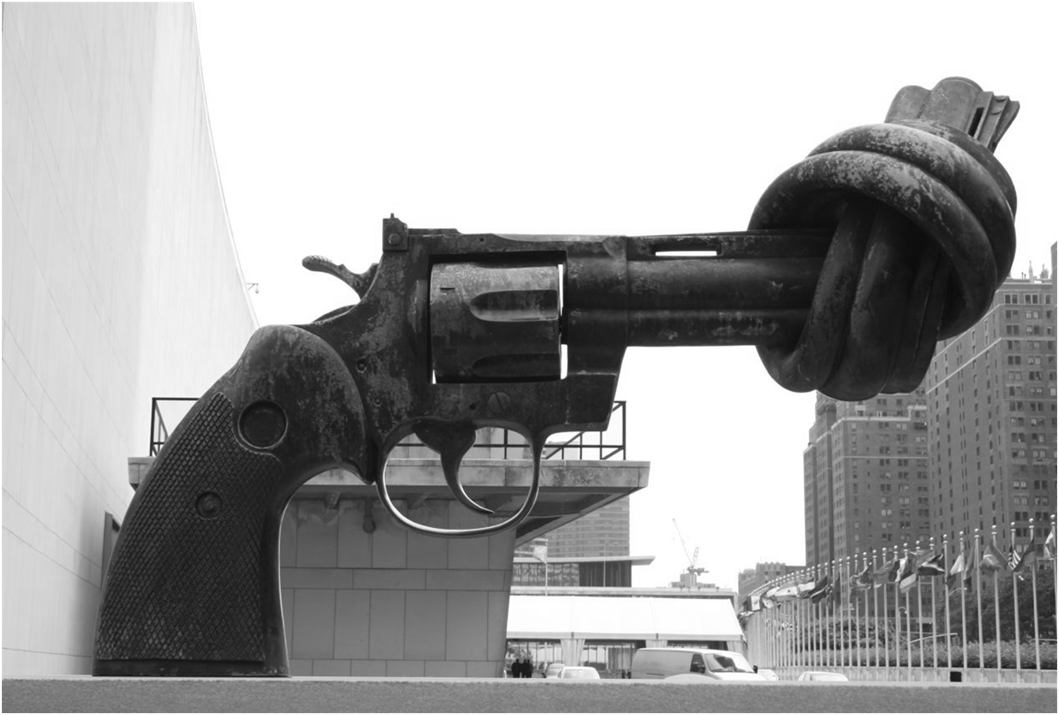
Reviving Global Disarmament

In this article, the author seeks to revive the debate around the issue of global disarmament by calling civil society to engage with the issue critically and constructively. Disarmament, he argues, ought to deal simultaneously with conventional weapons and armed forces, so called inhuman weaponry, and WMD, and be considered within the broader context of human rights, development, and climate change. The author concludes that more action-oriented debate is necessary.


By David J. Franco, 18 Nov, 2011

Under the provisions of the UN Charter the Security Council is responsible for the maintenance of international peace and security while the General Assembly may, inter alia, make recommendations in matters governing disarmament and the regulation of armaments. To date the General Assembly has issued numerous resolutions calling for disarmament but despite some progress a lot remains to be done. In extreme synthesis, when looking at disarmament matters we are referring to three interrelated areas: conventional and armed forces, humanitarian, and Weapons of Mass Destruction. Contemporary examples relating to each of these areas include, respectively, the 1990 European Treaty on Conventional Armed Forces, the 1997 Convention on landmines, and the Biological and Chemical Weapons Conventions of 1972 and 1993.

Surely the aforementioned achievements (and many others) constitute positive steps but many questions remain unresolved. For example, why keep the three disarmament fronts separate? Or why are past regional agreements not extended to other regions? In a Study on Conventional Disarmament[1] prepared in the early eighties experts in the field stated that ‘conventional disarmament should be pursued in conjunction with nuclear disarmament’. Further, they underlined that conventional disarmament ‘should not jeopardize the security of any State and it should be aimed at achieving general and complete disarmament’. The same conclusion must be reached when considering nuclear disarmament. The two, conventional and WMD, are mutually reinforcing and interlinked. Humanitarian disarmament is not different in that respect. Only a month ago Pakistan delivered a Statement to the UN First Committee on Disarmament reinforcing these points[2] -of special significance is the following paragraph taken from the Final Document of the 1978 First Special Session of the General Assembly on Disarmament:

“Together with negotiations on nuclear disarmament measures, negotiations should be carried out on the balanced reduction of forces and of conventional armaments, based on the principle of undiminished security of the parties with a view to promoting or enhancing stability at a lower military level, taking into account the need of all states to protect their security”.

But why is all the rhetoric on disarmament not accompanied by real, holistic proposals? Is it because of the daunting difficulties that such a project entails? Because of a lack of vision? Or is it simply the result of the absence of political will on the part of the P-5? It is often argued that nuclear disarmament should be given priority based on the tremendous destructive capabilities of nuclear weapons but in a time where these are now spread in at least nine different countries total nuclear disarmament would ultimately leave conventional strong states in an even greater position of power. After all, reducing power asymmetries is one of the reasons why countries seek to develop nuclear capabilities (although it is not the only reason[3]). Unfortunately, weapons and war remain for many states an instrument of power (not for all states though as some twenty one countries in the world do not have an army). Great powers still believe they can posit themselves over and above the law. Double standard policies have caused much harm. In cases such as the NPT regime, nuclear powers act as if they were part of an oligopoly similar to that of powerful companies trading with precious commodities.

An aspect we need to bear in mind when it comes to disarmament is the notion of issue-linkage. Disarmament needs to be approached in conjunction with human rights, development, and climate change. In mid September I attended the Third SGI-UK Peace Proposal Symposium[4] where I listened to a presentation by Dr Michele Lamb[5] who drew the attention to the lack of connection between the human rights movement and the movement for the abolition of nuclear weapons. The human rights movement has managed to cross boundaries and communicate and unite with disarmament initiatives aimed at light weaponry and other conventional weapons (for example, landmines and cluster munitions –the so called humanitarian disarmament). But why is it failing to communicate with the movement for the abolition of nuclear weapons? Are WMDs less of a humanitarian concern than conventional weapons or weapons inflicting unnecessary suffering to combatants and non-combatants alike? Is it not our right as citizens to be informed on how our governments and armies spend our money in WMDs?[6]

One possible explanation is the sense of helplessness and anxiety that common and ordinary people feel when confronted with the rather incomprehensible nature of nuclear weapons and WMDs more generally (I have pointed elsewhere to denial as another possible explanation[7]). Furthermore, the level of state secrecy with which these weapons are surrounded does not help increase either the level of awareness or the willingness to engage in a fruitful debate on the usefulness (rather the uselessness) of these weapons (someone has elsewhere described these weapons as “invisible”[8]). We have seen pictures of Hiroshima and Nagasaki yet we are not capable of understanding what nuclear weapons are. Nor are we capable of accepting that we, the West, used them in the past and that we risk using them again in the future –instead, we are always pointing the finger to others.

Moreover, military budgets have a direct impact on development and human security. At a lecture at the London Imperial War Museum, Sir Richard Jolly[9] opened his talk with the following statement: “Disarmament is the kindest cut of all for development”. He then added that a shift of spending away from the military brings immense benefits including a rise in education and employment, a decrease of inflation, and a notable increase in human security and development. Further, as a lady in the audience rightly noted we cannot look at disarmament and climate change from separate orbits. With environmental change, the world will see a rise in conflict as states and non-state actors will likely increase their struggle over natural resources and energy and food security. The more weapons are spread around the globe the more likely we are to resort to these to resolve our differences (thus failing to follow the UN Charter provisions on the use of pacific settlement of disputes).

Civil society needs to engage with all these issues simultaneously. After a decade of huge military spending, reviving global disarmament is much needed. Of course, that does not mean that other less universalizing and all-encompassing initiatives cannot take place in the meantime. Take for example the case of the Middle East. Does a global, holistic approach to disarmament mean that no interim steps should be taken there? Or should WMD disarmament in the region be subjected to parallel conventional disarmament and/ or agreement on the adoption of a regional security framework? Should, on the contrary, WMD disarmament be detached from the politics of the region? These are all questions that were raised and addressed at the 6th Annual Conference on a Middle East Weapons of Mass Destruction Free Zone held at the London School of Oriental and African Studies.

The authors of the aforementioned Study on Conventional Disarmament also noted that ‘in order to facilitate the process of disarmament it is necessary to take measures and pursue policies (…) including commitments to confidence-building measures’. Confidence security building measures are indeed necessary at all stages and levels of disarmament as they can help further develop a move from a culture of violence to a culture of peace. But then, what if nuclear disarmament could be achieved regionally without simultaneous conventional disarmament? Would that be a positive step for the region or should weaker conventional states with nuclear capabilities resist it because it would lead to further asymmetries of power and a breakdown of regional balance of power? Would the removal of WMDs from the Middle East not amount to a confidence building measure in itself?

According to some, disarmament needs no debate for it is neither a political nor an ideological matter. Let me disagree. When debate fails, silence reigns and all sorts of abuses take place. Debate is necessary, provided it is not sterile, provided it raises the relevant questions, and provided it is followed by action. Reviving global disarmament is mostly needed, the world can only benefit from it. Producing more weapons does not amount to more security. Neither does the current pervasive talk of non-proliferation and counter-proliferation.


[2] Available online at http://www.reachingcriticalwill.org/political/1com/1com11/statements/18Oct_Pakistan.pdf. In the same document, Pakistan further stresses the importance of linking conventional and nuclear disarmament with humanitarian disarmament and the implementation of confidence building measures.

[3] See for example ‘Why Do States Build Nuclear Weapons?: Three Models in Search of a Bomb’, International Security, 21:3, pp 54-86

[5] Dr Michele Lamb is principal Lecturer in Human Rights and Sociology at Roehampton University

[6] Note that the terms human rights and humanitarian are used here interchangeably and free of academic and theoretical constraints

[7] See ‘Farewell to nuclear weapons or the failure of civilisation’

[8] Watch a video available at www.hairtriggeralert.com

[9] Sir Richard Jolly is Honorary Professor and Research Associate of the Institute for Development Studies, University of Sussex, and former Assistant Secretary General of the United Nations. He has also worked with UNICEF and UNDP

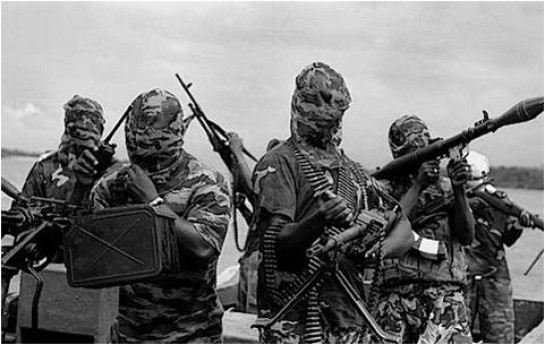
The State of Terrorism in Nigeria: The Rising Threat of Boko Haram

In this article the author assesses the rising threat of the Nigerian terrorist organisation, Boko Haram.  The most recent spate of bombings and executions has raised questions over the unity of the Nigerian state and the future of security on the continent.  It is therefore necessary to understand why Boko Haram is increasing in popularity as their attacks become increasingly barbaric.


By Jack Hamilton, 14 Nov, 2011

Unchecked Massacre

Brutal attacks in Nigeria over the past week have left over 100 people dead.  A single small religious group has transmogrified into a dynamic terrorist organisation capable of rapidly changing tactics and targets in a pattern of violence responsible for over 1000 deaths in northern Nigeria since 2009.

Last week the gunmen wandered around the northern town of Damaturu killing any Christian who could not recite the Islamic creed on the spot.  Nigeria’s Defence Minister Bello Halliru Mohammed has stated that the security forces once again have control and that there is nothing to fear but his words have assured few.

The fact remains that there is still no coherent strategy to combat Boko Haram.


Rising Intensity

The nature of recent events has shocked many, even in regions where Boko Haram attacks are frequent.  Residents expressed rage at the ease with which gunmen were able to take over the city and leave bodies littering the streets.  Police stations, mosques and churches were reduced to rubble before the security forces mobilised a response.  At that point members of the group engaged in gun battles across the city that lasted for hours.

The situation in northern Nigeria is degenerating rapidly.  International observers fear that Boko Haram may already have links to al-Qaeda and al-Shabab and that the campaign of terror shows no signs of abating.

In order to understand Boko Haram it is first necessary to look at who they are, what they want and how they believe they can achieve it.

Who

Boko Haram colloquially translates as “Western education is forbidden”.  It is a claim to reject all things Western from the theory of evolution to Western-style banking.  This has manifested itself in different tactics since the emergence of the group in 2002.  Before 2009 there were no signs that the group desired the overthrow of the state and rather preached to withdraw from the institutions of the non-Sharia Nigerian nation.  It was a law banning the riding of motorbikes without helmets that would prove to be the catalyst for violence.

In July 2009 the central government sought to enforce the law on helmets.  Boko Haram flouted the legislation and was subjected to police brutality which in turn set off an armed uprising in Bauchi, later spreading to Kano, Borno and Yobe.  By the time the army had suppressed the situation over 800 people were dead across the north of the country.

Since 2009 the group has spread rapidly.  The majority of the attacks have taken place in Borno state but Boko Haram have also expanded to the northern states of Adamawa, Bauchi, Gombe, Kaduna, Katsina and Sokoto as well as the attacks on Abuja and threats against Lagos.  In addition to the geographical spread there has been a change in tactics from the localised skirmishes to strategic suicide bombing campaigns and massacres directed not only at Nigerian security forces but also international targets such as the UN.

Tactics

Boko Haram have changed their tactics over the years.  Under their previous leader, Mohammed Yusuf, the group staged mass uprisings against the police and suffered hundreds of casualties.  After Yusuf’s death at the hands of security forces in 2009 they began using tactics more in line with jihadist terrorism including the first suicide bombings in Nigeria’s history.

The attack on the UN may have been an attempt to pressure the international community or perhaps it was simply to embarrass the Nigerian state but it succeeded in drawing global attention to a burgeoning problem.  Boko Haram may be diffuse but it is expanding geographically with increasing tactical sophistication.

Composition

As Boko Haram expands the questions over their composition complicate.  According to Paul Lubeck, an expert on northern Nigeria, Boko Haram is not a single group but a collection of splinters banded under one name by the Federal Government.  One section appears willing to negotiate while others remain determined to intensify the bombing campaign.

Some statements reflect a strict adherence to Islamic law while others cite a determination for a smaller Nigerian state as their raison d’être.  If the group is as amorphous as Lubeck claims it will make it very difficult to negotiate with let alone combat.

Grievances

Economic

The structural issues of northern Nigeria have allowed Boko Haram to thrive in recent years.  In addition to acute poverty the region has a high birth rate and 50% of the population are below the age of 30.

Inequality, unemployment and industrial stagnation have exacerbated the perception that the north has been marginalised by the liberalisation of the Nigerian economy.  The question of who owns the land has not been answered since independence and the Federal State seems too far away and blighted by corruption to deal with such issues.

Political

Grievances in the north were compounded by the election of a southerner, Goodluck Jonathan, as President earlier this year.  Jonathan assumed the office following the death of the northern Muslim President Umaru Yar’Adua and many northerners believe Jonathan should have stepped aside to allow another northerner to take Yar’Adua’s place.  This would have been in line with the ‘gentleman’s agreement’ that the Presidency should rotate between the north, the south-west and the south-east every two terms.

Security

The administration is treating Boko Haram as a security issue rather than tackling the divisive subject of poverty in the north.  Abuja’s response has been to flood the north with heavy-handed military and police forces that now stand accused of human rights violations against civilians.

Politicians in the north have begged for the numbers of security forces to be reduced as police corruption has become rife.  For many in the north the police are the face of the central government.  The people feel alienated from a force they perceive to be corrupt.

Responding to Boko Haram

For many the heavy military presence in the north is the single most important hindrance in securing any negotiated peace.  The failed attempt to destroy the group in 2009 was the greatest recruitment drive Boko Haram could have hoped for, especially the controversial extra-judicial killing of the leader Mohammed Yusuf.

The current strength of Boko Haram is largely a result of such poor foresight by the Nigerian state.  As a result there is now a security vacuum in the most heavily militarised region of the country.

Flagrant myopia has created martyrs and swelled the ranks of the guerrillas.  The legal response to the killing of Yusuf is a good first step but it does little to combat the issues of poverty and corruption that are integral to Boko Haram’s recruitment.

Opposition leaders in the north claim that the government has failed to understand the amount of support Boko Haram has amongst the population.  By stating their opposition to central government and corruption the group has grown far beyond their initial religious doctrine and the government will need to find a response to the structural inequalities in Nigeria if the terrorists are to lose their supporters.  It does not appear as if this is going to happen any time soon.  It is possible that Boko Haram may actually be growing beyond the borders of Nigeria.

The Anti-Social Network?

Many experts have questioned whether the increased tactical sophistication of Boko Haram is evidence of the group branching out to international terrorist organisations, especially al-Qaeda in the Islamic Maghreb (AQIM).  A change in tack to target international organisations with large high-tech bombs has caused concern.  General Ham, head of US Africa Command, believes that the worst case scenario already exists and that Boko Haram are working in tandem with AQIM and al-Shabab in a “loose” partnership.

Hard evidence for any such link is still to be produced.  The geographical distance between AQIM, Boko Haram and al-Shabab make such a partnership unlikely and the possibility remains that the increased military technology may have come from within Nigeria itself.  Alex Thurston, an expert on terrorism in the region, has posited that it is more likely the sophistication came from disaffected Nigerian soldiers than any international training.

The Future State of Nigeria

The failure of the government reactions have meant that Boko Haram has been successful in achieving one of their primary goals: the weakening of the legitimacy of the state.  Attacks on international organisations have created increased pressure on Jonathan to find a solution to the problem.  The short-term solution of heavy military deployment may eventually yield similar successes to those against the militant groups in the Niger Delta but it would also undermine the cohesion of Nigeria.  This would also act to provide momentum for Boko Haram.

The failure to develop a clear strategy to combat the small Islamic group in 2009 has forced the Nigerian state to face up to the larger structural issues concerning the north.  A solely military solution is no longer feasible.

Quo Vadis, America?

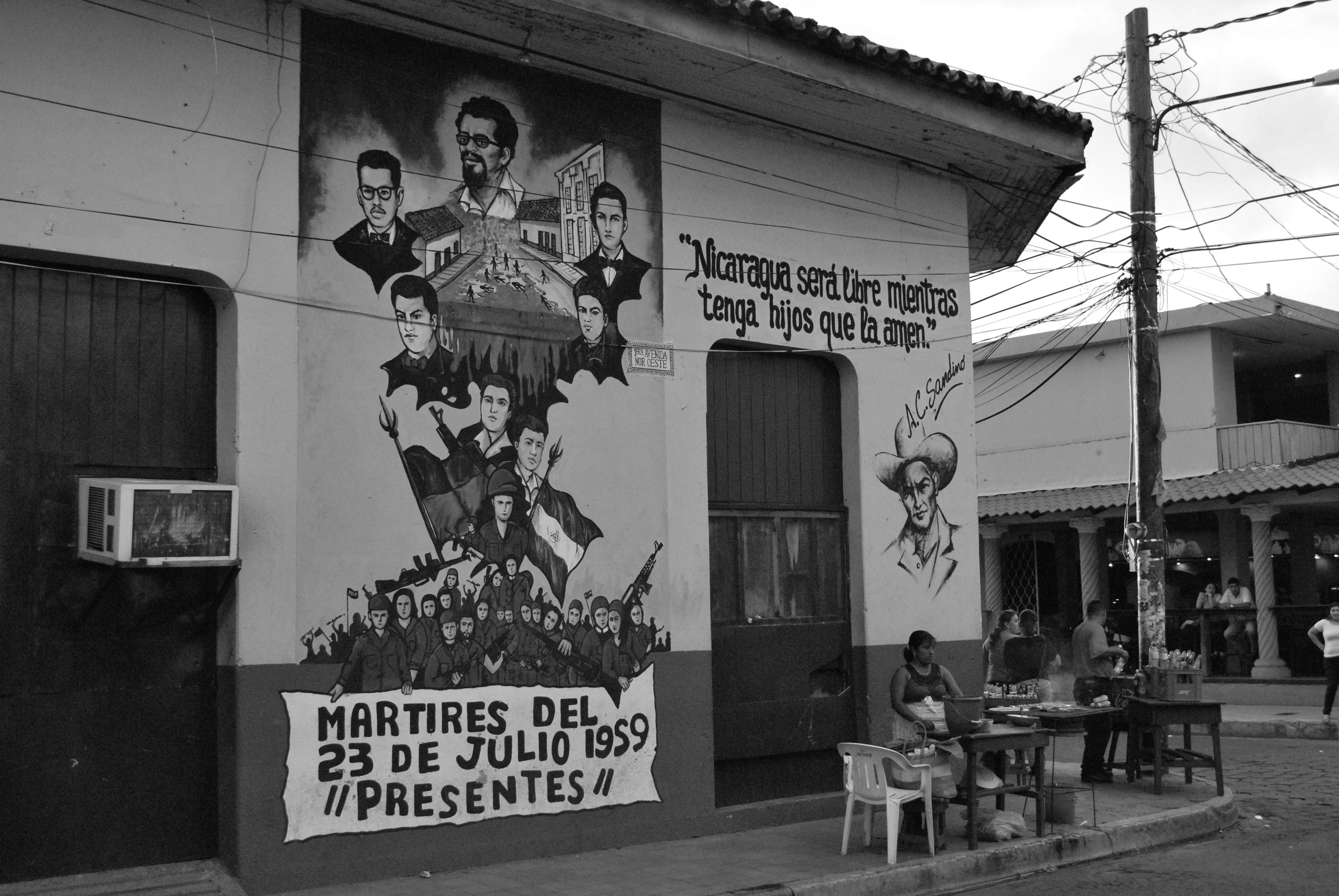
In this article, the author analyses the recent victory of Daniel Ortega and the Sandinistas in Nicaragua’s general elections within the broader context of Latin American politics. In light of regional and domestic claims of corruption, clashes between political forces, successful and unsuccessful coups, crime and drug trafficking, and a regional split between those in the ALCA and those in favour of Chavez’s ALBA, the author concludes by raising the question: Quo Vadis, America?


By David J. Franco, 9 Nov, 2011

With 62.6% of the total votes Daniel Ortega has won Nicaragua’s general elections and his second consecutive mandate amidst claims of fraud. A former Marxist leader of the Sandinista revolution, Ortega’s political program is unique in itself. Christian solidarity, clientelism, and populist social policies are the principal features of his government (his campaign slogan was “Socialism, Christianity, and Solidarity”). Outside Nicaragua, he is a follower of Chavez’s alternative to the Free Trade Area of the Americas (FTAA or ALCA in its Spanish version), the so called Bolivarian Alternative for the Peoples of America (BAPA or ALBA in its Spanish version), to which he adhered soon after taking power in the 2007 elections.

Nicaragua is after Haiti the second poorest country in the Americas with 48% of its population living below poverty line (estimates of 2005, although Ortega’s policies may have helped improve this figure). Its contemporary history sadly resembles that of many other Latin American nations: decades of oppression and corruption under a ruling elite of Spanish descent, a Marxist-oriented revolution, a counter-revolution backed and financed by the CIA, civil conflict, and incomplete transition to peace and democracy. Ortega, too, resembles many other leaders in Latin America seeking to alter existing Constitutions to secure an additional mandate. In fact, many warn that Ortega is likely heading towards securing indefinite power by ultimately eliminating any constitutional barriers in that respect –much in the way Chavez has done in Venezuela. Manuel Zelaya allegedly tried something similar in Honduras before being put on a plane to Costa Rica at gun point in June 2009.

Political life in Nicaragua is poisonous. Last year I visited the Museum of the Revolution in the Sandinista feud of the colonial city of León. Upon entering the museum one can see a cardboard box with a sign over it that reads: “all arms must be deposited here”. There I met two former guerrilla fighters who kindly explained the history of the revolution. They also showed me weapons and other war utensils while pointing me to photographs of comrades killed by the enemy. Up against the wall I saw an excerpt of a newspaper with a picture of President Reagan and a big heading reading “Nicaragua’s enemy number one”. The guerrillero could not avoid shedding a tear or two before telling me that Violeta Chamorro, Gadea, and many others are nothing but traitors of the revolution. Later, on my way down to Managua the lady sitting next to me on the bus told me in whispers that everything in Nicaraguan politics is rotten and that Ortega is only after Chavez’s money.

Many in Nicaragua still see life through the XXth century prism of left versus right. Others instead denounce that all politicians are driven by greed and interest. But what about Ortega himself? Ortega’s main competitor, Fabio Gadea, recently declared that the newly re-elected President has abandoned his revolutionary ideas and that all that he is after is power for the sake of power and power for the sake of money. He has become a poweraholic and nothing will stop him until he gets what he wants. His social policies, adds Gadea, are nothing but a way of securing the votes of the poor and the same applies to his special relationship with the private sector –in 2008 Ortega took a pragmatic turn and made deals to attract investment by letting entrepreneurs operate freely (in 2009 the economy shrunk but remounted in 2010. It is expected that the economy will grow a 3% in 2011). Further, Dora María Téllez, the young revolutionary that took the Congress in 1978 and precipitated the revolution, believes that “Ortega is going through a process of identification with Somoza”. She then adds that “his power ambitions are much stronger than his ideals”.

Opposition leaders also see Venezuela’s aid valued in some 500 million dollars a year as foreign interventionism in Nicaragua’s internal affairs –Chavez threatened to withdraw aid if Ortega did not win the elections. From the point of view of Ortega’s government, however, Chavez’s money is necessary to repay Nicaragua’s large amounts of external debt (despite benefiting from an IMF extended Credit Facility program and despite having secured some $4.5 billion in foreign debt reduction under the Heavily Indebted Poor Countries initiative, the country still struggles with large public deficit). In any case, the absence of transparency and accountability in that respect raises serious suspicions.

Many claim that the results of the elections are fraudulent and that they should be annulled and elections repeated. Others claim that the whole electoral process is illegal based on Ortega’s illegal change of the Constitution in 2009. Others simply opine that the results are overinflated but more or less in line with pre-election polls. Finally, others denounce Arnoldo Aleman (the third candidate, a Sandinista dissident, and Nicaragua’s President between 1997 and 2002, he was accused and condemned to twenty years of prison for money laundering and corruption in 2003, then officially liberated in 2009 by the Supreme Court of Justice) of favouring Ortega’s Sandinistas by dividing the vote of the opposition. Chavez and the ALBA see Ortega’s win as a triumph of the peoples of Nicaragua and the Secretary General of the Organisation of the American States, the polemic José Miguel Insulza, personally contacted Daniel Ortega ‘to greet the people and government of Nicaragua for the elections held yesterday’. He also highlighted ‘the maturity demonstrated by the Nicaraguan people throughout the entire process.’

Only yesterday the EU Observation Mission to Nicaragua’s elections presented a preliminary report denouncing a lack of transparency in Sunday’s elections. They pointed to serious limitations on the right of vote, a lack of impartiality of the Supreme Electoral Council, and a campaign to place obstacles on the opposition’s electorate thus creating a de facto division between citizens of first and second class –the latter was denounced by Inés Ayala Sender, the European Parliament’s President of the delegation to Nicaragua’s elections. On the other hand the President of Nicaragua’s Supreme Electoral Council, Roberto Rivas, dismissed claims of fraud published by Nicaraguan newspaper La Prensa for being ‘rubbish’. He also stated that all members of the opposition are ‘bad sons of the homeland (malos hijos de la Patria)’.

Everything in Nicaragua’s latest electoral process looks like a déjà vu. Power for the sake of power, money, corruption, an old-time Marxist ideology used to justify violations to the rule of law, and a questionable mix of capitalist socialism. Everything in the opposition seems like a déjà vu too with leaders denouncing fraudulent elections and claiming that the economy would look brighter under their policies – while forgetting their own implication in cases of corruption. Economic growth versus social policies, industrial elites against popular masses, populist millionaires, etc. Meanwhile, a former Army General has won the elections in Guatemala with the promise to crack down on violence and organised crime, and in Argentina Cristina Fernández has consolidated a growing trend in Latin American politics consisting in wives taking power over from their husbands. Only a year earlier Porfirio Lobo won the Honduran general elections while Zelaya was still taking refuge in Brazil’s embassy in Tegucigalpa, and recent reports denounce government-imposed limitations on the freedom of expression in Ecuador following Rafael Correa’s recent moves against certain sectors of the press -in Ecuador, too, something similar to a coup was attempted against Correa in October 2010. On the other hand, Colombia was under serious criticism by its neighbours, in particular by Venezuela, Cuba and those in the ALBA, but also by Brazil, Chile, and Argentina for reaching new agremments with the US regarding the use of its military bases. And only today Human Rights Watch presented a report accusing the Mexican Army of committing torture and executions in the war against drug cartels.

The official website of the ALBA states that the big difference between its project and that of the imperialists is that the former liberates peoples whereas the latter, exemplified in the brutal coup against Zelaya in Honduras, oppresses and pushes people to commit barbarous acts. Simon Bolívar, José Martí, Sandino and others alike had once a dream: Latin American and Caribbean nations united under the principles of mutual solidarity and political unity, with no selfish nationalisms obstructing the project of creating a great homeland for Latin America. That dream sounds great, but seeing the huge level of intrastate and interstate divisions, clashes, and corruption in the whole region one cannot refrain from asking: Quo Vadis, America?

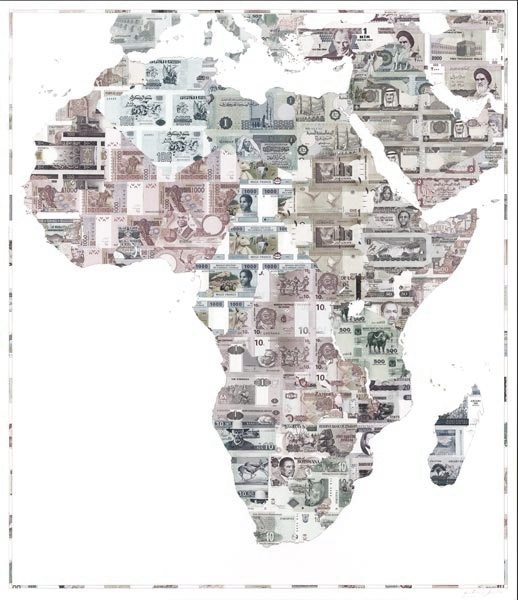
Lies, Damned Lies and Statistics: Africa’s Statistical Tragedy

In this article the author assesses how flawed statistics may be exacerbating poverty in Africa.


By Jack Hamilton, 3 Nov, 2011

This week the UN has declared that there are 7 billion people in the world. It is impossible to verify this statistic but the reasoning behind the declaration is clear. It raises awareness of population growth and draws attention to future development issues. But what of the more dangerous statistics that have been exacerbating poverty? In Africa especially poverty estimates have been based upon flawed data with potentially disastrous consequences. With so much being written now about African growth, the data behind it must be questioned to reveal the statistical tragedy of Africa.

‘The Century of Africa’?

In the past decade Africa has surged forward. Its economy is growing faster than that of any other continent. Foreign investment has hit an all time high and the middle class is absorbing consumer goods at rates comparable to China and India. Articles on African optimism abound, normally at the turn of the year when it will inevitably declared that this is to be the ‘Year of Africa’, the ‘Decade of Africa’ or in the new book by Michel Severino and Olivier Ray, the ‘Century of Africa’. That is not to say that it will not be true. Rather the statistics behind this must be evaluated as well as the capacity to harness resources for development.

Africa Rising

Around one third of African growth over the last decade has come from a rise in commodity prices. These have been combined with increased investment from China as a low cost builder. Further investment has come from around the globe from Brazil to Iran, Turkey to South Korea leading to the defensive rhetoric of Hillary Clinton in declaring a ‘neo-colonial’ era on the continent. This is an unfair overestimation of external influence for Africa’s best friend has been Africa itself.

Regional economic cooperation has increased dramatically on the continent. Borders are becoming easier to cross and technology is advancing rapidly. Africa has more mobile phone users than the Americas and mobile financial transfers on a single phone network in Kenya are greater than the annual global transfers of Western Union. At the start of the year there were 17m Facebook users in Africa and this figure is expected to be 28m by the end of the year. As mobiles and data become more affordable the numbers will continue to surge. The political implications of this connectivity have been in the news due to the revolutions in the North but the economic impact on Sub-Sahara could have even greater consequences. The rapid distribution of agricultural information alone has been revolutionary.

While the rest of the world struggles through the economic meltdown Africa is growing and political violence, so long the cancer of growth, is declining. Tensions still simmer in Sudan, Congo and Angola but pale in comparison to their previous intensity and the talk of ‘new wars’ is receding and the markets are opening. This is not to overstate the case as Jean-Michel Severino and Olivier Ray have done in calling the 21st century ‘the century of Africa’. Africa’s rise is impressive but how many Africans are moving to China to set up factories?

The problem with the optimistic projections is that they are supported by figures which cannot be verified. Data is immensely unreliable to the point that we don’t know how many people are living in poverty or how quickly most of the continent is growing. In the words of the World Bank Chief Economist for Africa, Shanta Devarajan, Africa has a statistical tragedy.

Statistical Tragedy

The use of the term ‘tragedy’ is a reference to Bill Easterly and Ross Levine’s ‘African Growth Tragedy’ in their 1997 paper of the same name. This outlined the destructive link between economic growth and poverty in increasingly open markets. The financial gap is seen to be widening with the ‘Growth Tragedy’ placing the exacerbation of poverty at 2-3% per year. This has been placed as high as 6% more recently. World Bank estimates claim that overall poverty in Africa is declining at a rate of around 1% every year but Easterly and Levine demonstrate that this poverty is becoming more acute. The tale of the rising African middle classes does not include the plight of those at the bottom.

The tragedy is this assumption that growth is rising while poverty is declining. The statistical tragedy is that we don’t even know the real poverty rates. World Bank growth rates are based upon the imprecise science of GDP which is itself based upon national accounts. We need to take into account that only 11 Sub-Saharan African states currently use the World Bank GDP system. Most of the countries use older GDP measuring systems with some dating back as far as the 1960s.

In Ghana the system of national accounts was updated by the World Bank leading to a GDP figure that was 62% higher than previously thought. The World Bank took credit for the leap but failed to take account of the fact that it was their system which had systematically undervalued the Ghanaian GDP for the previous twenty years thus hampering long-term economic growth.

Only 39 countries in Africa use GDP systems which can be used to provide comparable estimates. National poverty estimates taken over a long period of time in a single nation are difficult to generalise beyond individual borders and the impact of conflict further limits them. How can one talk about continental poverty with only a single statistical point of reference? Furthermore the estimates are not comparable over time as the methodologies frequently change between estimations. An estimate on Kenya in the late 1980s would incorporate 235 items in the consumption basket whereas the early 1990s model had more than 600. Today this figure is in the 900s and rising.

While economists have been congratulating themselves for the declining poverty rate they have not been looking at the limitations of the data. It is not up to date. There is no uniform 2011 estimate. Of the 39 African countries that use GDP only 11 have comparable data for the same year. For the rest of the continent there is a need to extrapolate back to 2005. In the case of Botswana we need to go back to 1993.

Africa is given as the recurring example as the continent is an especially bad case when it comes to statistical tragedies. There are on average 3.8 poverty estimates from each country to the World Bank. Taking the African continent in isolation this drops to 1.5. In Africa the national estimates for 2005 have just been collated.

Why has this happened?

Statistics are fundamentally political. A poverty estimate involves the government declaring whether or not their people are better off today than they were five years ago. If a government is standing for election it would be in their interests that a negative report is not published. The consequence of this is a delay in the financing of such projects until after the election meaning that much of the raw data is not published or at least withheld until it is anachronistic.

The trope of condescending economic optimism for Africa is often checked with the accusation of poor governance. In this capacity progress can be verified. In Zambia defeated President Rupiah Banda, leader for the last twenty years, bowed out gracefully last month. From 1960 until 1991 no African leader was voted peacefully out of power with the exception of Mauritius. Since 1991 this has occurred in 30 of the 54 nations on the continent. The one party state is no longer the norm. Vast amounts of money are now spent on elections with Nigeria setting the world record earlier this year in spending $580m in an attempt to have a free and fair election, a figure which may be surpassed in Congo later this month. The figures in this case demonstrate the desire for change but also the scale of the problem. Only today it was revealed that a one month old baby is on the government payroll in Nigeria. He is also said to have a diploma.

It remains to be seen whether the winds of democratic change in the North and increased transparency south of the Sahara will see a rise in independent judges and neutral civil services but there is a clear case for optimism in African politics despite the verisimilitude of economic statistics.

Transparent Solutions

If the problem with statistics is the politics then the solution must come through transparency. Kenya’s open data initiative is a shining example of this, especially after the recent electoral violence. Secondly the behaviour of donors should also be evaluated and made public. This would stop organisations taking credit for aiding a negative situation which they helped to create. Thirdly, those found manipulating or withholding statistics must be named and shamed. Unfortunately this most important of factors is entirely dependent on the success of the first two. Much talk remains over neo-colonialism and foreign investment in Africa but it is the African politicians who need to open up, not the markets.

The Revolution is Being Televised

In this article, the author explores the role of the media in reporting the protests seen around the world in the past few months.


By Mikael Santelli-Bensouda, 31 Oct, 2011

We live in exceptional times. The seemingly endless reach of the media brings popular movements and struggles of all persuasions into the public domain. From protests against educations cuts and austerity measures to pro-democracy revolutions, in one way or another, they are all accessible. But in what capacity are they being presented to us? There are huge inconsistencies in the manner in which societies’ information distribution mechanisms reflect upon the mobilisation of the masses.

As Derrida sensibly wrote, “nothing exits outside a context”. As such, any specific event is ascribed meaning through its contextualisation. Much like blinkers, context frames a given reality within a discourse that permits understanding. These blinkers are (consciously or not) constructed through an amalgamation of cultural norms and values, national history and worldviews. It is thus pertinent to understand that, from sender to receiver, information will have been contextualised in accordance to the sender’s worldview that is formulated by the media. In essence, the exchange of information between official outlets – whether the media, police or politicians – and the general public is pre-framed to influence the receiver.

The Fires of London

The disturbances that took place in August in London seemed to appear out of nowhere and spiraled out of control to a level on par with the social unrest in the 1980’s. Those events were widely condemned by the national media, political leadership and the majority of the British public alike. Whilst not wishing to dispute the validity of specific incidents, the virtually unanimous description of the incidents as riots and looting established a deep seeded negative connotation. In fact, the lexicon used to report the events seemed to oscillate around terms including thugs, opportunism and youth culture. The consequence of this is the establishment of a generalised and disconnected group, in this instance young people of a certain political class and ethnicity, and their separation from the main public body. By doing so, there emerges the establishment of a them, the maladapted and disruptive elements of the society, which, by extension reinforces an us. It is through this process that we can explain why blame derived from almost every angle (unruly attitudes, the decadence of education, computer games, rap music and even according to one (un)credible commentator, Patois) except the very societal factors that may have contributed to such disconnectedness.

The overwhelming drive to establish this group as a deviant societal sub-category suffocates deeper analysis especially one that attempts to understand their rationale, even if it is found that, by and large, there was none. Such condemnation transcended all levels of society, from the Prime Minister to the local cabby, and was especially prevalent within the media. The latter subtly reinforced the dividing lines between the deviant hooligans and the bastions of authority the police, who were interestingly described as the force in a bid to restore their legitimacy in the epically over-hyped battle to reclaim the streets. So, we ignored what may have been a nation-wide cry of dissatisfaction with society, swept it under the rug, and occupied our time by demanding a return to social order and punishment for troublemakers. Perhaps most worryingly is the unintended consequence of this affair. Whilst creating an other may foster a sense of unity amongst us, it risks sewing the seeds of a self-fulfilling prophecy wherein this disconnected group begins to believe what society thinks of them by accepting its deviant status and even embraces it.

Qualms with Capitalism

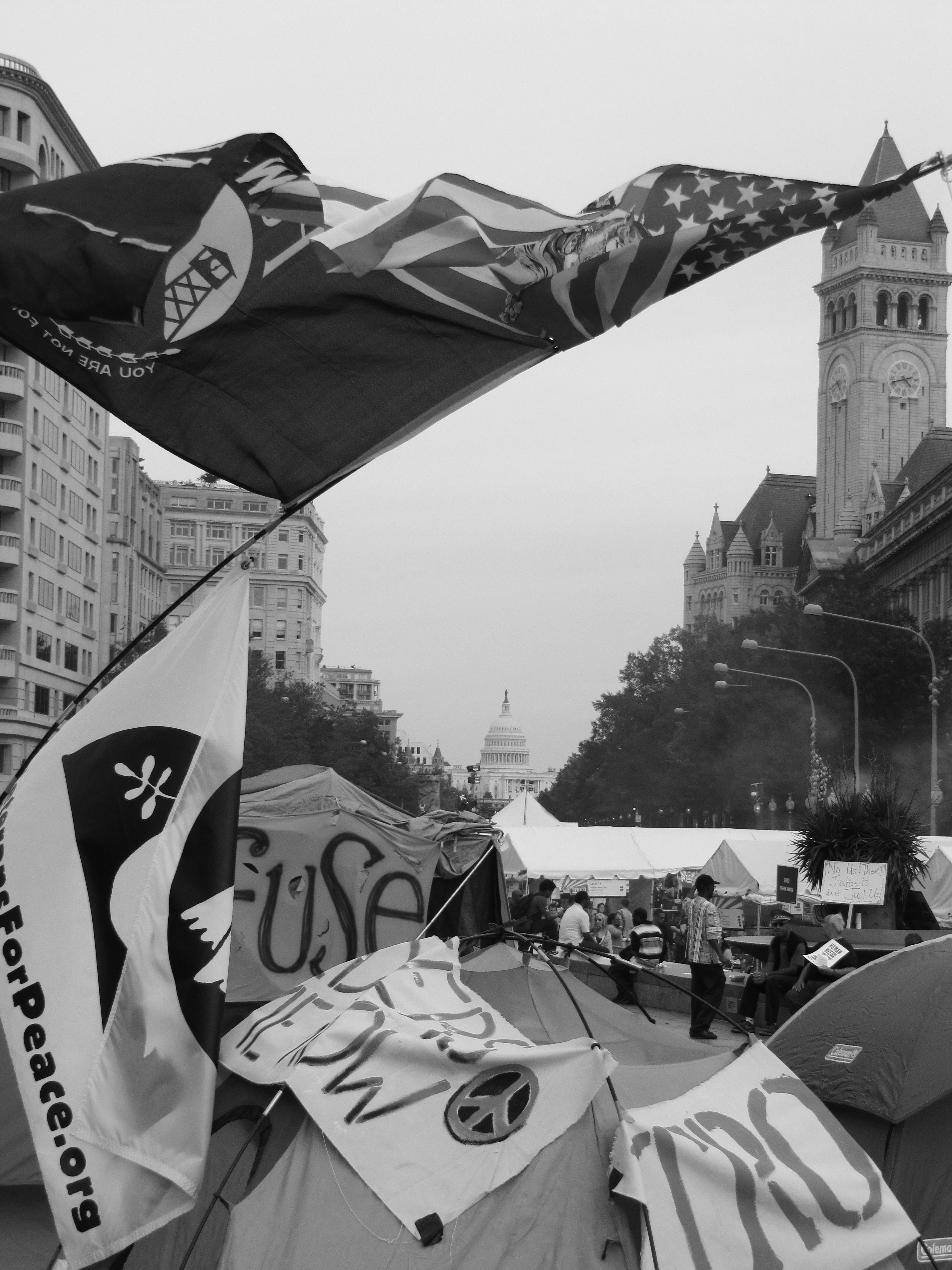
The recent protests aimed at the corrupt and immoral financial system that has severely affected virtually ninety nine per cent of us. It is epitomised by the ‘Occupy campaigns’ that have sprouted across the west from its original formation in New York to sympathetic permutations in London, the Republic of Korea and Jamaica to name but a few. These parallel movements showcase their frustration against the corrupt and unjust banking and financial systems that have been able to get away with the biggest economic injustice since colonialism. It is not a sentiment that is held by a mere minority. Anger and disbelief are global phenomena.

Intriguingly, a substantial amount of the reporting on these protests empathise little with the causes. There is little or no media support for the protests whatsoever; little or no glorification, no accounts of brave people who dare to speak on behalf of a disgruntled society. Instead, they are confronted with headlines like The Siege of St Paul’s, and their cause is belittled by generalization and the callous infusion of negatively connoted terminology including: anarchists, anti-capitalism, communism, disgruntled students and even Marxist revolutionaries.

The information that is espoused intends to devalue the efforts that are being showcased as they are portrayed as disturbing the order. By doing so, there emerges the establishment of a socially constructed and generalised group that is detached from society through a process of association and differentiation. Once a group has been identified as deviant it generally perturbs the general public and deters affiliation. Much like the consequences of the London riots, rather than engaging in debate about the true nature of discontentedness; which in this instance is the demand for greater accountability, transparency and judicial equality (after all these ideals are the foundation of our society), there is a manipulation of the movement to reduce its impact. Its very essence is intentionally distorted to evoke a separation between those who want to overthrow the capitalist system and every one else; who will remain pacified.

Another Day, Another Struggle

Moving beyond manipulation of social unrest within the west, we are confronted with seemingly endless stories of struggles in distant lands. It seems that there is an increasing sense of inevitability of events that originate in the global south and its redistribution. Education protests in Chile, religious solidarity in Nepal and democratic revolutions in Syria are, more often than one would like to think, contextualised through a veil of western superiority. As those people strive to attain a societal standard on par with what we have in the west, we hold the power to confer legitimacy upon such incidents (or not). Yet, needless to say, unless action in a foreign place threatens our interests, it remains out of our sphere of interest.

It is interesting to note that different geographical examples of social mobilisation, despite similar intentional goals, often receive a distinctly varied reception dependent on its location and its relation to the reporting press. For example; education protests in the UK were troublesome but in Chile they are conceived as a sign of progress in society. Similarly, protests against oppressive rule in Palestine are constructed within a negative frame and often ignored while those occurring in Iran are encouraged. Although it may be unfashionable to refer to orientalism in this day and age, it is hard to overlook the fact that the western media conveys a post-colonial hierarchy among states by granting selective support to its government’s clients.

Double Standards

The Arab Spring exemplified a media and political phenomenon across the world. Looking back to the initial outbreak of mass popular protest across North Africa it is interesting to notice that the media and politicians seemed to adopt no real stance. Perhaps for the first time in modern Arab history (excluding events in Palestine) the west abstained from publicly passing judgment, if only temporarily. A waiting game ensued.

In fact, a delicate balancing of interests was underway. Whilst initially not wishing to alienate authoritarian allies, whom for so long they had propped up and abused as geopolitical tools, the West could not jump on its archetypal bandwagon of backing democratic demands. However, it could not condemn such popular power in the event that the movement was successful. It is for that reason that, only once the dice of history had been firmly cast on the side of the people, did the west find its position. The discourse machine then went into overdrive; pro-democracy revolutionaries, heroes of the Arab world and lovers of freedom invaded the headlines and framed perceptions.

What was occurring was an attempt to overcome distance and difference by removing the sense of otherness by creating unity; people who share the values of democracy. So, unlike the discourse constructed on protests within the West, the context of the Arab Spring was intended to unify groups and extend legitimacy upon the events. Surely then it is no surprise to see how the events unfolded in Libya. Images of distress and asymmetric warfare resonated deep across peoples, as we had grown attached to these like-minded freedom lovers and, consequently, military intervention to assist the march of democracy against tyranny received widespread and unquestioning acceptance.

As history has proven, the West only conducts military operations when there is just cause, usually established through the construction of a narrative and on the odd occasion has been a matter of ‘self-interest’. The narrative constructed prior to the Libyan intervention emphasised shared values. It surely had nothing to do with oil, not this time. The connection of values/interests established through cross-societal bonding via image bombardment and discourse assimilation ultimately produced general acceptance for the ‘need to act’. Yet what about the uprisings in Syria?  A similar process to create empathy occurred but commitments were only made to economic sanctions. Perhaps, it was assumed that they are capable of fighting for themselves against a regime far more oppressive and evidently trigger happy than Ghaddafi’s. What about the protests in Bahrain? That is a story that should only be whispered. Limited reporting on attempts to overturn the constitutional monarchy stems directly from the fact that it threatens the Saudi Royal Family’s monopoly on authority and has taken painful steps to crush what is framed as a Shia rebellion. Due to the world’s insatiable appetite for oil, the Saudi’s prerogative ensures that the events either follow their own narrative construction or are lost in an informational void. Blinding self-interest is the driving force behind the way the West has viewed, acted upon and has constructed the narrative for the Arab Spring.

Revolutionary Inflections

These differing examples highlight how discourses surrounding certain events emerge from its initial contextualisation prior to dissemination. It helps to explain why certain acts are perceived in differing ways, even if they share the same principles. Such contextualisation derives from the desire to understand the reason for certain events by viewing it through a familiar lens (i.e., a British worldview). Through this process it reinforces cultural norms by creating dividing lines between what is acceptable in society and what is perceived as deviant even if there remains huge inconsistencies in its implementation. Essentially, if a certain movement challenges or questions the societal structure, and the position of a privileged elite, they are likely to be perceived negatively regardless of whether the country observes the universal values of democracy.

Revolutions all over the world are being televised. Over the past few months there have been constant updates on the progress being made by NATO and the NTC in Libya, how Basher Al-Asad continues to brutalise the people of Syria and the spread of the Occupy campaigns throughout the world like wildfire. However, their intended messages are often distorted or manipulated to serve a greater purpose, one that continues to sustain the hierarchical cross-societal structure that has dominated the world for centuries. The revolution is being televised with the intention of preserving the class structure within the UK, the West or the world.

Life After Gaddafi – The Future of Foreign Intervention

In this article, the author assesses the precedent of Libya in foreign intervention after the death of Muammar Gaddafi. In a world in which there are now increased calls for intervention and isolationism the case of Libya is being presented as both an example of a successful intrusion and a reason to reform the UN Security Council. Military capabilities and the tensions within NATO may act as a check to the boisterous rhetoric in the wake of Gaddafi’s death but the key lesson may be the message it has sent to those who are still clinging to power.


By Jack Hamilton, 23 Oct, 2011

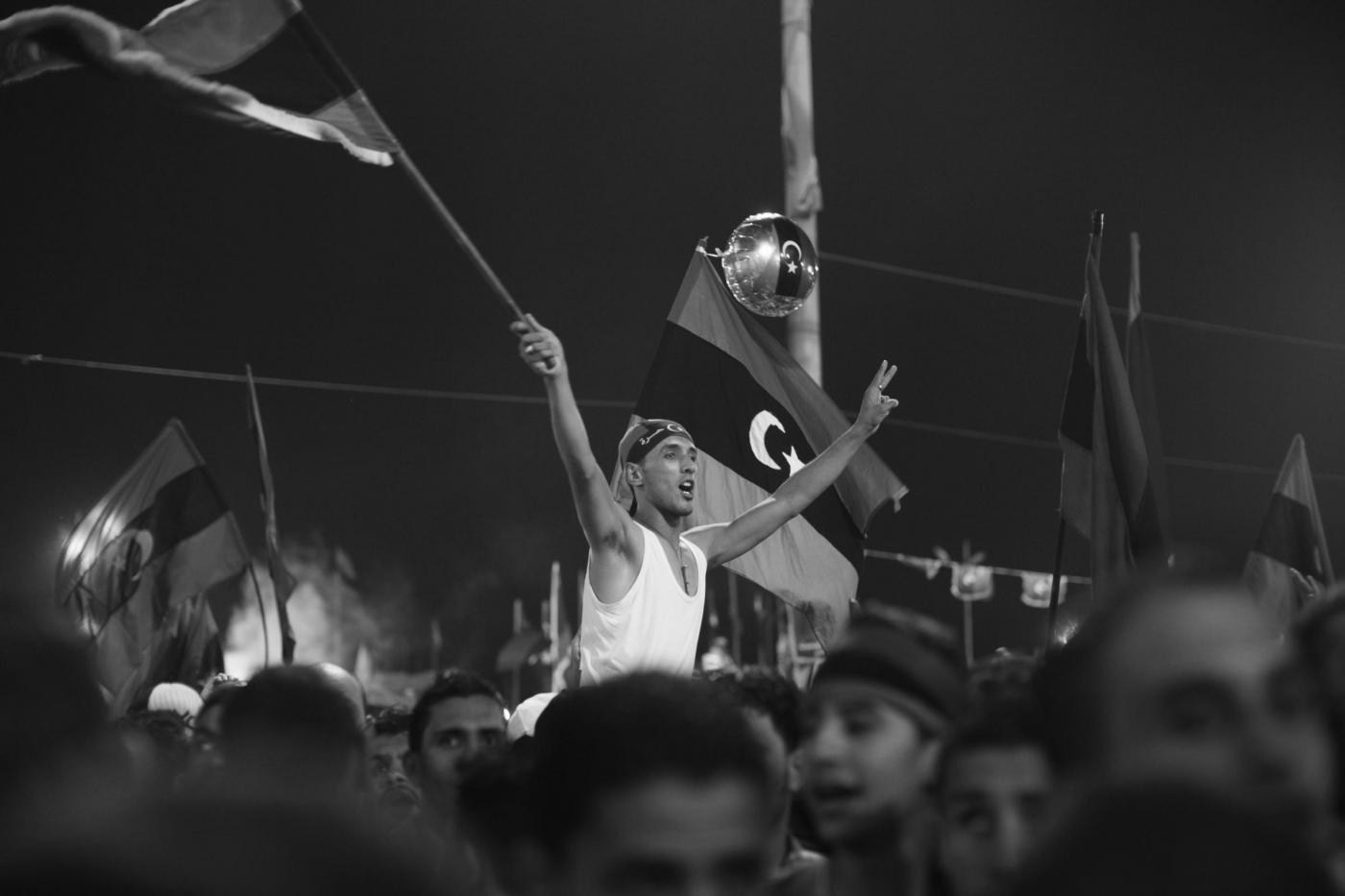
Today the Libyan transnational government has declared national liberation before a triumphant crowd in Benghazi, the city where the fight against Gaddafi began.

There are scenes of jubilation in Libya and NATO offices around the world.  Muammar Gaddafi is dead and attentions are now turning to the future of the Maghreb state and the implications of NATO’s intervention in the broader Arab Spring.  In such a celebratory atmosphere what will be the future response to rebellious populations rising up against murderous rulers?

Libya and the Future of Intervention

Nicolas Sarkozy has already made a direct comparison between the conflict in Libya and the plight of the people of Syria in facing down the armies of Bashar al-Assad.  He mused that “The best thing I can do is dedicate our visit to Tripoli to those who hope that Syria can one day also be a free country”.  The Obama Administration has toed a similar line in their policy of ‘Leading from Behind’ by touting the example of Libya as a framework for future interventions.

Deputy National Security Advisor for Communications Ben Rhodes stated that the Libya experience would provide the basis for future interventions with emphasis placed on the need for regime change to be based upon “indigenous political movements” rather than the ambitions of the United States and the importance of “burden sharing” amongst other nations.  The problem is that this does not fit into the model for preventing atrocities which the United States advocated so heavily in the 1990s.  In London and Paris there is talk of prevention and the need to take the lead while the US, perhaps due to domestic constraints, is taking up a more isolationist tone.  The question must therefore be asked if the example of Libya may hinder rather than assist future responses.

Military Capability

The first issue that must be addressed is military capability.  Don’t be distracted by the rhetoric of ‘no boots on the ground’, Libya was a huge military intervention.  The British and the French with help from the Norwegians and Danes, carried out the bulk of the airstrikes and provided the machinery to carry out the naval blockade.  This does not mean that the US should be discounted.  It was American air and sea forces that opened the intervention with decisive attacks on Libyan air bases allowing the European forces to act with greater freedom.  Specific American military capabilities in intelligence, surveillance and reconnaissance were key to the success to say nothing of the supplies of munitions that were supplied to the European forces.  The lasting images of the war will be of the final rebel push on Tripoli but it is the heavy NATO influence which will resonate in international relations.

A Frayed Alliance

The second impact is the increased tensions between the NATO powers.  Germany’s foreign minister hinted at an early stage that the country would refuse to take sides and eventually abstained from the vote on Security Council Resolution 1973.  The French have long advocated a reform of NATO and the obvious north/south European divide in capabilities has intensified this call.  Whether the military alliance is now in a position to oversee another campaign is debatable.

‘You Break It, You Own It’

NATO leaders have frequently referenced the ‘lessons of Iraq’ when discussing Libya.  The opposition of the National Transitional Council to any foreign troops in a post-war Libya has been welcomed by Western powers hesitant to adopt an increased military role in a time of economic uncertainty.  In this sense there has been a strong adherence to Colin Powell’s Pottery Barn mantra: ‘You Break It, You Own It’.

The Future of Intervention

So what will the lasting impact of the Libyan intervention be?  Crucially, both Britain and France seem to perceive the situation to have been an anomaly.  A nation with a small population and a weak military on the doorstep of Europe with regional actors who were unlikely to support the dictator.  It was seen as an easy case.  Additionally, the Western powers insisted on gaining the support of both the Arab League and the Security Council before intervening.  It is difficult to see such a situation emerging elsewhere in the Arab Spring and Russia has already blocked tentative discussions regarding Syria.

The question of Syria has been largely ignored in Washington.  Syrian opposition is increasingly turning to armed response with army defections burgeoning and calls for international intervention increasing.  People are being gunned down in the streets as the ‘liberators’ of Libya struggle to find the words to escape the precedent they have set.  It is unimaginable that international forces would enter Syria for a variety of reasons.  For that reason Libya must be viewed as an anomaly, not a precedent.

Reforming the Security Council?

Another impact of the intervention has been the rallying of non-interventionist states.  China, Brazil, South Africa and India have not been slow to point out the hypocrisy of the Security Council in elevating its own role while using the mandate of protecting civilians.  Perhaps the lasting message of Libya in international relations will be the claim these nations have demanded for many years: a reform of the Security Council.

Bloody Sheet, Noose, Cage or Condo?

The final message of the conflict in Libya is to those clinging to power in other nations.  It is a message to the Assads and Salehs of the world.  Like Gaddafi or Hussein they can go out on a bloody sheet or at the end of a rope.  Mubarak and Milosevic wound up in cages.  Ben Ali stepped aside amid violent persuasion and now resides comfortably in a condo in Saudi Arabia.  The bloody sheet, the rope, the cage or the condo?

What’s in a Name? Everything, if your name is Nakoshi

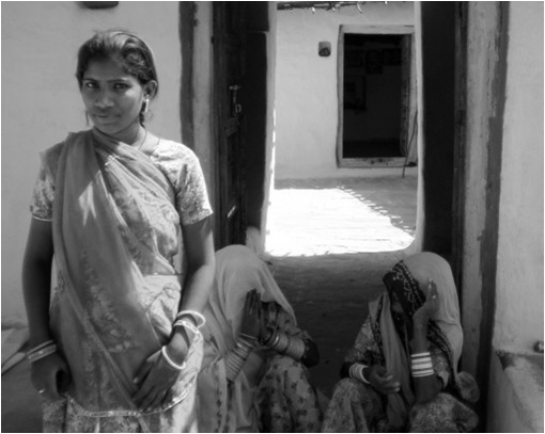
In this article, the author explores a regressive custom in rural India, where parents give unwanted names to their children because of the prevalent sexism, misogyny and castesim.


By Siddharth Singh, 23 Oct, 2011

22nd October, 2011 is an important date for the 265 girls from the rural Indian province of Satara. This was the day they were given a new name, a new identity, and hopefully a new life of dignity.

In 2007, the health officials in this region discovered a rampant practice in Satara where parents would name their girl children ‘Nakoshi’, which means ‘unwanted’, in the hope that their next child would be a boy. Consequentially, these girls would grow to live in a world where they would be stigmatized and discriminated against, more often than women already are.

On 22nd October this year, the administration organised a public event and renamed the girls. The girls were allowed to choose any name they wished, or select one from a list provided. The girls went ahead and chose names such as Aishwaria (meaning ‘wealth’). The Indian Express reported that these girls claimed that for the first time in their lives felt ‘loved and accepted’. They recounted how they were previously treated with disdain, and would often return from their schools crying because they were bullied.

Such practices, however, are not localised to the district of Satara. This happens to be symptomatic of the preference of the girl child by parents across most regions of India. While the average sex ratio of the world is 101 males to 100 females, it stands at 112 males to 100 females in India.  In certain areas, such as the city of Chandigarh, it stands at 123 to every 100. Such a skewed sex ratio has resulted from the practice of female foeticide (the abortion of the female foetus), which is rampant in India.

What is important to note, however, is that female foeticide is not a rural-poor phenomenon only. Studies show that this practice is relatively more rampant in urban areas and in the middle and upper class wealthy families rather than the poorer ones. One of the possible causes of this is that the poor cannot afford the sex determinatation tests and abortion procedures.

The poor are hence left with venting their frustration of not having a male child by adopting practices such as naming and shaming the girls who are already born.

However, the practice of giving children such names is not only determined by gender: such practices are common along caste lines too. In fact, it may well be the case that it is more prevalent by caste.

In rural India, casteism is expressed in a more violent and unabashed way than in urban India. Every year, hundreds, if not thousands of people from the ‘lowest’ castes are killed by the ‘higher’ castes. While accurate statistics of this are not readily available, evidence of such a high number can be observed in the daily reports of such killings in national and regional newspapers. The triggers of such violence is usually the ‘lowest’ castes ‘daring’ to assert their equality in the society, such as by entering temples where the ‘highest’ castes frequent, or using communal wells for water which the ‘lowest’ castes are forbidden to do.

An example of such brutality can be seen in this short documentary.

One of the outcomes of such violence is the naming of children of the ‘lowest’ castes as the regional-language equivalents of ‘dirt’, ‘garbage’, ‘filth’, ‘fool’, ‘stupid’, etc. Some parents do so willingly in order to prevent their children or the parents themselves from being beaten up or killed by the ‘upper’ castes for having names that they use on their own children.

This results in these children getting discriminated at every turn in their lives. It becomes difficult to find meaningful employment or be treated as equals. Their caste becomes apparent the moment they introduce themselves, so they aren’t even given an opportunity to prove themselves anywhere.

I have personally witnessed such a case in rural Rajasthan. A young man in his twenties who had good bachelors and masters degrees could not find employment in any private company in his district in spite of being more qualified than most other people across castes. This man had, after all, committed the ‘crime’ of being born in the ‘wrong’ family.

It is time regional administrations from around India made serious attempts to identify such cases and reverse this trend just as the Satara administration did in the case of the ‘Nakoshis’. Importantly, these children must be given caste-neutral surnames too. In doing so, they would be doing a lot to reduce the inequalities and injustices that have been thrust upon them.

The Shakespearean quote from Romeo and Juliet, ‘What’s in a name? That which we call a rose by any other name would smell as sweet’ unfortunately does not hold true everywhere.


The author can be followed on Twitter @siddharth3 

Farewell to Nuclear Weapons or the Failure of Civilisation

In this article, the author praises Mikhail Gorbachev for his renewed call for nuclear disarmament and discusses some of the myths surrounding nuclear weapons and nuclear deterrence. Drawing on psychology and psychoanalysis he concludes that denial is making us accomplices of the greatest atrocity known to civilisation.


By David J. Franco, 20 Oct, 2011

This morning I read Mikhail Gorbachev’s renewed call for nuclear disarmament. In his article A Farewell to the Nuclear Sword of Damocles former USSR President and artifice of the Perestroika warns that ‘by failing to propose a compelling plan for nuclear disarmament, the US, Russia, and the remaining nuclear powers are promoting through inaction a future in which nuclear weapons will inevitably be used’. As much as I was happy to read that Gorbachev is determined to continue the job he started as a man of power, I experienced a mixture of unhappiness and distaste upon reading the following commentary left by one of the readers:

‘The genie is out of the bottle, and cannot be put back inside.

Nuclear weapons ended WWII and kept the world from WWIII. So long as nations have these weapons, there will not be another World War. The presence of these arms has saved millions of lives. For example, they maintain the relative peace between India and Pakistan – because neither one wants to be bombed. I hope, really hope, that they will never be used, and that there will come a time when they are not needed or present.

As long as humankind insists on not living together in peace, these weapons are needed. I see little hope of changing human nature in the near term.’

Unhappiness and distaste, indeed, for the above analysis is misguiding at its best. Arguing that nuclear weapons are the sole reason for which the world has not lived a third world war is misleading and lacks scientific rigor. The great powers went through their longest period of peace between 1815 and 1914 (with the permission of the Crimean War and the Franco-Prussian exchange) when neither nuclear weapons nor United Nations existed as yet. Lessons from the past and, more plausibly, utilitarian calculations may be more at the core of why the world has not known a third world war. Further, the presence of these weapons, and their only use to this day, caused thousands of instant deaths in Hiroshima and Nagasaki. The Japanese army had been defeated by the time those weapons were dropped which means that the decision responded more to the need to announce the world who the new boss was. Hence, rather than saving millions of lives nuclear weapons have the honour to have caused the largest number of deaths at once in the history of human warfare. They also hold the record for bringing the greatest level of suffering to a non-combatant population during and after (many years after) the dropping of the bombs – you may want to read statements of survivorsor watch the acclaimed BBC film Threads.

Nuclear weapons and nuclear deterrence are said to be the reason for the relative peace between India and Pakistan, or the US and the USSR for the same matter. To demonstrate the contrary is an impossible task for it is impossible to prove something in the negative. However, if anything the existence of nuclear weapons in South Asia increases the security dilemma and exposes the region and the world to greater risk. But of course our commentator knows better and even delights us with his wishful thinking: ‘I hope, really hope, that they will never be used’. Well, for what it matters I do hope that they will never be used and for that reason I do hope that they are eliminated.

One of the greatest obstacles in the quest to eliminate nuclear weapons is said to be what in psychological or psychoanalytical terms is known as denial. Denial to accept the inner destructiveness of human beings in general and, more specifically, denial to see that destructiveness in ourselves as much as we can see it in our enemies. For in each of us, individually and collectively, there is as much good as there is evil. There may be multiple interrelated causes for war, amongst which I count political, economic, ethnic, religious, etc. But it is also a fact that human beings are naturally aggressive (of course some are more violent than others but all may become equally violent under certain circumstances). In short, regardless of whether life and death instincts clash with one another permanently, or whether necrophilious instincts take over only when love for life fails, the fact is that each of us, with no exception, is capable of the best and of the worst. The Russians weren’t worse than the Americans, and the Americans weren’t better than the Russians. For there is only one human race, not two –the good and the bad–, as many want us believe.

Nuclear deterrence policies are said to be rational and to fail only when dealing with irrational leaders or terrorists. Two things need be said in relation to this. First, there is nothing rational when a nation is defended with the most (self)destructive weapons ever created by man. Not even Tilly’s theory of war makes states, assuming such theory is valid, holds sway when all that is left after a nuclear explosion is a pile of debris and millions of dead in an inhospitable land. State leaders and terrorists seem equally irrational in light of this –plus so far only leaders have dropped a nuclear bomb. Second, nuclear deterrence policies can only make sense in the event that mankind’s inner destructiveness is denied or disregarded. Man has fought wars since the start and it will likely continue to fight wars until the end. International cooperation and norms can tame behavior and arguably, only arguably, change state interests. A change in the superstructure may also arguably help outlaw human competition. But as long as men have nuclear weapons at hand ready to be launched civilisation will continue to see the word failure each time it looks at itself in the mirror. For we do not need another nuclear explosion to confirm that we have failed. Civilization is already failing.

In a sense I am relieved that the author of the above commentary leaves denial aside to acknowledge mankind’s inner (self)destructiveness. What on the contrary puzzles me is that despite this, or because of this, he/she is led to conclude that nuclear weapons are necessary in order to maintain peace. The answer to this problem, he/she argues, is not to eradicate nuclear weapons but to eradicate war from the face of the earth. But because man is violent and will always be, war will always prevail and nuclear weapons will always be needed to maintain peace in the absence of better means. Against the argument that man will always fight wars because of its inner violence one may say that social conclusions cannot always be derived from biological conditions. Those who argue that may indeed have a point. But that is not the point. The key question here is: should we continue to allow the existence of nuclear weapons ad eternum? Even if we were to assume that it has worked in the past, are we fully certain that nuclear deterrence will always work in the future? If not, are the effects of a nuclear exchange something the world can afford? My view is that none of these questions can be answered in the positive. Nuclear deterrence will not always work and the effects of a nuclear exchange (there cannot exist such a thing as limited nuclear exchange) are not something civilisation can afford.

I am too young to have lived the nuclear anxiety of the Cold War years, but I am old enough to observe that such anxiety, although not particularly manifest in the West these days, can make a comeback any second. It only takes a renewed crisis or a change in the international order to revert the current situation. Note that I do not discuss here the possibility of a nuclear explosion caused by miscalculation or accidental use because this short article addresses mainly the contents of the commentary noted above. But miscalculation and/ or accidental use, too, can take place any minute and the effects of that happening will be as equally devastating as a nuclear exchange. Because, believe me, just as it is a matter of time before a state or terrorist cell uses a nuclear bomb, it is also a matter of time before one is dropped accidentally. The great powers have a duty to lead and to fulfill their obligations in accordance to international law including their obligation to disarm as per article VI of the Non-Proliferation Treaty. As long as they do not work together towards that goal, leaving aside irrational notions of power and prestige, the world will continue to see the emergence of new wanna-be proliferators. In a purely Orwellian fashion, history gets rewritten and those who are friends today can easily become enemies tomorrow. Memory too gets erased easily and it seems that not many today in the West remember what it was like to live under the threat of a nuclear exchange. I do not blame them for not remembering but I do blame them for not wanting to remember. When something has not been sorted it cannot be left ignored as if the problem did not exist in the first instance. Denial is the most dangerous of all self-defence mechanisms. Whether we like it or not, it is automatically making us accomplice of the worst atrocity facing civilization: its own failure.


Iranian-American Relations: Explaining the Recent Allegations against Iran

US agents state that a "significant terrorist act" linked to Iran which would have included the assassination of the Saudi US ambassador Adel al-Jubeir (seen here seated with former US First Lady Laura Bush and King Abdullah) has been foiled recently.In this article, the author argues that the recent allegations against Iran have been largely shaped by America’s perceptions of, and prejudices against Iran, which were shaped by the changes in their relations post-1979.


By Aryaman Bhatnagar, 19 Oct, 2011

The most recent American allegations against Iran accusing it of plotting the assassination of the Saudi Ambassador in Washington and the Iranian dismissal of such allegations as being baseless have once again revealed the endless cycle of blame that characterises Iranian-American relations. This latest round of allegations and subsequent denials originates from the perception that America has of Iran.

The Quds Force (QF), a special branch of Iran’s Revolutionary Guards Corps has been accused by the United States of America and Saudi Arabia to have been part of the plot to assassinate the Saudi Ambassador to Washington. However, Iran’s alleged complicity in this plot has met with strong scepticism within the diplomatic community and from foreign analysts specialising in Iran. Moreover, the lack of evidence to indict the Supreme Leader, Ayatollah Khameini or the Revolutionary Corps in this plot does not help America’s claims. Despite this, the Americans are adamant that the plot had been sanctioned by the QF or directly by Khameini himself. The Americans are calling upon the international community to strengthen sanctions against Iran and have not completely ruled out the military option as retaliation for Iran’s “flagrant violation of international law”.

This has not been the first time that Iran has been accused by the Americans without any concrete evidence. Iran had been accused of bombing the American embassy in Beirut in 1983 and the Khobar Towers in Saudi Arabia in 1996, which was home to American troops at that point. Years of investigation failed to prove Iranian involvement but even this has failed to dispel American suspicions, who continue to believe otherwise. Similarly, Iran has been accused of providing aid to al-Qaeda and the Taliban in order to destabilise American operations in Iraq and Afghanistan. Although, there has been evidence to suggest that Iranian weapons have been used by insurgents in both Iraq and Afghanistan, there is nothing to prove that this is part of a deliberate policy. However, such allegations have been used by America to exclude Iran from all the major projects concerning the region.

The reasons for the continuous demonization of Iran in America can be traced back to the Iranian Revolution of 1979, a watershed for American-Iranian relations. The revolution changed the image of Iran from a modern ‘westernised’ ally of America to one of America’s most formidable foes in the Middle East, which was ruled by ‘Mad Mullahs’. The Islamic Republic’s use of ideology in its foreign policy and an alternate vision for the world social and political order were seen as a threat to the American-led world order. It was the hostage crisis of 1979, which shaped the image of Iran as an irrational actor and left a lasting impact on the American impression of the Islamic Republic. From this date onwards, Iran became synonymous with worldwide terrorism and the source of all evil. Thus, irrespective of where terrorism was committed, the finger was automatically pointed at Iran. Even if there was lack of evidence, it was assumed to be something that Iran was capable of doing and were, thus, condemned for it.

Such a negative perception of Iran has become institutionalised in the political culture of America. As a result, the US policymakers have found it extremely difficult to shed their prejudices against. This is most evident in case of America’s response to Iran’s nuclear programme. Although, there is strong evidence that Iran’s nuclear programme is meant for peaceful purposes, America is convinced that it is meant to cause harm to them. A nuclear weapon in the hands of religious fanatics is believed to be dangerous for the entire world. It is interesting to note that America had been instrumental in starting the nuclear programme in Iran prior to the occurrence of the revolution. Their paranoia then clearly is an outcome of their perception of the nature of the Iranian regime than the actual dangers posed by the nuclear weapons.

The US’ differences with Iran are also motivated by their different strategic interests as both want to establish their primacy over the Persian Gulf region. Moreover, USA’s alliance with Israel and the bitter Iran-Israel relations also act as an obstacle for normalising the Iranian-American relations. But USA has managed to work around such issues and resolve its differences in the past with other countries. It is the perpetuation of the perception of Iran as an inherently anti-American nation, which is always looking for an opportunity to subvert them that has not only prevented USA from reconciling with Iran but also encourages speculations about its intentions.

Does It Get Better?


By Matthias Pauwels, 18 Oct, 2011

The year 1998 was not only dominated by the saga of Bill Clinton and Monica Lewinsky, but also saw the horrific hate crime murder of University of Wyoming student Matthew Shephard on grounds of his sexual orientation. On the night of October 6-7, Shephard got offered a ride home by Aaron McKinney and Russell Henderson. In sharp contrast to their good Samaritan offer, McKinney and Henderson subsequently drove the car to a remote, rural area in Laramie, Wyoming. Shephard was allegedly tortured for several hours and was finally tied to a fence, leaving him to die. Still alive but in a coma, Matthew Shephard was discovered 18 hours later by a cyclist. Having experienced severe brain-stem damage, Shephard never regained consciousness and passed away on October 12, 1998.

At trail, McKinney offered various rationales to justify his actions, ranging from the gay panic defense embedded in alleged sexual advances made by Shephard to involuntary manslaughter. The prosecution alleged that both men had pretended to be gay to gain Shephard’s trust. The testimony of Chastity Pasley and Kristen Price, girlfriends of McKinney and Henderson, came as a judicial drive-by-shooting for the two, claiming that both perpetrators had plotted beforehand to rob a gay man. In 1999 McKinney and Henderson received two consecutive life terms without the possibility of parole.

The Legislative Struggle of the Hate Crimes Protection Act

The United States 1969 federal hate-crime law encompassed crimes motivated by actual or perceived race, color, religion, or national origin, and only applicable when the victim is engaging in a federally-protected activity. In 1990, United States Congress passed the Hate Crimes Statistics Act, allowing the government to count the incidence of hate crimes based on religion, race, national origin, and sexual orientation. However, a clause was added to the end of the bill stating that federal funds should not be used to “promote or encourage homosexuality”.

However, the murders of Matthew Shephard and 15-year-old Lawrence King – who was shot and killed in February 2008 by 14-year-old Brandon McInerney who he’d asked to be his Valentine – , and the endless string of gay teenagers committing suicide was living proof that gay and lesbian youth are particularly prone to physical and mental victimization. There was a dire need of expanding the 1969 federal hate-crime law to include crimes motivated by a victim’s actual or perceived gender, sexual orientation, gender identity, or disability.

The passing of the Matthew Shephard and James Byrd, Jr. Hate Crimes Prevention Act proved to be an epic legislative battle in the American Congress. The bill, first introduced in the 107 Congress’s House of Representatives in 2001, drew specific criticism from American Evangelicals, with the evangelical off-shoot lobbying group Focus on the Family as a prominent force against strengthening federal hate-crimes legislation, stating that “it would muzzle people of faith who dared to express their moral and biblical concerns about homosexuality”.

After having died in Congress three consecutive times, the bill was reintroduced in 2007, this time with a clause adding gender identity to the list of suspect classes for prosecution of hate crimes. When the bill finally passed in Congress and proceeded to the United States Senate, many Republicans got in gear to make sure the Matthew Shephard Act never saw the legislative light of day. After having met its match a first time in the Senate, the bill was reintroduced as an amendment to the Senate Defense Reauthorization Bill (H.R.1585). Although the vote had been put briefly on hold after Republicans staged a filibuster on a possible troop-withdrawal amendment to the Defense Bill, the Matthew Shephard Act did finally pass in the Senate in September 2007 after a six-year-long legislative tour de force. However, as a dispiriting deus ex machina President Bush indicated that he would veto the Defense Bill if it reached the Oval Office with the hate-crimes legislation attached. Ultimately the amendment was dropped, nullifying six years of legislative struggle to expand the federal hate-crimes law incorporating gender identity and sexual orientation.

The Obama administration brought new hopes to those on the barricades for expanding the existing federal hate-crimes law. In a post-Bush era, President Obama communicated that one of the goals of his new administration was to see the Matthew Shephard Act pass. After it was reintroduced in Congress in April 2009, it sparked a feisty debate amongst Representatives, with Rep. Virginia Foxx stating that Matthew Shephard’s death was merely a hoax to further the gay agenda. Despite Republican claims that federal law was already sufficient to prevent hate crimes, the bill reached the Senate in the same month. The Matthew Shephard Act was adopted as an amendment to the National Defense Authorization Act and passed in the Senate in July 2009. Eleven years after the brutal murder of Matthew Shephard, the bill was signed into law on October 28, 2009 by President Obama.

Efficacy of the Matthew Shephard Act

In May 2011, a man in Arkansas pled guilty under the Act for running a car containing five Hispanic men off the road. As a result, he became the first person ever convicted under the new Act. In August 2011, one man pled guilty to branding a swastika into the arm of a developmentally disabled man of Navajo descent. The aforementioned crimes were framed under the Matthew Shephard Act on grounds of hate crimes based on race.

The expansion of the 1969 United States federal hate-crimes law was framed under the empirical observation that hate crimes are worse than regular crimes without a prejudiced motivation from a psychological perspective. The time it takes to mentally recover from a hate crime is almost twice as long than it is for a regular crime. Especially gay and lesbian people often feel as if they are being punished for their sexuality, which leads to higher incidence of depression, anxiety, and Post Traumatic Stress Disorder. In the aftermath of the Matthew Shephard murder, many gay youth reported going “back into the closet”, fearing for their safety and experiencing a strong sense of self-loathing embedded in their sexual orientation. 

Earlier aformentioned examples of the Act’s implementation refer to hate crimes based on race. The legislation’s efficacy regarding hate crimes based on sexual orientation has a much lower public exposure rate, and this is exactly where part of the problem still lies. For many gay youth, there is still is huge threshold in reporting victimization based on sexual orientation, embedded in fear of being labeled with a social stigma. Secondly, mental victimization is often suffered alone in silence, and its lack of visibility or understanding can be attributed to the recent suicide death of Buffalo, N.Y., 14-year-old Jamey Rodemeyer, who was bullied online with gay slurs for over a year. Marking a somber beginning to LGBT History Month this October, Rodemeyer’s death is a tragic reminder of the existing vulnerability and marginalization of gay teens. And while a legislative framework such as the Matthew Shephard Act incorporates the corporality of hate crimes, the mental aspect of these crimes based on ethnicity, gender identity, or sexual orientation have proven to be a silent killer which no piece of legislation can easily remedy. The ultimate responsibility here lies with educational systems by installing a protective framework for bullied LGBT students to prevent ostracization.

When the message that is out there claims that being gay equals being a second-class citizen, that message needs to be changed. Matthew Shephard was not a second-class citizen. Lawrence King and Jamey Rodemeyer were not second-class citizens. The Matthew Shephard Act may have given a new dimension to federal hate-crimes law, but doing the same to a social message stating that being gay is threatening, is not something that is easily remedied by any senatorial bill.

In May 2011, after coming out to friends, Jamey Rodemeyer posted a YouTube video on the new online site, It Gets Better Project, which provides testimony from adults and celebrities to reassure victimized and potentially suicidal LGBT youth that life improves as they get older. Jamey wrote: “Love yourself and you’re set… I promise you, it will get better.”

The Strange Politics of Anna Hazare

By Siddharth Singh, 12 Oct, 2011

Anna Hazare’s recent threat to campaign against the Congress party in case they don’t help pass his version of the Jan Lokpal Bill in the Uttar Pradesh (UP) elections is an artful move. Much as the Congress would like to dismiss this threat citing the non-existent political roots of Anna, it needs to tread with caution given it draws substantial support from the Middle-class in UP.  The Congress has pinned its re-election prospects, as well as the political prospects of Rahul Gandhi, to its performance in UP.  By threatening to strike the Congress where it would hurt the most, Anna has been very strategic.

However, while this move by him may see an initial success in Hisar’s by-polls (which is a constituency that wasn’t leaning towards the Congress in the first place),  it risks becoming a cause for the downfall of this movement. Political fault-lines in Uttar Pradesh lie – unfortunately – on issues of caste and religion, and to an extent – fortunately – on  the governance (or mis-governance) records of the respective parties. While the general call of ending corruption may resonate with the society, the electorate may not swing their votes in favour of parties that promise to implement certain legislation over others in the future. Especially not if the record of such parties on corruption and graft is equally if not more suspect than that of the Congress. In case they choose to do so, it may still not work towards meeting Anna’s goals.

Anna’s call may be further diluted in case the Congress manages to pass some version of the  Lokpal Bill before the UP elections. The Congress’ announcement that the Lokpal Bill envisages the body to be a Constitutional authority may work to dilute Team Anna’s position.

Realistically, two results can be expected from such an anti-Congress ploy in UP:  either Anna turns out to be successful in wooing the people away from the Congress, or he doesn’t. In the case of the first eventuality, if the result is the election of individuals and parties with a record of graft and corruption, then the purpose of the agitation would be lost. If the idea was to kick out the corrupt, then it makes no sense to work towards replacing one set of corrupt with another. This may lead to substantial disillusionment with the public. More so because a fractured mandate which includes the corrupt would diminish the chances of the passage of the Jan Lokpal Bill.

In the case of the second eventuality, the Congress  would claim popular victory and support for its policy on corruption and the popular rejection of Team Anna.  Either way, this movement would only lose out on the popular support it has garnered.

Annaji, as he is known by the public, may well be advised to not go ahead with such a simplistic call which may well prove to be counterproductive. If he wishes to hold on to the legitimacy he has earned in the past few months, he ought not to alienate his core constituency by aiding – indirectly – the victory of parties that are no less, if not worse, than the Indian National Congress when it comes to the issue of graft.

Occupy America – As Occupy Wall Street Spreads We Ask: Who Are the 99%?

Occupy DC


By Jack Hamilton, 12 Oct, 2011

What is the ‘Occupy’ Movement?

The ‘Occupy’ movement started four weeks ago on Wall Street and more than 100 solidarity movements have since sprung up across the country as activists have taken to the streets to oppose what they perceive to be the injustices of the corporate and financial sectors.

Contrary to some media attention the protests are not solely comprised of ‘hippies in hoodies’ and ‘tattooed vandals sporting Guy Fawkes masks’. I met with nurses and military veterans, fire-fighters and lecturers, librarians and libertarians. It is not an explosion of violence as a result of disenfranchisement or a day in the park but an ongoing event which seeks to focus attention on the issues of jobs and financial reform. There are also some crazy people there who I will come back to. For now it is important to focus on the goals of the ‘Occupy’ movement and the tactics through which they seek to achieve them.

Funny Signs Can Stop Bailouts

What Are Their Goals?

1. Urgency

Nouriel Roubini, better known as Dr. Doom for predicting the financial crash of 2007-2008 has rightly asserted “There’s a huge amount of anger”. The protestors remain steadfast in their belief that the current financial system is heading for another meltdown if no reforms are made and the current system continues unabated. Dr. Doom agrees. In an interview with Foreign Policy Roubini described the protests as “a symptom of economic malaise” that is being felt not only in the United States across the world. The first facet of the ‘Occupy’ movement is a rapid response to this impending disaster.

2. Agency

One of the most prominent signs at McPherson Square, DC read in bold letters ‘We need to Unfuck Ourselves’. This message clearly outlines the trope that the Occupiers perceive themselves to be the victims of the system and have taken it upon themselves to become active political agents and drive policy reform. The catchy image of the 99% rallying against the 1% has spread from the initial Wall Street protest across the various national spokes and it resonates strongly.

3. ?

Urgency and agency can best be described as two themes of the protests but when it comes to clear and defined policy goals the unity lapses dramatically. For some Obama is simply Hitler, a narcissist and a puppet of corporatism who must be sacrificed for the more malleable alternative in Joe Biden. For others it is the ongoing imperialism of the British Empire which is subjugating the world economy to the demands of the monarchy (I am not making this up) and they do so under the guise of soft power organisations. One of the bastions of this soft power network is the Wildlife and Wetland Fund (still not making this up) which uses the guise of environmental aid to dictate policy across the world. It is worth saying at this stage that I am not impartial on the subject as my Mother is a member of the WWF and counts birds in Northern Ireland on occasion. I will be sure to ask her if she has been intrinsic to any global domination plots, ornithological or economic, when I speak to her tomorrow.

No Unity

The movement has been compared to the emergence of the Tea Party in 2009, breathing life into the conservative Republicans and influencing the 2010 elections which put in place a House of Representatives intent on blocking the Obama administration at every opportunity. By comparison the ‘Occupy’ protestors have no set of unified policy goals. The Tea Party opposed tax increases, demanded a cut in government spending and most of all rallied in opposition to something tangible: the sitting administration. The ‘Occupy’ protestors are apathetic towards Obama, who many of them voted for, but are also strongly opposed to all other parties. The narrative is clear: corporations have too much power. The policy alternatives and tactics are less so. Without tangible goals it is difficult to see tangible change occurring.

Chances of Success?

Is there any real pressure for the 1% to change their trajectory? The antipathy directed at the financial sector across large swathes of the globe has led to limited reforms and curtailed few bailouts. Protests in London and New York may lack a coherent agenda and action but there is no doubting that they have staying power and the longer they remain the more focus will be placed upon their agendas.

The Future

There are many questions that remain. The first issue is the nature of Roubini’s pending recession. Will it be another collapse along the lines of 2007-08 or will it be something more manageable. This may come down to the fate of the Euro-zone fringes. With Greece teetering on the brink of a disastrous default and Spain and Italy suffering the indignity of having their economies downgraded within the last week the crisis is showing little signs of abating. An article in The Economist posited that the continued uncertainty may actually play into the hands of Germany as it may be able to force the reform of the banking havens such as Ireland and Cyprus despite US objections. Merkel has a point. As soon as the European Central Bank intervened to stabilise Italy’s bond markets over the Summer, Berlusconi retreated from his austerity programme citing pressure from within his coalition. Financial panic is a self-fulfilling prophesy, a prophesy which the protestors should take heed of.

After the catastrophe in Japan earlier this year Germany took the lead in announcing that it would phase out nuclear power, whatever the cost, and turned to the nuclear power stations in France and Switzerland to plug the capacity gaps. When it comes to the sovereign debt crisis the most powerful country in Europe seems far more accepting of the risks of meltdown.

This does not mean that Europe is in a perpetual state of gridlock. Much has been made of the incapacities of European states to interact with each other the subsequent economic consequences. The strong European economies certainly resent having to bail out those who are perceived to have mismanaged their finances but that does not mean that they will cease to do so. One only needs to look at the passing of the Lisbon Treaty to see that the individual wills of European states can be subsumed in the European ideal and that the European institutions are much stronger than the Euro-sceptics are willing to accept. While the Mandelbaums and Thomas Friedmans of the world wax lyrical about the opportunities of a new Marshall Plan it must be remembered that this is not a post-war Europe and would not take kindly to being treated as such.

We the People

It is highly limiting to view 1% of society as being responsible for every problem of the 99%. Where does this leave the highly divisive issue of Medicare or the broader issues of over-consumption and overspending? While these issues are more acute in the ‘1%’ they are certainly wider than the ‘Occupy’ protests imply. If all of the problems descend from a simple high peak of American society then surely the solutions must simply focus on scaling that one summit? The reality is that those advocating financial reform need to look beyond their own mountain and see the full range. If the movement is to achieve its goals it requires a behaviour modification of much more than the top 1%.

The Lighthouse in the Desert


By Jack Hamilton, 9 Oct, 2011

Folklore spills across time creating and undoing history as it ebbs. Whole identities can be constructed and deconstructed in these stories but it is rare in these ages that entire maps can be reimagined due to a single small tree. The old addage “so geographers in Afric maps, with savage pictures fill their gaps” has long since faded but this is a story about one such ‘gap’, the one piece of life within it and the price of life that goes with it.

The Sahara Desert is awash with a sandstorm of whispers and this particular spec is the lonely Tree of Ténéré. It is a story which entails trust amidst gossip as well as the dangers of blind trust in a terrain in which one can see for miles. Upon first hearing the story I didn’t believe that such a tree could ever have existed. In recent weeks a terrorist cell linked to al-Qaeda was undone by their belief that the tree still existed. However, I must start by describing the story of the tree.

There was once a solitary tree standing in the centre of the Sahara Desert. Between the Baobabs of Senegal and the Olive Trees of Tunisia remained one sole survivor of a bygone era. Millenia ago the tree had been part of a great forest which had gradually died off as the Sahara became the inhospitable mother she is today. One tree remained to guide all those who dared to traverse the barren lands. It was a beacon: the lighthouse in the desert.

The nomads of the desert alone knew of this tree and used it as a tracking mechanism when traversing the most desolate depths of enduring beige. When these Tuareg would encounter the Fulani in north east Mali they would recount their tracks in order to let the Fulani know of their passage, including the waypoint of the tree in the middle of the desert. Having listened politely to the detailed directions the Fulani would thank the Tuareg and see them on their way providing that no disagreements had been reached.

At this stage the Fulani would all agree never to follow the route of the Tuareg. These men had seemingly been driven dangerously insane by the desert. Of course, there is no chance for a tree to exist in such a place. There are no trees for hundreds of miles in the Sahel (the shoreline of the desert), let alone the Sahara. If this route had a proclivity for perverting the minds of the fearsome Tuareg, it was no place for men.

This story circulated until the times when modern technology made it possible for mere mortals to take the route. Safe inside the machinery that would be used to fight the Second World War, Europeans were able to cross the desert here in hopes of cutting off a rival. It was at this time that they too believed themselves to have gone insane too as in the horizon the withered spectre of an acacia tree loomed. They had not been in the desert long enough to have reached the Libyan coast and had not crossed the Italian lines that would have inevitably preceded the water. It could not be Algeria as there had been no sign of the southern Air mountains. The story was true. They had discovered the Tree of Ténéré. The most isolated life on Earth.

It is here that a part of the mystery ends. Confused and in search of the truth the Europeans (a French division) decided to dig underneath the tree and discovered a well 35 metres down. While the fairytale of the tree was slightly depleted the beacon took on a new significance as not only being the only life but suddenly becoming a redeemer of life in the harsh conditions of the Sahara. The tree was not a mirage but the literal symbol of water in the desert.

However, as with all of these stories of the desert, it ends in tragedy. In the 1970s a Libyan truck driver somehow careered into the tree, allegedly drunk. Upon hearing this part of the story I was always interested to hear how the driver could explain this to his boss. He had somehow managed to hit the only tree in a 400km radius.

The reason I was reminded of this story was due to reading intelligence reports from the security forces tracking al-Qaeda in the Islamic Maghreb (the Saharan branch of the terrorist organisation). One of the Algerian trackers claimed that they had an intimate knowledge of the desert and in the pursuit they had passed the Tree of Ténéré. Today in the place of the tree stands a simple metal sculpture representing the optimism of the tree. Unfortunately the tracker described in great detail the tree as it looked before the 1970s, exactly the description that was recounted to me. It was clear that the ‘trackers’ did not know the desert and had possibly never crossed into Niger where the tree used to stand. They were found out immediately.

The idea of the Tree of Ténéré had always seemed to me like one of the lies which whispers around the desert. It brought a smile to my face that the myth was actually the truth and it was this fact that unveiled the fiction.


Jack Hamilton can be followed on Twitter @jmhamilton

A Nobel Intervention?

Why did the Nobel Committee Award the Peace Prize to Liberian President Ellen Johnson Sirleaf one week before the Presidential election?

Victory Assured?


By Jack Hamilton, 7 Oct, 2011

Today’s award of the Nobel Peace Prize to Liberian President Ellen Johnson Sirleaf has stirred controversy.  The ‘Iron Lady’ said this morning that she is humbled by the award and has stated that it is an award for the people of Liberia.  However, the timing of the award, coming one week before the Presidential elections in Liberia, has brought forth claims of the Norwegian-based Nobel Committee interfering in the internal politics of the West African state.

President Sirleaf’s main rival in next weeks’ election, Winston Tubman, has lambasted the decision of the Nobel Committee instead declaring that “She brought war here, she is a warmonger” to the BBC Voice on Africa programme.

Such vitriol is nothing new to the first elected female leader in Africa having risen to prominence in 2005 following a civil war that left a quarter of a million people dead and the Liberian economy in tatters.  This is not the issue.  Rather it is the question of the timing of the award in such close proximity to the election.

Nobel Committee Chairman Thorbjoern Jagland has told reporters today that the committee does not consider domestic politics in its selection process and the spokesperson for the Liberian National Election Commission, Nathan Mulbah, has already stated that the election will go ahead as planned on October 11, four days from the award of the Nobel Peace Prize.

Peace by ‘Peace’

The Nobel Committee is no stranger to controversial timing.  Awarding the prize to Barack Obama was seen by many as an over-zealous attempt by the organisation to garner attention by affixing itself to a popular President who had achieved little in the way of international peace at the time of the presentation (aside from the snide observation that he may have won due to the simple fact that he was not George W Bush).  That has since been described as an incentive for the President to foster peace and security throughout the globe.  This function of the peace prize should not be overlooked.

In 1998 David Trimble and John Hume were awarded the Nobel Peace Prize for their roles in facilitating the Good Friday Agreement and ushering in a more peaceful era in Northern Ireland.  This was by no means a solid peace deal.  Similar agreements had been reached at Sunningdale in 1973 and at Hillsborough in 1985 but failed spectacularly.  The prize was a recognition of the start of a process and acted as a lightning rod for the global attention at a time when atrocities in were being carried out in the Balkans and al-Qaeda had struck in Nairobi.

While the Peace Prize did not create the peace in Northern Ireland it associated the terms of ‘Northern Ireland’ and ‘peace’ at a global level which certainly acted as a catalyst to maintain some semblance of dialogue. It is difficult to ascertain the motives of the Committee with any great deal of certainty but one assume that they are attempting to bring the world together piece by piece: peace by ‘peace’.

Ballots not Bullets

This brings me back to Liberia.  The elections will take place in a few days and there is no doubting that the Nobel Peace Prize has again drawn attention to an ongoing peace process.  The Committee is surely aware that their award will have an impact on the election.  Is it so wrong that they have chosen a woman who so clearly embodies the values the Nobel Committee stand for?  Sirleaf has been instrumental in transforming Liberia from a post-conflict country to a developing one.  Under her the economy has grown by 6.5%, free and compulsory primary education has been introduced, and doctors’ salaries have doubled.  Furthermore, the election has so far been described by the electoral observers of the Carter Center as “peaceful” and “fair” as healthy competition remains between the two frontrunners, Sirleaf and Tubman.

The timing of the decision will be used by the opponents of Sirleaf to frame her as a puppet of foreign interests but it was not her choice.  However it was Sirleaf’s actions led to her accolade and these actions will surely prove to be more influential come October 11.  Neither Sirleaf nor the people of Liberia are the puppets of foreign intervention and such a claim devalues the progress that has been made in the past six years.

Today’s award is recognition of those achievements as well as an incentive to continue the difficult rebuilding process, whatever the outcome of the election.  However with the objectives of the Nobel Committee being repeatedly questioned, the jury is out on the future of the prize.


Jack Hamilton can be followed on Twitter @jmhamilton

Understanding the Anna Hazare Movement through Kingdon’s Multiple Streams Theory

In this article, the author observes Anna Hazare’s anti-corruption agitation through the lens of Kingdon’s ‘Multiple Streams’ hypothesis. 


By Siddharth Singh, 4 Oct, 2011

It can be argued that India faces graver concerns that need far more attention than the issue of graft and corruption in the administration: issues such as farmer suicides, chronic malnutrition, religion-based violence, human rights violations, female foeticide, police excesses especially in rural India and the lack of justice in the Bhopal gas tragedy case. While activists like Irom Sharmila have been protesting against government apathy and excess for decades, it took a then-unknown Anna Hazare to upheave the political landscape of New Delhi in a matter of months. His agitation – incorrectly dubbed as India’s version of the ‘Arab Spring’ by a few international journalists – gave a semblance of the fast-tracking of an anti-corruption legislation which was in limbo for decades. Why did Anna succeed where others did not?

In order to explain why certain policy proposals emerge rather than others, political scientist John Kingdon has stated that three streams of actions need to converge: the problem stream (the problem must be clearly defined), the solution stream (feasible solutions need to be offered), and the political stream (where political consensus must be obtained). He added that chance plays a big role in the convergence of these streams. This model of Multiple Streams differed from the traditional models which have been described to be ‘linear’. The traditional models focused stepwise on, firstly,  problem identification, secondly, focusing government attention to the problem (known as ‘agenda setting’), thirdly policy proposal development and finally, the adoption of policies.

However, such traditional models inadequately explain the Hazare phenomenon and the relative failure of other activists and agitations in India. Kingdon’s framework is better suited to explain the success of the ‘Gandhian’ Anna Hazare over others. He explains that the convergence of the three ‘streams’ creates a window of opportunity during which policy makers are willing to seriously consider legislation aimed at improving a situation or solving a problem. Anna Hazare’s agitation met this condition while others – such as the Bhopal agitation – have not. In order to understand why, we must first delve further into these three streams and then contextualise it.

The problem stream is related to the recognition of the problem and the conditions that affect their recognition. Scholars have stated that systematic indicators such as dramatic events and crises facilitate public knowledge of the problem.

The solutions or policy stream concerns itself with the strategies that are needed to tackle the identified problem. These strategies and proposals exist as a “soup of ideas” that are generated by a community of researchers, advocates, public officials, and the civil society. These ideas are not static, and continue to mix with other ideas, morph and evolve. The survival of the proposal is determined by their technical feasibility, administrative practicability, compatibility with the dominant values of the society, as well as the national mood and political support.

The political stream is related to the politics that affect the chosen solution. Such politics emanates from electoral compulsions and interest-groups. Proposals that are most likely to rise to the top are the ones that match national mood, are congruent with the government and administration, and also enjoy the support of interest-groups.

The meeting of these three streams results in the formation of policy. It hence becomes clear how Anna Hazare and his team garnered considerable success while – say – Irom Sharmila hasn’t.

The Indian public has been constantly informed of scams after scams at the national and sub-national level over the past few years. The hyperactive media has brought corruption to the forefront while other issues – such as the agrarian crisis and farmer suicides – have not found favour with the media. The oft-spoken of common man in India (at least, in the Indian cities and where there is high penetration of television media), already burdened with corruption in almost all walks of life, saw their frustration with the government and politicians in general peak with the 2G spectrum scam, which implicated ministers at the highest echelons of the administration.

It is here that Anna Hazare and his team was able to garner support with a ‘Gandhian’ hunger strike and a proposal for a Jan Lokpal – Citizen Ombudsman – Bill. This Bill called for a radical overhaul of the anti-corruption machinery in India, even as it concentrated powers into one department which was entrusted to fight corruption. Social media and television media was optimally utilised to sell the idea that this Bill would free India from corruption. His team convinced the people that the Lokpal Bill as framed by the government was spineless and would be ineffective. The ‘silence’ of Prime Minister Dr. Singh and distractive verbal onslaught by Congress Party spokespersons further convinced the people of the same.

The current government had stated that they would introduce the Lokpal Bill this term. However, popular mistrust of the government, parliament and legislatures by the public, coupled with a carefully constructed ‘Gandhian’ image of Anna Hazare (which has been questioned by a few journalists and scholars over his ‘undemocratic’ dictums in his village), led the public to find resonance with the radical Jan Lokpal Bill. Such a feeling was strengthened by  an undemocratic and foolish move by the government to detain Anna Hazare just before his second round of protests, and lodge him in the same prison where the accused of the massive scams had been imprisoned. The symbolism of this move was profound, and the opposition claimed that this brought back memories of the Emergency period, when democracy in India had taken a back-seat under the rule of former Prime Minister Indira Gandhi.

The public was outraged and there was a massive outpouring of support to Anna and an unequivocal condemnation of the government’s move. A chicken run and a strategic shift within the government ensued. The government began working towards amending their version of the Bill ‘to give it more teeth’. On the other hand, scholarly discourse was largely critical of Team Anna’s Bill because of the behemothic size and lack of effective accountability of the proposed Lokpal. Unknown to the public was the fact that Team Anna revised their bill several times (more than 150 times, according to an Anna team member) to ‘mellow’ it down and make it more feasible due to the pressure of the academia as well as certain sections of the media. The government, on the other hand, proposed that their Bill would be reviewed by the Parliamentary Standing Committee, which had in the past amended a ‘weak’ Right to Information Bill draft and made it one of the most effective legislation to fight corruption and graft that India has seen. This Bill was passed by the parliament under the very same government in its previous term. However, public support (at least in the cities and small towns as reported by the media) of the parliament and politicians had hit rock-bottom. Anna Hazare and his team used this mistrust of the government to successfully get the parliament to accept a few terms and conditions, as no politician wanted to be seen opposing Anna in any manner.

While both the government and Team Anna changed their positions to reach their respective half-ways, the protest was perceived by the public as  a success of Team Anna and a censure of the politicians. The coming to light of the scams in a big way and the political churning that ensued fit neatly into the problem and solution streams of Kingdon’s framework respectively. In order for the Lokpal to see the light of the day, the political stream would also have to meet the other two streams in the near future.

Today, there are calls of resistance against the merger of existing anti-corruption agencies with the proposed Lokpal agency. Such resistance comes from the agencies themselves, and these form the interest-groups that Kingdon mentions. Unless the positions of the interest groups don’t align with the political outlook and popular opinion, there will be no easy passage of a Lokpal Bill. It can be reasonably argued that owing to the political and public pressure, this stream will also begin to tend towards the others in the near future.

On the other hand, issues such as farmer suicides, the continuing problems of the Bhopal survivors and the excesses related to the Armed Forces (Special Powers) Act – ASFPA – have not found resonance with the public at large. The cause of repealing ASFPA, for example, remains controversial because many claim that it is against the interests of ‘national security’ and because of the untainted image of the Army among the public. In the case of farmer suicides, there is a severe lack of reporting in the national media. Journalists such as P. Sainath have stated that more national journalists cover a single fashion show in Mumbai than the total number who report on the agrarian crisis in India – a sector that impacts upwards of 60% of India’s population.

The three streams as laid by Kingdon’s framework hence seem to be bending towards each other fairly well in the case of the Jan Lokpal Bill, but are distant in other cases. It may become imperative for the leaders of other movements to go the extra mile to frame the issues appropriately. However unfortunately, it is chance that will play a major role in determining the success – in the form of implementation of respective policies – of agitations.


The author can be followed on Twitter @siddharth3

Look East, Prime Minister Singh


By Siddharth Singh, 7 Aug, 2010

In his second term, Indian Prime Minister Dr. Manmohan Singh has taken up the challenge of improving India-Pakistan relations in line with his conviction that a nation which wishes to see itself as a global power must move beyond regional rivalries with a small neighbour. Consequentially, the Government of India has spent considerable time and effort into building this relationship in the face of public skepticism at home following the 26/11 attacks in Mumbai.

While this effort is laudable, evidence does not seem point towards a possible success in this initiative. The recently leaked Afghanistan war dossier confirmed what was long known in the policy circles: there is no unified face of the Pakistani leadership as groups and individuals within the administration are working towards different goals. These goals include helping jihadi groups that intend to establish control of Afghanistan once the NATO – ISAF forces led by the USA leave the region, and those that intend to fight India in Kashmir.

The popular opinion among Indians after 26/11 has not been accommodative of any dialogue with Pakistan, at least not until action is taken against the perpetrators of the attacks in Mumbai. Such a single minded focus of Indian foreign policy on terrorism is not acceptable to Pakistan, as it wishes to see issues – particularly Kashmir – to be discussed and resolved too. As a result of this mismatch, a rather ugly public falling out took place in Islamabad recently between India’s foreign minister Krishna and his counterpart Shah Mehmood Qureshi. Furthermore, it is unlikely that popular opinion in Pakistan will become receptive of any concessions made by their government towards India.

The memories of the bitter history between the two nations cannot be undone easily; at least not at the current juncture when the uncertainties of the Afghanistan war are encouraging the Pakistani administration to keep its options open. This hasn’t stopped Dr. Singh from insisting on the continuance of the talks even in the face of strong political opposition in India.

On the other hand, the Indian government is missing out on a golden opportunity to once and for all bury a petty regional rivalry between Bangladesh and India. The circumstances surrounding this relationship are such that if proper time and effort are invested, India and Bangladesh could bury the hatchet and move towards a stable South Asia.

Only recently, a military led caretaker government in Bangladesh was replaced by a coalition led by Sheikh Hasina’s Awami League. This government has shown the will to have strong relations with India. Bangladesh is the 7th most populated nation and has shown larger increases in the HDI index than Pakistan has in the past few years. It is expected to show a real GDP per capita growth rate of 6.8% in 2010. The Grameen Bank is playing a great role in poverty reduction in the country. They have also shown a steady improvement in the Corruption Perception Index.

Most importantly, the Supreme Court of Bangladesh recently reinstated a ban on religion in politics, implying that Islamist parties can no longer use religion to garner votes. The unifying identity in Bangladesh isn’t religious; it is linguistic and cultural.

India’s relationship with Bangladesh hasn’t been great historically for a variety of reasons, and this is holding back both countries to varying degrees. Bangladesh blames India of faulty water management (principally, the building of the Farakka Dam) on India’s sides of the borders that causes flooding and water shortages at different times of the year in Bangladesh. Additionally, The Border Security Force (BSF) of India is blamed for killing ‘innocent cattle traders’ from across the border frequently (The BSF maintains that they only fire in retaliation to the cattle ‘smugglers’, as cattle trade isn’t legal between the two nations). India is also accused of treating Bangladesh as an inferior state that is supposed to be obliged and indebted to India for the help that India gave during her freedom struggle.

India’s principal issue of conflict is a result of Bangladesh’s ‘sheltering of anti-India insurgents’. This claim is being countered as the new government has shown resolve to readily arrest and hand over anti-India insurgents to Indian authorities. The political right wing of India also speaks out against illegal immigrants from Bangladesh who cross over and do paltry jobs. Additionally, one incident that won’t be easily forgotten in India is the case where 16 BSF soldiers were killed by rogue Bangladesh Rifles (BDR) soldiers in 2001 (2 BDR soldiers were killed too).

However, India needs Bangladesh as much as Bangladesh needs India. For one, states and regions in India’s North East get completely cut off from the rest of the country in the face of local agitations, as was seen recently. This gives China a strategic advantage in the region, and this is critical given China’s claim over the Indian state of Arunachal Pradesh. India needs Bangladesh as a transit route to easily access its North Eastern states. Bangladesh needs peace with India to keep its focus on development and political stability rather than be distracted by military concerns.

There exist several advantages in the scenario surrounding India and Bangladesh that simply don’t exist in the case of India and Pakistan. For one, India’s opposition leaders are in favor of having better relations with Bangladesh, while they have a hawkish stance against Pakistan. Secondly, there is no ‘natural’ flashpoint such as Kashmir in the case of India and Bangladesh which could independently derail talks. Thirdly, Bangladesh shows the potential of having economic and political stability in the decade to come and the government has a united face.

Hard work will be needed by India to woo Bangladesh’s opposition, however. This is where Dr. Singh’s task is cut out. He has to go the extra length to bury the bitter history between the two nations. India must start treating Bangladesh as an equal in the region and must unilaterally offer economic concessions and access to its markets. Being in a better position economically, India can afford to do this. Bangladesh might eventually trust India enough to reciprocate. India must also resolve the water management issues that affect the average Bangladeshi. In turn, India must demand transit to its North Eastern states.

Dr. Singh also needs to convince the opposition in India to support the development of Bangladesh, for only a prosperous Bangladesh will lead to a fall in illegal immigration. The Prime Minister can also mull over immigration reforms to allow Bangladeshis to legally work in labour deficit regions in India.

China continues to woo Bangladesh in its attempt to create a chain of China-friendly states around India’s border for obvious strategic purposes. It is time India swallows its pride and get real by engaging Bangladesh. Proactiveness and conviction by Dr. Singh will get India much more than what Pakistan feigns to offer. Finance Minister Pranab Mukherjee’s recent trip to Bangladesh is a good start, but a lot more is required.  The time and effort being expedited on Pakistan must be replicated and overshadowed by India’s effort on Bangladesh. The timing for such an endeavor couldn’t be better.

__________________________________________________________________________________

The author can be followed on Twitter @siddharth3