InPEC Exclusive: Latest US Presidential Debate Polling Data

InPEC has obtained the first polling data from the host of the first US Presidential debate, the University of Denver.  This is the first website outside of the US to break this polling data.

NEW UNIVERSITY OF DENVER POLL:

OBAMA HOLDS NARROW LEAD IN COLORADO; VOTERS OVERWHELMINGLY SAY ROMNEY WON FIRST DEBATE

Strong Debate Performance Improves Voters’ Impressions of GOP Nominee

DENVER – The University of Denver, host of the first Presidential debate on Oct. 3, today released poll results that found President Barack Obama leading Governor Mitt Romney among likely voters in Colorado, 47-43. Four percent said that they would vote for someone else, and five percent noted that they remain undecided. The poll also found that President Obama is currently leading among independent voters, 48-31.

Despite President Obama’s current lead in Colorado, respondents have improving impressions of Gov. Romney. Those who said that they watched or heard about the debate believe that Gov. Romney won by a huge margin, 68-19. That includes almost half of Obama supporters (47 percent), with just 37 percent of the President’s supporters saying he did the better job. In addition, 38 percent of likely Colorado voters said their impression of Gov. Romney is improving, while 18 percent of respondents felt the same way about President Obama.

Continue reading

Libya, the Arab Winter?

In this essay, the author explores the fragile security situation and the rise of Islamist groups in post-revolution Libya. 


By Camille Maubert, 3rd October, 2012

Libya, through the persisting instability and violence ten months after the demise of Colonel Gadhafi, illustrates how fragile revolutionary gains can be. Indeed, the fall of the regime led to the disintegration of the status quo, the polarisation of the political scene and the assertion of new power relations. As the regime fell, so did the unity that the tyrant coercively insured over the great multiplicity of groups in the country, and this political break up resulted in the (re)-emergence of voices and groups with diverging agendas, interests and allegiances. The fight against the repressive regime united a multiplicity of actors from various tribal and socio-economic backgrounds into a strong, inclusive, but leaderless movement which disintegrated after the fall of the dictator. The uprising lost its unity at the moment when it lost its enemy. As a result, the constituents of this heterogeneous movement reorganised themselves in various groups with different – and sometimes competing – agendas. Among them are Islamists, which are the focus of this study because of their central role in the on-going violence. The security vacuum which stemmed from such a sudden change gave rise to instability, violence, and the empowerment of un-democratic actors – armed militias, terrorist groups, and so on – and increased insecurity in the wider Sahel region.

Accordingly, this paper aims to address the security consequences of the Libyan uprising by asking ‘How did the popular revolution impact on the regional security environment?’ In other words, it seeks to analyse the repercussion of the instability intrinsic to the post-revolutionary transitional period on Islamist activities in order to assess the shape and extent of the terror threat in the region. It argues that the security landscape is characterised by an increased Islamist presence which feeds on the instability, weak governance and widespread violence to expand its activities and audience.

Continue reading

Angola’s Election Day – An interview with MC Carbono

A note on the run-up to the Angolon elections that were held on August 31st, 2012.


By Roberto Valussi, 4th September, 2012

The 31st August 2012 marks the day of the Angolan presidential elections; the second one after the 27 years of civil war of 1975-2002. The last time the Angolan population went to the poll was in 2008, when the People’s Movement for the Liberation of Angola (MPLA) – which emerged victorious in the conflict – obtained an enviable 82%.

The transparency of the electoral process was a concern then and it has only grown on this occasion. Many  have denounced the irregularities, some of which has already hit the international news. The main opposition party, UNITA – which lost the war – organised a rally last Saturday calling a postponement  of the elections until a decent standard of transparency is met.

Continue reading

Resolving Iran’s nuclear stand-off with the west

By Alireza Ahmadian, 7th August, 2012

The two days of talks in Moscow between the representative of P5+1 (US, UK, China, France, Russia and Germany) led by Catherine Ashton, the European Union High Representative and Dr. Saeed Jalili, Iran’s chief nuclear negotiator, ended with no major breakthrough and the possibility of further negotiations in Istanbul in July. “It remains clear that there are significant gaps between the substance of the two positions,” commented Ashton.

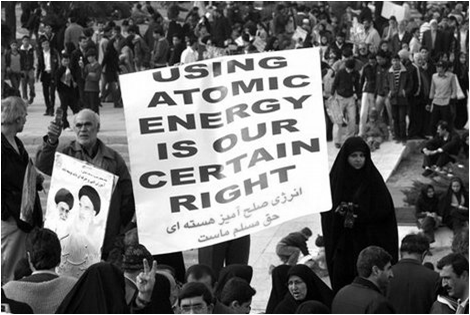
Concerned about uranium enrichment in Iran and the possibility of weaponization of its nuclear programme, the United Nations Security Council has imposed four sets of sanctions, resolutions 1737, 1747, 1803 and 1929 on Iran asking the country to “suspend all enrichment-related and reprocessing activities.” Moreover, The US House of Representative passed a resolution on May 11, 2012  asking for “the full and sustained suspension of all uranium enrichment-related and reprocessing activities.” Jalili, on the other hand, has repeatedly stated  that “enrichment of uranium for peaceful purposes in all levels is an inalienable right.”

Continue reading

Iran Should Not Allow the Talks to Be a “Success” If …

In this post, Shirin Shafaie offers a policy recommendation paper for Iran ahead of the Moscow talks between the P5+1 and Iran.


By Shirin Shafaie

Iran should not allow the Moscow talks (18 June, 2012) to be announced, declared or referred to as “successful”, “positive”, “constructive” or even “promising” by the other party or the Western media in the absence of absolutely concrete and tangible concessions from the West in terms of sanctions relief and normalisation of Iran’s nuclear file in the IAEA. I explain why.

Continue reading

Addressing the Asymmetry in Negotiations between Iran and P5+1: a critical review of Oxford Research Group’s briefing

In this article, the author presents a critical review of the briefing, “Iran´s Nuclear Impasse: Breaking the Deadlock”, published by the Oxford Research Group on 1 May 2012. As negotiations over Iran´s nuclear programme stall, the author criticises the lack of neutrality of the briefing by the Oxford-based think tank, and calls for a review of the same in order to avoid some of the mistakes of the past, when pro-war think tanks played a key role in manufacturing consent for the 2003 invasion of Iraq.


By Mehrnaz Shahabi, 10 July 2012

The Oxford Research Group’s briefing, Iran’s Nuclear Impasse: Breaking the Deadlock (1 May 2012) [1], published before the second round of negotiations between Iran and P5+1 (permanent Security Council and Germany) in Baghdad on 23 May, whilst proposing some positive principles for a successful outcome of the negotiations – such as Iran’s right to enrichment, “reciprocity”, “defining endgame”, and “taking regime change off the table” – suffers serious drawbacks, which have become even more glaringly clear with the result of the recent Moscow negotiations.

Continue reading

The Film Corner: The Namesake – Just for the Sake of It?

In this film essay, Yayaati Joshi looks at The Namesake  and considers it to be a mixed bag of emotions-cultural shocks, an unusual name, and a very hard attempt to replicate the book.

The Film Corner is a series on InPEC by Yayaati Joshi. Yayaati is a blogger and a short story writer whose work can be found here and in his book, ‘The Recluse and the Rag Picker’. He specialises in cinema of all kinds including commercial, arthouse and foreign films. This collection of film essays looks at the nature of film in society and the purposes that it serves.  The first article in the series, a review of Mere Apne, is here.


By Yayaati Joshi, 6th July, 2012. Continue reading

The Film Corner: Mere Apne – Seething rivals, One-Upmanship, and a Motherly Figure

The Film Corner is a new series on InPEC by Yayaati Joshi. Yayaati is a blogger and a short story writer whose work can be found here and in his book, ‘The Recluse and the Rag Picker’. He specialises on cinema of all kinds including commercial, arthouse and foreign films. This collection of film essays looks at the nature of film in society and the purposes that it serves.  In the first of these Yayaati analyses Gulzar’s 1971 movie, Mere Apne.


By Yayaati Joshi, 22nd June, 2012.

Long before Omkara introduced us to the manipulative, jealousy infested and gun waving antics of student politics, Gulzar, back in 1971, had made a film on a similar subject. This film, called, Mere Apne, a rather ill-assorted title for a film that deals with student politics, had the two macho men of that age Vinod Khanna, and Shatrughan Sinha, pitted against each other as (student) political rivals. The film was released at a time when the appetite of the audience had not been whetted for the out and out action films, where the likes of Amitabh Bachhan or Dharmendra would bash up goons, either out of animosity, or pure rage against a goonda upstart. This was the time of the long locked “heroes”, proposing to the “heroines”, crooning romantic verses to woo the women. But, at the same time, a film in Bengali cinema was garnering appreciation for being daring enough to tread the less chosen path. The film, called Apanjan, was remade as Mere Apne.

Continue reading

The Fallout from the Lagos Plane Crash: The $25m question for the NCAA’s Harold Demuren and his Son

In the aftermath of the Nigerian air disaster, Sardonicus looks at the crises in Nigerian aviation. Poor regulation, corruption, nepotism and a general failure of the system could all have been contributing factors to the tragedy. This article looks in particular at the endemic corruption and nepotism within the aviation authorities.

To provide a pretext for this article here is a brief excerpt from a recent article in the New York Times on flying in Nigeria:

A plane for a major Nigerian carrier was approaching Lagos at the end of a recent all-night international flight. The city came into view – the warren of streets near the airport was below – and the plane seemed to be descending. Suddenly the view changed.

“The plane was flying over fields and swamps. The city receded into the distance. Yet the weather was perfect. The plane was no longer, it seemed, approaching Lagos. After a few minutes, the captain’s voice came over the intercom: “Ah, distinguished ladies and gentlemen” – this is how Nigerian pilots address passengers – “I’m sorry, but I’ve missed my landing. I’m going to have to try again.”

The plane became very quiet. The flight attendants were frozen in their seats, their faces immobile. After 10 minutes, the pilot tried again, and the plane landed without incident.

On a recent domestic flight – again involving a major carrier – the small jet hit heavy turbulence. It went on and on, the plane bouncing up and down, minutes turning into a quarter-hour and a half-hour.

The pilot’s voice came over the intercom – but not to give information about the flight. To sing. In a cracked and wheezy baritone, the (evidently) aged pilot began to intone an improvised ditty in praise of his own carrier: “Oh, I love to fly Air Nigeria! Air Nigeria is the best!”

The plane bounced up and down, and the captain sang.

Eventually the jet landed at its provincial destination. The passengers, almost all Nigerians, disembarked, impassive and silent. They appeared to be used to these ordinary experiences that edge near – uncomfortably close – to the extraordinary.


By Sardonicus, 14th June, 2012. Continue reading

Is Mali the ‘next Afghanistan’?

This article is a re-publication of a piece by Andrew Lebovich on his website, al-Wasat.  It analyses the popular attitudes on the security situation in northern Mali to look at the potential risks to international security and the risks that are, at present, overstated.

Mr. Lebovich is a contributor to the popular foreign policy blog The Washington Note, and his work has appeared at ForeignPolicy.com and The Atlantic Online. He also writes a formerly weekly, and now twice-weekly brief with Foreign Policy on legal issues in the struggle against terrorism, the Legal War on Terror (LWOT).


By Andrew Lebovich, 13th June, 2012.

The title of this post is a question I’m seeing more and more, and it reflects the growing concern in Washington, Paris, and African capitals that the security situation in northern Mali is spiraling out of control. In this kind of environment, bad news tends to echo loudly and quickly. The most recent example of this is the strong reaction in the international press to an interview Nigerien President Mahamadou Issoufou gave to France 24 this week, in which he said that Afghans and Pakistanis were in Mali training fighters, in addition to confirming that French hostages held for nearly a year and a half by AQIM were in “good health” and still alive. This news has garnered quite a bit of attention, especially in the Francophone media, though it should be noted that RFI reported the presence Pakistani trainers in Timbuktu and in Kidal a month ago, to considerably less attention. Still, this and other signs of the degradation in the security environment in northern Mali and the growth of AQIM have spurred speculation about whether or not northern Mali was becoming a “West African Afghanistan“, a new Somalia, or a jumping-off point for terrorist attacks elsewhere.

While I think some of this concern is warranted, I think some of this language and concern may be, for the moment, a bit overwrought, as I will explain in this piece. This post is my attempt to sort through some of the current popular attitudes about the security situation in northern Mali, the very real risks to regional and international security that may be looming in the north, and the equally real constraints on militant groups attempting to impose shari’ah in northern Mali or project force beyond Mali’s already porous (or nonexistent) borders.

Continue reading

The Irony of Empire: Why the Diamond Jubilee is the Triumph of Britain without Empire

In this article, Alastair Stewart looks at the role of Queen Elizabeth II and the place of Britain in the modern world.  As many have looked to the decline in ‘red’ regions of map as the simple narrative for defining the trajectory of Britain, it can be argued that recent resurgence of the royalty has enabled it to construct a soft power empire.  Where can real influence be found today, in the distrusted pageantry of politics or in the hysterical reactions to an overt display of grandeur?


By Alastair Stewart, 8th June, 2012

Of all the transformations to have taken place during her sixty-year reign, none can be more apparent to Queen Elizabeth II than the transformation of Britain’s role in the world. But is the story of decline, and fall, of the British Empire as unassuming as it seems?

Continue reading

Vogue Italia’s ‘Rebranding Africa’ Disaster

In this article Elliot Ross of Africa is a Country dissects the ‘Rebranding Africa’ edition of Vogue Italia.  The author attacks the concept of outside intervention as a defining characteristic of Africa before dealing with some of the more troubling assumptions made by the magazine.  It is a fantastic read.

This article was originally published on June 6th, 2012 on the website Africa is a Country.


By Elliot Ross, 8th June, 2012

Everybody’s trying to rebrand Africa, and it isn’t going so well. Vogue Italia’s latest issue — boosted by great billowing gusts of editorial hot air from both the New York Times and the Guardian — is called “Rebranding Africa”, and as you’d expect the whole thing is an embarrassing and insulting shambles. The images are okay, but otherwise it feels like something a middle-schooler cobbled together for a class project. And then got a “D” for it.

Continue reading

Tinker, Tailor, Soldier, Guantanamo: Can Intelligence Agencies be Democratic?

In this article the author questions whether the methods being used to combat domestic terrorism are in fact contrary to the values they seek to protect. Using the case studies of the US and Pakistan, Camille Maubert looks at the discrepancy between democratic ideals and the often scandalous actions of intelligence agencies.


By Camille Maubert, May 15th, 2012

The superiority of democracy as a political system has become paradigmatic. In effect, it is known to be the best way for a state to simultaneously assert authority on its citizens and protect their basic rights from excessive uses of power. Yet, intelligence agencies are democracies’ Achilles’ heel. Scandals – from Watergate to Abu Graib – penetrated the layers of secrecy and exposed the discrepancies between democratic ideals and intelligence activities.

Continue reading

Disarmament is more practical than we are conditioned to think

In this article, the authors build on a recent piece appeared on Open Democracy titled ‘Restarting Disarmament’. Disarmament, the authors claim, is more practical than we are often conditioned to believe.


By Dan Plesch and David Franco, 14th May, 2012

In a recent article on the progress of the nuclear non-proliferation and disarmament talks now under way in Vienna, Rebecca Johnson notes that the newly formed coalition of pro-humanitarian states has the potential to become a game changer. Of all that has happened thus far in Vienna the most exciting news is the statement ↑ by a coalition of 16 non nuclear weapons states, including Switzerland and Norway – an ally of the nuclear weapons states, that nuclear weapons and programmes have catastrophic humanitarian consequences and that they should be abolished.

This initiative is the first involving western states to apply to nuclear weapons the thinking that has moved humanitarian disarmament on land mines, cluster munitions and the arms trade. President Obama’s ↑ cry for nuclear disarmament in Prague in 2009 may have had more effect than skeptics and critics believe. But more needs to be done as disarmament has long suffered from some kind of lethargic paralysis. Paraphrasing Richard Moyes and Thomas Nash, if disarmament were like an old PC it would need to be restarted. Indeed, restarting disarmament is a must, and not only at the nuclear level. The consequences would be immense, including a boost to democratic development as highlighted by Andrew Lichterman ↑ .

Continue reading

The Unhappiness Factory of Kashmir

In an April 2012 issue of Open Magazine, the editor Manu Joseph wrote a provocatively titled essay, “Sorry, Kashmir is Happy”. Unsurprisingly, this article became the subject of heated discussion. In this InPEC article, the author – Sualeh Keen, a Kashmiri writer, poet and cultural critic – brings some perspective to this issue.  


By Sualeh Keen, 7th May 2012

Trauma in Kashmir is like a heritage building—the elite fight to preserve it. ‘Don’t forget,’ is their predominant message, ‘Don’t forget to be traumatised.’ They want the wound of Kashmir to endure because the wound is what indicts India for the many atrocities of its military. This might be a long period of calm, but if the wound vanishes, where is the justice? India simply gets away with all those rapes, murders and disappearances? So nothing disgusts them more than these words: ‘Normalcy returns to Kashmir’; ‘Peace returns to the Valley’; ‘Kashmiris want to move on’.

When Manu Joseph wrote these words in the Open Magazine article ‘Sorry, Kashmir Is Happy’, it was but expected that ‘they’ would get disgusted and outraged. ‘They’ are the intellectual writers and online activists that constitute the second generation of Kashmiri Muslim separatists, the first generation being the Pakistan-trained mujahideen who fought with AK-47s, grenades, rockets, and bombs against ‘Hindu India’ in search of Azadi (literally, ‘freedom’). While originally Azadi meant the valley’s accession to Pakistan, after the Pakistan-sponsored armed uprising in the early 90’s failed and with the onset of internal turmoil in Pakistan, the meaning of Azadi has shifted from accession to Pakistan to independence from both India and Pakistan. This demand is largely confined to the Kashmiri Muslim community of the Kashmir valley, while finding little or no support in the Jammu and Ladakh regions of the Jammu and Kashmir (J&K) State. Even in the valley, opinions are divided in favour of independence, accession to Pakistan, greater autonomy or self-rule within the Indian union, and political status quo.

Continue reading

Non-Proliferation: Are we heading in the right direction?

In this article, the author reports from the first session of the Non-Proliferation Treaty Preparatory Committee conference being held in Vienna, Austria. The international community, including Iran and the US, have gathered at the IAEA headquarters to discuss next steps while non-participants Israel, India and Pakistan follow the progress of the conference from the comforts of distance.


By David J. Franco, 2nd May, 2012

Ignored by the mainstream media, the world’s nuclear weapons and energy problems are being tackled by the international community gathered in Vienna. Attended by a gallant but tiny band of NGOs the meeting witnesses states from Iran to the US engaged in the debate, while the non-participants Israel, Pakistan and India cast a shadow over the proceedings.

On Monday, Ambassador Libran Cabactulan, of the Philippines, declared open the first session of the Preparatory Committee of the 2015 Non-Proliferation Treaty (NPT) Review Conference. Ambassador Cabactulan led a successful process that culminated in the 2010 NPT Action Plan agreed with the consensus of all states parties to the NPT. After his opening statement, in which he emphasized the need to build upon pass success, Ambassador Cabactulan declared elected Ambassador Peter Woolcott, of Australia, as the Chair-designate for the first session of the 2015 NPT review conference cycle.

Continue reading

Heyns, the Final Straw for AFSPA in India?

In this article, the author discusses the controversial Armed Forces Special Powers Act (AFSPA), 1958 of India, which has been used in the North Eastern states of India, and Jammu and Kashmir where counter-insurgency operations were carried out in the past several decades. This Act has come under heavy criticism from human rights advocates.


By Rithika Nair, May 1, 2012

Christof Heyns, the Special Rapporteur on Extrajudicial Killings described India as “a living document … [of] human rights jurisprudence respected worldwide.” This extolling statement preceded his review of the country after brief visits to New Delhi, Gujarat, Kerala, Jammu and Kashmir, Assam and West Bengal. His detailed report on the issue will be submitted before the United Nations Human Rights Council only in 2013.

In a press release after his visit, he expressed concern regarding unlawful killings by State actors and non-State actors, delay in prosecution and lawful impunity. He touched upon the disproportional and unnecessary use of force by the police, encounter killings, custodial deaths, the death penalty, the Armed Forces Special Powers Act, communal violence, insurgencies and counter-insurgencies, violence against women, and most significantly measures of impunity and rewards instead of prosecution.

Continue reading

Time to reframe the debate on the Iranian nuclear programme

In this article, Paul Ingram* argues it is time to reframe debates on the Iranian nuclear programme. If we want to solve the current impasse, we need to move from a pervasive rhetoric based on security threats and mutual accusations to a cooperative framework more apt for negotiations. 


By Paul Ingram, 25th April, 2012

All too often the story around the Iranian nuclear issue is framed as our effort to contain the wild ambitions of a delinquent revolutionary state that with nuclear weapons given half a chance will threaten the stability of the world. This frame sticks for two key reasons: firstly because it plays into some of our greatest fears, and second, because there is enough of a hint of truth to it that people forget the qualifications, the underlying causes and the contrary evidence. In short, we fail in the face of complexity to understand the challenge, and the role of both sides in creating it. And in fact, many of the accusations made against Iran are mirrored in Tehran in things said about the West.

Western intelligence agencies continue to confirm that there is no strong evidence to back up the claim that Iran is engaged in a technical sprint to fulfil an ‘ambition to attain nukes’. Postulating reasons why Iran might want such capabilities is all very well, but such approaches are fraught with analytical and cultural traps. There are equally persuasive explanations for Iran’s programme that it would be equally dangerous to depend upon, such as the idea that Iran is caught up in an effort to demonstrate its modernity through the development of cutting-edge technologies, or that it is pursuing an energy-mix that both brings in foreign exchange and provides for an ever-increasing energy-hungry economy. The truth probably includes a balance of many explanations, including the fact that its technology development gives the administration a future option for nuclear deployment that may be seen as valuable in itself.

The talks in Istanbul last weekend between the E3+3 and Iran were best summed up by Guardian journalist Julian Borger as a play for a score draw, at least for now. Emerging without recriminations was in itself an achievement. But of course the challenge is how we get beyond this to reaching more substantive agreement in Baghdad on 23 May, when there have been so many factors in the way. Over the coming months, Iran faces some pretty severe additional sanctions, on top of crippling ones recently imposed. When previously people may have accused them of playing for time this is no longer be the case. In fact if anything it was Catherine Ashton, lacking a mandate, who last Saturday was playing for time when Jalili was looking for a deal that would soften impending sanctions. The best way of securing stocks of material in Iran is by negotiating access, not by threats, which only provide Iran an incentive to continue. Israeli protests over Iran’s increasing ‘immunity’ to attack ignores the fact that Iran has every right to protect themselves against illegal military threats. As Peter Jenkins, former UK Ambassador to the IAEA puts it, Iran bought itself immunity from attack by being a member of the United Nations and a signed up member of the NPT. Israeli military threats only make it more difficult for Iranian politicians and diplomats to sell any deal to their constituents.

There are plenty of frameworks out there to negotiate on that take the parties step-by-step in the direction of a technical agreements whilst the underlying trust essential to lasting improvement can be built up. Indeed, this is the only approach that holds any promise of working in negotiations. It will require parties to drop preconditions and talk with a view to understanding the other side’s perspective. Each step will need to involve net gains for both sides, as well as a clear sense of where the process is going. There will need to be maximum exploitation of common interests in other security areas – such as counter-terrorism and counter-narcotics activities. Positive signals such as those given recently by both President Obama and Ayatollah Khameini will need reflection, and negative, hostile rhetoric scaled back.

But we will also, in parallel have to tackle some of the deep-seated fears and attitudes that prevent progress. One such on the western side is a deep-seated exceptionalism around sovereignty that pervades the majority view. How much do we all share the attitude that we have a right to demand unlimited access and control over others’ nuclear programmes whenever we have our own suspicions? We have every reason to develop international systems based upon agreement and universal application, but we cannot force others into agreements, and certainly not those we are not willing to submit ourselves to. As a nuclear weapon state Britain is unwilling to seriously consider abandoning the highly expensive practice of keeping a nuclear submarine at sea at all times, or to share such a practice with France, for example, because we have such a powerful attachment to the concept of British sovereignty based upon the ability to threaten massive retaliation against any other state on the planet. This is bound to drive proliferation, sooner or later. Regionally, the inconsistent focus on Iran without any clear plan to address Israeli possession of a nuclear arsenal cannot be justified by a legalistic appeal to Israel’s non-membership of the NPT. As non-signatories the Israelis may not be directly breaking the law, but if we are to claim that the health of the international community depends upon a strong ethic of non-proliferation, then Israel cannot remain an out-law.

We cannot continue to have partial approaches to dangerous technologies. Did you know that India’s successful missile test this week broke a UN Security Council resolution, just as North Korea’s failed one last week did? Few have reported it.

On the Iranian side, it’s time they evolved the rather male pig-headed pride so ably illustrated in last year’s prize-winning film ‘the Separation’, an approach that too often characterises (though not uniquely) Iranian diplomacy and politics. Standing on one’s rights or maintaining an inflexible position can harm one’s own interests in fundamental ways, and destroy one’s position within the community, international or otherwise. International communities require trust, empathy and reassurance. They also depend upon a level of transparency and responsibility. Iranians have to recognise that for a variety of reasons they have a long way to go to build the trust of their neighbours, the sort of trust that will enable them to overcome the isolation they have suffered, isolation that threatens to deepen as the Syrian government goes down and their allies in Lebanon and the Occupied Territories start to look elsewhere for sponsorship in the context of the Arab Spring.

But the deeper choices lie in the international community’s relationship to nuclear deterrence, and how power has in the past been mediated by possession of nuclear arsenals. If we cannot break free from Cold War theologies that place such magical powers in the possession of nuclear weapons, we will only have ourselves to blame when the weapons spread, and those we fear most acquire the magic we have sought to invoke in defence of our privileged positions.

The views expressed in this article solely reflect Paul Ingram’s personal perspective.

____________________________________________________________________________________

*About the author: Paul Ingram is Executive Director of the British American Security Information Council (BASIC) where he develops BASIC’s long-term strategy to help reduce global nuclear dangers through disarmament and collaborative non-proliferation, coordinating operations in London and Washington. He is also a weekly talk-show host on Iranian TV. This article was first published in Open Democracy on 23 April 2012 (the original article can be accessed here).
Will Iran be accorded its rightful place in the world?

In an inspiring analysis, Peter Jenkins analyses the current state of affairs over Iran’s nuclear file in advance of the April 14 meeting in Istanbul between members of the international community (the P-5 + Germany and the EU) and Iran. Jenkins warns that the scope for any process on nuclear talks with Iran to founder on distrust, misunderstanding and political in-fighting in both Tehran and Washington remains formidable. Furthermore, he sees the wider political realities surrounding the Iranian case as ‘disturbing’ and calls for a more active role from the BRICS, especially India, in helping resolve the conflict. Iran’s nuclear programme is a symbol of a geostrategic shift, he argues, and the global family has an interest in Iran’s neighbours according Iran a say in the affairs of South West Asia.

This article was first published by Gateway House: Indian Council on Global Relations on 10 April under the title ‘Iran: An opportunity for BRICS‘.


By Peter Jenkins*, 12 April, 2012

The winter months saw the controversy over Iran’s nuclear programme become dangerously heated. Western media were encouraged to interpret recent International Atomic Energy Agency (IAEA) findings as proof that Iran is bent on making nuclear weapons, despite the assessment of the U.S. intelligence community remaining that a weapons decision has not been taken and is in no sense inevitable.

The U.S., UK, and European Union (EU) used the concern aroused by media reporting to justify a further sharpening of their attack on the Iranian economy, while Israel pressed for a different sort of attack, to wipe out Iranian nuclear facilities before the programme enters a so-called “zone of immunity”. Iran reminded its adversaries that it could retaliate by closing the Straits of Hormuz to oil and gas shipments.

As spring has come, passions have cooled. U.S. President Barack Obama seems to have felt able to tell Israel’s Prime Minister Netanyahu that a military attack is unnecessary at this juncture, even though the U.S. President is vulnerable to Israeli influence on U.S. public opinion in an electoral year. The five Permanent Members of the UN Security Council, the EU and Germany have agreed to talk to Iran’s nuclear negotiator despite the latter’s failure to commit Iran to full implementation of the resolutions passed by the UN Security Council since 2006 (Notably these require Iran to suspend all production of the enriched uranium that can be converted into reactor fuel, but which Iran could divert to military use if it decided to withdraw from the Nuclear Non-Proliferation Treaty [NPT], or to ignore its NPT obligations).

There are signs that the U.S., UK and Germany, if not France under President Sarkozy, are moving towards the Russian and Chinese position of accepting Iranian enrichment as long as Iran offers the best possible guarantees that all its nuclear material will remain in non-military use.  Public diplomacy has moderated rude aggression yielding to civility and reason.

The risk of disruption to oil and gas shipments has receded – for the time being at least – although recent U.S. and EU measures are causing problems for some of Iran’s traditional customers, and are hurting consumers everywhere through their effect on prices.

So it is not irrational to hope that when the eight parties – Britain, China, France, Russia and the U.S., the permanent members of the UN Security Council, plus Germany, the EU and Iran – meet on 14 April in Istanbul, they may find some way of launching a process that can, over time, lead to agreement. At long last, perhaps there can be concurrence on handling Iran’s nuclear ambitions in accordance with the treaty to which Iran is a founder-party, the NPT.

An NPT deal would recognise Iran’s right to enrich uranium and would accept its taking advantage of that right, in return for Iran placing all nuclear material in its possession under IAEA safeguards and renewing its commitment to refrain from manufacturing or otherwise acquiring nuclear weapons.

In one sense, the West approaches these talks from a position of weakness. The Iranians have shown no sign of buckling under the pressure of ever-tighter sanctions. They know that the West’s military option is deeply unattractive to any of sane mind.

In another sense, the West has many good cards in its hand.  Sanctions are hurting Iran and it has an interest in having them lifted provided the price is not intolerable.  Abandoning its enrichment plans would be intolerable; volunteering full access to IAEA inspectors, and other measures that can allay the concerns aroused by the clandestinity of some of its past nuclear activities, need not be.

To say that hope is permissible is not to say that the odds on yet another disappointment are long.  In 2007 a promising opening vanished when Iran’s chief negotiator clashed with President Ahmedinejad.  In 2009 it was President Ahmedinejad’s turn to be thwarted by domestic rivals; and President Obama, under pressure from hawks, withdrew his negotiators rather than wait for the Iranians to sort out their differences. In 2010, the timing of Iranian assent to a confidence-building proposal brokered by Turkey and Brazil cast doubt in Western minds on Iran’s sincerity.

In other words, the scope for any process to founder on distrust, misunderstanding and political in-fighting in both Tehran and Washington remains formidable. Equally disturbing are the wider political realities.

Since 1992 both leading Israeli parties, Likud and Labour, have sought to convince Washington that Iran is a mortal threat to U.S. interests in South West Asia. This they have done in order to maintain Israel’s value to the U.S. as an ally in a post-Cold War Middle East and to avert a thaw in U.S.-Iranian relations that they fear might entail a cooling in U.S.-Israeli relations.  For these Israelis, Iran’s nuclear programme, and especially its undeclared activities prior to 2003, has been a gift from heaven.

Iran’s transgressions are a matter for persuading Americans that Iran is bent on acquiring nuclear weapons, that these weapons will be used to destroy Israel, they say. Iran’s programme, if left unchecked, will precipitate nuclear proliferation in an unstable region, leading Saudi Arabia, Egypt and Turkey to acquire similar capabilities. U.S. conservatives, in thrall to dreams of re-shaping the Middle East and regime-change in Iran, have been eager echoers of these (highly questionable) arguments.

These constituencies, Israeli and American, have no interest in the normalisation of the Iranian nuclear case through an NPT deal.  On the contrary, they have every interest in making it as politically difficult as possible for any U.S. administration to arrive at such a deal.

Saudi Arabia has been even less transparent than Israel.  It is not obvious that the Saudis have been poisoning the wells of American opinion to thwart a deal with Iran.  But Saudi-Iranian rivalry, multifaceted and acute since the advent of an Islamic Republic that challenges the legitimacy of Saudi occupation of the Holy Places, seized from the Hashemites in 1924, and which shows up the undemocratic nature of the Saudi monarchy, is well-documented.  There have been veiled threats that Saudi Arabia will ignore its NPT obligations if Iran is left in peace to exploit nuclear technology that the Saudis themselves are decades away from mastering without outside help.  Saudi Arabia too has an interest in thwarting any deal that leaves Iran in possession of enrichment plants.

There are additional factors.  Ever since the NPT opened for signature in 1968, U.S. officials have found it hard to accept that the treaty allows non-nuclear-weapon states (NNWS) access to technologies that can serve both civil and military purposes. There’s been a 44-year itch to close what Americans see as a loop-hole, despite all the evidence that many NNWS are unready to concede a back-door renegotiation of a carefully-balanced instrument.

There is also in the U.S. a tendency to blind self-righteousness that can lead Americans to treat non-Americans as miscreants when the latter err. Iran’s failure to respect its NPT safeguards commitments prior to 2003, ill-disposes American officials to accord Iranian representatives the respect the latter crave.  There’s a risk Iran’s negotiators will be made to feel like criminal suspects invited to engage in plea-bargaining.

For their part, the Iranians have a tendency to give way to the temptation to retaliate when instead keeping a stiff upper lip would be wiser. For instance, they retaliated for the 2006 reporting of their IAEA non-compliance to the Security Council by ceasing to allow the IAEA the access it needed to arrive at the conclusion that there are no undeclared nuclear activities or material in Iran.  They retaliated for recent UK sanctions on financial dealings by trashing the British embassy in Tehran, an act of vandalism ill-calculated to make it easier for the British government to accept their enrichment activities. Will they be able to resist the urge to retaliate if some indignity is inflicted on them while negotiations are underway?

These wider factors suggest that India, Brazil and South Africa could play a part in resolving this controversy if they chose.  They could act as auxiliaries of their BRICS partners, Russia and China, whose role in a negotiating process will be to help narrow differences.  India could use its influence in Washington and European capitals to urge patience and the turning of deaf ears to special pleading from Israel and Saudi Arabia. It could draw attention to the way in which Western slowness to accept evidence that the Iranian nuclear threat had been exaggerated, has damaged Indian economic interests.

India could also stress the unacceptability of any attack on Iran that has not been authorised by the Security Council, both on legal grounds and on account of its probable consequences for Indian living standards. It could draw on 2,500 years of cultural affinity with Iran to offer advice on Iranian sensibilities: the dos and don’ts that matter in any negotiation.

The underlying need is for the BRICS to make their voice heard on this issue, to counter-point the tunes composed by the West’s Middle East allies. The BRICS are qualified to argue against seeing Iran’s nuclear programme in isolation. They can point out that the programme is a symbol of a geostrategic shift: Iran is slowly returning to the ranks of Asia’s greater powers.

This shift is unwelcome to some of Iran’s neighbours, it seems.  They have sought to prevent it by distorting Western perceptions, by encouraging Western governments to assume the worst of a state whose intentions the West finds it hard to fathom, and by playing on the negative prejudices that are the legacy of past clashes with Iran.

But this kind of shift cannot be prevented without a conflict that would entail hardship or suffering for most of mankind. So the global family has an interest in Iran’s neighbours accommodating what can hardly be prevented, and according Iran a say in the affairs of South West Asia – what the Iranians see as their rightful place in the world.

_________________________________________________________________________________

*Peter Jenkins is a former British diplomat who worked on the Iranian nuclear issue when ambassador to the International Atomic Energy Agency in Vienna (2001-06).


Can the American and Pakistani Positions on Islamic Militancy be Reconciled?

In this article, the author delves into the relationship between the United States and Pakistan in context of the Islamic Militancy in the extended region of Afghanistan-Pakistan. 


By Camille Maubert, 10th April, 2012

In 2001, Pakistan allied itself with the US on the grounds that it would assist in the War on Terror’s effort to tackle terrorism. At the time, the two countries’ interests seemed to coincide, as they had a common target – Al Qaeda and foreign fighters. Yet, from 2003 onwards, the expansion of the American war against the Taliban and its increased pressure on Pakistan to act against the Islamic militants who use the Afghan-Pakistani border to provide the Taliban with safe havens put the Pakistani leadership in a difficult situation. The unpreparedness of Pakistan to answer the US’s demands to repress these groups led to the current diplomatic standoff whereby there seems to be no alignment of strategic interests, let alone coordination between the US and Pakistan, and their respective policies remain fundamentally adversarial.

The premise of this study is to challenge the current understanding of the situation, which is overwhelmingly based on perceptions and representations rather than real insight into Islamic militancy.

Islamic Jihad or Pakistani Nationalism?

Despite the consensus on the decisive role played by militant organizations like the Lashkar-e-Taiba (LeT) and the Haqqani network in providing safe havens, logistical support and training to Taliban fighters, important questions like “who are the militants, who is supporting them and why?” are overlooked.

There is a strong argument that the reason why Islamic militants have such an overwhelming presence in the Afghan-Pakistani border region is because of the radicalisation of the population by madrassas and its sympathy for the jihadi ideology. Such an approach is flawed as it conveys a stereotypical understanding of the militant reality, and overlooks the deeper psychological and political fault lines underpinning it. Indeed, Islamic militants are fighting a revolutionary jihad for ideological purposes, to reform the state and impose a radical version of Islam. Conversely, most Pakistanis practice a more moderate version of Islam and thus do not support radical groups out of sympathy for their ideological agenda. Rather, those who join militant groups put forward reasons that stem from collusion, misinformation, support for the Afghan jihad and, mostly, Pakistani nationalism. Indeed, invasive American actions (drone strikes) have propped up support for militant groups out of patriotic sentiment. In other words, militant organisations have hijacked the nationalist concept of jihad as used during partition, and widely supported by Pakistanis, to justify violent action (against American infringements on Pakistani sovereignty and denounce the subordination of Pakistani leaders to American will (A 2009 Gallup Survey reveals that 59% of Pakistanis consider the US as the biggest threat, while only 11% chose the Taliban). As a result, support for Islamic militants spreads more easily through the various layers of Pakistani society, as they claim to act in the defence of the Muslim nation from external domination.

Therefore, it is the failure of Western analysts to make the distinction between ideologically motivated militants and nationalist Pakistanis that makes cooperation difficult. In the US, the post 9/11 environment and the need to mobilise people against terrorism promoted an unsophisticated understanding of what Islamic militancy is about by having the media “fuse shots of Osama Bin Laden, veiled women, (…) and riots in Kashmir and Palestine, thereby lending the visual impression that the West is confronted with a crazy, irrational faith” (Majid 2010:101). This securitisation of Islamic militancy is intrinsically flawed because it promotes an all-encompassing understanding that merges ideological and nationalist agendas into the same threat, making its targeting indiscriminate and, ultimately, counter-productive. Conversely, the Pakistani approach to Islamic militancy recognises that some elements – the Pakistani Taliban – do represent a threat, but it also acknowledges that it cannot crack down on those organisations as most jihadi groups historically enjoyed state sanction to wage jihad against the state’s enemies in the name of Islam and the Nation. Therefore, it is necessary to explore the relationship between the Pakistani state and Islamic groups in order to understand its reluctance to implement direct military action against them.

Islamic Groups as Pakistan’s Strategic Asset

Were the Pakistani civilian government willing to cooperate with the US, such commitment would only be a shallow promise if it proves to be unable – or unwilling – to convince the military and Inter-Services Intelligence to abide by its will. Not only is Zardari’s government unable to do so – given the historical weakness of Pakistani civilian governments – but it will not, as this would undermine the Pakistani strategic doctrine as a whole. Indeed, Islamic militants have been and remain the most reliable linchpin for Pakistan to project power where it matters; Kashmir. Since Partition, Islamic radicals and the army have teamed together to construct and secure Pakistan’s sovereignty and identity through the tactical use of guerilla warfare in Pakistan’s border regions.

Therefore, the reason why Pakistan does not – and will not – act against Kashmiri-based groups is that its whole foreign policy is founded upon issues of (Muslim) national identity, meaning that it uses militancy to challenge the Indian regional domination. Since this discourse informs Pakistan’s very identity narrative and exercises a powerful hold on the national imagination, it is impossible for Pakistani leaders to renounce it, especially as its influence has been reinvigorated by the fight for (Muslim) freedom in neighboring Afghanistan.

Similarly, Afghanistan is an aspect of Pakistan’s Indian policy. Indeed, Pakistan’s actions in Afghanistan are determined by its entrenched fear of encirclement and the necessity to limit Indian influence at its Western flank. Successive governments have therefore maintained strategic links with Islamic groups in Afghanistan and supported a proxy war aimed at undermining Indian assets. Interestingly, the post 2001 security environment increased the links between Kashmiri and Afghan groups, thereby strengthening the legitimacy of local groups and undermining the ability of the state to identify and target specific individuals.

However, this apparent predicament serves Pakistani interests in the long term; Aware of the need to preserve strategic depth against India and a friendly government in Afghanistan, Pakistan has no interest in withdrawing support to Afghan Islamic militants and the Pakistani groups that prop them up.

Questions like “how much support these groups truly get from the army and the ISI, and how much of it is provided by independent individuals”, remains unanswered. Yet what is clear is that the problem to which Pakistan is confronted with regards to Islamic militancy is one of control. Pakistan is in a situation where the state created organisations on the basis of identity for (geo)political purposes but has lost control over them as they were reinforced by traditional values and developed a life of their own. In effect, not only are Islamic organisations attractive to some sections of the population, they also are ingrained in the state apparatus – they recruit retired personnel from and have relatives working for the army. Given the kinship base of the Pakistani society, this makes them extremely difficult to root out. Consequently, Pakistan understands that disarming the militants would cause more damage than turning a blind eye, as it may lead to an internal conflict of interests within the army between pro-Western and nationalist elements. Such situation, it has been argued, would provoke the collapse of the only strong institution able of holding the state together.

Furthermore, the areas in which militancy is highest are those where the state doesn’t exert authority or governance – North West Frontier Province, Balochistan, Kyber-Pukhtoonkhwa. In these areas, the pre-eminence of Islamic organisations is all the more important that they fill the power vacuum and provide the population with social services that the state is failing to supply. The most notable example is that of LeT’s charity wing Jamaat ud-Dawa (JuD). After the 2005 earthquake and 2010 floods, JuD provided immediate relief to the population and further integrated itself at the grassroots level. As a result, LeT has been increasingly able to act independently from state sponsor, another reason for Pakistan not to provoke any rupture. What is needed, therefore, is a solution that acknowledges the structural weaknesses of the Pakistani state, the strength of its society, and promotes negotiation rather than coercion.

A Path to Reconciliation?

The difficulty with both US and Pakistani positions is that they are directly reliant on the states’ narratives. In that sense, finding a solution implies that they would have to compromise on those narratives. This is unlikely to happen since, on one hand, the American demands are based on the deeply entrenched ideological principles of the War on Terror, and, on the other hand, the Pakistani reluctance to comply is rooted in the certitude that militants are necessary to its regional strategy – and to an extent its national identity.

These discursive incompatibilities are reinforced by the process of securitisation at play. By framing Islamic militancy as a security threat, the US – and some pro-Western Pakistani civilian leaders – has promoted a military solution, which limits are becoming more visible. The protests steered by drone strikes and the backlashes met by the Pakistani army in Federally Administrated Tribal Areas and North West Frontier Province demonstrate that the use of force is ultimately inefficient as it increases anti-Americanism, steers sympathy for militants, and further disturbs Pakistan’s unstable political landscape.

As observed above, the reason why cooperation has so far failed between the two allies is the mismatch of each other’s vital interests. While the US demands are informed by the short-term requirements of its Afghan strategy, the Pakistani position is determined by a long-term approach to militancy and regional security. In addition, the securitisation process has led to a situation where the US promotes an all-encompassing definition of the militant threat which pushes for the elimination of all organisations linked to Islamic militancy. But what it fails to understand is that Islamic militancy is deeply rooted in the Pakistani society and state apparatus and, as such, it cannot simply be isolated or suppressed.

Therefore, any solution to the problem posed by Islamic militancy would have to acknowledge that it is not only a security threat but rather a socio-economic and nationalist phenomenon. Additionally, it would have to recognise Pakistan’s structural weaknesses and its lack of capacity to impose its will on some sections of the population. Pakistan is a negotiated state, which means that coercive measures from the top-down are unlikely to be successful if they are not supported by local stakeholders. In finding a solution, Pakistan itself has a role to play, as it would have to acknowledge its need for a consistent strategy against its home grown militants – which it lacks so far – to ease cooperation with the US and start to positively engage the militants.

There is a growing understanding that soft power is ultimately more likely to successfully change militant behaviours and counter the growth of violent extremism as it impacts directly on the grass roots level. Indeed, long-term American engagement in issues like education and development would decrease its perception by the population as a security threat and help diffuse more positive representations. Tactical attempts have mostly proven to be successful, as shown by the American help in flood relief in 2010. However, this policy so far happens to be unsuccessful on the strategic level as its positive contribution in winning Pakistanis’ hearts and minds is outbalanced by the negative impact of drone attacks. Therefore, in order to decrease the scale of Islamic militancy, Pakistan would have to restore its sense of sovereignty, which means that the US would have to cease its activities across the border. At the time of writing, such evolution is yet to happen. This is due to the intense climate of mistrust that characterises the relationship between the US and Pakistan, whereby neither side seems to be willing to tone its rhetoric – and demands – down for fear of being thought to make concessions on its narrative.

Islamic militancy highlights the complexity of the US-Pakistan bilateral relation by confronting their intrinsically different strategic and identity narratives. One demands a rapid military solution, the other prioritises its long-terms interests, and both are informed by domestic pressure and ideological discourses. Only when those uncomfortable realities are acknowledged will dialogue be possible. Ultimately, the militant challenge puts the ability of the two allies to engage in a long-term partnership to a test as it will show whether conflicting demands can be complemented by common goals.