The UN Human Rights Council Resolution on Sri Lanka’s Alleged War Crimes

In this article, the author explores the resolution’s impact on Sri Lanka, and its probable implications with reference to Sri Lanka.


By Rithika Nair, 3rd April, 2012

The United Nations Human Rights Council’s (UNHRC) judgment on Sri Lanka’s efforts at post-conflict reconstruction, invited an abundance of opinions and debate globally. Newspapers cried out country decisions to the US sponsored resolution with regard to their foreign policies, domestic policies and moral policies. In lending an ear to all the global justifications and rationalizations, the importance shifted away from what Sri Lanka had to say with regard to the resolution and its possible impact on the island.

In 2010, the Government of Sri Lanka created the Lessons Learnt and Reconciliation Commission (LLRC) suo moto, to look into the causes of the conflict, its consequences on the people, and to promote national unity and reconciliation. The LLRC, though criticized for overlooking the violations of human rights and humanitarian law committed by the Sri Lankan army, stated that there were “considerable” civilian casualties. This was opposed to the government claims, which insisted on a zero-casualty rate.

The international community had already begun to push Sri Lanka to begin its post-conflict reconstruction agenda.  The LLRC report increased this demand for the Sri Lankan government to act – prosecute those who were accountable for civilian massacres, and bring relief to those displaced and devastated by the war.

This never happened.

The disappointing LLRC report largely exonerating the government, and the subsequent government inaction to suggested accountability procedures encouraged the international community to act.

In March 2012, the US submitted a resolution at the 19th session of the UNHRC, urging the Sri Lankan government “to address serious allegations of violations of international law by initiating credible and independent investigations and prosecutions of those responsible for such violations.” The resolution, after being slightly amended to word that the implementation of any external advice or investigation by the Human Rights Commissioner or Special Procedures must unfold only “in consultation with and the concurrence of ” the Sri Lankan government, was passed with 24 votes in favour, 15 against, and 8 abstentions.

The closing of Sri Lankan embassies in Europe, the threats to human rights defenders and the anti-Americanism in Sri Lanka are some of the immediate effects of the resolution. But it’s long-term implications – constructive and destructive, are nothing but analytical renderings as of now.

The resolution with its honorouble intentions could be a possible check on the quasi-dictatorship of Mahinda Rajapaksa. It could be the warning hand on the back, reminding Sri Lanka of what it had promised to deliver three years ago, a paternal gesture offering assistance if needed. It could imply that dialogue and soft diplomacy may harden, and the whispers of a ‘South Asian Spring’ may jump to reality with an international demand for the removal of Rajapaksa from his throne. With the Sri Lankan Tamils still dissatisfied with their government’s empty promises of reconciliation, and Sinhalese human rights activists being called traitors if they stood up for the Tamils, it would not be long before Sri Lanka could walk the line with Maldives, Libya, Egypt and Tunisia. If such a future be predicted, then the precautionary resolution – a very fair and balanced one, has been passed at a very appropriate juncture.

The resolution may have been a UN step to avoid being blamed for not taking action. Perhaps the UN was guilty of its own lack of action while the crisis unfolded over 26 years. Then, the resolution is but a ticking pendulum, softly but notably reminding Sri Lanka of its obligations and responsibility – and in doing so, delivering rehabilitation and hopeful justice to the victims of the war – the people of Sri Lanka.

On the other hand, the resolution placed the ball back in the Lankan court, and it ordered the multi-faced Lankan king to finish what he had promised to do. It asked him to submit an action plan detailing what he had done, and will do to implement the LLRC recommendations, and to address all matters that violated international law.

The king, with all ten heads, rejected the resolution.

Neither he nor his court thought that it added any value to the humanitarian and justice implementation process in Sri Lanka. They felt the resolution was ‘counterproductive’, ‘ill-timed’, and ‘an unwarranted initiative’. They perceived the supporters and sponsors of the resolution to be LTTE sympathizers – those who underestimated the violence and trauma that the LTTE had unleashed upon them. They felt that the unpunished situations in Afghanistan, Iraq and India removed the moral legitimacy of the resolution.  Lobbying against the vote in Geneva transcended into anti-America lobbying, and human rights activists and defenders of the resolution were threatened in Sri Lanka. In such circumstances, the significance of the resolution is undermined.

This resolution should not and cannot be rejected by comparing them to conflict situations where deeds committed by the sponsors and supporters go unchecked. This matter pertains to and reflects on Sri Lanka, and Sri Lanka alone. This does not mean that this case supersedes any of the other situations, but the current context is Sri Lanka, and that should be respected. If the world and its leaders were to act and re-act following the policy of every eye for an eye, and every tooth for a tooth, the vicious cycle of blame and revenge would never stop spinning.

However, as the ambassador for Bangladesh very prudently stated at the Council session, if Sri Lanka is not on board, then the resolution will have a very limited impact. Without the Sri Lankan nod to implement efficient rehabilitation and accountability measures, the resolution is but an empty bell with no sound.

Three Myths about China and its Relationship with the US

In this article, the author busts three myths about China and its relationship with the United States. 


By Mikael Santelli-Bensouda, 5th March, 2012

Many things have been written regarding the relationship between China and America, most of which is founded upon a sense of speculation that emerges from a state of fear. The general assumption is as follows: China is acting unilaterally and belligerently to undermine and overtake the US, initially through economic means and later through traditional military means. This is not the case. The China threat perception has been, in recent times, blown out of proportion. This can be verified by examining what’s really going on between these two behemoths.

Myth 1

What we are told: China manipulates its currency at a low rate to provide it’s exported goods with an unfair advantage in the international arena. This leads to the assumption that the Chinese are callously stealing American jobs as part of a long-term strategy to control the entire US economy through debt absorption. Akin to a puppet master, China is positioning itself to both dominate and manipulate the American economy.

What’s really going on: Contrary to popular sentiment, $1.175 trillion of America debt in Chinese hands, does not necessarily leave America in a weak position. By holding such an absurd amount of debt, China too is exposed to an enormous risk. The much-sighted scenario’s regarding this toxic wealth largely unfolds like this: The Chinese recall their investment and the US economy crumbles. This will cause a chain reaction that severly impacts the global economy from which China’s export based economy will be hit hard. However, there is also an alternate, and more likely scenario; The US either refuse to pay the debt or default on the amount, leaving Beijing with a financial whole over $1 trillion dollar. Regardless of how cash rich China is, losing $1.175 trillion is a moral blow to any powerful nation. The most reassuring thing is that neither scenario is likely. Largely, this is because both nations understand the necessity of current state of affairs and there is a pragmatic acceptance that they are equally reliant on the other economically.

Talk of a currency war, especially during the republican candidate election is one of the foremost contentious issues in the relationship. The argument put forward is that the Chinese have pegged the Yuan to the Dollar to keep its value low and consequently manage Chinese exported goods uncompetitively low. Without question, this is true. It is also not illegal nor against ‘the rules’ of the international markets. In fact, the reason there has been so much furore regarding the matter is that this policy facilitates continuous Chinese economic growth in a time of American stagnation, much to Washington’s frustration. A simplistic reading of capitalism suggests that production will move to where is cheapest to maximise gains. This naturally will incur casualties and in America there have been plenty. Intriguingly, however, there is a strong argument to be shared that would question why should China readjust its currency at present? Especially given the historical precedent of Japan who did exactly that, allowed the Yen to float against the Dollar after a period of exceptional growth only to be outclassed by the Dollar and end up in perpetual economic stagnation. Beijing is aware that allowing the Yuan to rise will reduce the competitiveness of their exports and ultimately slow economic growth. This not only has a detrimental affect for China but also the US, who, as already explored, is dependent on Chinese cash to sustain it’s debt-laden hypercapitalist system. It borders on farcical to suggest that the argument boils down to expectations for China to ‘play fair’, after all, nobody really believes that capitalism equates to fairness.

So, given the necessity of economic cooperation, it is no stretch of the imagination to suggest that the two nations are economically symbiotic. They both share (in differing capacities) benefits and risks. Accordingly, greater cooperation and integration has been mooted as a viable option. An increased exchange of foreign direct investment (FDI) and bilateral trade that can form a foundation to increase bilateral economic productivity has been occasionally undermined by incidents that suggest, in fact, China is not the unfair, protectionist player it is so widely claimed to be. The much under publicised case of the UNOCAL incident, wherein a Chinese firm was agonisingly close to acquiring a large US energy company only to be federally overruled at the eleventh hour. The rationale for the move was for the preservation of state interests.

Essentially, this is the same rationale adopted by China and the Chinese Communist Party (CCP). The CCP’s raison d’etre is to ensure continued economic growth in order to sustain the ‘legitimacy’ it fractionally holds in China. This equates to pacification of large sections of the Chinese population (namely the burgeoning middle-classes) through participation in a, politically numbing, consumerist culture. Should the economy falter, it is not only the Chinese bank balance that takes a knock as the very political system is likely to come under intense pressure to reform and largely expected to democratise. The crux of the relationship between China and the US is based on this very fact: the CCP needs continued growth to sustain its fragile monopoly over authority whilst the US needs China to continue to fund its ever extravagant life-style.

Myth 2

What we are told: China is a revisionist player. Beijing has a deep-rooted interest in destabilising the current international system with the desire to supersede American hegemony and establish a new world order with Beijing assuming the helm. This is to be achieved through the establishment of alliance blocs comprising of both ‘rogue nations’ and the developing world.

What’s really going on: It seems illogical to suggest that China would benefit from the demise of the current international system. China, like many other emerging powers, benefits immensely from the systems relative stability. The US is heavily invested in ensuring the prosperity of global markets and undertakes security operations, which includes providing physical protection for energy shipments from the Persian Gulf and combating piracy in the Gulf of Aden. These actions leave Beijing free to pursue its own agenda without the burden of sacrifice and disruption. Restructuring the system would expose Beijing to a number of security and political headaches that, frankly, it is ill equipped to deal with. Additionally, an overhaul would require the CCP to renege on their key guiding principles of international relations. As already examined, China’s political preoccupation is to ensure sustained economic growth and this is evidently achieved under the current paradigm.

Additionally, to consider China as politically expansionist in the international arena (Taiwan and issues pertaining to ‘sovereignty’ should be considered a separate issue) is misguided, as this overlooks the CCP’s preoccupation with consolidating their domestic authority. Questions pertaining to Tibet and Xingjian provide a deep threat to the legitimacy enjoyed by the Chinese political party and cases of social discontent have proven, time and again, that they require immense policy consideration. Thus, this dictates that China is largely unable to divert attention away from its domestic concerns for fear of losing control in the fractious territories and by extension also have the potential inspire nationwide uprisings. In the perspective of Sino-US relations, no political issue is more controversial than Tibet. Constant claims of brutality, censorship and human rights abuses emanating from Washington are perceived from Beijing’s perspective as an attack on the legitimacy of the CCP by externally undermining its authority. This sentiment is exacerbated when American leaders meet with the Dalai Lama, who is considered an existential threat to the Chinese establishment. In America this is seen as a noble defence of human rights but to the Chinese it embodies a rather sinister undertone as it is considered both antagonising and undermining.

By and large, China has attempted to keep a low profile on the international stage. This is in accordance with its key principles, which pedestal mutual issues such as non-interference and respect for sovereignty, for it is these principles, accompanied with the active pursuit of securing state interests, that have directed its international interaction. Recently, China has been much scrutinised for its veto on the Syrian resolution in the UN Security Council (UNSC). As with any political action, it must be analysed within the wider framework of Chinese foreign policy and equally important, not judged alone. If the Chinese choose to exercise their right to veto a resolution based on protecting self-interest or in disagreement with the direction of the plan, it remains their choice. Understanding the motivational factors are a prerequisite for analysis and selective criticism should be avoided at all costs as it serves only to fan the flames of international friction between China, America and the West. Beijing could quite rightly point to the numerous examples of American acts of self-interest in the UNSC in defiance of humanitarian issues (as in the case of the recent veto for the Palestinian state).

Additionally, condemning China for conducting business with nations such as Iran and Venezuela is hypocritical, especially as it hardly encourages international instability. For Washington, the Saudi regime, both wholly repressive and undemocratic, is an acceptable business partner but democratic Venezuela is a rogue nation. China, as previously mentioned, is driven by the need to secure business opportunities and resources to sustain its hyperbolic growth. Accordingly, Beijing will court any suitable partner to secure their needs regardless of political persuasion. Whether it’s the United States, the European Union, Venezuela or Iran the central issue for the Chinese is based on national gains. China is simply pursuing a pragmatic business engagement that differs little from American policies.

Myth 3

What we are told: China is belligerent. The Chinese army is big, scary and will one day attempt Asian, then later world domination.

What’s really going on: Explicitly, China stands to gain little from starting or partaking in any act of conflict. Although the People’s Liberation Army is the largest standing army in the world, its technological capability remains years behind that of the United States. Again, the much sighted increased military budget, a substantial 12%, still pails in significance to the monumental US military budget. As a direct consequence, the parameters of the China threat are not manifest physically but oscillate around challenges to US strategic interests in the Pacific and Central Asia. What is largely missing in the security debate is Beijing’s perspective and the view from the Middle Kingdom is markedly different.

Beijing sees that permanent American military bases surround the Middle Kingdom, whether by sea or land and allies of Washington, dubbed the ‘democratic axis’, further acts to consolidate the feeling of encirclement; Huge military presences in Korea and Japan, bases throughout bordering Central Asian Republics, Vietnam and Australia’s emergence as vocal allies of Washington and a very powerful nuclear alliance across the Himalayas. It is clear that, with the exception of China’s northern border a tangible American presence can be felt in all directions.

Nonetheless, security tensions between China and the US remain relatively low. Only a couple of key areas, including the external influence in Pakistani-Indian affairs and the North Korean question, threaten to raise tensions. But nothing has the potential to boil the blood of the Chinese more than the issue of Taiwan. The generally accepted discourse on the matter is that Taiwan is an independent nation that needs protection from an aggressive behemoth who constantly espouses bellicose statements and threatens on regular occasion to illegally re-conquer the island. Characteristic of the Sino-American relationship, there is more to the story than just the American angle. For Beijing, Taiwan is an essential part of its territory stolen during its ‘century of humiliation’ and forms the final piece of the One Nation Policy. The completion of this policy, whether justified or not, has become almost insurmountable due to one simple fact: Taiwan has a military capability that is on par with European powers, which originates from the US. Arms sales between Washington and Taipei have increased in recent years culminating in the $6.4 billion deal by the Obama administration, which signals that the US are no longer adhering to the arms sales reduction agreements they agreed to in the 1982 Shanghai Communiqué. Make no mistake, in Beijing this is perceived as an act of both aggression and defiance. Nonetheless, due to rising levels of confidence in China, the CCP have begun exerting pressure on matters of integral importance, such as Taiwan, by leaning on the mutually dependent ties between Beijing and Washington.

The current state of affairs between China and the US is far from troublesome. Granted, they disagree on a number of issues from how to engage Syria to the most effect methods to combat climate change, but that does not mean they are on a course for destruction. After all, no relationship is perfect. It is also the case that China is less belligerent than conventionally assumed and that the US bares responsibility for some of the inconsistencies that are present in the relationship. To this end, both China and America are, at present, partners as much rivals and the general impression of the relationship between the two behemoths is highly misconstrued.

Exploring the Sino-Indian Maritime Rivalry

In this article, the author explores China and India’s maritime rivalry in context of the recent skirmishes between the two nations in the South China Sea.

_____________________________________________________________________________

By Mikael Santelli-Bensouda, 10 Jan, 2012

In the dying embers of 2011 the sentiment between China and India regarding maritime activities became increasingly antagonistic. China explicitly warned India from any interference in the South China Sea, India demonstrated its increasing naval capability with the induction of its second aircraft carrier – two years ahead of schedule – and China beefed up its physical presence across the Indian Ocean. Emboldened by a sense of strength and necessity both nations are expanding their capability and presence beyond their immediate periphery, directly into the others ‘backyard’. What is the naval security state of affairs between Asia’s rising powers?

Competing claims to Asia’s waterways

As emerging Asian powers, both China and India’s vital security interests have dilated towards regional concerns. Their interests, particularly lie in the Indian Ocean. The strategic focus on the region is predominantly due to its proximity to the energy rich Persian Gulf, a vital transport route for Asia’s energy and commercial interaction with the world market. Specifically, it is the desire to ensure security over vital shipments that has dictated the growing Chinese naval presence in the region. This, in turn, stimulates India’s proactive response of increasing its naval capability whilst projecting their presence in the South China Sea. These parallel policies signal an overlap in their strategic spheres, as both nations aim to stretch their strategic footprint across coastal Asia.

Beijing’s rationale derives largely, but not exclusively, from energy security, as China’s energy import dependency leaves her vulnerable across volatile transport routes. To this extent, the Malacca Dilemma constitutes a potent threat perception. In the event of heightened Sino-Indian tension, India (due to its proximity to the Malacca Strait, of which 85% of China’s energy needs pass through) can physically blockade China’s energy supplies. This narrative is used to justify the Middle Kingdom’s proactive presence expansion into the Indian Ocean. However, Beijing’s expansion also serves to stifle Indian attempts at exercising domain dominance. India, by a coincidence of geography, is the dominant maritime power in the Indian Ocean. Accordingly, the region constitutes India’s sphere of influence wherein New Delhi widely sees that its task is to be the steward of the waterways, safeguarding transit vessels. It is this vital responsibility that many consider to be India’s breakthrough into the global elite of nations. As both nations aim to ensure their national interests, they are increasingly drawn into a competition for supremacy.

The China Threat: String of Pearls

Beijing’s interests in establishing a quasi-permanent presence in the Indian Ocean are contextualised through the narrative of energy insecurity. The desire to express self-determination is an essential characteristic in China’s ‘peaceful development’. Accordingly, China has employed mutually enforcing tactics to facilitate its policies. Firstly, to strengthen its presence, it is taking tempered measures, which consist of diplomatic, economic and military engagement across the ocean’s littoral. Described as the ‘String of Pearls’. Secondly, Beijing is continuing a traditional naval buildup to fully utilise and protect their growing interests.

The String of Pearls strategy has been used to describe the physical manifestations of China’s interests within the Indian Ocean. These ‘pearls’ consist of: the building of container ports and deep-sea facilities in Chittagong, Bangladesh; assistance in constructing Pakistan’s deep-water port of Gwadar; support for the projected construction of a twelve-hundred-mile oil and gas pipeline from a port near Sittwe in Myanmar; and the controversial investment in the construction of Asia’s own Suez Canal that would cut across the Kra Isthmus in Thailand, subsequently bypassing the Malacca Strait.

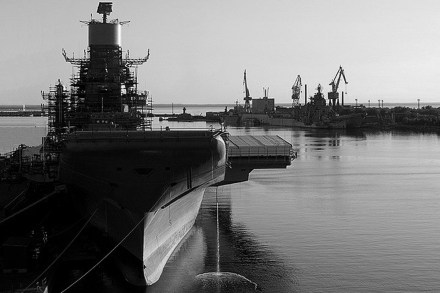
Supplementing this is a methodical and patient naval buildup. In August 2011 Beijing’s naval ambitions were significantly boosted as China’s first aircraft carrier, the Varyag, completed its maiden voyage. This is noteworthy as aircraft carriers denote strategic importance and subsequently improves China’s maritime deterrence and combat capability. This significant moment is a watershed in the process of developing a capable navy, one that will be able of projecting and defending the Middle Kingdom’s interests.

Such advancement has not gone unnoticed by India, as with any augmentation of military strength and presence expansion comes greater suspicion and acts of counter-balancing. Despite official Chinese rhetoric professing that its actions serve only to safeguard its national security, it does little to alleviate New Delhi’s perceived threat. China’s actions are viewed with suspicion and are widely described within Indian military circles as antagonistic and provocative.

However, from the Chinese perspective the advent of the String of Pearls strategy is itself misleading as it attempts to construct a narrative of the China threat to justify retaliatory and often aggressive means. Beijing claims that it is not in search of any permanent presence in the region and that it wants to ensure security of its energy supplies. Nonetheless, China’s geopolitical intentions cannot be naively overlooked. Beijing may be attempting to exercise power through ensuring its presence across the Indian Ocean. Supplementing this is also the desire to curtail the naval reach and capability of India, suggesting that China deems India a long-term adversary. In essence, Beijing may be exercising a policy of ‘nipping India’s navy in the bud’.

India’s manifest destiny

China’s encroaching presence in the Indian Ocean is cause for Indian ire. India’s interests in Asia’s waterways are a manifestation of its geographical reality; it is the central territorial feature of the Indian Ocean. This feeds India’s inherent naval desire to exercise dominance and hegemony over the Ocean. In an attempt to achieve this, India is consistently upgrading its naval fleet, which last month witnessed the advent of its second aircraft carrier INS Vikramaditya and is soon to be followed by the third. This demonstrates how seriously India takes it perceived role by not limiting itself for future options of force.

Furthermore, India’s augmentation of its naval capability is not pursued exclusively unilaterally. Recently, New Delhi has actively participated and hosted naval exercises with Singapore, Australia, Japan and the US, tentatively signaling the formation of a democratic bloc alliance. Not only does this energise India’s aspirations but it is also intended to act as deterrent to the ever-watchful China. Certainly, a substantial part of India’s naval surge is undoubtedly responding to the perceived reality of the China threat. The China threat was first raised in the 2004 The Indian Maritime Doctrine claiming explicably that China poses a maritime challenge to India. It highlighted China’s “determined drive to build a powerful blue water maritime force” and the “imperative for India, therefore, [was] to retain a strong maritime capability in order to maintain a balance of maritime power in the Indian Ocean, as well as the larger Asia-Pacific region”. This indicates that not only has the China question has been an active defence consideration for some time but also effective measures are being taken, and have been taken, to address the concern.

Additionally, India has moved to balance China’s creeping influence with its own strategically targeted maritime presence in the South China Sea. This firmly locks them both into an intense zero-sum relationship, or put rudimentarily, a tit-for-tat encounter. New Delhi’s Look East Policy, a similar strategy to that of Beijing’s, is becoming critical for strategic deterrence against China and sustained presence in the South China Sea is a crucial national security imperative. The establishment of closer ties with Japan, Taiwan and Vietnam ensure that India holds some power of deterrence whilst enabling their military to project its presence into the heavily disputed Sea. Whilst China is frustrated with India’s newfound strategic relationship with all these nations, the most troublesome of late has been Vietnam. This is largely due to the increasing tenacity with which China is pursuing its disputed territorial claims, an issue it vehemently warns New Delhi should steer clear of.

As both nations aim to outmaneuver their rival in order to secure national interests by manipulating Asia’s waterways, it is clear that both are jostling for strategic space across Asia’s littoral. The active-reactive nature of the maritime rivalry between China and India dictates that the emergence of interests in opposing strategic zones increases the likelihood of confrontation; especially considering patrol boats and strategic relationship from both nations expand their Asian footprint. The wider implication of this rivalry is that it severely effects the fragile security situation across the continent, by engendering fractious responses to any future incidents.