Marriage Equality: What’s the Big Deal?

In this article, the author looks at how marriage equality has become one of the most popularized social issues du jour in American national politics. By examining racial attitudes and the Obama administration’s evolving stance on the matter, LGBT activists are brimming with hope that a reelection of Obama could pave the way for a repeal of the Defense of Marriage Act and the legalization of same-sex marriage on a federal level by 2016. 


By Matthias Pauwels, 31st March, 2012

‘They’re losing California. Inch by inch, sit back and watch it go.’ 

If film director Gus Van Sant ever decides to follow up on his critically acclaimed Harvey Milk biopic with a Proposition 8 film adaption, ‘Losing California’ by Canadian rock band Sloan could easily wind up on the film’s soundtrack, voicing the bitter and biggest defeat gay activists in California have faced since Milk’s unabashed activism of the 1970’s.

The United States has always liked to boast its much vaunted liberalism on social issues, but when Californians cast their ballot vote in favor of a state-wide constitutional ban on gay marriage in November 2008, it not only marked the end of same-sex unions in the Golden State, but also of the most expensive social-issue ballot in American national history. A triumph for social conservatism, Proposition 8 had crushed the LGBT community’s hopes that California would become one of the vanguards for the legalization of same-sex marriage across the nation, and turned liberal America into an emotional wasteland. To many, the actual passing of Proposition 8 defied all logic, especially in the context of  California’s rich history as a historical trailblazer in the fight for gay rights. And even though New York  fared a better deal with the passing of the Marriage Equality Act in a tight majority vote in 2011, it was a legislative tour de force fuelled only by a favorable power momentum in the New York Senate amongst Democrats and Republicans.

From a concept cradled by John Locke to the dominant political force in the Western hemisphere today, liberalism has triumphantly survived two world wars and major ideological challenges from fascism and communism. For several centuries now, a strong focus on human rights has been one of the paramount liberal tenets. But for gay men and women everywhere, the harsh reality of liberalism’s shadow side often revealed that human rights did not encompass gay rights, a perception which was publicly invalidated only last December by Secretary of State Hillary Clinton at International Human Rights Day in Geneva. The gay community has come a long way since New York’s Stonewall riots in the late 1960s or Harvey Milk’s assassination in 1978 but  nonetheless the 21st century was ushered in without absolute gender equality.

<

‘Don’t Ask, Don’t Tell’, a controversial military policy barring openly gay, lesbian, and bisexual soldiers from military service was only recently repealed under the Obama administration, setting the official end date of ‘Don’t Ask, Don’t Tell’ for September 20, 2011. Furthermore, the sodomy law in Texas, classifying consensual, adult homosexuality as illegal sodomy, was only struck down in 2003 in the landmark Lawrence vs. Texas Supreme Court case.

For the past five years, the intensifying debate over same-sex marriage has become the new social issue du jour, marking a clear and distinct cleavage between religious traditionalism and progressivism.  Widening the gap between social conservatives and liberals, the issue of marriage equality echoes the growing pains of gender equality in the 21st century. Its global legislative struggle fully testifies to the fact that it is still a deeply divisive and emotional issue on both sides of the fence. From the majestic Golden Gate Bridge to the Big Apple, the United States has been a perpetual arena of conflict and contention on the issue of marriage equality. The religiousness of America’s social conservatives and their moral objections have more than once provided a filibuster on the matter, but what the Rick Santorums or Kirk Camerons of this world fail to see is that gay people’s longings to be wedded is fundamentally conservative, as New York Times columnist Frank Bruni notes. Once denounced as sexual libertines who brazenly flouted society’s norms, the fundamental message of the LGBT community is that marriage is an institution worth aspiring and fighting for. In a time where more than half of births to American women under 30 happen outside marriage and the divorce rate estimate of first marriages flirts with the 50% mark, the LGBT community is surprisingly pleading for a return to conservatism – only to be told by many, including political leaders, that that’s not O.K. either. So is the only possible takeaway for gay couples then to remain outliers forevermore, unworthy of the experiences and affirmations accorded others?

Not recognized on a federal level due to the Defense of Marriage Act (DOMA) [1], same-sex marriages are state-bound with marriage rights granted in Massachussets, Connecticut, New Hampshire, New York, Vermont, Iowa, plus Washington D.C. and Oregon’s Coquille Indian tribe. Earlier this year, Maryland approved a draft bill to legalize same-sex marriage. The Maryland vote came one day after Washington became the seventh state to legalize same-sex marriage, adding to national momentum for gay nuptials across the States.

But why do some states succeed in legalizing gay marriage where others, such as New Jersey, have failed? In the end, does it all depend on a favorable Democrat vs. Republican power momentum in the State Senate? There are two main elements that are instrumental in gaining state-wide support for a gay marriage bill. Firstly, any bill  – especially those which touch upon the social fibres of society – trigger a period of lobbying to build support for the respective piece of legislation, which can be a long and tedious process. On the issue of same-sex marriage, New York saw its judicial system stymied by a political cat-and-mouse game between the Assembly and the Senate that eventually dragged on for seven years. Each time, a draft bill was approved in the Assembly but shot down consecutively in the New York State Senate. As Senators came and went and a long process of shadow diplomacy unfolded, it was eventually the adding of a discrimination clause for religious institutions, allowing them the freedom to refrain from performing same-sex marriages, that provided the much-needed swing vote in favor of the Marriage Equality Act. A similar clause was paramount to the legalization of gay marriage in Maryland and has also been added to a draft marriage bill introduced in the Illinois House of Representatives in February.

Across the pond, the United Kingdom faces the exact same challenge. The UK government has launched a 12-week consultation in support of a process that would legalize same-sex marriage by 2015 for England and Wales. And while Equalities Minister Lynne Featherstone said that the state should rejoice in people’s desire to marry, senior church figures, as well as a number of conservative MP’s, were getting in gear to oppose the measure. Here the inclusion of a discrimination act, regarding protection against discrimination lawsuits for ‘benevolent organisations or religious groups refusing to provide accommodations, advantages, facilities or privileges related to the solemnisation or celebration of marriage’ could appease members of the Church of England, giving the Cameron administration an incentive to unequivocally approve on the measure.

Gay people have a dream too: the racial minority vote on legalizing same-sex marriage

Another interesting factor relating to the perception of gay marriage is how the racial factor will play out. In the aftermath of the narrowly approved Proposition 8 in California and in the search for answers, it did not take long before another well-publicized story made national headlines, pointing the finger at a rather surprising culprit for swinging the ballot in favor of Proposition 8: California’s racial minorities. Exit polling indicated that roughly 70% of blacks had cast their ballots in favor of Proposition 8, together with 53% of Latino Californians, 49% of Asians, and 51% from those of other racial or ethnic identity.  The American media quickly dubbed this the ‘Obama effect’, since the 2008 presidential election happened to coincide with its Californian state counterpart, causing racial minorities to cast their votes in large numbers. These figures quickly sparked the debate that Latino and black Californians had backed the proposed same-sex marriage ban at rates higher than whites, aiding to provide the margin of victory. These results were disappointing to many gay rights activists who had hoped that the election of Barack Obama to the White House would usher in a new era of advances on gay rights, but gave cheer to Proposition 8 proponents who believed that the issue of same-sex marriage had been revealed to be a potent issue dividing liberal Californians on the basis of race and ethnicity. In California, the evangelical community was well aware of the black community’s sensitive stance on gay rights, and chose to target Californian African Americans in a manner they saw fit. Just days before the general election on the 4th November 2008, the ‘ProtectMarriage.com – Yes on 8’ campaign targeted African Americans in Oakland and the San Francisco Bay area with rather misleading mailers featuring Obama and several African American pastors, suggesting that Obama heavily favored a ban on same-sex marriage. Efforts to target the black and Latino community were primarily channeled via a clerical framework, and since both ethnic communities traditionally strongly identify themselves with Christian movements, the stakes were high for Evangelicals in reeling the Latino and black communities in to join their crusade against same-sex marriage.

Religion is a powerful tool that has been shown to structure attitudes across an array of issues, and it is particularly relevant to the discourse-framing dynamic investigated here, given the importance of gay issues to religious communities and churches. While Latino and African American communities tend to embrace traditionalism on matters of morality and are highly religious, they usually affect ballot voting in different ways, with strongly Latino districts traditionally enhancing support for gay issues, and strongly African American districts depressing support for them. However, this theory can easily be undermined. In the case of Proposition 8, registered Latino voters clearly did not support the concept of same-sex marriage as gay activists would have hoped.  Gay marriage has recently become legal in Maryland, but a draft bill on the issue died in the Maryland House of Representatives last year following strong opposition from several African-American lawmakers. In fact, race has proven to be a sharply divisive factor on the issue of same-sex marriage in Maryland. Maryland Democrats, who hold majorities in both chambers of the legislature, are sharply divided by race. A Washington Post poll published in January showed that among whites in Maryland, 71% back same-sex unions, while only 41% of blacks support it. Button, Rienzo, and Wald’s research [2] indicate that while African Americans tend to support the notion of equality opportunities for homosexuals, they tend to be less supportive of civil rights advancements or protections, which in the case of Propostion 8 could explain the alleged high number of African American proponents. Moreover, a recent NBC/Wall Street Journal poll released in March 2012 showed support for marriage equality amongst African Americans at 50% – which may prove that there still is a great deal of division amongst the black community on the issue.

But is the ethnic community really to blame for America’s sluggish and capricious advancements on gay marriage? Not really. A number of important characteristics that shape Americans’ view on many important political issues – including party identification, ideology, and religiosity – have simultaneously played strong and pivotal roles in determining the choices of individual votes. Research has shown that a thorough analysis of the structure of black, Latino and white attitudes on same-sex marriage finds that after accounting for differences among demographics, partisanship, and core values, interracial group differences in opinion on the issue are unsubstantial.

In California, all Latino, black and Asian registered voters were still a minority compared to its Caucasian counterpart. Even if all Latino, black and Asian registered voters had voted against the ballot initiative, Proposition 8 still would have passed due to the high number of Caucasian voters eligible to vote, and their high support for the same-sex marriage ban.

Earlier this week, confidential memos were made public in a courtroom in Maine, revealing the National Organizaton for Marriage’s attempt to drive a wedge between the LGBT and ethnic communities during its winning campaign to ban same-sex marriage in the US state of Maine. The documents detail the anti-gay organization’s active interest in fanning the hostility between the LGBT and the black and Latino communities in an attempt to stymie any advancement of gay civil rights in Maine. For anti-gay lobbying groups, the stakes remain high in targeting ethnic communities to endorse the crusade against same-sex marriage. But with the tides of time turning and support for same-sex marriage reaching an all-time high, how long will a conservative approach on the issue hold out?

The Obama administration and marriage equality

So where is marriage equality to go from here in the United States? As gay activists nationwide count their wins and losses, the only certainty they seem to have is that any advancement on LGBT rights is highly dependent on who is in the White House.

During his 2008 presidential election campaign, Obama took what many on both sides of the gay marriage debate viewed as a straddle. While publicly denouncing the California ballot proposition measure, he also communicated his opposition to same-sex marriage, leaving gay activists puzzled by his unwillingness to endorse gay marriage. And although Obama criticized the divisive and discrimatory nature of Proposition 8, the abstruseness of his argument was reflected in how he squared his position for overall equality with his refusal to embrace actual equality in marriage.

Once elected, Obama has upped the ante in conveying his equality message. Although having never publicly endorsed same-sex marriage, the Obama administration has been adamant towards communicating its progressive stance on equality in a post-Proposition 8 era. By repealing ‘Don’t Ask, Don’t Tell’, endorsing initiatives such as the ‘It Gets Better’ campaign, offering hope and support for LGBT youth who are struggling with being bullied, and hosting a high-profile LGBT event at the White House in 2011, the President of the United States has made no secret of his firm belief in equality for all. And for those willing to read between the lines, Obama’s opposition to a constitutional amendment defining marriage as a union between one man and one woman, indicates that his full endorsement of civil unions with federal benefits for all is similar to his understanding of the institution of marriage, although his Christian beliefs do not allow him to communicate this. Praising New York in 2011 on the legalization of same-sex marriage while tiptoeing around a public endorsement of the issue testifies to the aforementioned.

If anyone has taken the least equivocal stance on gay marriage, it has to be First Lady Michelle Obama. In March, while campaigning for her husband’s second term in the Oval Office, Michelle Obama reminded people twice that it is the president who makes appointments to the US Supreme Court and that those appointments could impact gay marriage.

Asked about the First Lady’s comments, White House Press Secretary Jay Carney later issued the following statement: ‘the president and first lady firmly believe that gay and lesbian Americans and their families deserve legal protections and the ability to thrive just like any family does. The first lady has said she is proud of his accomplishments, including the repeal of ‘Don’t Ask, Don’t Tell,’ ensuring hospital visitation rights and calling for the repeal of the Defense of Marriage Act (DOMA) and obviously our actions attached. Our decision not to defend DOMA is well known.’

Having famously remained neutral on the same-sex marriage issue throughout his first term, Obama has communicated he is ‘evolving’ on the issue. But what does evolving really entail? Is that just a clever word politicans throw around not to take a stance? An unexptected surge in support to place same-sex marriage on the Democratic Party platform at the August 2012 convention has energized LGBT advocates and complicated an already delicate situation facing Obama’s reelection campaign. Gay activists are brimming with hope that any evolvement which will affect their civil rights further on a federal level will happen in his second term in office. Obama has done reasonably well during his first term in office on gay rights, and a reelection could give him the political green card to further push for equality and possible tackle the Defense of Marriage Act.

____________________________________________________________________________

The issue of LGBT rights and marriage equality has already proven to be an important factor in the 2012 Republican presidential primaries, and it will be incredibly interesting to see how this social issue will play out in an Obama vs. Romney showdown.

[1] The Defense of Marriage Act (DOMA), enacted 21st September 1996, is a United States federal law that defines marriage as the legal union between one man and one woman. The law passed both houses of Congress by large majorities and was signed into law by then-President Bill Clinton on 21st September, 1996..

[2] Button, J.; Rienzo, B.; Wald, K., 1997. Sexual Orientation and Education Politics. Gay and Lesbian Representation in American Schools. In: APSA (American Political Science Association), 1999 Annual Meeting.

Deck the Halls with Boughs of Homophobia: the 2012 Republican Presidential Primaries and the Evangelical Connection


GOP Candidates

In this article, the author looks at the evangelical presence in the 2012 Republican presidential primaries and how the issue of gender equality has resurfaced in the civil rights debate.

_____________________________________________________________________________

By Matthias Pauwels, 9 Jan, 2012

With the United States Republican Party presidential primaries in full swing, the issue of marriage equality has regained considerable momentum over the past weeks in American national politics. In early December, it was beginning to look a lot like Christmas – until Rick Perry decided to deck the halls with rabid homophobia rather than holly. In a bizarre ad, Perry equated the repeal of “Don’t Ask, Don’t Tell[1]” to a blatant attack on people of faith. Michele Bachman, perhaps one of the most extreme and contested anti-gay candidates in the GOP presidential contest, has an impressive anti-gay track record, including likening being gay to being a “part of Satan”.  However, Bachman has suspended her campaign following a poor result in the Iowa caucus of January 3rd, 2012.

When the Iowa votes were in on that first Tuesday of 2012, Mitt Romney won the caucuses after publicly promising to support an amendment to the United States constitution barring same-sex couples from marriage. But perhaps the one to watch on the marriage equality front is Rick Santorum, who came in a close second to Romney and continues to court the support of extremist organizations and has strong ties to many anti-gay groups. Santorum has a long track record of trying to score political points by bashing the LGBT community. In Iowa, his anti-gay stance almost led him to victory. In New Hampshire however, Santorum’s anti-gay rhetoric got an icy reception as he got booed off stage after comparing marriage equality to polygamy.

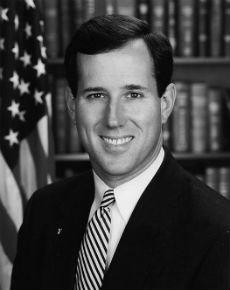
Rick Santorum

Rick Santorum

Santorum and the Anti-Gay Lobbyist Force

Religious Right activists are positively giddy over the new momentum behind Rick Santorum’s candidacy for presidency, praising his appeal to women and evangelical centers on a desire for authenticity. In many ways, the conflict over marriage equality and gay rights represents what is arguably one of the dominant cultural cleavages of the post-material era in the United States. The specific battle over gay marriage represents a cultural cleavage between religious traditionalism on the one hand and progressivism on the other. In a similar fashion to the highly contested Proposition 8[2] vote in California and the legislative battle of the Marriage Equality Act[3] in New York, the evangelical movement was quick to jump on the anti-gay bandwagon in the presidential primaries. But Rick Santorum isn’t just close to traditional Religious Right organizations and activists: the former Pennsylvania senator even has ties to the most fringe parts of the movement. Santorum, for example, is a heavy supporter of Ron Luce’s cult-like group “Teen Mania”, which focuses on challenging a youth-culture that, in Luce’s words, promotes homosexuality. Luce’s organization Teen Mania, which hosts teen-oriented prayer rallies, was recently featured in the MSNBC documentary Mind Over Mania, where former interns described Teen Mania’s cult-like practices, such as faith healings and enduring verbal abuse and extreme sleep deprivation.

Last month Santorum attended the Presidential Pro-Life Forum hosted by Personhood USA, accompanied by fellow Republican presidential candidates Michelle Bachman and Newt Gingrich. As a radical anti-choice activist group, Personhood USA’s ultimate goal is to ban abortion and even common forms of birth control without exception. Earlier the group launched unsuccessful referenda in Colorado and Mississippi on the matter, characterizing President Obama as “the Angel of Death” and likening opponents of the proposed abortion ban to Nazis.

But perhaps there are three other organizations whose connection to Santorum is more worrisome, especially on the LGBT-front. For the Presidential Pro-Life Forum, Santorum was in close contact with Lou Engle’s The Call, also a host of the forum. In 2009, Engle used his The Call prayer rally to bolster Ugandan legislation that would criminalize and in some cases give the death penalty for homosexuals. The other organization is the highly evangelical Oak Initiative, a project of South Carolina pastor Rick Joyner. Joyner has previously argued that hurricane Katrina was God’s punishment for the advancement of gay rights. And last but certainly not least, there is Focus on the Family, a non-profit group that, despite its warm and fuzzy name, is in tenor and in practice an anti-gay hate group. Focus on the Family is a recurrent factor in the evangelical ability to create powerful networks and was instrumental in gearing up to endorse Proposition 8 in California. Santorum has been a regular guest on Focus on the Family radio broadcasts, engaging in topics such as gay marriage and the repeal of “Don’t Ask, Don’t Tell”, stating that injecting social policies into the military weakens its morale and that there is no place for “any type of sexual activity in the military”. Additionally, Santorum has found support in the Family Research Council, Focus on the Family’s political lobbying arm.

Santorum’s sentiments on homosexuality have often contradicted his own statements. He has spoken ardently in favor of personal freedoms, opposing the McCain-Feingold campaign finance bill[4] in 2002 on the grounds that it was an “affront to personal freedom and liberty.” But at the same time, Santorum argues that states do have a right to “limit individuals’ wants and passions” – striking an eerie resemblance to his comparison of marriage equality to polygamy and the need to curtail “any type of sexual activity” in the military and reinstate “Don’t Ask, Don’t Tell.”

Evangelicals and Politics: Hit or Miss?

Santorum’s views didn’t affect him negatively in Iowa, where evangelical Christians make up a large part of the Republican electorate. The religious groups voted heavily in his favor and helped propel him to top status just days before the Iowa caucus. But the story is different in New Hampshire, a state where gay marriage is legal and which boasts a much more moderate set of Republicans. So while Santorum’s views on traditional marriage and the sanctity of life might serve him well with certain constituencies, he is also alienating and bashing an entire community of his fellow Americans. Santorum’s views could be problematic for him in less conservative states – hence the icy reception he got in New Hampshire, which is next on the list in the 2012 Republican Party presidential primaries.

Santorum is likely to receive a more friendly welcome in South Carolina, but nationally, his views could come back to haunt him. But Santorum is no fool – enter the PR machine. One of his former aides who is openly gay recently jumped to Santorum’s defense, saying the former senator is not homophobic but simply opposes gay marriage.

It remains to be seen, however, whether or not an intricate set of evangelical lobbying networks can create a favorable power momentum for either Rick Santorum or Mitt Romney when focusing on social issues such as marriage equality. In Lobbying Against Progressivism: The Evangelical Power of Mobilization Against LBGT Rights in the United States I have previously argued that it is highly debatable whether the approval of Proposition 8 in California was exclusively enmeshed in evangelical lobbyist efforts. The legislative struggle for gender-neutral marriage in both California and New York testifies to the fact that it is still a deeply divisive and emotional issue on both sides of the fence. California’s highly contested approval of a ban on gender-neutral marriage and New York’s legislation of marriage equality – taken into account its long legislative struggle – still echo the growing pains of equality. For many Christian Right groups, opposition to gay rights has been a major agenda item for the past 30 years and in many ways, it has been their rallying cry.

But does having the support of American Evangelicals as a grassroots movement create any real political power, or is any outspoken religious affiliation more of an obstacle rather than an asset in the Republican presidential primaries? Many political observers in the Republican camp have been adamant on de-emphasizing Mitt Romney’s Mormon conviction as a member of the Church of Jesus Christ of Latter-Day Saints. For many Republicans, Romney is an appealing candidate with compassionate conservative allure. Moreover, we would all like to believe that a politician’s religious affiliation is not an obstacle to higher office. Americans have indeed become more religiously tolerant, but Romney – as the first Mormon to run for President – will clearly have to change some minds. In the late 1960s, the percentage of Americans who said they would not vote for a Jewish or Catholic presidential candidate was in the double digits; by 1999, those numbers had fallen to 6 and 4 percent, respectively. Compare that to the 17 percent of Americans who currently say they would have qualms electing a Mormon to the White House. That number has not changed one bit since 1967, the year that Romney’s father considered a presidential run.

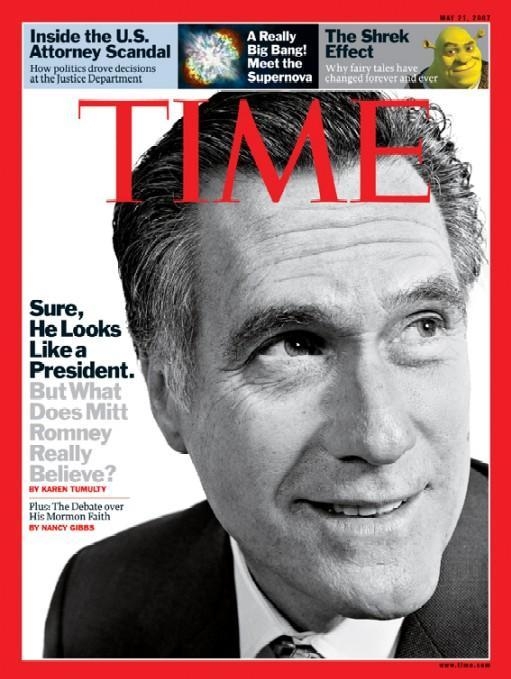
Mitt Romney

Mitt Romney

In the end, it remains to be seen how both Romney and Santorum will wield their newly gained status as the Republican answer to Obama, and whether or not Santorum is looking to further intensify his relationship with evangelical movements.


[1] “Don’t Ask, Don’t Tell” was a controversial military policy barring openly gay, lesbian, and bisexual soldiers from military service. It was only recently, under the Obama administration, that a congressional bill to repeal the aformentioned military policy was enacted, setting the official end date of “Don’t Ask, Don’t Tell” for September 20, 2011.

[2] Proposition 8, also known under its ballot title “Eliminates Rights of Same Sex Couples to Marry: Initiative Constitutional Amendment” was a 2008 ballot proposition and constitutional amendment which added a new provision to the California Constitution. This initiative measure, additionally cited as the California Marriage Protection Act, aimed to add section 7.5 to the California Constitution, stating that “only marriage between a man and women is valid or recognized in California.” The ballot proposition passed in the California state elections on November 4, 2008 but was later overturned by a federal judge on grounds of unconstitutionality.

[3] The Marriage Equality Act was a senatorial bill in the state of New York legalizing same-sex marriage. The law took effect on July 24, 2011.

[4] The McCain-Feingold Bill was a bill which was introduced to the United States Senate in 2002 in an attempt to reform campaign financing in the United States.

Does It Get Better?


By Matthias Pauwels, 18 Oct, 2011

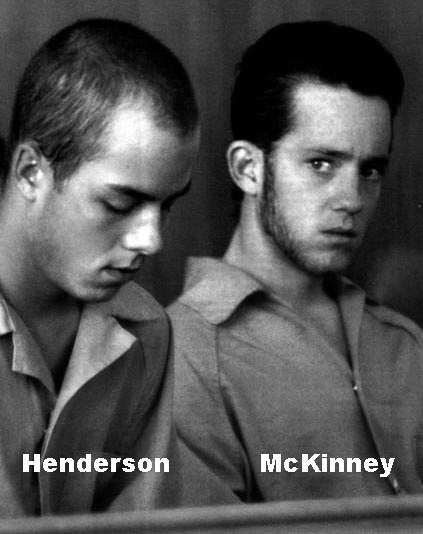
The year 1998 was not only dominated by the saga of Bill Clinton and Monica Lewinsky, but also saw the horrific hate crime murder of University of Wyoming student Matthew Shephard on grounds of his sexual orientation. On the night of October 6-7, Shephard got offered a ride home by Aaron McKinney and Russell Henderson. In sharp contrast to their good Samaritan offer, McKinney and Henderson subsequently drove the car to a remote, rural area in Laramie, Wyoming. Shephard was allegedly tortured for several hours and was finally tied to a fence, leaving him to die. Still alive but in a coma, Matthew Shephard was discovered 18 hours later by a cyclist. Having experienced severe brain-stem damage, Shephard never regained consciousness and passed away on October 12, 1998.

At trail, McKinney offered various rationales to justify his actions, ranging from the gay panic defense embedded in alleged sexual advances made by Shephard to involuntary manslaughter. The prosecution alleged that both men had pretended to be gay to gain Shephard’s trust. The testimony of Chastity Pasley and Kristen Price, girlfriends of McKinney and Henderson, came as a judicial drive-by-shooting for the two, claiming that both perpetrators had plotted beforehand to rob a gay man. In 1999 McKinney and Henderson received two consecutive life terms without the possibility of parole.

The Legislative Struggle of the Hate Crimes Protection Act

The United States 1969 federal hate-crime law encompassed crimes motivated by actual or perceived race, color, religion, or national origin, and only applicable when the victim is engaging in a federally-protected activity. In 1990, United States Congress passed the Hate Crimes Statistics Act, allowing the government to count the incidence of hate crimes based on religion, race, national origin, and sexual orientation. However, a clause was added to the end of the bill stating that federal funds should not be used to “promote or encourage homosexuality”.

However, the murders of Matthew Shephard and 15-year-old Lawrence King – who was shot and killed in February 2008 by 14-year-old Brandon McInerney who he’d asked to be his Valentine – , and the endless string of gay teenagers committing suicide was living proof that gay and lesbian youth are particularly prone to physical and mental victimization. There was a dire need of expanding the 1969 federal hate-crime law to include crimes motivated by a victim’s actual or perceived gender, sexual orientation, gender identity, or disability.

The passing of the Matthew Shephard and James Byrd, Jr. Hate Crimes Prevention Act proved to be an epic legislative battle in the American Congress. The bill, first introduced in the 107 Congress’s House of Representatives in 2001, drew specific criticism from American Evangelicals, with the evangelical off-shoot lobbying group Focus on the Family as a prominent force against strengthening federal hate-crimes legislation, stating that “it would muzzle people of faith who dared to express their moral and biblical concerns about homosexuality”.

After having died in Congress three consecutive times, the bill was reintroduced in 2007, this time with a clause adding gender identity to the list of suspect classes for prosecution of hate crimes. When the bill finally passed in Congress and proceeded to the United States Senate, many Republicans got in gear to make sure the Matthew Shephard Act never saw the legislative light of day. After having met its match a first time in the Senate, the bill was reintroduced as an amendment to the Senate Defense Reauthorization Bill (H.R.1585). Although the vote had been put briefly on hold after Republicans staged a filibuster on a possible troop-withdrawal amendment to the Defense Bill, the Matthew Shephard Act did finally pass in the Senate in September 2007 after a six-year-long legislative tour de force. However, as a dispiriting deus ex machina President Bush indicated that he would veto the Defense Bill if it reached the Oval Office with the hate-crimes legislation attached. Ultimately the amendment was dropped, nullifying six years of legislative struggle to expand the federal hate-crimes law incorporating gender identity and sexual orientation.

The Obama administration brought new hopes to those on the barricades for expanding the existing federal hate-crimes law. In a post-Bush era, President Obama communicated that one of the goals of his new administration was to see the Matthew Shephard Act pass. After it was reintroduced in Congress in April 2009, it sparked a feisty debate amongst Representatives, with Rep. Virginia Foxx stating that Matthew Shephard’s death was merely a hoax to further the gay agenda. Despite Republican claims that federal law was already sufficient to prevent hate crimes, the bill reached the Senate in the same month. The Matthew Shephard Act was adopted as an amendment to the National Defense Authorization Act and passed in the Senate in July 2009. Eleven years after the brutal murder of Matthew Shephard, the bill was signed into law on October 28, 2009 by President Obama.

Efficacy of the Matthew Shephard Act

In May 2011, a man in Arkansas pled guilty under the Act for running a car containing five Hispanic men off the road. As a result, he became the first person ever convicted under the new Act. In August 2011, one man pled guilty to branding a swastika into the arm of a developmentally disabled man of Navajo descent. The aforementioned crimes were framed under the Matthew Shephard Act on grounds of hate crimes based on race.

The expansion of the 1969 United States federal hate-crimes law was framed under the empirical observation that hate crimes are worse than regular crimes without a prejudiced motivation from a psychological perspective. The time it takes to mentally recover from a hate crime is almost twice as long than it is for a regular crime. Especially gay and lesbian people often feel as if they are being punished for their sexuality, which leads to higher incidence of depression, anxiety, and Post Traumatic Stress Disorder. In the aftermath of the Matthew Shephard murder, many gay youth reported going “back into the closet”, fearing for their safety and experiencing a strong sense of self-loathing embedded in their sexual orientation. 

Earlier aformentioned examples of the Act’s implementation refer to hate crimes based on race. The legislation’s efficacy regarding hate crimes based on sexual orientation has a much lower public exposure rate, and this is exactly where part of the problem still lies. For many gay youth, there is still is huge threshold in reporting victimization based on sexual orientation, embedded in fear of being labeled with a social stigma. Secondly, mental victimization is often suffered alone in silence, and its lack of visibility or understanding can be attributed to the recent suicide death of Buffalo, N.Y., 14-year-old Jamey Rodemeyer, who was bullied online with gay slurs for over a year. Marking a somber beginning to LGBT History Month this October, Rodemeyer’s death is a tragic reminder of the existing vulnerability and marginalization of gay teens. And while a legislative framework such as the Matthew Shephard Act incorporates the corporality of hate crimes, the mental aspect of these crimes based on ethnicity, gender identity, or sexual orientation have proven to be a silent killer which no piece of legislation can easily remedy. The ultimate responsibility here lies with educational systems by installing a protective framework for bullied LGBT students to prevent ostracization.

When the message that is out there claims that being gay equals being a second-class citizen, that message needs to be changed. Matthew Shephard was not a second-class citizen. Lawrence King and Jamey Rodemeyer were not second-class citizens. The Matthew Shephard Act may have given a new dimension to federal hate-crimes law, but doing the same to a social message stating that being gay is threatening, is not something that is easily remedied by any senatorial bill.

In May 2011, after coming out to friends, Jamey Rodemeyer posted a YouTube video on the new online site, It Gets Better Project, which provides testimony from adults and celebrities to reassure victimized and potentially suicidal LGBT youth that life improves as they get older. Jamey wrote: “Love yourself and you’re set… I promise you, it will get better.”