Deja vu: The French Intervention in Mali

On January 11, 2013, French President François Hollande sent a military expedition to rescue Dioncounda Traoré’s government from the “imminent terrorist threat”. Camille Maubert, a security analyst, explores this turn of events. 


By Camille Maubert, 16th January, 2013

Five days after the French “surprise” intervention in Mali, it is – to say the least – not clear what operation Serval is all about. Brandishing UN Article 51 (which proclaims the individual and collective right to protect a member subjected to armed aggression), French President François Hollande sent a military expedition to rescue Dioncounda Traoré’s government from the “imminent terrorist threat”.  750 ground troops, 30 tanks and several Rafale combat planes have thus been mobilised to strike Islamist strongholds in the North and West of Malian territory, making, according to “security sources”, important damage to the groups’ bases and leadership.

However, doubts are rising as to what the ins and outs of the intervention are in a context where reliable information is scarce. Indeed, most of the information publically available relies on two sources. On the one hand there are the official communiqués published by the various actors’ communication outlets which are often politically biased, and which are therefore unreliable and/or contradictory. For instance, while French defence spokesperson announces 60 terrorist casualties, the Malian army increases their number to “hundreds” and Islamic groups refuse to make any statements. On the other hand, the local press predominantly relies on witness accounts from the population and “local officials”. The weakness of such sources is patent, as they are based on what people saw, or think they saw, and therefore produces subjective and incomplete interpretations.

Continue reading

Addressing the Asymmetry in Negotiations between Iran and P5+1: a critical review of Oxford Research Group’s briefing

In this article, the author presents a critical review of the briefing, “Iran´s Nuclear Impasse: Breaking the Deadlock”, published by the Oxford Research Group on 1 May 2012. As negotiations over Iran´s nuclear programme stall, the author criticises the lack of neutrality of the briefing by the Oxford-based think tank, and calls for a review of the same in order to avoid some of the mistakes of the past, when pro-war think tanks played a key role in manufacturing consent for the 2003 invasion of Iraq.


By Mehrnaz Shahabi, 10 July 2012

The Oxford Research Group’s briefing, Iran’s Nuclear Impasse: Breaking the Deadlock (1 May 2012) [1], published before the second round of negotiations between Iran and P5+1 (permanent Security Council and Germany) in Baghdad on 23 May, whilst proposing some positive principles for a successful outcome of the negotiations – such as Iran’s right to enrichment, “reciprocity”, “defining endgame”, and “taking regime change off the table” – suffers serious drawbacks, which have become even more glaringly clear with the result of the recent Moscow negotiations.

Continue reading

The State of Terrorism in Nigeria: The Rising Threat of Boko Haram

In this article the author assesses the rising threat of the Nigerian terrorist organisation, Boko Haram.  The most recent spate of bombings and executions has raised questions over the unity of the Nigerian state and the future of security on the continent.  It is therefore necessary to understand why Boko Haram is increasing in popularity as their attacks become increasingly barbaric.


By Jack Hamilton, 14 Nov, 2011

Unchecked Massacre

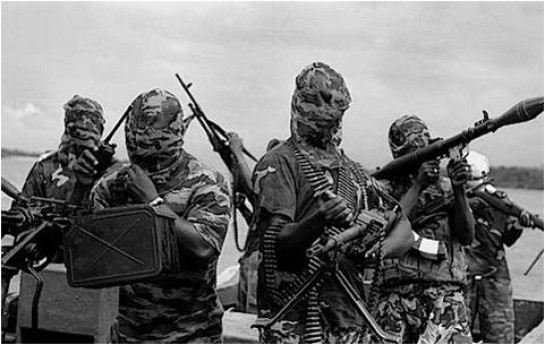
Brutal attacks in Nigeria over the past week have left over 100 people dead.  A single small religious group has transmogrified into a dynamic terrorist organisation capable of rapidly changing tactics and targets in a pattern of violence responsible for over 1000 deaths in northern Nigeria since 2009.

Last week the gunmen wandered around the northern town of Damaturu killing any Christian who could not recite the Islamic creed on the spot.  Nigeria’s Defence Minister Bello Halliru Mohammed has stated that the security forces once again have control and that there is nothing to fear but his words have assured few.

The fact remains that there is still no coherent strategy to combat Boko Haram.

Rising Intensity

The nature of recent events has shocked many, even in regions where Boko Haram attacks are frequent.  Residents expressed rage at the ease with which gunmen were able to take over the city and leave bodies littering the streets.  Police stations, mosques and churches were reduced to rubble before the security forces mobilised a response.  At that point members of the group engaged in gun battles across the city that lasted for hours.

The situation in northern Nigeria is degenerating rapidly.  International observers fear that Boko Haram may already have links to al-Qaeda and al-Shabab and that the campaign of terror shows no signs of abating.

In order to understand Boko Haram it is first necessary to look at who they are, what they want and how they believe they can achieve it.

Who

Boko Haram colloquially translates as “Western education is forbidden”.  It is a claim to reject all things Western from the theory of evolution to Western-style banking.  This has manifested itself in different tactics since the emergence of the group in 2002.  Before 2009 there were no signs that the group desired the overthrow of the state and rather preached to withdraw from the institutions of the non-Sharia Nigerian nation.  It was a law banning the riding of motorbikes without helmets that would prove to be the catalyst for violence.

In July 2009 the central government sought to enforce the law on helmets.  Boko Haram flouted the legislation and was subjected to police brutality which in turn set off an armed uprising in Bauchi, later spreading to Kano, Borno and Yobe.  By the time the army had suppressed the situation over 800 people were dead across the north of the country.

Since 2009 the group has spread rapidly.  The majority of the attacks have taken place in Borno state but Boko Haram have also expanded to the northern states of Adamawa, Bauchi, Gombe, Kaduna, Katsina and Sokoto as well as the attacks on Abuja and threats against Lagos.  In addition to the geographical spread there has been a change in tactics from the localised skirmishes to strategic suicide bombing campaigns and massacres directed not only at Nigerian security forces but also international targets such as the UN.

Tactics

Boko Haram have changed their tactics over the years.  Under their previous leader, Mohammed Yusuf, the group staged mass uprisings against the police and suffered hundreds of casualties.  After Yusuf’s death at the hands of security forces in 2009 they began using tactics more in line with jihadist terrorism including the first suicide bombings in Nigeria’s history.

The attack on the UN may have been an attempt to pressure the international community or perhaps it was simply to embarrass the Nigerian state but it succeeded in drawing global attention to a burgeoning problem.  Boko Haram may be diffuse but it is expanding geographically with increasing tactical sophistication.

Composition

As Boko Haram expands the questions over their composition complicate.  According to Paul Lubeck, an expert on northern Nigeria, Boko Haram is not a single group but a collection of splinters banded under one name by the Federal Government.  One section appears willing to negotiate while others remain determined to intensify the bombing campaign.

Some statements reflect a strict adherence to Islamic law while others cite a determination for a smaller Nigerian state as their raison d’être.  If the group is as amorphous as Lubeck claims it will make it very difficult to negotiate with let alone combat.

Grievances

Economic

The structural issues of northern Nigeria have allowed Boko Haram to thrive in recent years.  In addition to acute poverty the region has a high birth rate and 50% of the population are below the age of 30.

Inequality, unemployment and industrial stagnation have exacerbated the perception that the north has been marginalised by the liberalisation of the Nigerian economy.  The question of who owns the land has not been answered since independence and the Federal State seems too far away and blighted by corruption to deal with such issues.

Political

Grievances in the north were compounded by the election of a southerner, Goodluck Jonathan, as President earlier this year.  Jonathan assumed the office following the death of the northern Muslim President Umaru Yar’Adua and many northerners believe Jonathan should have stepped aside to allow another northerner to take Yar’Adua’s place.  This would have been in line with the ‘gentleman’s agreement’ that the Presidency should rotate between the north, the south-west and the south-east every two terms.

Security

The administration is treating Boko Haram as a security issue rather than tackling the divisive subject of poverty in the north.  Abuja’s response has been to flood the north with heavy-handed military and police forces that now stand accused of human rights violations against civilians.

Politicians in the north have begged for the numbers of security forces to be reduced as police corruption has become rife.  For many in the north the police are the face of the central government.  The people feel alienated from a force they perceive to be corrupt.

Responding to Boko Haram

For many the heavy military presence in the north is the single most important hindrance in securing any negotiated peace.  The failed attempt to destroy the group in 2009 was the greatest recruitment drive Boko Haram could have hoped for, especially the controversial extra-judicial killing of the leader Mohammed Yusuf.

The current strength of Boko Haram is largely a result of such poor foresight by the Nigerian state.  As a result there is now a security vacuum in the most heavily militarised region of the country.

Flagrant myopia has created martyrs and swelled the ranks of the guerrillas.  The legal response to the killing of Yusuf is a good first step but it does little to combat the issues of poverty and corruption that are integral to Boko Haram’s recruitment.

Opposition leaders in the north claim that the government has failed to understand the amount of support Boko Haram has amongst the population.  By stating their opposition to central government and corruption the group has grown far beyond their initial religious doctrine and the government will need to find a response to the structural inequalities in Nigeria if the terrorists are to lose their supporters.  It does not appear as if this is going to happen any time soon.  It is possible that Boko Haram may actually be growing beyond the borders of Nigeria.

The Anti-Social Network?

Many experts have questioned whether the increased tactical sophistication of Boko Haram is evidence of the group branching out to international terrorist organisations, especially al-Qaeda in the Islamic Maghreb (AQIM).  A change in tack to target international organisations with large high-tech bombs has caused concern.  General Ham, head of US Africa Command, believes that the worst case scenario already exists and that Boko Haram are working in tandem with AQIM and al-Shabab in a “loose” partnership.

Hard evidence for any such link is still to be produced.  The geographical distance between AQIM, Boko Haram and al-Shabab make such a partnership unlikely and the possibility remains that the increased military technology may have come from within Nigeria itself.  Alex Thurston, an expert on terrorism in the region, has posited that it is more likely the sophistication came from disaffected Nigerian soldiers than any international training.

The Future State of Nigeria

The failure of the government reactions have meant that Boko Haram has been successful in achieving one of their primary goals: the weakening of the legitimacy of the state.  Attacks on international organisations have created increased pressure on Jonathan to find a solution to the problem.  The short-term solution of heavy military deployment may eventually yield similar successes to those against the militant groups in the Niger Delta but it would also undermine the cohesion of Nigeria.  This would also act to provide momentum for Boko Haram.

The failure to develop a clear strategy to combat the small Islamic group in 2009 has forced the Nigerian state to face up to the larger structural issues concerning the north.  A solely military solution is no longer feasible.

The Revolution is Being Televised

In this article, the author explores the role of the media in reporting the protests seen around the world in the past few months.


By Mikael Santelli-Bensouda, 31 Oct, 2011

We live in exceptional times. The seemingly endless reach of the media brings popular movements and struggles of all persuasions into the public domain. From protests against educations cuts and austerity measures to pro-democracy revolutions, in one way or another, they are all accessible. But in what capacity are they being presented to us? There are huge inconsistencies in the manner in which societies’ information distribution mechanisms reflect upon the mobilisation of the masses.

As Derrida sensibly wrote, “nothing exits outside a context”. As such, any specific event is ascribed meaning through its contextualisation. Much like blinkers, context frames a given reality within a discourse that permits understanding. These blinkers are (consciously or not) constructed through an amalgamation of cultural norms and values, national history and worldviews. It is thus pertinent to understand that, from sender to receiver, information will have been contextualised in accordance to the sender’s worldview that is formulated by the media. In essence, the exchange of information between official outlets – whether the media, police or politicians – and the general public is pre-framed to influence the receiver.

The Fires of London

The disturbances that took place in August in London seemed to appear out of nowhere and spiraled out of control to a level on par with the social unrest in the 1980’s. Those events were widely condemned by the national media, political leadership and the majority of the British public alike. Whilst not wishing to dispute the validity of specific incidents, the virtually unanimous description of the incidents as riots and looting established a deep seeded negative connotation. In fact, the lexicon used to report the events seemed to oscillate around terms including thugs, opportunism and youth culture. The consequence of this is the establishment of a generalised and disconnected group, in this instance young people of a certain political class and ethnicity, and their separation from the main public body. By doing so, there emerges the establishment of a them, the maladapted and disruptive elements of the society, which, by extension reinforces an us. It is through this process that we can explain why blame derived from almost every angle (unruly attitudes, the decadence of education, computer games, rap music and even according to one (un)credible commentator, Patois) except the very societal factors that may have contributed to such disconnectedness.

The overwhelming drive to establish this group as a deviant societal sub-category suffocates deeper analysis especially one that attempts to understand their rationale, even if it is found that, by and large, there was none. Such condemnation transcended all levels of society, from the Prime Minister to the local cabby, and was especially prevalent within the media. The latter subtly reinforced the dividing lines between the deviant hooligans and the bastions of authority the police, who were interestingly described as the force in a bid to restore their legitimacy in the epically over-hyped battle to reclaim the streets. So, we ignored what may have been a nation-wide cry of dissatisfaction with society, swept it under the rug, and occupied our time by demanding a return to social order and punishment for troublemakers. Perhaps most worryingly is the unintended consequence of this affair. Whilst creating an other may foster a sense of unity amongst us, it risks sewing the seeds of a self-fulfilling prophecy wherein this disconnected group begins to believe what society thinks of them by accepting its deviant status and even embraces it.

Qualms with Capitalism

The recent protests aimed at the corrupt and immoral financial system that has severely affected virtually ninety nine per cent of us. It is epitomised by the ‘Occupy campaigns’ that have sprouted across the west from its original formation in New York to sympathetic permutations in London, the Republic of Korea and Jamaica to name but a few. These parallel movements showcase their frustration against the corrupt and unjust banking and financial systems that have been able to get away with the biggest economic injustice since colonialism. It is not a sentiment that is held by a mere minority. Anger and disbelief are global phenomena.

Intriguingly, a substantial amount of the reporting on these protests empathise little with the causes. There is little or no media support for the protests whatsoever; little or no glorification, no accounts of brave people who dare to speak on behalf of a disgruntled society. Instead, they are confronted with headlines like The Siege of St Paul’s, and their cause is belittled by generalization and the callous infusion of negatively connoted terminology including: anarchists, anti-capitalism, communism, disgruntled students and even Marxist revolutionaries.

The information that is espoused intends to devalue the efforts that are being showcased as they are portrayed as disturbing the order. By doing so, there emerges the establishment of a socially constructed and generalised group that is detached from society through a process of association and differentiation. Once a group has been identified as deviant it generally perturbs the general public and deters affiliation. Much like the consequences of the London riots, rather than engaging in debate about the true nature of discontentedness; which in this instance is the demand for greater accountability, transparency and judicial equality (after all these ideals are the foundation of our society), there is a manipulation of the movement to reduce its impact. Its very essence is intentionally distorted to evoke a separation between those who want to overthrow the capitalist system and every one else; who will remain pacified.

Another Day, Another Struggle

Moving beyond manipulation of social unrest within the west, we are confronted with seemingly endless stories of struggles in distant lands. It seems that there is an increasing sense of inevitability of events that originate in the global south and its redistribution. Education protests in Chile, religious solidarity in Nepal and democratic revolutions in Syria are, more often than one would like to think, contextualised through a veil of western superiority. As those people strive to attain a societal standard on par with what we have in the west, we hold the power to confer legitimacy upon such incidents (or not). Yet, needless to say, unless action in a foreign place threatens our interests, it remains out of our sphere of interest.

It is interesting to note that different geographical examples of social mobilisation, despite similar intentional goals, often receive a distinctly varied reception dependent on its location and its relation to the reporting press. For example; education protests in the UK were troublesome but in Chile they are conceived as a sign of progress in society. Similarly, protests against oppressive rule in Palestine are constructed within a negative frame and often ignored while those occurring in Iran are encouraged. Although it may be unfashionable to refer to orientalism in this day and age, it is hard to overlook the fact that the western media conveys a post-colonial hierarchy among states by granting selective support to its government’s clients.

Double Standards

The Arab Spring exemplified a media and political phenomenon across the world. Looking back to the initial outbreak of mass popular protest across North Africa it is interesting to notice that the media and politicians seemed to adopt no real stance. Perhaps for the first time in modern Arab history (excluding events in Palestine) the west abstained from publicly passing judgment, if only temporarily. A waiting game ensued.

In fact, a delicate balancing of interests was underway. Whilst initially not wishing to alienate authoritarian allies, whom for so long they had propped up and abused as geopolitical tools, the West could not jump on its archetypal bandwagon of backing democratic demands. However, it could not condemn such popular power in the event that the movement was successful. It is for that reason that, only once the dice of history had been firmly cast on the side of the people, did the west find its position. The discourse machine then went into overdrive; pro-democracy revolutionaries, heroes of the Arab world and lovers of freedom invaded the headlines and framed perceptions.

What was occurring was an attempt to overcome distance and difference by removing the sense of otherness by creating unity; people who share the values of democracy. So, unlike the discourse constructed on protests within the West, the context of the Arab Spring was intended to unify groups and extend legitimacy upon the events. Surely then it is no surprise to see how the events unfolded in Libya. Images of distress and asymmetric warfare resonated deep across peoples, as we had grown attached to these like-minded freedom lovers and, consequently, military intervention to assist the march of democracy against tyranny received widespread and unquestioning acceptance.

As history has proven, the West only conducts military operations when there is just cause, usually established through the construction of a narrative and on the odd occasion has been a matter of ‘self-interest’. The narrative constructed prior to the Libyan intervention emphasised shared values. It surely had nothing to do with oil, not this time. The connection of values/interests established through cross-societal bonding via image bombardment and discourse assimilation ultimately produced general acceptance for the ‘need to act’. Yet what about the uprisings in Syria?  A similar process to create empathy occurred but commitments were only made to economic sanctions. Perhaps, it was assumed that they are capable of fighting for themselves against a regime far more oppressive and evidently trigger happy than Ghaddafi’s. What about the protests in Bahrain? That is a story that should only be whispered. Limited reporting on attempts to overturn the constitutional monarchy stems directly from the fact that it threatens the Saudi Royal Family’s monopoly on authority and has taken painful steps to crush what is framed as a Shia rebellion. Due to the world’s insatiable appetite for oil, the Saudi’s prerogative ensures that the events either follow their own narrative construction or are lost in an informational void. Blinding self-interest is the driving force behind the way the West has viewed, acted upon and has constructed the narrative for the Arab Spring.

Revolutionary Inflections

These differing examples highlight how discourses surrounding certain events emerge from its initial contextualisation prior to dissemination. It helps to explain why certain acts are perceived in differing ways, even if they share the same principles. Such contextualisation derives from the desire to understand the reason for certain events by viewing it through a familiar lens (i.e., a British worldview). Through this process it reinforces cultural norms by creating dividing lines between what is acceptable in society and what is perceived as deviant even if there remains huge inconsistencies in its implementation. Essentially, if a certain movement challenges or questions the societal structure, and the position of a privileged elite, they are likely to be perceived negatively regardless of whether the country observes the universal values of democracy.

Revolutions all over the world are being televised. Over the past few months there have been constant updates on the progress being made by NATO and the NTC in Libya, how Basher Al-Asad continues to brutalise the people of Syria and the spread of the Occupy campaigns throughout the world like wildfire. However, their intended messages are often distorted or manipulated to serve a greater purpose, one that continues to sustain the hierarchical cross-societal structure that has dominated the world for centuries. The revolution is being televised with the intention of preserving the class structure within the UK, the West or the world.

Life After Gaddafi – The Future of Foreign Intervention

In this article, the author assesses the precedent of Libya in foreign intervention after the death of Muammar Gaddafi. In a world in which there are now increased calls for intervention and isolationism the case of Libya is being presented as both an example of a successful intrusion and a reason to reform the UN Security Council. Military capabilities and the tensions within NATO may act as a check to the boisterous rhetoric in the wake of Gaddafi’s death but the key lesson may be the message it has sent to those who are still clinging to power.


By Jack Hamilton, 23 Oct, 2011

Today the Libyan transnational government has declared national liberation before a triumphant crowd in Benghazi, the city where the fight against Gaddafi began.

There are scenes of jubilation in Libya and NATO offices around the world.  Muammar Gaddafi is dead and attentions are now turning to the future of the Maghreb state and the implications of NATO’s intervention in the broader Arab Spring.  In such a celebratory atmosphere what will be the future response to rebellious populations rising up against murderous rulers?

Libya and the Future of Intervention

Nicolas Sarkozy has already made a direct comparison between the conflict in Libya and the plight of the people of Syria in facing down the armies of Bashar al-Assad.  He mused that “The best thing I can do is dedicate our visit to Tripoli to those who hope that Syria can one day also be a free country”.  The Obama Administration has toed a similar line in their policy of ‘Leading from Behind’ by touting the example of Libya as a framework for future interventions.

Deputy National Security Advisor for Communications Ben Rhodes stated that the Libya experience would provide the basis for future interventions with emphasis placed on the need for regime change to be based upon “indigenous political movements” rather than the ambitions of the United States and the importance of “burden sharing” amongst other nations.  The problem is that this does not fit into the model for preventing atrocities which the United States advocated so heavily in the 1990s.  In London and Paris there is talk of prevention and the need to take the lead while the US, perhaps due to domestic constraints, is taking up a more isolationist tone.  The question must therefore be asked if the example of Libya may hinder rather than assist future responses.

Military Capability

The first issue that must be addressed is military capability.  Don’t be distracted by the rhetoric of ‘no boots on the ground’, Libya was a huge military intervention.  The British and the French with help from the Norwegians and Danes, carried out the bulk of the airstrikes and provided the machinery to carry out the naval blockade.  This does not mean that the US should be discounted.  It was American air and sea forces that opened the intervention with decisive attacks on Libyan air bases allowing the European forces to act with greater freedom.  Specific American military capabilities in intelligence, surveillance and reconnaissance were key to the success to say nothing of the supplies of munitions that were supplied to the European forces.  The lasting images of the war will be of the final rebel push on Tripoli but it is the heavy NATO influence which will resonate in international relations.

A Frayed Alliance

The second impact is the increased tensions between the NATO powers.  Germany’s foreign minister hinted at an early stage that the country would refuse to take sides and eventually abstained from the vote on Security Council Resolution 1973.  The French have long advocated a reform of NATO and the obvious north/south European divide in capabilities has intensified this call.  Whether the military alliance is now in a position to oversee another campaign is debatable.

‘You Break It, You Own It’

NATO leaders have frequently referenced the ‘lessons of Iraq’ when discussing Libya.  The opposition of the National Transitional Council to any foreign troops in a post-war Libya has been welcomed by Western powers hesitant to adopt an increased military role in a time of economic uncertainty.  In this sense there has been a strong adherence to Colin Powell’s Pottery Barn mantra: ‘You Break It, You Own It’.

The Future of Intervention

So what will the lasting impact of the Libyan intervention be?  Crucially, both Britain and France seem to perceive the situation to have been an anomaly.  A nation with a small population and a weak military on the doorstep of Europe with regional actors who were unlikely to support the dictator.  It was seen as an easy case.  Additionally, the Western powers insisted on gaining the support of both the Arab League and the Security Council before intervening.  It is difficult to see such a situation emerging elsewhere in the Arab Spring and Russia has already blocked tentative discussions regarding Syria.

The question of Syria has been largely ignored in Washington.  Syrian opposition is increasingly turning to armed response with army defections burgeoning and calls for international intervention increasing.  People are being gunned down in the streets as the ‘liberators’ of Libya struggle to find the words to escape the precedent they have set.  It is unimaginable that international forces would enter Syria for a variety of reasons.  For that reason Libya must be viewed as an anomaly, not a precedent.

Reforming the Security Council?

Another impact of the intervention has been the rallying of non-interventionist states.  China, Brazil, South Africa and India have not been slow to point out the hypocrisy of the Security Council in elevating its own role while using the mandate of protecting civilians.  Perhaps the lasting message of Libya in international relations will be the claim these nations have demanded for many years: a reform of the Security Council.

Bloody Sheet, Noose, Cage or Condo?

The final message of the conflict in Libya is to those clinging to power in other nations.  It is a message to the Assads and Salehs of the world.  Like Gaddafi or Hussein they can go out on a bloody sheet or at the end of a rope.  Mubarak and Milosevic wound up in cages.  Ben Ali stepped aside amid violent persuasion and now resides comfortably in a condo in Saudi Arabia.  The bloody sheet, the rope, the cage or the condo?

A Nobel Intervention?

Why did the Nobel Committee Award the Peace Prize to Liberian President Ellen Johnson Sirleaf one week before the Presidential election?

Victory Assured?


By Jack Hamilton, 7 Oct, 2011

Today’s award of the Nobel Peace Prize to Liberian President Ellen Johnson Sirleaf has stirred controversy.  The ‘Iron Lady’ said this morning that she is humbled by the award and has stated that it is an award for the people of Liberia.  However, the timing of the award, coming one week before the Presidential elections in Liberia, has brought forth claims of the Norwegian-based Nobel Committee interfering in the internal politics of the West African state.

President Sirleaf’s main rival in next weeks’ election, Winston Tubman, has lambasted the decision of the Nobel Committee instead declaring that “She brought war here, she is a warmonger” to the BBC Voice on Africa programme.

Such vitriol is nothing new to the first elected female leader in Africa having risen to prominence in 2005 following a civil war that left a quarter of a million people dead and the Liberian economy in tatters.  This is not the issue.  Rather it is the question of the timing of the award in such close proximity to the election.

Nobel Committee Chairman Thorbjoern Jagland has told reporters today that the committee does not consider domestic politics in its selection process and the spokesperson for the Liberian National Election Commission, Nathan Mulbah, has already stated that the election will go ahead as planned on October 11, four days from the award of the Nobel Peace Prize.

Peace by ‘Peace’

The Nobel Committee is no stranger to controversial timing.  Awarding the prize to Barack Obama was seen by many as an over-zealous attempt by the organisation to garner attention by affixing itself to a popular President who had achieved little in the way of international peace at the time of the presentation (aside from the snide observation that he may have won due to the simple fact that he was not George W Bush).  That has since been described as an incentive for the President to foster peace and security throughout the globe.  This function of the peace prize should not be overlooked.

In 1998 David Trimble and John Hume were awarded the Nobel Peace Prize for their roles in facilitating the Good Friday Agreement and ushering in a more peaceful era in Northern Ireland.  This was by no means a solid peace deal.  Similar agreements had been reached at Sunningdale in 1973 and at Hillsborough in 1985 but failed spectacularly.  The prize was a recognition of the start of a process and acted as a lightning rod for the global attention at a time when atrocities in were being carried out in the Balkans and al-Qaeda had struck in Nairobi.

While the Peace Prize did not create the peace in Northern Ireland it associated the terms of ‘Northern Ireland’ and ‘peace’ at a global level which certainly acted as a catalyst to maintain some semblance of dialogue. It is difficult to ascertain the motives of the Committee with any great deal of certainty but one assume that they are attempting to bring the world together piece by piece: peace by ‘peace’.

Ballots not Bullets

This brings me back to Liberia.  The elections will take place in a few days and there is no doubting that the Nobel Peace Prize has again drawn attention to an ongoing peace process.  The Committee is surely aware that their award will have an impact on the election.  Is it so wrong that they have chosen a woman who so clearly embodies the values the Nobel Committee stand for?  Sirleaf has been instrumental in transforming Liberia from a post-conflict country to a developing one.  Under her the economy has grown by 6.5%, free and compulsory primary education has been introduced, and doctors’ salaries have doubled.  Furthermore, the election has so far been described by the electoral observers of the Carter Center as “peaceful” and “fair” as healthy competition remains between the two frontrunners, Sirleaf and Tubman.

The timing of the decision will be used by the opponents of Sirleaf to frame her as a puppet of foreign interests but it was not her choice.  However it was Sirleaf’s actions led to her accolade and these actions will surely prove to be more influential come October 11.  Neither Sirleaf nor the people of Liberia are the puppets of foreign intervention and such a claim devalues the progress that has been made in the past six years.

Today’s award is recognition of those achievements as well as an incentive to continue the difficult rebuilding process, whatever the outcome of the election.  However with the objectives of the Nobel Committee being repeatedly questioned, the jury is out on the future of the prize.


Jack Hamilton can be followed on Twitter @jmhamilton