The Strange Politics of Anna Hazare

By Siddharth Singh, 12 Oct, 2011

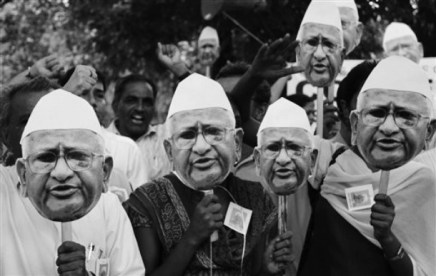
Anna Hazare’s recent threat to campaign against the Congress party in case they don’t help pass his version of the Jan Lokpal Bill in the Uttar Pradesh (UP) elections is an artful move. Much as the Congress would like to dismiss this threat citing the non-existent political roots of Anna, it needs to tread with caution given it draws substantial support from the Middle-class in UP.  The Congress has pinned its re-election prospects, as well as the political prospects of Rahul Gandhi, to its performance in UP.  By threatening to strike the Congress where it would hurt the most, Anna has been very strategic.

However, while this move by him may see an initial success in Hisar’s by-polls (which is a constituency that wasn’t leaning towards the Congress in the first place),  it risks becoming a cause for the downfall of this movement. Political fault-lines in Uttar Pradesh lie – unfortunately – on issues of caste and religion, and to an extent – fortunately – on  the governance (or mis-governance) records of the respective parties. While the general call of ending corruption may resonate with the society, the electorate may not swing their votes in favour of parties that promise to implement certain legislation over others in the future. Especially not if the record of such parties on corruption and graft is equally if not more suspect than that of the Congress. In case they choose to do so, it may still not work towards meeting Anna’s goals.

Anna’s call may be further diluted in case the Congress manages to pass some version of the  Lokpal Bill before the UP elections. The Congress’ announcement that the Lokpal Bill envisages the body to be a Constitutional authority may work to dilute Team Anna’s position.

Realistically, two results can be expected from such an anti-Congress ploy in UP:  either Anna turns out to be successful in wooing the people away from the Congress, or he doesn’t. In the case of the first eventuality, if the result is the election of individuals and parties with a record of graft and corruption, then the purpose of the agitation would be lost. If the idea was to kick out the corrupt, then it makes no sense to work towards replacing one set of corrupt with another. This may lead to substantial disillusionment with the public. More so because a fractured mandate which includes the corrupt would diminish the chances of the passage of the Jan Lokpal Bill.

In the case of the second eventuality, the Congress  would claim popular victory and support for its policy on corruption and the popular rejection of Team Anna.  Either way, this movement would only lose out on the popular support it has garnered.

Annaji, as he is known by the public, may well be advised to not go ahead with such a simplistic call which may well prove to be counterproductive. If he wishes to hold on to the legitimacy he has earned in the past few months, he ought not to alienate his core constituency by aiding – indirectly – the victory of parties that are no less, if not worse, than the Indian National Congress when it comes to the issue of graft.

Occupy America – As Occupy Wall Street Spreads We Ask: Who Are the 99%?

Occupy DC


By Jack Hamilton, 12 Oct, 2011

What is the ‘Occupy’ Movement?

The ‘Occupy’ movement started four weeks ago on Wall Street and more than 100 solidarity movements have since sprung up across the country as activists have taken to the streets to oppose what they perceive to be the injustices of the corporate and financial sectors.

Contrary to some media attention the protests are not solely comprised of ‘hippies in hoodies’ and ‘tattooed vandals sporting Guy Fawkes masks’. I met with nurses and military veterans, fire-fighters and lecturers, librarians and libertarians. It is not an explosion of violence as a result of disenfranchisement or a day in the park but an ongoing event which seeks to focus attention on the issues of jobs and financial reform. There are also some crazy people there who I will come back to. For now it is important to focus on the goals of the ‘Occupy’ movement and the tactics through which they seek to achieve them.

Funny Signs Can Stop Bailouts

What Are Their Goals?

1. Urgency

Nouriel Roubini, better known as Dr. Doom for predicting the financial crash of 2007-2008 has rightly asserted “There’s a huge amount of anger”. The protestors remain steadfast in their belief that the current financial system is heading for another meltdown if no reforms are made and the current system continues unabated. Dr. Doom agrees. In an interview with Foreign Policy Roubini described the protests as “a symptom of economic malaise” that is being felt not only in the United States across the world. The first facet of the ‘Occupy’ movement is a rapid response to this impending disaster.

2. Agency

One of the most prominent signs at McPherson Square, DC read in bold letters ‘We need to Unfuck Ourselves’. This message clearly outlines the trope that the Occupiers perceive themselves to be the victims of the system and have taken it upon themselves to become active political agents and drive policy reform. The catchy image of the 99% rallying against the 1% has spread from the initial Wall Street protest across the various national spokes and it resonates strongly.

3. ?

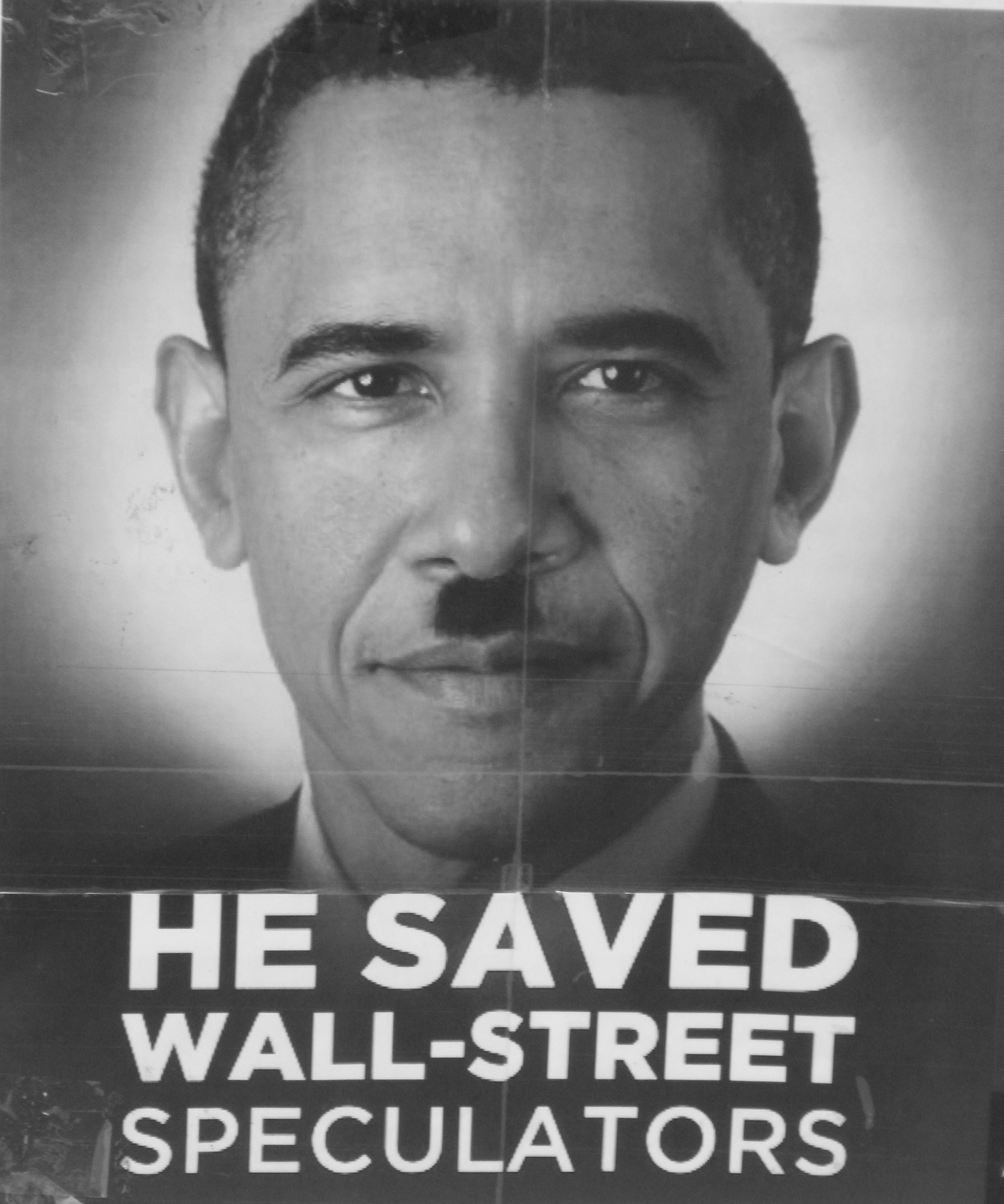
Urgency and agency can best be described as two themes of the protests but when it comes to clear and defined policy goals the unity lapses dramatically. For some Obama is simply Hitler, a narcissist and a puppet of corporatism who must be sacrificed for the more malleable alternative in Joe Biden. For others it is the ongoing imperialism of the British Empire which is subjugating the world economy to the demands of the monarchy (I am not making this up) and they do so under the guise of soft power organisations. One of the bastions of this soft power network is the Wildlife and Wetland Fund (still not making this up) which uses the guise of environmental aid to dictate policy across the world. It is worth saying at this stage that I am not impartial on the subject as my Mother is a member of the WWF and counts birds in Northern Ireland on occasion. I will be sure to ask her if she has been intrinsic to any global domination plots, ornithological or economic, when I speak to her tomorrow.

No Unity

The movement has been compared to the emergence of the Tea Party in 2009, breathing life into the conservative Republicans and influencing the 2010 elections which put in place a House of Representatives intent on blocking the Obama administration at every opportunity. By comparison the ‘Occupy’ protestors have no set of unified policy goals. The Tea Party opposed tax increases, demanded a cut in government spending and most of all rallied in opposition to something tangible: the sitting administration. The ‘Occupy’ protestors are apathetic towards Obama, who many of them voted for, but are also strongly opposed to all other parties. The narrative is clear: corporations have too much power. The policy alternatives and tactics are less so. Without tangible goals it is difficult to see tangible change occurring.

Chances of Success?

Is there any real pressure for the 1% to change their trajectory? The antipathy directed at the financial sector across large swathes of the globe has led to limited reforms and curtailed few bailouts. Protests in London and New York may lack a coherent agenda and action but there is no doubting that they have staying power and the longer they remain the more focus will be placed upon their agendas.

The Future

There are many questions that remain. The first issue is the nature of Roubini’s pending recession. Will it be another collapse along the lines of 2007-08 or will it be something more manageable. This may come down to the fate of the Euro-zone fringes. With Greece teetering on the brink of a disastrous default and Spain and Italy suffering the indignity of having their economies downgraded within the last week the crisis is showing little signs of abating. An article in The Economist posited that the continued uncertainty may actually play into the hands of Germany as it may be able to force the reform of the banking havens such as Ireland and Cyprus despite US objections. Merkel has a point. As soon as the European Central Bank intervened to stabilise Italy’s bond markets over the Summer, Berlusconi retreated from his austerity programme citing pressure from within his coalition. Financial panic is a self-fulfilling prophesy, a prophesy which the protestors should take heed of.

After the catastrophe in Japan earlier this year Germany took the lead in announcing that it would phase out nuclear power, whatever the cost, and turned to the nuclear power stations in France and Switzerland to plug the capacity gaps. When it comes to the sovereign debt crisis the most powerful country in Europe seems far more accepting of the risks of meltdown.

This does not mean that Europe is in a perpetual state of gridlock. Much has been made of the incapacities of European states to interact with each other the subsequent economic consequences. The strong European economies certainly resent having to bail out those who are perceived to have mismanaged their finances but that does not mean that they will cease to do so. One only needs to look at the passing of the Lisbon Treaty to see that the individual wills of European states can be subsumed in the European ideal and that the European institutions are much stronger than the Euro-sceptics are willing to accept. While the Mandelbaums and Thomas Friedmans of the world wax lyrical about the opportunities of a new Marshall Plan it must be remembered that this is not a post-war Europe and would not take kindly to being treated as such.

We the People

It is highly limiting to view 1% of society as being responsible for every problem of the 99%. Where does this leave the highly divisive issue of Medicare or the broader issues of over-consumption and overspending? While these issues are more acute in the ‘1%’ they are certainly wider than the ‘Occupy’ protests imply. If all of the problems descend from a simple high peak of American society then surely the solutions must simply focus on scaling that one summit? The reality is that those advocating financial reform need to look beyond their own mountain and see the full range. If the movement is to achieve its goals it requires a behaviour modification of much more than the top 1%.

The Democratic Peace Thesis: Not a Force for Peace After All


By Aryaman Bhatnagar, 10 Oct, 2011

The attempts to establish a strong symbiotic relationship between Liberalism and peace can be traced back to the times of writers like Kant, Montesquieu and Rousseau. They proposed that liberal domestic constitutional and institutional mechanisms would make liberal states inherently more peaceful (Macmillan, 1978, p.278). It is the legacy of such works that has continued down till this day to influence a number of theorists, many of whom perceive liberalism to be a force for absolute pacifism. It has, in fact, provided the basis for the “Democratic Peace Thesis”, which argues that liberal democratic states never wage war against each other.

This pacification of foreign relations among liberal states is said to be a direct product of their shared legitimate political orders based on democratic principles and institutions. The reciprocal recognition of these common principles leads liberal democracies to share a feeling of mutual trust and respect towards each other reducing the possibility of war. Moreover, democratic institutions such as public opinion, legislatures and the electoral process make leaders more accountable making the possibility of large-scale war nearly impossible. Finally, the commercial ties between the liberal states also foster a spirit of interdependence and cooperation, further, reinforcing the ‘zone of peace’ between them. It is these transnational ties, liberal institutions and ideas, which together can account for sustained peace among the liberal states. It is also argued that liberal states are as war-prone or as aggressive in their approach to non-liberal states like other states and that they wage wars only for liberal or humanitarian purposes (Doyle, 2005).

The Democratic Peace thesis has found considerable support among a number of theorists. Jack S. Levy stated “absence of war between democracies comes as close as anything we have to an empirical law in international relations (Levy, cited in Chan, 1997, p.60).” However, it has been heavily criticised on the grounds that it oversimplifies the explanation of the existence of peace. Moreover, they believe that this thesis itself may be used by some nations as intellectual justification for the belief that spreading democracy abroad will perform the dual task of enhancing their national security and promoting world peace (Rosato, 2003, p.585).

This essay will attempt to evaluate liberalism as a force for peace in light of criticism against the Democratic Peace Thesis. My main argument is that liberalism by itself is not enough to create, preserve or explain the existence of peace between nations. While liberal states themselves do not always stay away from conflict, there are also other factors that play an important role in creating peace. Moreover, I will also show how the belief of liberalism as a force of peace can create war.

Democracies and the Use of Force

Do democratic states stay at peace with each other when their interests clash? If one looks at empirical examples then it can be said that democracies are still willing to use force in order to achieve their ends even against democracies (Macmillan, 1996, p.281). When interests clash even liberal states tend to behave like any other states, bargaining hard, issuing threats and, at times, using military force. In such situations, the nature of the adversary regime is of very little value as vested interests tend to outweigh the liberal principles. The US intervention in the developing world during the Cold War period testifies this fact as the containment of Communism took precedence over respect for fellow democracies. The CIA helped in overthrowing democratic governments in Chile, Iran, Guatemala and Nicaragua replacing them with more authoritarian regimes (Rosato, 2003, p.590).

Wars between democracies have also taken place due to the fixity in the definition of democracy. As a result, a “hegemonic liberalism” defines out other historically valid democratic claims and may license violence against them (Barkawi and Laffey, 1999, p.409). This is how the invasions of a number of democracies, as stated above, during the Cold War were justified by the US. Moreover, the mutual respect and trust between democracies can be maintained only if they consider each other to be liberal. But in the absence of any coherent mechanism to categorise democracies, the perceptions of states regarding the regime type of another state comes into picture. They often get another state’s regime type wrong, thereby, lessening our confidence in the fact that objectively democratic states will not fight one another (Rosato, 2003, p.592).

It should also be noted that democratic norms and institutions do not cause democracies to behave differently from non-democracies in systematic ways (Rosato, 2005, p.467). The public constrain, for instance, acts as a very small deterrent on the state’s decision to go to war. If it was a major constraint then it would be able to prevent them from going to war even against the non-democracies (Rosato, 2003, p.594) as the public should feel sensitive about the human and material cost of war with any state. At times, the public may actually welcome war as was seen during WW1, which was welcomed by the public in all participating countries of Europe, even though, some of them were fighting other liberal states.

Moreover, these democratic structures are as likely to drive states to war as to restrain them from it. Cabinets, legislatures and public were often more belligerent than the government heads they were supposed to constrain (Owen, 1994, p.91). These can be belligerent towards democracies as well. This was evident during the build up to WW1.

Apart from looking at such constraints that could prevent war between democracies, it is also important to investigate the deepening of a democratic ethos within specific countries (Chan, 1997, p.66). While stable, well established democracies may not fight one another, a nascent democracy or rocky transition towards a fragile democracy may not necessarily imply that countries become immediately more peaceful. The transition phase of democracies is supposed to be quite dangerous and the nascent democracies are more likely to be caught up in wars (Ward and Gleditsch, 1998, p.53). The transition in Eastern Europe, for instance, had left the population “free to hate” (Ward and Gleditsch, 1998, p.54) resulting in large-scale ethnic cleansing of minority groups.

The instability in such new regimes can hardly create a spirit of mutual trust and respect that may prevent war between nations. In fact, at times, stable autocratic regimes are less prone to conflict and escalation to war. This can be seen with a number of non-liberal states like Cuba, Belarus and more recently, China that is emerging as a potential superpower through the use of its “soft power”.

Along with chaos in new democracies, the existence of civil wars and insurgencies in liberal states create obstacles in viewing them as symbols of pacifism. If democratic norms and culture fail to prevent the outbreak of civil war or insurgency within democracies, what reason is there to believe that they will prevent the out-break of interstate wars between democracies (Layne, 1994, p.41). Moreover, the states may use coercive and violent means to put an end to these movements and if they can resort to such methods against their own people then there is no guarantee that they would be not resort to such methods in the context of international relations. The independent history of some democratic nations like Sri Lanka, Algeria, Nepal, Lebanon among others have been seriously affected by such violent movements, which tend to seriously undermine the claim that democratic nations are inherently more peaceful.

The failure to recognise the changing nature of ‘war’ and the various implications of the word ‘peace’ have also strengthened this belief of peace among nations. The perception of war being a sustained violent conflict fought by organised armed forces, which are directed by a governmental authority (Starr, 1997, p.154) cannot hold in light of the changing nature of warfare. The liberal states may not confront each other through conventional warfare but through proxies or the armed units of the indigenous nations, who were armed by the superpowers themselves. Thus, while, the occurrence of overt conflict maybe extremely rare, states- even the liberal ones- have started to confront each other through covert means (Barkawi and Laffey, 1999, p.412).  In recent times, India and Pakistan are said to confront each other through such means. It is alleged that they try to destabilise each other by arming insurgent or militant groups in each other’s territories rather than confront each other through conventional means.

It is for this reason that the absence of war should not be equated with peace as the two phenomena are conceptually different (Chan, 1997, p.66). The absence of violence may be replaced by hostile diplomatic relations and constant threats of war. The Indo-Pak relations have followed such a pattern for the last sixty years, wherein, the threat of war or use of force has generally overshadowed all other forms of conflict resolution. This situation of ‘negative peace’ that creates a war like atmosphere can hardly be conducive to a more literal form of peace and harmony.

Why are Democracies Peaceful Towards Each Other?

If we were to accept the hypothesis that liberal states may actually be more peaceful towards each other than with a non-liberal state, it is unlikely that this can be explained by their liberal democratic norms or political institutions alone. Liberal states employ factors other than liberalism in deciding questions of peace and war (Macmillan, 1996, p.280).

These factors could be borne out of a common culture that tends to bind states together irrespective of the nature of their regime. The states are often caught up in geo-strategic and socio-economic relations because of which they tend to maintain the equilibrium through peaceful non-violent means (Barkawi and Laffey, 1999, p.421). This is highly evident in case of International bodies like the European Union, NATO, SAARC and ASEAN. It is the shared interests of the member nations of these bodies that prevent them from going to war against each other as the maintenance of peace is imperative for the cultural and economic development in this region. Moreover, in case of ASEAN, the member states are not always democratic in nature, yet, wars are avoided between the member nations clearly showing that states are motivated by factors other than liberal norms.

The existence of the democratic zone of peace can also be achieved by the presence of a local hegemon, which imposes a peaceful order in the concerned region and satisfaction of the states with territorial status quo. The existence of the ‘zone of peace’ in North America can be explained through this idea. The countries of this region are satisfied with the existing balance of power in which the US is the leading nation and have no territorial ambitions of their own. This has helped in maintaining peace between the concerned nations (Kaeowicz, 1995).

One also needs to realise that wars are so rare that random chance could account for the democratic peace (Owen, 1994, p.88). A dyad of nations becomes significant only if there is a real possibility of two states going to war (Layne, 1994, p.39). If motives, means and opportunities are absent then it is only natural that there would be no war between those nations. For instance, Senegal and Costa Rica both are liberal nations but the lack of warfare between them should be understood more in terms of the lack of any significant external relations between them (Macmillan, 1996,p.281).

Liberalism: A Barrier for Peace   

We can, finally, turn our attention to some of the practical implications of this thesis, which act as serious obstacles in the attainment of world peace. The belief that democratic nations do not go to war against one another has become an important aspect of the western policy. The logic of this discourse is that if democratic nations alone do not go to war against each other then it is important to create more of them, thereby, creating a more peaceful world (Barkawi and Laffey, 1999, p.423). This can fuel a spirit of democratic crusade and be used to justify covert or overt interventions against others (Chan, 1997, p.59).

According to many observers, the spread of democracy to different parts of the world has become the central focus of the American foreign policy post the Cold War and especially post-9/11. The US has taken up the moral responsibility of ensuring that a global liberal order is created, which is crucially linked not only to its own security but also to that of its allies. For this they will not hesitate to use their military power in a more aggressive and pre-emptive manner (Rhodes, 2003, p.134). The war against Iraq was also justified on these grounds.

This liberal interventionist role can have serious repercussions for world peace. It can be viewed as efforts to create an empire that would naturally offset a reaction against it. In the mid-90s, the attempts to create liberal states in Central and Eastern Europe to facilitate the expansion of NATO had seriously strained the US-Russian relations (Layne, 1994, p.47). Such extension into “Russia’s backyard” can also lay the foundation for future conflicts.  The deterioration of relations between Russia and Georgia, which ultimately resulted in the outbreak of war between the two in 2008 can be said to be rooted in the US efforts to include Georgia in NATO.  Similarly, the US image has taken a severe beating among the Arab states following its invasion of Iraq. The efforts to set up liberal institutions in Iraq and Afghanistan have acted as a catalyst for a number of non-state entities to carry out acts of terror in the region against the American presence and her backed regime.

Conclusion

The Democratic Peace Thesis seems to be based on hope and on the image of an idealised notion of what the world ought to be like. In reality, nations tend to maintain peace with other nations- irrespective of the regime type- as long as their own vested interests are not being compromised. The normative and institutional mechanisms that are meant to constraint the liberal nations from waging war can hardly override the pursuit of national interests. Even when peace is maintained it is probably explained more by these vested interests than commonality of a political culture.
Finally, it is important to note that peace is not the sole prerogative of democracies alone. Peaceful relations have also characterised many non-democratic polities throughout history and authoritarian regimes, at times, are more likely to maintain peace as compared to nascent democracies.

The essay hence establishes that the link between peace and liberalism has been over glorified by the Democratic Peace thesis. Peace is a complex issue that only a complex web of factors can explain and Liberalism maybe just one aspect of it.

_____________________________________________________________________________
Bibliography

  • Barkawi, T and M. Laffey, 1999.The Imperial Peace: Democracy, Force and Globalization. European Journal of International Relations, 5(4), pp.403-34
  • Chan, S., 1997. In Search of Democratic Peace: Problems and Promise. Mershon International Studies Review, 41(1), pp.59-91
  • Doyle, M.D., 2005. Three Pillars of the Liberal Peace. The American Political Science Review, 99 (3), pp.463-66
  • Kaeowicz, A.M., 1995. Explaining Zones of Peace: Democracies as Satisfied Powers?. Journal of Peace Research, 32 (3), pp. 265-76
  • Layne, C., 1994. Kant or Cant: The Myth of the Democratic Peace. International Security, 19 (2), pp.5-49
  • Macmillan, J., 1996. Democracies Don’t Fight: A Case of the Wrong Research Agenda?. Review of International Studies, 22(3), pp. 275-99
  • Owen, J.M., 1994. How Liberalism Produces Democratic Peace. International Security, 19(2), pp. 87-125
  • Rhodes, E., 2003. The Imperial Logic of Bush’s Liberal Agenda. Survival, 45 (1), pp.131-52
  • Rosato, S., 2003. The Flawed Logic of the Democratic Peace Theory. The American Political Science Review, 97 (4), pp.585-602
  • Rosato, S.,2005. Explaining the Democratic Peace. The American Political Science Review, 99 (3), pp. 467-72
  • Starr, H., 1997. Democracy and Integration: Why Democracies Don’t Fight Each Other. Journal of Peace Research, 34 (2), pp.153-62
  • Ward, M. D. and K.S. Gleditsch, 1998. “Democratizing for Peace”. The American Political Science Review, 92 (1),pp.51-61

The Lighthouse in the Desert


By Jack Hamilton, 9 Oct, 2011

Folklore spills across time creating and undoing history as it ebbs. Whole identities can be constructed and deconstructed in these stories but it is rare in these ages that entire maps can be reimagined due to a single small tree. The old addage “so geographers in Afric maps, with savage pictures fill their gaps” has long since faded but this is a story about one such ‘gap’, the one piece of life within it and the price of life that goes with it.

The Sahara Desert is awash with a sandstorm of whispers and this particular spec is the lonely Tree of Ténéré. It is a story which entails trust amidst gossip as well as the dangers of blind trust in a terrain in which one can see for miles. Upon first hearing the story I didn’t believe that such a tree could ever have existed. In recent weeks a terrorist cell linked to al-Qaeda was undone by their belief that the tree still existed. However, I must start by describing the story of the tree.

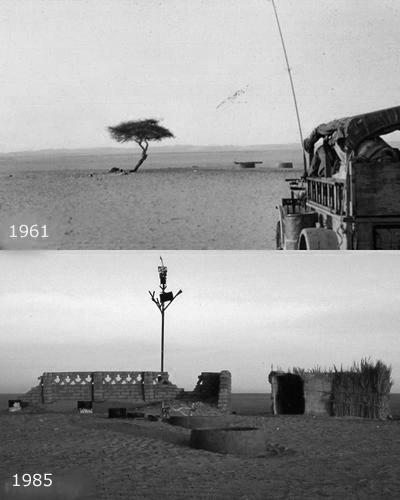
There was once a solitary tree standing in the centre of the Sahara Desert. Between the Baobabs of Senegal and the Olive Trees of Tunisia remained one sole survivor of a bygone era. Millenia ago the tree had been part of a great forest which had gradually died off as the Sahara became the inhospitable mother she is today. One tree remained to guide all those who dared to traverse the barren lands. It was a beacon: the lighthouse in the desert.

The nomads of the desert alone knew of this tree and used it as a tracking mechanism when traversing the most desolate depths of enduring beige. When these Tuareg would encounter the Fulani in north east Mali they would recount their tracks in order to let the Fulani know of their passage, including the waypoint of the tree in the middle of the desert. Having listened politely to the detailed directions the Fulani would thank the Tuareg and see them on their way providing that no disagreements had been reached.

At this stage the Fulani would all agree never to follow the route of the Tuareg. These men had seemingly been driven dangerously insane by the desert. Of course, there is no chance for a tree to exist in such a place. There are no trees for hundreds of miles in the Sahel (the shoreline of the desert), let alone the Sahara. If this route had a proclivity for perverting the minds of the fearsome Tuareg, it was no place for men.

This story circulated until the times when modern technology made it possible for mere mortals to take the route. Safe inside the machinery that would be used to fight the Second World War, Europeans were able to cross the desert here in hopes of cutting off a rival. It was at this time that they too believed themselves to have gone insane too as in the horizon the withered spectre of an acacia tree loomed. They had not been in the desert long enough to have reached the Libyan coast and had not crossed the Italian lines that would have inevitably preceded the water. It could not be Algeria as there had been no sign of the southern Air mountains. The story was true. They had discovered the Tree of Ténéré. The most isolated life on Earth.

It is here that a part of the mystery ends. Confused and in search of the truth the Europeans (a French division) decided to dig underneath the tree and discovered a well 35 metres down. While the fairytale of the tree was slightly depleted the beacon took on a new significance as not only being the only life but suddenly becoming a redeemer of life in the harsh conditions of the Sahara. The tree was not a mirage but the literal symbol of water in the desert.

However, as with all of these stories of the desert, it ends in tragedy. In the 1970s a Libyan truck driver somehow careered into the tree, allegedly drunk. Upon hearing this part of the story I was always interested to hear how the driver could explain this to his boss. He had somehow managed to hit the only tree in a 400km radius.

The reason I was reminded of this story was due to reading intelligence reports from the security forces tracking al-Qaeda in the Islamic Maghreb (the Saharan branch of the terrorist organisation). One of the Algerian trackers claimed that they had an intimate knowledge of the desert and in the pursuit they had passed the Tree of Ténéré. Today in the place of the tree stands a simple metal sculpture representing the optimism of the tree. Unfortunately the tracker described in great detail the tree as it looked before the 1970s, exactly the description that was recounted to me. It was clear that the ‘trackers’ did not know the desert and had possibly never crossed into Niger where the tree used to stand. They were found out immediately.

The idea of the Tree of Ténéré had always seemed to me like one of the lies which whispers around the desert. It brought a smile to my face that the myth was actually the truth and it was this fact that unveiled the fiction.


Jack Hamilton can be followed on Twitter @jmhamilton

Responsibility to Protect: A rebranding of Imperial Intervention


By Aditya Sakorkar, 8 Oct, 2011

Introduction

Humanitarianism or Humanitarian intervention has attracted immense controversy and popularity since the end of the Cold War. Humanitarian intervention is usually employed to deliver a country and its people from war crimes, genocide and so forth. As Kuperman opines, humanitarian intervention is based in the altruistic desire to protect others (Kuperman, 2008, p.49). This essay examines the Responsibility to Protect (R2P) doctrine, one of the most controversial ideas in modern times, from the perspective of John Stuart Mill’s ideas on intervention and non-intervention. The primary objective of this comparison is to identify if the R2P doctrine amount to a rebranding of imperial intervention. The essay begins with a brief discussion on Mill’s notions of intervention and non intervention; followed by an examination of the R2P doctrine and a conclusion that sums up the findings.

Mill’s Notion of Intervention/Non-intervention

John Stuart Mill, a philosopher and politician from Great Britain spoke on the notion of intervention/non-intervention, in his essay titled ‘A few words on Non-intervention.’ Mill, of course, wrote this essay in the context of the Suez Canal crisis and the Crimean War. However, the ideas he has proposed transcend these two scenarios and can easily be applied to other similar contexts. This section discusses Mill’s ideas on intervention and non-intervention in detail.

Mill wrote this text at a time when imperial rivalries were really getting more and more aggressive. He starts the article by describing Great Britain’s place in the world. In many ways, most people would agree, the opening section looks like a eulogy for Great Britain. It must be noted that he is candid about his views on this subject and intervention/non-intervention.

Mill puts forward the distinction between civilised and barbaric lands through three very clear points. In fact, he’s so specific about these distinctions that, together, they could easily pass as a model of some kind and could be used to justify interventions in the so called barbaric lands. It’s really not possible to incorporate the whole section of the text that distinguishes between barbaric and civilised lands. However, I will provide a short summary of the same.

Firstly, Mill speaks about the level of civilisation in a country. According to him, there is a big difference between 2 countries on par with each other in terms of their civilisation and one country which is highly civilised and the other one is low (Mill, 1859). Mill’s idea, however, of civilised nation is largely vague. That said, in one of the paragraphs he refers ‘Christian Europe as an equal community of nations.’ Christianity is what Mill had in mind when he was assessing the level of civilisation in a country, most likely. However, I would think that Christianity was only one of the parameters to assess the level of civilisation in a country.

Depending on how civilised a nation was, Mill assessed if the rules of international morality could be applied to it. If the nation is civilised, any rules that constitute international morality would be applicable. If the nation is not civilised or barbaric, these rules cannot be applied (Mill, 1859). Once again, what constitutes the rules of international morality is mostly not clear. However, sections of the opening paragraph could be used to formulate rules of international morality#.

Finally, Mill argues, if the rules of international morality are to be applied, the capacity of a country to reciprocate accordingly is essential. Civilised nations have the ability to reciprocate so they can be subjected to such rules. However, barbarians are in no position to reciprocate and consequently can’t be depended on to observe such rules. According to Mill, the barbarians’ minds are just not fit to perform a task of this kind (Mill, 1859). This argument or distinction is clearly stated by Mill as compared to the previous ones. However, this distinction in some ways reflects the prejudice that many Europeans had in this period that it was down to them to civilise the world.

Based on these distinctions, Mill creates three scenarios where intervention would be justified. Firstly, according to Mill, intervention is justified if the concerned nation is still barbarous. This is because invasion and subjugation by foreigners will only benefit such a nation. Also, Mill says that barbarians have no rights as nations except a right to be made fit to become a nation (Mill, 1859). This idea has a very strong racial basis to it. In fact, this justification, in many ways, echoes Hobson’s justification of imperialism: It is desirable that the earth should be peopled, governed, and developed, as far as possible, by the races which can do this work best, i.e. by the races of highest social efficiency (Hobson, 1902, p.154).

Secondly, Mill says that intervention by a civilised nation in a barbaric nation is justified if they share boundaries. Mill argues that the civilised nation cannot continue to have a defensive stance against a barbaric nation for too long. Eventually, the former will have to act so that the latter gets completely conquered or is so subdued that it becomes dependent on the civilised nation (Mill, 1859). This argument is applicable in other places as well. Meaning, a civilised state could intervene in a barbaric land anywhere in the world.

Thirdly, Mill argues that intervention is justified, if one nation calls another nation to assist in the suppression of its own population (Mill, 1859). It could be argued that this justification for intervention has, in some ways, a resonance of humanitarian intervention. An appropriate example of this scenario would be how General Franco came to power in Spain with Hitler’s and Mussolini’s assistance. On the basis of what Mill says, it would not have been a violation of the rules of international morality if the other European powers had intervened to prevent these developments. In fact, as Walzer argues, some military response is probably required at such moments if the values of independence and community are to be sustained (Walzer, 1977, 97).

For Mill, intervention is also justified in a country which subjugates its own people with the help of foreign arms and especially if they have what it takes to use and free institutions effectively (Mill, 1859). Like the previous condition, this also has a strong resonance of humanitarian intervention. A good example of this would be the Indian intervention in East Pakistan in the early 1970s.

Non-intervention

Mill also spoke about non-intervention just as candidly as he did on intervention. Like most liberals, Mill was very much for self-determination and self-help. In fact, he clearly says that in case a civil war is happening within a state, it should be left alone. For Mill, intervening in such situations, even to assist the citizens, would be violation of their right of self-determination. Mill also says that any group of people wanting use popular institutions need to brave the labours and peril of a revolution to become free. In essence, passing such a test would make them worthy of any popular institutions (Mill, 1859).

It could be argued that self-determination is something very close to Mill’s heart. Though he doesn’t mention it clearly, Mill may have been talking of democratic form of government and everything that is associated with it when he refers to popular institution. Also, he’s willing to let people take their own chances to reach such a stage, irrespective of the possible failure that they might encounter while they are at it. As Walzer argues, there is no right to be protected against the consequences failure, even if it means repression (Walzer, 1977, p.88).

One example of such a scenario would be the protests and the Tiananmen Square massacre in the People’s Republic of China (PRC) in 1989. The people who participated in the protest endured the perils and labours of revolution for the sake of liberty. However, their success never materialised because of massive repression by the government. Most importantly, as negative it might seem, there was no intervention by any other country. This however, was also because of the fact that the PRC is a force to reckon with militarily and no country would want to antagonise it by initiating intervention.

Also, at first sight, this idea looks highly idealistic and, for Mill, this is the only foolproof way to do it (Mill, 1859). However, not everyone would share this view. According to Walzer, there is no shortage of revolutionaries who have demanded external help for their causes (Walzer, 1977, p.88).

Mill says that countries should have the love of liberty to maintain their freedom. However, such feelings may not arise if the country is ruled in ways that does not permit it. Such a government may be tyrannical or may have some other way of keeping its population from getting such thoughts; Mill does not clarify this. However, he says to develop such sentiments, the country needs to undertake an arduous struggle to gain freedom (Mill, 1859).

Mill’s argument about non-intervention in states having revolutions is a little problematic. What happens if the concerned state is, as Mill classifies it, barbaric? In that case, he would probably support and even highlight how important it is to intervene and subjugate the populace in order to make them fit to have popular institutions or democracy.

The Responsibility to Protect

The debate on humanitarian interventions came to the fore in the post Cold War period. The 1990s saw a range of conflicts within states which involved large scale genocide and ethnic cleansing and similar crimes. In some cases, these acts went to such an extent that the international community had to step in to put a stop to them. Certain cases such as Bosnia (1991-92) required full scale military action to stop the conflict. Ironically though, the international community did not intervene in Rwanda, where a large genocide began a little later than the Bosnian crisis. These problems fuelled the debate surrounding humanitarian intervention which paved way for the doctrine of R2P. This section takes a close look at the doctrine of (R2P) to assess if it is different from Mill’s notion of intervention. Also, this section explains concepts like failed states, rogue states and states that violate human rights because these almost form the core of the R2P discourse.

The idea of having a broad consensus on humanitarian interventions came to the fore in 1999 and 2000 in the UN General Assembly. It was the then Secretary General, Kofi Annan who posed a question to the international community (ICISS, 2001, p.VII):

…if humanitarian intervention is, indeed, an unacceptable assault on sovereignty, how should we respond to a Rwanda, to a Srebrenica – to gross and systematic violations of human rights that affect every precept of our common humanity?

This resulted in the establishment of the International Commission on Intervention and State Sovereignty (ICISS) under the auspices of the Canadian government and a group of major foundations. The sole objective of the commission was to prepare a report that addressed the moral, legal, operational and political questions associated with humanitarian interventions (ICISS, 2001, p.VII).

The report presented by the ICISS was titled “The Responsibility to Protect.” It recognises and reiterates the fact that a state has a legal identity in international law and that all states are equal irrespective of their size or capabilities. Each of these states has the right to make decisions within their territories regarding people and resources, as enshrined in the UN charter (ICISS, 2001, p.12). However, this right also brings certain responsibilities. Firstly, states have to protect their citizens and strive for their welfare. Secondly, states are responsible to their citizens and the international community through the UN. Thirdly, states or their agents are accountable for their actions (ICISS, 2001, p.13).

Under R2P, the state has three more responsibilities. The first one, the responsibility to prevent, expects states to address the direct and root causes of a conflict which may occur within its boundaries. The second one is the responsibility to react under which the states need to respond to situations of compelling human need with appropriate measures (including military action). The third one is the responsibility to rebuild which asks states to provide the necessary assistance for recovery, reconstruction and reconciliation; especially after a military intervention (ICISS, 2001, p.XI).

Besides, in case of interventions, issues need to be assessed from the perspective of the ones seeking support or help and not the interveners. The primary responsibility to protect lies with the concerned state. However, if the state can’t fulfil this responsibility for whatever reasons or is the perpetrator, the international community can step in. There are three responsibilities that need to be embraced by states under R2P doctrine (ICISS, 2001, p.17).

Similarly, the report of the UN Secretary-General, Implementing the Responsibility to Protect, of January 2009, reiterated 2005 World Summit Outcome: Operationalisation of the R2P. The participating Heads of State mandated a three pillar strategy. Pillar one outlined the protection responsibilities of the states to protect its citizens from genocides, ethnic cleansing, war crimes etc. Pillar two called for international assistance and capacity building so that states can carry out their responsibilities. Pillar three calls for timely and decisive response to crisis scenarios if the state has failed to provide the necessary protection (Ban Ki-moon, 2009, p.8 & 9).

So, where is the R2P doctrine applicable? To put it simply, the R2P doctrine is most applicable in failed states, rogue states and in states where there is gross violation of human rights. Let’s take a look at these categories more closely.

Failed States

The Failed States Index explains that a state has failed when its government has lost control of its territory or its monopoly on the legitimate use of force (Foreign Policy, 2005, p.57). However, this may not be the only cause why a state comes to be known as failed state. According to Rotberg, state failure can also be caused by a nation’s geographical, physical, historical and political circumstances, which include colonial errors and Cold War policy mistakes (Rotberg, 2002, p.127). There is also the human element that may result in state failure. As Rotberg argues, destructive decisions by leaders may also pave way for state failure (Rotberg, 2002, p.128).

Rogue States

Rogue States has become quite a common term in international politics. The most regular user of this term is the US. In fact, the term Rogue States, as Litwak argues, is efficient political shorthand that leaves no doubt any country’s place in the world of nations (Litwak, 2000). In essence, a rogue state is one, according to Litwak, that has violated accepted international norms (Litwak, 2000). George Bush’s famous ‘Axis of Evil’ comprising Iraq, Iran, North Korea, Libya and other states could also be referred to as rogue states.

States that violate Human Rights

As the name suggests, this category constitutes states which have been involved in human rights violation at a considerable magnitude. The violation could be through a number of ways. For instance, it could be genocide at varying degrees or setting up and sending people to labour and concentration camps or war crimes which include unjustified destruction of cities. Basically, any breach of humanitarian law would amount to violation of human rights.

Analysis: Responsibility to Protect or Right of Intervention   

This section directly compares R2P, and the three categories of states mentioned above and where it could be applied, with Mill’s idea of intervention/non-intervention in barbaric and civilised lands. In other words, I attempt to find out if the doctrine of R2P amounts to a rebranding of imperial intervention. For reasons of simplicity I would like to refer to Mill’s notion of intervention/non-intervention as Mill’s doctrine through the rest of this section. Also, for organisational purposes, I have included sub-headings in this section in the hope that they will make reading this section easier.

Most Important Differences and Additions

The first strikingly visible difference between the two doctrines is their clarity. As elaborate as the doctrine of R2P is, I would argue that Mill’s ideas are more profound and clearer simply because his core context is of imperialism. Also, his doctrine largely reflected the leading ideas of his time and was not as controversial as the R2P. In terms of the ideas, I would argue that the R2P and Mill’s idea of intervention are largely similar. One major difference between the two doctrines is the introduction of the “Responsibility to Prevent” through an “Early warning capability” (Ban Ki-moon, 2009, p.4) under R2P.

I would argue that this idea is not new one per se but it reflects the notion in Mill’s doctrine that if civilised states have barbaric neighbours, the former cannot and should not hold back for too long, but just intervene and take over from that government or make it militarily dependent. The only difference is that under R2P, states should try to address the root cause and prevent any conflict within the state. This, however, is easier said than done. As the ICISS observed in its report, prevention of a conflict is tough because strong support of the international community is needed almost at all times (ICISS, 2001, p.19).

This was the case in the Kenyan crisis that began in 2007. Thanks to the intervention of the Kofi Annan, mandated by the AU (African Union) and the support of the Secretary General of the UN (United Nations), a power sharing argument was concluded between the warring parties thereby preventing the conflict from escalating into any crimes against humanity.  Having said that, the Responsibility to Prevent is an important inclusion in R2P especially against the backdrop of the intra-state conflicts in Yugoslavia, Rwanda etc. through the 1990s, whose root causes were never addressed.

Rebranding of Imperial Intervention?

This brings us to the more important issue of whether the modern doctrine of R2P is a rebranding of imperial intervention or the kind of intervention Mill spoke of? My answer to this question is yes, the doctrine of R2P is, largely, a rebranding of imperial intervention as proposed by Mill.

However, R2P is not as overt as the Mill doctrine. For instance, Mill supported intervention in the so called barbaric states and non-intervention in the so called civilised ones. The reasons: intervention would benefit of the natives of the so called barbaric state and that annexing another civilised nation would be immoral, unless the nation chooses to do so willingly (Mill, 1859). On this note, it would be interesting to have a look at the current situation. In the current scenario, terms like civilised and barbaric may not be used anymore, at least not overtly. They have been replaced by terms like failed states, rogue states and states that violate humanitarian rights. The characteristics of such states (as highlighted in the previous section) could easily replace Mill’s notion of barbaric states (even though he did not really elaborate on what constitutes a barbaric state). This kind of state branding has become more popular since the end of the Cold War.

Mill also spoke about a vague notion of international morality. Though he did not elaborate on its principles, it’s not very difficult to guess what these might have been. The world, for Mill, was divided into civilised Christian nations and barbaric states completely unfit to have rights as nations. So, international morality would have comprised of the principles and beliefs (probably based on Christianity) of the so called civilised nations.

On a similar note, it could be argued that the new international morality is global peace and security. Any violations of the same would first result first in the state getting branded as a failed state or rogue state and followed by sanctions and other punitive actions. In essence, intervening states might carry out their Responsibility to React and even the Responsibility to Rebuild, if military action is undertaken. This, however, can be slightly problematic. As Finnemore argues, if the situation warrants military intervention it usually means a change of government (Finnemore, 2004, 136).

What’s more, the R2P doctrine also sanctions the use of military force (ICISS, 2001, p.32). It’s perfectly possible that a state or group of states might use this as a licence. As Finnemore points out, intervention and change of government is not undertaken for altruistic reasons but sheerly because the states believe it’s the best solution (Finnemore, 2004. p.136). A good example here could be the global war on terror which began after 9/11 attacks under US leadership. The other problem with regard to the R2P doctrine is that it is definitely prone to abuse by the powerful states. For instance, Russia justified its intervention in South Ossetia, against Georgia, through R2P. The Russian leadership maintained that atrocities committed by the Georgian troops amounted to genocide. The Russian claim was rejected by almost everyone who witnessed this episode (Bellamy, 2010, p.151). To sum up, the doctrine of R2P does amounts rebranding of imperial intervention or the Mill doctrine and because of the creation of the R2P doctrine, classical imperial intervention has become more institutionalised than it was during 19th century and the 1st half of the 20th century.

Conclusion

This essay compared and examined Mill’s notion of intervention/non-intervention and the doctrine of R2P to assess if the latter is a rebranding of imperial intervention. This was demonstrated by first presenting Mill’s ideas on intervention and non-intervention which included his distinction between civilised and barbaric states and the scenarios where interventions would be justified. The next section covered the R2P doctrine by explaining its main points as conceived in the ICISS report and their implementation by the UN. This section also examined the notions of failed states, rogue states and states that violate human rights.

________________________________________________________________________________

  • Ban Ki-moon. (2009). Implementing the Responsibility to Protect: Report of the Secretary General. 12 January, 2009. http://globalr2p.org/pdf/SGR2PEng.pdf
  • Bellamy, A, J. (2010). The Responsibility to Protect: Five Years On. Ethics and International Affairs. Vol No.: 24. No.: 2. 2010: 143-169
  • Foreign Policy. (2005). The Failed States Index. Foreign Policy. No.: 149. Jul-Aug 2005: 55-65.
  • Finnemore, M. (2004). The Purpose of Intervention: Changing Beliefs about the Use of Force. Cornell University Press, New York. 2004
  • Hobson, J, A. (1902). Imperialism: A Study. George Allen & Unwin, London. August 1902.
  • ICISS (International Commission on Intervention and State Sovereignty). (2001). The Responsibility to Protect. International Development Research Centre. 2001. http://www.iciss.ca/pdf/Commission-Report.pdf
  • Kuperman, A. (2008). The Moral Hazards of Humanitarian Intervention: Lessons from the Balkans. International Studies Quarterly. 2008. 52: 49-80.
  • Litwak, R, S. (2000). A look at Rogue States a Handy Label but a Lousy Policy. The Washington Post. February 20, 2000. http://www.nucnews.net/nucnews/2000nn/0002nn/000220nn.htm
  • N.B: There are plenty of reports on this link. Please use the find feature (Ctrl+F) and search using author’s name or the topic.
  • Rotberg, R, I. (2002). Failed States in a World of Terror. Foreign Policy. Vol No.: 81. No.: 4: 127-140.
  • Walzer, M. (1977). Just and Unjust Wars: A Moral Argument with Historical Illustrations. Penguin. 1977.

A Nobel Intervention?

Why did the Nobel Committee Award the Peace Prize to Liberian President Ellen Johnson Sirleaf one week before the Presidential election?

Victory Assured?


By Jack Hamilton, 7 Oct, 2011

Today’s award of the Nobel Peace Prize to Liberian President Ellen Johnson Sirleaf has stirred controversy.  The ‘Iron Lady’ said this morning that she is humbled by the award and has stated that it is an award for the people of Liberia.  However, the timing of the award, coming one week before the Presidential elections in Liberia, has brought forth claims of the Norwegian-based Nobel Committee interfering in the internal politics of the West African state.

President Sirleaf’s main rival in next weeks’ election, Winston Tubman, has lambasted the decision of the Nobel Committee instead declaring that “She brought war here, she is a warmonger” to the BBC Voice on Africa programme.

Such vitriol is nothing new to the first elected female leader in Africa having risen to prominence in 2005 following a civil war that left a quarter of a million people dead and the Liberian economy in tatters.  This is not the issue.  Rather it is the question of the timing of the award in such close proximity to the election.

Nobel Committee Chairman Thorbjoern Jagland has told reporters today that the committee does not consider domestic politics in its selection process and the spokesperson for the Liberian National Election Commission, Nathan Mulbah, has already stated that the election will go ahead as planned on October 11, four days from the award of the Nobel Peace Prize.

Peace by ‘Peace’

The Nobel Committee is no stranger to controversial timing.  Awarding the prize to Barack Obama was seen by many as an over-zealous attempt by the organisation to garner attention by affixing itself to a popular President who had achieved little in the way of international peace at the time of the presentation (aside from the snide observation that he may have won due to the simple fact that he was not George W Bush).  That has since been described as an incentive for the President to foster peace and security throughout the globe.  This function of the peace prize should not be overlooked.

In 1998 David Trimble and John Hume were awarded the Nobel Peace Prize for their roles in facilitating the Good Friday Agreement and ushering in a more peaceful era in Northern Ireland.  This was by no means a solid peace deal.  Similar agreements had been reached at Sunningdale in 1973 and at Hillsborough in 1985 but failed spectacularly.  The prize was a recognition of the start of a process and acted as a lightning rod for the global attention at a time when atrocities in were being carried out in the Balkans and al-Qaeda had struck in Nairobi.

While the Peace Prize did not create the peace in Northern Ireland it associated the terms of ‘Northern Ireland’ and ‘peace’ at a global level which certainly acted as a catalyst to maintain some semblance of dialogue. It is difficult to ascertain the motives of the Committee with any great deal of certainty but one assume that they are attempting to bring the world together piece by piece: peace by ‘peace’.

Ballots not Bullets

This brings me back to Liberia.  The elections will take place in a few days and there is no doubting that the Nobel Peace Prize has again drawn attention to an ongoing peace process.  The Committee is surely aware that their award will have an impact on the election.  Is it so wrong that they have chosen a woman who so clearly embodies the values the Nobel Committee stand for?  Sirleaf has been instrumental in transforming Liberia from a post-conflict country to a developing one.  Under her the economy has grown by 6.5%, free and compulsory primary education has been introduced, and doctors’ salaries have doubled.  Furthermore, the election has so far been described by the electoral observers of the Carter Center as “peaceful” and “fair” as healthy competition remains between the two frontrunners, Sirleaf and Tubman.

The timing of the decision will be used by the opponents of Sirleaf to frame her as a puppet of foreign interests but it was not her choice.  However it was Sirleaf’s actions led to her accolade and these actions will surely prove to be more influential come October 11.  Neither Sirleaf nor the people of Liberia are the puppets of foreign intervention and such a claim devalues the progress that has been made in the past six years.

Today’s award is recognition of those achievements as well as an incentive to continue the difficult rebuilding process, whatever the outcome of the election.  However with the objectives of the Nobel Committee being repeatedly questioned, the jury is out on the future of the prize.


Jack Hamilton can be followed on Twitter @jmhamilton

Assessing the impact of the Iranian revolution on the world beyond the Middle East


By Matthias Pauwels, 7 Oct, 2011

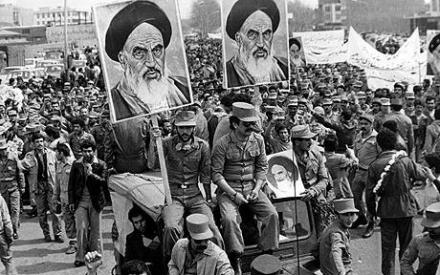
When an uneasy coalition of religious leaders, secular intellectuals, and bazaar merchants spearheaded the anti-Shah movement in Iran, the Iranian revolution would cause ripples well beyond the Middle East as the new regime began alienating once close western allies, mainly the United States. In the Khomeini era, US foreign policy toward Iran would shift from one of total commitment to one on the defence, embedded in Iran’s rampant anti-Americanism.

As Khomeini’s triumph was a blow to America’s credibility, it encompassed a boost to Soviet diplomacy in the region, especially in the early days of a nascent revolution. However, Iran’s bilateral relations with the Soviet Union would prove to be extremely bipolar, ranging from Moscovian hopes of fruitful development of good neighbourliness to large-looming mistrust in the Moscow-Tehran relationship.

Moreover, at the time of the 1979 revolution, and repeatedly since, political analysts have argued that Western Europe would enjoy a better, privileged, and more stable relationship with Tehran. But as the course of history proved, normalisation – or even reconciliation – with the Iranian government did not eventuate as hoped. On the contrary, the dream of a reasonable Iran and a compliant Western Europe has not been realised (Halliday, 1994: 309).

In this essay, I will discuss how the Iranian revolution and the Khomeini era have influenced Iran’s bilateral ties with the United States, the Soviet Union and Western Europe. Drawing back upon the pre-revolutionary foreign policies of the aforementioned, the revolution has caused a considerable tension, not to mention alteration, in the international community’s foreign policy track record toward Iran. As the Carter administration had the greatest difficulties manoeuvring its way around the Khomeinist ideological view of America and as the political hot potato of the American embassy hostage crisis unfolded, the United States found itself simultaneously confronted with a massive brain drain from Iran, where the departure of a large number of highly educated elite was embedded in the political impetus of the revolution and its aftermath. Consequently, I will not only address the impact of the revolution on Iran’s bilateral ties with the United States, the Soviet Union and Western Europe, but I will additionally discuss the socio-economic impact of the extent of brain drain from Iran to the United States.

The end of American geopolitical determinism toward Iran

The triumph of the Khomeini forces and of the Iranian revolution in February 1979 marked the beginning of a highly critical period in American-Iranian relations. For the United States, the Iranian crisis was a wasteful diversion, conflicting with real American interests and intentions. For both the Shah and the US, a decade-long embryonic American involvement in Iran had paid off handsomely in the initial stages (Ramazani, 1982: 9). By making security and military ties with the United States the centrepiece of his American policy, the Shah had successfully projected himself as a full-fledged American ally, hoping to resolve basic problems of political legitimacy and authority of his regime partly with the aid of the United States. But just as the Shah’s wooing and winning of American support for his regime was anchored in his domestic policy of strengthening his security forces and boosting economic modernisation, the US had its own reasons for involvement in Iran. The imagery that prevailed among US policy makers was a classic Cold War one and the Shah, in this view, was a major regional surrogate of American policy and could be counted on to ‘stem a red tide sweeping the Horn of Africa, South Yemen, and Afghanistan.’ (Cottam, 1980: 298). Drawing back upon the Shah’s anti-communist stance, the American prevailing view of Iran was one of a stable, progressive, and anti-communist regime.

When it became clear to Washington that the Shah’s regime was on the verge of toppling in 1978-1979, American policy toward Iran became enmeshed in ambiguity. Although the Carter administration was initially hesitant to publicly denounce the Shah, Washington was more than convinced by the beginning of 1979 that the Shah’s regime was finished.In the early stages, relations between the United States and the Khomeini regime were cool but not hostile (Snyder, 1999: 277). When the United States accepted the downfall of the stabilised Bakhtiyar government and his replacement by the moderate Bazargan cabinet, appointed by Khomeini himself, US policy toward Iran was still embedded in a Cold War thought pattern where Iran remained a pivotal state in America’s anti-communist crusade. Since Washington’s main global and even regional problem was not Iran but the Soviet Union and its influence, a stable and united Iran was an American objective no matter who ruled in Tehran. Therefore, US post-revolution policy was premised on the assumption that ‘the emerging Islamic Republic was an established fact and the Department of State was prepared to establish correct formal relations with the new regime.’ (Snyder, 1999: 277) Since Washington’s greatest fear during the first months of the revolutionary government was of a leftist takeover with possible Soviet assistance, a consideration which was further sharpened by the Soviet invasion of Afghanistan in December 1979,  the Carter administration had every intention to show the new regime its friendly intentions through various gestures, including face-to-face meetings, rapid recognition of the Bazargan regime, and material cooperation (Rubin, 1980: 311). However, US-Iranian relations gradually turned sour, finally leading to Iran’s rabid anti-Americanism. The idea that President Carter sought to build a new and friendly relationship with Iran never penetrated the radical fraction of the revolution, who cleverly manipulated the hostage crisis to their advantage in order to weed out the liberal fractions of the revolution. The idea that the global hegemon was still keen on dictating events within Iran and Iranian political culture was a crucial aspect of the Khomeinist ideological view of the United States. Even when Khomeini called for an unapologetic isolationism, thus breaking away from the omnipotence of American influence, the Reagan administration still attempted to befriend Tehran for years in spite of the hostility it demonstrated toward the United States, and this because of Iran’s anti-Soviet foreign policy. Geo-political considerations remained a pivotal part of US post-revolution foreign policy toward Iran, anchored in wishful thinking that the more radical ardour of the revolution would gradually cool and moderates, pragmatists, and technocrats would emerge as dominant in Tehran.

However, the hostage issue proved to be a critical stage in the alteration of Washington’s foreign policy toward Iran. As Rubin (1980: 316) notes, the frustrating spectacle of over fifty American representatives being held as prisoners month after month in the face of seeming US impotence had a tremendous psychological effect on America’s relationship with Iran. In the early Spring of 1980, Carter radically changed his policy of rapprochement after the Iranians had failed to comply with various agreements with Algerian third-party mediators. Moreover, as Tehran adopted a policy of complete isolationism, declaring to default on its foreign commitments in the autumn of 1979, including loans by American banks with a total capital exposure of $2.2 billion in Iran, Carter made the inevitable but wise decision of freezing the assets of the Iranian government in the US. Had it not been for this decision, the unilateral action by Tehran could have had serious repercussions for some US banks, vis-à-vis possibly triggering a severe financial crisis.

Within the United States, the hostage issue had its own impact on domestic politics and the Presidential election campaign. The high visibility of the question in the closing days of the campaign brought into vivid focus Carter’s inability to secure the hostages’ freedom (Rubin, 1980: 320). The Carter administration’s emphasis on human rights and reform and its stress on regional approaches rather than on a globalist geopolitical strategy – a policy often mentioned by right-wing globalists as the main culprit for the fall of the Shah’s regime – seemed to become the likely victim of a new era that was ushered into American diplomacy. As stated earlier, the Republican view concerning Iran did not push Reagan toward an antagonistic Iranian foreign policy initially, but the ongoing hostage crisis did accelerate the breakdown in relations between the two countries. The combination of Khomeini’s anti-Americanism and the hostage dilemma played a pivotal role in altering the mood in Washington, moving away from attempting to achieve détente and instead adopting a knee-jerk, hard-line policy toward Tehran. Blunt policy instruments such as economic embargoes and military threats in seeking to pressure the regime to change its ideological perspectives have only strengthened the Khomeinist anti-American push for isolationism. Perhaps Rubin (1980; 323) summarises the policy paradox of US-Iranian relations in the post-shah era in the most spot-on manner: ‘never before have cordial relations with a stable regime in Iran seemed more important to American geopolitical interests; never before has such a state of affairs seemed more unlikely.’

Impact of Iranian brain drain on American civil society

Not only Washtingon’s geopolitical interests toward Iran suffered a blow in the post-revolution era. The United States found itself additionally confronted with a considerable brain drain from Iran to the United States, measured by the migration rates of Iranian nationals to the US with tertiary education, including physicians and professors. Whilst economic-related factors are normally the main driving force for migration, in the case of Iran, political factors are found to be the main push force. With Khomeini on a mission to de-Westoxicate the higher education system in Iran, universities were officially closed from April 1980 for about three years under the banner of the so-called Cultural Revolution. Consequently, secular students and professors who opposed the remodelling of Iran’s education system according to Islamic ideals and beliefs, were purged and the newly established regime began a large-scale crackdown against any oppositional forces. In the 1981-1996 period, Iran was ranked fifth among countries with the highest numbers of refugees admitted to the US (Torbat, 2002: 276). Moreover, in the 1979-1980 period, at the hight of the revolution, the number of Iranian students enrolled in the United States reached its peak of 51,310, leaving Iran to be the country with the highest number of students in the United States at the time compared to any other country (Torbat, 2002: 277). The purging of the educated elite who left Iran and the new graduates abroad who chose not to return home created a large pool of highly educated and skilled Iranian professionals in the United States, causing Iran to experience a huge amount of human and financial capital flight. Whilst the departure of highly educated elite and university students from Iran caused a social loss to the country, it has provided the United States – a country that was built on immigrant human capital – with an unbridled opportunity to incorporate the Iranian educated elite in American global civil society, since they are the medium for transferring technology and know-how.  In this light, Torbat (2002: 273) mentions Bozorghmehr, Sabagh and Ansari, who all agree that Iranians are one of the high status immigrant groups, whose educational achievements trump those of others, thus leaving them to achieve rapid success in the American global civil society. Almost half of the educated elite who left Iran after the revolution reside in California (Torbat, 2002: 278), with a brain drain percentage of roughly twenty percent of Iranian medical doctors in the years after the revolution (Torbat, 2002: 283). As the brain drain caused a significant national loss for Iran due to the fact that education is a public good, for the United States the pool of educated, high-skilled Iranians  surely must have contributed to the society’s well-being and knowledge, and as such it is enmeshed in the frame of side-effects in post-revolution, vis-à-vis deteriorating US-Iranian relations.

The Soviet Union and post-revolutionary Iran: memories of a failed rapprochement

As Rubinstein (1981: 599) mentions, Moscow watched the toppling of the Shah and the unfolding of the Iranian Revolution with mingled anticipation and anxiety: no other internal upheaval and political turnabout had brought such immediate gain and promising opportunity. Whilst Khomeini’s triumph was a blow to America’s influence in the region, it seemed promising for the Soviet Union as the Ayatollah began the process of de-Westernisation and thus de-capitalisation. Moscow regarded the Iranian situation as complex but promising, hoping to bend it to its advantage in the bipolar power struggle frame of the Cold War.

In the early days of the revolution, the unfolding of the new government appeared to be fruitful for Moscovian Cold War politics. As two American-manned electronic intelligence collection stations on Iranian soil, adjacent to the Soviet border, were shut down, politicians in the Kremlin surely must have gloated. Additionally, in an early post-revolutionary phase and the confusion that accompanied the move from Iran’s alignment to non-alignment in regard to the United States, Moscow learnt a great deal about some of the most advanced military hardware in the American arsenal (Rubinstein, 1981: 601). And with the communist and pro-Moscow Tudeh party back on the political horizon in Iran, the Soviet Union cherished high hopes that it would manipulate post-revolution developments to its advantage.

Alas, the Soviet Union was not able to push through a harmonious rapprochement with the Khomeini regime and Moscow had largely itself to blame. As the Kremlin became troubled by the chaotic environment surrounding the turbulent post-revolutionary year, Iran grew more wary of the Soviet Union’s true intentions. Many in Khomeini’s entourage were deeply suspicious of the Soviet Union, mainly due to ingrained anti-communism, a remnant from the Shah era, and the communist coup in Afghanistan in April 1978. As Brezhnev tried to push his luck by insisting on reaffirming Articles 5 and 6 of the 1921 Soviet-Iranian defence treaty, bilateral relations took a turn for the worse. The treaty claimed that if a third country threatened to attack the Soviet Union from Iranian territory, Soviet forces would be able to intervene in Iranian affairs in the interest of self-defence. With US-Iranian relations suddenly deteriorating due to the hostage crisis, the Soviet Union was suddenly provided with a rare opportunity to demonstrate its support for Iran’s revolutionary regime, diverting attention away from its involvement in Afghanistan. But as Moscow immediately moved to exploit the mounting tension, hoping to win the trust of the Khomeini government, Brezhnev and his policy advisers were only too clever by half: their transparent pro-Iranian position on the hostage issue failed to ingratiate itself with Tehran, thus deflecting Iranian criticism away from the Soviet intervention in Afghanistan (Rubinstein, 1981: 605). As Soviet occupation of Afghanistan became a major impediment to improved relations between Moscow and Tehran, anti-communist slurs began to emanate themselves from the Khomeini regime. Despite Moscow’s assurance that it would stand by Iran and not tolerate outside, hence American, interference in Iran’s internal affairs, and its veto on a Security Council resolution calling for ratcheting up economic sanctions against Iran, Tehran sharply denounced Russia’s military intervention in Afghanistan. Moreover, its insistence on the validity of the 1921 Soviet-Iranian treaty served as an ever-present reminder of Russian imperial ambitions, validating Khomeini’s claim for an unapologetic isolationism. In many ways, the Kremlin was its own worst enemy on the matter of normalisation (Rubinstein, 1981: 603) and thus was not able to benefit fully from the Iranian Revolution and the breakdown of US-Iranian relations.

Western Europe during and after the Khomeini period

At the time of the revolution and shortly after, political analysts shared the expectation that Iran’s relations with Western Europe would be better than those with the United States or even the Soviet Union. Not caught in the middle of an all-consuming Cold War struggle, Europe had adopted a policy of “neither West nor East” (Halliday, 1994: 312), resulting in the fact that European countries – such as Germany – had become Iran’s major trading partners. Therefore it seemed reasonable that a post-revolutionary Iran would not take any drastic measures to offset its relationship with Western Europe, since the Khomeini regime had opted for a strict non-alignment with the United States and therefore had limited the direct importation of as many US products into Iran as possible.

Whilst Britain had been associated by the Khomeini regime with the external domination of Iran in the preceding decades, this was not true of for instance Germany or France. In the commercial realm, Germany’s percentage of the total Iranian import market went up gradually to reach a staggering 26 percent share in the post-revolutionary years (Halliday, 1994: 313). And perhaps France was the country that might have been expected to establish the most favourable relations with Iran, given Khomeini’s residence in Neuphle-le-Chateau from October 1978 to February 1979 in exile (Halliday, 1994: 313).

Illusions about harmonious post-revolutionary relations with Iran remained a stubborn element in West-European foreign policy towards the Khomeini regime. Although Germany’s Genscher became the first Western foreign minister to visit the Iranian nation in 1984 after the revolution of 1979, improving bilateral relations proved to be a shaky endeavour for both France and Germany. Factors such as breaching diplomatic immunity during the hostage crisis at the American embassy in Iran and Tehran’s revolutionary foreign policy, shifting away from cooperation towards unapologetic isolationism, made the West take a more critical stance toward the Khomeini regime. Therefore, the querulous history of Iran’s relations with Western Europe in the post-revolutionary period were not the result of accident or aberration on the Western European side, but reflected deeper incompatibilities on both sides (Halliday, 1994: 315).

Conclusion

The Iranian revolution has impacted the world beyond the Middle East on numerous levels. Diplomatic relations with both the United States and the Soviet Union have suffered. The Shah’s downfall drastically altered Iran’s international posture vis-à-vis other nations and most notably the United States. Iran’s fierce independence and unapologetic non-alignment has annoyed the United States because of the Islamic Republic’s geostrategic significance as well as its refusal to compromise its national sovereignty and dignity in any way, thus popularising the view of Iran as a rogue state, refusing to abide by the global hegemon’s dictates. In the post-revolutionary years, diplomatic efforts have not been successful in hemming in the fringes of fanaticism and militancy, leaving a possible US-Iran détente to be nothing but a far-flung utopian dream. The Soviet Union tried wooing and winning Ayatollah Khomeini in the post-revolutionary years but ultimately lost Iran as a trump card in the Cold War struggle with the United States, mainly due to Moscow’s transparent policies and greediness in reeling Iran in as an ally against the Americans.


List of references

  • Bill, J. A., 1999. Iran and the United States: A Clash of Hegemonies. Middle East Report, No. 212, Pushing the Limits: Iran’s Islamic Revolution at Twenty (Autumn 1999), p. 44-46
  • Ramazani, R. K., 1982. Who lost America? The case of Iran. Middle East Journal, Vol. 36, No. 1 (Winter 1982), p. 5-21
  • Cottam, R. W., 1980. American Policy and the Iranian Crisis. Iranian Studies, Vol. 13, No. ¼, Iranian Revolution in Perspective (1980), p. 279-305
  • Fatemin, K., 1980. The Iranian Revolution: Its Impact on Economic Relations with the United States. International Journal of Middle East Studies, Vol. 12, No. 3 (Nov. 1980), p. 303-317
  • Halliday, F., 1994. An Elusive Normalization: Western Europe and the Iranian Revolution. Middle East Journal, Vol. 48, No. 2 (Spring 1994), p. 309-326
  • Panah, M. H., 2002. Social Revolution: The Elusive Emergence of an Agenda in International Relations. Review of International Studies, Vol. 28, No. 2 (April 2002), p. 271-291
  • Ramazani, R. K., 1982. The U.S. role in the Iranian Revolution and the collapse of U.S. influence. In: Ramazani, R. K., 1982. The United States and Iran: The Patterns of Influence (New York: Praeger Publishers, 1982), Ch. 7
  • Rubin, B., 1980. American Relations with the Islamic Republic of Iran, 1979-1981. Iranian Studies, Vol. 13, No. ¼, Iranian Revolution in Perspective (1980), p. 307-326
  • Rubinstein, A. Z., 1981. The Soviet Union and Iran under Khomeini. International Affairs (Royal Institute of International Affairs 1944-), Vol. 57, No. 4 (Autumn 1981), p. 599-617
  • Snyder, R. S., 1999. The U.S. and Third World Revolutionary States: Understanding the Breakdown in Relations. International Studies Quarterly, Vol. 43, No. 2 (Jun. 1999), p. 265-290
  • Torbat, A. E., 2002. The Brain Drain from Iran to the United States. Middle East Journal, Vol. 56, No.2 (Spring 2002), p. 272-295

Understanding the Anna Hazare Movement through Kingdon’s Multiple Streams Theory

In this article, the author observes Anna Hazare’s anti-corruption agitation through the lens of Kingdon’s ‘Multiple Streams’ hypothesis. 


By Siddharth Singh, 4 Oct, 2011

It can be argued that India faces graver concerns that need far more attention than the issue of graft and corruption in the administration: issues such as farmer suicides, chronic malnutrition, religion-based violence, human rights violations, female foeticide, police excesses especially in rural India and the lack of justice in the Bhopal gas tragedy case. While activists like Irom Sharmila have been protesting against government apathy and excess for decades, it took a then-unknown Anna Hazare to upheave the political landscape of New Delhi in a matter of months. His agitation – incorrectly dubbed as India’s version of the ‘Arab Spring’ by a few international journalists – gave a semblance of the fast-tracking of an anti-corruption legislation which was in limbo for decades. Why did Anna succeed where others did not?

In order to explain why certain policy proposals emerge rather than others, political scientist John Kingdon has stated that three streams of actions need to converge: the problem stream (the problem must be clearly defined), the solution stream (feasible solutions need to be offered), and the political stream (where political consensus must be obtained). He added that chance plays a big role in the convergence of these streams. This model of Multiple Streams differed from the traditional models which have been described to be ‘linear’. The traditional models focused stepwise on, firstly,  problem identification, secondly, focusing government attention to the problem (known as ‘agenda setting’), thirdly policy proposal development and finally, the adoption of policies.

However, such traditional models inadequately explain the Hazare phenomenon and the relative failure of other activists and agitations in India. Kingdon’s framework is better suited to explain the success of the ‘Gandhian’ Anna Hazare over others. He explains that the convergence of the three ‘streams’ creates a window of opportunity during which policy makers are willing to seriously consider legislation aimed at improving a situation or solving a problem. Anna Hazare’s agitation met this condition while others – such as the Bhopal agitation – have not. In order to understand why, we must first delve further into these three streams and then contextualise it.

The problem stream is related to the recognition of the problem and the conditions that affect their recognition. Scholars have stated that systematic indicators such as dramatic events and crises facilitate public knowledge of the problem.

The solutions or policy stream concerns itself with the strategies that are needed to tackle the identified problem. These strategies and proposals exist as a “soup of ideas” that are generated by a community of researchers, advocates, public officials, and the civil society. These ideas are not static, and continue to mix with other ideas, morph and evolve. The survival of the proposal is determined by their technical feasibility, administrative practicability, compatibility with the dominant values of the society, as well as the national mood and political support.

The political stream is related to the politics that affect the chosen solution. Such politics emanates from electoral compulsions and interest-groups. Proposals that are most likely to rise to the top are the ones that match national mood, are congruent with the government and administration, and also enjoy the support of interest-groups.

The meeting of these three streams results in the formation of policy. It hence becomes clear how Anna Hazare and his team garnered considerable success while – say – Irom Sharmila hasn’t.

The Indian public has been constantly informed of scams after scams at the national and sub-national level over the past few years. The hyperactive media has brought corruption to the forefront while other issues – such as the agrarian crisis and farmer suicides – have not found favour with the media. The oft-spoken of common man in India (at least, in the Indian cities and where there is high penetration of television media), already burdened with corruption in almost all walks of life, saw their frustration with the government and politicians in general peak with the 2G spectrum scam, which implicated ministers at the highest echelons of the administration.

It is here that Anna Hazare and his team was able to garner support with a ‘Gandhian’ hunger strike and a proposal for a Jan Lokpal – Citizen Ombudsman – Bill. This Bill called for a radical overhaul of the anti-corruption machinery in India, even as it concentrated powers into one department which was entrusted to fight corruption. Social media and television media was optimally utilised to sell the idea that this Bill would free India from corruption. His team convinced the people that the Lokpal Bill as framed by the government was spineless and would be ineffective. The ‘silence’ of Prime Minister Dr. Singh and distractive verbal onslaught by Congress Party spokespersons further convinced the people of the same.

The current government had stated that they would introduce the Lokpal Bill this term. However, popular mistrust of the government, parliament and legislatures by the public, coupled with a carefully constructed ‘Gandhian’ image of Anna Hazare (which has been questioned by a few journalists and scholars over his ‘undemocratic’ dictums in his village), led the public to find resonance with the radical Jan Lokpal Bill. Such a feeling was strengthened by  an undemocratic and foolish move by the government to detain Anna Hazare just before his second round of protests, and lodge him in the same prison where the accused of the massive scams had been imprisoned. The symbolism of this move was profound, and the opposition claimed that this brought back memories of the Emergency period, when democracy in India had taken a back-seat under the rule of former Prime Minister Indira Gandhi.

The public was outraged and there was a massive outpouring of support to Anna and an unequivocal condemnation of the government’s move. A chicken run and a strategic shift within the government ensued. The government began working towards amending their version of the Bill ‘to give it more teeth’. On the other hand, scholarly discourse was largely critical of Team Anna’s Bill because of the behemothic size and lack of effective accountability of the proposed Lokpal. Unknown to the public was the fact that Team Anna revised their bill several times (more than 150 times, according to an Anna team member) to ‘mellow’ it down and make it more feasible due to the pressure of the academia as well as certain sections of the media. The government, on the other hand, proposed that their Bill would be reviewed by the Parliamentary Standing Committee, which had in the past amended a ‘weak’ Right to Information Bill draft and made it one of the most effective legislation to fight corruption and graft that India has seen. This Bill was passed by the parliament under the very same government in its previous term. However, public support (at least in the cities and small towns as reported by the media) of the parliament and politicians had hit rock-bottom. Anna Hazare and his team used this mistrust of the government to successfully get the parliament to accept a few terms and conditions, as no politician wanted to be seen opposing Anna in any manner.

While both the government and Team Anna changed their positions to reach their respective half-ways, the protest was perceived by the public as  a success of Team Anna and a censure of the politicians. The coming to light of the scams in a big way and the political churning that ensued fit neatly into the problem and solution streams of Kingdon’s framework respectively. In order for the Lokpal to see the light of the day, the political stream would also have to meet the other two streams in the near future.

Today, there are calls of resistance against the merger of existing anti-corruption agencies with the proposed Lokpal agency. Such resistance comes from the agencies themselves, and these form the interest-groups that Kingdon mentions. Unless the positions of the interest groups don’t align with the political outlook and popular opinion, there will be no easy passage of a Lokpal Bill. It can be reasonably argued that owing to the political and public pressure, this stream will also begin to tend towards the others in the near future.

On the other hand, issues such as farmer suicides, the continuing problems of the Bhopal survivors and the excesses related to the Armed Forces (Special Powers) Act – ASFPA – have not found resonance with the public at large. The cause of repealing ASFPA, for example, remains controversial because many claim that it is against the interests of ‘national security’ and because of the untainted image of the Army among the public. In the case of farmer suicides, there is a severe lack of reporting in the national media. Journalists such as P. Sainath have stated that more national journalists cover a single fashion show in Mumbai than the total number who report on the agrarian crisis in India – a sector that impacts upwards of 60% of India’s population.

The three streams as laid by Kingdon’s framework hence seem to be bending towards each other fairly well in the case of the Jan Lokpal Bill, but are distant in other cases. It may become imperative for the leaders of other movements to go the extra mile to frame the issues appropriately. However unfortunately, it is chance that will play a major role in determining the success – in the form of implementation of respective policies – of agitations.


The author can be followed on Twitter @siddharth3

The Neo-conservatives and Al Qaeda: More Similar than Different?


By Abdulaziz Khalefa, 27 Aug, 2011

Introduction

This article is about two groups, Al Qaeda (AQ) and the American Neo-conservatives.  Before comparing and contrasting their ideological worldviews, I look at their antecedents separately.  I then analyze their worldviews in terms of these antecedents to show the similarities, which I identify as (1) the concern with decadence (2) the premodern epistemology (3) irrationalism; and differences, where one groups is exclusive and backwards looking, the other is more open and forward looking.  I argue that their ideological world views are more similar than different.

Al Qaeda

The evidence supporting AQ as a global organized network of Islamic fundamentalists run by some puppet master is flimsy.  How this evidence was propagated will be discussed in another section below.  There is no real evidence that such an organized network of Islamists with global terrorist cells exists.  Jason Burke more accurately describes AQ as a “tripartite” consisting of around a dozen core members, a network of co-opted (most of which remained autonomous) groups and an ideology.  In the following sections as I look at the group’s ideological antecedents, I also analyze this tripartite and its dynamics.

A Typology of Islamists

It is useful to set up a framework for Islamism to accurately understand where any Islamist group would fit among the numerous others.  Hrair Dekmejian in his book Islam in Revolution typifies Islamists into three categories (1) gradual pragmatic (2) revolutionary (3) puritanicals.

The first two groups can be distinguished based on their legal harmony with the state – both groups accept the nation-state as a useful notion for governance.  Dekmejian describes the gradual pragmatic Islamists as “[Operating] within the confines of legality as defined by governments.”  The revolutionaries in contrast would “advocate the resort to jihad as a means to establish Islamic rule.”  Open confrontation with the effective governments is the characteristic placing Islamists in this category.

The puritanical Islamists are distinguished by their fundamental understanding of their faith.  It is not merely the open confrontation with governments that places them in this category, but their parochial interpretation of Islam which rejects pluralism.  Dekmejian explains “…puritanism centers on the quest to emulate strictly the Prophet’s example and life-styles of the first Islamic community… They aim to recreate the Prophet’s Ummah, and oppose innovation or efforts to adapt to modern conditions.”  It is useful to regard them as the Salaf who aim to emulate the three generations after the prophet’s lifetime; however it is important to understand that not all Salaf are puritanical, such as those in Saudi Arabia who turn a blind eye to the un-Salafist character of the Kingdom.

Al Qaeda’s Ideological Antecedents

It is in the puritanical category that AQ is placed.  The group is the product of Qutbist thought which reintroduced the concepts of jahiliya (literal translation is ignorance) and Islam.  These terms were used by Mohamed in spreading his message in the 7th century, and are applied by Qutb to current day Muslim communities.  According to Qutb the jahili society and its leadership are aggressive towards Muslims, because they trust in other humans instead of “the lordship of God.”   He goes on to say that Muslims must defend themselves against the jahili people and their leaders.  The jahili society and the leaders they sustain comprise the near enemy.  The far enemy is however comprised of “the US, Israel and other non-Muslim powers.”

What inspired Qutb to write about these concepts, to have them apply to current Muslim society, is tied to his perceived decadence of western society.  John Calvert explains “all of Qutb’s politically oriented writings… point either directly or indirectly, to the presence of a moral flaw planted in the heart of the Western character.”  For example, he showed disdain to the “animal like” mixing of the sexes, and the immodesty of woman when he was in the United States.  It is the Islamic orientation to the decedent western society and form of governance which made jahiliya applicable to the Muslim public.

Abul Ala-Maududi has also contributed to Qutbist thought.  Dale Eikmeir notes a few ideas in Maududi’s books which would certainly have interesting global implications, conjuring the idea of clashing civilizations.  He quotes Maududi as saying in his book Jihad in the Name of Allah, that “Islam wishes to destroy all States and Governments anywhere on the face of the earth which are [sic] opposed to the ideology and program of Islam regardless of the country or the Nation which rules it.”  In his other book, Jihad in Islam, Maududi explains “Islam does not intend to confine this revolution to a single State or a few countries; the aim of Islam is to bring about a universal revolution.”

Going back to Qutb, in Milestones, he writes “…wherever an Islamic community exists… it has a God-given right to step forward and take control of the political authority so that it may establish the divine system on earth….”  Ayman Al Zawaheri, the AQ number 2 and mentor to Osama Bin Laden, in his book Knights Under the Prophet’s Banner explains that the Nasserist regime thought it dealt a decisive blow to the Islamic movement in Egypt when it “executed Qutb and arrested thousands from the Islamic movement.”

Al Zawaheri rebuffs this and claims that the execution of Qutb, and the arrests of the Islamic movement’s members, involved igniting the dissemination of his thought in the Islamic movement.  More importantly Al Zawaheri states after these events Qutbism “has shaped the objectives of the person writing these lines.”  Lawrence Wright also notes that Ayman Al Zawaheri aims “to put Qutb’s vision into action.”

Eikmeir explains that AQ has however, for strategic reasons, decided to abandon the traditional sequence which first sought defense against the near enemy followed by the far enemy.  Instead Eikmeir explains that

It is only natural to assume that [Bin Laden and Al Zawaheri] compared the failures of the Muslim Brotherhood, al-Jamaa al-Islamiya, Egyptian Jihad, and other organizations to prevail over the “near enemy,” to the successes of the Afghan mujahideen in their victory over the Soviets.   They reasonably concluded that the “far enemy” strategy was the wiser course of action.

By focusing on the far enemy AQ was no longer a domestic concern for the Taliban’s Islamic Emirate of Afghanistan (IEA) (1996-2001) to deal with, but a global concern.

The global terrorist attacks (such as 9/11) attributed to AQ implied that the organization was run by a puppet master who could attack at any given order.  Burke however explains that “when it came to terrorist attacks, it was more often al-Qaeda that was approached with ideas or plans for an attack than groups or individuals approached by al-Qaeda.”

The Neo-conservatives

            John Mearsheimer explains that most Neo-conservatives “believe that U.S. power should be used to encourage the spread of democracy and discourage potential rivals from even trying to compete with the United States.”  Current Neo-conservative ideology unites around three common themes (1) “the human condition being defined as a choice between good and evil” (2) Power politics (3) a focus on the Middle East and Islam as the theater for American overseas interests.

As for who is a Neo-conservative, Halper Clarke explains that “their movement is not a card-carrying organization.  They do not hold meeting or conventions.  There is no absolute dividing line between who is and is not a Neo-conservative.”  In the following section I look at the moral concern and its implications, and then the theoretical influences.

Morality, Liberalism and the American Interest

Michael Williams explains that Neo-Conservatives “view the idea that individuals have interests… as an important moral principle.”  Neo-conservatives view this individual interest, while essential for the operation of modern societies, as “an insufficient basis for a healthy and viable polity.”  Neo-conservatives explain that at the individual level, pursuing nothing but self interest leads to “hedonism and despair.”  These sentiments are expressed by Irving Kristol, the so called “godfather of Neo-conservatives.”

A main reason why the Neo-conservatives hold this view is because of the social impact they think it will have; where the excessive individualism becomes “destructive of the communal ties and values.”  Williams succinctly summarizes the Neo-conservative view of liberalism’s impact on society saying “Individual liberty and self-realization may be the honestly held and even well-intentioned goals of this form of liberalism, but its consequences are anomie and degradation.”  Williams, in addition to the individual and social aspects of experiencing this particular “form” liberalism, also looks the political aspect.

The political aspect is important because it shows that the negative individualism in society is transferred to the state level, which would turn politics into “nothing more than the pursuit of individual or group interests” eliminating any sense of higher values and destroying what is in the interest of the public.  It is from there Neo-conservatives conclude that the “main threat confronting modern liberal society… is decadence.”

Yet Neo-conservatives extol the liberal values abroad, and have gone to war for them.  This is explained by the Neo-conservative distinction of two types of liberalisms.  The first is liberal modernity which Kristol points out would have the bourgeois “live off the accumulated moral capital, traditional religion and traditional moral philosophy….”   The second type is the liberalism of the Scottish Enlightenment which compounded ‘virtue’ with self interest, to have “the economic and political enquires of the Scottish Enlightenment also be moral.”

In embracing the second type of liberalism, Neo-conservatives adopt a two-fold strategy (1) they seek to rekindle their view of liberalism within American society (2) they adopt a forward-looking form of American nationalism aimed at extending America’s values outward.  Here the Neo-conservatives talk of ‘benevolent hegemony’, and how ‘American foreign policy should be informed with a clear moral purpose, based on the understanding that its moral goals and fundamental national interests are always in harmony.’

Theoretical Influences

Jesus Valesco identifies Leo Strauss and Samuel Huntington as theoretical influences to Neo-conservatism.  He associates Huntington with the first (Reagan) generation of Neo-Conservatives and Strauss with the second (Bush junior); however he notes that the second generation “undeniably” has promoted ideas from both Huntington and Strauss.

Strauss’s affiliation with the Neo-conservatives is controversial, with less evidence of a direct link between him and both generations.  While Huntington’s contributions to Neoconservative thought is more apparent, Valesco explains that “the best way to evaluate the influence of Strauss is to understand that the implications of his ‘teachings were almost always indirect’.”  Valesco identifies Strauss’s contributions to be (1) Communism and fascism, and ultimately Islam are evil (2) democracies are fundamentally different from tyrannies (3) America needs “[a] leader, especially strong  in his actions, firm in his beliefs and willing to go against the grain to combat tyranny.”

Strauss’s esotericism is also linked to a peculiar method of intelligence analysis.  Abram Shulsky, a student of Strauss and a Neo-conservative directly involved in the Bush administration’s information gathering and analysis about Iraq prior to the 2003 invasion, explains that the conventional “mirror imaging” (to see others as fundamentally similar to one’s own)  in intelligence analysis “is misleading.”  He advocates the use of Strauss’s political philosophy as a solution instead of the social scientific analysis of information, so to pick up on the deception of political life (which has become the norm).  This would go on to mean that if the available intelligence “doesn’t fit their theory, they don’t… accept it.”

I found it interesting how this method of intelligence analysis is tied to the moral concern mentioned above.  Patricia Owens explains that it is possible to argue that Strauss advocated the use of the “noble lie.”  In quoting Strauss she states “the morally and intellectually inferior must believe in noble lies, ‘statements which, while being useful for the political community, are nevertheless lies.’” In the introduction I mentioned that the evidence supporting AQ as an organized network run by a puppet master is flimsy, this method of intelligence analysis can best explain how this evidence came about.

Huntington is directly affiliated with the Neo-conservatives.  His ideas are explicit unlike the esoteric Strauss.  Valesco highlights that Huntington contributed the idea of “…a general clash of civilizations” to Neo-conservative thought.  In his article The Clash of Civilizations? Huntington states that the new source of conflict will not be “ideological or economical.”  Instead he describes an Islamic civilization as well as a Western one among others, who contest each other.  He explains that Islam “has bloody borders” and it is the Western and Islamic civilizations where the conflict will be the most intense.  Huntington also contributes the idea of “Americans buil[ding] their identity according to an unacceptable other.


Comparing and Contrasting

I identified the similarities in ideological world views (IWV) between AQ and the Neo-conservatives as (1) concerns about moral decadence (2) the premodern good vs. evil epistemology (3) and irrationalism.  The differences however is that while the AQ IWV is parochial, exclusive and maintains backwards looking (anti-globalization) rule sets; the Neo-conservatives are more open, inclusive of others on the international scene and operate with forward looking (globalized) rule sets.

Similarities: Nihilism, Irrationalism and the Moral Choice

The BBC documentary The Power of Nightmares in its introduction states that “both [AQ and the Neo-conservatives] were idealists who were born out of the failure of the liberal dream to build a better world, and both had a very similar explanation to what caused that failure.”  A good starting point to understanding this similarity in their explanations is perhaps the German philosopher Friedrich Nietzsche – who famously remarked “God is dead.”

The word decadence is used by Nietzsche to define “modern progress.”  The reason why Nietzsche would define progress with a seemingly antithetical term has to do with morality; with the modern notion of the death of God, the person would become increasingly nihilistic.  Nihilism is therefore the reason why progress is defined as decedent – progress is associated with declining morality.  The ideological antecedents of both AQ and the Neo-conservatives acknowledge that progress can lead society to nihilism (or jahiliya in Qutb’s case).  How the two groups picked up on this decadence in society is evident with their concern on how unrestrained individualism can corrupt society.

As for the Zoroastrian concept of good vs. evil; the Neo-conservative choice to advocate a world view of liberalism vs. illiberalism is not very different from AQ’s choice (or existential obligation from God) to perceiving a struggle between Islam vs. jahiliya.  The similarity can be noted in the epistemologies the two groups adopt, which is the premodern epistemology.  This epistemology does not see shades of grey, or a middle ground, but absolutes of right and wrong, good and evil, with us or against us, and so on.  Further to this, pre-modernism involves an additional variable which is value judgments.  These value judgments are best reflected in how both groups claim to hold the higher moral ground while decrying the other.

In the Neo-conservative case, I mentioned above that they speak of benevolent hegemony and “altruistic imperialism.”  The reason why they think it is altruistic is because it will “bring the benefits of progress to benighted regions of the world.”  This can explain why the Bush administration decried “conquer” and “invasion” as terms employed in their actions against Iraq in 2003, and instead used “liberation.”  This stance cannot be maintained without the conviction that what they propagate (liberalism) is superior in some sense to what they view as benighted.  In simple terms, it is the good vs. the evil.

In AQ’s case in December of 1998 Bin Laden, who pursues the Qutbist idea of “taking control of the political authority to establish a divine system on earth”, said that the Islamic Emirate of Afghanistan (IEA) has realized the desired form of governance.  A few months after Mulla Omar, the de-facto head of state of the IEA at the time, murdered Iranian diplomats Bin Laden explained

[Mulla Omar] is the only legitimate ruler of the state of Afghanistan, where Allah, praise and glory be to him, has guided the steps of Muslims so that an Islamic country can be ruled by Allah’s Sharia for the first time in tens of years.

This is significant because it shows that as a puritanical group AQ is not aspiring for impossible dreams, but a kind of polity they helped bring about which they have considered acceptable by their own standards. To them, Islam has finally defeated jahiliya in Afghanistan.

Another similarity is the irrationalism in constructing IWVs.  The Neo-conservative selective intelligence approach born out of Strauss’s esotericism, as shown above, is peculiar; the intelligence had to fit the theory they already had.  It was not empirical and they clearly spoke out against social science. This peculiar method of analyzing intelligence can be seen at work in the lead up to the Iraq war, when the United States government tied the 9/11 attacks to Saddam Hussein.  Similarly, Ana Soage notes the shift Qutbism took from the apologetic path Islam was heading towards (as with the Church in the face of the enlightenment), to the characteristic fundamentalism of AQ.  She states

…independent observers have indicated that al-Banna and his followers had a radically different approach to reform: as mentioned above, Moussalli considers al-Afghani and ‘Abduh “modernists,” and al-Banna and Qutb, “fundamentalists.” The crucial difference between them is that the former tried to prove that religion and reason were in harmony, whilst the latter distrusted the human mind.

Differences: Rule Sets and Globalization

AQ has in its antecedents and own announcements called for the revolt against the heads of state of Muslim countries as well as a call for jihad against the enemies of God.  It has considered the Sunni Muslims themselves to be infected with jahiliya, while the Shia are khawarej (those who left Islam) who are just as bad, if not worse, than the enemies of God.  In contrast, the Neo-conservative desire for liberal democracy is not as difficult to sustain by a third party as it is AQ’s Puritanism.

Despite the skepticism of rationality the two groups share – I must point out that to the rest of the international community the Neo-conservatives seem to better appreciate empiricism than a puritanical group.  The Neo-conservatives can (relatively speaking) operate empirically and rationally within the realm of liberalism.  The same cannot be said of AQ which is wholly faith based, and maintains a “distrust of the human mind” even within the realm of Islam.

This leads to the issue of rule sets between AQ and the Neo-conservatives.  While the AQ rule sets are revisionist and endogenous to Islam, the Neo-conservative rule sets are forward looking and pro-globalization.  AQ seeks to emulate the Salaf of the 7th and 8th centuries, and are obsessed with land, blood and creed (Jerusalem and the Arabian Peninsula, Muslims and Sharia).  They are revisionist about how the world conducts itself, resisting globalization.  This makes it disconnected from the rest of the developed world, especially with regards to diplomacy; the Iranian diplomats murdered by IEA remain a testament to that.

The Neo-conservative rule sets however are shared with the rest of the modern world.  The status quo diplomatic protocol between states is not an issue.  While there will always be cultural differences and preferences from one state to another, they realize that principally they will be dealing with the representatives of nation states; not representatives of a 7th century concept of a religion and empire.  They maintain an unprecedented IWV where it is not blood and land that concern them, but the prospects for a liberal peace.

Conclusion

The ideological world views of AQ and the Neo-conservatives are reactionary to moral decadence.  Both maintain premodern epistemologies.  They share the conviction of holding the moral high ground and seem to distrust rationality.  However there are also some notable differences between them in that the Neo-conservatives are “more marketable” than AQ to the rest of the international community.  While AQ is obsessed with the past, the Neo-conservatives are forward looking.

Technological Advancements Cannot Tackle Climate Change on their Own. Here’s why.


By Siddharth Singh, 26 May, 2011

Cornucopians have never been shy in dismissing what they call the “environmentalist hysteria” of climate change and resource crunch. In his article, Julian Simon once wrote that the “bad news” presented by several scientists and environmentalists about the environment and natural resources are contrary to available evidence. The claim made by all those who hold that view is that natural advances in technology can adequately tackle environmental issues such as climate change.

The IPCC argued in 2007 that greenhouse gas (GHG) emissions from industrialized countries must fall by 25-40% by 2020 compared with the 1990 levels to keep global warming to a maximum of 2 degrees Celsius. If technology alone cannot deal with climate change, the thrust by policymakers on technology alone could be detrimental. Indeed, prominent leaders such as the former US President, George W. Bush and the former Chief Scientific Adviser to the UK government, David King have held this view. Lawmakers in the US House of Representatives such as Sensenbrenner continue to actively propagate it.

In an attempt to analyse the role of technology in fighting climate change, this essay will first briefly look into the Cornucopian argument. It will then analyse the potential and readiness of technology in the near future to fight climate change. The essay will then describe the supporting policy infrastructure needed for such technology to flourish. Next, government policies that cut carbon emissions will be scrutinised, with focus on international climate change governance. Finally, a brief comment would be made on the issue of behavioural change.

The Cornucopian Argument

Proponents of the Cornucopian view include Matt Ridley and Bjorn Lomborg, who followed the footsteps of Julian Simon. Ridley writes that Lomborg exposed the “litany of environmental gloom” by showing how claims of climate change are grossly exaggerated in his book, ‘The Skeptical Economist’. Lomborg’s prediction of the indefinite improvement of the environment is based on a premise which is independent of human agency.

Ridley hence proposes that technological development will be able to deal with these issues adequately and that our concerns should instead be to “spread affluence” around the globe. It is important to note here that the basic premise of the “technology-only” argument in these cases comes from the claim that climate change isn’t as grave as it is made out to be, and the environment may in fact be improving.

The Potential and Competitiveness Of New Technology

Would markets be able to push out fossil fuel-based energy systems and replace them with renewables, as and when they become competitive? Reports by OECD (2003) have argued that it would be a grave error to believe that technical progress by itself can reduce Carbon dioxide (CO2) and other GHG emissions. In fact, technical progress can prolong emissions as there have been significant cost reductions in oil and gas explorations in the past few decades. This can be attributed to the research and development (R&D) and technical improvements in the fossil fuel sector. For instance, the cost of oil from deep-water platforms has fallen from US$25/bbl in the 1980s to US$10/bbl today.

CO2 emissions caused by energy-production can be reduced by technological improvements at different levels. These include end-use technologies in all sectors, fuel switching from coal to oil to gas, efficiency increases of energy conservation, phasing in non-carbon energy sources and CO2 capture and storage.

In particular, renewable sources of energy are a force to reckon with. Life cycle emissions of GHG are markedly low. Wind and solar GHG emission is 9 and 32 g CO2/kWh, as compared to a figure of approximately 1000 for coal. Solar and wind energy have the realisable potential of contributing around 40% by 2020 and by 2050 around 90% to the global energy mix.

In reference of the above, views on the readiness of low-carbon technology vary. The IPCC (2001) in its third Assessment Report asserts that technologies exist in pilot plant stage and these can be implemented successfully at a larger scale. In the USA for example, academic Makhijani has shown that it is possible to have a zero-CO2 producing electricity generation system within the next 30-50 years. A contrasting view held by Hoffert and others, who claim that low-carbon technologies aren’t ready to be implemented at a large scale and there is a need to intensify research on such technologies.

However, there is a widespread agreement that known technological options exist that could help reduce emissions significantly. The problem, however, isn’t of development but the dissemination of these technologies. Apart from solar and wind options discussed above, smart grid systems, also have the capacity to reduce GHG emissions. Automated distribution which match supply and demand reduces energy wastage, as does the use of super conducting materials. These and other features of smart grids make them an important innovation in the fight against climate change.

It needs to be borne in mind that the time frame to bring about meaningful cuts to fight climate change is only a few decades as per IPCCs recommendations. Hence, it is not only vital that the technology exists, but that it is successfully implemented around the world.

The costs of implementing non-carbon technologies are high, and often the underlying assumption is that these technologies will sooner or later become competitive on their own merits. This in turn will crowd out fossil fuel intensive technology.

The idea that R&D spending is the only form of intervention required is a form of the “technology-only” view, and it rests on an incorrect perception of the dynamics of markets and technology. To understand these dynamics, the next section will describe the evolution of technology, the concept of path dependence, and technology market creation.

The Process of Technological Change

Technological change is not a linear process but a cyclical one. The Schumpetarian theory of invention, innovation, diffusion and permeation of technology into the market place may not fully describe the mechanism of change. The process is cyclical because there is a feedback mechanism between the market experience and further technical development. Market development and technology development hence complement each other. In regard to this, Grubb has stated that endogenous (market induced) change in technology does accelerate development of low-cost solutions to CO2 emission abatement.

IEA (2000) illustrates that the costs of technologies fall as total unit volume rises. Technologies also learn faster from market experiences when they are new rather than when they are mature . Hence, new technologies become cost-effective over time if they benefit from dissemination. This can be seen in Figure 1 below, which shows the relationship between cost of electricity and cumulative production in electrical technology in the EU between 1980 and 1995.


Source: OECD, 2003

Projections have revealed that a break-even point would be reached by photovoltaics (PV) with fossil fuels by 2025 if historical growth of PV implementation continues at 15% a year. Such a break-even point may be reached even sooner for wind power, given how countries such as Denmark, Germany, Spain and India have been investing in it over the past several years.

The feedback from markets to technological improvements has several consequences. Technologies tend to get “locked-in” or “locked-out”. This happens not because an efficient technology has been adopted, but because it becomes efficient once it is adopted. This follows from the phenomena of increasing returns to scale (the more a technology is applied, the more it improves and widens its market potential). Hence, it is the very selection of technology which determines how competitive it becomes in the marketplace. Thus, Nakicenovic has taken the view that postponing investment decisions will not bring about technological change required to reduce CO2 emissions in a cost-effective manner.

Technological development is a multi-phase process that requires appropriate institutional framework, intellectual property rights protection, market-based licencing of those rights, innovative funding mechanisms and the removal of trade and investment barriers.

Figure 2 below shows how the phases of R&D, deployment and commercialisation are not linear. To induce private sector investment in innovation in the field of technology, governments will need to create a framework that will value the public benefits accrued.


Figure 2: Adapted from: CEE, 2008

Figure 3 below shows the framework conditions that influence successful technology development and deployment. Apart from the supporting infrastructure discussed above, governments also need to develop human capital and infrastructure in order to facilitate technical change.

Figure 3: Adapted from CEE, 2008

There are two important policy implications on account of this. First, R&D efforts are unlikely to be sufficient to produce sufficient progress. The second implication is that investment decisions in the energy sector over the next 2-3 decades will determine long-term technological options. This will impact how successfully climate change can be impacted.

Tools for Policy

The dynamics of the technological change discussed above give room to governments to facilitate the speed of technical change. There are five specific policy paths that can be taken. Importantly, these policy tools are most effective when used in unison rather than in isolation.

First, R&D can be funded or subsidised. This is the traditional area of government intervention. One of the primary reasons for under-investment in R&D is “spillovers”, i.e. firms aren’t able to appropriate adequate benefits from their investments. However, Clarke and Weyant show that in the case of environmental control technologies, international spillovers might be positive for R&D.

Governments can support research by, 1) cooperating with the private sector to develop and diffuse technology, 2) by facilitating public-private and inter-firm collaboration for cleaner technologies, and 3) by seeking greater international collaboration. Unfortunately, OECD (2003) claims that current levels of energy R&D investments are unlikely to be adequate given the magnitude of climate change. Furthermore, Fischer and Newell (2004) show that R&D subsidies may be inefficient since they postpone the majority of the effort to displace fossil fuel generation until after costs are brought down, thus requiring huge investments to reduce emissions.

Second, governments can put in place technology and performance standards as they prove to be effective tool to disseminate environmentally friendly technologies. A softer kind of standard is making it mandatory to give information to consumers about the efficiency of the product or service, and these have proven to be effective tools. However, imposing standards are often considered more costly than market-based solutions, and hence are scorned by the industry. One way around this issue is the creation of markets through performance-based standards. This can be done by making the performance obligations tradable. However, OECD (2003) states that they are ‘ill-suited’ to stimulate technical innovation on their own.

A third policy path would be subsidising technological dissemination. In the past, several approaches such as earmarked taxes to straightforward government subsidies have been taken up. Some of the instruments used include fixed feed-in tariffs (used by US, Germany, India), bidding process (Ireland, France, UK), and tradable green certificate schemes (Italy, UK). Governments however are increasingly looking at making consumers rather than taxpayers subsidise renewable energy technologies. One issue that crops up regarding the funding of new technologies is the picking of winner. Jacoby states that picking winners has proved to be difficult and daunting.

Fourth, Pigouvian taxes and cap-and-trade systems may be used as policy instruments. Even though they aren’t specifically designed to foster technical change, they do have innovation effects, as both systems modify the price of using the commodity that creates the externality. Fischer and Newell show that emission price is the most efficient at reducing emissions as it simultaneously gives incentives for fossil fuel energy producers to reduce emissions intensity, for consumers to conserve and for renewable energy producers to expand production and invest in R&D.

Finally, voluntary agreements including non-binding agreements on reporting emissions and progress to legally binding self-defined targets to negotiated agreements can be put in place. Although there is limited evidence of their effectiveness, they have effects on the dissemination of information and awareness among the public.

International Governance

This essay has so far described the dynamics of technology and markets, their interrelationship, and the policy tools that can be used to foster them at a national level. This section will assess the role of international collaboration in facilitating this process.

Low or no carbon intensive energy technologies have characteristics that make it a public good. It is for this reason that they are likely to be provided in greater quantities through international collaboration. Moreover, countries are more likely to provide subsidies when there is a global agreement to do so. This is because innovations have a tendency to spillover to competitors and thus there is little incentive for any nation to move first. Additionally, international collaboration avoids the duplication of efforts. Barrett suggests an international agreement on R&D must be put in place which would eventually replace the Kyoto Protocol.

Over the past years, the primary tool for the promotion of technology in developing countries has been financial assistance by the means of preferential loans. The Climate Technology Initiative and the Global Environment Facility (GEF) have played important roles in this regard. GEF has given out $1 billion for climate change projects and has further assisted to an amount of $5 billion in co-financing. The programme funds technologies including photovoltaics for grid-connected bulk power, for advanced biomass power, solar thermal-electric technologies, wind power and fuel cells for mass transportation.

In addition to this, the Clean Development Mechanism (CDM) as proposed in the Kyoto Protocol is intended to facilitate the financing of emission reductions in developing countries and technology transfer from the private sector. However, the jury is still out on how effectively the CDM works, with CEE claiming that it hasn’t lived up to its expectations in bringing investments and technologies to developing countries.

Social and Behavioural Change

CO2 concentrations need to stabilise at or below 450 ppm by 2100 in case climate change is to be limited. This would require global per capita emissions to reduce to around 0.6tC from the current average of around 1.2tC. Rajan states that it is difficult to expect that incremental technological changes aided by policy framework alone would bring about major reductions in emissions relative to today’s levels.

Contrary to the technological-determination view as held by Hoffert and others, Rajan propagates a change in behaviour and consumption patterns to reduce emissions. This entails a social change leading to lifestyle and land-use changes.

It has been argued that gasoline or Pigouvian taxes would encourage people to take public transport and this would help reduce GHG emissions. However, such carbon taxes have been politically unviable, as there is great public resistance against them.

The willingness of people to transform their behaviour towards environment-friendly choices hinges on factors including availability of alternative modes, personal capabilities or skills, and attitudinal ones such as beliefs and values. These are not independent and indeed reinforce one another. In this regard, suggestions involving “push” and “pull” measures that provide behavioural incentives have been proposed, apart from cognitive-motivational ones which attempt to change people’s understanding. The former two involve having economic and legal frameworks to encourage people to cut down on carbon use, and the latter involves information provision and learning.

Conclusion

It can thus be concluded that policy making directed at curbing climate change must incorporate the development of technology markets, creating a framework for international cooperation, and bringing about behavioural change in consumers. In recent years, even Bjorn Lomborg has recognised the need for a low carbon tax to fund innovation in order to fight climate change.

Alternative sources of energy could provide a solution to curtailing CO2 emissions in the longer run. In the short run however, behavioural and structural changes need to be made together. The innovation of new technology alone will not be able to overcome the market inertia that prolongs the use of less effective technology.  As this essay has shown, technological improvements result from a basket of policies which include market transformation. It is thus vital that the dynamics of technological development are well understood among policy makers in order to be successful in containing climate change to manageable levels.

_____________________________________________________________________________

Citations available on request.

By Siddharth Singh, who can be followed on Twitter @siddharth3

Look East, Prime Minister Singh


By Siddharth Singh, 7 Aug, 2010

In his second term, Indian Prime Minister Dr. Manmohan Singh has taken up the challenge of improving India-Pakistan relations in line with his conviction that a nation which wishes to see itself as a global power must move beyond regional rivalries with a small neighbour. Consequentially, the Government of India has spent considerable time and effort into building this relationship in the face of public skepticism at home following the 26/11 attacks in Mumbai.

While this effort is laudable, evidence does not seem point towards a possible success in this initiative. The recently leaked Afghanistan war dossier confirmed what was long known in the policy circles: there is no unified face of the Pakistani leadership as groups and individuals within the administration are working towards different goals. These goals include helping jihadi groups that intend to establish control of Afghanistan once the NATO – ISAF forces led by the USA leave the region, and those that intend to fight India in Kashmir.

The popular opinion among Indians after 26/11 has not been accommodative of any dialogue with Pakistan, at least not until action is taken against the perpetrators of the attacks in Mumbai. Such a single minded focus of Indian foreign policy on terrorism is not acceptable to Pakistan, as it wishes to see issues – particularly Kashmir – to be discussed and resolved too. As a result of this mismatch, a rather ugly public falling out took place in Islamabad recently between India’s foreign minister Krishna and his counterpart Shah Mehmood Qureshi. Furthermore, it is unlikely that popular opinion in Pakistan will become receptive of any concessions made by their government towards India.

The memories of the bitter history between the two nations cannot be undone easily; at least not at the current juncture when the uncertainties of the Afghanistan war are encouraging the Pakistani administration to keep its options open. This hasn’t stopped Dr. Singh from insisting on the continuance of the talks even in the face of strong political opposition in India.

On the other hand, the Indian government is missing out on a golden opportunity to once and for all bury a petty regional rivalry between Bangladesh and India. The circumstances surrounding this relationship are such that if proper time and effort are invested, India and Bangladesh could bury the hatchet and move towards a stable South Asia.

Only recently, a military led caretaker government in Bangladesh was replaced by a coalition led by Sheikh Hasina’s Awami League. This government has shown the will to have strong relations with India. Bangladesh is the 7th most populated nation and has shown larger increases in the HDI index than Pakistan has in the past few years. It is expected to show a real GDP per capita growth rate of 6.8% in 2010. The Grameen Bank is playing a great role in poverty reduction in the country. They have also shown a steady improvement in the Corruption Perception Index.

Most importantly, the Supreme Court of Bangladesh recently reinstated a ban on religion in politics, implying that Islamist parties can no longer use religion to garner votes. The unifying identity in Bangladesh isn’t religious; it is linguistic and cultural.

India’s relationship with Bangladesh hasn’t been great historically for a variety of reasons, and this is holding back both countries to varying degrees. Bangladesh blames India of faulty water management (principally, the building of the Farakka Dam) on India’s sides of the borders that causes flooding and water shortages at different times of the year in Bangladesh. Additionally, The Border Security Force (BSF) of India is blamed for killing ‘innocent cattle traders’ from across the border frequently (The BSF maintains that they only fire in retaliation to the cattle ‘smugglers’, as cattle trade isn’t legal between the two nations). India is also accused of treating Bangladesh as an inferior state that is supposed to be obliged and indebted to India for the help that India gave during her freedom struggle.

India’s principal issue of conflict is a result of Bangladesh’s ‘sheltering of anti-India insurgents’. This claim is being countered as the new government has shown resolve to readily arrest and hand over anti-India insurgents to Indian authorities. The political right wing of India also speaks out against illegal immigrants from Bangladesh who cross over and do paltry jobs. Additionally, one incident that won’t be easily forgotten in India is the case where 16 BSF soldiers were killed by rogue Bangladesh Rifles (BDR) soldiers in 2001 (2 BDR soldiers were killed too).

However, India needs Bangladesh as much as Bangladesh needs India. For one, states and regions in India’s North East get completely cut off from the rest of the country in the face of local agitations, as was seen recently. This gives China a strategic advantage in the region, and this is critical given China’s claim over the Indian state of Arunachal Pradesh. India needs Bangladesh as a transit route to easily access its North Eastern states. Bangladesh needs peace with India to keep its focus on development and political stability rather than be distracted by military concerns.

There exist several advantages in the scenario surrounding India and Bangladesh that simply don’t exist in the case of India and Pakistan. For one, India’s opposition leaders are in favor of having better relations with Bangladesh, while they have a hawkish stance against Pakistan. Secondly, there is no ‘natural’ flashpoint such as Kashmir in the case of India and Bangladesh which could independently derail talks. Thirdly, Bangladesh shows the potential of having economic and political stability in the decade to come and the government has a united face.

Hard work will be needed by India to woo Bangladesh’s opposition, however. This is where Dr. Singh’s task is cut out. He has to go the extra length to bury the bitter history between the two nations. India must start treating Bangladesh as an equal in the region and must unilaterally offer economic concessions and access to its markets. Being in a better position economically, India can afford to do this. Bangladesh might eventually trust India enough to reciprocate. India must also resolve the water management issues that affect the average Bangladeshi. In turn, India must demand transit to its North Eastern states.

Dr. Singh also needs to convince the opposition in India to support the development of Bangladesh, for only a prosperous Bangladesh will lead to a fall in illegal immigration. The Prime Minister can also mull over immigration reforms to allow Bangladeshis to legally work in labour deficit regions in India.

China continues to woo Bangladesh in its attempt to create a chain of China-friendly states around India’s border for obvious strategic purposes. It is time India swallows its pride and get real by engaging Bangladesh. Proactiveness and conviction by Dr. Singh will get India much more than what Pakistan feigns to offer. Finance Minister Pranab Mukherjee’s recent trip to Bangladesh is a good start, but a lot more is required.  The time and effort being expedited on Pakistan must be replicated and overshadowed by India’s effort on Bangladesh. The timing for such an endeavor couldn’t be better.

__________________________________________________________________________________

The author can be followed on Twitter @siddharth3