Photo Reportage: A Taste of Costa Rican Culture

In this post, the author shares photographs taken during a trip to Costa Rica in summer 2010.


By David Franco, 16 Dec, 2011

Located between Nicaragüa and Panamá and flanked by the North Pacific Ocean and the Caribbean Sea, Costa Rica proclaimed its independence from Spain in 1821 and gained full sovereignty in 1838. Today, Costa Rica is Central America’s most prosperous country and one of the few nations in the world to have voluntarily given up its army. The country is known for its rich natural resources and agricultural products (including coffee, sugar, bananas, and beans), an impressive biodiversity, and a very friendly indigenous population. Its rapid industrial development and specialisation in microprocessors, food processing, medical equipment, textiles and clothing, construction materials, fertilizer, and plastic products make it a very attractive economy for foreign investors. I know it sounds a bit of a cliche, but two words define this fantastic country: Pura Vida.

_____________________________________________________________________________

1. Ticos in San José

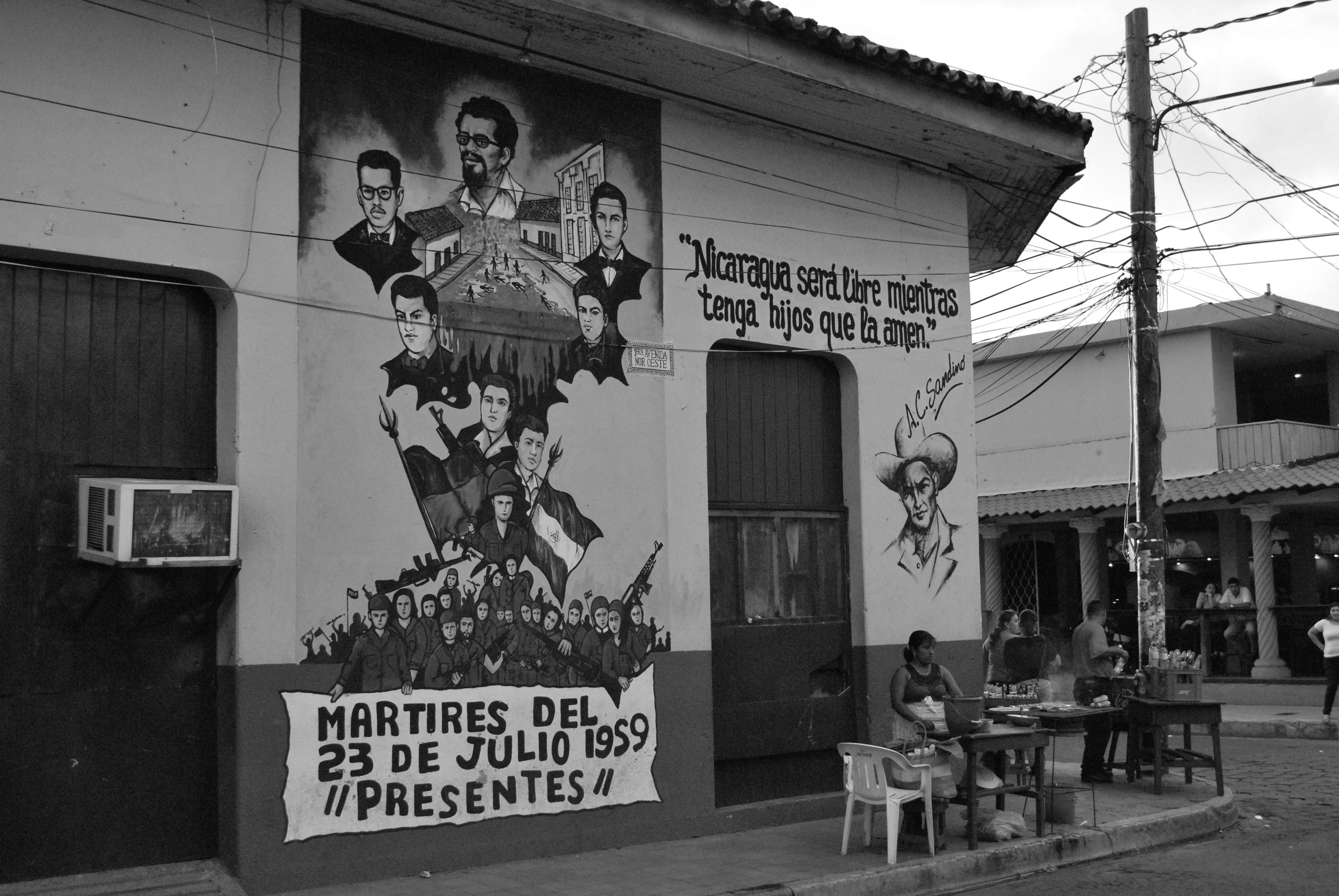
Costa Ricans are known as Ticos and are extremely friendly and approachable. Wherever you go they welcome you with a big smile and wish you Pura Vida, an expression that perfectly exemplifies their attitude towards life. Of approximately 4.5 million inhabitants, it is estimated that between half a million and a million have Nicaraguan origin as many left Nicaragua following the 1979 Sandinista Revolution against the Somoza regime and the subsequent economic struggles during the nineties. Usually known as a peaceful and accepting nation, Nicaraguans are nonetheless often the subject of racist comments from local population. However, it is fair to say that generally speaking Ticos and Nicaraguans coexist peacefully as the photograph above illustrates (the gentleman in the right is of Nicaraguan origin).


2. Mercado Central, San José

San José is Costa Rica’s capital and home to the Central Market or Mercado Central. For a first-time visitor, the Mercado Central is a perfect introduction to Costa Rica’s culture and cuisine. Populated with infinite numerous family-owned eateries and small stands covered with piled fruits of all sorts, it is the capital’s little treasure and a must if you find yourself wandering the streets of San José. Walk around, interact with the locals, take a typical Costa Rican meal at one of the numerous sodas, and round it all up with a cup of coffee made from the finest Costa Rican beans.


3. Parque Nacional de Tortuguero

Literally meaning “Turtle Place”, Tortuguero is a small village located in the Northeast, 31,187-hectare costal National Park of Tortuguero and approximately 50 miles north of Puerto Limon. Both town and park owe their name to the hundreds of Green, Leatherback, and Hawksbill Sea Turtles that nest every year alongside the wide shorelines. Witnessing the turtles nest at night under the light of a white, round moon is a brief but enduring experience. Unfortunately, turtles are an endangered species as centuries of hunt have led to a worrying decrease in their numbers. And although Costa Rican legislation has toughened in that respect, many still worry that clandestine hunting is still common practice. Be that as it may, Tortuguero is a realm of peace as the photograph above crystallises: all you need to do is jump on a canoe, paddle your way through the canals and spend the morning fishing. Locals will then help you cook a delicious soup called Rondón.


4. Puerto Viejo

Puerto Viejo is unique in itself. Located in Costa Rica’s Caribbean coastline, Puerto Viejo is home to a mixture of Jamaican, European, and Afro-Caribbean cultures. Everywhere you go you can listen to locals speaking some sort of Creole English. Surf, fishing, night life, and a rich cuisine can easily turn this place into a trap as many Europeans who came for a few days yet stayed for years will happily testify. I could have chosen a photograph of a local surfing the acclaimed Salsa Brava but I prefer the above picture as it reflects the best of that magical place: when the sun goes down, take a swim and let the warmth of the Caribbean wash away all your burdens. Puerto Viejo really is the place to experience and on top of all that it is very close to Manzanillo and Cahuita.


5. Imperial

Any reportage on Costa Rican culture and society needs to cover the country’s beer Imperial. Not that I like beer myself as I am allergic to barley, but a reference to the preferred beer of the majority of Ticos is necessary as the entire Costa Rican landscape is populated with signs showing the Imperial Eagle. Born in 1924 at the Ortega family-owned brewery, Imperial combined German beer tradition with the taste of Costa Ricans. In 1957 the Ortega brewery was acquired by the Jamaican FIFCO (Florida Ice & Farm Co), owner also since 1912 of the Traube brewery and Costa Rica’s second most popular beer Pilsen, and soon after Imperial became a national emblem. In the words of FIFCO, throughout history Imperial has traditionally reflected the character of ticos: cheerful, kind, sociable, popular, and proud of their country. By the way, today Imperial announced that it has finally set a date in 2012 for its popular annual Music Festival after four years of absence.


6. Cahuita, the sea, and the sloth sanctuary

Cahuita also deserves a mention of its own. Surprisingly small and located on Costa Rica’s Caribbean coastline between Limon and Costa Rica’s border post of Sixaola, Cahuita hides a real treasure: a long, desert white-sanded beach flanked by an Aviarios Sloth Sanctuary where some two hundred baby, orphan sloths are looked after and rehabilitated before being returned to the wild. The town is magical but incredibly small, and the transparency of its waters as well as the sloths’ almost invisible presence is definitely worth the effort of travelling to that remote place of the world.


7. Costa Rica: A life full of colour

My last chosen photograph has a clear purpose: in addition to all the green and blue of Costa Rica’s natural parks and sea, the country is full of live colours deriving directly from its home grown agricultural products. Wherever you go, towns are always filled with street markets selling a wide range of fruits and vegetables. Their colour is so powerful that it inevitably cheers you up. Apart from the Mercado Central mentioned above, one cannot miss out on this market located in San Isidro de El General, a rapidly growing town located some 120 km Southeast of San Jose and 30 km North of Dominical in the Puntarenas Province.

Conclusion

As the title of this entry indicates, the above is meant to be a brief taste of Costa Rican culture. Geographically, it provides snapshots of the center and East coast of the country leaving aside the West coast for a very simple reason: the entire country is amazing but my preference lies with the east coast as it is, in my view, less Americanised and more authentic (these are generalisations and of course there is a bit of both everywhere). The reportage also leaves unexplored some other fantastic areas located in the heart of the land either because I was not able to cover these due to shortage of time or because I do not keep photographs of some of the places I went to, such as El Arenal or La Fortuna. The reportage also leaves aside other less attractive aspects of Costa Rica such as poverty, crime, and drug trafficking in Limón, for example. This, too, is the result of a conscious decision as is the focus on culture and not on politics.

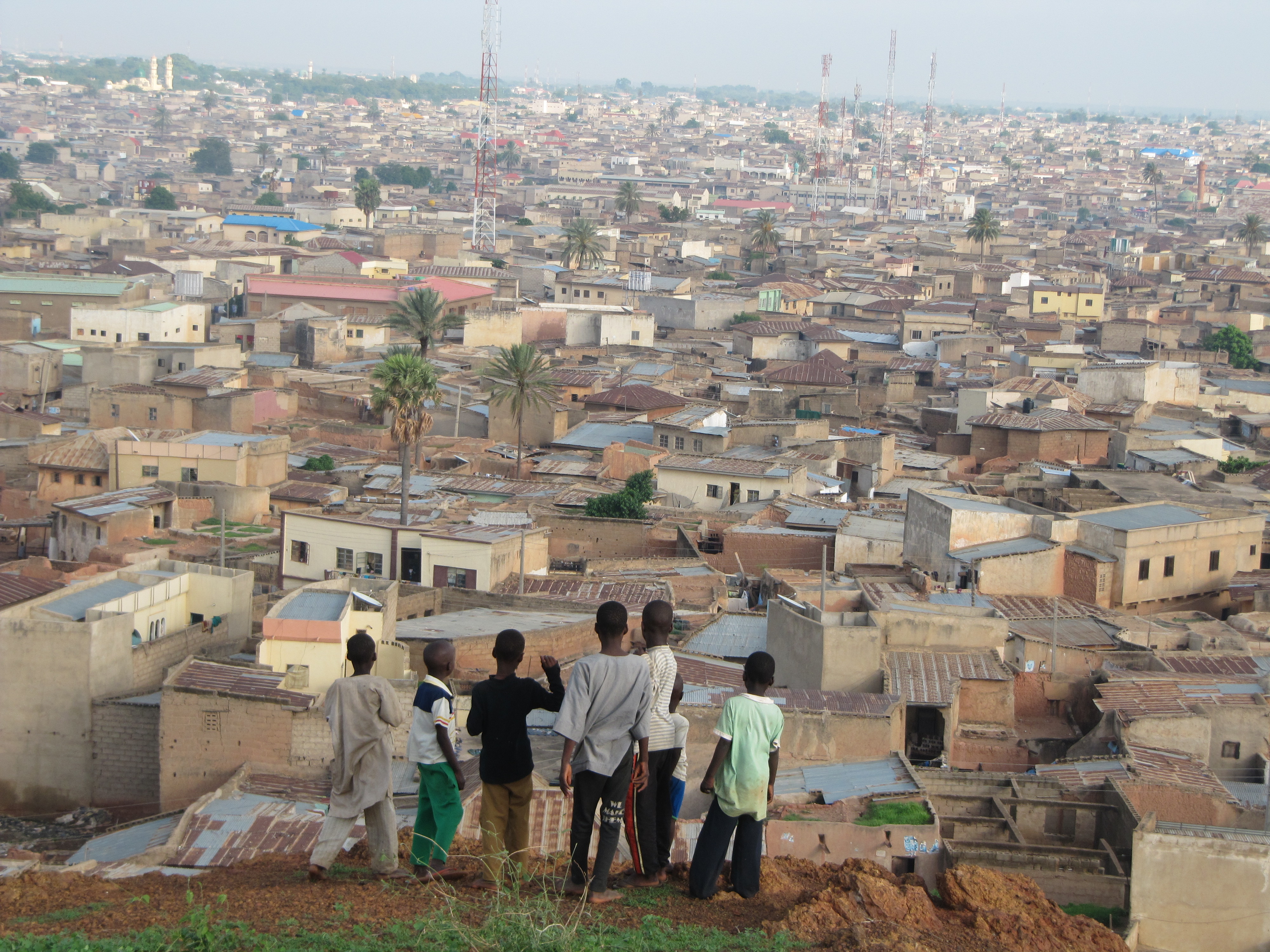
Photo Essay: 6 Reasons Why Terror is Gaining Momentum in Northern Nigeria

Looking for a Future

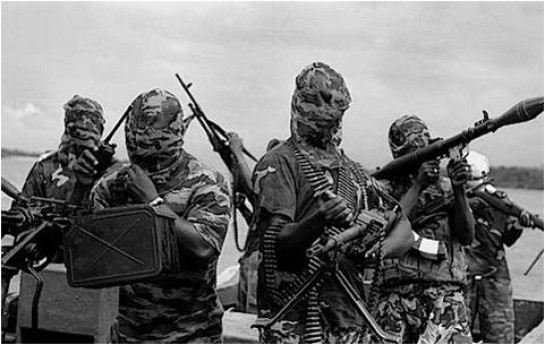
The state of Nigeria is facing its largest crisis in over a decade.  As the ferocity and popularity of the Islamist terrorist group Boko Haram rises, the very unity of the state is being challenged. This collection of photos assesses the reasons why the group is becoming increasingly attractive to the disaffected population in the north despite their gruesome tactics.

For more on Boko Haram see ‘The State of Terrorism in Nigeria’


By Jack Hamilton, 14 Dec 2011

1. The Lost Generation

The 'Lost' Generation

Northern Nigeria is a youthful place. Having maintained a high birth rate for decades, over half of the population is now under the age of 30. The average fertility rate in Nigeria is 5.7. In the northern states it is 7.3. This demographic shift has arrived at a time in which unemployment is rife and the perception of victimisation by the federal government is strengthening. There is now a generation of young, unemployed northern Nigerians who feel alienated from the central government and see flagrant displays of wealth in Nollywood films depicting the southern cities of Lagos and Port Harcourt. This sentiment of marginalisation has been utilised effectively in the propaganda of Boko Haram.


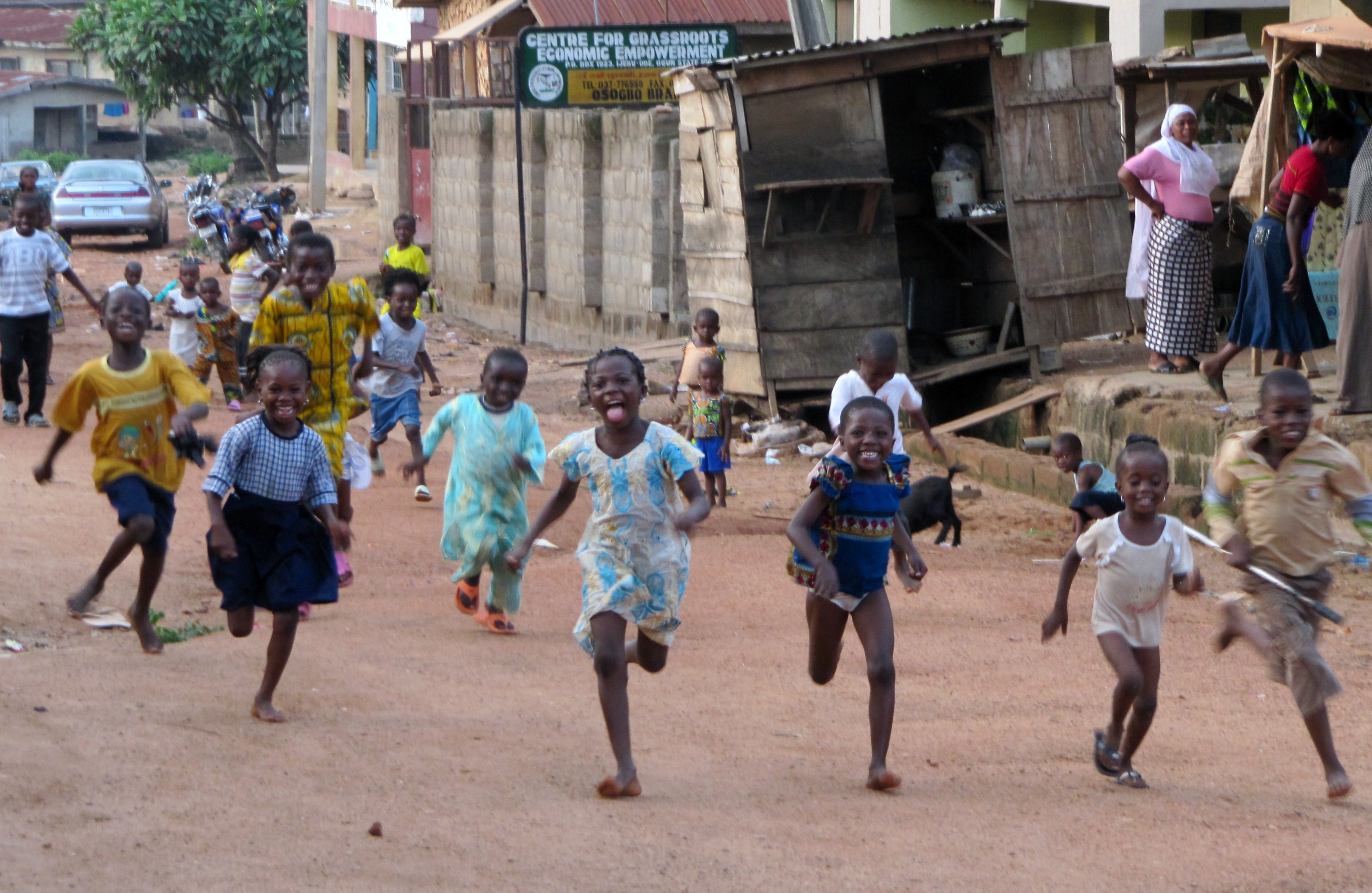
2. Religion

A Sign of the Times

The use of religion as a political tool goes back to the pre-colonial era of Nigerian history.  Now a democratic state, in theory one religion should not take precedence over another (a notion enshrined in the Nigerian Constitution).  Despite this, religious disputes consume much of Nigeria  in an ongoing conflict which has claimed thousands of lives.  Politics, especially in electoral cycles, so often comes down to religion.

Boko Haram is a religious actor whose primary goal is to implement Sharia law across the entire state of Nigeria.  They claim that the 50.5% population of Muslims is underrepresented at a Federal level and advocate extreme violence to achieve their objectives.  It is clear that the vast majority of Muslims in Nigeria do not support the religious stance of the group but the popularity of Sharia law since its institution in the twelve northern states shows the strength of faith in the region.

The complexity of the ethno-religious conflicts engulfing the Middle Belt and the north of Nigeria is difficult to summarise here.  While the attacks of Boko Haram are frequently framed as solely religious actions the reality is a more complex conflagration of ethnicity, alienation, fear and insecurity.


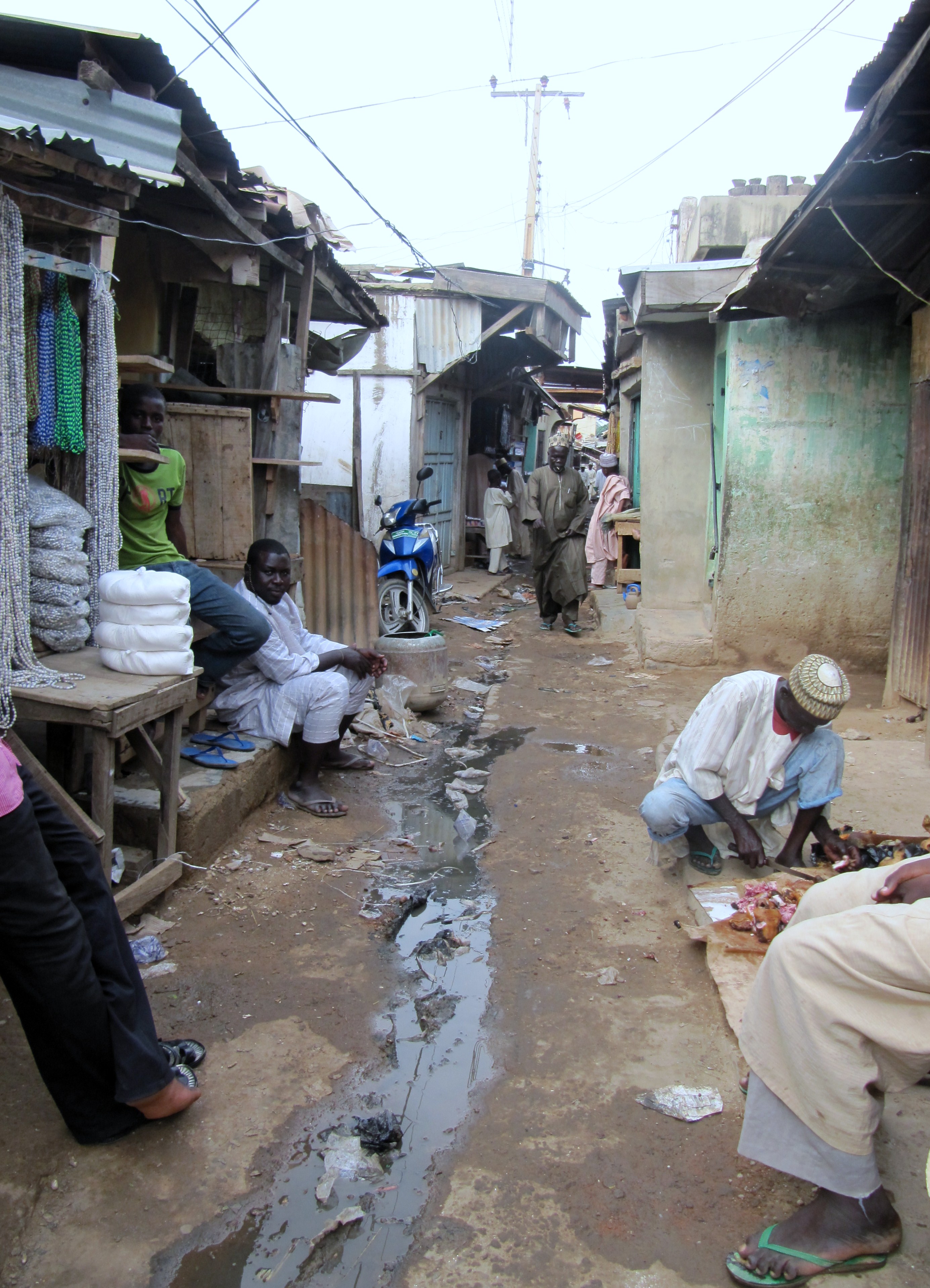
3. Urban Planning

Street Politics

Islamic design resonates in the street networks of Kano. To ensure privacy and the seclusion of women the city does not have a regularized street network and instead seeks to avoid long lines of sight and open vantage points. A consequence of this urban planning has been that non-Muslim migrants to the city have been taken up residence in the non-Muslim enclave, ‘Sabon Gari’ (colloquially: ‘Sabo’). This has meant that the cities of the north have grown from having a single core to being polynucleated with conflicting parties living side by side but not together. When conflict erupts in urban areas, it can be explosive. Boko Haram attacks frequently target the ‘Sabo’ districts.


4. Mistrust

Beware 419

The mere mention of Nigeria often conjures the phrase ‘419’. While popularly known as an internet scam, the number is derived from the property laws in Nigeria in which Law 419 outlines property ownership. The phrase ‘Beware 419’ litters walls across the country to alert ‘potential buyers’ that the house is in fact inhabited and not for sale. After asking for a deposit up front the criminal will flee the scene leaving the ‘new owners’ to confront the current occupants. Mutual distrust is rife.


5. The Security Vacuum

And if one green bottle should accidently fall...

Personal security takes primacy in the north of Nigeria. A lack of trust in the central authority of the state manifests itself in personal security measures. This picture shows the rows of broken glass bottles cemented into the top of a wall to deter intruders. Such walls surround houses in both high and low income areas as violent crime and theft is endemic. Disdain towards the Nigerian security forces have meant that the horrific bomb attacks of Boko Haram on police stations and international organisations have helped to garner support for the terrorist group.


6. Health

Testing Times

Northern Nigeria continuously faces a shortage of doctors known as a ‘brain drain’: doctors migrate to higher paying positions in the south of the country or further afield in Europe and North America. The issues of malnutrition and water shortages are taking their toll as the climate of the arid northern regions becomes increasingly inhospitable. Medicinal supplies are insufficient at current levels as malaria and HIV/AIDS remain at constant levels and when aid does arrive it has on occasion been mismanaged. In 2009 alone 84 children in the northern states died after ingesting a batch of contaminated teething medication.

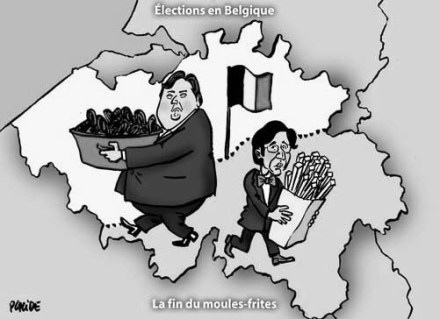
What about Belgium?

In this article, the author assesses the record-breaking government formation crisis in Belgium and addresses why a complete deadlock in government formation negotiations has a detrimental effect on Belgium’s economy and its international reputation. 


By Matthias Pauwels, 22 Nov, 2011

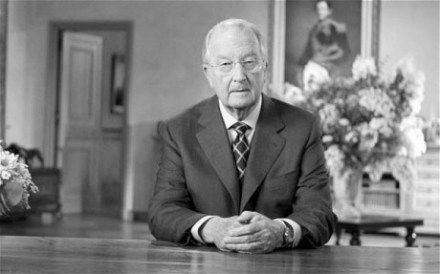
Ten thousand thundering typhoons! Filibusters! If the insults of Belgian King Albert II strike any resemblance to those of his fellow compatriot, Tintin’s Captain Haddock, this perhaps would be the best of times to hear them in the corridors of the Royal Palace in Laken. When Belgium’s federal elections took place on Sunday 13th June 2010, no one could have imagined that the country would end up in political limbo due to a record-breaking political crisis.

As Belgium hit a crippling 526 days without a government on 21st November 2011, the man tasked with ending Belgium’s political crisis, Francophone Socialist leader Elio di Rupo, offered his resignation to King Albert II for the second time in five months on Monday night after talks collapsed over budget cuts to counter the Eurozone’s debt crisis. And after an endless string of appointing mediators, negotiators, and government formation specialists, even the palace’s inspiration to come out with a strong statement appeared rather stale when the king urged to “recall the gravity of the current situation and underlined that the defence of the general interest of all Belgians and European deadlines require a very quick resolution to the political crisis.”

Quo Vadis, Belgica?

In the 1830s, the artificial construct that is Belgium found its unified strength, as the Southern Provinces from the United Kingdom of the Netherlands – albeit linguistically divided but united as Roman Catholics – tore away from the overwhelmingly Dutch Protestants. William I, the Dutch King, rightly believed that the separation of the Southern Provinces of the rest of the Netherlands would be detrimental to his country’s economy. In many ways, the Belgian Revolution had several causes; mainly, the treatment of the French-speaking Catholic Walloons in the Dutch-dominated United Kingdom of the Netherlands, the difference of religion between the Belgians and their Dutch King, and the domination of the Dutch over the economic, political, and social institutions of the Kingdom.

Two centuries later, the power of religion that once unified Belgium as a whole has traded places with the finer Burgundian things in life the country is internationally renowned for, such as trappist beers, mussels and fries, and chocolates. But as apathic as Belgians seemed to be about their deepening political crisis, is the savoury of the country’s cuisine strong enough to keep the Dutch and French-speaking centres united?

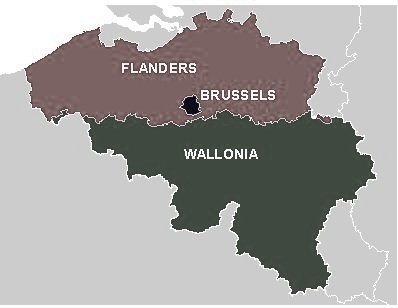
In a striking resemblance to the Dutch King’s woes and sorrows regarding the separation of the Southern Provinces in 1830, Belgium’s current political squabbles are heavily embedded in the country’s unequal regional economic growth, combined with the intractable problem of revenue flow to the different regions. Flanders – not to be confused with the Simpsons’ sometimes sickeningly cheerful Hi-didly ho next-door neighbour – accuses the Walloon region of being too dependent on economic subsidies from the Flemish region. Wallonia, once the shining beacon of Belgium’s industrial revolution, capitalised heavily on its extensive deposits of coal and iron from the beginning of the 19th to the middle of the 20th century. This brought the region wealth, making Wallonia undoubtedly the more prosperous half of Belgium.

Since World War II, however, the importance of heavy industry has greatly declined, and the Flemish Region gradually surpassed Wallonia in wealth as this region economically declined while the former specialised in IT, engineering, pharmaceuticals, and shipping. Wallonia, making up 55% of Belgium’s territory but with only a third of its population, now suffers from high unemployment and a significantly lower GDP per capita than Flanders, leaving the region to rely heavily on economic subsidies from the Flemish region. It is this fact exactly that has led Bart De Wever, leader of the right-wing New-Flemish Alliance and winner of the previous general elections in Flanders, to quote that “Belgium is the sick man of Europe, with unbridled money flows to Wallonia, a junkie on a Flemish drip.”

The most recent elections were fought mainly on the failure to resolve the conflict over the electoral arrondissement of Brussels-Halle-Vilvoorde. The conflict centered on the political and linguistic differences in the arrondissement and exacerbated tensions between Dutch- and French speaking Belgians, with the Flemish desiring to split the arrondissement into two separate areas, while the Walloons wish to keep it together. Belgium’s latest marathon government formation talks collapsed after Flemish and French centre-right parties rejected formateur di Rupo’s plan to curb the public deficit, saying it relied too much on tax hikes and not enough on cuts. Hopes of an end to the crisis had risen last month after the feuding Flemish and French-speaking parties at the negiotiating table reached a deal on the thorniest issues, such as giving the regions more power and reforming the status of bilingual Brussels. The New-Flemish Alliance however, winner of the election in the northern part of Belgium and the largest political party in Flanders, had by then long left the negiotiating table, claiming that the reforms outlined by di Rupo still catered too much to the needs of Wallonia. The remaining negotiating parties, now deeply divided over how to slash the Belgian debt, leave the country without any hopes of a government before the new year.

Impact of Belgium’s deadlock government formation

The impact of Belgium’s political woes affect the country both on a domestic and international level. On a domestic level, Belgium’s growth prospects, like the rest of the debt-saddled 17-nation Eurozone, have deteriorated in recent months. In the second trimester of 2011, the economy of the EU grew by 0.2 %, according to Eurostat. In the same period Belgium, paradoxically enough, registered a comparative high growth rate of 0.7 %, leaving many analysts baffled on how to explain “the Belgian wonder”. A government-less country that hadn’t dare to introduce anything remotely resembling austerity measures surpassed Germany and France in economic growth. The absence of a government seemed to make little difference to day-to-day life in the small kingdom. Many state functions, from education to welfare, have already been ceded over the years to regional and community governments. Belgium deftly helmed the presidency of the European Union in the second half of 2010, and the caretaker government headed off market jitters over its debt levels in January 2011 by quickly agreeing on a tighter budget.

The Belgian wonder, however, seems to be over. Belgium’s borrowing costs have spiked in recent months, but so far the nation has fended off the type of market pressure that has already toppled the Spanish, Italian, Greek, Irish, and Portuguese governments and forced the latter three to take out multi-billion-euro EU-IMF bail-out loans. Moreover, the European Commission published new growth figures this month showing that Belgium’s economy would expand by only 0.9 % next year, as against the 2.2 % previously predicted by the EU six months ago. Additionally, EU economic affairs commissioner Olli Rehn warned Belgium and four other EU states earlier this month that they could face fines if they failed to get their public finances back in order. In order to remain financially feasible, Belgium would have to slice 11.3 billion euros off the deficit next year and some 20 billion in all by 2015. Caretaker Belgian premier Yves Leterme and the European Commission have repeatedly called for a deal that would bring the country’s public deficit below 3 % of gross domestic product by 2012 – rather than the 4.6 % now forecast. In October of this year, Moody’s put Belgium’s Aa1 government bond ratings on review for possible downgrade, a decision that was heavily influenced by troubled Franco-Belgian Dexia bank. The nationalisation of Dexia was one of the only major tour de forces the Belgian caretaker government was capable of. The approval of new legislature on Belgium’s federal level, the expansion of new development aid plans, and a clearly outlined federal approach to implement austerity measures tackling the current economic crisis have been put on hold for a painful 527 days in the absence of a new government. And while Belgians initially celebrated breaking the Iraqi world record of government formation in February of this year – an event which was whimsically dubbed the “Fries Revolution” – at this point, the party is long over. And Belgians are undoubtedly left to wonder: is there still a party planner left that can fix this mess?

Furthermore Belgium’s international reputation is at stake. As the heart of Europe and hub to the European Union and NATO, the country’s political struggles have left many international politicians to wonder whether or not Belgian politicians can rise above their differences. The partition of Belgium has been deemed not viable by many leading political analysts and would leave the intractable problem of bilingual Brussels, home to many domestic and international political institutions.

End of Belgium?

For some in Belgium, the question is not if, but when the divorce of Flanders and Wallonia will be consummated. But the partition of Belgium has been deemed not viable by many as well. You wind up with the intractable problem of bilingual Brussels and, more worryingly, the demise of Belgium – a sticking plaster over the fault-line between Europe’s Protestant north and Catholic south – could potentially make Europe a more dangerous place.

According to many Walloons, Flanders has systematically organised its independence over 35 years, taking away responsibilities from Belgium’s federal level and transferring them to local community governments, such as education and welfare. French-speaking Brussels – whose cultural and linguistic affinity is with Wallonia to the South – sits like an island in Flemish speaking Flanders, courtesy of the newly established linguistic frontier that was drawn southwards in 1962.

In the 45 years since, Belgium as a state, steered by the economically and numerically superior Flemish, has effectively devolved itself out of existence. ”Now Flanders with six million people makes the rules and four million French-speakers adapt,’” said Myriam Delacroix-Rolin in an interview with the Guardian in 2007. Delacroix-Rolin is the mayor of Rhode Saint-Genese, a small town 9 miles south of Brussels, who is banned from speaking French at council meetings or official functions. ”The Flemish are very clever. My council does not use language criteria to allocate housing, but the region does. In this way Flanders is ensuring that more Flemish-speakers settle in my municipality. The region also imposes a language test on teachers seeking to work here or parents wishing to adopt children. One way or another, your route is barred unless you have Dutch language diplomas.”

It used to be the opposite. During centuries of Walloon prosperity – including 200 years as Europe’s most productive mining and steel basin – the Flemish were looked down on and their language banned. Recently they have gained the economic upper hand, and now see post-industrial Wallonia as a costly passenger. Increasingly, Flemish politicians speak of the ‘Czechoslovakia option’ and point to the fact that the ‘velvet’ break-up in 1993 was a success for both sides. But economically it is hard to imagine what the wastelands of Wallonia would stand to gain.

Most observers believe the break-up is just a matter of time; Flemish nationalist support will grow every time there is a local or national election. But nothing will happen without the EU, to which an independent Flanders, would have to apply for membership. Flanders believes that Brussels will be its new capital, but with the capital’s linguistic and cultural affinity to Wallonia, this is highly contentious. Flanders could be pushing for a messy divorce.

For the time being, Belgian King Albert II has not yet accepted the resignation of formateur di Rupo. While the King deliberates on where to go from here and Belgians await his next move with bated breath, the tricolor Belgian flag remains to wave stately at the royal palace. For Belgium and Europe’s sake, let’s hope it’s not the last time.

Reviving Global Disarmament

In this article, the author seeks to revive the debate around the issue of global disarmament by calling civil society to engage with the issue critically and constructively. Disarmament, he argues, ought to deal simultaneously with conventional weapons and armed forces, so called inhuman weaponry, and WMD, and be considered within the broader context of human rights, development, and climate change. The author concludes that more action-oriented debate is necessary.


By David J. Franco, 18 Nov, 2011

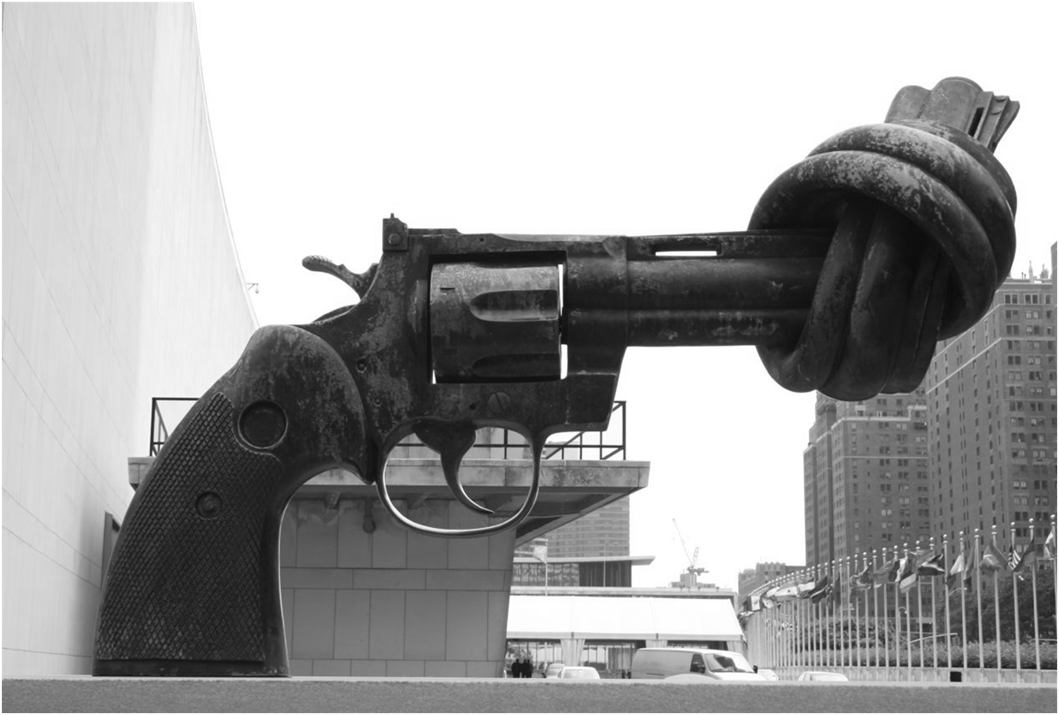
Under the provisions of the UN Charter the Security Council is responsible for the maintenance of international peace and security while the General Assembly may, inter alia, make recommendations in matters governing disarmament and the regulation of armaments. To date the General Assembly has issued numerous resolutions calling for disarmament but despite some progress a lot remains to be done. In extreme synthesis, when looking at disarmament matters we are referring to three interrelated areas: conventional and armed forces, humanitarian, and Weapons of Mass Destruction. Contemporary examples relating to each of these areas include, respectively, the 1990 European Treaty on Conventional Armed Forces, the 1997 Convention on landmines, and the Biological and Chemical Weapons Conventions of 1972 and 1993.

Surely the aforementioned achievements (and many others) constitute positive steps but many questions remain unresolved. For example, why keep the three disarmament fronts separate? Or why are past regional agreements not extended to other regions? In a Study on Conventional Disarmament[1] prepared in the early eighties experts in the field stated that ‘conventional disarmament should be pursued in conjunction with nuclear disarmament’. Further, they underlined that conventional disarmament ‘should not jeopardize the security of any State and it should be aimed at achieving general and complete disarmament’. The same conclusion must be reached when considering nuclear disarmament. The two, conventional and WMD, are mutually reinforcing and interlinked. Humanitarian disarmament is not different in that respect. Only a month ago Pakistan delivered a Statement to the UN First Committee on Disarmament reinforcing these points[2] -of special significance is the following paragraph taken from the Final Document of the 1978 First Special Session of the General Assembly on Disarmament:

“Together with negotiations on nuclear disarmament measures, negotiations should be carried out on the balanced reduction of forces and of conventional armaments, based on the principle of undiminished security of the parties with a view to promoting or enhancing stability at a lower military level, taking into account the need of all states to protect their security”.

But why is all the rhetoric on disarmament not accompanied by real, holistic proposals? Is it because of the daunting difficulties that such a project entails? Because of a lack of vision? Or is it simply the result of the absence of political will on the part of the P-5? It is often argued that nuclear disarmament should be given priority based on the tremendous destructive capabilities of nuclear weapons but in a time where these are now spread in at least nine different countries total nuclear disarmament would ultimately leave conventional strong states in an even greater position of power. After all, reducing power asymmetries is one of the reasons why countries seek to develop nuclear capabilities (although it is not the only reason[3]). Unfortunately, weapons and war remain for many states an instrument of power (not for all states though as some twenty one countries in the world do not have an army). Great powers still believe they can posit themselves over and above the law. Double standard policies have caused much harm. In cases such as the NPT regime, nuclear powers act as if they were part of an oligopoly similar to that of powerful companies trading with precious commodities.

An aspect we need to bear in mind when it comes to disarmament is the notion of issue-linkage. Disarmament needs to be approached in conjunction with human rights, development, and climate change. In mid September I attended the Third SGI-UK Peace Proposal Symposium[4] where I listened to a presentation by Dr Michele Lamb[5] who drew the attention to the lack of connection between the human rights movement and the movement for the abolition of nuclear weapons. The human rights movement has managed to cross boundaries and communicate and unite with disarmament initiatives aimed at light weaponry and other conventional weapons (for example, landmines and cluster munitions –the so called humanitarian disarmament). But why is it failing to communicate with the movement for the abolition of nuclear weapons? Are WMDs less of a humanitarian concern than conventional weapons or weapons inflicting unnecessary suffering to combatants and non-combatants alike? Is it not our right as citizens to be informed on how our governments and armies spend our money in WMDs?[6]

One possible explanation is the sense of helplessness and anxiety that common and ordinary people feel when confronted with the rather incomprehensible nature of nuclear weapons and WMDs more generally (I have pointed elsewhere to denial as another possible explanation[7]). Furthermore, the level of state secrecy with which these weapons are surrounded does not help increase either the level of awareness or the willingness to engage in a fruitful debate on the usefulness (rather the uselessness) of these weapons (someone has elsewhere described these weapons as “invisible”[8]). We have seen pictures of Hiroshima and Nagasaki yet we are not capable of understanding what nuclear weapons are. Nor are we capable of accepting that we, the West, used them in the past and that we risk using them again in the future –instead, we are always pointing the finger to others.

Moreover, military budgets have a direct impact on development and human security. At a lecture at the London Imperial War Museum, Sir Richard Jolly[9] opened his talk with the following statement: “Disarmament is the kindest cut of all for development”. He then added that a shift of spending away from the military brings immense benefits including a rise in education and employment, a decrease of inflation, and a notable increase in human security and development. Further, as a lady in the audience rightly noted we cannot look at disarmament and climate change from separate orbits. With environmental change, the world will see a rise in conflict as states and non-state actors will likely increase their struggle over natural resources and energy and food security. The more weapons are spread around the globe the more likely we are to resort to these to resolve our differences (thus failing to follow the UN Charter provisions on the use of pacific settlement of disputes).

Civil society needs to engage with all these issues simultaneously. After a decade of huge military spending, reviving global disarmament is much needed. Of course, that does not mean that other less universalizing and all-encompassing initiatives cannot take place in the meantime. Take for example the case of the Middle East. Does a global, holistic approach to disarmament mean that no interim steps should be taken there? Or should WMD disarmament in the region be subjected to parallel conventional disarmament and/ or agreement on the adoption of a regional security framework? Should, on the contrary, WMD disarmament be detached from the politics of the region? These are all questions that were raised and addressed at the 6th Annual Conference on a Middle East Weapons of Mass Destruction Free Zone held at the London School of Oriental and African Studies.

The authors of the aforementioned Study on Conventional Disarmament also noted that ‘in order to facilitate the process of disarmament it is necessary to take measures and pursue policies (…) including commitments to confidence-building measures’. Confidence security building measures are indeed necessary at all stages and levels of disarmament as they can help further develop a move from a culture of violence to a culture of peace. But then, what if nuclear disarmament could be achieved regionally without simultaneous conventional disarmament? Would that be a positive step for the region or should weaker conventional states with nuclear capabilities resist it because it would lead to further asymmetries of power and a breakdown of regional balance of power? Would the removal of WMDs from the Middle East not amount to a confidence building measure in itself?

According to some, disarmament needs no debate for it is neither a political nor an ideological matter. Let me disagree. When debate fails, silence reigns and all sorts of abuses take place. Debate is necessary, provided it is not sterile, provided it raises the relevant questions, and provided it is followed by action. Reviving global disarmament is mostly needed, the world can only benefit from it. Producing more weapons does not amount to more security. Neither does the current pervasive talk of non-proliferation and counter-proliferation.


[2] Available online at http://www.reachingcriticalwill.org/political/1com/1com11/statements/18Oct_Pakistan.pdf. In the same document, Pakistan further stresses the importance of linking conventional and nuclear disarmament with humanitarian disarmament and the implementation of confidence building measures.

[3] See for example ‘Why Do States Build Nuclear Weapons?: Three Models in Search of a Bomb’, International Security, 21:3, pp 54-86

[5] Dr Michele Lamb is principal Lecturer in Human Rights and Sociology at Roehampton University

[6] Note that the terms human rights and humanitarian are used here interchangeably and free of academic and theoretical constraints

[7] See ‘Farewell to nuclear weapons or the failure of civilisation’

[8] Watch a video available at www.hairtriggeralert.com

[9] Sir Richard Jolly is Honorary Professor and Research Associate of the Institute for Development Studies, University of Sussex, and former Assistant Secretary General of the United Nations. He has also worked with UNICEF and UNDP

Should new wars be seen as a continuation of economics by other means?

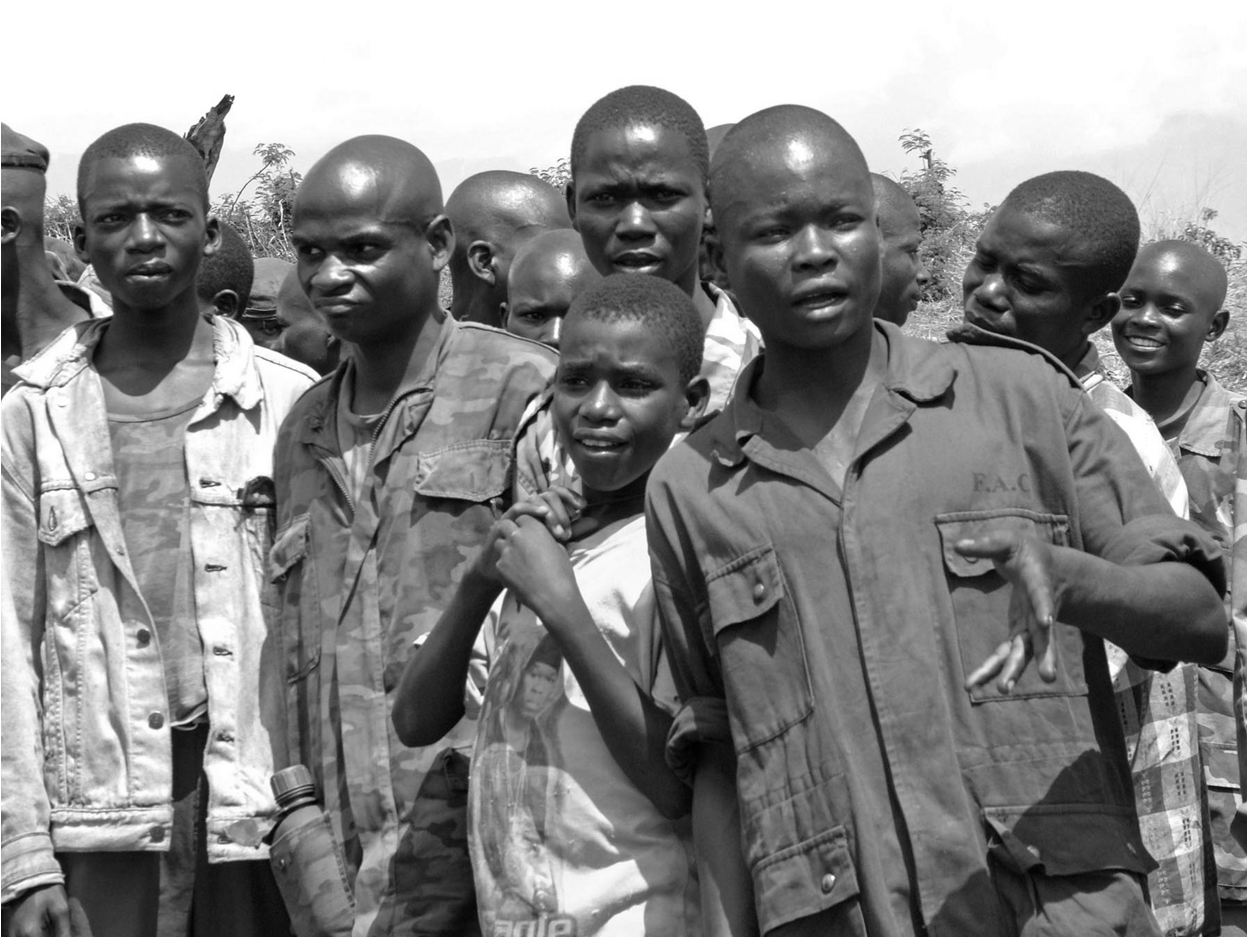
Child Soldiers in the Democratic Republic of Congo – Source: USAID

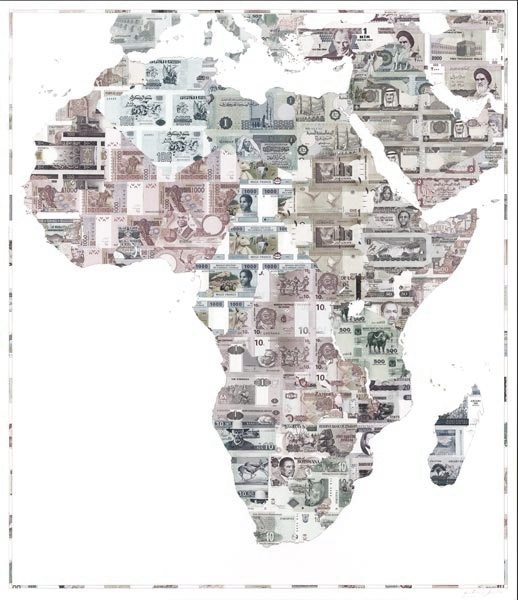
In this essay, the author critically analyses Mary Kaldor’s new wars theory and challenges views that portray new wars as a continuation of economics by other means. Drawing on the writings of Mats Berdal and Stathis Kalyvas, as well as theories of peace and conflict, the author dismisses Paul Collier’s greed thesis and concludes that it is necessary to move beyond reductionist theories and adopt holistic approaches to conflict.


By David J. Franco, 17 Nov, 2011

Some scholars claim that war has shifted from a classical model to a new mode of intra-state warfare[1] in which ‘states have given up their the facto monopoly of war’[2] to groups and actors driven by greed. This, in turn, has led some to propose a reformulation of Clausewitz’ dictum of war[3] by defining the so called new wars a continuation of economics by other means[4]. In this regard, if we accept that new wars are driven only by economic motives then surely these should be seen as the continuation of economics by other means. In other words, defining new wars as wars driven by greed or defining these as the continuation of economics by other means is the same. Therefore, the answer to the actual question lies in the same definition of new wars and, in particular, on whether these can be defined as wars driven only by private, greedy motives or economics. This essay looks into this issue with a critical view. My argument is that the so called new wars are not so new and that, even if we accept some of the alleged new elements of these wars, economics is generally not the only motive driving conflict. Hence, I contend that no general theory of war based on economics can be drawn from these so called new wars and that a holistic approach is always necessary if we want to translate theory into effective policy.

This essay is organized as follows: The first part is a broad critical analysis of the new wars thesis. This is important because before focusing on the actual question it is first necessary to define what new wars are really about. In this section I point to the weaknesses of the claimed newness and demonstrate that the changing dynamics of conflict must not be confused with a change in the nature of war. In the second part I narrow the analysis and focus on thesis based on greed. In this section I critically analyse the works of Paul Collier and David Keen and seek to prove that reductionist explanations based on economic motivations are incomplete. Finally, the third part of this essay is a reflection on the nature of war and whether it is possible to formulate a general theory of war or whether every war is sui generis[5].

Defining New Wars

According to Mary Kaldor, new wars find their origin in the context of the globalization of the 1980s and 1990s which she defines as ‘the intensification of global interconnectedness – political, economic, military and cultural’[6]. Kaldor further stresses the relation between global interconnectedness and the erosion of the principle of territorially based sovereignty, as a result of which states would be experiencing an erosion of their monopoly of legitimized violence[7]. But Kaldor’s definition of globalization is insufficient, too vague and incomplete to explain why it has brought about, if it has, changes to the nature of war. As Mats Berdal notes, ‘much of the writings on the so-called New Wars of the 1990s typically proceed from a loose understanding of globalization as “the widening and deepening of economic, political, social and cultural interdependence and interconnectedness”’[8]. In this regard, Berdal denounces the ‘term’s “totalizing pretensions”’[9] in the sense that its vagueness is very distorting when trying to explain the particularities of one conflict or another[10].  Despite the attempts of other authors to clarify and expand on Kaldor’s definition of globalization[11], from an analytical viewpoint her explanation of the origins of the so called new wars remains incomplete[12]. But, leaving aside the issue of globalization, what are the so called new wars? Broadly, new wars are characterised as ‘criminal, depoliticized, private, and predatory’[13], while old wars are usually portrayed as ‘ideological, political, collective, and even noble’[14]. In the following paragraphs I critically analyse the so called new wars by disaggregating the new wars thesis along three clusters: goals and motivations; the means of warfare; and the means of funding war.

The first claimed distinction relates to the causes and motivations driving new wars. Among the competing thesis, two are worth exploring[15]: First, Kaldor claims that with the advent of globalization and the end of the Cold War[16] identity politics[17] have replaced ideology as the principal raison d’être of conflicts. Although she agrees with the fact that there may still be background ideas, she argues that these are merely an ‘idealized nostalgic representation of the past’[18]. In other words, Kaldor claims that the end of the clash of ideologies and the superpower rivalry of the Cold War unleashed ancient latent hatreds[19]. However, historical accounts prove Kaldor wrong. Indeed, two good examples are the French Revolutionary wars of Napoleon, where French grandeur might have been at the core of the revolutionary idea of “liberté, égalité, fraternité”, and the total wars of the twentieth century, which were as much about ideas as they were about nationalism[20]. Not to mention many of the wars of the second half of the twentieth century, where rebels were usually able to successfully mix Marxist ideology with nationalism[21]. The second competing interpretation stresses, with varying degrees, that new wars are driven primarily by greed or economic motives[22]. According to this, defenders of the greed thesis argue that the principal goal in new wars is to loot and to seek profit-maximizing, especially through the exportation of valuable commodities. But this view of old wars as wars of grievance while new wars are fought merely for greed reasons is too naïve and simplistic. It attaches too much weight to ideological or other motives in old wars, while it underestimates the weight of these motives in new wars. Further, it must also be observed that the greed argument is problematic as it is not clear whether it refers to the causes of war or to the motivations of the combatants, or both[23]. It is also unclear whether it refers to greed as a result of the need to finance war or to greed as the cause for war. This particular issue will be looked at in more detail in the next section; let us then continue with the other two main claimed distinctions between old and new wars.

The second alleged distinction refers to the methods of warfare. Here Kaldor points to the shift towards a culture of ‘fear and hatred’[24] implying a sort of new gratuitous violence where non-combatants take the worst part. In this regard, the literature often compares new wars with classic inter-state wars of the sort defined by Carl von Clausewitz[25]. The argument is often one that compares Clausewitz’s trinity of people, government, and armies with the blurred situation of new wars where combatants and non-combatants get mixed and the state’s structures are torn down[26]. This seems to imply that order, albeit one in situations of war, has given way to chaos, and that public interest, represented by the state, has given way to private interest(s). However, none of these claimed features are new in war. Historical accounts again portray situations in which war was not always like the sort defined by Clausewitz[27]. Further, to a greater or lesser extent, brutality among warring parties and against the population has always been, and continues to be, a common feature of war; not to mention rape as an extended practice in both old and new wars[28]. In this regard, it is often argued that in new wars the ratio of deaths among non-combatants has significantly increased[29]. But historians suggest that some forms of people’s war were fought in early Modern Europe, during modern Europe, and again in the twentieth century total wars[30]. Further, it is often also argued that a feature of new wars is the increase in the number of refugees and internally displaced people[31]. Indeed, such an increase in numbers cannot be denied per se but it may be due more to the fact that intra-state conflicts increased significantly in the early nineties than to other more obscure reasons[32]. Hence, when faced with what seems to be the absence of one or more features of old classic wars, scholars tend to argue that we are witnessing the emergence of a new type of war. The issue, I would suggest, is not whether the wars of the post-Cold War era are new, but whether the particularities of accounts such as those of Clausewitz are universal or confined to a particular spatiotemporal context.

Last but not least, a third claimed characteristic of new wars is that these are founded on what Kaldor calls the ‘new “globalized” war economy’[33]. In essence, new wars would no longer be ‘centralized, totalizing, and autarchic’[34] but decentralized, with high levels of unemployment, and dependent on external resources[35]. In addition, as opposed to classic warfare the new wars would be fought by different units of war that would ‘finance themselves through plunder and the black market or through external assistance’[36], including ‘remittances from the diaspora, “taxation” of humanitarian assistance, support from neighbouring governments or illegal trade in arms, drugs or valuable commodities such as oil or diamonds’[37]. But Kaldor’s argument is, again, misleading. One can agree that some of these features are applicable to a few of the wars of the developing world or to wars fought in para-states or states in transition, but to argue that these are common features of all intra-state wars in the post-Cold War era is incorrect. For instance, based on the works of Zeeuw and Frerks, and the studies of David Shearer, Mats Berdal argues that ‘the actual importance of diaspora income remains unclear and underresearched’[38] and that ‘[b]eyond the case of Sudan, however, the impact of relief aid on the course of civil wars, especially in prolonging them, appears to be exaggerated’[39]. With regards to the funding of wars through illegal practices such as the extraction and trade of commodities, scholars are unclear as to whether such practices are a means to an end or an end in itself. Indeed, while initially Kaldor seems to suggest that looting takes place in order to finance war, she then seems to confuse her own argument by suggesting that war is waged in order to loot[40].

Therefore, according to the above the so called new wars are not as new as it is often claimed. However, while this is true mostly with regards to the form (i.e. the methods of warfare and the funding of war), can the same conclusion be reached with regards to substance (i.e. the goals and motivations of new wars)? In this regard, since it is not form but substance what ultimately determines the nature of war, it is the causes and motivations of new wars, especially the claim that these are driven by greed, that needs to be analysed in more detail. It is to this particular debate I now turn.

Are new wars driven by greed?

While it is commonly agreed that economics are relevant to conflicts, ‘there remains considerable disagreement as to how it matters and how much it matters relative to other political, socio-cultural, and identity factors’[41]. As a starting point, Mats Berdal and David M. Malone point out that ‘what is usually considered to be the most basic of military objectives in war—that is, defeating the enemy in battle—has been replaced by economically driven interests in continued fighting’[42]. Further, Berdal and Malone note that ‘much of the violence (…) in the post–Cold War era has been driven not by a Clausewitzian logic of forwarding a set of political aims, but rather by powerful economic motives and agendas’[43]. Therefore, the question is whether private economic agendas outperform politics as the main cause driving wars since, as explained above, this inevitably would lead to a reformulation of Clausewitz’ definition of war as a continuation of economics by other means.

Studies based on new functional approaches to conflicts in the nineties demonstrated that ‘far from being irrational or dysfunctional, violence and instability often serve a range of political, social and economic functions for individuals’[44]. However, Paul Collier disagrees with this holistic approach and argues that ‘civil wars are far more likely to be caused by economic opportunities than by grievance’[45]. Collier’s main argument is that resources and commodities are the principal cause of intra-state conflict in the post-Cold War era. Indeed, as one scholar puts it, ‘[a]ccording to his controversial “greed thesis”, economic motivations and opportunities (“loot-seeking”) are more highly correlated with the onset of conflict than ethnic, socio-economic, or political grievances (“justice-seeking”)’[46]. But Collier’s thesis is too reductionist thus posing serious problems when translating theory into actual effective policy. Indeed, just as theories based solely on grievance are incomplete and may therefore fail to translate into effective policy, any explanation of conflict that focuses only on greed suffers from the same weakness. As noted by Ballentine and Nitzschke, ‘explanations of conflict should avoid “resource reductionist” models in favour of more comprehensive approaches that focus on the wider range of political and economic interactions that drive conflict’[47]. In this regard, the work of David Keen seems to offer a more appropriate approach. Keen highlights the ‘importance of investigating how violence is generated by particular political economies’[48] and, based on his analysis of the economic functions of violence, notes that ‘particularly where chains of command are weak, war may be a continuation of economics by other means’[49]. In fact, ‘”where there is more to war than winning”, those benefiting from violence may have a vested economic interest in conflict continuation’[50]. But Keen’s words should not be taken as the formulation of a general theory of war based on private economic goals. Instead, my suggestion is that Keen’s reformulation of Clausewitz’ famous dictum of war is one which he sees applicable only to particular situations where the monopoly on the means of violence lies neither with the state nor with rebel groups but with other groups or individuals willing to take advantage of the situation. This then raises the question of whether in new wars the chains of command are always weak. But Keen’s choice of verb and tense (i.e. that war may be a continuation of economics by other means), suggests the contrary (i.e. that chains of command are not necessarily always weak or inexistent and/ or that even in those instances greed may not be the only element driving conflict). Hence, Keen’s thesis should be seen more as an attempt to address the problematic of existing theories of conflict constructed solely on political causes or grievance than a general theory of war based solely on economics. In fact, Keen clarifies his position in the following paragraph:

‘Paul Collier has emphasized the importance of greed rather than grievance in driving civil wars. My own work gives a good deal of importance to economic motivations. However, this process of falling below the law underlines the continuing importance of grievances and not greed in contemporary conflicts. Indeed, we need to understand how the two interact.’[51]

Similarly, Herfried Münkler notes that while special attention must be paid to the ‘economics of war and force, this does not at all mean that ideological factors should be neglected’[52]. Indeed, as noted by Frances Stewart, while economics played a very important role in initiating and sustaining the conflicts in Liberia, Sierra Leone, and Sudan, grievance also played an important role alongside greed[53]. For example, in Sierra Leone one could find both elements of ‘class conflict as well as short-term benefit maximization’[54], whereas in Liberia ‘ethnic inequalities combine with profit maximizing’[55]. Likewise, Christopher Cramer’s account of the civil war in Angola shows that it was as much a new war as it was an old war and that both greed and grievance played key roles in initiating and sustaining the conflict[56].

Accordingly, new wars are not solely or mainly about economics but about a wide range of issues encompassing politics, economics, development, ethnicity, religion, ideology, and identity[57]. While it is agreed that the wars of the late twentieth/ early twenty-first centuries have certain common new features, this cannot lead to the conclusion that the nature of war has changed and that new wars should be seen, as a matter of principle, as a continuation of economics by other means. Therefore, as Cramer points, have wars really changed or is it that we have changed the way we understand them?; and ‘is it possible to find a convincing general theory of war or is instead every war sui generis?’[58]

A final reflection

An approximation to these questions can be found in the works of Stathis N. Kalyvas. Indeed, Kalyvas notes that ‘the distinction drawn between post-Cold War conflicts and their predecessors may be attributable more to the demise of readily available categories than to the existence of profound differences’[59]. What these conceptual categories are, Kalyvas does not say. Maybe he had in mind the western, realist idea or concept of the state as the only unit legally entitled to hold the monopoly of organised violence. If so, the demise of this realist conception may have driven some scholars, too enthusiastically, to denounce the appearance of new wars where warlords fight driven by private interests. Be it as it may, in his conclusion Kalyvas refers to ‘the constraints of externally imposed lenses’[60] and warns about the risks of building theories founded on ‘conceptual categories grounded in current events rather than good theory’[61]. In a more recent work, Kalyvas notes that a ‘twin historical myopia’[62], affecting both actors and observers, has produced an undesired outcome: ‘the domination of the empirical and conceptual association of insurgency, civil war, and revolution’[63]. In his opinion, the problem is that this merger is ‘often understood as a universal constant when, in fact, it is a historically contingent’[64]. In other words, war and conflict are dynamic, not static, and so a good theory of war is one which leaves aside historical contingencies and draws a series of premises applicable to conflict throughout space and time. This point is illustrated in Kalyvas’ critique of Paul Collier’s “greed thesis”:

‘In a way, Collier (2007) was not necessarily wrong when he described all rebels as greedy looters rather than justice seekers; he just had in mind a subset of civil wars that happened to be particularly visible in Sub-Saharan Africa during the post-Cold War era. His error was to generalize what was, once more, a historically and geographically confined phenomenon’[65].

Indeed, David Keen was more prudent when he noted that under certain conditions war may be a continuation of economics by other means. Had Keen wanted to draw a theory of war based on economics applicable through space and time, he would have made a stronger case. But to do so would have been unwise and misleading for, as suggested by Kalivas, no good theory should be grounded on historical contingencies. In this regard, anything that bears the adjective “new” is inevitably based on historical contingencies and so runs the risk of being bad theory. Paul Collier’s greed thesis may be just that, a thesis, but his critique of discourses based on grievance and his conclusions reached on econometric models reflect higher ambitions. Accordingly, it may not be that the nature of war has changed (if anything, war is in constant evolution) but that we have changed the way we understand it or even that we never understood it in the first place. In this regard, it is important to note that the types of wars that we see in the Middle East are not like those of the nineties in Africa, or like those of the Balkans. The question, therefore, remains open: is it really possible to find a convincing theory of war through which to study war across space and time? This, I suggest, is something to explore in a separate study. For now, let it just be said that, more likely than not, any such theory risks leaving aside important elements of causality.

Conclusion

The end of the Cold War and the acclaimed advent of globalisation shifted the attention of scholars to the intra-state wars that developed during the nineties in the Balkans and Africa. This led many to label these conflicts as new wars in the sense that they presented features unknown or unseen in past eras. Among these, the most problematic is the claim that new wars are driven by private, greedy motives.

However, a close analysis of the new wars thesis shows that the new is not so new, and the old has not been entirely relegated to the past. In addition, while economics plays an important and sometimes decisive role in many of these so called new wars, it is generally not the only motivation driving conflict and so a reformulation of Clausewitz’ definition of war grounded on economics is not appropriate. In this regard, it is necessary to move beyond reductionist theories based on grief or greed and adopt holistic approaches if we want to both understand the dynamics of intra-state conflict and produce effective policies.


[1] Herfried Münkler, The New Wars (Cambridge Polity Press, 2005), p.1

[2] Ibid

[3] Clausewtiz defines war as the ‘continuation of policy by other means’. Carl von Clausewitz, On War, trans. Michael Howard & Peter Paret (Princeton University Press, 1976), Book 1, ch.1: ‘What is War?’, p. 99

[4] This question was first raised by David Keen in his work ‘Incentives and Disincentives for Violence’, in Mats Berdal & David M. Malone (eds.), Greed and Grievance: Economic Agendas in Civil Wars (Lynne Rienner, 2000), ch.2. Available at http://www.idrc.ca/openebooks/421-5/#page_19.

[5] These questions are raised by Christopher Cramer in Civil War Is Not a Stupid Thing: Accounting for Violence in Developing Countries (Hurst, 2006), p. 144

[6] Mary Kaldor, New and Old Wars: Organized Violence in a Global Era (Polity Press, 1999), p. 3

[7] Ibid, p. 4

[8] Mats Berdal, ‘How “New” are “New Wars”? Global Economic Change and the Study of Civil War’, Global Governance 9:4 (2003),p. 480. Here Berdal quotes an extract from the work of Willett, “Globalization and Insecurity” but in his endnote he also refers to Kaldor’s definition of globalisation as noted above.

[9] Ibid

[10] Notwithstanding this, Berdal notes that Kaldor points to distinctive aspects worth exploring under the common rubric of ‘economic globalization’ (Ibid, p. 481)

[11] See for example Martin Shaw’s Review Essay ‘The Contemporary Mode of Warfare? Mary Kaldor’s Theory of New Wars’, Review of International Political Economy 7:1 (2000) pages 171-80, where Shaw points to a ‘new political economy of war: globalised arms markets (analysed by Schméder in Military Fordism), transnational ethnicities and internationalised western-global interventions are all integral to new wars’ (page 172).  See also Mark Duffield, Global Governance and the New Wars: The Merging of Development and Security (Zed Books, London; 2001).

[12] Christopher Cramer has argued that globalization is not an explanation for the conflict in Angola where, he notes, ‘[i]nternational interdependence is not new… Nor is it a simple matter of the most recent, post-Cold War phases of war being different and especially “globalised”’. Cramer further dismisses Duffield’s argument that new wars are tied to a new phase of globalisation by contending that ‘[t]his is a misleading distinction to impose on Angola’ (Christopher Cramer (fn.5), p. 147)

[13] Stathis N. Kalyvas, “’New’ and ‘Old’ Civil Wars: A Valid Distinction?`, World Politics 54:1 (2001), p. 100

[14] Ibid

[15] These two competing views form the basis of the so called greed versus grievance debate. A third or residual view would be the claim that new wars may be seen as wars ‘about nothing at all’ (Hans Magnus Enzensberger, Civil Wars: From L.A. to Bosnia (New York, The New Press, 1994), as quoted in Stathis N. Kalyvas (fn.13), p. 103).

[16] Whether globalisation was the cause of the end to the Cold War or whether the end of the Cold War accelerated the process of globalisation is far from clear in the literature. In her introductory chapter of New and Old Wars, Mary Kaldor suggests that the end of the Cold War could be viewed as the way in which ‘the Eastern Bloc succumbed to the inevitable encroachment of globalisation’ (Mary Kaldor, (fn.6), pp. 3-4).

[17] Kaldor defines identity politics as ‘the claim to power on the basis of a particular identity – be it national, clan, religious or linguistic’ (Ibid, p. 6).

[18] Ibid, p. 7

[19] Kaldor’s usual example is the wars of the former Yugoslavia (Ibid, p. 1).

[20] Martin Shaw contends that there is a continuity with the total wars of the twentieth century (see Mary Kaldor (fn.6), p. 2. Also in Martin Shaw (fn.11), pp. 171-80)

[21] Stathis N. Kalyvas, ‘The Changing Character of Civil Wars, 1800-2009’, in Hew Strachan and Sibylle Scheipers (eds.), The Changing Character of War (Oxford; Oxford University Press; forthcoming), available at http://faculty.virginia.edu/spandya/kalyvas.pdf, p. 15

[22] For example, Kofi Annan, “Facing the Humanitarian Challenge: Towards a Culture of Prevention”, UNDPI (New York, 1999), as quoted in Stathis N. Kalyvas (fn.13), pp. 102-3; David Keen (fn.4); Paul Collier, ‘Doing Well out of War: An Economic Perspective’, in Mats Berdal & David M. Malone (fn.4), ch.5; or Herfried Münkler (fn.1).

[23] Stathis N. Kalyvas (fn.13), p. 103.

[24] Mary Kaldor (fn.6), p. 8

[25] See for example, Herfried Münkler (fn.1), pp. 32-50

[26] Bart Schuurman, ‘Clausewitz and the “New Scholars”’, Parameters (2010), pp. 89-100

[27] Mats Berdal points to ‘war in early modern Europe’, ‘the various wars and phases of imperial and colonial conquest from the sixteenth through to the twentieth century’, the conditions of warfare…at the edge of borderlands of empires’, or the ‘Thirty Years’ Wars’ (Mats Berdal (fn. 8), p. 493)

[28] For an account and analysis of the functionality of rape in old and new wars see Herfried Münkler (fn.1), pp. 83-5.

[29] Mary Kaldor (fn.6), p. 8; and Herfried Münkler (fn.1), p. 14

[30] Herfried Münkler (fn.1), pp. 42 and 67. Münkler refers to the Thirty Year’s War, the Spanish Guerrilla War against Napoleon, the Russian partisan war of the autumn and winter of 1812 and to some extent the South Tyrol uprising of 1809. Münkler also admits that while not the dominant form, this form of asymmetrical warfare was also present in the anti-Napoleonic War of Liberation (1813) and the Franco-Prussian War of 1870-1 (p. 67).

[31] Mary Kaldor (fn.6), p.8

[32] As Kalyvas suggests, ‘mass population displacements is nothing new–as suggested by such classic wars as the Russian, Spanish, and Chinese Civil wars’ (Stathis N. Kalyvas (fn.13), p. 110).

[33] Mary Kaldor (fn.6), p. 9

[34] Ibid

[35] Ibid

[36] Ibid

[37] Ibid

[38] Mats Berdal (fn. 8), p. 496

[39] Ibid

[40] Mary Kaldor (fn.6), p. 9. Similarly, Herfried Münkler (fn.1), pp. 1-4

[41] Karen Ballentine and Heiko Nitzschke, ‘The Political Economy of Civil War and Conflict Transformation’, Research Centre for Constructive Conflict Management, p. 3 (available at http://www.berghof-handbook.net/documents/publications/dialogue3_ballentine_nitzschke.pdf)

[42] Mats Berdal & David M. Malone (fn.4), ch.1

[43] Ibid

[44] Karen Ballentine and Heiko Nitzschke (fn.41), p. 3

[45] Paul Collier (fn. 22), ch.5

[46] Karen Ballentine and Heiko Nitzschke (fn.41), p.4

[47] Karen Ballentine and Heiko Nitzschke (fn.41), p.4

[48] David Keen (fn.4), ch.2

[49] Ibid

[50] Karen Ballentine and Heiko Nitzschke (fn.41), p. 3

[51] David Keen (fn.4), ch.2

[52] Herfried Münkler (fn.1), p. 1

[53] Frances Stewart, ‘Development and Security’, Conflict, Security & Development 4:3 (2004), p.275

[54] Ibid

[55] Ibid

[56] Christopher Cramer (fn.5), pp. 139-69

[57] This is not a closed list as in fact any element or factor affecting conflict can be added to the list.

[58] Christopher Cramer, (fn.5), p. 144

[59] Stathis N. Kalyvas (fn.13), p. 99

[60] Ibid, p. 117

[61] Ibid

[62] Stathis N. Kalyvas (fn.21), p.2.

[63] Ibid

[64] Ibid

[65] Ibid, p. 23

Democracy is for Losers: Why Do Democratic Counterinsurgencies Fail?

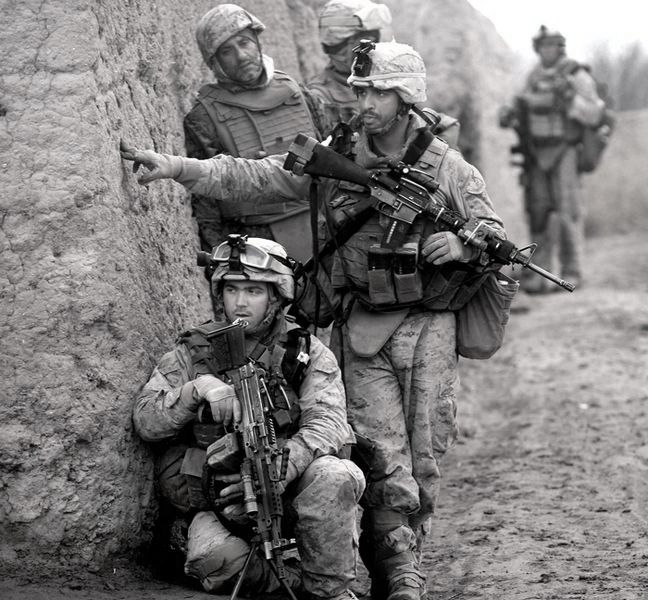
In this article the author assesses the view that democracies can never be successful in fighting a counterinsurgency.  Taking the case studies of Afghanistan and Northern Ireland it is clear that the power of the propaganda war inhibits the capacities of democracies to act freely and that every military leader must understand that their actions will be perceived as an act of political warfare.


By Jack Hamilton, 16 Nov, 2011

General Sir Gerald Templer claimed of counterinsurgency that “the shooting side of this business is only twenty five percent of the trouble”[i].  Due to the nature of democracies and modern warfare, counterinsurgency may well now be one hundred percent political.

The political vulnerability of accountable democratic leaders, omniscient media presence and the potential propaganda exploitation of all combat actions mean that military officials at every level now need to understand that their every action can be construed as an act of political warfare in which political outcomes are more important than battlefield success.  This issue creates huge problems for democracies when engaging in counterinsurgencies but can also open up opportunities.

This essay will posit that the inherent challenges that democracies face when engaging in counterinsurgencies can be turned into opportunities by using the democratic nature of the state, the local population and the open media to their advantage.  However, these practices have their limits and the overemphasis on any one of these factors has the potential to seriously undermine the counterinsurgency effort.

Counter-Insurgency On the Fly

The notion of counterinsurgency is logically contingent on the concept of insurgency.  If counterinsurgency includes all of the measures used to put down an insurgency it must be a pragmatic position that is not fixed but shifting in response to the changes in the insurgency.  An insurgency is an attempt to control a contested political space.  This means that changes in the state, its functions or the international system change the nature of the insurgency.

The constantly changing nature of insurgency means that no single doctrine is able to explain counterinsurgency, despite the popularity of the US COIN Manual.  The British Manual reflects this ethos: “Reflection suggests that, where particular organisations or methods have been exported to other theatres, their success lies in the extent to which they are adapted to local conditions’[ii].

The specific nature of counterinsurgency means that drawing broad conclusions may not be the most useful analytical technique.  Instead, this essay will use case studies of Afghanistan and Northern Ireland to outline some of the challenges and opportunities that democracies face when engaging in counterinsurgency both internally and externally.

Democracies and War: Conventional Success and Unconventional Failure?

Counterinsurgency has enjoyed a recent level of academic attention unseen since the U.S. campaign in Vietnam[iii].  The assumption that small wars were irrelevant to politics has been dismissed due to the increasingly influential role that asymmetrical conflicts take on the world stage[iv].  Since the end of the Second World War insurgents appear to have been relatively successful in these small wars, especially when fighting against a democracy.  This is despite the fact that the democratic protagonists were among the most experienced, successful and resilient states to have been fighting in conventional wars at the time.

The question must therefore be asked, why do democracies seem to be successful in conventional forms of warfare but unsuccessful in carrying out counterinsurgencies?

Are Democracies Losers?

The notion that democracies are systematically more prone to defeat when engaging in counterinsurgency is predicated upon three claims according to Gil Merom[v].  First, the importance of accountability in leaders makes it difficult for a democracy to engage in a sustained campaign.  Second, democracies are restricted from using overt forms of coercion by international and domestic public opinion.  The concerns over human rights abuses and the desire to maintain a good reputation curtail the use of force when fighting insurgencies.  The US COIN Manual begins with the overt statement that insurgents “will try to exhaust U.S. national will, aiming to win by undermining and outlasting public opinion”[vi].   It also warns against excessive violence (“the more force you use, the less effective it is”) since the images of such for can be presented in the media to erode public support at home and prolong the war[vii].  The third factor that can undermine the effectiveness of counterinsurgency efforts by democracies is the freedom of the media which is seen to relay certain images of war, such as the overuse of force, to the domestic and international audience and helps to shape popular opinion.

These same features that appear to restrict the effectiveness of democracies engaging in counterinsurgencies seem to be responsible for their success in conventional forms of warfare.  Democracies have succeeded in ninety three percent of the interstate wars they have initiated since 1815 largely as a consequence of democratic leaders participating in wars where the chances of victory were high[viii].

Are Democracies Winners?

There are several reasons as to why democracies have been successful in conventional forms of warfare.  The first explanation for this stems from the combination of the openness of democratic governance and the political vulnerability of democratic leaders.  This process of freer decision making and the high risk of failure make democracies less prone to start wars they cannot win.  Democracies are more selective in choosing their battles therefore explaining the higher winning percentage.

The second explanation claims that democracies fight more effectively in wars.  This can be due to high levels of cohesion allowing the force to overwhelm the opposition with sheer numbers or due to the advantage of democratic decision making when deciding strategy.

A third reason is that democracies tend to treat their captives more leniently meaning that enemies are more likely to surrender rather than fighting to the last bullet[ix].  The challenges and opportunities for democracies in warfare can be seen as interchangeable depending on the context and the ability of the democracy to frame the conflict to project itself in the best light on the world stage.  A good example of a democracy fostering a favourable narrative in a counterinsurgency was the experience of the British Army in Northern Ireland.

Internal Counterinsurgency – The British Army in Northern Ireland

According to the British Army report on the counterinsurgency effort in Northern Ireland, the intervention was ‘one of the very few ever brought to a successful conclusion by the armed forces of a developed nation against an irregular force’[x].  The Army were perceived to have removed the sting from the violence in the province and allow for a peace process to take shape.  Whether or not this was reality was not the most important factor as the perception of the effort was more significant than the military activities.  This is made explicit in the report following the conflict which frames the conflict as a ‘propaganda war’ in which ‘information is the currency, not firepower’[xi].

When the British Army[xii] was deployed onto the streets of Northern Ireland it sought to draw on the model of counterinsurgency which had been developed for the withdrawal from the Empire[xiii].  This entailed overcoming three of the challenges of counterinsurgency:

  1. The demonstration of ‘political will’ to defeat the insurgents
  2. The battle for ‘hearts and minds’
  3. ‘Police primacy’ in defeating insurgents[xiv]

1.      Political Will

The importance of political will was especially prescient in the case of Northern Ireland following the disunity in the US over the Vietnam conflict.  The British solution to this was for the political parties to graft a bipartisan approach to promote a consistent policy towards the Northern Irish situation[xv].  This undermined the attempts of the insurgents to divide British politics and meant that one party would not offer more favourable terms to one of the parties within Northern Ireland.  It also helped to minimise the public debate over the bigger questions within Great Britain as an inter-party conflict had the potential to stimulate debate over not only the question of withdrawal but over the ‘Irish Question’ in general[xvi].

The apparent fractured nature of democracies was therefore overcome by this act of bipartisanship.  While the inherent threat of fracturing remained the two leading parties used the democratic system to cooperate and thus remove a potential advantage for the insurgents.

2.      ‘Hearts and Minds’

The battle for ‘hearts and minds’ is always crucial to any counterinsurgency effort.  In the case of Northern Ireland this battle would be fought using the weapons of minimal force and psychological operations.  The use of minimal force has been disputed in Northern Ireland due to the ambiguities of counterinsurgency theory.  While the early activities of the Army in Northern Ireland may not have used overt force, small scale efforts such as the Falls Road Curfew meant that the Army was no longer seen as the protector of both the Catholic and the Protestant community.

By isolating only the Catholic community in the use of curfews and internment, those in communities more closely tied to the insurgent efforts felt that the security forces were no longer there to protect them.  It is no coincidence that during the period of curfews and internment in the early years of the 1970s recruitment to the IRA accelerated[xvii].  Large swathes of the Catholic population that were not involved with the IRA were treated as if they were, and this caused widespread resentment of the security forces that were purportedly there to protect them.

Minimal force was also necessary due to the increased role of the media during the conflict.  The internal nature of the conflict meant that the mainstream news in Britain was also being transmitted directly to those engaged in the conflict subjecting the British army to dual scrutiny.  British counterinsurgency therefore had the problem of simultaneously winning the hearts and minds of both the ‘local’ and the ‘domestic’ public.  The British Army manual on counterinsurgency correctly ascertained that the press, if handled well, is ‘one of the Government’s strongest weapons’.  This was backed up by the claim from the British Army press representative in 1972: ‘Northern Ireland is basically a propaganda battle…It’s a propaganda battle backed up by military action’[xviii].

Opinion polls in Great Britain show that the general public was not behind the counterinsurgency campaign in Northern Ireland.  In September 1971 a Daily Mail poll showed that 59 percent of British public opinion favoured withdrawal[xix].  This negative attitude to the conflict was consistent throughout but failed to have an impact on the activities of the counterinsurgency project.  Public opinion in Britain supported more extreme uses of force such as internment and during the punitive years of the Army presence in the province only 7 percent of respondents to a Gallup poll said that the army were being ‘too tough’.  In fact, 90 percent thought that the plans to deal with the IRA were ‘not tough enough’ and 88 percent supported the reintroduction of the death penalty in Britain to combat the insurgency[xx].

Merom assumes that democracies will be restricted by public opinion that will call for less force to be used in counterinsurgency.  In the case of the internal conflict in Northern Ireland the opposite was true due to the perceived costs of the engagement in both human and financial terms.  The response of the British Army was to conduct a propaganda war through the use of ‘black propaganda’ through which they attempted to control the information that was available to the media[xxi].  This permitted the Army to circumvent many of the challenges of the free media and public opinion by removing the fundamental issues such as the ‘Irish Question’ from the debate[xxii].

3.      Police Primacy

The ‘police primacy’ entailed a more expansive role for the local police and a more restricted role for the British Army.  The reason for this was the advantage of the local police in gathering regional intelligence and the increased likelihood that they would be sensitive to local opinions[xxiii].  It would also decrease the costs to the British Army both in terms of the financial and human cost of fighting the insurgents.  The reasoning behind this logic was the success of the policy in Malaya[xxiv] but this failed to take into account the idiosyncrasies of the internal counterinsurgency effort.

The discrediting of the local police force, the RUC, following violent crackdowns on civil rights marches had isolated them from the nationalist community meaning that they would not be able to capture the ‘hearts and minds’ of those most likely to join the insurgency.  Republican paramilitaries also targeted Catholic members of the security forces and reinforced a pre-existing bias in recruitment (under 4 percent Catholic by 1973)[xxv].

The democratic nature of the British state helped to re-establish the trust in the local security forces.  The reformation of the police from the distrusted RUC into the slightly more popular PSNI was part of the peace process that helped to take the sting out of the violence in Northern Ireland.  This process was made possible by providing political concessions to the insurgents.

Entry Concession

The counterinsurgency effort in Northern Ireland put huge amounts of pressure on the democracy of the United Kingdom.  Public opinion and large swathes of the media supported a more coercive approach to counterinsurgency that would have had a hugely detrimental impact on the attempts to win hearts and minds.  Despite this, the use of bipartisanship meant that political unity was maintained despite calls for repression from Great Britain and Unionists within Northern Ireland.  The solution to this potential fracturing was facilitated by the internal nature of the conflict plus the democratic state.  The British government accepted that it could not defeat the IRA in a military battle and accepted that the goal of a united Ireland was legitimate provided that it was pursued through the existing democratic process.

In a study of 267 cases of opposition to state authority Stephan and Chenoweth found that regimes become more democratic as they are more likely to offer concessions to the campaigns that challenge their authority[xxvi].  This was to be the case in Northern Ireland.  The operations in the province can be seen as a success as the counterinsurgency effort helped to take the sting out of the political violence.  In the words of the Banner Report, the reflection of the British Army on the effort in Northern Ireland, the counterinsurgency was a success as it was able to ‘suppress the level of violence to a level which the population could live with, and with which the RUC and later the PSNI could cope’[xxvii].  The statement summarises the success of the British effort to demonstrate a political will to capture the hearts and minds of the population and promote policy primacy.


Installing Democracy from Outside: External Counterinsurgency in Afghanistan

Stable democracies are much less likely to face the challenge of internal war than other regimes types[xxviii].  The consequence of this is that democracies are more likely to be engaging in counterinsurgencies on foreign territory as external occupiers.

The opportunities that exist for counterinsurgency campaigns internally do not necessarily translate to the same form of combat outside of the state.  The most important difference is that achieving a political solution is much more complicated when it is outside the political system, especially in an area of weak governance.  Secondly, the intelligence gathering that was so crucial to the ‘police primacy’ effort in Northern Ireland is more difficult externally as the ‘locals’ are likely to speak a different language.  Third, the ability to use the media to frame the conflict is much more difficult in an external counterinsurgency as the sources are more diffuse.  It is therefore important to assess the different challenges that democracies face when fighting a counterinsurgency abroad.  These can be broken down into four categories:

  1. Weak governance
  2. No ‘buy-in’
  3. The need to maintain momentum
  4. Law and Order

In the example of Northern Ireland the counterinsurgent effort was an attempt to maintain the political status quo in the nation whereas in Afghanistan international forces attempted to change it.  The opportunity for the democracies was to frame the conflict in such a way that their humanitarian objectives would be the key issue and thus help in garnering the support of the local population and the media.  However, the four issues outlined above provided challenges to this narrative of the conflict.  It is therefore necessary to elaborate on these factors to explain how the opportunities for the democracies became challenges.

Weak Governance

Weak central governments made insurgencies more feasible and therefore more of a challenge to democracies attempting to engage in counterinsurgencies abroad.  The need to establish functioning governance presents a further challenge.  Governance includes the ability to establish law and order, manage resources and implement policies[xxix].  This poses a significant problem for a democracy as it is forced to provide the enforcement of justice and policing from outside the state which means that it is enforcing its own doctrine upon a foreign political body.

‘Top Down’ Democracy

Since the invasion of Afghanistan the state has become an experiment in installing democracy from the outside and from the ‘top down’.  This is a complete diversification from the status quo in the country as it is an attempt to implement a new set of institutions which are not rooted in the traditional institutions of Afghanistan.  Not only are Afghans not the driving force behind the democratic push but the lack of economic development since the process began may have actually contributed to the insurgency and undermined the counterinsurgent efforts[xxx].

The gap between the vision of democracy and the domestic realities in Afghanistan are constantly widening as evidenced by the spike in insurgent attacks in 2010[xxxi] and development figures show that basic indicators such as life expectancy and adult literacy have also fallen in recent years[xxxii].  All of these factors play into the hands of the insurgents who wish to prevent ‘Western’ democracy taking root in Afghanistan.

Inclusivity?

Inclusivity was a vital goal in the attempt to develop a national debate and the election of former warlords and Taliban members to parliamentary seats gave hope to this process[xxxiii].  This inclusivity has inevitably been a key factor in the disunity of the government as the executive and the legislative have repeatedly clashed.  The executive was deemed to be dominated by Western-back ‘liberals’ while the National Assembly became the stronghold of dissent without the ability to raise questions about sovereignty[xxxiv].  Such a lack of coherence meant that the governance that was so crucial to the ambitions of security and counterinsurgency could not be achieved.  The inherent threat of the new institutions becoming negatively associated with the counterinsurgent force was realised in the perceptions of the Karzai administration.

Legitimacy?

Poor governance also causes problems for security as a lack of legitimacy undermines the ability to provide law and order.  This problem is at its most acute when the security problem is spread over a vast geographical expanse such as Afghanistan.  In the words of Robert Rotberg, ‘failed states cannot control their peripheral regions. Especially those regions occupied by out-groups.  They lose authority over large sections of territory’[xxxv].  Insurgency itself is a form of state-building as the insurgents seek to provide the same security to the population.  In an area of weak governance insurgents can then assume state-like functions and set up administrative structures.  In the rural areas of Afghanistan the beneficiaries of the Karzai government were seen to benefit only the ‘urban elite’ which caused widespread resentment[xxxvi].  Such grievances accompanied by the inability of the U.S. government to build competent Afghan security forces meant that there was no monopoly of the legitimate use of force within the state.  As noted by President Karzai, ‘The Taliban are not strong…It is not them that causes the trouble.  It is our weakness that is causing trouble”[xxxvii]

Bottoms Up?

The alternative to democracy emerging from in a top-down manner is attempting to foster it ‘bottom-up’.  This however contains the inherent challenge of making the imported democracy something worth fighting pursuing for the Afghan people.  The Bonn Agreement placed too much emphasis on the process and not enough on the substance of the transfer to a democratic state in Afghanistan.  It failed to take account of the daily realities for the Afghan people who were suffering in a sea of underdevelopment, corruption and insecurity.  The counterinsurgency needs to maintain the initiative at all times, including in the development field.  If it is perceived that limited improvements have been made it may lead to the local population questioning whether the costs of democratization are a price worth paying.  In Afghanistan the lack of tangible development in the everyday lives of Afghans at a time when it was public knowledge that the international community was spending vast sums of money there fuelled mistrust.  The cumulative impact of corruption was that forty percent of the aid to Afghanistan in 2008 flowed back out of the country[xxxviii].  The essentials for social functioning such as school systems, courts and welfare systems were crippled by this[xxxix].  Corruption disproportionately burdens the most vulnerable section of society, undermines the rule of law and damages government legitimacy.  All of these factors benefit the insurgents and provide a challenge for the intervening democracy.

Peace is not the Absence of War

When engaging in an external counterinsurgency it is a misguided assumption that peace is merely an absence of war.  The democratization process that follows needs to ensure that the anti-democratic forces are deprived of political authority that they had maintained through the use of strategic violence.  In an external case it is not as simple as merely removing the sting from the political violence to allow for political concessions to slowly take shape, as it was in Northern Ireland.  Public opinion at home will be less permissive of using human and financial capital in a foreign country than in an internal insurgency crisis.

In Afghanistan the new political institutions were put in place at a time when the Taliban had not been pacified causing the military campaign in the country to metamorphose into a counterinsurgency.  The growing dissatisfaction of Afghans with the democratization process and the tactics used in the military side of counterinsurgency has led some theorists to claim that violence and insecurity in the nation are now a direct result of the international intervention[xl].  If this is the case then the international forces are stuck in a vicious cycle in which the harder they try, the worse the situation will get.

Counterinsurgency by democracies abroad always carries the political dimension of the exportation of democracy for the purposes of international security.  The attempt to implement this system, itself the result of a specific historical evolution in a specific context, into a new environment ignores the socio-political and cultural circumstances that are vital to the security of the people.  Democratization from outside therefore carries the threat of isolating those hearts and minds which the counterinsurgency seeks to protect.  So far in Afghanistan the democratic project lacks the ‘buy-in’ that it needs to succeed.  The legitimacy of the governing organisation must come from the population rather than a timetable such as the Bonn Agreement.


Democracies and Counterinsurgencies: The Challenge of Opportunism

There are huge challenges to fighting a counterinsurgency both internally and externally but it is dangerous to generalise the issues.  Counterinsurgency must always be a pragmatic and rapid response to events on the ground.  To use a set theory contains several key flaws when attempting to conduct a counterinsurgency.  Firstly, the rejection of a purely military solution and the emphasis on the role of the government does not draw attention to the tensions that can arise from the relationship between the military and the political elites.  Secondly, the aims of counterinsurgency are seen to be so ambiguous that they are open to hugely divergent interpretations, particularly on the use of force.  Third, the attempt to apply the lessons of previous counterinsurgency efforts ignores the complex political environment and creates a problem when ‘lessons’ from previous campaigns are applied out of context.

Internal Success?

The apparent success of the counterinsurgency effort in Northern Ireland was a consequence of the democratic system and the internal nature of the conflict.  Following a failed initial ‘surge’ in the early years of the Troubles, the British Army assumed a more withdrawn role that was designed to bolster the local security forces and attempt to repair relationships with those communities which were more inclined to support the insurgency campaigns.

Bipartisanship and successful propaganda campaigns permitted for the potential weaknesses of the democratic state to be overcome as a verisimilitude of unity was fostered until a time when security was able to be devolved and the ‘hearts and minds’ of the majority of the population bought in to the idea of a legitimate democratic solution.

External Failure?

Engaging in an external counterinsurgency poses further challenges for a democracy which cannot be overcome in the same way.  The case of Afghanistan demonstrates the problem of attempting to achieve a ‘buy in’ while trying to implement democracy from the outside.  The failure to make democracy seem like a desirable alternative to the status quo means that the effort fails to win the ‘hearts and minds’ of the local population while the inevitable drawing out of the conflict leads to the same result at home due to the burgeoning costs.

The solution cannot be the use of the political system as in Northern Ireland if the local population do not accept the authority of the institutions and instead place priority on their security.  Security is the one element that the Taliban could provide the Afghan population with.

The opportunities of counterinsurgency have been demonstrated by the activities of the British Army in Northern Ireland while the limitations can be seen in the ongoing efforts of international forces in Afghanistan.  These statements should not be taken to be absolute but rather a reflection of the fluid nature of counterinsurgency and how challenges can rapidly become opportunities and vice versa as every element of conflict is politicised.

Every Individual Counts: The Lesson of Lynndie England

Stalin famously remarked that ‘the death of one man is a tragedy, the death of millions is a statistic’.  In the case of counter-insurgency every individual counts.  Even Privates can now take on a political and strategic role as a result of the saturation of media in warzones.  The photographs of Lynndie England in a smiling pose besides abused detainees at Abu Ghraib made her the face of the scandal[xli].  The actions of any individual soldier can alter the narrative and the effectiveness of the campaign more than any public information operation.  The opportunities available to a counterinsurgency campaign are therefore contingent on their ability to dictate the popular narrative of the war to both the population at home and to the local people.


[i] Quoted in Simon Smith, ‘General Templer and Counterinsurgency in Malaya: Hearts and Minds, Intelligence and Propaganda’, Intelligence and National Security, 16 (3:2001), p. 65.

[ii] British Army, Operation Banner, Army Code 71842, An Analysis of Military Operations in Northern Ireland, Accessed at http://www.vilaweb.cat/media/attach/vwedts/docs/op_banner_analysis_released.pdf, on 26/2/2011 at 13:44, p. 85.

[iii] David Kilcullen, ‘Counterinsurgency Redux’, Small Wars Journal, accessible at: http://smallwarsjournal.com/documents/kilcullen1.pdf, Accessed on 26/02/2011 at 13:41, p. 1.

[iv] Kenneth Waltz, Theory of International Politics, Addison-Wesley Publishing (Reading, MA: 1979), pp. 190-191.

[v] Gil Merom, How Democracies Lose Small Wars, Cambridge University Press (Cambridge: 2003), p. 15.

[vi] U.S. Army, Field Manual No. 3-24, University of Chicago Press (Chicago: 2007), p. ix.

[vii] U.S. Army, p. 252.

[viii] Dan Reiter and Allan C. Stam, Democracies at War, Princeton University Press (Princeton, New Jersey: 2002), p. 29.

[ix] Stephen Biddle and Stephen Long, ‘Democracy and Military Effectiveness: A Deeper Look’, The Journal of Conflict Resolution, 48 (4: 2004), p. 531.

[x] British Army, Operation Banner, p. 83.

[xi] Ibid., p. 85.

[xii] I am using the term ‘British’ to refer to those people living in Great Britain and it should not be taken to assume that there are not British people living in Northern Ireland.

[xiii] T.R. Mockaitis, British Counter-Insurgency, 1919-1960, Macmillan (London:1990).

[xiv] Paul Dixon, ‘Hearts and Minds? British Counterinsurgency Strategy in Northern Ireland’, Journal of Strategic Studies, 32 (3: 2009), p. 446.

[xv] Paul Dixon, ‘A House Divided Cannot Stand: Britain, Bipartisanship and Northern Ireland’, Contemporary Record, 9 (1: 1995), pp. 147-87.

[xvi] Paul Dixon, ‘Britain’s Vietnam Syndrome? Public Opinion and British Military Intervention from Palestine to Yugoslavia’, Review of International Studies, 26 (1: 2000), pp. 99-121.

[xvii] Sunday Times Insight Team, Ulster, Penguin (Harmondsworth: 1972), p. 221.

[xviii] Dixon, ‘Hearts and Minds?’, p. 461.

[xix] Ibid., p. 462.

[xx] Ibid., p. 463.

[xxi] Paul Foot, ‘Colin Wallace and the Propaganda War’, in Bill Rolston and David Miller (Eds.), War and Words. The Northern Ireland Media Reader, Beyond the Pale Publications (Belfast: 1996).

[xxii]Simon Hoggart, ‘The Army PR Men of Northern Ireland’ in Bill Rolston and David Miller (Eds.), War and Words. The Northern Ireland Media Reader, Beyond the Pale Publications (Belfast: 1996).

[xxiii] Brian A. Jackson, ‘Counterinsurgency Intelligence in a Long War.  The British Experience in Northern Ireland’, Military Review, January-February (2007), p. 75.

[xxiv] Robert Thompson, Defeating Communist Insurgency, Chatto and Windus (London: 1967), p. 103.

[xxv] D. Anderson and D. Killingray, Policing and Decolonisation: Nationalism, Politics and the Police, 1917-1975, Manchester (Manchester: 1992), p. 6.

[xxvi] Maria Stephan and Erica Chenoweth, ‘Why Civil Resistance Works: The Strategic Logic of Nonviolent Conflict’, International Security, 33 (1:2008), p. 23.

[xxvii] British Army, Operation Banner, p. 94.

[xxviii] James D. Fearon and David D. Laitin, ‘Ethnicity, Insurgency and Civil War’, American Political Science Review, 97 (1: 2003), p. 84.

[xxix] World Bank, Governance Matters, 2006: Worldwide Governance Indicators, World Bank (Washington DC: 2006), p. 2.

[xxx] Shahrbanou Tadjbakhsh and Michael Schoiswohl, ‘Playing with Fire? The International Community’s Democratization Experiment in Afghanistan’, International Peacekeeping, 15 (2:2008), p. 252.

[xxxi] ‘One More Please Sir’, The Economist, 26 February 2011.

[xxxii] Tadjbakhsh and Schoiswohl, ‘Playing with Fire?’, p. 253.

[xxxiii] Antonio Giustozzi, ‘War and Peace Economies of Afghanistan’s Strongmen’, International Security, 14 (1:2007), pp. 75-89.

[xxxiv] Tadjbakhsh and Schoiswohl, ‘Playing with Fire?’, p. 257.

[xxxv] Robert Rotberg, ‘The Failure and Collapse of Nation-States: Breakdown, Prevention, and Repair’ in Robert Rotberg (ed.), When States Fail: Causes and Consequences, Princeton University Press (Princeton, NJ: 2004), p. 6.

[xxxvi] World Bank, Afghanistan: State Building, Sustaining Growth, and Reducing Poverty, Report No. 29551-AF, World Bank (Washington DC: 2005), p. xxvi.

[xxxvii] C.J. Chivers, ‘Karzai Cites Taliban Shift to Terror Attacks’, New York Times, June 20, 2007.

[xxxviii] Oxfam, ‘Afghanistan: Development and Humanitarian Priorities’, Jan. 2008, accessed at www.oxfam.org.uk/resources/policy/conflict-disasters/downloads/afghanistan_priorities.pdf , 09:15 on 26 February 2011.

[xxxix] Ann Hironaka, Neverending Wars: The International Community, Weak States, and the Perpetuation of Civil War, Harvard University Press (Cambridge, Mass.: 2005), pp. 42-46.

[xl] Tadjbakhsh and Schoiswohl, ‘Playing with Fire?’, p. 263.

[xli] ‘Lynndie English Convicted in Abu Ghraib Trial’, USA Today, 26 September 2005.

The State of Terrorism in Nigeria: The Rising Threat of Boko Haram

In this article the author assesses the rising threat of the Nigerian terrorist organisation, Boko Haram.  The most recent spate of bombings and executions has raised questions over the unity of the Nigerian state and the future of security on the continent.  It is therefore necessary to understand why Boko Haram is increasing in popularity as their attacks become increasingly barbaric.


By Jack Hamilton, 14 Nov, 2011

Unchecked Massacre

Brutal attacks in Nigeria over the past week have left over 100 people dead.  A single small religious group has transmogrified into a dynamic terrorist organisation capable of rapidly changing tactics and targets in a pattern of violence responsible for over 1000 deaths in northern Nigeria since 2009.

Last week the gunmen wandered around the northern town of Damaturu killing any Christian who could not recite the Islamic creed on the spot.  Nigeria’s Defence Minister Bello Halliru Mohammed has stated that the security forces once again have control and that there is nothing to fear but his words have assured few.

The fact remains that there is still no coherent strategy to combat Boko Haram.


Rising Intensity

The nature of recent events has shocked many, even in regions where Boko Haram attacks are frequent.  Residents expressed rage at the ease with which gunmen were able to take over the city and leave bodies littering the streets.  Police stations, mosques and churches were reduced to rubble before the security forces mobilised a response.  At that point members of the group engaged in gun battles across the city that lasted for hours.

The situation in northern Nigeria is degenerating rapidly.  International observers fear that Boko Haram may already have links to al-Qaeda and al-Shabab and that the campaign of terror shows no signs of abating.

In order to understand Boko Haram it is first necessary to look at who they are, what they want and how they believe they can achieve it.

Who

Boko Haram colloquially translates as “Western education is forbidden”.  It is a claim to reject all things Western from the theory of evolution to Western-style banking.  This has manifested itself in different tactics since the emergence of the group in 2002.  Before 2009 there were no signs that the group desired the overthrow of the state and rather preached to withdraw from the institutions of the non-Sharia Nigerian nation.  It was a law banning the riding of motorbikes without helmets that would prove to be the catalyst for violence.

In July 2009 the central government sought to enforce the law on helmets.  Boko Haram flouted the legislation and was subjected to police brutality which in turn set off an armed uprising in Bauchi, later spreading to Kano, Borno and Yobe.  By the time the army had suppressed the situation over 800 people were dead across the north of the country.

Since 2009 the group has spread rapidly.  The majority of the attacks have taken place in Borno state but Boko Haram have also expanded to the northern states of Adamawa, Bauchi, Gombe, Kaduna, Katsina and Sokoto as well as the attacks on Abuja and threats against Lagos.  In addition to the geographical spread there has been a change in tactics from the localised skirmishes to strategic suicide bombing campaigns and massacres directed not only at Nigerian security forces but also international targets such as the UN.

Tactics

Boko Haram have changed their tactics over the years.  Under their previous leader, Mohammed Yusuf, the group staged mass uprisings against the police and suffered hundreds of casualties.  After Yusuf’s death at the hands of security forces in 2009 they began using tactics more in line with jihadist terrorism including the first suicide bombings in Nigeria’s history.

The attack on the UN may have been an attempt to pressure the international community or perhaps it was simply to embarrass the Nigerian state but it succeeded in drawing global attention to a burgeoning problem.  Boko Haram may be diffuse but it is expanding geographically with increasing tactical sophistication.

Composition

As Boko Haram expands the questions over their composition complicate.  According to Paul Lubeck, an expert on northern Nigeria, Boko Haram is not a single group but a collection of splinters banded under one name by the Federal Government.  One section appears willing to negotiate while others remain determined to intensify the bombing campaign.

Some statements reflect a strict adherence to Islamic law while others cite a determination for a smaller Nigerian state as their raison d’être.  If the group is as amorphous as Lubeck claims it will make it very difficult to negotiate with let alone combat.

Grievances

Economic

The structural issues of northern Nigeria have allowed Boko Haram to thrive in recent years.  In addition to acute poverty the region has a high birth rate and 50% of the population are below the age of 30.

Inequality, unemployment and industrial stagnation have exacerbated the perception that the north has been marginalised by the liberalisation of the Nigerian economy.  The question of who owns the land has not been answered since independence and the Federal State seems too far away and blighted by corruption to deal with such issues.

Political

Grievances in the north were compounded by the election of a southerner, Goodluck Jonathan, as President earlier this year.  Jonathan assumed the office following the death of the northern Muslim President Umaru Yar’Adua and many northerners believe Jonathan should have stepped aside to allow another northerner to take Yar’Adua’s place.  This would have been in line with the ‘gentleman’s agreement’ that the Presidency should rotate between the north, the south-west and the south-east every two terms.

Security

The administration is treating Boko Haram as a security issue rather than tackling the divisive subject of poverty in the north.  Abuja’s response has been to flood the north with heavy-handed military and police forces that now stand accused of human rights violations against civilians.

Politicians in the north have begged for the numbers of security forces to be reduced as police corruption has become rife.  For many in the north the police are the face of the central government.  The people feel alienated from a force they perceive to be corrupt.

Responding to Boko Haram

For many the heavy military presence in the north is the single most important hindrance in securing any negotiated peace.  The failed attempt to destroy the group in 2009 was the greatest recruitment drive Boko Haram could have hoped for, especially the controversial extra-judicial killing of the leader Mohammed Yusuf.

The current strength of Boko Haram is largely a result of such poor foresight by the Nigerian state.  As a result there is now a security vacuum in the most heavily militarised region of the country.

Flagrant myopia has created martyrs and swelled the ranks of the guerrillas.  The legal response to the killing of Yusuf is a good first step but it does little to combat the issues of poverty and corruption that are integral to Boko Haram’s recruitment.

Opposition leaders in the north claim that the government has failed to understand the amount of support Boko Haram has amongst the population.  By stating their opposition to central government and corruption the group has grown far beyond their initial religious doctrine and the government will need to find a response to the structural inequalities in Nigeria if the terrorists are to lose their supporters.  It does not appear as if this is going to happen any time soon.  It is possible that Boko Haram may actually be growing beyond the borders of Nigeria.

The Anti-Social Network?

Many experts have questioned whether the increased tactical sophistication of Boko Haram is evidence of the group branching out to international terrorist organisations, especially al-Qaeda in the Islamic Maghreb (AQIM).  A change in tack to target international organisations with large high-tech bombs has caused concern.  General Ham, head of US Africa Command, believes that the worst case scenario already exists and that Boko Haram are working in tandem with AQIM and al-Shabab in a “loose” partnership.

Hard evidence for any such link is still to be produced.  The geographical distance between AQIM, Boko Haram and al-Shabab make such a partnership unlikely and the possibility remains that the increased military technology may have come from within Nigeria itself.  Alex Thurston, an expert on terrorism in the region, has posited that it is more likely the sophistication came from disaffected Nigerian soldiers than any international training.

The Future State of Nigeria

The failure of the government reactions have meant that Boko Haram has been successful in achieving one of their primary goals: the weakening of the legitimacy of the state.  Attacks on international organisations have created increased pressure on Jonathan to find a solution to the problem.  The short-term solution of heavy military deployment may eventually yield similar successes to those against the militant groups in the Niger Delta but it would also undermine the cohesion of Nigeria.  This would also act to provide momentum for Boko Haram.

The failure to develop a clear strategy to combat the small Islamic group in 2009 has forced the Nigerian state to face up to the larger structural issues concerning the north.  A solely military solution is no longer feasible.

Quo Vadis, America?

In this article, the author analyses the recent victory of Daniel Ortega and the Sandinistas in Nicaragua’s general elections within the broader context of Latin American politics. In light of regional and domestic claims of corruption, clashes between political forces, successful and unsuccessful coups, crime and drug trafficking, and a regional split between those in the ALCA and those in favour of Chavez’s ALBA, the author concludes by raising the question: Quo Vadis, America?


By David J. Franco, 9 Nov, 2011

With 62.6% of the total votes Daniel Ortega has won Nicaragua’s general elections and his second consecutive mandate amidst claims of fraud. A former Marxist leader of the Sandinista revolution, Ortega’s political program is unique in itself. Christian solidarity, clientelism, and populist social policies are the principal features of his government (his campaign slogan was “Socialism, Christianity, and Solidarity”). Outside Nicaragua, he is a follower of Chavez’s alternative to the Free Trade Area of the Americas (FTAA or ALCA in its Spanish version), the so called Bolivarian Alternative for the Peoples of America (BAPA or ALBA in its Spanish version), to which he adhered soon after taking power in the 2007 elections.

Nicaragua is after Haiti the second poorest country in the Americas with 48% of its population living below poverty line (estimates of 2005, although Ortega’s policies may have helped improve this figure). Its contemporary history sadly resembles that of many other Latin American nations: decades of oppression and corruption under a ruling elite of Spanish descent, a Marxist-oriented revolution, a counter-revolution backed and financed by the CIA, civil conflict, and incomplete transition to peace and democracy. Ortega, too, resembles many other leaders in Latin America seeking to alter existing Constitutions to secure an additional mandate. In fact, many warn that Ortega is likely heading towards securing indefinite power by ultimately eliminating any constitutional barriers in that respect –much in the way Chavez has done in Venezuela. Manuel Zelaya allegedly tried something similar in Honduras before being put on a plane to Costa Rica at gun point in June 2009.

Political life in Nicaragua is poisonous. Last year I visited the Museum of the Revolution in the Sandinista feud of the colonial city of León. Upon entering the museum one can see a cardboard box with a sign over it that reads: “all arms must be deposited here”. There I met two former guerrilla fighters who kindly explained the history of the revolution. They also showed me weapons and other war utensils while pointing me to photographs of comrades killed by the enemy. Up against the wall I saw an excerpt of a newspaper with a picture of President Reagan and a big heading reading “Nicaragua’s enemy number one”. The guerrillero could not avoid shedding a tear or two before telling me that Violeta Chamorro, Gadea, and many others are nothing but traitors of the revolution. Later, on my way down to Managua the lady sitting next to me on the bus told me in whispers that everything in Nicaraguan politics is rotten and that Ortega is only after Chavez’s money.

Many in Nicaragua still see life through the XXth century prism of left versus right. Others instead denounce that all politicians are driven by greed and interest. But what about Ortega himself? Ortega’s main competitor, Fabio Gadea, recently declared that the newly re-elected President has abandoned his revolutionary ideas and that all that he is after is power for the sake of power and power for the sake of money. He has become a poweraholic and nothing will stop him until he gets what he wants. His social policies, adds Gadea, are nothing but a way of securing the votes of the poor and the same applies to his special relationship with the private sector –in 2008 Ortega took a pragmatic turn and made deals to attract investment by letting entrepreneurs operate freely (in 2009 the economy shrunk but remounted in 2010. It is expected that the economy will grow a 3% in 2011). Further, Dora María Téllez, the young revolutionary that took the Congress in 1978 and precipitated the revolution, believes that “Ortega is going through a process of identification with Somoza”. She then adds that “his power ambitions are much stronger than his ideals”.

Opposition leaders also see Venezuela’s aid valued in some 500 million dollars a year as foreign interventionism in Nicaragua’s internal affairs –Chavez threatened to withdraw aid if Ortega did not win the elections. From the point of view of Ortega’s government, however, Chavez’s money is necessary to repay Nicaragua’s large amounts of external debt (despite benefiting from an IMF extended Credit Facility program and despite having secured some $4.5 billion in foreign debt reduction under the Heavily Indebted Poor Countries initiative, the country still struggles with large public deficit). In any case, the absence of transparency and accountability in that respect raises serious suspicions.

Many claim that the results of the elections are fraudulent and that they should be annulled and elections repeated. Others claim that the whole electoral process is illegal based on Ortega’s illegal change of the Constitution in 2009. Others simply opine that the results are overinflated but more or less in line with pre-election polls. Finally, others denounce Arnoldo Aleman (the third candidate, a Sandinista dissident, and Nicaragua’s President between 1997 and 2002, he was accused and condemned to twenty years of prison for money laundering and corruption in 2003, then officially liberated in 2009 by the Supreme Court of Justice) of favouring Ortega’s Sandinistas by dividing the vote of the opposition. Chavez and the ALBA see Ortega’s win as a triumph of the peoples of Nicaragua and the Secretary General of the Organisation of the American States, the polemic José Miguel Insulza, personally contacted Daniel Ortega ‘to greet the people and government of Nicaragua for the elections held yesterday’. He also highlighted ‘the maturity demonstrated by the Nicaraguan people throughout the entire process.’

Only yesterday the EU Observation Mission to Nicaragua’s elections presented a preliminary report denouncing a lack of transparency in Sunday’s elections. They pointed to serious limitations on the right of vote, a lack of impartiality of the Supreme Electoral Council, and a campaign to place obstacles on the opposition’s electorate thus creating a de facto division between citizens of first and second class –the latter was denounced by Inés Ayala Sender, the European Parliament’s President of the delegation to Nicaragua’s elections. On the other hand the President of Nicaragua’s Supreme Electoral Council, Roberto Rivas, dismissed claims of fraud published by Nicaraguan newspaper La Prensa for being ‘rubbish’. He also stated that all members of the opposition are ‘bad sons of the homeland (malos hijos de la Patria)’.

Everything in Nicaragua’s latest electoral process looks like a déjà vu. Power for the sake of power, money, corruption, an old-time Marxist ideology used to justify violations to the rule of law, and a questionable mix of capitalist socialism. Everything in the opposition seems like a déjà vu too with leaders denouncing fraudulent elections and claiming that the economy would look brighter under their policies – while forgetting their own implication in cases of corruption. Economic growth versus social policies, industrial elites against popular masses, populist millionaires, etc. Meanwhile, a former Army General has won the elections in Guatemala with the promise to crack down on violence and organised crime, and in Argentina Cristina Fernández has consolidated a growing trend in Latin American politics consisting in wives taking power over from their husbands. Only a year earlier Porfirio Lobo won the Honduran general elections while Zelaya was still taking refuge in Brazil’s embassy in Tegucigalpa, and recent reports denounce government-imposed limitations on the freedom of expression in Ecuador following Rafael Correa’s recent moves against certain sectors of the press -in Ecuador, too, something similar to a coup was attempted against Correa in October 2010. On the other hand, Colombia was under serious criticism by its neighbours, in particular by Venezuela, Cuba and those in the ALBA, but also by Brazil, Chile, and Argentina for reaching new agremments with the US regarding the use of its military bases. And only today Human Rights Watch presented a report accusing the Mexican Army of committing torture and executions in the war against drug cartels.

The official website of the ALBA states that the big difference between its project and that of the imperialists is that the former liberates peoples whereas the latter, exemplified in the brutal coup against Zelaya in Honduras, oppresses and pushes people to commit barbarous acts. Simon Bolívar, José Martí, Sandino and others alike had once a dream: Latin American and Caribbean nations united under the principles of mutual solidarity and political unity, with no selfish nationalisms obstructing the project of creating a great homeland for Latin America. That dream sounds great, but seeing the huge level of intrastate and interstate divisions, clashes, and corruption in the whole region one cannot refrain from asking: Quo Vadis, America?

ETA says it will kill no more but the Basque conflict isn’t over

In this essay, the author analyses the last conflict in Western Europe as the Basque clandestine group ETA declared on October 20 a permanent cessation of all armed action.


By David J. Franco, 5 Nov, 2011

On October 20th the Basque group ETA (Euskadi ta Askatasuna – Basque Country and Freedom) declared the complete cessation of all armed action. This essay analyses the process leading up to such declaration, the questionable participation of international groups and stakeholders in the so called peace process, and the road ahead. The first section provides an overview of the historical background of the conflict. The second section continues with an account of the latest developments since ETA unilaterally broke negotiations in 2007. The closing section is a critical analysis of the conflict as it stands today.

Historical background

The fifties saw the emergence of a new armed group in Europe. In Spain, under the military dictatorship of General Franco no languages other than Spanish were allowed, no more than three people could gather in public spaces, and anybody who opined different than the powers that be faced deer consequences including execution. Political parties were banned and in historical regions such as the Basque Country the traditional and conservative Basque Nationalist Party (Partido Nacionalista Vasco (PNV)) was left with no political representation. Prison or exile was to be the fate of non-Spanish nationalists.

Against that background, a group of Basques formed a new coalition. Soon after, they held their first series of clandestine meetings and in 1959 ETA was born. Instead of Sabino Arana’s traditional nationalism based on race, ETA chose Krutwig’s nationalism based on language. Against conservatism and Catholicism, it chose Socialism. Against political debate, it chose to imitate the movements of liberation in the Third World. Against political paralysis and the gradualist approach of traditional nationalists initiated towards the end of the XIXth century, ETA chose armed action. Independence was the goal and the means justified the end. Euskadi (also known as the Basque Country and Euskal Herria), which spans across seven territories in Spain (the three provinces of the Spanish Basque Country –Bizkaia, Guipuzkoa, and Álava– plus Navarra) and France (the three provinces of Lapurdi, Nafarroa Beherea, and Zuberoa), ought to be liberated from the two imperial invaders. ETA’s first declared victim dates back to 1968. In 1975 they killed Franco’s successor to power, Carrero Blanco, and the Basque National Liberation Movement, a coalition of political forces and civil society in the far-left also known as the left abertzale (the radical Basque left), was formed. Herri Batasuna, composed of radical abertzales, became ETA’s political wing.

Both parties have travelled a long way since those days. Spain turned into a Parliamentary Monarchy following the adoption of the 1978 Constitution. Spaniards chose to constitute themselves as a semi-federal state in which regions would be given a fair degree of autonomy and self-governance under the unity of the Spanish Monarchy and the partial rule of the Central Government. In the Basque Country only, abstention in the vote for a new Constitution rose to 45% (data varies according to the source). Catalonia and the Basque Country were the first two historical regions to constitute themselves in autonomous communities with significant legislative and executive powers –the judicial power remains to this day part of the unity of Spain (or, in the words of Basque radicals, part of Spain’s oppressive apparatus). Languages other than Spanish were again part of people’s public daily lives and debate and political parties were again allowed.

On the other hand, ETA and its radical nationalist allies saw no real change on the ground. Independence and self-determination, not autonomy, was their condition for peace. Despite a long record of splits and internal divisions, ETA’s hardliners took control of the agenda and intensified their violence against targets in the military –the same military that held the country together under Franco and which was now under civilian command. In the years from 1978 to 1981, some 230 people, mostly military servicemen, were killed almost costing the country the return to the old regime as some units in the military and the semi-military police Guardia Civil attempted a frustrated coup.

In the following years Spain joined NATO, then the EEC, and some positive steps were taken towards resolving the conflict –ETA had by then suffered a number of splits as a group of their members view armed action no longer necessary in the face of democratic change. A general amnesty was granted to those who abandoned violence yet in reality ETA’s military branch prevailed. In the backstage, a shadow war was fought as Spain practiced State terrorism and several para-military groups in the far-right carried out clandestine counter operations against ETA and their allies. Those were the years of the “dirty war”. In 1987 the central government approved a new penitentiary policy aimed exclusively at prisoners of ETA. The policy, which lasts to this day and has been the subject of severe criticism from human rights organisations, establishes that condemned etarras (members of ETA) be dispersed throughout prisons spread in the Spanish territory. In 1989 Spanish officials initiated peace talks with ETA in Algiers but despite a 60-day ceasefire negotiations failed and violence resumed.

The nineties saw a change in ETA’s strategy following the detention of their leaders in the South of France as a result of Franco-Spanish police co-operation. Under a new leadership, the clandestine group turned to a new strategy based on a socialization of terror similar to that of the IRA in Northern Ireland. Targets no longer were limited to the military or the police but were officially extended to all the population including innocent civilians. Street protests were massive with people from all conditions and political affiliations demanding the end of violence. In 1996 Jose María Aznar of the right-wing conservative Partido Popular (PP) won Spain’s general elections putting an end to fourteen years of Socialist rule. His approach to ETA and its radical allies was to be tougher –Aznar had previously escaped a bombing attempt in 1995. The Basque Country lived in terror and large numbers of youth turned violent practicing street violence (kale borroka). All social strata were filled with fear.

Between 1996 and 1998 police and judicial pressure mounted on ETA’s entourage and Herri Batasuna suffered many arrests leading the party to change its constitution and name to Euskal Herritarrok (EH). Arnaldo Otegi, one of the active members of ETA amnestied in the early eighties, became the party’s leader. In 1998 EH was the third political party to win more votes in the Basque Elections and that same year the principal political forces in the Basque Country, including the traditional nationalists (PNV) and EH, reached a polemic pact (known as the Pacto de Estella or the Pacto de Lizarra) aimed at putting pressure on the Spanish Government to initiate a dialogue free of pre-conditions of any sort. In the meantime, the peace process in Northern Ireland seemed to advance in the right direction with the adoption of the Good Friday Agreement. This led the PP to initiate peace talks with ETA in 1999 but again ETA’s demands for independence were deemed too high and dialogue failed.

In the following years the two largest central political parties, the PP and the Socialists, decided to unite against ETA and its political wing. In 2002, they passed the Political Parties Act (Ley de Partidos) aimed at banning political parties and coalitions with links to terrorism. Batasuna, known previously as Herri Batasuna and EH, was banned with the backing of Spain’s Supreme Court and Constitutional Tribunal. So were several newspapers closely related to ETA. In 2003 ETA, its associated political parties, sindicates, juvenile associations, newspapers, and individual activists and members were added to the European Union list of terrorist organisations and individuals. In 2004 an Al Qaeda cell exploded several bombs in a train nearing Madrid’s train station, Atocha, killing approximately two hundred civilians. The then ruling party PP first pointed the finger to ETA to avoid being blamed for the killings only days before general elections –the killings were in fact motivated by Spain’s role in the 2003 invasion of Iraq. ETA had nothing to do with those killings and this was very well exploited by the Socialists who, under the new leadership of José Luis Rodríguez Zapatero, won the March 2004 elections with the promise to initiate talks with ETA. That same year Arnaldo Otegi, whose party had been banned but whose individual rights had not been affected by the prohibition, made the so called Declaration of Anoeta inviting all political forces to initiate a new democratic process free of violence of any nature. In July 2005 the IRA announced the end of the armed struggle in Northern Ireland.

Against this positive scenario and following the implementation of some confidence building measures, negotiations between Zapatero’s Government and ETA then took place and on 22March 2006 ETA announced a permanent ceasefire aimed at advancing a democratic process in Euskal Herria. But just as the peace process seemed to be moving in the right direction, on 30 December 2006 ETA detonated a car bomb in the Madrid-Barajas airport adding two civilians to their long list of victims. One day earlier Zapatero had addressed the nation and promised a future free of violence and terror.

Latest developments

Two major developments took place in 2007. First, ETA’s unilateral action and refusal of Zapatero’s ultimatum was a blow to the President’s bet for dialogue, and to his credibility as the right interlocutor. This led the central government to shut the door to future negotiations. The conflict entered an impasse and again Spain opted to address the conflict merely from a judicial and military perspective: the conflict was again to be denied its political dimension until ETA was defeated. Between 2008 and 2010 security forces dismantled ETA’s organization and violent entourage on several occasions. Arnaldo Otegi had several pending trials for his alleged links to ETA.

Further, the Basque political scenario changed radically. With the support of the votes obtained by the Basque PP, the Basque Socialist Party took power ousting the historic conservative Nationalists (PNV) for the first time since the Basque Country became an autonomous community. With some of its members having been directly involved in the 2006 negotiations with ETA, the new regional government adopted a ‘tolerance zero’ attitude towards ETA and its violent supporters. This then led to pressure on ETA’s political wing and to the demand that it splits with ETA as the only way to regain political life. Politics and the ballot box, not violence, were their only chance to advance their cause of independence; ETA ought to abandon violence as a pre-condition for the radicals to be re-allowed in the political life of the country.

There were reasons to believe that the left abertzale was prepared to take steps in that direction but several factors played against this: first, having played the democratic card previously, a new declaration in this direction risked being seen as just another trick in a long history of deception and lies. Second, ETA could turn even more violent if it felt abandoned by its historical supporters who, this time, risked not being exempted from further armed operations. Third, many of the abertzale leaders were in prison or in exile and there were fears that they may demand a general amnesty before taking any such steps.

But all the odds were against them and in practice they had very little choice. Hence, historical supporters such as Arnaldo Otegi, who in 2009 was again arrested and accused of belonging to ETA’s political apparatus, reiterated their desire to launch a new democratic process free of any expression of violence. This was no minor thing: their proposal implied readiness to take steps towards ultimately breaking ties with ETA. Simultaneously, against the will of Spain’s principal political forces (who have always avoided external interference) the conflict reached international dimension as members of the left abertzale asked Brian Currin, a South African lawyer and expert in conflict resolution, to step in as facilitator. In 2010 Currin asked ETA to declare a permanent and verifiable ceasefire –Currin consecutive calls for the parties to take steps towards resolving the conflict have generally been welcomed by the international community. In September 2010 ETA declared it had been operating a de facto ceasefire since January of the same year but demanded that further steps be taken towards reaching a political solution to the conflict. ETA also confirmed its willingness to allow for an international committee to verify the truce as proposed by Currin with the backing of the abertzales and part of the international community.

The next twelve months saw several developments. In May 2011 Bildu, a new political coalition of abertzales and leaders with no official links to ETA or its consecutive banned political parties (a previous coalition, Sortu, had also been banned and Bildu, despite being taken to court, was finally allowed to take part in the elections), obtained more than 25% of the total votes in the local elections –they even won the top sit in San Sebastian, a historic socialist feud. Meanwhile, security forces and the judicial apparatus continued to close in on ETA and their violent entourage. In September 2011 Arnaldo Otegi and other abertzales were condemned to ten years of prison for seeking to reorganise Batasuna under the direct orders of ETA. Many criticised these measures as counter-productive to the climate of confidence that Otegi himself had helped construct. Others, including Spanish political forces, are of the view that after more than forty years of violence peace must be achieved at no political price. Be that as it may, truth is that by now violence has in fact dropped considerably: ETA is weaker than ever before and street violence has almost disappeared for the first time in more than a decade.

Against this background, a coalition of social platforms and human rights organisations including Currin’s work group called for an International Peace Conference to be held in San Sebastian with the aim of advancing towards a resolution of the Basque conflict. The Conference went finally ahead on October 17th 2011 and reached a five-point Final Declaration calling for ETA to declare a definitive cessation of all armed action and for Spain and France to hold talks about the consequences of the conflict and the political road ahead. The international delegation to the conference was composed by former UN Secretary General Kofi Annan, Tony Blair’s former advisor for Northern Ireland Jonathan Powell, Ireland’s former Prime Minister Berti Ahern, Sinn Fein’s President Gerry Adams, France’s former Ministry of Interior Pierre Joxe, and Norway’s former Prime Minister Gro Harlem Brundtland. Tony Blair failed to attend the conference due to commitments in the Middle East and former US President Jimmy Carter and former US Senator Mitchells, who had a prominent role in the Northern Ireland peace process, both backed the resulting declaration.

Three days after the Conference and forty three years after its first appearance ETA announced the complete cessation of all armed action leading international personalities and domestic leaders to declare the triumph of democracy and reason. Total figures of the conflict vary according to the source but some associations point to some 1300 mortal victims (with approximately 850 attributable to ETA and 450 attributable to Spanish forces, official and unofficial) and hundreds more injured. At least 700 members of ETA are still in prisons spread throughout the Spanish territory, France, the UK, Northern Ireland and Mexico. Many others are in exile particularly in Latin American countries. Very few of the existing estimates take into consideration the conflict’s psychological effects amongst the population.

Analysis

Initial thoughts

ETA’s cessation of all armed action has been hailed a triumph. Yet euphoria and adrenaline should not blind us from past, present, and future realities. ETA was never welcome by Spanish democrats but like it or not their existence to this day has been made possible thanks amongst other to the unconditional support of a segment of the Basque population. That it has decided to abandon violence is not so much based on a change of rationale but rather on a Darwinian need for survival. ETA has simply been defeated militarily but the hearts and minds of its leadership and members have not all been conquered. In a clear, symbolic indication of where they stand, the three members that appeared on television to announce the end of hostilities on October 20 did not reveal their identity. The conflict is very much still alive.

ETA’s historical allies have decided to abandon their rhetorical support for armed struggle and physical violence yet again their willingness to take such steps may be more the result of police and judicial persecution, as well as political ostracism, than a change in the way they see things. Independence continues to be their ultimate goal but they have finally come to realize, or so it seems, that ETA cannot win this war and that the ballot box, not guns, is the only accepted channel in twenty first century European politics. This is no minor thing and they should be praised for that. Yet statements affirming that peace has been achieved without concessions of any sort are inaccurate and dangerous. Although there appear to have been no concessions, ETA’s communiqué, with its usual Machiavellian language, hides numerous key messages and petitions.

Several personalities from the Spanish political and social strata have been quick to tame the level of euphoria seen in political and media circles. Fernando Savater, a philosopher, political activist and writer that for many years was a target of ETA, wrote an article on October 20th in which he ironically referred to the clandestine group as both pyromaniacs and fire-fighters. He stated that it is terribly ironic that those that initiated the terror are now the same ones that present themselves as the saviours of democracy and peace. In a similar line, Spain’s most renowned political analyst Antonio Elorza also criticized politicians and journalists for not being more critical with ETA’s latest declaration as in a sense the clandestine group is emerging as the ultimate interlocutor between Spain and France. He also strongly criticized the interference of Brian Currin in Spain’s internal affairs and even mocked the International Peace Conference of San Sebastian. Both Savater and Elorza have their points, but their analyses are evidently influenced by years of fear of being the next one in ETA’s long list of killings.

Brian Currin: mediator, negotiator, facilitator?

The role that Currin and his team of mediators have played in this affair is questionable to say the least. Despite appearing relatively late in the chronology of the conflict his role is worth examining in some degree of detail. Currin has on occasions presented himself as mediator or facilitator in the peace process yet Spanish officials have always been quick to reject such statements. For example, on 12 August 2010 Spain’s delegate to the Basque Country, Miguel Cabieces, stated that if anything Currin could only be considered a negotiator between ETA and the left abertzale because he never established direct contact with the Spanish Government and because the peace process ended the day ETA unilaterally broke negotiations with Zapatero’s Government. Moreover, Spain’s Ministry of Interior Antonio Camacho reiterated in September 2011 that neither Spain’s central government nor the Basque regional government have ever recognised Currin as mediator in the conflict. He also refused Currin’s proposal to allow an international committee to verify and oversee the de facto truce declared by ETA in September 2010. This is nothing new. Spain has always rejected external interference in this matter.

In an article entitled Peace or Victory (Paz o Victoria) of October 21st, Elorza analyses what in his judgement ETA’s declaration truly means for the peace process in the Basque Country. According to Elorza, ETA’s decision to abandon armed action represents not so much the triumph of democracy but the culmination of a synchronised strategy co-designed by Currin, the abertzales, and ETA, with the ultimate support of a blinded international community that ignores the particularities of the conflict. As per the contents of such strategy, Elorza points to the specifics of Currin’s letter published in Le Monde Diplomatique in June 2011. What can ETA’s phrase the “consequences of the conflict” possibly mean, asks Elorza?. Very simple: nothing shorter than the independence of the Basque Country. Associations of victims go even further to denounce that Currin’s wages derive directly from the suffering of the victims of the conflict.

Officially, Currin was never a facilitator or a mediator in the conflict yet in practice he has become one –both in his individual capacity and as representative of an international community that was/is supposedly actively watching. But has he become a de facto third party facilitator or is he/has he become embedded with one of the parties to the conflict? Currin never stepped in voluntarily despite the fact that he has often introduced himself and his team as impartial interlocutors seeking peace and justice in Euskadi. His first appearance in 2005 is likely to have taken place following the petition of the abertzales. In fact, Currin seems to have erected himself first as a de facto chief negotiator between ETA and the Government on behalf of the abertzales and, second, as the abertzale’s best strategist thinker with a clear mandate of bringing them back to politics. His often innocent calls for the adoption and implementation of confidence building measures addressed both to ETA, the left abertzale, and Spanish and French political forces are not reflective of the true, obscure nature of his role.

No doubt Elorza and all those denouncing Currin’s intromission in this affair have a point. But so does Currin and those who back him including the participants of the International Peace Conference of San Sebastian. They have reminded Spanish society and political forces of something of crucial importance in this matter: that ETA is just an element in a larger political conflict and that ETA’s military defeat cannot lead anybody to believe, lest conclude, that the conflict was never political in the first instance. The parties certainly need to deal with the consequences of the conflict including the belief by many in the Basque Country that Basques have the right to decide their own future away from Spain and France. A different matter, and one very serious, is whether the participants of the Conference would like to be subjected to a similar intromission in the internal affairs of their respective countries.

What next?

In a previous analysis of the Basque conflict (prepared in April 2010) I designed a step-by-step roadmap to peace that had as first objective the complete cessation of violence. No political action or steps should be taken before that objective was achieved. To that end, I stated that police and judicial action against ETA and the kale borroka should continue but that parallel dialogue should always prevail since cutting all channels of communication could result in ETA seeking broader participation by way of a sudden increase of violence. This strategy, I suggested, would ultimately lead to ETA’s defeat and to either a permanent ceasefire or a cessation of all armed action. Ultimately, I added, it could lead to the self-disintegration of the clandestine group.

Further, I also stressed that Spanish and Basque political forces should not make any pre-concessions to ETA. However, I noted that if the latter declared the end of hostilities, and only after this had been verified by a newly formed independent commission perhaps of an international nature, the central government should seek to implement confidence building measures such as for example a relocation of condemned etarras (members of ETA) to prisons located in the Basque Country. This, I noted, would contribute to an atmosphere of renewed trust and confidence. No general amnesties should be granted to members of ETA charged with blood crimes and the abertzales ought to express openly and publicly their desire to break up with ETA, both politically and financially.

So what are the next steps now that the abertzales have seemingly divorced ETA, now that the kale borroka has been reduced almost to zero, and now that ETA has declared complete cessation of armed action? Following ETA’s declaration of October 20 the leader of the conservative PP and Spain’s likely next Prime Minister, Mariano Rajoy, stated that most importantly no concessions have been made to ETA. In a similar line, Zapatero’s successor and former Ministry of Interior, Alfredo Pérez-Rubalcaba, expressed that ETA’s declaration represents a triumph and that he is convinced that ETA will not kill again. But as stated above, ETA’s declaration is Machiavellian and partially, only partially, convincing.

In an online article of 21st October Ana Martín Plaza analyses ETA’s communiqué and contrasts it with that made by the IRA in 2005. Like the IRA ETA has announced the end of the armed struggle but has not renounced to the ultimate goal of independence. It just considers that another ‘way’ is now available and implies that this has been made possible thanks to the armed struggle. Likewise, neither the IRA nor ETA apologized for their (often indiscriminate) killings although the IRA included a reference to the deer consequences of the conflict in the lives of peoples from both sides of the fence. But the two declarations bear some differences too. For example, unlike leaders of the IRA, ETA’s interlocutors appeared hidden behind their traditional gudari masks (masks worn by members of the Basque rural resistance during Franco’s dictatorship). They also remained silent around a possible disintegration and handing in of their military arsenals. In this regard, a recent poll carried out by Spanish newspaper La Vanguardia resulted in a clear majority of the participants answering ‘no’ to the question of whether they trusted ETA’s declaration of a cessation of armed action. The key question, then, is whether as Mariano Rajoy says peace has been achieved without conceding anything to ETA or whether on the contrary ETA needs something in exchange before dissolving and giving up arms.

The answer, I argue, could not be simpler. ETA is unlikely to be willing to take steps in that direction until Spanish and Basque political forces, and to a certain extent French forces too, publicly recognise the political dimension of the conflict and the willingness to address such dimension in a constructive and effective manner. Such is the meaning of the words “consequences of the conflict” in their communiqué, much in line with Currin’s letter of June 2011 and the second point in the final five-point declaration of the International Peace Conference. ETA, as noted by Elorza, does not have in mind just the implementation of confidence building measures such as the rapprochement of detainees; they are after a political solution to the conflict which, they believe, can only translate into independence. “Batasuna has been quick to explain what the price is for the ‘cessation’ of all armed action: to initiate ‘without further due’ the negotiations for the ‘recognition of Euskal Herria and the right to decide’. They are the same ones and they still want victory” (Elorza in El País, translation is mine).

Many in Spain portray ETA as a terrorist group with links to clandestine criminal activities such as arms trade and drug trafficking. They often argue that it has travelled a long way since the ETA of the sixties, seventies, and early eighties. I do agree with some of this analysis, the facts often speak for themselves, but I cannot agree with analyses that reject the political dimension of the conflict. ETA may not be nice to nobody’s eyes in a democratic age but the existence of the group finds its origin in a political conflict that goes a long way back in time and history. The last local elections showed that 25% of the Basque population wants independence. A similar, possibly higher percentage can be found in Catalonia, the other historical region. Once ETA will be gone further negotiations will be necessary and all political parties need to be included in a holistic democratic process that excludes no one and that establishes no pre-conditions. Spain celebrates elections on November 20th; let’s hope that the resulting new government handles this situation effectively and justly for all the parties. And although I believe that victims and relatives of victims of ETA’s terror must have a say in all this process I do nonetheless believe that they cannot hold the whole process hostage. That applies to the PP who often coalesces with associations of victims in order to refuse taking any further steps to address the political dimension of the conflict.

The seeds of violence must be grounded but for that to happen politics need to replace a culture of violence that has lasted too long and therefore penetrated the minds of many people. If Spain fails to address the political dimension of the conflict there could be a return to violence, either through a return to arms by ETA or through a split of the organisation.

Transforming the conflict

Theoretical approaches to conflict tend to differentiate between conflict prevention, conflict management, conflict resolution, post-conflict stabilization, and conflict transformation. This often gives the wrong impression that conflicts are like structured novels which include a clear beginning, a development, and an end. There is some truth in that, but often these processes overlap as is particularly the case with the phases of conflict resolution and conflict transformation.

The Basque conflict, although not as violent as other existing conflicts, has had a tremendous impact on Spanish population in general and Basque population in particular especially since ETA sought to involve all social strata and institutions in the early nineties. Politics in the Basque Country, to make it clear, has for decades not been business as usual and this has had very negative effects on the core of the population. This is well illustrated in a study published under the title “The Night of the Victims” which finds its inspiration in a similar study undertaken in Northern Ireland and published under the title “The Cost of the Troubles”. The study gathers statements of victims and witnesses of violence and concludes that political violence generates continued suffering and health problems that last for decades. It adds that collective violence bears not only physical effects but also consequences of a psychological, economic, professional, and social nature. Applying this to the Basque conflict, public institutions ought to deal with the long lasting effects of direct and indirect, visible and non visible violence.

As stated above, usually work towards transforming a conflict initiates after peace has been achieved. However, in practice steps can be taken in that direction even before the conflict is definitely solved. In fact, implementing a culture of peace may indeed become to be seen and felt by the population as confidence building measures preparing the terrain for a brighter future. Some sectors of the Basque civil society including religious congregations have called this a process of pre-reconciliation and have started to form groups of work with the aim of “disarming collective memories of violence”. The Basque conflict has had a significant toll in the lives of Basques and in the rest of the Spanish population. That is why public institutions, regional and central, but also civil society including in particular Basque women, have the responsibility and the historic opportunity to rebuild trust and generate public goods for the entire population.

Lies, Damned Lies and Statistics: Africa’s Statistical Tragedy

In this article the author assesses how flawed statistics may be exacerbating poverty in Africa.


By Jack Hamilton, 3 Nov, 2011

This week the UN has declared that there are 7 billion people in the world. It is impossible to verify this statistic but the reasoning behind the declaration is clear. It raises awareness of population growth and draws attention to future development issues. But what of the more dangerous statistics that have been exacerbating poverty? In Africa especially poverty estimates have been based upon flawed data with potentially disastrous consequences. With so much being written now about African growth, the data behind it must be questioned to reveal the statistical tragedy of Africa.

‘The Century of Africa’?

In the past decade Africa has surged forward. Its economy is growing faster than that of any other continent. Foreign investment has hit an all time high and the middle class is absorbing consumer goods at rates comparable to China and India. Articles on African optimism abound, normally at the turn of the year when it will inevitably declared that this is to be the ‘Year of Africa’, the ‘Decade of Africa’ or in the new book by Michel Severino and Olivier Ray, the ‘Century of Africa’. That is not to say that it will not be true. Rather the statistics behind this must be evaluated as well as the capacity to harness resources for development.

Africa Rising

Around one third of African growth over the last decade has come from a rise in commodity prices. These have been combined with increased investment from China as a low cost builder. Further investment has come from around the globe from Brazil to Iran, Turkey to South Korea leading to the defensive rhetoric of Hillary Clinton in declaring a ‘neo-colonial’ era on the continent. This is an unfair overestimation of external influence for Africa’s best friend has been Africa itself.

Regional economic cooperation has increased dramatically on the continent. Borders are becoming easier to cross and technology is advancing rapidly. Africa has more mobile phone users than the Americas and mobile financial transfers on a single phone network in Kenya are greater than the annual global transfers of Western Union. At the start of the year there were 17m Facebook users in Africa and this figure is expected to be 28m by the end of the year. As mobiles and data become more affordable the numbers will continue to surge. The political implications of this connectivity have been in the news due to the revolutions in the North but the economic impact on Sub-Sahara could have even greater consequences. The rapid distribution of agricultural information alone has been revolutionary.

While the rest of the world struggles through the economic meltdown Africa is growing and political violence, so long the cancer of growth, is declining. Tensions still simmer in Sudan, Congo and Angola but pale in comparison to their previous intensity and the talk of ‘new wars’ is receding and the markets are opening. This is not to overstate the case as Jean-Michel Severino and Olivier Ray have done in calling the 21st century ‘the century of Africa’. Africa’s rise is impressive but how many Africans are moving to China to set up factories?

The problem with the optimistic projections is that they are supported by figures which cannot be verified. Data is immensely unreliable to the point that we don’t know how many people are living in poverty or how quickly most of the continent is growing. In the words of the World Bank Chief Economist for Africa, Shanta Devarajan, Africa has a statistical tragedy.

Statistical Tragedy

The use of the term ‘tragedy’ is a reference to Bill Easterly and Ross Levine’s ‘African Growth Tragedy’ in their 1997 paper of the same name. This outlined the destructive link between economic growth and poverty in increasingly open markets. The financial gap is seen to be widening with the ‘Growth Tragedy’ placing the exacerbation of poverty at 2-3% per year. This has been placed as high as 6% more recently. World Bank estimates claim that overall poverty in Africa is declining at a rate of around 1% every year but Easterly and Levine demonstrate that this poverty is becoming more acute. The tale of the rising African middle classes does not include the plight of those at the bottom.

The tragedy is this assumption that growth is rising while poverty is declining. The statistical tragedy is that we don’t even know the real poverty rates. World Bank growth rates are based upon the imprecise science of GDP which is itself based upon national accounts. We need to take into account that only 11 Sub-Saharan African states currently use the World Bank GDP system. Most of the countries use older GDP measuring systems with some dating back as far as the 1960s.

In Ghana the system of national accounts was updated by the World Bank leading to a GDP figure that was 62% higher than previously thought. The World Bank took credit for the leap but failed to take account of the fact that it was their system which had systematically undervalued the Ghanaian GDP for the previous twenty years thus hampering long-term economic growth.

Only 39 countries in Africa use GDP systems which can be used to provide comparable estimates. National poverty estimates taken over a long period of time in a single nation are difficult to generalise beyond individual borders and the impact of conflict further limits them. How can one talk about continental poverty with only a single statistical point of reference? Furthermore the estimates are not comparable over time as the methodologies frequently change between estimations. An estimate on Kenya in the late 1980s would incorporate 235 items in the consumption basket whereas the early 1990s model had more than 600. Today this figure is in the 900s and rising.

While economists have been congratulating themselves for the declining poverty rate they have not been looking at the limitations of the data. It is not up to date. There is no uniform 2011 estimate. Of the 39 African countries that use GDP only 11 have comparable data for the same year. For the rest of the continent there is a need to extrapolate back to 2005. In the case of Botswana we need to go back to 1993.

Africa is given as the recurring example as the continent is an especially bad case when it comes to statistical tragedies. There are on average 3.8 poverty estimates from each country to the World Bank. Taking the African continent in isolation this drops to 1.5. In Africa the national estimates for 2005 have just been collated.

Why has this happened?

Statistics are fundamentally political. A poverty estimate involves the government declaring whether or not their people are better off today than they were five years ago. If a government is standing for election it would be in their interests that a negative report is not published. The consequence of this is a delay in the financing of such projects until after the election meaning that much of the raw data is not published or at least withheld until it is anachronistic.

The trope of condescending economic optimism for Africa is often checked with the accusation of poor governance. In this capacity progress can be verified. In Zambia defeated President Rupiah Banda, leader for the last twenty years, bowed out gracefully last month. From 1960 until 1991 no African leader was voted peacefully out of power with the exception of Mauritius. Since 1991 this has occurred in 30 of the 54 nations on the continent. The one party state is no longer the norm. Vast amounts of money are now spent on elections with Nigeria setting the world record earlier this year in spending $580m in an attempt to have a free and fair election, a figure which may be surpassed in Congo later this month. The figures in this case demonstrate the desire for change but also the scale of the problem. Only today it was revealed that a one month old baby is on the government payroll in Nigeria. He is also said to have a diploma.

It remains to be seen whether the winds of democratic change in the North and increased transparency south of the Sahara will see a rise in independent judges and neutral civil services but there is a clear case for optimism in African politics despite the verisimilitude of economic statistics.

Transparent Solutions

If the problem with statistics is the politics then the solution must come through transparency. Kenya’s open data initiative is a shining example of this, especially after the recent electoral violence. Secondly the behaviour of donors should also be evaluated and made public. This would stop organisations taking credit for aiding a negative situation which they helped to create. Thirdly, those found manipulating or withholding statistics must be named and shamed. Unfortunately this most important of factors is entirely dependent on the success of the first two. Much talk remains over neo-colonialism and foreign investment in Africa but it is the African politicians who need to open up, not the markets.

Durban COP-17: the end of the global climate regime?

In this article, the author explores the world of climate change diplomacy and the international efforts, or lack thereof, in fighting climate change. 


By Ugo Ribet, 1 Nov, 2011

From the 28 November – 9 December, the 17th Conference of the Parties (COP-17) of the United Nations Framework Convention on Climate Change (UNFCCC) will be meeting in Durban, South Africa, for the next round of climate change talks and negotiations.

The COP were set up nearly twenty years ago as meetings which would refine, improve and extend climate protection beyond the initial principles established in the UNFCCC in 1992. They form the basis of what is now known as the state led global climate regime: “a system of principles, norms, rules, operating procedures and institutions that authors agree or accept to regulate and coordinate actions” in climate protection[i]. The idea behind the regime is that the atmosphere is a global common and the effects of climate change go beyond state borders, thus requiring collective action. It provides a global solution to a global problem.

Progress was made in the early years, especially at COP-3 where the Kyoto protocol set out emissions targets for developed countries as well as mechanisms and funds to help developing countries to participate. However, since then it has achieved very little. The regime increasingly seems unable limit the global temperature rise under 2ºC (relative to 1980-1999) as the International Panel on Climate Change (IPCC) recommends to prevent the risks of abrupt or irreversible changes.  Following the disappointments of COP-15 in Copenhagen and COP-16 in Cancun, the Durban meeting is already seen as a ‘last chance’ to take concrete action and support global climate change mitigation. Indeed, very little has been achieved in terms of setting effective binding targets on green house gas emissions (GHG), and more importantly no realistic agreement has been reached for post 2012 when the Kyoto protocol first commitment period runs out.

Thus, it is fair to say COP-17 will either extend or end the current climate change framework. While progress on new institutions should be welcomed, it must be highlighted that only an ambitious global agreement could deliver the deep emissions cuts called for by the scientific community. Anything less will certainly commit the world to dangerous change. Sadly, the second outcome is the most likely given that countries such as Japan, Russia and Canada have already warned they will not be in favor of an extension of the Kyoto protocol. This brings us to wonder what alternatives exist today to mitigate climate change. What happens if Durban ‘fails’?  Is the global regime the only long term solution?

What went wrong since Kyoto?

As mentioned, the global climate regime seems incapable of properly dealing with climate change, and even more so as time advances. What is even more worrying is that while certainty about anthropogenic climate change has increased, chances of reaching an efficient global agreement have fallen. Even though most variables of climate change (atmospheric science, demography, economic growth, technology progress, political context, vulnerability and adaptive capacity) have strong uncertainties attached to them, it is now widely recognized that GHG emissions need to be regulated and cut down globally. The UNFCCC framework has not succeeded in bringing states to agree on effective legally binding targets despite scientific warnings, and as Giddens highlights “just at the time when the world needs more effective governance, international institutions look weaker than they have been for some years”[ii].

The main reason for the failure of the Kyoto protocol is certainly due to a lack of political commitment and enforcement mechanisms. Putting aside the fact that its objectives were not good enough, we can see that even the weak goals were not achieved. As Helm notes:“the trends are in the wrong direction, the timescale is short and a Kyoto style new agreement from 2012 is unlikely to make much difference to the underlying (upward) trend in emissions”[iii].

The reasons states have not met their targets is linked to the main reason the global climate regime is struggling to move forward: the fact that cutting GHG emissions is linked to economic and political interests. Indeed, climate change is produced as an externality of states, corporations and individuals pursuing their economic and political interests (energy production for example). Therefore, tackling climate change requires radical changes and efforts which states are not always willing to make if they consider that the costs are too high compared to the benefits. Adjustment costs are different for each country, those which have economic interests attached to a polluting energy industry like coal will incur more costs and be more reluctant to tackle climate change.

These economic implications of climate change are the main reason for what is known as the ‘North/South divide’. Developing countries claim developed countries should act first as they are historically more responsible for GHG emissions and climate change. Developing countries feel that being imposed climate regulations will slow their development. This is a relatively fair point which was recognized as the ‘common but differentiated responsibility of states’ in the UNFCCC and the Kyoto Protocol. However, countries like the US feel this leads to a competitive disadvantage for them with countries like the China, India and Brazil who are major emerging economies and remain free of emission targets. This is why it pulled out of Kyoto.

In twenty years of existence the global climate regime has therefore been unable to solve the disagreements between the major economies of the world and create the necessary incentives for an efficient global agreement. The costs and complexity make many countries hesitant to participate. In the meantime, GHG emissions are increasing and the timeframe to solve the problem is reducing. The institutional architecture in place seems rather incapable of affectively addressing climate change. The only ‘success’ of the regime has probably been in raising awareness about climate change. Indeed regular international meetings have served to spread knowledge, interest and concern about the climate change problem.

What alternatives to an international regime?

The increasing certainty and awareness of climate change along with the inability of the regime to find global solutions has led to the development of initiatives outside the regime to try to address the causes and symptoms of climate change. This has created a parallel, more flexible, fragmented and decentralized system which many have seen as an alternative to the international, top-down regime approach.

The first actors of this system are some of the few countries which have decided to act even without a global agreement. The most common example is the regional approach of the EU which is the only actor likely to meet its targets under Kyoto. It even wants to go further than the international agreement, by proposing to cut emissions by more than the protocol requires them to, going from 20% reduction compared to 1990 levels to 30% by 2020 if the conditions are right. It is clearly acting beyond the regime and trying to lead others by example, by showing that projects such as EU-ETS can be effective. Other countries have also decided to act voluntarily, without being bound by any treaty. Brazil for example, which sees itself as a vulnerable territory to climate change due to the Amazon forest, has adopted measures on deforestation and put carbon emissions targets into national law. Even though they know individual action will not solve the problem, these countries have acted voluntarily to encourage and influence others into doing the same thing.

Apart from States acting outside their international obligations, another important phenomenon is due to the increasing importance of non state actors (NSAs) in the global arena. Here I do not mean the increasing role and influence NGOs or MNCs may have on environmental regimes, rather the actions NSAs undertake on their own to reduce CO2 emissions, based and on their own principles, rules, norms and procedures, independently of the performance of the evolving climate regime (not to be confused with mechanisms such as the CDM or JI which involve actions by NSA but were put in place by the regime under Kyoto).

The failure of the international system in finding a realistic solution to regulating GHG emissions has left room for others to act, at many different levels. In the past ten years, many independent voluntary projects have appeared, going from the local to the global level and across the private and public sectors. Bellow the state level, actors such as regions or cities have been putting in place mechanisms to tackle CO2 emissions. In the US for example, despite that the federal government has been reluctant to adopt any emissions binding targets in climate negotiations, various initiatives have appeared at states level. This has led to inter-regional transnational cooperation efforts. The Western Climate Initiative (WCI) for example, which regroups American, Canadian and Mexican states and provinces has set the goal of reducing emissions by 15% below 2005 levels by 2020 and put in place a cap-and-trade program. Cities have also taken initiatives and created partnership networks. Some like the C40 cities encourage GHG emissions reduction through a range of efficiency and clean energy programs as well as information and technology sharing. Public non state actors have started to act at their own level, regardless of the climate regime.

The private sector has also made efforts. The most basic types of initiatives are CO2 reduction programs adopted by individual companies. Today, more that 100 US companies, such as Procter and Gamble, Coca-Cola, DuPont and Alcoa, have set or already reached voluntary targets. In some cases they have also decided to work with NGO’s or public actors. The most interesting initiative which has appeared outside the regime has been the voluntary carbon offset market, as opposed to the regime’s compliance market. It allows actors (companies, individuals, events) who are not bound by any caps or regulations to voluntarily buy emissions reductions by investing in projects to offset their carbon footprint. It is new and remains small compared to compliance sector but it possesses significant potential for growth. The Chicago Carbon Exchange is an example (CCX) where private members commit to emissions reduction targets. What is interesting is that it is voluntary but legally binding. Those who meet targets can sell their surplus allowance and those who do not can purchase an extra allowance.

Many other programs have arisen in the past years. The progress in governing climate change has resulted not just in the participation of a wide range of actors – from individuals through local communities to transnational organizations – but in the emergence of relatively new governance arrangements at all levels of social organization. Some have even advocated abandoning the climate regime as a solution to climate change, and concentrating on efforts which are working. Pattberg and Stripple highlight that while some nations hope to maintain a universal approach towards climate governance, others seemingly work towards new forms of a more fragmented and flexible order that places emphasis on hybrid and private mitigation policies[iv]. The failure of the current climate regime has led to divergent polities and principles on how the overall architecture of climate governance should be structured.

No one in favor of mitigating climate change will say these multilevel voluntary initiatives are no good, they are. However, an increasingly fragmented and flexible governance of climate change does present some problems. A decentralized, multi-level governance system cannot be an effective alternative to the global climate regime.

The need for a top-down approach

As explained earlier on, climate change is a global problem. Multilevel, transnational initiatives do have positive impacts, but if they are not acting within a globally set framework they will only have a limited impact. The problem of relying on a decentralized voluntary governance system is the absence of commonly defined objectives. Even though the main goal is to mitigate climate change, because there is a scientifically determined limit to how much CO2 we can emit before we reach an irreversible stage, actions must be coordinated globally to stay within that limit. Moreover, since the time-frame to remain within that limit is relatively short according to IPCC projections, actions must be organized and targets imposed from the global level.

If actions to reduce GHG emissions remain voluntary, some countries, regions, states or companies which have economic interests tied to a polluting energy or industry may simply not act and cancel out efforts made by others. To work, international environmental cooperation must rely on the legitimate coercion over private actors which only states and their organizations can do.  A global climate regime is necessary to prevent a collective action problem. Moreover, without an international regime some states may be willing to free-ride or even take advantage of uneven emissions controls to gain a competitive advantage on others.

Another problem with voluntary multi-level and multi-actor initiatives is that they create a complex web of different regulations and verification standards. Each actor decides on its own rules and ways of controlling and measuring efforts. This can lead to competing or even conflicting definitions or principles. Authors who write about the emergence of transnational governance recognize this problem of coordination and the need for policy coordination vertically, horizontally and across sectors.

These points clearly support the idea of having top-down regulations to coordinate efforts and allow multilevel initiatives to develop within an organized framework. Thus, a state led regime is a necessary condition for long term climate mitigation because only intergovernmental organizations can wield political power and public authority to provide an institutional infrastructure within which private activity and private governance can occur.  Only states have the power and legitimacy to regulate the actions of disparate actors who, in their pursuit of individual gain, might otherwise destroy the common objective.

Through intergovernmental organizations, states have played an important role in forming the climate regime and setting the international agenda. However, as mentioned earlier on, it has not been able to reduce GHG emissions and foster real international cooperation. This does not mean that an international state led approach is not the solution. It simply means the current regime is not the solution. We have also seen that a decentralized, fragmented and flexible system cannot work on its own.

A regime can work; it has in the past for other environmental issues. The most similar one to the climate regime also happens to be the most successful example of international cooperation up to date. The ozone protection regime has managed to deal with ozone depletion and the ozone layer is expected to recover by 2050. It is true that eliminating ozone depleting substances is probably a simpler task than limiting CO2 emissions which are widespread in our societies. However, the Montreal protocol is an example of efficient international cooperation and could inspire a future climate agreement. It did have an effect the Kyoto protocol in terms setting up funding and technology transfer for developing countries as well as the idea of ‘common but differentiated responsibility’. Unfortunately, mechanisms such as trade control with non parties, to encourage non parties to get involved or parties to meet their commitments, were not taken on board.

However, the point of this paper is not to discuss the structure of a new regime. What is clear is that the existing state led structure must be changed. The collective gains from cooperation are high but incentives for participation are low. An effective international treaty can change this prisoner’s dilemma by increasing incentives to act, especially for strong polluters. Moreover, it must be clear that international agreements on their own will not solve the problem. Ultimately climate change will require a transition to a low carbon economy; therefore an effective global climate regime will need to encourage initiatives from the global to the local level and mobilize resources and creativity at all levels.

What is missing to the UNFCCC regime?

The main missing ingredient is political will.  Climate change is produced as an externality of states, corporations and individuals pursuing their interests, therefore the struggle to cut down GHG emissions is linked to their economic and political interests. The interests of the hydrocarbon industry are at stake for example. Because this industry is large and powerful, it also has strong influences over politics (energy and job provider). Because it is a powerful lobby, policy and regulation has not facilitated the transition into the new system as much as it could have. It is up to governments to commit to the low carbon economy. Giddens points out that subsidies for fossil fuels have been estimated at $20-30 billion in OECD countries[v]. Unless this money is directly turned towards CO2 reductions and the transition into the green economy, the problems will remain. If scientists are right about the urgency of the problem, and if politicians believe them as they say they do, why has little been done to stop it? If policymakers where committed to prevent this disaster they would act like it.

I will conclude from the discussion above that the prospect of mitigating climate change seems weak. As we have seen, the current regime has been hitting a wall and unable to provide the necessary direction towards a positive outcome. The current regime has increased awareness on climate change, and by its failures left space for actors from outside the regime to take initiatives. This has created a multi-actor, multi-level system of climate change mitigation and adaptation projects. It was seen that these initiatives are encouraging and will be critical for the future, but that they cannot be a solution on their own. Climate change mitigation consists in meeting strict goals in a short time-frame, thus requiring organized collective efforts. Only a top-down, state led process can provide this on a global scale.

Due to a lack of political will and commitment to limiting GHG emissions and global warming, this top-down process has not sufficiently developed. The only hope for tackling climate change lies in a change in political commitment, policy and behavior. In Durban, the (unlikely) commitment to tackling the problem can be assessed by looking at three topics:

  • Agreement of developed countries on a second commitment period of the Kyoto Protocol


  • Progress on a broader, comprehensive agreement which includes all major emitters


  • Progress in putting in place new institutions such as the Green Climate Fund and technical mechanisms


Without a renewed commitment to the UNFCCC regime in Durban, as the International Energy Agency (IEA) warns, the world is on a path for a rise in global temperature of up to 6C, with catastrophic consequences for our climate.


[i] [i] Downie, D. (2011) ‘Global Environmental Policy: Governance through Regimes’ in Axelrod, R., VanDeever, S. and Downie, D. (Eds),  The Global Environment: Institutions, Law and Policy, 3rd Ed, Washington: CQ Press, p. 70.

[ii] Giddens, A. (2009), The Politics of Climate Change, Cambridge: Polity Press, p. 207.

[iii] Helm, D. (2009) ‘Climate-change Policy: Why has so Little been Achieved?’ in Helm, D. and Hepburn, C. (Eds) The Economics and Politics of Climate Change, Oxford: Oxford University Press, p.34.

[iv] Pattberg, P. and Stripple J. (2008) ‘Beyond the public and private divide:remapping transnational climate governance in the 21st century’, International Environmental Agreements: Politics, Law and Economics 8(4), p.368.

[v]  Giddens (2009), p. 140.

The Revolution is Being Televised

In this article, the author explores the role of the media in reporting the protests seen around the world in the past few months.


By Mikael Santelli-Bensouda, 31 Oct, 2011

We live in exceptional times. The seemingly endless reach of the media brings popular movements and struggles of all persuasions into the public domain. From protests against educations cuts and austerity measures to pro-democracy revolutions, in one way or another, they are all accessible. But in what capacity are they being presented to us? There are huge inconsistencies in the manner in which societies’ information distribution mechanisms reflect upon the mobilisation of the masses.

As Derrida sensibly wrote, “nothing exits outside a context”. As such, any specific event is ascribed meaning through its contextualisation. Much like blinkers, context frames a given reality within a discourse that permits understanding. These blinkers are (consciously or not) constructed through an amalgamation of cultural norms and values, national history and worldviews. It is thus pertinent to understand that, from sender to receiver, information will have been contextualised in accordance to the sender’s worldview that is formulated by the media. In essence, the exchange of information between official outlets – whether the media, police or politicians – and the general public is pre-framed to influence the receiver.

The Fires of London

The disturbances that took place in August in London seemed to appear out of nowhere and spiraled out of control to a level on par with the social unrest in the 1980’s. Those events were widely condemned by the national media, political leadership and the majority of the British public alike. Whilst not wishing to dispute the validity of specific incidents, the virtually unanimous description of the incidents as riots and looting established a deep seeded negative connotation. In fact, the lexicon used to report the events seemed to oscillate around terms including thugs, opportunism and youth culture. The consequence of this is the establishment of a generalised and disconnected group, in this instance young people of a certain political class and ethnicity, and their separation from the main public body. By doing so, there emerges the establishment of a them, the maladapted and disruptive elements of the society, which, by extension reinforces an us. It is through this process that we can explain why blame derived from almost every angle (unruly attitudes, the decadence of education, computer games, rap music and even according to one (un)credible commentator, Patois) except the very societal factors that may have contributed to such disconnectedness.

The overwhelming drive to establish this group as a deviant societal sub-category suffocates deeper analysis especially one that attempts to understand their rationale, even if it is found that, by and large, there was none. Such condemnation transcended all levels of society, from the Prime Minister to the local cabby, and was especially prevalent within the media. The latter subtly reinforced the dividing lines between the deviant hooligans and the bastions of authority the police, who were interestingly described as the force in a bid to restore their legitimacy in the epically over-hyped battle to reclaim the streets. So, we ignored what may have been a nation-wide cry of dissatisfaction with society, swept it under the rug, and occupied our time by demanding a return to social order and punishment for troublemakers. Perhaps most worryingly is the unintended consequence of this affair. Whilst creating an other may foster a sense of unity amongst us, it risks sewing the seeds of a self-fulfilling prophecy wherein this disconnected group begins to believe what society thinks of them by accepting its deviant status and even embraces it.

Qualms with Capitalism

The recent protests aimed at the corrupt and immoral financial system that has severely affected virtually ninety nine per cent of us. It is epitomised by the ‘Occupy campaigns’ that have sprouted across the west from its original formation in New York to sympathetic permutations in London, the Republic of Korea and Jamaica to name but a few. These parallel movements showcase their frustration against the corrupt and unjust banking and financial systems that have been able to get away with the biggest economic injustice since colonialism. It is not a sentiment that is held by a mere minority. Anger and disbelief are global phenomena.

Intriguingly, a substantial amount of the reporting on these protests empathise little with the causes. There is little or no media support for the protests whatsoever; little or no glorification, no accounts of brave people who dare to speak on behalf of a disgruntled society. Instead, they are confronted with headlines like The Siege of St Paul’s, and their cause is belittled by generalization and the callous infusion of negatively connoted terminology including: anarchists, anti-capitalism, communism, disgruntled students and even Marxist revolutionaries.

The information that is espoused intends to devalue the efforts that are being showcased as they are portrayed as disturbing the order. By doing so, there emerges the establishment of a socially constructed and generalised group that is detached from society through a process of association and differentiation. Once a group has been identified as deviant it generally perturbs the general public and deters affiliation. Much like the consequences of the London riots, rather than engaging in debate about the true nature of discontentedness; which in this instance is the demand for greater accountability, transparency and judicial equality (after all these ideals are the foundation of our society), there is a manipulation of the movement to reduce its impact. Its very essence is intentionally distorted to evoke a separation between those who want to overthrow the capitalist system and every one else; who will remain pacified.

Another Day, Another Struggle

Moving beyond manipulation of social unrest within the west, we are confronted with seemingly endless stories of struggles in distant lands. It seems that there is an increasing sense of inevitability of events that originate in the global south and its redistribution. Education protests in Chile, religious solidarity in Nepal and democratic revolutions in Syria are, more often than one would like to think, contextualised through a veil of western superiority. As those people strive to attain a societal standard on par with what we have in the west, we hold the power to confer legitimacy upon such incidents (or not). Yet, needless to say, unless action in a foreign place threatens our interests, it remains out of our sphere of interest.

It is interesting to note that different geographical examples of social mobilisation, despite similar intentional goals, often receive a distinctly varied reception dependent on its location and its relation to the reporting press. For example; education protests in the UK were troublesome but in Chile they are conceived as a sign of progress in society. Similarly, protests against oppressive rule in Palestine are constructed within a negative frame and often ignored while those occurring in Iran are encouraged. Although it may be unfashionable to refer to orientalism in this day and age, it is hard to overlook the fact that the western media conveys a post-colonial hierarchy among states by granting selective support to its government’s clients.

Double Standards

The Arab Spring exemplified a media and political phenomenon across the world. Looking back to the initial outbreak of mass popular protest across North Africa it is interesting to notice that the media and politicians seemed to adopt no real stance. Perhaps for the first time in modern Arab history (excluding events in Palestine) the west abstained from publicly passing judgment, if only temporarily. A waiting game ensued.

In fact, a delicate balancing of interests was underway. Whilst initially not wishing to alienate authoritarian allies, whom for so long they had propped up and abused as geopolitical tools, the West could not jump on its archetypal bandwagon of backing democratic demands. However, it could not condemn such popular power in the event that the movement was successful. It is for that reason that, only once the dice of history had been firmly cast on the side of the people, did the west find its position. The discourse machine then went into overdrive; pro-democracy revolutionaries, heroes of the Arab world and lovers of freedom invaded the headlines and framed perceptions.

What was occurring was an attempt to overcome distance and difference by removing the sense of otherness by creating unity; people who share the values of democracy. So, unlike the discourse constructed on protests within the West, the context of the Arab Spring was intended to unify groups and extend legitimacy upon the events. Surely then it is no surprise to see how the events unfolded in Libya. Images of distress and asymmetric warfare resonated deep across peoples, as we had grown attached to these like-minded freedom lovers and, consequently, military intervention to assist the march of democracy against tyranny received widespread and unquestioning acceptance.

As history has proven, the West only conducts military operations when there is just cause, usually established through the construction of a narrative and on the odd occasion has been a matter of ‘self-interest’. The narrative constructed prior to the Libyan intervention emphasised shared values. It surely had nothing to do with oil, not this time. The connection of values/interests established through cross-societal bonding via image bombardment and discourse assimilation ultimately produced general acceptance for the ‘need to act’. Yet what about the uprisings in Syria?  A similar process to create empathy occurred but commitments were only made to economic sanctions. Perhaps, it was assumed that they are capable of fighting for themselves against a regime far more oppressive and evidently trigger happy than Ghaddafi’s. What about the protests in Bahrain? That is a story that should only be whispered. Limited reporting on attempts to overturn the constitutional monarchy stems directly from the fact that it threatens the Saudi Royal Family’s monopoly on authority and has taken painful steps to crush what is framed as a Shia rebellion. Due to the world’s insatiable appetite for oil, the Saudi’s prerogative ensures that the events either follow their own narrative construction or are lost in an informational void. Blinding self-interest is the driving force behind the way the West has viewed, acted upon and has constructed the narrative for the Arab Spring.

Revolutionary Inflections

These differing examples highlight how discourses surrounding certain events emerge from its initial contextualisation prior to dissemination. It helps to explain why certain acts are perceived in differing ways, even if they share the same principles. Such contextualisation derives from the desire to understand the reason for certain events by viewing it through a familiar lens (i.e., a British worldview). Through this process it reinforces cultural norms by creating dividing lines between what is acceptable in society and what is perceived as deviant even if there remains huge inconsistencies in its implementation. Essentially, if a certain movement challenges or questions the societal structure, and the position of a privileged elite, they are likely to be perceived negatively regardless of whether the country observes the universal values of democracy.

Revolutions all over the world are being televised. Over the past few months there have been constant updates on the progress being made by NATO and the NTC in Libya, how Basher Al-Asad continues to brutalise the people of Syria and the spread of the Occupy campaigns throughout the world like wildfire. However, their intended messages are often distorted or manipulated to serve a greater purpose, one that continues to sustain the hierarchical cross-societal structure that has dominated the world for centuries. The revolution is being televised with the intention of preserving the class structure within the UK, the West or the world.

Oil and the Arabian Peninsula: Blessing or Curse?

In this article, the author assesses the success rate of how oil-rich countries in the Arabian peninsula and beyond have tackled the challenge of increased oil revenues and how they have handled their newly established wealth. For many, oil has been a curse in disguise, with mismanagement of oil revenues, unequal distribution of wealth and the Machiavellian power of the rentier state – which in the case of Libya proved to be fatal.


By Matthias Pauwels, 26 Oct, 2011

Roughly a century ago, nobody would have imagined that a complex mixture of hydrocarbons of various molecular weights and other liquid organic compounds would become the most contested, sought-after commodity in the world. Oil-rich countries in the Middle East have been the scene of epic battlegrounds to gain control over the black gold. As a crafty tool to conduct psychological warfare, petrodiplomacy has become an important diplomatic weapon to the Arab nations against the West and, in particular, Israel. When crude oil found its way to the international market during World War II, the world became increasingly dependent on Arab oil. For over half a century, the oil industry of the world outside North America and the Soviet Union had been dominated by seven great international oil companies, exercising control over output and off-take prices. However, the tide was turning. By the 1960s-1970s control over Middle Eastern oil was rapidly passing into the hands of governments in the area and out of the hands of the heretofore dominant Western companies. International oil companies, once the beneficiaries of lucrative concessions and tax arrangements, slowly lost the control they traditionally exercised over Middle East oil production and pricing and had to accept policies determined unilaterally by the producing nations.

Consequently, a sudden increase in the rate of revenue flows to the Middle East simultaneously presented the economic planners of the region with an unprecedented opportunity and challenge. Over the past decades, very large increases in the revenues accruing to the oil-exporting countries have given rise to extravagant hopes of a swift acceleration in their economic development.

At the dawn of the twenty-first century, we are able to assess the success rate of how these countries have tackled the challenge of increased oil revenues and how they have handled their newly established wealth. Here I am arguing that for countries of the Arabian peninsula, oil, paradoxically, is a curse in disguise. Although the possibilities of oil revenue flows appeared unbridled, these governments have largely crumbled under the huge pressure to properly utilise this wealth.

Firstly, the mismanagement of large proportions of oil revenues is embedded in the asymmetry of economic, political, and cultural perspectives. Practices such as unwise spending policies and loose budgetary controls have produced the caricature – so popular in the West – of the rich Arab with dark glasses and his Rolls Royce. Secondly, unequal leaps of development in the Middle East, often based on oil revenues, have accentuated multilateral social and economic inequalities. As a result, Pan-Arabism has declined. Thirdly, the sole concentration on oil revenues has proved to be a slippery slope: declining oil revenues in an undiversified economy leave young people with reduced changes and disappointment, creating a breeding ground for Islamism to firmly nestle itself in the consciousness of the common Arab youth. And finally, the most desirable course for relations between consumers and producers of oil remains the issue of heated argument. Over the past decades, the world has witnessed several oil crises, the establishment of OPEC and severe fluctuations in oil prices, directly affecting the world economy. Rather than moderating with time, the debate of optimising the relationship between consumers and producers of oil remains volatile.

1.      The paradox of oil: a financial curse in disguise

The actual utilisation of oil as a strategic commodity of great political potency as well as developmental power has left the Middle East faced with numerous challenges. When Saudi Arabia imposed the first income tax on oil companies in 1950, the law was specifically designed to capture fifty percent of the profits attributed to crude oil. As a result of these arrangements, the revenues of oil-producing countries of the Arabian peninsula soared, and their governments seemed satisfied. As time moved on, a final transfer of power of petroleum from companies to governments in the 1973-1974 period created the opportunity to fully gain control over oil revenues. Although there was a realisation that oil resources of the region would ultimately be depletable and the development of more diversified domestic economies, capable of generating their own funds for investment, should be made a “first priority goal”, the Middle East has received considerable criticism for the way they have handled their new wealth. In this context, authors such as Sayigh allude to the misdirection of an inordinately large proportion of oil revenues into the private accounts of rulers, continuing wastefulness, loose budgetary controls and unwise spending policies which permitted overconsumption and the formation of private “princely fortunes” in Saudi Arabia, Kuwait, and the Gulf sheikhdoms.

 (Click to enlarge image)

It is certainly true that the construction of superhighways and the building of stadiums that will only be filled sporadically fully testify to the folly of oil revenue investments. The real estate investment bubble of Dubai has burst, a process which was accelerated by the financial crisis of 2008. Additionally, Qatar has recently invested an unprecedented oil revenue budget in bringing the World Championship Football to the small Arab emirate in 2022.

Although many do not deny the existence of the concept of “conspicuous investment”, one can argue that the comic, Orientalist figure of the wealthy oil sheikh, with his thousand-and-one night palaces and lavish cars, has disappeared. In this context, Sayigh notes that after a few years of wasteful confusion in the oil countries, careful procedures were developed for assigning revenues to capital and current expenditures. Huge infrastructural projects have been undertaken in transport, communications, power, irrigation, land reclamation, housing, urban facilities, education and health – all of which have helped to consolidate the economic base.

While I do not contest that attempts have been made to create more diversified domestic economies in the realisation that oil resources may ultimately be depletable and to cope with the changing panorama of energy sources, Sayigh’s observation should by no means be generalised. Although efforts have been made by governments to sensibly manage the impressive flow of oil revenues, problems of misspending, overspending and overconsumption are not a manifestation of the past. True, Kuwait has been blazing a trail for sensible domestic oil revenue investment through the Kuwait Fund for Arab Economic Development (KFAED). During the past three decades, the country has more or less found a balance in allocating equal portions of its income to three areas: domestic development, regional development and foreign investment. Dubai, on the other hand, has played the role of the golden child of the Emirates for the past two decades, massively investing in urban development, the expansion of industry, infrastructure, and the modernisation of transportation. The government’s decision to diversify from a trade-based, oil-reliant economy to one that is service and tourism-orientated has made property more valuable. A longer-term assessment of Dubai’s property market, however, showed depreciation. Some properties lost as much as 64% of their value from 2001 to November 2008.

Dubai’s property market experienced a major downturn in 2008 and 2009 as a result of the slowing economic climate and when by early 2009 the situation had worsened due to the global economic crisis, the emirate was faced with an $80 billion debt due to overspending, and was forced to seek financial help from other emirates. Although Dubai’s intentions are noble to invest in creating a diversified economy, not solely reliant on oil, unwise spending policies are not a manifestation of the past.

2.      Political consequences of the oil effect

Aside from the financial challenges oil extraction has brought countries of the Arabian peninsula, one can put this in the perspective of two extremes: on one hand, the Arab oil states have enjoyed stability, continuity and wealth to a degree unknown since the 1950s. On the other hand, the glaringly uneven distribution of resources among the various sectors of the population has provoked anger and frustration. Furthermore the rising social status and self-awareness of the middle class and its low political status, combined with unemployment, has created a breeding ground for Islamism, although there is by no means an exclusive link between oil exports and the rise of militant Islam.

The one significant political development noticeable during the oil decade is the decline of the ideal of Arab unity and Pan-Arab solidarity. Since the 1950s, Pan-Arabism is on the decline, with the occasional flicker of revival during the Arab-Israeli conflict. In general, revenues from oil have exacerbated the differences in the economic conditions of the Arab states, particularly between the sparsely inhabited oil states of the Arabian peninsula and the densely populated countries of the Nile Valley.

By the late 1970s, a deepening economic gap had opened between the populations on either side of the Red Sea – that of the Nile Valley and that of the Arabian Peninsula. Its impact was considerable, and meant among other things a weakening of the forces calling for Arab unity while it favoured the territorial Arab nation-states. In addition, the failure of Nasserism and its view on Pan-Arabism weakened Egypt’s ideological opposition to the existence of separate Arab states. Unwillingly, Egypt was forced to turn to Arab oil producers for aid.

However, the decline of Pan-Arabism is no exclusive international phenomenon. Even domestically it can be disruptive to a harmonious feeling of unity. Despite the United Arab Emirates’ increased sharing of the oil wealth with the poorer, non-oil sheikhdoms through the confederation government, the contrasts in wealth have continued to underscore the urgent hope of the have-not rulers of Ajman, Fujayrah, Ra’s al-Khaymah, and Umm al-Qaywayn that it would be only a matter of time before they, too, became oil producers. Alledgedly these contrasts have been the root of many political differences between the rulers. In this light, the hope that an oil discovery on its territory was imminent was the main reason for Ra’s al-Khaymah to delay joining the U.A.E. until February 1972. And so, oil and the hope of prospective oil wealth became an obstacle for Pan-Arabism, both internationally and domestically.

3.      Oil and Islam: a breeding ground for political polarisation?

Islamism today is a universal phenomenon in the Muslim world. Therefore the mere hypothesis of a strict connection between oil and Islamism is too far-fetched. It is by no means an exclusive phenomenon of oil exporting countries. Even the study of potential links between oil exports and the rise of Islam remains empirically difficult.

When we do shine a light on Islamist movements in oil exporting countries, it becomes clear that they represent both a social revolt as well as an assertion of cultural and national identity in the wake of an unsuccessful or incomplete modernisation based on oil. Rapid population growth, immature and unstructured political systems where ageing leaders stay in power without accountability to the public, and the autocratic nature of these political systems have been known to create social and generational tensions. Many Muslim countries have old rulers, who control the government and have a firm grip on the economic surplus. Often they also tend to represent Western ideas and lifestyles to a considerable extent. Opposition to them is a frustrated middle generation and especially an impoverished, unemployed youth – no surprise there in context of the recent Arab Spring. They want influence, prosperity and to assert cultural traditions against Western influence. Such a stereotype may be particularly relevant to the oil exporting Muslim countries. After the 9/11 terrorist attacks on the United States, the United Arab Emirates was identified as a major financial center used by al-Qaeda in transferring money to the hijackers. Moreover, two of the 9/11 hijackers who were part of the group that crashed United Flight 175 into the South Tower of the World Trade Center, were UAE citizens.

Unequal leaps of development in the Middle East, often based on oil revenues, have accentuated social and economic inequalities, as I have mentioned earlier. The issue here can be described as being three-fold: it is social, concerning the distribution of income, wealth and power; cultural and national, concerning political and personal identity; and generational, affecting conflicts of power between age groups with different experiences and expectations.

However, oil exports appear to be neither a necessary nor a sufficient condition for the rise of Islamism. If they were a necessary condition, Islamism would not have been present in non-exporting oil countries such as Sudan, Lebanon or Palestine. If they were a sufficient condition, oil exports alone would have provoked a strong surge of Islamism in, for instance, Kuwait. When it comes to the 9/11 hijackers, it probably was a mere coincidence that both men had the UAE nationality, although al-Qaeda has been known to frown upon the “ emerati wastefulness” and splurging lifestyle. But a direct causal link between oil exports and Islamism would be indirect and highly complex. As an alternative, authors such as Noreng suggest three sensible reasons for possible links between oil and Islamism. First of all, when oil revenues decline, the public sector suffers from diminishing resources and a frustrated private sector emerges. Secondly, declining oil revenues in an undiversified economy leave young people with reduced changes and disappointment. And thirdly, there is a ripple effect from the oil exporters to the non-oil exporters. When oil revenues rise, the rich oil exporters employ labour from the non-oil exporting countries of the region. They in turn remit money home and increase the GNP of their home country. When oil revenues decline, foreign workers lose jobs, go home and remittances diminish. This way, religion creates an escape and an outlet for frustrations. It is however important to mention that the sole combination of misery and mosques does not by itself produce Islamist movements. Islam’s social promise has to be elaborated, interpreted and presented by a conscious elite able to influence the masses and propagate Islamism to the people.

The social task of Islam focuses precisely on an equal distribution of wealth through the zakat, the wealth tax, which has become an imperative duty for devout Muslims. The specific purpose of the wealth tax is to prevent the rise of any rentier class in the economic system. The specific problem of oil is that it creates an influx of rentier income. Oil provides much money without much effort. In a Middle Eastern context, oil seems to have produced a special political system, based on the centralisation of petroleum revenues within the state. Here, the state is the distributor of economic rent and favours instead of being a tax collector and redistributor. Rulers tend to hand out selective privileges, financed by oil revenues, against loyalty and support from a large private sector. This way, political loyalty is exchanged for economic favours. This is the basis of a classic rentier state. Islamic economic principles can be used to fight or prevent the rise of a rentier class within a state. The problem with oil revenues for Islam is that they differ qualitatively from productive income, because they have their origin in the extraction of a finite resource, not in human labour and productivity: it is “easy” money. When wasteful consumption above reasonable needs goes hand in hand with mismanagement of income distribution and wealth, Islamism may once again find a breeding ground in these rentier states, drawing back upon Islamic economic principles, such as the zakat.

 4.      What role has oil played in the Libyan crisis?

Libya’s petroleum sector has been critical in shaping its political economy. Although Libya ranks 17th among global oil exporters, its 46.4 billion proven oil reserves are the largest in Africa – practically the size of Nigeria and Algeria combined. Over the decades this sector has provided significant resource inflows for Gaddafi. Oil revenues laid the foundation for the establishment of the Libyan rentier state, where rents from natural resources rather than domestic productivity were the backbone for economic growth. The rentier state in Libya was responsible for mass unemployment and poverty since the vast majority of Libyans without access to oil rents hardly benefitted from the country’s wealth, while Gaddafi and his cronies distributed oil wealth via a highly exclusive patronage network and the “republic of the people” effectively eviscerated opposition politicians.

As the dominoes started falling across North Africa, it was only a matter of time before unrest spilled over in Libya. However, Libya was different from Tunisia and Egypt. Without a history of opposition activity, the rebellion has been poorly coordinated and clear leaders were hard to identify. The patronage system appeared to be strong and those benefitting from Gaddafi’s largesse were quick to rally to his side in the initial stages. Moreover, Libya’s patronage system was highly liquid, as evidenced by the more than $60 billion government deposits in local banks – an astounding 99% of Libya’s GDP. By comparison, lending to the private sector only accounted for 11% of its GDP, underlying the rentier characteristics of Libya’s political economy.

5.      Arab petrodiplomacy: a double-edged weapon

The concept of oil as a diplomatic weapon and means for psychological warfare is as old as the Arab-Israeli conflict itself. Especially during the 1967 six-day Arab-Israeli war, Middle East oil became even more important as a diplomatic weapon to the oil-exporting Arab nations due to the fact that oil had almost entirely replaced the use of coal since 1965. However, the use of oil as a diplomatic weapon by the Arab nations against the West has its pitfalls. Applying diplomatic pressure through oil embargoes has mainly missed its primary target, since the United States has remained virtually unaffected by them.  Before the oil weapon could cause irreparable damage to the American economy in the 1973 oil crisis, the oil embargo was quickly eased. The early lifting of the embargo was driven by economic impulses that a major recession in America would affect the entire world adversely. Moreover, the oil embargo of 1973 has paradoxically strengthened the American position in the Middle East, especially in Saudi Arabia. American oil companies, such as Aramco, are still making high profits and continue to operate in the region.

6.      Conclusion

Whether we are discussing the pitfalls of Arab petrodiplomacy,  the intricate task of sensibly managing oil revenues, the dangers of becoming a breeding ground for Islamist groups or the rise of the rentier state, oil-rich nations of the Arabian peninsula and beyond have been confronted with numerous challenges. Although the possibilities oil and its revenues can provide seem endless, they are nothing but a curse in disguise. There are still huge challenges to face when it comes to creating sensible spending policies, managing budgetary controls, keeping overconsumption in check but above all, an equal distribution of wealth. Still too often oil revenues are used solely to aggrandise private fortunes. More efforts should be made to create diversified economies, expand the private sector and ensure that oil revenues are reinvested in domestic development programmes. Development, to mean anything at all, must include the development of the productive capacities of the people themselves, and this is only partly promoted by the provision of transport facilities, factories, buildings and other infrastructure. The receipt of foreign revenues – money – does not in itself improve the capacities of people, a common mistake which oil-rich Middle Eastern countries have often made. This is what we can call absorptive capacity: beyond a certain level, no increase in the availability of capital or other direct inputs can influence the rate of development if a country lacks the social, institutional, and political capacities to utilise increased capital, labour, and natural resources.


References

  • Ali, Sheikh R., 1987. Oil and Power: Political Dynamics in the Middle East. London: Pinter Publishers
  • Anthony, John Duke, 1975. The Impact of Oil on Political and Socioeconomic Change in the United Arab Emirates. In J.D. Anthony, ed. 1975. The Middle East: Oil, Politics and Development. Washington: American Enterprise Institute for Policy Research, Ch. 4.
  • Armitstead, Louise, 2008. Dubai’s Palm Jumeirah sees prices fall as crunch moves in. London: The Daily Telegraph (20 November 2008).
  • Gilbar, Gad G., 1997. The Middle East Oil Decade and Beyond: Essays in Political Economy. London: Frank Cass & Co LTD.
  • Licklider, Roy, 1988. The Oil Weapon in Theoretical Context. In R. Licklider, ed. 1988. Political Power and the Arab Oil Weapon. London: University of California Press, Ch. 1
  • Licklider, Roy, 1988. The “Lessons” of the Oil Weapon for Theory and Policy. In R. Licklider, ed. 1988. Political Power and the Arab Oil Weapon. London: University of California Press, Ch. 7
  • Loutfi, Muhammed, 1975. Prospects for Development and Investment For Oil Producing Countries. In J.D. Anthony, ed. 1975. The Middle East: Oil, Politics and Development. Washington: American Enterprise Institute for Policy Research, Ch. 4.
  •  Noreng, Øystein, 1997. Oil and Islam: Social and Economic Issues. Chichester, West Sussex (UK): John Wiley & Sons LTD
  • Penrose, Edith, 1975. International Oil Companies and Governments in the Middle East. In J.D. Anthony, ed. 1975. The Middle East: Oil, Politics and Development. Washington: American Enterprise Institute for Policy Research, Ch. 1.
  • Said Zahlan, Rosemarie, 1999. The Making of Modern Gulf States: Kuwait, Bahrain, Qatar, the United Arab Emirates and Oman. New York: Ithaca Press
  • Sayigh, Yusif A., 1975. Oil in Arab Developmental and Political Strategy: an Arab View. In J.D. Anthony, ed. 1975. The Middle East: Oil, Politics and Development. Washington: American Enterprise Institute for Policy Research, Ch. 2.
  •  Stocking, George W., 1970. The Economics of Middle East Oil Pricing: Costs, Prices, Profits and Revenues. In G.W. Stocking, 1970. Middle East Oil. Tennessee: Kingsport Press, Inc., Ch. 21
  • Tempest, Paul, 1993. The Politics of Middle East Oil. London: Graham & Trotman Limited


Life After Gaddafi – The Future of Foreign Intervention

In this article, the author assesses the precedent of Libya in foreign intervention after the death of Muammar Gaddafi. In a world in which there are now increased calls for intervention and isolationism the case of Libya is being presented as both an example of a successful intrusion and a reason to reform the UN Security Council. Military capabilities and the tensions within NATO may act as a check to the boisterous rhetoric in the wake of Gaddafi’s death but the key lesson may be the message it has sent to those who are still clinging to power.


By Jack Hamilton, 23 Oct, 2011

Today the Libyan transnational government has declared national liberation before a triumphant crowd in Benghazi, the city where the fight against Gaddafi began.

There are scenes of jubilation in Libya and NATO offices around the world.  Muammar Gaddafi is dead and attentions are now turning to the future of the Maghreb state and the implications of NATO’s intervention in the broader Arab Spring.  In such a celebratory atmosphere what will be the future response to rebellious populations rising up against murderous rulers?

Libya and the Future of Intervention

Nicolas Sarkozy has already made a direct comparison between the conflict in Libya and the plight of the people of Syria in facing down the armies of Bashar al-Assad.  He mused that “The best thing I can do is dedicate our visit to Tripoli to those who hope that Syria can one day also be a free country”.  The Obama Administration has toed a similar line in their policy of ‘Leading from Behind’ by touting the example of Libya as a framework for future interventions.

Deputy National Security Advisor for Communications Ben Rhodes stated that the Libya experience would provide the basis for future interventions with emphasis placed on the need for regime change to be based upon “indigenous political movements” rather than the ambitions of the United States and the importance of “burden sharing” amongst other nations.  The problem is that this does not fit into the model for preventing atrocities which the United States advocated so heavily in the 1990s.  In London and Paris there is talk of prevention and the need to take the lead while the US, perhaps due to domestic constraints, is taking up a more isolationist tone.  The question must therefore be asked if the example of Libya may hinder rather than assist future responses.

Military Capability

The first issue that must be addressed is military capability.  Don’t be distracted by the rhetoric of ‘no boots on the ground’, Libya was a huge military intervention.  The British and the French with help from the Norwegians and Danes, carried out the bulk of the airstrikes and provided the machinery to carry out the naval blockade.  This does not mean that the US should be discounted.  It was American air and sea forces that opened the intervention with decisive attacks on Libyan air bases allowing the European forces to act with greater freedom.  Specific American military capabilities in intelligence, surveillance and reconnaissance were key to the success to say nothing of the supplies of munitions that were supplied to the European forces.  The lasting images of the war will be of the final rebel push on Tripoli but it is the heavy NATO influence which will resonate in international relations.

A Frayed Alliance

The second impact is the increased tensions between the NATO powers.  Germany’s foreign minister hinted at an early stage that the country would refuse to take sides and eventually abstained from the vote on Security Council Resolution 1973.  The French have long advocated a reform of NATO and the obvious north/south European divide in capabilities has intensified this call.  Whether the military alliance is now in a position to oversee another campaign is debatable.

‘You Break It, You Own It’

NATO leaders have frequently referenced the ‘lessons of Iraq’ when discussing Libya.  The opposition of the National Transitional Council to any foreign troops in a post-war Libya has been welcomed by Western powers hesitant to adopt an increased military role in a time of economic uncertainty.  In this sense there has been a strong adherence to Colin Powell’s Pottery Barn mantra: ‘You Break It, You Own It’.

The Future of Intervention

So what will the lasting impact of the Libyan intervention be?  Crucially, both Britain and France seem to perceive the situation to have been an anomaly.  A nation with a small population and a weak military on the doorstep of Europe with regional actors who were unlikely to support the dictator.  It was seen as an easy case.  Additionally, the Western powers insisted on gaining the support of both the Arab League and the Security Council before intervening.  It is difficult to see such a situation emerging elsewhere in the Arab Spring and Russia has already blocked tentative discussions regarding Syria.

The question of Syria has been largely ignored in Washington.  Syrian opposition is increasingly turning to armed response with army defections burgeoning and calls for international intervention increasing.  People are being gunned down in the streets as the ‘liberators’ of Libya struggle to find the words to escape the precedent they have set.  It is unimaginable that international forces would enter Syria for a variety of reasons.  For that reason Libya must be viewed as an anomaly, not a precedent.

Reforming the Security Council?

Another impact of the intervention has been the rallying of non-interventionist states.  China, Brazil, South Africa and India have not been slow to point out the hypocrisy of the Security Council in elevating its own role while using the mandate of protecting civilians.  Perhaps the lasting message of Libya in international relations will be the claim these nations have demanded for many years: a reform of the Security Council.

Bloody Sheet, Noose, Cage or Condo?

The final message of the conflict in Libya is to those clinging to power in other nations.  It is a message to the Assads and Salehs of the world.  Like Gaddafi or Hussein they can go out on a bloody sheet or at the end of a rope.  Mubarak and Milosevic wound up in cages.  Ben Ali stepped aside amid violent persuasion and now resides comfortably in a condo in Saudi Arabia.  The bloody sheet, the rope, the cage or the condo?

What’s in a Name? Everything, if your name is Nakoshi

In this article, the author explores a regressive custom in rural India, where parents give unwanted names to their children because of the prevalent sexism, misogyny and castesim.


By Siddharth Singh, 23 Oct, 2011

22nd October, 2011 is an important date for the 265 girls from the rural Indian province of Satara. This was the day they were given a new name, a new identity, and hopefully a new life of dignity.

In 2007, the health officials in this region discovered a rampant practice in Satara where parents would name their girl children ‘Nakoshi’, which means ‘unwanted’, in the hope that their next child would be a boy. Consequentially, these girls would grow to live in a world where they would be stigmatized and discriminated against, more often than women already are.

On 22nd October this year, the administration organised a public event and renamed the girls. The girls were allowed to choose any name they wished, or select one from a list provided. The girls went ahead and chose names such as Aishwaria (meaning ‘wealth’). The Indian Express reported that these girls claimed that for the first time in their lives felt ‘loved and accepted’. They recounted how they were previously treated with disdain, and would often return from their schools crying because they were bullied.

Such practices, however, are not localised to the district of Satara. This happens to be symptomatic of the preference of the girl child by parents across most regions of India. While the average sex ratio of the world is 101 males to 100 females, it stands at 112 males to 100 females in India.  In certain areas, such as the city of Chandigarh, it stands at 123 to every 100. Such a skewed sex ratio has resulted from the practice of female foeticide (the abortion of the female foetus), which is rampant in India.

What is important to note, however, is that female foeticide is not a rural-poor phenomenon only. Studies show that this practice is relatively more rampant in urban areas and in the middle and upper class wealthy families rather than the poorer ones. One of the possible causes of this is that the poor cannot afford the sex determinatation tests and abortion procedures.

The poor are hence left with venting their frustration of not having a male child by adopting practices such as naming and shaming the girls who are already born.

However, the practice of giving children such names is not only determined by gender: such practices are common along caste lines too. In fact, it may well be the case that it is more prevalent by caste.

In rural India, casteism is expressed in a more violent and unabashed way than in urban India. Every year, hundreds, if not thousands of people from the ‘lowest’ castes are killed by the ‘higher’ castes. While accurate statistics of this are not readily available, evidence of such a high number can be observed in the daily reports of such killings in national and regional newspapers. The triggers of such violence is usually the ‘lowest’ castes ‘daring’ to assert their equality in the society, such as by entering temples where the ‘highest’ castes frequent, or using communal wells for water which the ‘lowest’ castes are forbidden to do.

An example of such brutality can be seen in this short documentary.

One of the outcomes of such violence is the naming of children of the ‘lowest’ castes as the regional-language equivalents of ‘dirt’, ‘garbage’, ‘filth’, ‘fool’, ‘stupid’, etc. Some parents do so willingly in order to prevent their children or the parents themselves from being beaten up or killed by the ‘upper’ castes for having names that they use on their own children.

This results in these children getting discriminated at every turn in their lives. It becomes difficult to find meaningful employment or be treated as equals. Their caste becomes apparent the moment they introduce themselves, so they aren’t even given an opportunity to prove themselves anywhere.

I have personally witnessed such a case in rural Rajasthan. A young man in his twenties who had good bachelors and masters degrees could not find employment in any private company in his district in spite of being more qualified than most other people across castes. This man had, after all, committed the ‘crime’ of being born in the ‘wrong’ family.

It is time regional administrations from around India made serious attempts to identify such cases and reverse this trend just as the Satara administration did in the case of the ‘Nakoshis’. Importantly, these children must be given caste-neutral surnames too. In doing so, they would be doing a lot to reduce the inequalities and injustices that have been thrust upon them.

The Shakespearean quote from Romeo and Juliet, ‘What’s in a name? That which we call a rose by any other name would smell as sweet’ unfortunately does not hold true everywhere.


The author can be followed on Twitter @siddharth3 

Farewell to Nuclear Weapons or the Failure of Civilisation

In this article, the author praises Mikhail Gorbachev for his renewed call for nuclear disarmament and discusses some of the myths surrounding nuclear weapons and nuclear deterrence. Drawing on psychology and psychoanalysis he concludes that denial is making us accomplices of the greatest atrocity known to civilisation.


By David J. Franco, 20 Oct, 2011

This morning I read Mikhail Gorbachev’s renewed call for nuclear disarmament. In his article A Farewell to the Nuclear Sword of Damocles former USSR President and artifice of the Perestroika warns that ‘by failing to propose a compelling plan for nuclear disarmament, the US, Russia, and the remaining nuclear powers are promoting through inaction a future in which nuclear weapons will inevitably be used’. As much as I was happy to read that Gorbachev is determined to continue the job he started as a man of power, I experienced a mixture of unhappiness and distaste upon reading the following commentary left by one of the readers:

‘The genie is out of the bottle, and cannot be put back inside.

Nuclear weapons ended WWII and kept the world from WWIII. So long as nations have these weapons, there will not be another World War. The presence of these arms has saved millions of lives. For example, they maintain the relative peace between India and Pakistan – because neither one wants to be bombed. I hope, really hope, that they will never be used, and that there will come a time when they are not needed or present.

As long as humankind insists on not living together in peace, these weapons are needed. I see little hope of changing human nature in the near term.’

Unhappiness and distaste, indeed, for the above analysis is misguiding at its best. Arguing that nuclear weapons are the sole reason for which the world has not lived a third world war is misleading and lacks scientific rigor. The great powers went through their longest period of peace between 1815 and 1914 (with the permission of the Crimean War and the Franco-Prussian exchange) when neither nuclear weapons nor United Nations existed as yet. Lessons from the past and, more plausibly, utilitarian calculations may be more at the core of why the world has not known a third world war. Further, the presence of these weapons, and their only use to this day, caused thousands of instant deaths in Hiroshima and Nagasaki. The Japanese army had been defeated by the time those weapons were dropped which means that the decision responded more to the need to announce the world who the new boss was. Hence, rather than saving millions of lives nuclear weapons have the honour to have caused the largest number of deaths at once in the history of human warfare. They also hold the record for bringing the greatest level of suffering to a non-combatant population during and after (many years after) the dropping of the bombs – you may want to read statements of survivorsor watch the acclaimed BBC film Threads.

Nuclear weapons and nuclear deterrence are said to be the reason for the relative peace between India and Pakistan, or the US and the USSR for the same matter. To demonstrate the contrary is an impossible task for it is impossible to prove something in the negative. However, if anything the existence of nuclear weapons in South Asia increases the security dilemma and exposes the region and the world to greater risk. But of course our commentator knows better and even delights us with his wishful thinking: ‘I hope, really hope, that they will never be used’. Well, for what it matters I do hope that they will never be used and for that reason I do hope that they are eliminated.

One of the greatest obstacles in the quest to eliminate nuclear weapons is said to be what in psychological or psychoanalytical terms is known as denial. Denial to accept the inner destructiveness of human beings in general and, more specifically, denial to see that destructiveness in ourselves as much as we can see it in our enemies. For in each of us, individually and collectively, there is as much good as there is evil. There may be multiple interrelated causes for war, amongst which I count political, economic, ethnic, religious, etc. But it is also a fact that human beings are naturally aggressive (of course some are more violent than others but all may become equally violent under certain circumstances). In short, regardless of whether life and death instincts clash with one another permanently, or whether necrophilious instincts take over only when love for life fails, the fact is that each of us, with no exception, is capable of the best and of the worst. The Russians weren’t worse than the Americans, and the Americans weren’t better than the Russians. For there is only one human race, not two –the good and the bad–, as many want us believe.

Nuclear deterrence policies are said to be rational and to fail only when dealing with irrational leaders or terrorists. Two things need be said in relation to this. First, there is nothing rational when a nation is defended with the most (self)destructive weapons ever created by man. Not even Tilly’s theory of war makes states, assuming such theory is valid, holds sway when all that is left after a nuclear explosion is a pile of debris and millions of dead in an inhospitable land. State leaders and terrorists seem equally irrational in light of this –plus so far only leaders have dropped a nuclear bomb. Second, nuclear deterrence policies can only make sense in the event that mankind’s inner destructiveness is denied or disregarded. Man has fought wars since the start and it will likely continue to fight wars until the end. International cooperation and norms can tame behavior and arguably, only arguably, change state interests. A change in the superstructure may also arguably help outlaw human competition. But as long as men have nuclear weapons at hand ready to be launched civilisation will continue to see the word failure each time it looks at itself in the mirror. For we do not need another nuclear explosion to confirm that we have failed. Civilization is already failing.

In a sense I am relieved that the author of the above commentary leaves denial aside to acknowledge mankind’s inner (self)destructiveness. What on the contrary puzzles me is that despite this, or because of this, he/she is led to conclude that nuclear weapons are necessary in order to maintain peace. The answer to this problem, he/she argues, is not to eradicate nuclear weapons but to eradicate war from the face of the earth. But because man is violent and will always be, war will always prevail and nuclear weapons will always be needed to maintain peace in the absence of better means. Against the argument that man will always fight wars because of its inner violence one may say that social conclusions cannot always be derived from biological conditions. Those who argue that may indeed have a point. But that is not the point. The key question here is: should we continue to allow the existence of nuclear weapons ad eternum? Even if we were to assume that it has worked in the past, are we fully certain that nuclear deterrence will always work in the future? If not, are the effects of a nuclear exchange something the world can afford? My view is that none of these questions can be answered in the positive. Nuclear deterrence will not always work and the effects of a nuclear exchange (there cannot exist such a thing as limited nuclear exchange) are not something civilisation can afford.

I am too young to have lived the nuclear anxiety of the Cold War years, but I am old enough to observe that such anxiety, although not particularly manifest in the West these days, can make a comeback any second. It only takes a renewed crisis or a change in the international order to revert the current situation. Note that I do not discuss here the possibility of a nuclear explosion caused by miscalculation or accidental use because this short article addresses mainly the contents of the commentary noted above. But miscalculation and/ or accidental use, too, can take place any minute and the effects of that happening will be as equally devastating as a nuclear exchange. Because, believe me, just as it is a matter of time before a state or terrorist cell uses a nuclear bomb, it is also a matter of time before one is dropped accidentally. The great powers have a duty to lead and to fulfill their obligations in accordance to international law including their obligation to disarm as per article VI of the Non-Proliferation Treaty. As long as they do not work together towards that goal, leaving aside irrational notions of power and prestige, the world will continue to see the emergence of new wanna-be proliferators. In a purely Orwellian fashion, history gets rewritten and those who are friends today can easily become enemies tomorrow. Memory too gets erased easily and it seems that not many today in the West remember what it was like to live under the threat of a nuclear exchange. I do not blame them for not remembering but I do blame them for not wanting to remember. When something has not been sorted it cannot be left ignored as if the problem did not exist in the first instance. Denial is the most dangerous of all self-defence mechanisms. Whether we like it or not, it is automatically making us accomplice of the worst atrocity facing civilization: its own failure.


Iranian-American Relations: Explaining the Recent Allegations against Iran

US agents state that a "significant terrorist act" linked to Iran which would have included the assassination of the Saudi US ambassador Adel al-Jubeir (seen here seated with former US First Lady Laura Bush and King Abdullah) has been foiled recently.In this article, the author argues that the recent allegations against Iran have been largely shaped by America’s perceptions of, and prejudices against Iran, which were shaped by the changes in their relations post-1979.


By Aryaman Bhatnagar, 19 Oct, 2011

The most recent American allegations against Iran accusing it of plotting the assassination of the Saudi Ambassador in Washington and the Iranian dismissal of such allegations as being baseless have once again revealed the endless cycle of blame that characterises Iranian-American relations. This latest round of allegations and subsequent denials originates from the perception that America has of Iran.

The Quds Force (QF), a special branch of Iran’s Revolutionary Guards Corps has been accused by the United States of America and Saudi Arabia to have been part of the plot to assassinate the Saudi Ambassador to Washington. However, Iran’s alleged complicity in this plot has met with strong scepticism within the diplomatic community and from foreign analysts specialising in Iran. Moreover, the lack of evidence to indict the Supreme Leader, Ayatollah Khameini or the Revolutionary Corps in this plot does not help America’s claims. Despite this, the Americans are adamant that the plot had been sanctioned by the QF or directly by Khameini himself. The Americans are calling upon the international community to strengthen sanctions against Iran and have not completely ruled out the military option as retaliation for Iran’s “flagrant violation of international law”.

This has not been the first time that Iran has been accused by the Americans without any concrete evidence. Iran had been accused of bombing the American embassy in Beirut in 1983 and the Khobar Towers in Saudi Arabia in 1996, which was home to American troops at that point. Years of investigation failed to prove Iranian involvement but even this has failed to dispel American suspicions, who continue to believe otherwise. Similarly, Iran has been accused of providing aid to al-Qaeda and the Taliban in order to destabilise American operations in Iraq and Afghanistan. Although, there has been evidence to suggest that Iranian weapons have been used by insurgents in both Iraq and Afghanistan, there is nothing to prove that this is part of a deliberate policy. However, such allegations have been used by America to exclude Iran from all the major projects concerning the region.

The reasons for the continuous demonization of Iran in America can be traced back to the Iranian Revolution of 1979, a watershed for American-Iranian relations. The revolution changed the image of Iran from a modern ‘westernised’ ally of America to one of America’s most formidable foes in the Middle East, which was ruled by ‘Mad Mullahs’. The Islamic Republic’s use of ideology in its foreign policy and an alternate vision for the world social and political order were seen as a threat to the American-led world order. It was the hostage crisis of 1979, which shaped the image of Iran as an irrational actor and left a lasting impact on the American impression of the Islamic Republic. From this date onwards, Iran became synonymous with worldwide terrorism and the source of all evil. Thus, irrespective of where terrorism was committed, the finger was automatically pointed at Iran. Even if there was lack of evidence, it was assumed to be something that Iran was capable of doing and were, thus, condemned for it.

Such a negative perception of Iran has become institutionalised in the political culture of America. As a result, the US policymakers have found it extremely difficult to shed their prejudices against. This is most evident in case of America’s response to Iran’s nuclear programme. Although, there is strong evidence that Iran’s nuclear programme is meant for peaceful purposes, America is convinced that it is meant to cause harm to them. A nuclear weapon in the hands of religious fanatics is believed to be dangerous for the entire world. It is interesting to note that America had been instrumental in starting the nuclear programme in Iran prior to the occurrence of the revolution. Their paranoia then clearly is an outcome of their perception of the nature of the Iranian regime than the actual dangers posed by the nuclear weapons.

The US’ differences with Iran are also motivated by their different strategic interests as both want to establish their primacy over the Persian Gulf region. Moreover, USA’s alliance with Israel and the bitter Iran-Israel relations also act as an obstacle for normalising the Iranian-American relations. But USA has managed to work around such issues and resolve its differences in the past with other countries. It is the perpetuation of the perception of Iran as an inherently anti-American nation, which is always looking for an opportunity to subvert them that has not only prevented USA from reconciling with Iran but also encourages speculations about its intentions.

Does It Get Better?


By Matthias Pauwels, 18 Oct, 2011

The year 1998 was not only dominated by the saga of Bill Clinton and Monica Lewinsky, but also saw the horrific hate crime murder of University of Wyoming student Matthew Shephard on grounds of his sexual orientation. On the night of October 6-7, Shephard got offered a ride home by Aaron McKinney and Russell Henderson. In sharp contrast to their good Samaritan offer, McKinney and Henderson subsequently drove the car to a remote, rural area in Laramie, Wyoming. Shephard was allegedly tortured for several hours and was finally tied to a fence, leaving him to die. Still alive but in a coma, Matthew Shephard was discovered 18 hours later by a cyclist. Having experienced severe brain-stem damage, Shephard never regained consciousness and passed away on October 12, 1998.

At trail, McKinney offered various rationales to justify his actions, ranging from the gay panic defense embedded in alleged sexual advances made by Shephard to involuntary manslaughter. The prosecution alleged that both men had pretended to be gay to gain Shephard’s trust. The testimony of Chastity Pasley and Kristen Price, girlfriends of McKinney and Henderson, came as a judicial drive-by-shooting for the two, claiming that both perpetrators had plotted beforehand to rob a gay man. In 1999 McKinney and Henderson received two consecutive life terms without the possibility of parole.

The Legislative Struggle of the Hate Crimes Protection Act

The United States 1969 federal hate-crime law encompassed crimes motivated by actual or perceived race, color, religion, or national origin, and only applicable when the victim is engaging in a federally-protected activity. In 1990, United States Congress passed the Hate Crimes Statistics Act, allowing the government to count the incidence of hate crimes based on religion, race, national origin, and sexual orientation. However, a clause was added to the end of the bill stating that federal funds should not be used to “promote or encourage homosexuality”.

However, the murders of Matthew Shephard and 15-year-old Lawrence King – who was shot and killed in February 2008 by 14-year-old Brandon McInerney who he’d asked to be his Valentine – , and the endless string of gay teenagers committing suicide was living proof that gay and lesbian youth are particularly prone to physical and mental victimization. There was a dire need of expanding the 1969 federal hate-crime law to include crimes motivated by a victim’s actual or perceived gender, sexual orientation, gender identity, or disability.

The passing of the Matthew Shephard and James Byrd, Jr. Hate Crimes Prevention Act proved to be an epic legislative battle in the American Congress. The bill, first introduced in the 107 Congress’s House of Representatives in 2001, drew specific criticism from American Evangelicals, with the evangelical off-shoot lobbying group Focus on the Family as a prominent force against strengthening federal hate-crimes legislation, stating that “it would muzzle people of faith who dared to express their moral and biblical concerns about homosexuality”.

After having died in Congress three consecutive times, the bill was reintroduced in 2007, this time with a clause adding gender identity to the list of suspect classes for prosecution of hate crimes. When the bill finally passed in Congress and proceeded to the United States Senate, many Republicans got in gear to make sure the Matthew Shephard Act never saw the legislative light of day. After having met its match a first time in the Senate, the bill was reintroduced as an amendment to the Senate Defense Reauthorization Bill (H.R.1585). Although the vote had been put briefly on hold after Republicans staged a filibuster on a possible troop-withdrawal amendment to the Defense Bill, the Matthew Shephard Act did finally pass in the Senate in September 2007 after a six-year-long legislative tour de force. However, as a dispiriting deus ex machina President Bush indicated that he would veto the Defense Bill if it reached the Oval Office with the hate-crimes legislation attached. Ultimately the amendment was dropped, nullifying six years of legislative struggle to expand the federal hate-crimes law incorporating gender identity and sexual orientation.

The Obama administration brought new hopes to those on the barricades for expanding the existing federal hate-crimes law. In a post-Bush era, President Obama communicated that one of the goals of his new administration was to see the Matthew Shephard Act pass. After it was reintroduced in Congress in April 2009, it sparked a feisty debate amongst Representatives, with Rep. Virginia Foxx stating that Matthew Shephard’s death was merely a hoax to further the gay agenda. Despite Republican claims that federal law was already sufficient to prevent hate crimes, the bill reached the Senate in the same month. The Matthew Shephard Act was adopted as an amendment to the National Defense Authorization Act and passed in the Senate in July 2009. Eleven years after the brutal murder of Matthew Shephard, the bill was signed into law on October 28, 2009 by President Obama.

Efficacy of the Matthew Shephard Act

In May 2011, a man in Arkansas pled guilty under the Act for running a car containing five Hispanic men off the road. As a result, he became the first person ever convicted under the new Act. In August 2011, one man pled guilty to branding a swastika into the arm of a developmentally disabled man of Navajo descent. The aforementioned crimes were framed under the Matthew Shephard Act on grounds of hate crimes based on race.

The expansion of the 1969 United States federal hate-crimes law was framed under the empirical observation that hate crimes are worse than regular crimes without a prejudiced motivation from a psychological perspective. The time it takes to mentally recover from a hate crime is almost twice as long than it is for a regular crime. Especially gay and lesbian people often feel as if they are being punished for their sexuality, which leads to higher incidence of depression, anxiety, and Post Traumatic Stress Disorder. In the aftermath of the Matthew Shephard murder, many gay youth reported going “back into the closet”, fearing for their safety and experiencing a strong sense of self-loathing embedded in their sexual orientation. 

Earlier aformentioned examples of the Act’s implementation refer to hate crimes based on race. The legislation’s efficacy regarding hate crimes based on sexual orientation has a much lower public exposure rate, and this is exactly where part of the problem still lies. For many gay youth, there is still is huge threshold in reporting victimization based on sexual orientation, embedded in fear of being labeled with a social stigma. Secondly, mental victimization is often suffered alone in silence, and its lack of visibility or understanding can be attributed to the recent suicide death of Buffalo, N.Y., 14-year-old Jamey Rodemeyer, who was bullied online with gay slurs for over a year. Marking a somber beginning to LGBT History Month this October, Rodemeyer’s death is a tragic reminder of the existing vulnerability and marginalization of gay teens. And while a legislative framework such as the Matthew Shephard Act incorporates the corporality of hate crimes, the mental aspect of these crimes based on ethnicity, gender identity, or sexual orientation have proven to be a silent killer which no piece of legislation can easily remedy. The ultimate responsibility here lies with educational systems by installing a protective framework for bullied LGBT students to prevent ostracization.

When the message that is out there claims that being gay equals being a second-class citizen, that message needs to be changed. Matthew Shephard was not a second-class citizen. Lawrence King and Jamey Rodemeyer were not second-class citizens. The Matthew Shephard Act may have given a new dimension to federal hate-crimes law, but doing the same to a social message stating that being gay is threatening, is not something that is easily remedied by any senatorial bill.

In May 2011, after coming out to friends, Jamey Rodemeyer posted a YouTube video on the new online site, It Gets Better Project, which provides testimony from adults and celebrities to reassure victimized and potentially suicidal LGBT youth that life improves as they get older. Jamey wrote: “Love yourself and you’re set… I promise you, it will get better.”

Special Economic Zones in India: The law and the experience

In this paper, the author analyses the motivation, framework and the socio-economic impact of India’s Special Economic Zones (SEZ) Act of 2005.


By Siddharth Singh, 16 Oct, 2011

Special Economic Zones (SEZs) have been touted to be magic pills for nations to kick-start exports, develop infrastructure, and increase employment by adhering to the principles of free markets and minimum distortions caused by effective administration and low or no taxes (Tantri, 2010, p26). Owing to the success of China and other countries, India took up the development SEZs with much enthusiasm, but the outcome has not entirely been as desired. On the one hand, the Ministry of Commerce and Industry reports impressive figures to show how SEZs have “worked” (discussed below), but on the other hand, there are cases such as that of Nandigram, West Bengal (The Telegraph, 2007) where 14 people died in March, 2007 while protesting against the establishment of a chemicals hub SEZ by an Indonesian developer (Manoj, 2009, p355 and Dohrmann, 2008, p75).

In an attempt to understand India’s experience with SEZs, this essay will first look into the motivations of setting up SEZs. It will then assess the framework the SEZ Act of 2005, and finally, move on to scrutinise the social and economic impact of this policy.

The Rationale of the SEZ

An SEZ is a geographically delimited area administered by a single body, offering a certain incentive regime to businesses which physically locate within the zone (The World Bank Group, 2008, p2). An Export Processing Zone (EPZ) is a type of SEZ which is legally defined as a “policy enclave” within the host state territory, to which distinct regime of custom and trade regulations apply (Muchlinski, 2007, p226). These policy enclaves are instruments to realise micro and macro-economic, and political objectives. Microeconomic issues include employment generation, while political objectives include implementing regional economic development strategies (Guangwen, 2003, p20).

The SEZ is a subset within the geographical boundaries of the state. The rest of the host state is legally referred to as the Domestic Tariff Area or the DTA (Muchlinski, 2007, p229). Effectively, the SEZ is “outside” the territory of the host state with respect to trade and investment. Figure 1 below explains this relationship.
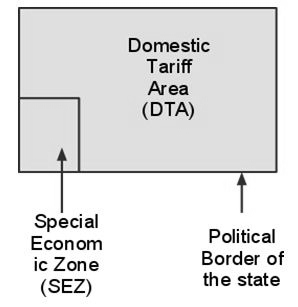
 Figure 1

The host states can expect inter alia to earn increased export earnings, benefit from increased employment opportunities, improved training and skills, and transfer of modern technology (Muchlinski, 2007, p227). In return, foreign investors are offered incentives such as tax exemptions, duty free imports, exemptions from import quotas, capital mobility to remit profits, export allowances and subsidised interest rates within the SEZ. A significant incentive offered by the host state involves the legal control of labour relations. Specifically, the right to establish trade unions or take industrial action may be limited within the SEZ (Muchlinski, 2007, p229).

Political and economic stability, reliable infrastructure, inexpensive labour, market access, and efficient bureaucracy are factors that determine not only how attractive investors will find the SEZ, but are factors that eventually determine the success of the SEZ (UNIDO, n.d., p27).

Keeping in mind these objectives and demands, India embarked on a journey to use SEZs as engines of economic growth. India set up Asia’s first EPZ set up in Kandla in 1965. The government announced the SEZ policy in April 2000, claiming to “to overcome the shortcomings experienced on account of the multiplicity of controls and clearances; absence of world-class infrastructure, and an unstable fiscal regime and with a view to attract larger foreign investments in India” (SEZ India, 2011a, Introduction). The Foreign Trade Policy provisions governed SEZs in India prior to the implementation of the SEZ Act, 2005 in February, 2006 (Chandrasekhar and Ghosh, 2007).

Salient Features of the SEZ Act (2005)

‘The Special Economic Zones Act, 2005’ was passed on the 23rd June, 2005, in an attempt to give a framework to the implementation of SEZs in India. It includes several regulatory and investment fostering mechanisms.

i. Creation of SEZs and general administration:

The Act explicitly mentions a few guiding principles for the Central Government regarding the creation of SEZs. The objectives of the government, as stated by the Act, must be to generate additional economic activity, promote exports of goods and services, create employment opportunities, and develop infrastructure, all while maintaining the “sovereignty and integrity” of India

(SEZ Act, 2005, p8). Thus, SEZs have thus come to be justified as an engine of growth and employment generation, and not in terms of exports expansion alone (Sharma, 2009, p18).

The Act calls for the creation of the “Board of Approval”, which, as the name suggests, looks into applications to set up SEZs and gives approval to them if they meet the required criteria. This acts as a single-stop-shop for investors (called ‘developers’) to get the required regulatory permission to set up an SEZ. SEZs may be established under this Act either jointly or severally by the Central Government, State Government of any legal person. The Central Government, however, can suo moto set up SEZs, and can prescribe other requirements at a later stage (SEZ Act, 2005, p1-6).

The position of a Development Commissioner is established (p14), and this position is responsible for the general overview of the SEZ, from presiding over the Approval Committee (p17-18) to running the SEZ Authority, which is in charge of provision of infrastructure, promoting exports. reviewing the functioning and performance of the SEZ, and other such functions (p28-29).

ii. Tax Exemptions, Finance and Banking

By definition, SEZs are so-called “tax havens”. The Act specifies all those taxes and duties that the developers would be exempted from in the SEZs. There is exemption from Custom Tariff Act, 1975, Central Excise Act, 1944, Central Excise Tariff Act, 1985 and other similar laws (p24). 100% Income Tax exemption on export income for the first 5 years, and 50% for the next 5 years is offered (SEZ India, 2011a, Facilities and Incentives).

Attention is also given to the trade between the SEZ and the DTA. The Act (SEZ Act, 2005, p8) prescribes the exemption from the payment of duties, taxes or cess under all enactments of the First Schedule for trade between DTA to SEZ. However, any goods moved from the SEZ to the DTA would be subject to safeguarding duties, anti-dumping regulations and other instruments (p26).

The Act also specifies the financial governance structure of the SEZ. Bank branches in SEZs, for example, are defined as ‘Offshore Banking Units’ (SEZ Act, 2005, p3-4), and can be set up after the approval of the Reserve Bank of India (RBI), which is India’s central bank (p20). Other financial activities in the SEZ would be monitored by the relevant regulatory authorities in the DTA (p21).

iii. Law Enforcement

Were illegal activities to take place, the Act states that the Development Commissioner would have the cases investigated, and the cases would be heard at the court(s) appointed by the State Government and the Chief Justice of the state High Court (SEZ Act, 2005, p22). The Act also explicitly states that in case there is any inconsistency of this law with other laws, than this Act would have an overriding effect over others (p34).

iv. Amendments

Over the years, several amendments have been made to the Act. They have primarily revolved around specifying the provision of infrastructure and requirements for establishment of SEZs. The minimum area requirements vary across industries and regions. As an example, a multi-product SEZ has to be between 1000 and 5000 hectares, and at least 50% of the area needs to be earmarked for developing the processing area (SEZ India, 2010, ch II sec. 5, sub-sec 2 a).

Amendments also allow for the generation, transmission and distribution of power within an SEZ (sec. 5, sub-sec 5 c). Importantly, in the case of an information technology related SEZ, 24 hours of uninterrupted power supply is to be provided, apart from reliable connectivity (sec. 5, sub-sec 5A).

Importantly, a stated objective is the generation of positive net foreign exchange earnings, as it is specified that a unit would achieve positive net foreign exchange, calculated cumulatively for a period of five years from production (ch VI sec 53).

The Act is clear in specifying the framework regarding the implementation of an SEZ promotion strategy. The Act however, remains conspicuous in its silence on land acquisition and labour laws, which has become the bone of contention on the implementation of the policy.

A Brief Overview of SEZs in India

Prior to the enactment of the SEZ Act, 2005, there were 19 SEZs across India. The government has now approved 581 SEZs (SEZ India, 2011b) with a further 154 with in-principle approvals (SEZ India, 2011c). 130 of these SEZs are operational today. 283 of the 581 approved SEZs are in the three states if Andhra Pradesh, Maharashtra and Tamil Nadu (SEZ India, 2011d). Of the sectors, the Information Technology and IT enabled services sector has a 61% share of SEZs, while the biotech, pharma, textile sector and multi-product SEZs have less than 10% share each. Apart from these, there are three airport based multi-product, and eight port-based multi-product SEZs (SEZ India, 2011e).
Source: SEZ India, 2011e

The Indian experience in the implementation of SEZs has brought to light major areas of concern in the economic and social spheres. In the economic sphere, these are related to fiscal costs, net employment generation and exports. The social experience of SEZs has brought up issues of worker rights, and those of land transfer, dispossession and displacement. The next two sections of the paper will look into these briefly.

The Economic Experience

i Fiscal issues and investment:

Tax holidays in the SEZ are generous, and provide 100% exemption for Income Tax on profits for the first 5 years of production and 50% for the next five years, apart from the tax breaks discussed above. In addition to this, land is given by the government to developers at low rates (Dutta, 2009, p23). Estimates by the Finance Ministry show that the losses to the state exchequer in terms of forgone revenue would be £24billion for an investment of £50billion (Chandrasekhar and Ghosh, 2007).

Owing to the perceived lost revenue, the Finance Ministry announced a Minimum Alternate Tax on the book profits of developers and units operating in SEZs in the 2011-12 Budget. The Commerce Ministry, however, wants to see a roll back of this tax and sees SEZs as “engines of growth” (Pannu, 2011). This points to differences between the Finance Ministry and the Commerce Ministry on the issue of SEZs.

In fact, Arunachalam (2010, p25) shows that the investment as of 2009 in approved SEZs stood at £416million, and not the figures cited by the Finance Ministry. He argues (2010, p20) that Indian SEZs failed to attract FDI as it would have liked because firstly, India has not used SEZ policies to test reforms which would later be adopted nationwide; secondly, Indian SEZs are small in size (especially when compared to their Chinese equivalents), and finally, because of the lack of labour market flexibility.

ii. Exports:

The Ministry of Commerce and Industry claimed that the value of exports from functioning SEZs increased from £1.9billion in 2003-04 to £30.6billion in 2009-10 (exchange rate £1 = INR72 as of 16th March, 2011). The growth rate of exports over the previous years increased from 25% before the SEZ Act, 2005 to 52% after its implementation, and it stands at 121.40% in 2009-2010 (SEZ India, 2011a, Export Performances). Note that these figures are inconsistent with the estimates of
losses by the Finance Ministry.

An example of a successful SEZ in this regard would be the Mundra SEZ. This SEZ houses India’s largest private port, has been most successful in seeing an increase in exports. It is expected to handle 100m tonnes of exports by 2013, with a growth rate of 40% in these years (Thakkar, 2008).

However, the Comptroller and Auditor General of India has pointed out that most of the SEZs sell goods within the country as “deemed exports” rather than actually exporting them overseas. This seems plausible as the exponential rise of exports from SEZs corresponds with stagnant national exports. The Finance Ministry speculates that some units have merely shifted to these zones from the DTA to avail tax benefits (Pannu, 2011).
Source: SEZ India, 2011a, Export Performances

iii. Employment generation (or the lack thereof):

Proponents of SEZs have claimed that SEZs lead to employment generation, in addition to exports. While the total employment by all types of SEZs across India as of 2008 was about 370,000 (Reddy, Prasad and Kumar, 2010, p87), Mahanta (2010, p199) shows that acquisition of agricultural land by SEZs lead to a fall in food-grain output and agricultural employment. Importantly, he shows that this fall in agricultural employment is not offset by the increase in employment in SEZs.

Another point to note is that compared to countries around the world, Indian SEZs have not seen a high proportion of female workers. In 2003, only 37% of the workforce was female (Varma, Prasad and Krishna, 2010, p320-322). The claims of benefits of the generation of employment by SEZs are hence called into question.

The Social Experience

i. Land acquisition and displacement

Land acquisition is the ‘hot topic’ of India’s SEZ policy. The SEZ Act, 2005 makes no mention of it. The out-dated Land Acquisition Act, 1894, is applicable in this regard. Even the Land Acquisition (Amendment) Bill, 1998 has come under fire from for several shortcomings. For instance, land losers could have their land acquired even if a stated compensation isn’t paid (Asif, 1999, p1564).

Land acquisition is especially contentious and problematic when the land being acquired is populated with people living off the land, which is often the case with agricultural land, as was the case in Nandigram, West Bengal. In addition to this, Chandrasekhar and Ghosh (2007) argue that real-estate developers can engage in major land grab in the guise of setting up SEZs as the SEZ rules require only 25 per cent of the land to be used for industrial processing purposes.

While approved SEZs are to consume 95,000 hectares of land, (Balasubramanian, 2010, p53), the Ministry of Commerce stated that as of 2008, the land allocated to SEZs was about 0.070% of the total land area and 0.128% of the total agricultural area of the country (Reddy, Prasad and Kumar, 2010, p87). While this may seem low, it is has proven to be problematic because of the high population density in some of these areas.

An illustration of the flawed acquisition mechanism by the government would be the case of the state of Andhra Pradesh, where land is being acquired from the poorest people who had been earlier allocated land by the government in “land-for-the-poor schemes”. Legally, this land belongs to the government, so the government takes it back often without compensation on the behalf of SEZ developers (Oskarrsson, 2010, p368).

On the other hand, the Commerce Ministry has cited examples of how rise in land rates in barren, unproductive land has brought wealth to the poor and SEZs have brought infrastructure to the hinterland, as is the case with Mundra in the state of Gujarat (Bhatt, 2007). The wastelands in the coastal regions of Gujarat are mostly owned by the government, hence leaving out land acquisition out of the picture. Moreover, states like Tamil Nadu have seen the rural population welcome SEZs, because several years of social upliftment by the government has made the populace less dependent on agriculture for their livelihood (Murugesan and Bandgar, 2010).

ii. Labour relations

While the SEZ Act, 2005 makes no mention of changes in labour law, Tanwar (2010, p231) writes that changes to the prevailing pattern of application of labour laws have been made in SEZs. All units operating in SEZs are categorised as “Public Utility Service”, meaning that many labour laws become irrelevant. A Public Utility Service is defined to be a service that is of great value to the society, and the lack of provision of which can affect the life of everyone. In this case, employees have to give a 14 day notice before going on strike. Additionally, employees in SEZs don’t have protection in the form of a notice period or compensation against retrenchment. It follows that employees will be reluctant to raise a voice against their employers when the need arises. Moreover, employers in SEZs have the right to change the terms and conditions of service at any point of time. Mahanta (2010, p200) raises concern regarding the lack of labour unions, stating that the possibility of fall in real wages is high, although experience shows that SEZ wages are at par with non-zone wages (Varma, Prasad and Krishna, 2010, p326).

Conclusion

This essay has dealt briefly into a few contentious issues that arise with the establishment of SEZs in India. With significant employment not being generated, and with no real rise in national exports has taken place, the rationale of this establishment is called into question. The issue remains volatile, as was seen in the case of Nandigram, where the conflict continued to simmer after the scrapped its plans to establish the SEZ there (Dohrmann, 2008, p76).

However, governments are unlikely to give up on establishing SEZs, and it is imperative that laws are amended in order to make trade and investment flourish without disempowering the people who are displaced or the workforce in SEZs. The Land Acquisition Act of 1894 need to be looked into, and a transparent rehabilitation law needs to be put in place (Dohrmann, 2008, p79). In fact, the people need to be made stakeholders in the progress of the nation. Failure to do so may further prove former Indian Prime Minister VP Singh correct in his assessment of the SEZ policy of India, when he said (Dohrmann, 2008, p1), “the current promotion of SEZs is unjust”, and that it acts as a “trigger for massive social unrest, which may even take the form of armed struggle.”

__________________________________________________________________________________

References

  • Arunachalam, P., 2010. “Special Economic Zones and Foriegn Direct Investment in India and China”. In: Arunachalam, ed. Special Economic Zones in India. Serials Publications, New Delhi. ISBN 978-81-8387-336-9

  • Asif, M., 1999. “Land Acquisition Act: Need for an Alternative Paradigm”. Economic and Political Weekly June 19, 1999 Balasubramaniyan, R., 2010. “An Econometric Analysis of Special Economic Zones in India”. In: Arunachalam, ed. Special Economic Zones in India. Serials Publications, New Delhi. ISBN 978-81-8387-336-9

  • Bhatt, S., 2007. “Rivalry Between Business Houses has blown up the SEZ issue”. Rediff News 21st Feb, 2007. [online] Available at: http://www.rediff.com/money/2007/feb/21sez.htm [accessed 18th March, 2011]
  • Chandrasekhar, C.P., and Ghosh, J., 2007. “SEZs in India: The Record So Far”. Business Line, 27th November, 2007. [online] Available at http://www.thehindubusinessline.in/2007/1/27/stories/2007112750070900.htm [accessed 15th March, 2011]
  • Dohrmann, J. A., 2008. “Special Economic Zones in India – An Introduction”. ASIEN 106 (January, 2008) p60-80 [online] Available at http://www.asienkunde.de/articles/a106_asien_aktuell_dohrmann.pdf [Accessed 16th March, 2011]
  • Dutta, M., 2009. “Nokia SEZ: Public Price of Success”. The Economic and Political Weekly, 3rd October, 2009. Vol XLIV no. 40
  • Guangwen, M., 2003. The Theory and Practice of Free Economic Zones: A Case Study of Tinajin/People’s Republic of China. Peter Lang ISBN 0-8204-6508-9
  • Mahanta, A., 2010. “Special Economic Zones and its Impact on Agriculture and Employment in India”. In: Arunachalam, ed. Special Economic Zones in India. Serials Publications, New Delhi. ISBN 978-81-8387-336-9

  • Manoj, P. K., 2009. Special Economic Zones in India: Financial Inclusion: Challenges and Opportunities. Serials Publications, New Delhi. ISBN 978-81-8387-275-1
  • Muchlinski, P., 2007. Multinational Enterprises and the Law 2nd Ed. Oxford University Press
  • Murugesan, P., and Bandgar, P. K., 2010. “Land Acquisition for SEZs in India: Theoretical Perspective”. Southern Economist, 1st August, 2010 [online] Available at:  http://www.vesasc.org/Economics_-_Murugeshan_Sir.pdf [Accessed 19th March, 2011]
  • Nagayya, D., and Rao, T. V., 2010. “Special Economic Zones For Raid Insutrlization and Regional Development: Progress and Concerns”. In: Arunachalam, ed. Special Economic Zones in India. Serials Publications, New Delhi. ISBN 978-81-8387-336-9

  • Oskarsson, P., 2010. “Zoning Andhra Pradesh: Land for SEZs via tha Land for the Poor Program”. In: Arunachalam, ed. Special Economic Zones in India. Serials Publications, New Delhi. ISBN 978-81-8387-336-9

  • Pannu, S.P.S, 2011. “Ministries in a tug of war over tax on SEZs”. Business Today, 14th March, 2011 [online] Available at: http://businesstoday.intoday.in/bt/story/ministriesfightovertaxonspecialeconomiczones-(sezs)/1/13883.html [accessed 14th March, 2011]
  • Reddy, P., Prasad, A., and Kumar, P., 2010. “Generation of employment by Special Economic Zones in India”. In: Arunachalam, ed. Special Economic Zones in India. Serials Publications, New Delhi. ISBN 978-81-8387-336-9
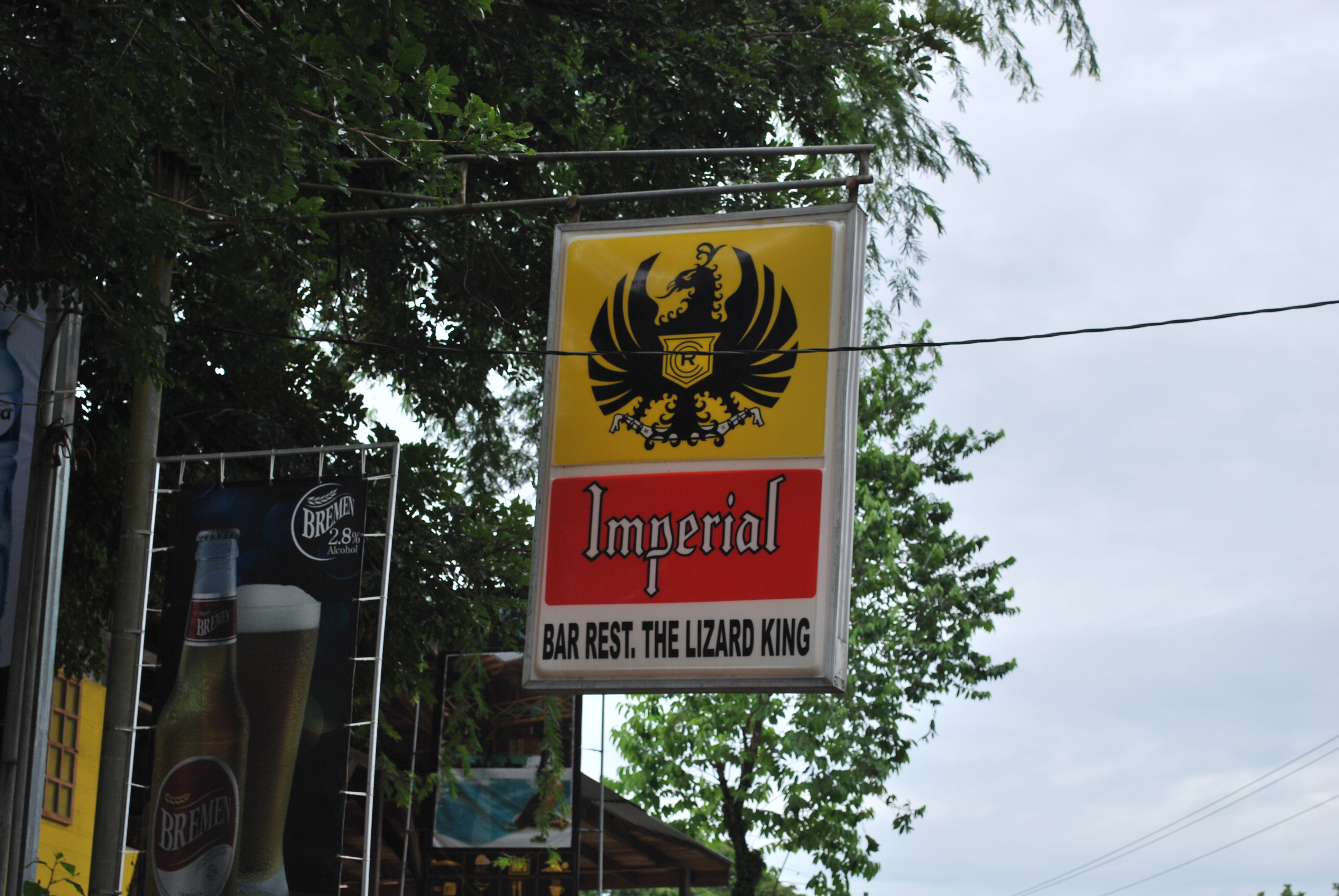
  • Sharma, N. K., 2009. “Special Economic Zones: Socio-Economic Implications.” Economic and Political Weekly 16th, May, 2009 vol. XLIV no. 20
  • SEZ India, 2010, “SEZ Rules incorporating amendments upto July, 2010”. Ministry of Commerce and Industry (Department of Commerce), Government of India  [online] Available at: http://sezindia.nic.in/goipoliciessra.asp [Accessed 14th March, 2011]
  • SEZ India, 2011a. Special Economic Zones in India, Ministry of Commerce & Industry (Department of Commerce) [online] Available at http://sezindia.nic.in/ [Accessed 15th March, 2011]
  • SEZ India, 2011b. “ListofFormalApprovalsgrantedundertheSEZAct,2005, 2011”. Ministry of Commerce and Industry (Department of Commerce), Government of India  [online] Available at: http://sezindia.nic.in/writereaddata/pdf/ListofFormalapprovals.pdf [Accessed 14th March, 2011]
  • SEZ India, 2011c. “In Principle approvals granted under the SEZ Act, 2005”. Ministry of Commerce and Industry (Department of Commerce), Government of India [online] Available at: http://sezindia.nic.in/writereaddata/pdf/Listofinprincipleapprovals.pdf [Accessed 14th March, 2011]
  • SEZ India, 2011d. “SEZ: Statewise Distribution”. Ministry of Commerce and Industry (Department of Commerce), Government of India  [online] Available at: http://sezindia.nic.in/writereaddata/pdf/StatewiseDistributionSEZ.pdf [Accessed 14th March, 2011]
  • SEZ India, 2011e. “SEZ: Sectorwise Distribution”. Ministry of Commerce and Industry (Department of Commerce), Government of India  [online] Available at: http://sezindia.nic.in/writereaddata/pdf/Sectorwise%20distributionSEZ.pdf [Accessed 14th March, 2011]
  • Tanwar, S., 2010. “Relevance of Labour Laws in Special Economic Zones”. In: Arunachalam, ed. Special Economic Zones in India. Serials Publications, New Delhi. ISBN 978-81-8387-336-9

  • Thakkar, M., 2008. “Mundra Port: Anchored to Success”. The Economic Times 12th Nov, 2008 [online] Available at: http://articles.economictimes.indiatimes.com/2008-11-12/news/28448158_1_mundraportsezadanisbiggestport [Accessed 19th March, 2011]
  • Tantri, M. L., 2010. “Import Dependency of Special Economic Zones”. The Economic and Political Weekly 4th September, 2010 Vol. XLV no. 36
  • The Telegraph, 2007. “Red-hand Buddha 14 killed in Nandigram re-entry bid”. The Telegraph, 15th March, 2007 [online] Available at http://www.telegraphindia.com/1070315/asp/frontpage/story_7519166.asp [accessed 14th March, 2011]
  • The World Bank Group, 2008. “Special Economic Zones: Performance, Lessons Learned, and Implications for Zone Development”. The World Bank Group, April, 2008 [online] Available at: http://www.ifc.org/ifcext/fias.nsf/AttachmentsByTitle/SEZpaperdiscussion/$FILE/SEZs+report_April2008.pdf [accessed 14th March, 2011]
  • The Land Acquisition Act, 1894. Ministry of Law and Justice, Government of India, 1st Spetember, 1895 [online] Available at: http://dolr.nic.in/hyperlink/acq.htm [accessed 16th March, 2011]
  • The Special Economic Zones (SEZ) Act, 2005. Ministry of Law and Justice, Government of India. 23rd June 2005 [online] Available at http://sezindia.nic.in/goipolicies.asp [Accessed 13th March, 2011]
  • UNIDO, n.d. “Export Processing Zones: Principles and Practice”, United Nations Industrial Development Organisation. [accessed from the British Library of Political and Economic Science, LSE]
  • Varma, A. V. N., Prasad, J. C., and Krishna Y. R., 2010. “Special Economic Zones – The Socio Economic Dimensions and Challenges.” In: Arunachalam, ed. Special Economic Zones in India.
    Serials Publications, New Delhi. ISBN 978-81-8387-336-9

The Aryan Debate in the Indian Context

In this essay, the author analyses the debate surrounding the origin of the Indo-Aryan people who constitute a majority of the population in Northern India. While the traditional view is that the Aryans migrated from outside the subcontinent, a more recent view holds that they were indigenous to the region.


By Rebecca Aranha, 13 Oct, 2011

“The truth of ancient history is indifferent to our wishes, our politics, our religion… the idea of truth in history involves the idea that exists independent of our will, and is therefore difficult to know, because our interpretations are will-bound and our facts are never independent of our theories”  -Thomas R. Trautmann

The Aryan debate, ancient Indian history’s very own case of ‘whodunit’, has been raging in books, newspapers, and public forums of India for the last decade or so. It examines the following question: did the Sanskrit-speaking Aryans enter from the north-west in about 1500 BC, or were they indigenous to India and identical to the people of the Indus Civilization of 2600-1900 BC? This question is central to the debate that has shaped Indian history writing, and has been strongly contested in public discussions for over a decade.

The first position, the immigrant Aryan position that the Aryans came to India from outside in about 1500 BC, is called the standard view because it is the interpretation that has prevailed in schools and university textbooks and in academic journals and books. The second position, the indigenous Aryan position that the Aryans were the makers of Indus Civilisation, is called the alternate view, because it is challenging the established, standard view.

The resolution to the Indo-European controversy has been one of the most consuming intellectual projects for historians of Ancient India of the last two centuries. It has captivated the imagination and dedication of generations of archaeologists, linguists, anthropologists, historians, and many scholarly, and not so scholarly, dilettantes. In modern India, the discussion of Indo-Aryan migration is charged politically and religiously, with the debate having produced a lot of polemics on both sides.

Thus, apart from just being a historical debate, the Aryan debate has now acquired a political and social colour. Moreover, what used to be a debate among scholars has boiled and spilled over into the public arena, and the sober works of academicians are now swamped by the often heated writings of those who are not scholars trained in the history, linguistics and archaeology of ancient India. With such heated debates it becomes easier to be thrown off the track of historical truth in favour of political or religious objectives, thus allowing partisan politics to enter the debate. As may be questioned by many, why has this debate become so highly charged and contentious? In a general manner we may say that the past often becomes very important and debatable as ancient history serves as a character for society and marks its growth and continuance. When there are various visions about the future, it is the past, that sets precedence so to speak, that is looked upon to judge the ‘righteousness’ of the path. It also brings to light the matter of who were the ‘foreigners’ and who were the ‘natives’ and, as can obviously be seen, these matters are highly sensitive and lead to extremely charged debates!

It is extremely difficult to discover the truth behind the Aryan debate, because, as Trautmann rightly says, “the truth of ancient history is indifferent to our wishes, our politics, our religion… the idea of truth in history involves the idea that exists independent of our will, and is therefore difficult to know, because our interpretations are will-bound and our facts are never independent of our theories”.

I shall now attempt to contextualise this debate, to put it into today’s perspective. The relevance of the Aryan debate can be seen from the influence of the colonial period on India’s present to our current political scenario and, right up to controversial comments of certain Right-wing politicians in the very recent past. The present volatile situation in India has made Western, and many Indian, scholars particularly concerned about the repercussions of communal interpretations of history.

The theory of the Aryan race is not limited to historical reconstruction and is an example of how historical perceptions of the past can be related to conflictual situations of the present. This debate is intensely relevant to the constructions of several very different sets of competing identities: associations of coloniser and colonised, neo-colonial and Hindu fundamentalist, indigenous and foreigner, Hindu communal and Marxist secularist etc.

The conquest of the ‘fair-skinned Aryans’ over the ‘dark-skinned aborigines’ became the mechanism by which caste came to be viewed as a form of racial segregation and was central to Indian social institutions.

The debate over how ‘Aryanism’ was to be interpreted provides us insight into the political agendas of the groups who used it. These groups were involved in seeking identities from the past and in countering each other’s claims to these identities as well as choosing a homeland and working out a national culture. The interpretation therefore hinged on specific ideological needs. The primary concern in establishing an Indian identity was the need to define the rightful inheritors of the land. Here the question of origins and affirmations of common descent was central to nation-building. It is thus important to consider modern ideological underpinnings of this debate in India as different forces compete over the construction of national identity.

The Aryan invasion theory also has a genesis in colonial attempts to ‘discover’ the Indian past, a discovery which was rooted in the colonial present.

During the earlier phase of the ‘homeland of the Aryans’ quest, when India was still a popular candidate, many scholars were uncomfortable about moving the Indo-Europeans too far from their biblical origins somewhere in the Near East. There were those among the British, in particular, whose colonial sensibilities made them reluctant to acknowledge any potential cultural indebtedness to the forefathers of the rickshaw pullers of Calcutta, and who preferred to hang on to the biblical Adam for longer than their European contemporaries. Even well after Adam was no longer in the picture, there was a very cool reception in some circles to the “late Prof. Max Muller who had blurted forth to a not over-grateful world the news that we and our revolted sepoys were of the same human family”.  Muller noted, “They would not have it, they would not believe that there could be any community of origin between the people of Athens and Rome, and the so-called Niggers of India…”

The Indomania of the early British Orientalists was replaced by an Indophobia initiated by Evangelicalism. Charles Grant epitomised this by stressing the absolute difference, in all respects, between the British and the despicable natives of the subcontinent. Grant was by no means the first or sole Christian leader to engage in extreme denunciations against Hinduism – these continued throughout the colonial period. Christian evangelists, in fact, found advantages in discourses of Aryan kinship. For instance, Samuel Laing held that the “two races so long separated meet once more… the younger brother has become the stronger, and takes his place as the head and protector of the family… we are here… on a sacred mission, to stretch out the right hand of aid to our weaker brother, who once far outstripped us, but has now fallen behind in the race”.

Devendraswarup, a historian of the colonial period, finds the scholarly work of missionary intellectuals to be readily presenting the Brahmins as foreigners who had imposed their Vedic language and texts onto the aboriginals of India. The idea in this case was to create a sense of alienation from Brahmanical religion among the lower castes, thereby preparing them for exposure and conversion to Christianity.

Clearly, the developing pressure to justify the colonial and missionary presence in India prompted the denigration of Indian civilisation, and the shunning of embarrassing cultural and linguistic ties. Trautmann suggests that such considerations also explain why the British, despite having primary access to Sanskrit source material, did not pursue the study of comparative philology. Racial theorists paved the way for the postulate that the Aryans were an autonomous white race who brought civilisation and the Sanskrit language to the different races of India– a development Trautmann holds as pivotal to the political construction of Aryan identity developing in Germany.

The colonial view would endorse the idea that the progress of India was dependent on the return of the Aryan in the guise of the British. The British presence in the subcontinent could now be cast as a rerun several millennia later of a similar script, but a script that hoped to have a different ending. The British could now present themselves as a second wave of Aryans, again bringing a superior language and civilisation to the racial descendants of the same natives their forefathers had attempted to elevate so many centuries earlier. Devendraswarup argues that after the British were shaken by the Great Revolt of 1857, certain individuals suddenly found reason to stress their common Aryan bond with the Brahmins where others had previously shunned it. The Aryan connection was thus simply manipulated at will.

This view was partially responsible for the extreme nationalist rejection of the theory that Aryans were anything other than indigenous. Rajaram stated that the Aryan invasion theory is “the fabrication of a version of ancient history and tradition that was highly advantageous to missionary and colonial interests”. This discourse is also attacked as some claim that it attempts to promote disunity between Dravidians and northerners. Shankaracharya believed that “the Indologists and Orientalists introduced the till then unheard of concept of Aryans and Dravidians, which created mutual hatred”. Supporters of the migration theory are now faced with several accusations. The major one is that the British Raj from the 19th century to the present day promoted the Aryan invasion hypothesis in support of Euro-centric notions of white supremacy. Assertions that the highly advanced proto-Hindu Vedic culture could not have had its roots in India are seen as attempts to bolster European ideas of dominance.

I have earlier discussed how the discourse of Aryanism affected religious and political identities in post-Enlightenment Europe. I shall now go on to examine how the same theme has been utilized to support a variety of agendas on the Indian subcontinent in the modern period. It should however be kept in mind that not all scholars who have written for or against the Aryan invasion theory are politically motivated.

In this context, there are essentially two opposing interpretations, the Dalit one pioneered by Jyotiba Phule, and the Hindutva one pioneered by Veer Savarkar.

Let us begin with Hindutva, since this is the element of most pressing concern. The Hindutva interpretation follows a strong imperative to stress the racial unity of the Indian people prior to the coming of Islam and the solidarity of the Brahmins and non-Brahmins within Hinduism as well as the differences of Hindus from Muslims and Christians. It tends to reject an Aryan homeland outside of India, and to identify Vedic civilisation with the Indus Civilisation.

Savarkar’s Hindutva, literally ‘Hinduness’, or the essential quality of being a Hindu, has been a very influential expression of Hindu self-identity. Savarkar’s book on Hindutva was eventually adopted by the Hindu Mahasabha, and is still a seminal text of Hindu nationalist groups such as the RSS (Rashtriya Svayamsevak Sangh). Savarkar’s writings clearly reveal the crux of Hindutva – to be considered a native of Hindustan, a person’s religious faith must have an indigenous origin. What, then, of other Indians – those whose religious beliefs blossomed in other lands – where do they fit into such a scheme of things? Savarkar writes on – “That is why in the case of some of our Mohammedan or Christian countrymen who had originally been forcibly converted to a non-Hindu religion and who consequently have inherited, along with the Hindus, a common fatherland and a greater part of the wealth of a common culture are not and cannot be recognised as Hindus. For though Hindusthan to them is Fatherland, as it is to any other Hindu, yet it is not to them a holy land too. Their holy land is far off in Arabia or Palestine. Their mythology and godmen, ideas and heroes are not the children of this soil. They must set their holy land above their Fatherland…” Savarkar believes that the Muslims and Christians can never participate in the benefits (whatever they might be) of Hindutva because their prophet was born on the wrong side of the Arabian Sea!

Returning to the Aryan theme, it should be evident how the basis of Savarkar’s Hindutva is undermined if the Vedic Aryans came from central Asia. If that were the case, then the followers of Vedic religion would have to be disqualified from being Hindus, since the original founders of their faith were not born and bred in Bharat. Acceptance of the Aryan invasion theory according to Savarkar’s logic would then imply that the forefathers of the Vedic Aryans are undoubtedly foreigners and their followers essentially no different from those revering other “foreigners” such as Muhammad or Christ. Also, if the Aryans came from somewhere near the Caspian Sea area, adjacent to Persia, they would actually share close blood links with the proto-Iranians, thereby making the Vedic Aryans much closer relatives in language, proto-religion and blood with the Muslims who came to India from these areas.

Therefore, the opposition of other RSS leaders, such as M.S. Golwalkar, to the Aryan invasion theory was extremely aggressive. He said, “It was the wily foreigner, the Britisher, who to achieve his ulterior motives, set afloat all such mischievous notions among our people so that the sense of patriotism and duty towards the integrated personality of our motherland was corroded. He carried on the insidious propaganda that we were never one nation, that we were never the children of the soil but mere upstarts having no better claims than the foreign hordes of Muslims or the British over this country”. This brand of Hindu nationalism, which seems determined to alienate the Muslim community on the grounds of its lack of religious pedigree, is obliged to refute the Aryan invasion theory or risk logical absurdity.

Where Savarkar specifies the importance of India as the geographic land of religious revelation in his criteria for Hindutva, Shrikant Talageri considers the psychological bond to be more significant. He argues that while Indian culture absorbs and assimilates newcomers, Islam and Christianity do not; the leaders, founders, saints, sacred languages, scripts, holy places, traditional attire etc all owe allegiance to cultures outside India. He essentially requires that the Muslims, if not convert completely, at least accept Hindu concepts and beliefs, even those that might completely jar with their own religious sensibilities. He categorically stated, “The non-Hindu people in Hindusthan must either adopt the Hindu culture and language, must learn to respect and hold in reverence the Hindu religion, must entertain no idea but those of glorification of the Hindu race and culture… or may stay in the country, wholly subordinated to the Hindu nation, claiming nothing, deserving no privileges, not even citizen’s rights”.

There can be no doubt that Hindutva is easily pressed into service in alienating and targeting the Muslim minority in communally volatile, modern-day India. Irfan Habib said in a newspaper interview: “I would like to cite the example of the Nazis, of how a particular perception of history held by a respectable section of the German intelligentsia, which was not racist at least outwardly and certainly was not anti-Jewish, was so easily utilised by the Nazis… so, here you have an example of how a historical theory is created by someone who had no idea of what use it can be put to… before 1947 the idea that Aryans went out of India was hardly espoused by any serious historian… but now, while some people deny that they espouse the Nazi race theory, they have in fact espoused it”. Not surprisingly, the various Hindutva versions either deny the validity of the linguistic analyses or else ignore them. From this perspective, archaeology is now viewed as important to the identity of the Aryans, but not so linguistics.

The Dalit interpretation, on the other hand, maintained that the lower castes were the indigenous inhabitants who had been conquered and oppressed by Brahmins who represented the Aryan conquest. This view was expounded initially by Jyotiba Phule. Writing in the latter half of the nineteenth century, Phule argued that the original inhabitants of India were the Adivasis, among whom he included the Sudras, the ati-Sudras and the untouchables, who were descendants of the heroic peoples led by the Daitya king, Bali. The indigenous peoples under the leadership of Bali, fought the arrival of the Brahmins who for Phule represented the Aryan invasion, but the Adivasis were conquered and subordinated. Phule’s ‘golden age’ was the period prior to the Aryan invasion when Sudras were cultivators, landowners and warriors, and had their own culture. The Brahmins are said to have deliberately invented caste so that the Sudras would be kept permanently servile and divided among themselves. He argued that the rightful inheritors of the land were the lower castes, not the Brahmins.

Phule was not merely concerned with the indigenous origins of the lower castes but he was also a ‘social reformer’ working towards educating Sudras and women with the intention of providing them with a sense of relative independence. In the colonial-nationalist divide, his views were not entirely supportive of either.

The dichotomy between Brahmin and non-Brahmin was seen to provide a rational expression for the pattern of history and the suppression of the non-Brahmin by the Brahmin. Brahmins were seen as Sanskrit-educated Aryans and the other castes using Dravidian languages were the non-Aryans. The use of language for demarcation was perhaps one reason for the non-Brahmin movement being more influential in peninsular India (the heartland of Dravidian languages) than elsewhere.

There are others who support the Aryan invasion theory, but do not necessarily share Phule’s ideas, including Romila Thapar. She remarks: “The theory of the Aryans being a people has been seen as fundamental to the understanding of the identity of modern Indians and the question of identity is central to the change in Indian society from caste to class. The upholding of a false theory is dangerous. The next step can be to move from the indigenous origin of ‘the Aryans’ to propagating the notion of an ‘Aryan nation’”.

This ‘school’ of scholars is often branded ‘Left-liberal’ or ‘secular Marxist’ by opponents of the invasion theory, because its model of invasion and subordination corresponded to Marxist concepts of class struggle and ideology. Secular Marxists are accused of maintaining a defunct theory in order to insist that the arrival of the Aryans is analogous to the arrival of the Muslims, Christians, and other groups of newcomers to the subcontinent. In such an amalgamation of immigrants, no one has more claims to indigenous pedigree or cultural hegemony than anyone else.

Chakrabarti, an Indigenous Aryanist, has nothing but scorn for the Indian intellectual elite who “fail to see the need of going beyond the dimensions of colonial Indology, because these dimensions suit them fine and keep them in power”. The most maligned figureheads are precisely those who have most publicly opposed the Indigenous Aryan position, particularly R.S. Sharma and Romila Thapar. She, in turn, holds that “indigenism is intellectually and historiographically barren with no nuances or subtleties of thought and interpretation”. In India, some Indigenous Aryanists, being branded communal, then label their detractors either “colonial stooges” or “secular Marxists” who are motivated by their own political agendas.

The question of Aryanism and the beginnings of Indian history remains a complex problem because it still carries, at the popular level, the baggage of nineteenth century European preconceptions, even if in the European context it has now been rejected as a nineteenth century myth. It has overwhelmed Indian history, but is now less important to a nationalist reconstruction of the past, although the Hindutva version claims to derive from a nationalist cause and accuses those who disagree of being anti-national. Its real function in their hands is political, in that it is used to separate the supposedly indigenous Hindu Aryan from the alien, the Muslim and the Christian; or, in the case of the Dalit interpretation, the indigenous lower castes from the alien upper castes.

The crux of the debate is the crisis of identity and status in the claims to political and social power and a contestation over what is viewed as alternative forms of national culture and ethnic homogeneity. Though the debate itself may never truly be resolved for a lack of concrete evidence it continues to be relevant today not only in its controversial content but also because it shows us how misguided perceptions, narrow-mindedness and political agendas can be detrimental to the development of a nation and its international relations, the peaceful co-existence of its people as well as the analysis of its history.

________________________________________________________________________________

The views expressed in this article are the author’s own and do not necessarily reflect InPEC’s editorial position.