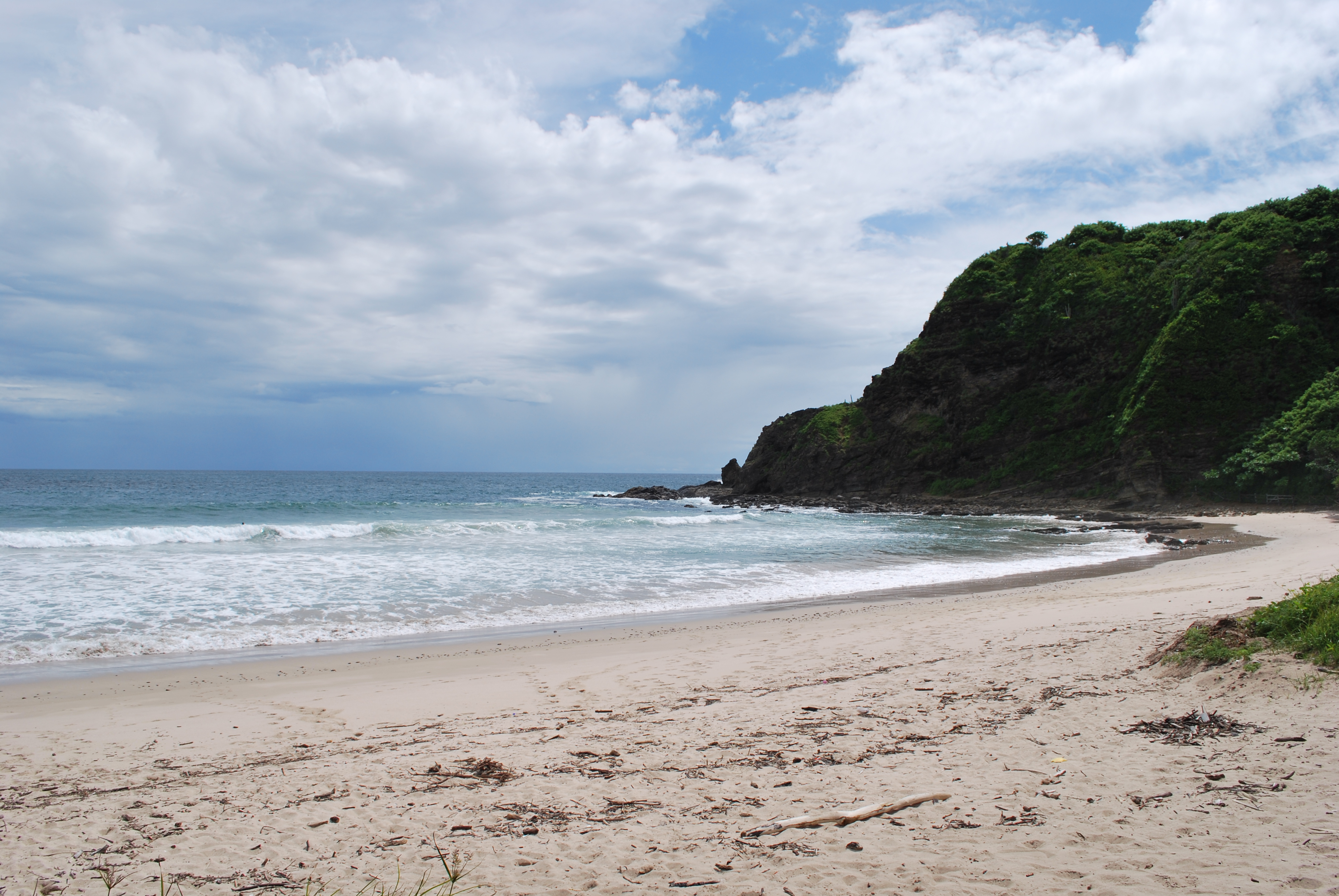
Research Project: Best Before, the London food revolution

In this post, documentary filmmaker Ben Mann brings us his latest work on the current food revolution taking place in London.


By Ben Mann, 27 February, 2012

Best Before is about the current food revolution in London and the reasons why it is happening. Since it is a revolution that few people are aware of, we wanted to draw a picture of what it constitutes of, and how and why it is happening. The 2007/2008 Food Price Crisis pushed an extra 800 million people around the world into chronic hunger, as a result of the price for basic foods drastically increasing. This was so dramatic a shock since many developing countries are net importers of staple crops. Here in the UK we import about 40% of the food we consume[i]. With increasing oil volatility, the food system in London and the UK is vulnerable to increasing prices of basic foods. Food prices are expected to double across the world by 2030[ii], and food prices have already risen 6% in the UK in the last year[iii].

Continue reading

Interview with Dr Dan Plesch (Part II) – ‘As a concept, SCRAP is a tool to be used’

In this second issue of a two-part interview, longstanding disarmament activist and Director of the Centre for International Studies and Diplomacy (CISD) at the London School of Oriental and African Studies, Dr Dan Plesch, answers questions on SCRAP (or Strategic Concept for the Removal of Arms and Proliferation), the CISD project on global disarmament.


By David J. Franco, 23 Feb, 2012

In 2011 the Centre for International Studies and Diplomacy (CISD) of the London School of Oriental and African Studies formally launched SCRAP, a holistic approach to global disarmament that proposes the adoption of an international legally binding agreement for complete and general disarmament with a ten-year implementation period. Originally developed in Dr Plesch’s book, the Beauty Queen’s Guide to World Peace, SCRAP was recently presented at the UN Headquarters in Geneva, during a Consultation on Disarmament Education co-organised by the Costa Rican and the Philippines delegations to the UN, the International Peace Bureau, and the CISD.

Continue reading

Photo Reportage: South Tel Aviv, a changing neighbourhood – Part II

In this second part of a series of photo reportages, the author shares photographs taken in South Tel Aviv, Israel, where large numbers of refugees have landed over the past decades.

Part I can be accessed here: South Tel Aviv, a changing neighbourhood


By Natalie Muallem, 22 Feb, 2012

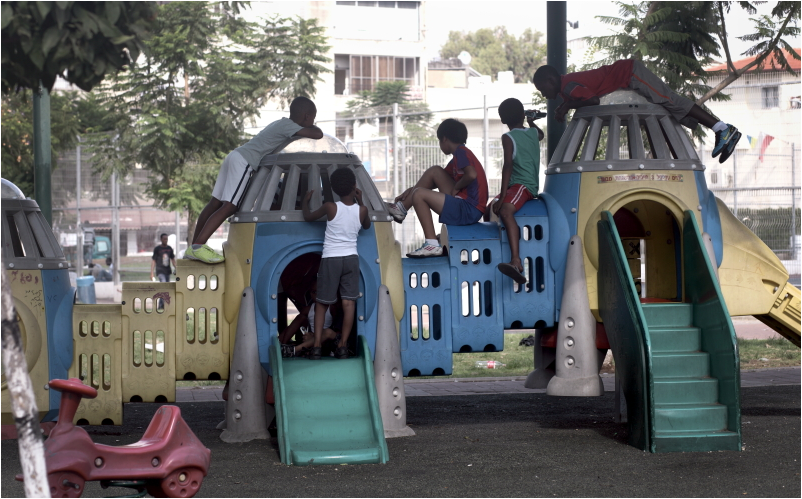
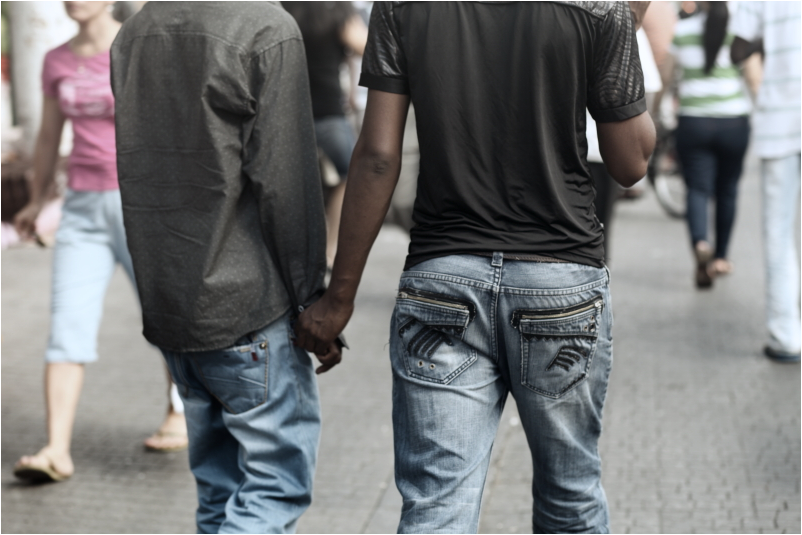
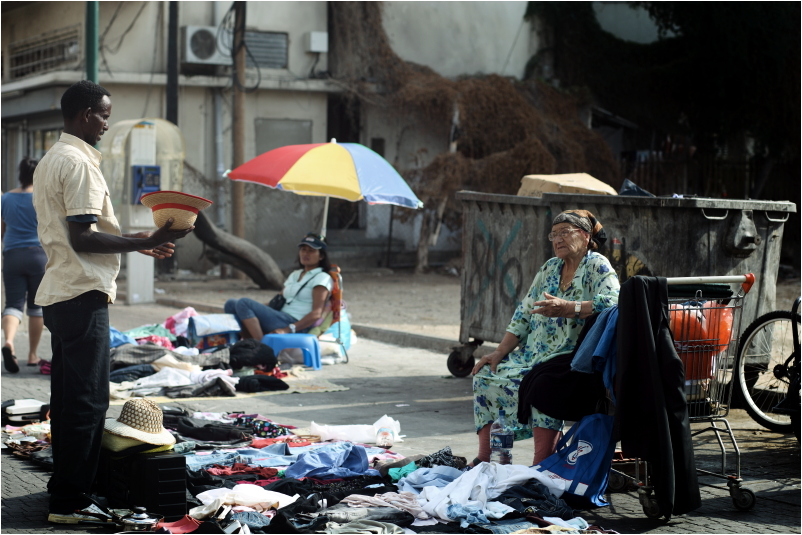
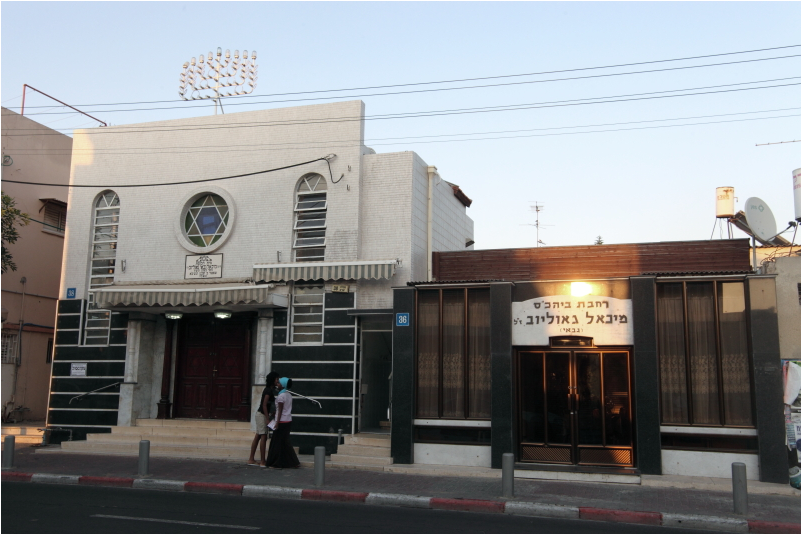
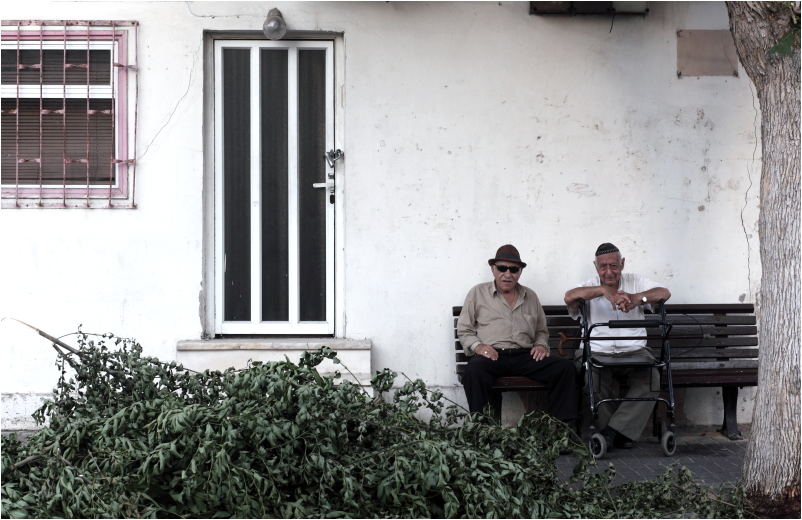
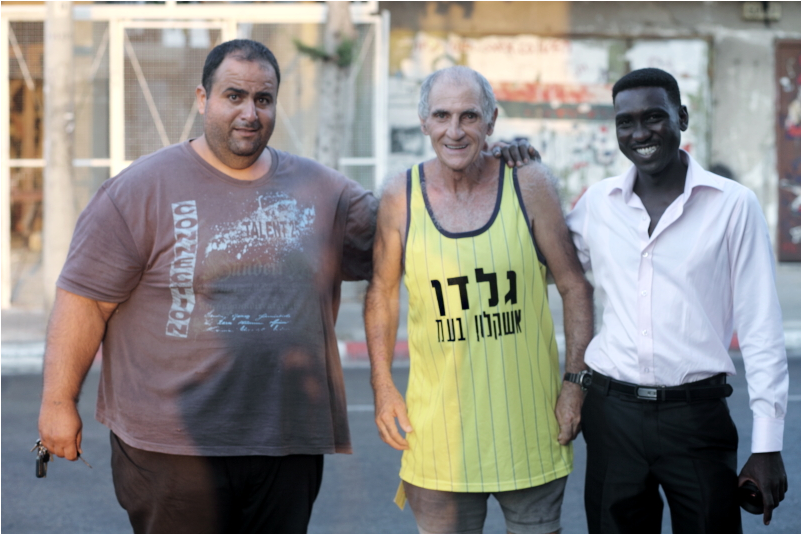
Last summer I spent two months in the south part of Tel Aviv. I was teaching English to a family from Darfur who arrived in Israel over three years ago. I have not included photos of them in this series as I feel they are too personal. However, I spent a lot of time walking around the neighbourhood in which they live with Ahmed, a refugee from Darfur and someone who has volunteered much of his time working for an NGO that helps to make the life of other refugees easier. These photographs are not a statement about the life of refugees but rather a document of a changing neighbourhood. This second part of a two-part series on South Tel Aviv includes photographs of the Central Bus Station Area.

1. Ahmed

_____________________________________________________________________________________
2. Locals

_____________________________________________________________________________________

3. Landscape of the summer social protests

_______________________________________________________________________________________

4. Kids playground

_______________________________________________________________________________________
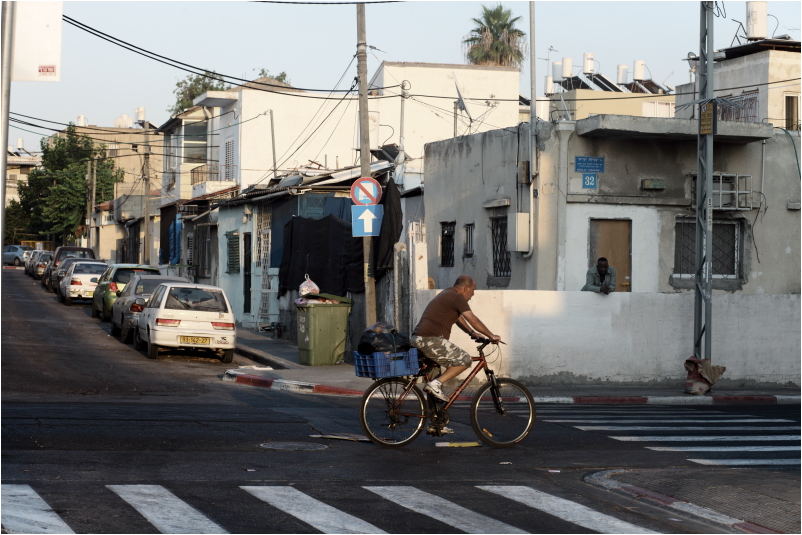
5. Friendship

______________________________________________________________________________________
6. Time for celebration

____________________________________________________________________________________
7. Local market

_____________________________________________________________________________________
8. The road towards Central Bus Station

____________________________________________________________________________________

The copyright of all photos are with Natalie Muallem. Please do not reprint without permission.

Interview with Dr Dan Plesch (Part I) – ‘Disarmament is the Cinderella while Weapons and Non-Proliferation are the Mean Sisters’

In this issue of a two-part interview, longstanding disarmament activist and Director of the Centre for International Studies and Diplomacy at the London School of Oriental and African Studies, Dr Dan Plesch, answers questions on disarmament.

______________________________________________________________________________________
By David J. Franco, 21 Feb, 2012 Continue reading

Photo Reportage: South Tel Aviv, a changing neighbourhood – Part I

In this part of a series of photo reportages, the author shares photographs taken in South Tel Aviv, Israel, where large numbers of refugees have landed over the past decades.

___________________________________________________________________________________
By Natalie Muallem, 20 Feb, 2012

Last summer I spent two months in the south part of Tel Aviv. I was teaching English to a family from Darfur who arrived in Israel over three years ago. I have not included photos of them in this series as I feel they are too personal. However, I spent a lot of time walking around the neighbourhood in which they live with Ahmed, a refugee from Darfur and someone who has volunteered much of his time working for an NGO that helps to make the life of other refugees easier. These photographs are not a statement about the life of refugees but rather a document of a changing neighbourhood.

1. Friend of Ahmed and founder of NGO Bnei Darfur (sons of Darfur)

____________________________________________________________________________________

2. Families

_______________________________________________________________________________________

3. Kids

____________________________________________________________________________________

4. The Neighbourhood

_____________________________________________________________________________________

5. A Synagogue

____________________________________________________________________________________

6. Old friends

______________________________________________________________________________________

7. Ahmed and two locals

_________________________________________________________________________________

8. Ahmed

________________________________________________________________________________

The copyright of all photos are with Natalie Muallem. Please do not reprint without permission.

Photo Essay: Stories from Kabul, Afghanistan – Part III

As part of a USAID project, Abhishek Srivastava worked in Kabul, Afghanistan on AMDEP (Afghanistan Media Development and Empowerment Program). The principal goal of the project is to train and assist Afghan journalists and students of Kabul University on the nuances of reporting. Abhishek tells us stories of people and places in Kabul using his photos as a medium. This is the second in a series of photo-essays on Kabul.

Part I can be accessed here: Stories from Kabul – Part I

Part II can be accessed here: Stories from Kabul – Part II

_____________________________________________________________________________

By Abhishek Srivastava, 17 Feb, 2012

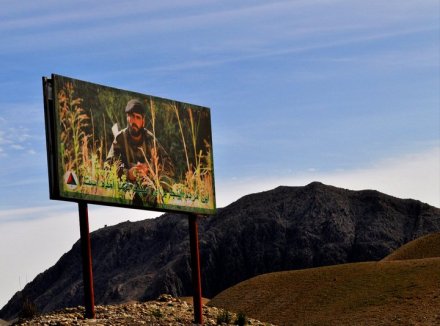
1. Your Country Needs YOU!

A poster calling people to join the Afghan National Army and be a hero.

_____________________________________________________________________________

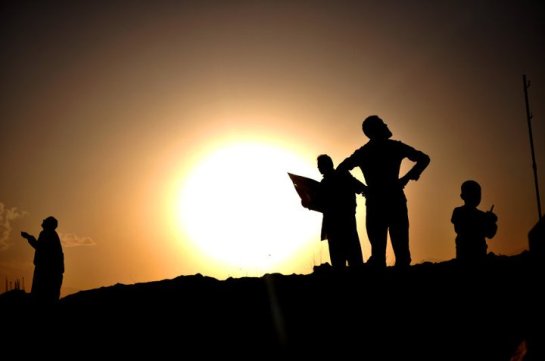
2. The Kite Runners

Kite flying at dawn. I was not aware that kite flying is so popular among Afghans. Kite flying had been banned during the the Taliban regime.
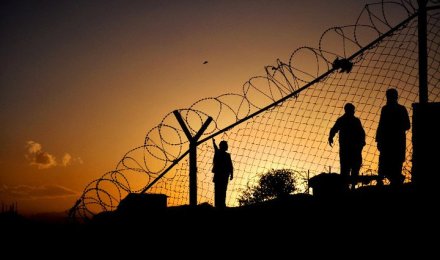
3.

Bullet ridden walls and barbed wires are common in this area around Zahir Shah’s tombstone, a typical Kabul suburb. I saw hundreds of people scattered over a limitless piece of land, flying colorful kites.

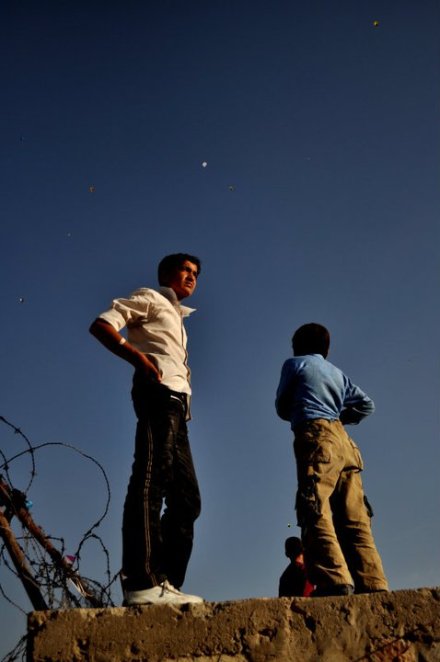
4.

Keeping a hawk eye. The number of kite catchers were the same as the number of people flying the kites.

_____________________________________________________________________________

5. Baaz

That is a Baaz (Falcon). In Afghanistan, keeping of birds as pets has long been a popular pastime.
_____________________________________________________________________________

6. The River of Poppies

The main river of eastern Afghanistan is this famous Kabul River. It is a 700kms long river, and it flows east past Kabul and Jalalabad, north of the Khyber Pass into Pakistan, and past Peshawar; it joins the Indus River northwest of Islamabad. Alexander the Great used it to invade India in the 4th century BCE. It now mainly helps in the cultivation of poppies.

_____________________________________________________________________________

7. The Corner of a Foreign Field

‘Jumma Cricket in Kabul’

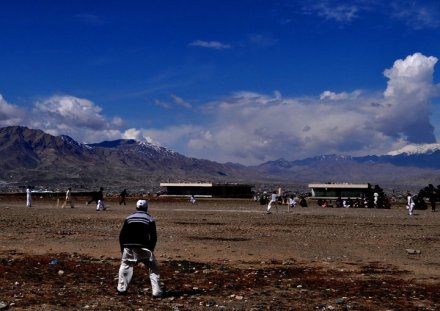
At 6am one day, I got a call from an Afghan asking me to accompany him to see what some Afghans do on a holiday morning, after their morning prayers.

And here I was, right in the middle of some mountains, with the wind blowing away the clouds and making way for the clear blue sky. On a ground full of rock and pebbles, with spectators sitting right next to the batting wicket, a match of cricket was on.

The ground was yet again a part of Soviet recreation facility built in the 1980’s. I could not have been more delighted, for it was the World Cup season, and India was in the finals. That was reason enough for me to connect with any match of cricket.

Out of nowhere, I got that extra adrenaline rush to hold the bat and try those rusted strokes from childhood. But first I had to watch. Yes, the cricket fever was on in Afghanistan as well. Being a holiday in this Islamic country, playing cricket every Friday is like a ritual for most. I saw some of them wearing the Pakistan cap as well.

It was 12 over match with 11 players in each team. Some of the them even tried enacting Shahid Afridi, their hero. Afridi is a popular Pakistani batsman. The moment they got to know that an Indian was present, they congratulated me for defeating Pakistan in the World Cup Semi Final and handed me the bat!

8.

Our cricket ball was a normal tennis ball, which was nicely wrapped in white plastic tape. They say that it makes the ball heavier and makes it swing, much like a leather ball. Well it did hit me hard a couple of times!

9.

Firing star batsman, Haaseeb.

_____________________________________________________________________________

10. Taimani Fort

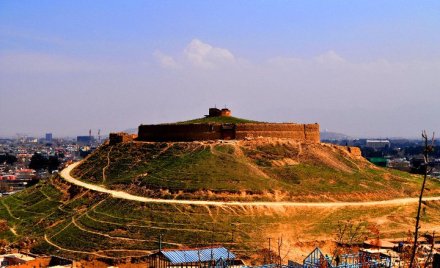
The mud walled Taimani Fort. This fort was built in the late 1880’s. It belongs to a tribe called ‘Taimani’ in Afghanistan. I am told that underneath this fort runs a Cavernous hall and a lot of debris from the Soviet era.

_____________________________________________________________________________

The copyright of all photos are with Abhishek Srivastava. Please do not reprint without permission.

Reporting from the United Nations – The dilemma of the Conference on Disarmament: to be or not to be.

In this article, the author reports on the first plenary meeting of the 2012 session of the Conference on Disarmament.

__________________________________________________________________________________________

By David J. Franco, 15 Feb, 2012

Introduction

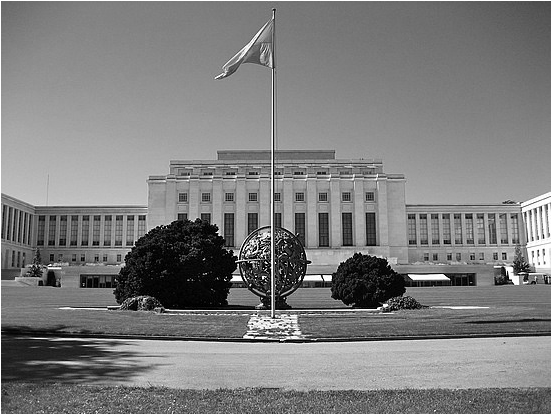
On 14 February 2012, representatives of the states parties to the Conference on Disarmament (CD) gathered at the UN headquarters in Geneva for the opening of the first plenary meeting of the 2012 session. Following the opening statement of this session’s Presidency (held by Ecuador) we heard the statements of several delegations including those of Croatia, Mexico, Switzerland, Colombia, Chile, Egypt, Iran, Syria, and the US. There were no substantive surprises as states sticked to their well-known, longstanding scripts. However, perhaps the most positive notes derived from the Presidency’s efforts to overcome the current impasse and from the UN Secretary General’s statement and message that either the parties reach an agreement on a way forward or the General Assembly will consider alternative routes for disarmament.

The impasse

His Excellency the Ambassador of Ecuador Mr Luis Gallegos, who held the Presidency for the first time, opened the session highlighting that this year is of crucial importance for the future of the CD and that parties to the CD have a moral responsibility in finding the way to unlock the existing impasse (since 1996 the CD has not reached agreement on a single substantive issue). Thus, he placed the debate of the paralysis of the CD top of this year’s agenda and further called the parties to exercise political flexibility in order to overcome fifteen years of sterile negotiations.

The Debate

The floor was then given to delegations and one by one these read their readily prepared statements. Here we heard a mixture of opinions. Whilst most of the delegations agreed that 2012 is of crucial importance for the future of the CD, their position with regards to the causes and solutions to the current impasse often differed to the extent that one could sense, grosso modo, the co-existence of two blocks of states: those who believe that the current impasse is due to the procedural characteristics of the CD (in other words to the fact that the adoption of decisions in the CD is procedurally based on the principle of consensus), and those who believe that the lack of progress is due to the lack of political will and flexibility of some states parties to the CD. Depending on which of the two blocks states find themselves in, their proposed way forward also differs: hence, those in the first block call for substantive changes in the structure and procedural elements of the CD, while those in the second block call for more political flexibility and less radical changes.

The Statements

Of the statements of the various delegations, some are worth highlighting here. The Mexican delegation, for instance, reminded the conference of the work undertaken by Mexico on the occasion of the signature of the Treaty of Tlatelolco more than forty years ago, which established a nuclear free zone for Latin America and the Caribbean. In this regard, the representative of Mexico highlighted the organic relationship between peace and disarmament and argued that the establishment of free zones, while extremely important for the disarmament regime, should not be seen as goals in themselves but rather as stepping stones towards the ultimate goal of freeing the world of all nuclear weapons.

The representative of Syria, on the other hand, highlighted the lack of progress and pointed to the lack of political flexibility as its immediate cause. Further, without mentioning at any stage the name of Israel, the Syrian delegate indirectly referred to that country as the most destabilizing element in the Middle East. In this regard, the Egyptian representative referred to the importance of working towards the establishment of a Middle East Free Zone of Nuclear and other Weapons of Mass Destruction and stated that he has started to see things holistically, as opposed to seeing disarmament from the standpoint of a state party, as a result of the fact that he now sits in the podium next to the Secretary and the current Presidency (Egypt follows Ecuador in the Presidency and therefore now sits in the podium of the CD).

As per the Swiss delegate, he emphasized the need to overcome the current impasse and called for the elaboration and proposal of alternatives capable of leading the parties to progress. Further, the Chilean delegation intervened in similar terms and the Colombian delegation expressed the view that with increasing political flexibility parallel work in two directions is possible: that is, work towards the adoption of a Fissile Material Cut-off Treaty (FMCT) and work on the adoption of Negative Security Assurances (NSAs). Finally, the US delegate emphasized the willingness of her government to work towards finding a solution to the CD’s current deadlock and to further work towards the ultimate goal of freeing the world of nuclear weapons as stated in numerous occasions by President Obama.

Message of the United Nations Secretary-General

Towards the end of the plenary session, the Director-General of the United Nations Office at Geneva, Mr. Kassym-Jomart Tokayev, delivered a message of the UN Secretary-General, Mr. Ban Ki-moon. Mr. Kassym-Jomart started his speech by emphasizing past achievements and reminded the parties present at the plenary that the CD has a great record despite its current longstanding deadlock. Nevertheless, his speech contained a clear message: one that, it could be argued, amounted to a clear threat (as far as words are concerned): ‘In 2012, the future of the Conference will be under the spotlight as never before. Lamenting the constraints of the rules of procedure or the “absence of political will” can no longer suffice as explanations for any further lack of progress. The General Assembly is seized of the matter and, if the Conference remains deadlocked, is ready to consider other options to move the disarmament agenda forward’.

Concluding remarks

The session ended with the closing remarks of the Presidency who made it clear that this year’s top priority is to reach consensus on the way forward. In other words, the CD is confronted with a serious dilemma: to be or not to be. For all the achievements of the past, the CD now faces its own extinction precisely at a time where the tide of disarmament is high in the agenda, at least rhetorically. On a more theoretical level, one is left wondering if consensus is the right way forward in a polarized world in which large groups of states have clear vested interests in preserving the status quo: fifteen years without reaching substantive agreements is a long time and if the CD fails to overcome its paralysis in 2012 the world should not fear the extinction of this forum in favour of existing or newer fora based on majority rules or coalitions.

Changes are often for the better and what may be seen as a threat to the existing disarmament agenda may in fact be seen as an opportunity to explore new venues. As a final remark, the Presidency discussed the issue of the involvement of civil society in disarmament matters generally and in the CD in particular, and pointed that several delegations have expressed their wish to increase civil society participation in the proceedings (as is more the case for example with the NPT and the First Committee of the General Assembly). However, upon discussing this particular issue with one delegate I was left with the impression that here, too, consensus is failing once again.

The Israeli Embassy Vehicle Attack in New Delhi – Reactions in India

In this article, the author explores the reaction among the media, the government and the people over the attack that took place on the Israeli Embassy vehicle on the 13th of February, 2012. 

_________________________________________________________________________________

By Siddharth Singh, 15th Feb, 2012

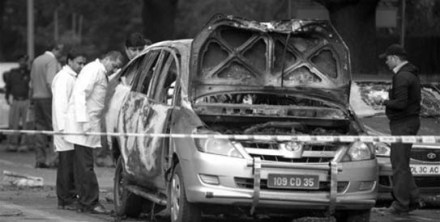
In the aftermath of the bomb blast targeting an Israeli embassy car in central Delhi, the reaction of the people and the press has largely revolved around three themes: one, outrage that yet another attack has taken place in India and the condemnation of the current government over its inability to stop such attacks. This perception is strengthened by the “weak” verbal responses by the concerned Indian ministers. Two, pointed criticism that the government couldn’t prevent an attack which is a stone’s throw away from the Prime Minister’s residence. Three, surprise – by people mostly – that Iran is in any way related to this attack. Bomb blasts in India have so far been popularly and officially blamed on home grown terrorist groups and those supported by or originating from Pakistan.

The First Theme: Outrage over the attack and ridicule of the official response

The near-universal condemnation of the United Progressive Alliance government under Dr. Manmohan Singh is a recurrent theme that follows every bomb blast in a big city in the country. While it is true that India is a rather large country with multitudes in a politically and socially unstable neighbourhood, it is equally true that the government can do a lot more to improve the security situation in the country without resorting to the controversial measures such as the U.S. government has. Indeed, the government has failed to put in place effective counter-terror and law-and-order mechanisms.

For instance, the Ministry of Home Affairs is overburdened with non-security related tasks such as “implementation of the official language” – Hindi – and welfare of freedom fighters from the pre-Independence era. The long proposed Internal Affairs Ministry has not been set up yet, even though it is an idea accepted by officials on Raisina Hill. Comprehensive police reforms too haven’t seen the light of the day in spite of being on paper for several years.

Additionally, the establishment of an Internal Security University – which would provide long term research and analysis on the internal security scenario in India, apart from providing better trained policemen and administrators – has not been established yet, in spite of being passed by the Cabinet years ago. Currently the officials in the ministry are over burdened with day-to-day crisis management and do not have time to research and plan for the longer run.

The image of the government as an ineffective unit, however, largely comes from the lack of effective communication from the government, in particular its ministers. While the government response is typically greeted with disdain, this time around, it was met with ridicule. One of the reasons is that unlike previous attacks, this one did not result in deaths, making mockery acceptable. The people and media resorted to ridiculing the government over what they referred to as a “cliched, disinterested and monotonous” official statement. This time around, they got to see on their favourite prime time news shows on TV – in the form of Israeli ministers, including Prime Minister Netanyahu – give decisive statements on how such attacks cannot be tolerated and the perpetrators will be hunted down. The Israeli administration was also hasty in blaming Iran for the attack, at a time when the Indian officials were sticking to the story of an “incident” caused due to “unknown circumstances.” The reaction to the blame on Iran will be addressed later in this article.

While this author does not believe that hawkish statements are constructive in the aftermath of such bomb blasts, it is true that the government’s reaction is often trite, and are often replays of every official reaction after every major attack the country has seen in the past many years. This fits into the popular narrative of the government, which lacks effective communicators at the top of the administrative setup. The leader of the political coalition – Sonia Gandhi, the Prime Minister, Defence Minister and External Affairs Minister, among others, are not exactly known for their oratory skills. In a hyperactive news TV era, this has become a burden on the political establishment. The media and people in India yearn for effective communicators who can sell governance as much as they can effectively govern in the first place. Even though transparency has been legislated via the Right to Information Act and other instruments, there seems to be opacity in the verbal communication at the top of the administration.

This narrative is popular and cannot be easily undone by the government without a major cabinet reshuffle. It is an issue the government will have to accept and work around.

The Second Theme: Outrage over the location of the attack

The second theme of the reaction has been specific to this incident: the bomb blast took place on one end of Aurangzeb Road, which is a posh neighbourhood in the Lutyens Bungalow Zone (where all the ministers, officials, parliamentarians and chiefs of military reside) in New Delhi. The location of the attack was a stones throw away from the Prime Minister’s official residence at 7, Race Course Road.

Unsurprisingly, this became a talking point, and many commentators and the general public have lamented about the lack of security even in such a high profile area. One news TV host in partcular was at his hyperbolic best when he commented that even the Prime Minister could hear the bomb blast (adding later that it would have been possible only if the Prime Minister was home. The police eventually revealed that the blast wasn’t a loud one).
The Prime Minister’s residence is on the Race Course Road, which is open to the general public. Pedestrians freely walk along the sidewalks on the road, and motorists are free to use this road for their daily commute. This fact once brought praise by a friend from a subcontinental neighbour who lamented that common people in his country couldn’t even step in the neighbourhood of the most important ministers.

The entire Lutyens Bungalow Zone is fully accessible to the public, as it rightly must be. However, this also means that it is easy for a motorist to – say – bring explosives in close proximity of the Prime Minister’s home. The PM, of course, is safe in his multi layered security setup. In fact, he uses a different road (which is fully secured) from the other side of his home for his daily commute.

Lutyens Delhi cannot be made exclusive to the residents of the area. Not only does this area house the representatives of the people, it has the headquarters of the political parties, and several markets where the poor find employment. There is no practical way to fully secure this area. Commentary on this theme of the location of the attack is hence misplaced. The location is immaterial here: that it happened at all is the issue at hand.

The Third Theme: Surprise and confusion over Iran’s involvement

What has been more interesting, however, is the sense of confusion among people and a few reporters about Iran’s alleged involvement in the attack. The only foreign nation Indians are used to hearing get linked to attacks has been Pakistan. (To a much lesser extent, Bangladesh was once on this list too, but now makes headlines for partnering India in its fight against militancy).

Natanyahu’s assertion that Iran had a role in the attack even before the Indian authorities could confirm that it was an “attack” rather than an “incident” came as a surprise to many. Many in the media termed this as a hasty reaction without credible evidence to back the claim. A few in the public commended such naming tactics, recommending India do the same with Pakistan.

Importantly, however, this holds important implications on India’s foreign policy. In case Iran’s role is directly or indirectly established, it would mean that India will have to re-draft its policy in the region, which has so far been fairly neutral so far (barring for a few strategic decisions against Iran on the nuclear issue and the Iran-Pakistan-India Natural Gas Pipeline).

Historically, Iran has an image of a cultural “ally” in India. In recent years, the Ahmedinejad administration has brought criticism of official Indo-Iranian relations among those who advocate a more realist foreign policy. However, there is a general acceptance of Iran as an energy supplier nation which can help India meet its growing energy demand.

Indians are in general unaware of the growing tension between Iran and Israel. Reports on the stand off between Iran and the United States are often buried deep inside new papers and have nearly no mention on TV. For these reasons, the very mention of Iran has caught many by surprise. People still don’t fully grasp why India has emerged as a battlefield in the Iran-Israel stand off. The set of challenges for policymakers are profound, and it will be interesting to observe how the foreign policy and security discourse evolves from here.

The Case of the Missing Girl Child – Focus on Tamil Nadu, India

This article examines the issue of female infanticide in the southern Indian state of Tamil Nadu. While the author is optimistic about the initiatives taken to eradicate the practice, there is emphasis on an understanding the issue at a more basic level and the need for a national level consciousness raising to change patriarchal attitudes. 

_____________________________________________________________________________

By Gowri Thampi 14th Feb, 2012

I was surprised when I read an article on infanticide by Athreya and Chunkath in the Economic and Political weekly twelve years ago. The horrible practice of female infanticide in Tamil Nadu had not gained media coverage until 1986, when the press highlighted its prevalence in Usilampatti, Madurai district, Tamil Nadu. Even then, it was assumed that this practice was only prevalent among a small minority in that area.

We have this idea, largely painted by the media and what appears before our well bred urban eyes, of India, one of continuous improvement and development. Either we deal with those who exalt the past glory of what is honestly an infant nation or those who speak of its future reign as a global super power, but rarely those who acknowledge the present realities without a defeatist attitude. Technology may have in fact contributed to the declining female sex ratio, though it wouldn’t have anything to do with female infanticide as opposed to female feticide.

This Google Motion Chart (click here) serves as a great tool to visualize the sex ratio in Tamil Nadu and individual districts over time. Click on the link and play around with it. Note that Tamil Nadu started off with far more girl babies than boy babies per thousand and sex ratio declined steadily till the 1990s after which we have seen some increase. You can look at individual districts as well over time, setting unique colors for them, and using opacity settings to view them individually, sex ratio changes will be observed along the diagonal, with an increase being an upward movement along the diagonal.

I see the work done to eliminate female infanticide in Tamil Nadu as a welcome blend of realism and optimism. Before I go into the measures, I will touch on female infanticide itself as a social issue. At the bare bones level, it’s a crime, murder, murder euphemized by so many almost polite sounding words that it is with a jerk alike the response to a sharp rap on the knuckles that we must remind ourselves that we are dealing with parental murder of their infants, babies who are girls, killed, because they are girls. Why then should we not deal with the issue like we deal with murder? Charge the accused, send them to jail. Apart from the obvious reasons like underreported births and deaths, ease of being mistaken for a case of infant mortality and the difficulty to get to the actual instigator as opposed to the hapless mother who may have been threatened to commit the act, we must understand that many practices held illegal in the eyes of law and the moral eyes of many well meaning educated citizens have large scale social legitimacy in various closed rural societies.

What grants practices social legitimacy is a grand question I do not want to get involved in right away as that may turn this article into a rant. It suffices to say that despite what the zealots may think, our morality is relativist; it is dependent on a host of cultural and temporal variables. What was moral in the medieval world is not moral today, what was moral in Usilampatti is not moral in Bangalore’s IT hubs. What I will talk about, is the core ideology that runs through urban and rural India, the rich and the poor, the impact of which varies only in the magnitude and the hues of its manifestation. That is patriarchy.

At the core of female infanticide are not murderous parents looking for ways to inflict torture on their babies but victims of an ideology condoned even by those who condemn this heinous avatar of it. Given this, any attempt to address the issue of female infanticide without trying to address the bigger problem of the patriarchy itself can only serve as cursory bandage on a deep internal wound. Well a cursory bandage would help to stem the flow of blood while society tries to deal with its internal injuries. Here I would like to talk about some such attempts to reduce the rate at which female infants die at the hands of their parents.

The cradle baby scheme was instituted by the Tamil Nadu Chief Minister Jayalalithaa In 1992 in Salem, it was extended to Madurai, Theni, Dindingul, Dharmapuri, Erode and Namakkal districts by 2001. Under the scheme mothers were allowed to anonymously drop off their infants in government run centers in these districts. There were 188 centers in these districts. By the end of 2007, 2410 female babies and 390 male babies were received in these centers. Dharmapuri had the largest number of female babies received at 965, closely followed by Salem with a total of 915 female babies received. It is undoubted that this scheme has saved the lives of many infants who have later been given up for adoption in India and abroad.

This however wasn’t the only scheme instituted by the government. Recognizing the importance of local government participation and education of the people, the government also funded theater troupes to stage street plays (kalaipayanams) to educate the rural public about the cause. Training actors for the plays, repeat performances by the troupes with themes including humor with a deep message helped in getting the word around. In Dharmapuri district from April 26 to June 6 1998, 18 troupes carried out 3,000 performances according to Athreya, Chunkath.

While the cradle baby scheme saved lives, there is evidence that the work of the troupes helped to balance the sex ratio.

However when in 2011, the Chief Minister, once again Jayalalithaa, decided to extend the cradle baby scheme to other districts namely,Cuddalore, Perambalur, Ariyalur, Villupuram and Tiruvannamalai , due to the falling sex ratio in these districts, there was criticism. Critics claimed that the scheme makes parents more prone to abandoning their children, particularly girls. I do not understand how such a statement can be made when the sex ratio clearly indicates that, female fetuses, and (more likely due to India’s pre natal sex determination laws,) infants are being killed off. The babies that end up in the cradle would have very likely ended up in the grave, or at least faced an extremely grim future. The critics however are right that the scheme has to be supplemented with more work in restructuring our society.

The above efforts while laudable do not address the widespread prevalence of patriarchy, a society structured around the male. This issue will have to be addressed at a level which requires a countrywide awakening. Patriarchy cannot be eradicated by a series of half measures which considers some evils to be lesser evils and thus acceptable, we will have to fight inequality at every level, however subtle, because it is the attitude in itself which is dangerous and needs to change.

Not all the symptoms of patriarchy are as heinous as female infanticide, some of them materialize as seemingly trivial issues like asking a girl why she would choose to study mechanical engineering, isn’t that a man’s field? It manifests itself in the scourge of dowry which even the educated and wealthy indulge in, at the root of it all is the myopic vision of a woman as a second rate citizen who needs to be under the watchful eye of a male, either he father or a husband. That leads to the burden on the parents for finding a husband for their daughter, right from the day she is born. Large dowries are paid off to ensure the woman can be handed over to a male custodian, astrologers are consulted if a woman remains single for too long and she fasts on certain days of the week so she may find that man, because she can never be an independent individual in society. She has to be under somebody’s watchful eye. The rich provide their daughters with all that society requires, the poor dreading the consequences of not fulfilling social requirements, conclude that death is better for their daughters.

It is easy to brush aside the mentioned subtler forms of patriarchy though they, like female infanticide, are just symptoms of the same disease. Ignoring some of the issues leads to wrongs greater than the ones ignored, which is why I never mince my words when people ask me why, being a girl, I don’t settle down fast instead of studying so much. I have scant regards for the ‘feelings’ of those who start their sentences with “You are a girl…” It is more than my ego or theirs at stake here, it is the wellbeing of our entire society and the lives of little babies all over India, eaten up by a cancer we choose to close our eyes to.

References

  • Chunkath, S. , & Athreya, V. (1997). Female Infanticide in Tamil Nadu: Some Evidence. Economic and Political Weekly, 32(17), WS21-WS25+WS27-.


  • Kandwami, D. (2005). Cradling Humanity, Saving Lives. Herizons, 19(2), 11.


A Pocket Guide – The 1942 US Army Booklet on Northern Ireland – Part 2

This is the second in a series of articles compiling the US Army guide to Northern Ireland during World War Two. Following the bombing of Pearl Harbor the US agreed to take over the defence of the region to free up British troops to fight in North Africa and the Middle East. It also gave the US the time to complete invaluable military training before entering the war in Europe. This was the manual given to the first officers to arrive in Belfast on 23 January, 1942.

The first article outlined the differences between the North and South of Ireland as well as the two key rules for any visitor:

(1) Don’t argue religion
(2) Don’t argue politics

This excerpt describes the country: the geography, climate and feel of living in Northern Ireland.

_______________________________________________________________________________________________________

The Country

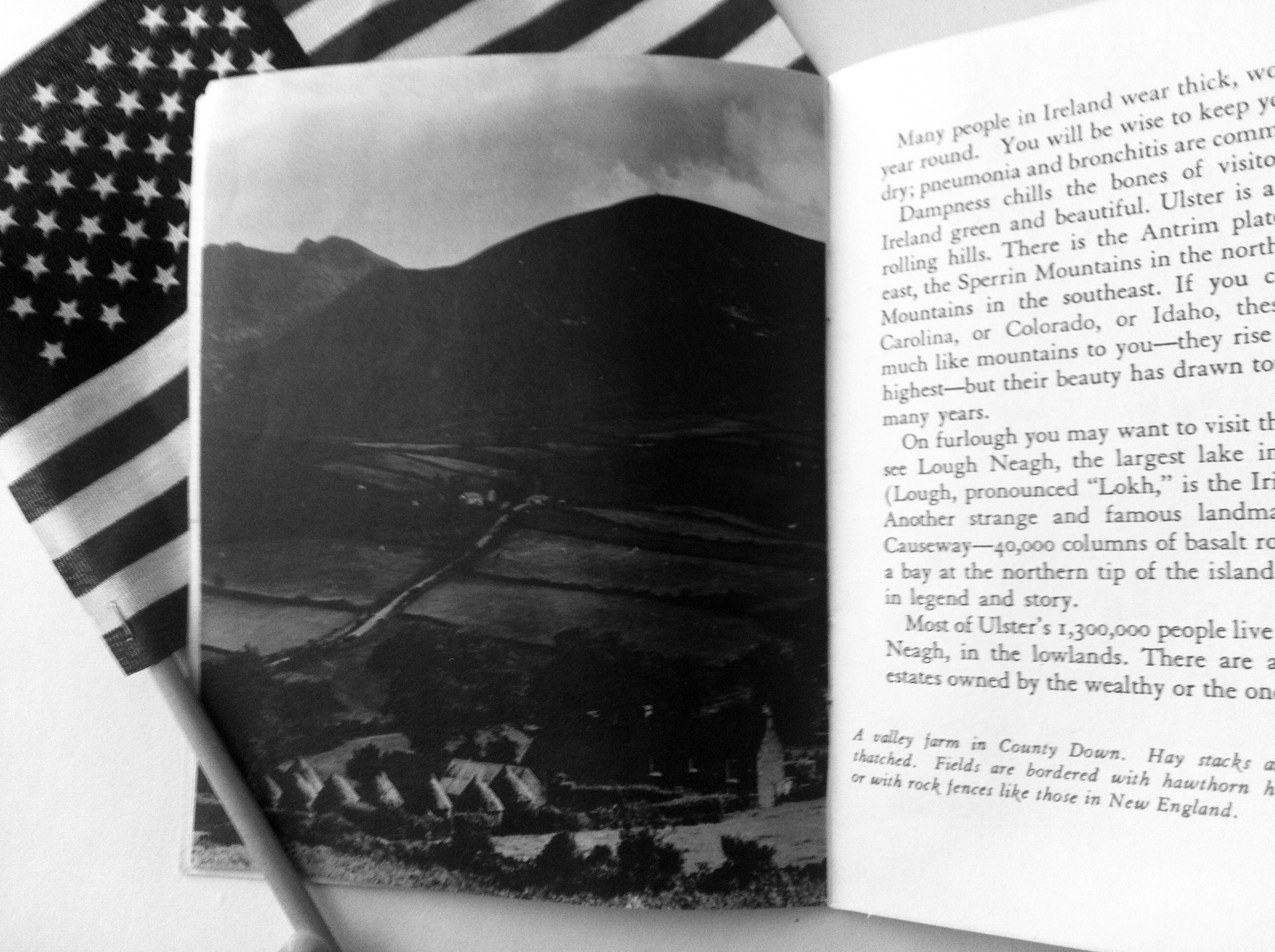
A valley farm in County Down. Hay stacks are neatly thatched. Fields are bordered with hawthorn hedgerows or with rock fences like those in New England

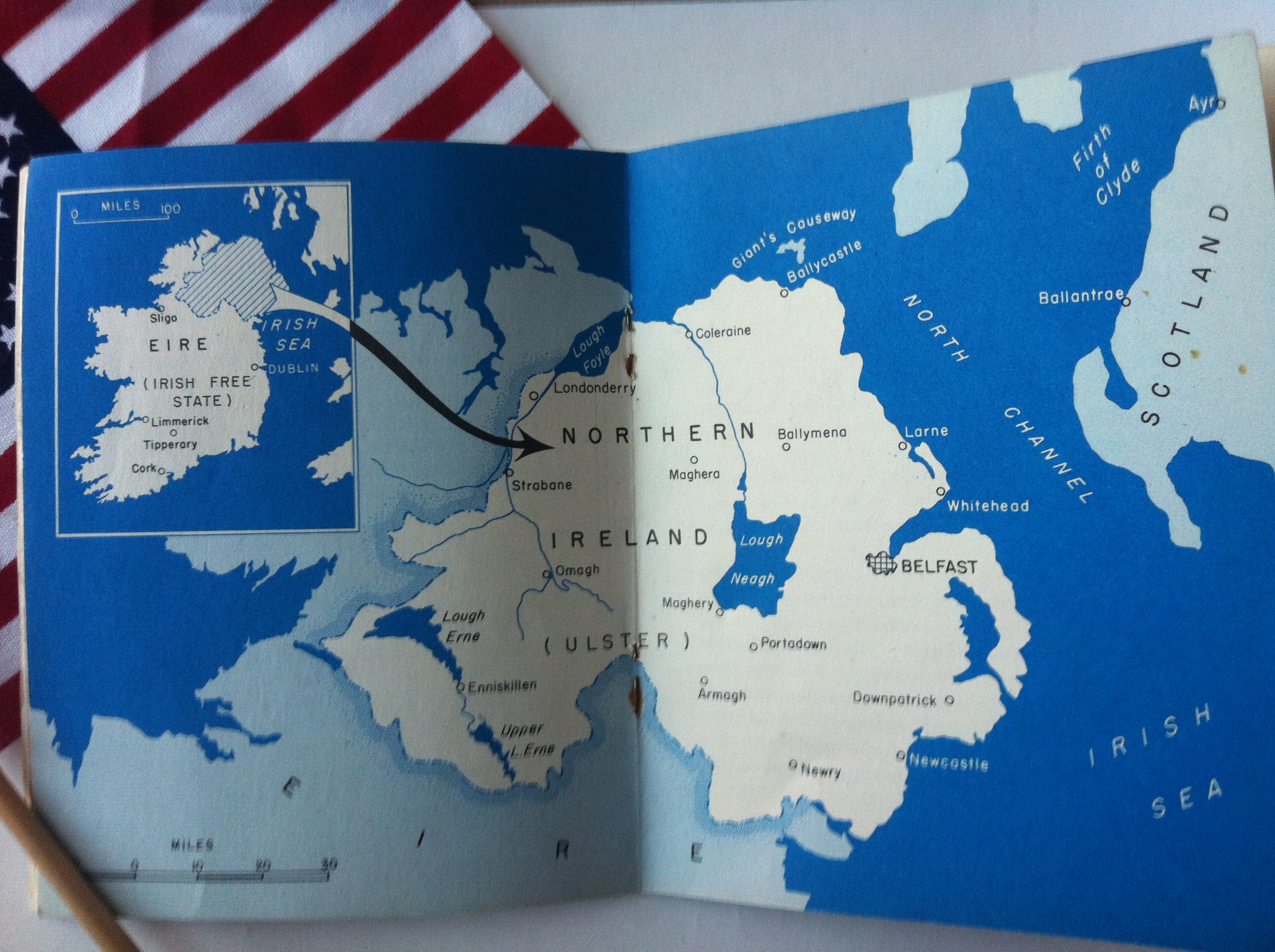
NORTHERN Ireland – usually called Ulster – is a small country, only slightly larger than the State of Connecticut. It is made up of the six counties in the northeastern corner of the island: Antrim, Armagh, Down, Londonderry, Fermanagh, and Tyrone. Some 1,300,000 people – not quite so many as Los Angeles – live there.

First off you may not like the Irish climate. It is damp, chilly, rainy. If you are from the Southwest or from California you may find yourself homesick for sunshine. The sun is only an occasional visitor in Ireland; there are about 200 rainy days a year. The rains, however, come usually as gentle drizzles, not as thundershowers.

It may be news to you that Ireland is farther north than the United States. For this reason the day is very short in winter and long in summer. In late June and July there is little darkness and you will be able to read a newspaper at 9 o’clock at night. In late December daylight lasts less than 7 hours, and darkness closes by midafternoon.

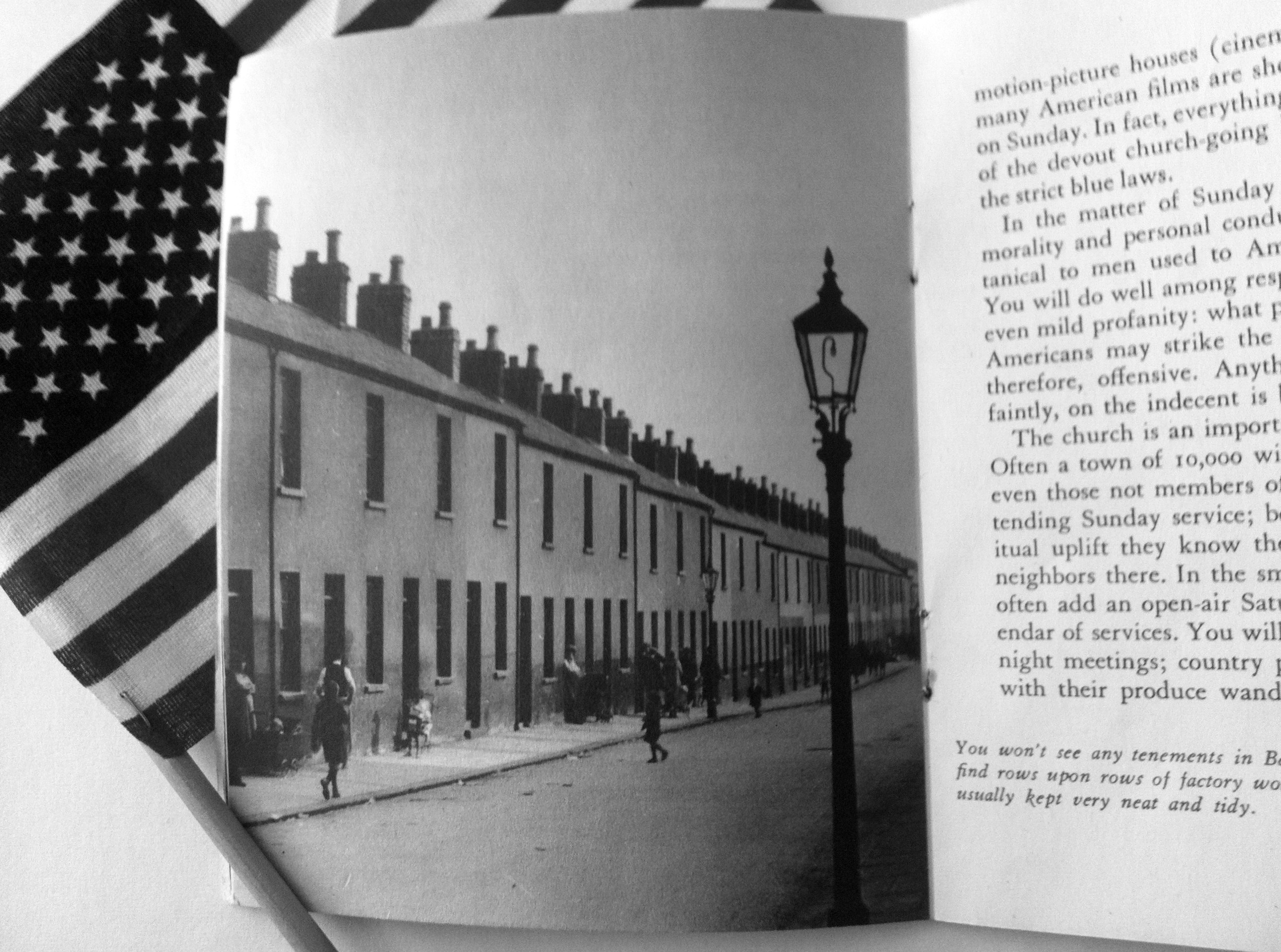
You won't see any tenements in Belfast. Instead, you will find rows upon rows of factory workers' homes like these, usually kept very neat and tidy

Despite Ireland’s northliness – it lies about exactly opposite Labrador – extremes of heat and cold are rare. In the summer a temperature of 80 degrees is the peak of a heat wave, and in winter freezing weather is the exception rather than the rule. It is the always-present dampness which make the cool summers and mild winters seem colder than they are.

Many people in Ireland will wear thick, woollen clothing the year round. You will be wise to keep yourself warm and dry; pneumonia and bronchitis are common.

Dampness chills the bones of visitors, but it makes Ireland green and beautiful. Ulster is a saucer circles by rolling hills. There is the Antrim plateau in the north-east, the Sperrin Mountains in the northwest, the Mourne Mountains in the southeast. If you come from North Carolina, or Colorado, or Idaho, these may not seem much like mountains to you – they rise 3,000 feet at their highest – but their beauty has drawn tourists to Ulster for many years.

On furlough you may want to visit the mountains, or to see Lough Neagh, the largest lake in the British Isles. (Lough, pronounced ‘Lokh’, is the Irish word for lake.) Another strange and famous landmark is the Giant’s Causeway – 40,000 columns of basalt rock which rise from a bay at the northern tip of the island. This is celebrated in legend and story.

The shipbuilding yards of Belfast are among the very largest in the world. Before the war, when this picture was taken, giant liners, including the ill-fated Titanic, were launched here. Now the yards are busy day and night building ships of war

Most of Ulster’s 1,300,000 people live northeast of Lough Neagh, in the lowlands. There are a good many large estates owned by the wealthy or the once-wealthy, and you will find ancient turreted castles scattered among the hills and the glens, but most of the Irish farmers manage to make their livings on plots of land which Americans, used to tractors and far horizons, would think hardly larger than ample vegetable gardens.

This scale of farming will seem almost absurdly small to you who come from the Middle West or the Far West. There are 90,000 farms in Ulster with tiny fields and small, whitewashed, thatched-roof cottages. A 5-acre place is really substantial and anyone who owns more than 40 acres is considered to be engaged in large-scale farming. Fine cattle graze on the pasture land, and hay, potatoes, turnips, and wheat are grown.

Belfast is the most important industrial center in Ireland, and one of the key points of the British war effort. It has a population of 438,000 – one-third of the people in all Ulster live there – and is slightly larger than Kansas City, Missouri. Belfast was badly bombed by the Germans in 1940. Londonderry (called Derry by the Irish), the second city of Ulster, is located on the North Coast, and had a population of 43,000 before the war.

Belfast today resembles many American cities where the weapons of war are being forged as fast as industrial wheels will turn. The production of linen in peacetime is a great industry; Irish linens are known all over the world. Today much of the linen industry has been converted to the manufacture of cotton goods – cloth for British Army uniforms.

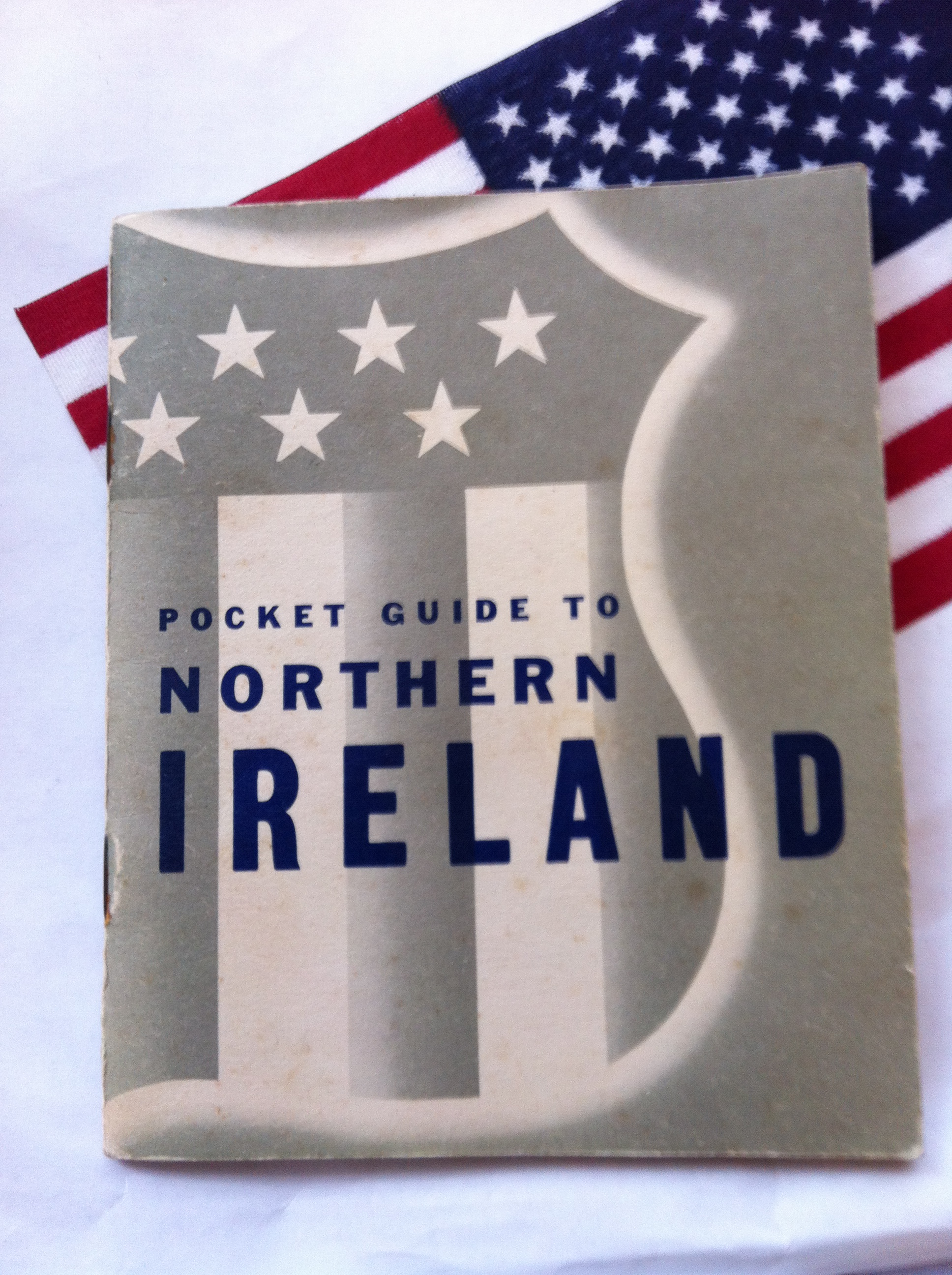
A Pocket Guide – The 1942 US Army Booklet on Northern Ireland

This is the first in a series of articles compiling the US Army guide to Northern Ireland during World War Two.  Following the bombing of Pearl Harbor the US agreed to take over the defence of the region to free up British troops to fight in North Africa and the Middle East.  It also gave the US the time to complete invaluable military training before entering the war in Europe.  This was the manual given to the first officers to arrive in Belfast on 23 January, 1942.

This guide was prepared by the Special Service Division, War and Navy Departments, Washington DC

_________________________________________________________________________________________

By Jack Hamilton, 7 Feb, 2012

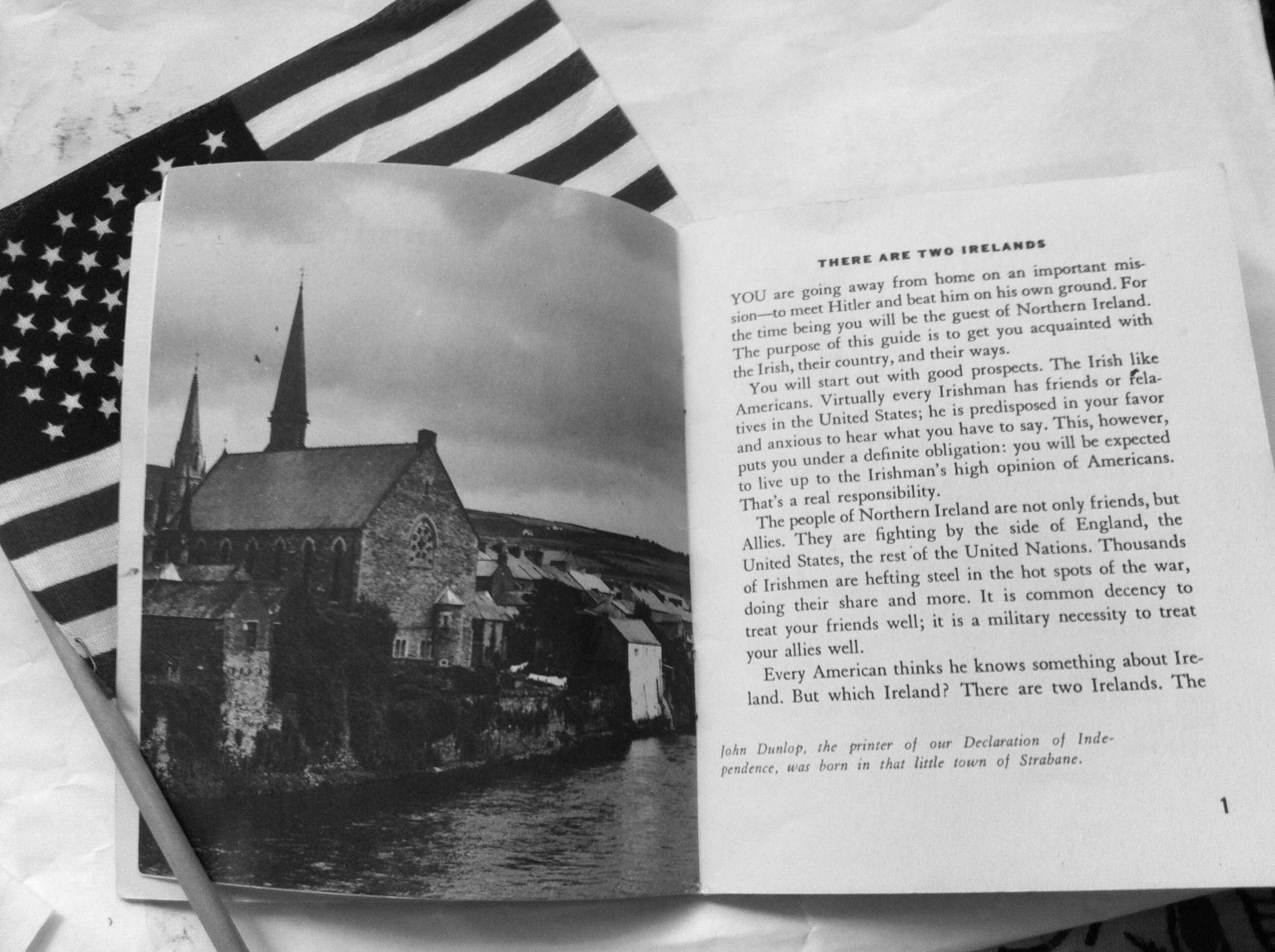
There are Two Irelands

"John Dunlop, the printer of our Declaration of Independence, was born in that little town of Strabane"

YOU are going away from home on an important mission – to meet Hitler and beat him on his own ground. For the time being you will be the guest of Northern Ireland. The purpose of this guide is to get you acquainted with the Irish, their country, and their ways.

You will start out with very good prospects. The Irish like Americans. Virtually every Irishman has friends or relatives in the United States; he is predisposed in your favour and anxious to hear what you have to say. This, however, puts you under a definite obligation: you will be expected to live up to the Irishman’s high opinion of Americans. That is a real responsibility.

The people of Northern Ireland are not only friends, but Allies. They are fighting by the side of England, the United States, the rest of the United Nations. Thousands of Irishmen are hefting steel in the hot spots of the war, doing their share and more. It is common decency to treat your friends well; it is military necessity to treat your allies well.

Every American thinks that he knows something about Ireland. But which Ireland? There are two Irelands. The shamrock, St. Patrick’s Day, the wearing of green – these belong to South Ireland, now called Eire (Air-a). Eire is neutral in the war. Northern Ireland treasures its governmental union with England above all things. These are historic reasons for these attitudes.

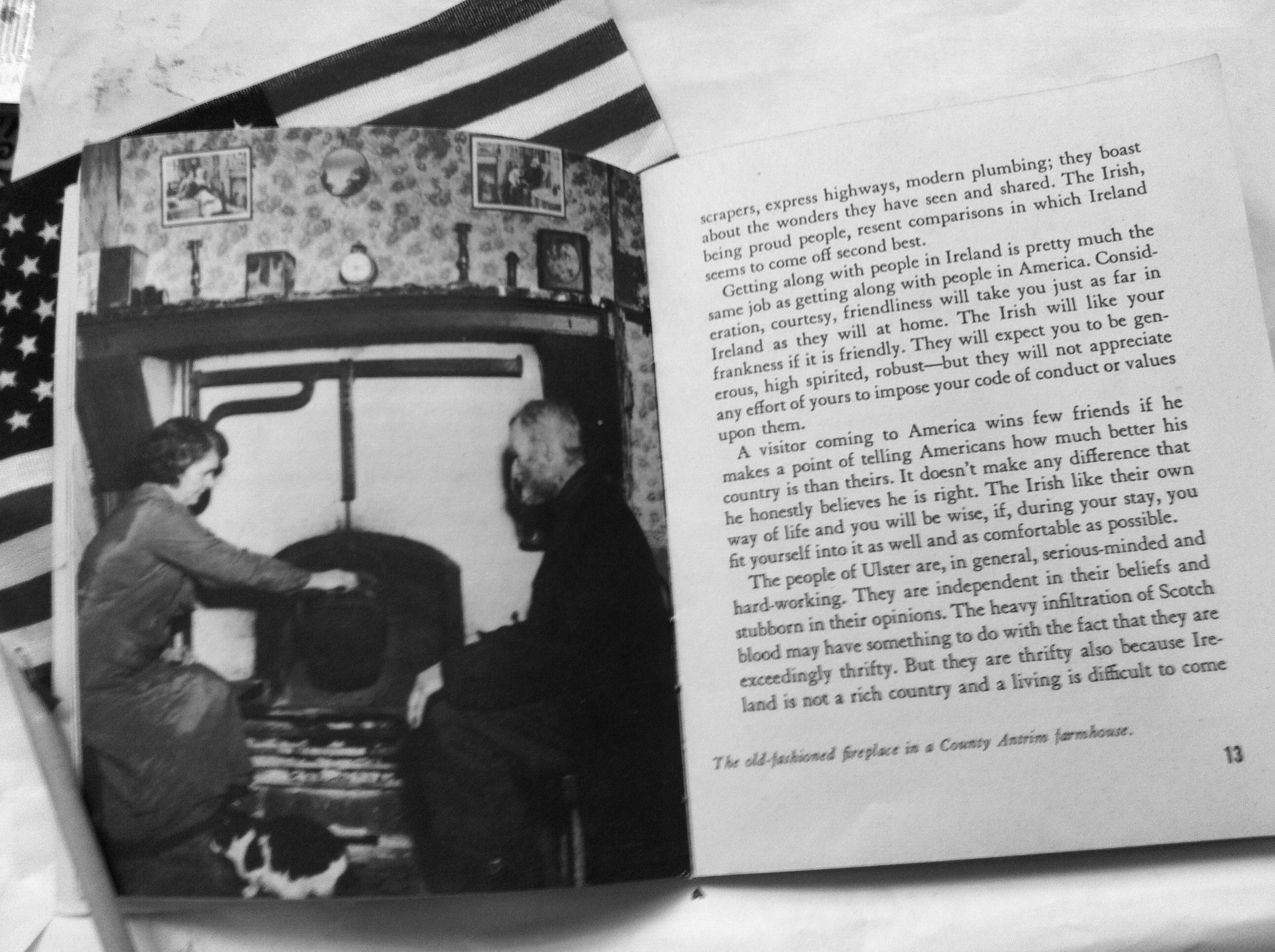
"An old-fashioned fireplace in a County Antrim farmhouse"

Ireland has sent many gifted and valuable citizens to the United States. Irishmen from North and South, Protestant and Catholic, began to emigrate to America in early colonial days. Nine generals in the American Revolution were of Irish birth. Four signers of the Declaration of Independence were born in Ireland and four were of Irish descent. Fourteen Presidents of the United States have carried the blood of Ireland in their veins.

There are so many of you soldiers who are of Irish descent. Some of you, Protestants or Catholics, may know at first hand or second hand about the religious and political differences between Northern and Southern Ireland. Perhaps they seem foolish to you. We Americans don’t worry about which side our grandfathers fought in the Civil War, because it doesn’t matter now. But these things still matter in Ireland and it is only sensible to be forewarned.

There are two excellent rules for conduct for the American abroad. They are good rules anywhere but they are particularly important in Ireland:

(1) Don’t argue religion
(2) Don’t argue politics

The Cartography of Insecurity – What Does ‘The Sahara’ Mean?

This article is the second in the series on the Sahara Desert. The first article explored the idea of emptiness and how this has come to be seen as a threat in international politics.  In this article the author assesses the aggressive language used to describe the Sahara Desert. The tropes of terrorism and poverty have defined the region as an ‘impending Afghanistan’ but the reality isn’t so bleak.

_____________________________________________________________________________________________________________

By Jack Hamilton, 2 Feb, 2012

Mapping Stereotypes

In the words of comedian Dara O’Briain, ‘we all have list of countries inside our heads and each of these countries has one or two words attached to them. We can’t all have fully formed opinions of every country in the world’.

It generally narrows down to a few choice phrases. Ask a wide audience how they would define the Americans and the French and you will receive a narrow range of answers. But when happens if the country is less globally visible?

O’Briain jokes that characteristics can be arbitrarily ascribed such as the ‘vacuous people of Vanuatu’ and the people of Swaziland who are ‘terrible at small talk’. The reality is not so random.

Take the Global War on Terror. The terms associated with this geopolitical idea redraw the map of the world into secure and insecure areas. As mentioned in the first article in this series, the ‘empty’ areas of the map are seen to be insecure and the emptiest place on the map is the Sahara.

Sahara = Terrorism

Any act of violence in the region is immediately placed within the frame of a terrorist action perpetrated by a group with global terrorist connections priming themselves to attack the West.  This is not to say that terrorism does not exist in the Sahara. Merely that it is overstated. Ask a large group of people how they envisage Timbuktu. Formerly it was seen to be a city of mystery in the desert, defined by its remoteness. Now the language used to describe it would place it closer to Kabul than Atlantis.

Drawing Lines in the Sand

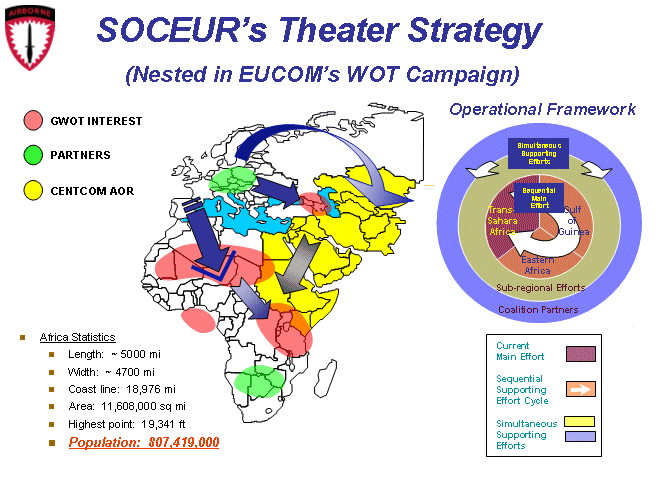
The concept of the GWoT has redrawn the map of the world to create a global cartography of insecurity. A US Special Operations Command (SOCEUR) briefing during the early years of the GWoT presented a map predicting the movement of the terrorist threat for the next two decades (see fig. 1 below).

This map depicts a cycle of instability incorporating Europe, the Middle East and Africa with specific ‘GWoT Interest’ reserved for Azerbaijan/Georgia, East Africa, the Bight of Benin and the Sahara-Sahel. It provides a succinct example of the rhetoric which assumes a direct linkage between terrorism in Asia and the presence of terrorism in the Sahel.

The diagram to the right of the map asserts that there is a steady arc of terror traversing Africa towards what has been described by Stewart Powell of the US Air Force as ‘a swamp of terror in the Sahara’. This notion of a global terrorist network flowing through the Sahara-Sahel is a recurring theme which is often stretched to breaking point.

The ‘Impending Afghanistan’

In this cartography of insecurity it is important to locate the Sahel not geographically but rhetorically as proximate to other ‘terrorist’ regions, notably Afghanistan. The defining characteristics of the region are perceived to be that it is ‘arid and impoverished’ and according to one US Air Force article this makes it a prime candidate to ‘succeed Afghanistan as the world’s number one haven for fanatic Islamic militants’.

This linkage of demographic conditions and terrorism has been echoed in the appraisal of Military Review in which the Sahara’s ‘conjunction of extreme poverty…and high fertility has created conditions like those found in Afghanistan before the rise of the Taliban’.

Under New Management – Failed States and Failed Regions

Linkages to Afghanistan remain as the term ‘Afghanistan’ has come to mean a combination of a ‘failed state’ as well as a terrorist ‘safe haven’ leading one New York Times columnist to define the Sahel as a collection of ‘potential Afghanistans’. In terms of the GWoT, the idea of ‘weak’ and ‘failed states’ effectively bifurcates the world leading to further comparisons with the Cold War. It is a profoundly political categorisation as it not only defines the borders but it also attempts to justify how to deal with those on the outside.

In this sense the mapping goes beyond the realms of Cold War ‘containment’ due to the understanding of the world as interconnected and borderless. Instead these dangerous regions must be ‘brought towards order’ and be ‘controlled and managed’ in the derisive words of Rita Abrahamsen.

This notion of ‘management’ changes the character of intervention along the lines of the GWoT as it is no longer direct military action but rather armed surveillance with the inherent threat of escalation. It is not a perpetual state of emergency but a permanent sense of insecurity.

Poverty as a Security Threat

The final and perhaps most pervasive trope in framing the Sahara-Sahel as an al-Qaeda ‘safe haven’ in the GWoT has been the construction of poverty as a security threat. The association of underdevelopment and conflict is nothing new, it can be detected in the industrial revolution as the ‘dangerous classes’ constituted a threat to the ‘civilized’ way of life of the upper classes and therefore needed to be controlled.

Mark Duffield has observed that the notion of underdevelopment creating insecurity has become the consensus amongst aid donors under the moniker ‘the structural reform of conflict prevention’. This trope has helped to repackage development as a tool in the armoury of liberal peace.

It is true that informal economic networks flourish in such impoverished regions but the conflation of these crimes and the image of AQIM that has been created exacerbate a reductionist narrative of linking poverty and terrorism.

Narratives of impoverished extremists are especially obvious in discussions about the smuggling activities of AQIM. While it is clear that those associated with AQIM are poor, that is the case for the vast majority of people around them who have never become associated with such movements.

The idea that poverty is the main catalyst for the turn towards religious fundamentalism is not credible. If that were the case, West Africa should have been the centre of Islamist terror for some time now given the extreme poverty of the countries there.

Conclusion

The ‘emptiness’ of the Sahara-Sahel has been combined with the narrative of ‘globalisation’ and the GWoT to forge the ‘swamp of terror’ in the desert. Lacking definition in itself the region has become an amalgamation of GWoT tropes, many without much in the way of empirical support.

Overlapping narratives cease to interpret the complexity of the region itself by obfuscating reality with imagined terrorist migration routes, misinterpreted religious groups and reductionist maps. To make sense of this sandstorm of information the terrorist threat in the Sahara must be looked at in more detail than the simple tropes of failed states, poverty and empty spaces. Without this nuance, in the words of O’Briain, we will be watching a news report on Vanuatu in a week and think, ‘oh, those vacuous pricks’.

US-China Relations in the Bush Era – Strategic Partners or Competitors?

In this essay, the author reviews the Sino-US relationship during the George W. Bush administration. Specifically, this paper discusses whether or not the countries should be viewed as strategic partners or competitors.

_____________________________________________________________________________

By Anna Rabin, 1 February, 2012

Whilst fluctuating during the early stages of George W. Bush’s presidency, China and the United States (US) maintained a fairly stable strategic partnership throughout the two terms of the Bush administration. The idea of a strategic partnership was advocated through the signing of the Sino-US Joint Statement during the presidencies of Bill Clinton and Jiang Zemin. The document set the foundations for the two countries to ‘work together to set up a constructive strategic partnership.’ This essay will discuss the transition in the Sino-US relationship from Clinton to Bush and the status of the relationship throughout Bush’s presidency.

Bush’s electoral campaign stance on China will initially be reviewed. An analysis of Bush’s electoral campaign characterisation of China as a strategic competitor of the US will then be provided. The September 11th terrorist attacks will then be extensively analysed. The ways in which the attacks acted as a catalyst for a sustained Sino-US strategic partnership throughout the rest of the Bush administration will be discussed. The US’s preoccupation with terrorism, which allowed China to assume a more prominent role within the Asia Pacific, will then be discussed.

This increased role was allowed in spite of Sino-US tensions surrounding Taiwan’s sovereignty. Sino-US co-operation on the issue of North Korea’s nuclear weapons will be seen as a source of creating a more stable relationship between the two countries. The growing economic interdependence between the two countries and the stabilising impact that this has had on the Sino-US strategic relationship will also be examined. This essay will provide an extensive discussion that will demonstrate the relatively stable Sino-US strategic relationship that occurred during the Bush administration.

Whilst principally a foreign policy concern, the Sino-US strategic relationship figures prominently in US domestic politics. Since a diplomatic relationship was formed between the two countries in 1979, Sino-US relations have become an important policy platform in US presidential elections. US foreign policy towards China is a key area in which a presidential candidate can differentiate themself from their competitors and predecessors. The trend has been however, that once elected, the new administrations’ policy towards China is then moderated.

Political scientist Yu Wanli believes that the Sino-US relationship is influenced by small cycle and big cycle politics. The small cycle, as with any bilateral relationship is influenced by everyday political discussions. The big cycle, also referred to as the China syndrome, is a trend in which ‘the candidate from the opposition party always brings out and criticizes the China policy of the incumbent administration and makes Sino-US relations the victim of party politics.’ Whilst Wanli asserts that there was a relatively smooth transition from republican President Reagan to republican George H.W. Bush, the big cycle trend that has seen China become a political ‘punching bag’ within US domestic politics was evident during the transition from Bill Clinton to George W. Bush.

During his electoral campaign, Bush, and those who would become key members of his administration, made it clear that they would shift the Sino-US relationship away from the strategic partnership advocated by Clinton. They did this by enacting a campaign that portrayed China as a strategic threat to the US. The Bush administration undertook an ABC (Anything But Clinton) approach to Sino-US relations. Such a campaign was undertaken at a time when voters in the US were becoming disenfranchised with Clinton’s approach to the Sino-US relationship. A 1999 survey conducted by the Gallup Organization, found forty-seven percent of those people surveyed believed that ‘the Clinton administration goes too far in trying to maintain a constructive relationship with China.’

Bush, and the conservative Republicans that surrounded him, therefore set out a foreign policy distinctly different to that of Clinton, one that took a unilateralist stance on issues of security and defence. It must be noted that the vast ideological differences between the one party Chinese communist state and the democratically elected government of the US call into question what exactly a constructive strategic partnership would produce.

Professor of Chinese Studies, David Lampton, used the phrase ‘same bed different dreams’ to characterise the relationship between the two countries during the 1990s. Whilst through the Sino-US Joint Statement, Clinton and Zemin were advocating increased dialogue and improved relations between the two countries, due to their vastly differing ideologies and values, the strategic partnership they talked about would most probably not lead to the two countries becoming allies.

In a speech during the electoral campaign, Bush announced that ‘China should be seen as a competitor, not a partner and treated without ill will but without illusions.’ In the lead up to the election, China’s role within the Asia Pacific region was also addressed by those who would become key members of the Bush administration. Condoleezza Rices declared that she believed that China was a country ‘that would like to alter Asia’s balance of power in its own favor’. These comments were made at a time when Sino-US relations were already tense. A rift in the relationship had occurred after the 1999 bombing of the Chinese embassy in Belgrade by NATO (Northern Atlantic Treaty Organization) forces.

The contentious issue of whether the bombing was as a result of an intelligence error or was a deliberate attack resulted in tension between China and the US near the end of Clinton’s administration. Upon Bush’s election, the bombings, coupled with the April 2001 collision of a US EP-3 aircraft with a Chinese J-8 fighter plane within Chinese airspace, placed the two countries as strategic competitors in the early days of the Bush administration.

Whilst campaigning on the presumption of China as a strategic competitor, the September 11th terrorist attacks dramatically altered the nature of the Sino-US relationship. Under the banner of being united by a common threat, the terrorist attacks gave China a ‘historic, strategic opportunity for peaceful rise’. Whilst China was still being portrayed by the Bush administration as a threat to US hegemony, the US found itself in a position in which it needed to secure strategic partners. The move towards a strategic partnership, however, was not immediate.

The 2001 Quadrennial Defence Report, issued in the aftermath of September 11th made a non-explicit reference to China by stating that ‘[a] military competitor with a formidable resource will emerge in the region’. The aftermath of the terrorist attacks, however, demonstrated that whilst the US would still attempt to hedge against an increasing Chinese power, the two countries could unite on issues deemed strategically important by the US.

Following the September terrorist attacks, China’s President Jiang Zemin personally telephoned Bush to convey his sympathy. In the sign of a long-term strategic commitment, China supported the war in Afghanistan. Their support did not waver even though it required China to put aside its historical sensitivities regarding the Japanese military by allowing their vessels to be positioned in the Indian Ocean.

China also contributed $150 million towards the reconstruction of Afghanistan. Chinese influence also helped the US to overcome anti-American sentiments within the region by pressuring Pakistan to co-operate in the war on terror. China’s co-operation in the War on Terror demonstrated the strongest Sino-US strategic partnership since the election of Bush.

Whilst support for the War on Terror strengthened the Sino-US bilateral relationship, China chose not to support the US led War in Iraq. Although supporting the United Nations Security Council Resolution 1441 that gave Saddam Hussein ‘a final opportunity to comply with its disarmament obligations’, China objected to the US’s unsanctioned invasion of Iraq. Ideologically, China opposed the US’s unilateralist approach to defence.

China advocated that whilst the US approach may have fulfilled the short-term goal of overthrowing Saddam Hussein, undermining international institutions such as the United Nations could lead to chaos. In a 2003 statement, the Foreign Affairs Committee of the Chinese People’s Political Consultative Conference, stated that ‘trampling over the UN Charter and the basic norms of international relations, set a vicious precedent for international relations in the 21st century.’

The ideological differences between China and the US are a major hindrance to improved strategic co-operation between the two countries. Competition between the two countries has also arisen as a result of China’s willingness to source raw materials from countries such as Venezuela, Iran and Sudan. The US sees this decision as ‘undermining Western efforts to promote transparency and human rights.’ China’s decision to provide weapons to Iran and North Korea, countries the US deems to be rogue states, also highlights this point. The US suspicion of China was made public when the 2002 Nuclear Posture Review was leaked. The document specified China as a possible target of a US nuclear attack. Whilst China and the US are ‘still very far apart in political ideology and values’ during the Bush administration they were drawn into partnership by mutual security risks.

Colin Powell, Secretary of State in the Bush administration, stated that whilst ‘a competitor, a potential regional rival’ China must be seen as ‘a trading partner willing to cooperate in areas … where our strategic interests overlap.’ The Bush administration encouraged Sino-US strategic co-operation within the Asia Pacific region. This co-operation was, however, on a conditional basis. Whilst promoting co-operation within the region, the Bush administration made it clear that it intended to maintain hegemony.

Deputy Secretary of State Zoellick reinforced the importance of this point by warning Beijing not to ‘maneuver toward a predominance of power.’ The threat of this occurring has been strongly emphasised within US academic circles. Samuel Huntington stressed that with such a fast rate of both internal growth and expansion, it is inevitable that China will seek hegemony.

The US’s willingness, however, to allow China to shoulder the burden of regional security is on the presumption that China will continue to uphold Deng Xiaoping’s promise of ‘taoguang yanghui (keeping one’s head down)’ therefore not seeking hegemony within the region or the international community. In an effort to quell the fears of the US, the Chinese government released a foreign policy statement of reassurance stating that ‘China did not seek hegemony in the past, nor does it now, and will not do so in the future when it gets stronger.’

In 2006, however, in terms of military spending, China ranked fifth in the world and its yearly increase in expenditure was bigger than any Western country. Undoubtedly still the predominant power within the Asia Pacific, the Bush administration’s preoccupation with the threat of terrorism forced it to trust China to increase its role within the region and take on the role as a ‘responsible stakeholder.’ China has undertaken this role willingly, with China’s President Hu Jintao stating that on issues of regional security, ‘China and the United States are not only both stakeholders, they should also be constructive partners’.

In addition to relying on China’s promise to not seek hegemony, the US has secured multiple allies within the region. The US has done so by using the hub and spokes model. This method, inspired by the realist take on international relations, has seen the US act as the hub of the wheel, with its bilateral partners within the region, namely Japan, Australia, Thailand, the Philippines and South Korea, acting as the spokes.

This approach, in which the US has garnered multiple allies within the Asia Pacific region, ‘constitute a de facto containment policy’ of China. The importance of China remaining the second most strategically important power within the region was reinforced by Condoleezza Rice when she stated that the US ‘will seek to dissuade any potential adversary from pursuing a military build-up in the hope of surpassing, or equalling, the power of the United States and [its] allies.’ With their resources tied and the continuation of their hegemonic status in the region reassured, the Bush administration was willing to act in partnership with China on issues of regional security.

China’s unrivalled ability to negotiate with North Korea has significantly strengthened the Sino-US strategic partnership in the Asia Pacific region. The breakdown of the Agreed Framework with North Korea, Bush’s characterisation of it as being in the ‘axis of evil’ and the eventual 2003 withdrawal from the Nuclear Non-proliferation Treaty saw North Korea’s nuclear ambitions become a key area of concern during the period of the Bush administration.

Due to China’s ‘geographical proximity, ideological affinity, and time-weathered friendship’ Bush found himself in a position of reliance on China. With the US unwilling to undertake bilateral discussions with North Korea, China took the lead role in organising Three-party discussions in April 2003 and the eventual Six-party talks that began in August of the same year. This co-operation has continued with China playing host to two more round of Six Party talks.

In addition to fulfilling the role of mediator, China is also a self-interested actor in denuclearising the region. As a signatory to the Non-proliferation treaty, surrounded by nuclear neighbours Pakistan, Russia and India, a nuclear-armed North Korea would most likely be detrimental to the region’s security. Instability and the possibility of conflict regarding North Korea would also result in an influx of refugees into China. This is due to the proximity of North Korea and the country’s 1,000 plus shared borders.

Whilst co-operating with the US on the issue of North Korea’s nuclear ambitions, China and North Korea are still bound by the 1961 Treaty of Friendship, Cooperation and Assistance. When North Korea withdrew from the Non-proliferation treaty in 2003, China behaved in a way contrary to the US expectations by continuing its sale of arms to North Korea. Whilst agreeing that North Korea should suspend its ballistic missile program, in order the avoid a veto by China, the United Nations Resolution 1695 barring states from providing technology and missiles to North Korea, was not made legally binding for fear that China and Russia would block the resolution.

China’s has also been unwilling to exert economic sanctions, such as removing its Lifeline Assistance, toward North Korea. The assistance package accounts for approximately one-third of North Korea’s imports and between seventy – ninety percent of fuel. It is crucial to North Korea’s survival. The stability of North Korea, however, is important to the region’s security and therefore crucial for China to prosper economically.

In the event of North Korea collapsing, there would be an influx of US ground troops in very close proximity to China. Whilst working to increase US dialogue with North Korea, China is not in complete partnership with the US as its overriding objective is to secure its own borders and its region’s security.

The US’s policy towards Taiwan also has a significant impact on the Sino-US strategic relationship. A sensitive issue of historical importance to Mainland China, the US’s stance on Taiwan’s independence has the ability to impact Sino-US relations. Since capitalising on the realist theory that my enemy’s enemy is my friend after the Sino-Soviet rift, the US has recognised the Mainland People’s Republic of China as the government. Ceasing diplomatic relations with Taiwan as a result of this recognition, under the Taiwan Relations Act of 1979 the US retained ‘commercial, cultural and other relations with the people of Taiwan on an unofficial basis’. Whilst maintaining this position since 1979, the status of Taiwan’s sovereignty was an issue of contention between the US and China during the Bush administration.

One hundred days into office, when Bush announced that the US would ‘do our utmost to help Taiwan defend itself’ on an ABC interview, the Sino-US strategic relationship became increasingly fragile. Leading up to this statement, Clinton’s decision to deploy aircraft carriers to the Strait in 1996, and the sale of previously denied military technology to Taiwan had created fragility in the Sino-US relationship. In spite of attempts to defuse Bush’s comments, and give reassurance at the Sydney APEC conference that the US does not support Taiwan’s independence, Bush’s reluctance to subscribe to President Zemin’s position of ‘peaceful reunification; one country, two systems’ significantly hampered the Sino-US strategic relationship.

Whilst causing friction, the issue of Taiwan is increasingly unlikely to break the Sino-US strategic relationship. China’s co-operation in the War on Terror and in increasing US dialogue with North Korea decreased the chances that the Bush administration would engage in full-scale combat over Taiwan. Increased cross strait co-operation has also decreased the chances of the US finding itself in a position where it would have to exert power.

The election of Chen Shui-bian in Taiwan during the period of the Bush administration saw cross strait relations improve. Whilst he is a member of the pro-independence Democratic Progressive Party in Taiwan, there has been a move of popular support within Taiwan for improved relations with the Mainland. This popular support has been driven by the economic benefits the Taiwanese have been reaping from Chinese investment. During the Bush era, there was between forty to fifty billion US dollars of mainland investment in Taiwan.

There are also forty thousand companies from Taiwan investing in Mainland China. Under the liberal theory of economic interdependence, China is also unwilling to jeopardise its relations with its two largest trading partners, Japan and the US, by attacking Taiwan. Whilst the issue of Taiwan has the ability to strain relations, the economic and strategic reality during the Bush presidency means that it is highly unlikely that it would turn the US and China into strategic competitors.

The economic interdependence of China and the US has an impact on the two countries’ strategic relationship to the point where it significantly narrows the scope in which the Sino-US strategic relationship will oscillate. When Bush came to power in 2000, US imports from China totalled 100,062 million US dollars. This figure dramatically increased during the period of the Bush administration. By 2004, this figure had increased to 196,698 million US dollars, nearly a two-fold increase in four years.

During this period, US exports to China rose from 16,253 to 34,721 million US dollars and China held 699 billion dollars worth of US securities. Whilst the growing economic interdependence is viewed as the ‘anchor and engine for that relationship, creating growing vested interests on both sides’ selected groups of Americans view the relationship as threatening. With China’s economy sustaining a growth rate of approximately nine percent per year, many American’s see the economic relationship as unbalanced. Whilst US industries exporting advanced technologies have greatly benefited from the increased trade, US manufacturers that compete directly with the lower costs of production in China have been disadvantaged.

With the US exporting significantly less to China than it imports, Bush was criticised for the loss of three million jobs in the US during his presidency. Although facing domestic criticism, interlinking China in the global economy, in which the US is the major player, significantly stabilises any movement within the Sino-US strategic relationship.

Tense at times, the Sino-US strategic relationship did not fluctuate significantly during the period of the Bush administration. Bush’s electoral campaign clearly characterised China as both a strategic threat and competitor to the US. After the September 11th terrorist attacks, the relationship shifted and remained one of strategic co-operation for the duration of Bush’s time in office.

This demonstrates that whilst very far removed in an ideological sense, the mutual security concerns that dominated Bush’s time in office, bound China and the US into a strategic partnership. The power vacuum created by the Bush administration’s preoccupation with fighting global terrorism, and albeit reluctant, allowance of China to increase its role within the Asia Pacific, cemented the strategic partnership in both a global and regional sense. Whilst strained by the US’s stance over Taiwan and the countries’ differing interests regarding North Korea, they retained their strategic partnership.

The binding mutual security concerns, coupled with the economic interdependence of the two countries ensured that whilst tense at times, the Sino-US strategic relationship did not oscillate very far from a relationship of strategic co-operation during the Bush administration.

_____________________________________________________________________________

Bibliography

Grassroot Diplomat: The Power of Relationships

In this interview, young policy leader and entrepreneur Talyn Rahman-Figueroa discusses her new project, Grassroot Diplomat, and gives her view on different hot-topics, from gender through to disarmament and UN Reform.

_____________________________________________________________________________________

By David J. Franco, 31 Jan, 2012

InPEC has conducted this interview with Talyn Rahman-Figueroa at Grassroot Diplomat’s office in Central London. Ms Rahman-Figueroa is a young policy leader and enthusiastic entrepreneur with a clear goal: to bridge the existing gap between civil society and leaders. With an impressive academic and practical background in diplomacy, Ms Rahman-Figueroa set up the first Diplomatic Business Consulting firm of its kind. Five months later, Grassroot Diplomat has grown to include a team of six experts in their respective fields as projects proliferate rapidly in all continents. Despite her young age, Ms Rahman-Figueroa is determined to tear down traditional barriers and work towards moving from a culture of national interests to a culture of people interests. ‘Success depends on one thing’, she argues, and that thing is the ‘power of relationships’.

Continue reading

Research Project – Pune: A (Nearly) Waste-Free City

This post is the tenth in a series sharing findings from a research project Sam Kornstein and Paul Artiuch are working on throughout the month of January. Paul Artiuch and Samuel Kornstein are graduate students at the MIT Sloan School of Management. Throughout the month of January they are in India researching market-oriented approaches to reducing agricultural food waste.

_________________________________________________________________________________

By Samuel Kornstein and Paul Artiuch

January 26, 2012

Until now, we’ve spent the majority of our time exploring upstream agricultural supply chains – learning about what happens to food between farms and markets, before it reaches end consumers. Unlike many western countries, Indian consumers waste remarkably little food, as a use is found for nearly all left-overs and food scraps. However, this doesn’t mean that there’s no waste, and Pune, a four million person city three hours southeast of Mumbai, is implementing an innovative initiative to change that.

Continue reading

Research Project: Four Problems with India’s Food Supply Systems

This post is the ninth in a series sharing findings from a research project Sam Kornstein and Paul Artiuch are working on throughout the month of January. Paul Artiuch and Samuel Kornstein are graduate students at the MIT Sloan School of Management. Throughout the month of January they are in India researching market-oriented approaches to reducing agricultural food waste.

_________________________________________________________________________________

By Samuel Kornstein and Paul Artiuch

January 24, 2012

We’ve spent the past three weeks in India researching agricultural supply chains to see if we could uncover the reasons why an estimated 30-40% of food grown in the country goes to waste. Over this time we’ve had a chance to speak with many stakeholders to gain their perspectives on the issue. Not surprisingly, the landscape that’s emerged is quite complex. At the risk of oversimplifying some of India’s largest agricultural challenges, we’ve outlined four of the main problem areas.

Continue reading

Research Project: Smaller Markets in Rajasthan

This post is the eighth in a series sharing findings from a research project Sam Kornstein and Paul Artiuch are working on throughout the month of January. Paul Artiuch and Samuel Kornstein are graduate students at the MIT Sloan School of Management. Throughout the month of January they are in India researching market-oriented approaches to reducing agricultural food waste.

_________________________________________________________________________________

By Samuel Kornstein and Paul Artiuch

January 23, 2012

Earlier this month, we visited Azadpur Mandi, the largest wholesale produce market in Asia. We found that while the marketplace is extraordinarily chaotic, it’s actually quite efficient, and little food goes to waste once it reaches the city. Since then, we’ve spent some time in rural areas, meeting with farmers, commission agents, traders, academics, and start-up companies. It’s become clear that some of the most significant causes of food waste in India include inadequate storage facilities, limited processing capacity, government program inefficiencies, and as well as some economic challenges related to cold storage and capital investment capabilities.

Continue reading

Research Project: India’s Lack of Food Processing

This post is the seventh in a series sharing findings from a research project Sam Kornstein and Paul Artiuch are working on throughout the month of January. Paul Artiuch and Samuel Kornstein are graduate students at the MIT Sloan School of Management. Throughout the month of January they are in India researching market-oriented approaches to reducing agricultural food waste.

_________________________________________________________________________________

By Samuel Kornstein and Paul Artiuch

January 21, 2012

Fresh produce, such as fruits and vegetables, generally spoils quickly. As we’ve previously discussed, cold storage is an effective method of extending shelf life. In most cases, however, the cost of such storage is prohibitively expensive in India, stifling investment. Another way to preserve food is to process it into products, including juice, sauce, dried fruit, and jarred/canned vegetables. Processing can extend shelf life from days to years, and in many cases can add value to the product.

Continue reading

Photo reportage: 10+1 photographs of Nicaragüa

In this photo reportage, the author explores part of Nicaragüa’s beauty.

For more on Nicaragüan politics follow this link: Quo Vadis, America?

__________________________________________________________________________________________

By David J. Franco, 27 Jan, 2012

Introduction

Few places have captivated me more than Nicaragüa, the largest country in Central America, famous for its Sandinista revolution, its colonial cities Granada and León, Rubén Darío’s poetry, and the twin volcanos, Maderas and Concepción, located in that tiny island called Isla de Ometepe, in the middle of the Lake Nicaragüa. True, not all in Nicaragüa is as mystic as I’ve just portrayed. Life and drama coexist in this Central American country: politics is a corrupt matter and poverty, drugs, and crime continue to force many Nicaraguans to cross the Southern border in search for a better life in Costa Rica. Two unfortunate recent events have brought Nicaragüa back to the international stage: its 2010 military incursion into the Río San Juan, and José Ortega’s victory in the 2011 presidential elections amidst claims of fraud.

Good thing though about sharing personal experiences is that one can choose which side of the story is worth telling, and which side of the story is better left untold. In this case, I will not share with you photographs of piles of litter in the roadsides, or photographs of that place where a young lady got kidnapped one night, or photographs of the chaos reigning in border posts. Instead, I will limit this series to show you some of the beauty of Nicaragüa. Because, unfortunately, it is her beauty that is often left untold.

1.School Buses

I want to start this series of photographs by showing you the interior of one of the many old decommissioned yellow US school buses that populate Nicaragüan geography. These are usually packed and not very comfortable for long distance trips (they were initially meant for US kids with short legs, not for adults carrying luggage). There is however something unique about crossing the country in these buses: their decoration is colourful, and at every stop women take the opportunity to get on the bus to try and sell all sorts of produces: from water contained in small plastic bags, to fried plantains.

2. Granada, Iglesia de la Merced

Granada is beautiful, it is silent, it is lonely. It is like many of Spain’s old cities but without the buzz. From the top of this bell tower, I could see Nicaragüa’s lake. Still, quiet, paused. It felt good, it felt as if time had been put on hold.

3. Daily life in Granada

No traffic lights, no street names. Only coloured houses with the typical Spanish tyled-roof. When you ask for directions, don’t be surprised if you get the following answer: ‘walk a hundred meters down the road, then turn right, walk fifty meters and you will see the post-office. It’s ten meters after the post-office’. Skinny, hungry horses pulling old carts are a common sight.

4. Social Centre Tío Antonio

Located in the old colonial city of Granada, this social centre was founded in 2007 by Antonio Prieto, known locally as Tío Antonio. When I got there with a Costa Rican friend I was caught by the slogan of a sign governing the place: ‘Take a rest by helping others’. Though the most touristic city in Nicaragua, Granada has a large population living unde poverty line. In this photograph, impaired boys and girls knit hammocks that will later be sold to finance shelter, education, and other social programmes.

5. León, Museo de la Revolución

The city of León is fascinating. Compaired to Granada, it is much more chaotic and noisy. It is also more decadent and the home of the Sandinista revolution. In this photograph, two former guerrilla fighters pose at the Museum of the Revolution holding the flag of the Frente Sandinista, leaders of the 1979 revolution that ended more than four decades of ruling by the Somoza family. Upon entering the Museum I saw a big cardboard sign reading ‘No Weapons Allowed’. The gentlemen in the photograph treated me very well and even took me to the roof of the building from which we could see the Cathedral of León.

6. León, Casa Museo de Rubén Darío

Rubén Darío is one of the greatest Latin American poets of the nineteenth century, known for initiating the literary movement of modernism. Like the magnificient Chilean poet Pablo Neruda, Darío combined his literary work and passion with a diplomatic career that took him to several posts outside his Nicaragüan borders. Poets are said to be solitary souls. If Darío was as solitary as the house where he died in 1916, surely poetry must have been his ultimate refuge.

7. San Juan del Sur

Very close to Costa Rica’s border of Peñas Blancas is San Juan del Sur, a town of fishermen that every year sees the arrival of hundreds of backpackers in search of sun, sea, and surf. Locals are very nice and usually very discreet, they mind their business yet are very friendly. After all, tourism is one of their main sources of income.

8. Beaches near San Juan del Sur

I stayed a few days in San Juan del Sur but instead of practising surf I spent every morning fishing when the tyde is low: I only caught two catfish and one of them sank its spine well into my finger. While not very tasty, catfish is good for making soup. The photograph above shows a beautiful, wild beach near San Juan del Sur where some friends and I spent the day surfing and fishing. It is also, with Playa Maderas, the scenery chosen by different TV programs to shoot reality shows.

9. Isla de Ometepe

I never thought there could be something like a twin volcano island in the middle of a lake. Until I saw Isla Ometepe, home to the twin volcanoes Concepción (1610 metres) and Maderas (1394 metres), right in the middle of Lake Nicaragüa.

10. Finca Magdalena

When arriving at Isla Ometepe, I suggest you take a local bus to Finca Magdalena, a 350-hectare organic farm and agricultural cooperative stretching along the foothills of Volcán Maderas. The place is fantastic and well kept. Wake up at dawn and hike up the volcano, When you get to the top after some three to four hours, enjoy the view as the crater is inundated with rain water. You can even take a swim, if you dare… Unfortunately for hiking lovers, Volcán Concepción (above) is currently active.

Conclusion

Little else needs be said, The above are only snapshots of some of Nicaragüa’s Eastern spots. Many more places are left unexplored by this series of photographs. As the kids in the opening photograph show us, Nicaragüa can also be all smiles.

Research Project: India’s Grain Storage Problem

This post is the sixth in a series sharing findings from a research project Sam Kornstein and Paul Artiuch are working on throughout the month of January. Paul Artiuch and Samuel Kornstein are graduate students at the MIT Sloan School of Management. Throughout the month of January they are in India researching market-oriented approaches to reducing agricultural food waste.

_________________________________________________________________________________

By Samuel Kornstein and Paul Artiuch

January 18, 2012

India is one of the largest wheat producers in the world, with the most recent harvest bringing in over 80 million tons of grain. As we’ve mentioned in previous posts, the government buys a significant portion of each year’s harvest and distributes it to the poor through ration shops. As part of this program, the government also maintains a grain reserve as a food security measure, and provides farmers with purchase guarantees at a minimum support price. As a result, massive stocks of wheat are kept in government storage every year – 17 million tons was held by the program’s agency, the Food Corporation of India, at the beginning of 2011.

Continue reading