Disarmament is more practical than we are conditioned to think

In this article, the authors build on a recent piece appeared on Open Democracy titled ‘Restarting Disarmament’. Disarmament, the authors claim, is more practical than we are often conditioned to believe.


By Dan Plesch and David Franco, 14th May, 2012

In a recent article on the progress of the nuclear non-proliferation and disarmament talks now under way in Vienna, Rebecca Johnson notes that the newly formed coalition of pro-humanitarian states has the potential to become a game changer. Of all that has happened thus far in Vienna the most exciting news is the statement ↑ by a coalition of 16 non nuclear weapons states, including Switzerland and Norway – an ally of the nuclear weapons states, that nuclear weapons and programmes have catastrophic humanitarian consequences and that they should be abolished.

This initiative is the first involving western states to apply to nuclear weapons the thinking that has moved humanitarian disarmament on land mines, cluster munitions and the arms trade. President Obama’s ↑ cry for nuclear disarmament in Prague in 2009 may have had more effect than skeptics and critics believe. But more needs to be done as disarmament has long suffered from some kind of lethargic paralysis. Paraphrasing Richard Moyes and Thomas Nash, if disarmament were like an old PC it would need to be restarted. Indeed, restarting disarmament is a must, and not only at the nuclear level. The consequences would be immense, including a boost to democratic development as highlighted by Andrew Lichterman ↑ .

Continue reading

The Unhappiness Factory of Kashmir

In an April 2012 issue of Open Magazine, the editor Manu Joseph wrote a provocatively titled essay, “Sorry, Kashmir is Happy”. Unsurprisingly, this article became the subject of heated discussion. In this InPEC article, the author – Sualeh Keen, a Kashmiri writer, poet and cultural critic – brings some perspective to this issue.  


By Sualeh Keen, 7th May 2012

Trauma in Kashmir is like a heritage building—the elite fight to preserve it. ‘Don’t forget,’ is their predominant message, ‘Don’t forget to be traumatised.’ They want the wound of Kashmir to endure because the wound is what indicts India for the many atrocities of its military. This might be a long period of calm, but if the wound vanishes, where is the justice? India simply gets away with all those rapes, murders and disappearances? So nothing disgusts them more than these words: ‘Normalcy returns to Kashmir’; ‘Peace returns to the Valley’; ‘Kashmiris want to move on’.

When Manu Joseph wrote these words in the Open Magazine article ‘Sorry, Kashmir Is Happy’, it was but expected that ‘they’ would get disgusted and outraged. ‘They’ are the intellectual writers and online activists that constitute the second generation of Kashmiri Muslim separatists, the first generation being the Pakistan-trained mujahideen who fought with AK-47s, grenades, rockets, and bombs against ‘Hindu India’ in search of Azadi (literally, ‘freedom’). While originally Azadi meant the valley’s accession to Pakistan, after the Pakistan-sponsored armed uprising in the early 90’s failed and with the onset of internal turmoil in Pakistan, the meaning of Azadi has shifted from accession to Pakistan to independence from both India and Pakistan. This demand is largely confined to the Kashmiri Muslim community of the Kashmir valley, while finding little or no support in the Jammu and Ladakh regions of the Jammu and Kashmir (J&K) State. Even in the valley, opinions are divided in favour of independence, accession to Pakistan, greater autonomy or self-rule within the Indian union, and political status quo.

Continue reading

Should the ‘new wars’ be seen as a continuation of economics by other means?

In this essay the author attacks the idea that modern conflicts are more driven by economic motivations than those in the past. Romantic ideals of gentlemanly European conflicts have masked the harsh realities of war. Even in the most egregious cases of greed and ‘warlording’, the political motivations can never be fully amputated from the criminal behaviour.

If modern conflict is to be understood the language of ‘new wars’ must be avoided. In the case of the Lomé Peace Agreement, the concept of economic determinism was taken to the extreme and led to the subsequent collapse of the peace. Future peacemakers must keep this simple message in mind: money is not the only form of power.


By Jack Hamilton, 4th May, 2012

In 2007 the Former U.S. Treasury Secretary Lawrence Summers described the links between economics and politics in conflict regions as ‘something out of Dickens: you talk to international relations experts and it’s the worst of times. Then you talk to potential investors and it’s one of the best of all times’ . This idea that modern warfare has evolved into a new era in which economic motivations have overtaken political ambitions has become popularised in the post-Cold War era. The notion has led Carl von Clausewitz’s aphorism to be rephrased to claim that ‘war has increasingly become the continuation of economics by other means’ . This substitution of ‘politics’ in favour of ‘economics’ poses the question: have economic incentives created a situation in which there is now more to war than winning?

Continue reading

Non-Proliferation: Are we heading in the right direction?

In this article, the author reports from the first session of the Non-Proliferation Treaty Preparatory Committee conference being held in Vienna, Austria. The international community, including Iran and the US, have gathered at the IAEA headquarters to discuss next steps while non-participants Israel, India and Pakistan follow the progress of the conference from the comforts of distance.


By David J. Franco, 2nd May, 2012

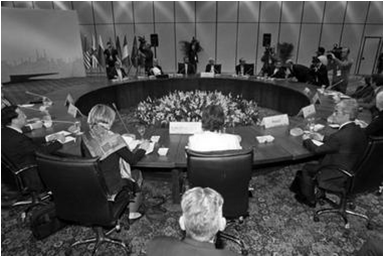
Ignored by the mainstream media, the world’s nuclear weapons and energy problems are being tackled by the international community gathered in Vienna. Attended by a gallant but tiny band of NGOs the meeting witnesses states from Iran to the US engaged in the debate, while the non-participants Israel, Pakistan and India cast a shadow over the proceedings.

On Monday, Ambassador Libran Cabactulan, of the Philippines, declared open the first session of the Preparatory Committee of the 2015 Non-Proliferation Treaty (NPT) Review Conference. Ambassador Cabactulan led a successful process that culminated in the 2010 NPT Action Plan agreed with the consensus of all states parties to the NPT. After his opening statement, in which he emphasized the need to build upon pass success, Ambassador Cabactulan declared elected Ambassador Peter Woolcott, of Australia, as the Chair-designate for the first session of the 2015 NPT review conference cycle.

Continue reading

Heyns, the Final Straw for AFSPA in India?

In this article, the author discusses the controversial Armed Forces Special Powers Act (AFSPA), 1958 of India, which has been used in the North Eastern states of India, and Jammu and Kashmir where counter-insurgency operations were carried out in the past several decades. This Act has come under heavy criticism from human rights advocates.


By Rithika Nair, May 1, 2012

Christof Heyns, the Special Rapporteur on Extrajudicial Killings described India as “a living document … [of] human rights jurisprudence respected worldwide.” This extolling statement preceded his review of the country after brief visits to New Delhi, Gujarat, Kerala, Jammu and Kashmir, Assam and West Bengal. His detailed report on the issue will be submitted before the United Nations Human Rights Council only in 2013.

In a press release after his visit, he expressed concern regarding unlawful killings by State actors and non-State actors, delay in prosecution and lawful impunity. He touched upon the disproportional and unnecessary use of force by the police, encounter killings, custodial deaths, the death penalty, the Armed Forces Special Powers Act, communal violence, insurgencies and counter-insurgencies, violence against women, and most significantly measures of impunity and rewards instead of prosecution.

Continue reading

Time to reframe the debate on the Iranian nuclear programme

In this article, Paul Ingram* argues it is time to reframe debates on the Iranian nuclear programme. If we want to solve the current impasse, we need to move from a pervasive rhetoric based on security threats and mutual accusations to a cooperative framework more apt for negotiations. 


By Paul Ingram, 25th April, 2012

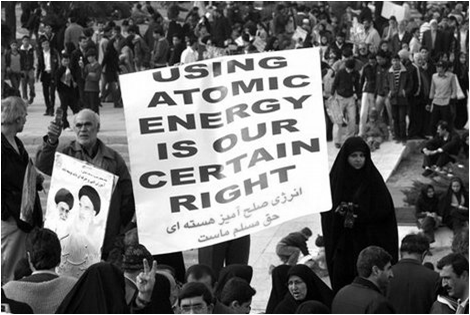
All too often the story around the Iranian nuclear issue is framed as our effort to contain the wild ambitions of a delinquent revolutionary state that with nuclear weapons given half a chance will threaten the stability of the world. This frame sticks for two key reasons: firstly because it plays into some of our greatest fears, and second, because there is enough of a hint of truth to it that people forget the qualifications, the underlying causes and the contrary evidence. In short, we fail in the face of complexity to understand the challenge, and the role of both sides in creating it. And in fact, many of the accusations made against Iran are mirrored in Tehran in things said about the West.

Western intelligence agencies continue to confirm that there is no strong evidence to back up the claim that Iran is engaged in a technical sprint to fulfil an ‘ambition to attain nukes’. Postulating reasons why Iran might want such capabilities is all very well, but such approaches are fraught with analytical and cultural traps. There are equally persuasive explanations for Iran’s programme that it would be equally dangerous to depend upon, such as the idea that Iran is caught up in an effort to demonstrate its modernity through the development of cutting-edge technologies, or that it is pursuing an energy-mix that both brings in foreign exchange and provides for an ever-increasing energy-hungry economy. The truth probably includes a balance of many explanations, including the fact that its technology development gives the administration a future option for nuclear deployment that may be seen as valuable in itself.

The talks in Istanbul last weekend between the E3+3 and Iran were best summed up by Guardian journalist Julian Borger as a play for a score draw, at least for now. Emerging without recriminations was in itself an achievement. But of course the challenge is how we get beyond this to reaching more substantive agreement in Baghdad on 23 May, when there have been so many factors in the way. Over the coming months, Iran faces some pretty severe additional sanctions, on top of crippling ones recently imposed. When previously people may have accused them of playing for time this is no longer be the case. In fact if anything it was Catherine Ashton, lacking a mandate, who last Saturday was playing for time when Jalili was looking for a deal that would soften impending sanctions. The best way of securing stocks of material in Iran is by negotiating access, not by threats, which only provide Iran an incentive to continue. Israeli protests over Iran’s increasing ‘immunity’ to attack ignores the fact that Iran has every right to protect themselves against illegal military threats. As Peter Jenkins, former UK Ambassador to the IAEA puts it, Iran bought itself immunity from attack by being a member of the United Nations and a signed up member of the NPT. Israeli military threats only make it more difficult for Iranian politicians and diplomats to sell any deal to their constituents.

There are plenty of frameworks out there to negotiate on that take the parties step-by-step in the direction of a technical agreements whilst the underlying trust essential to lasting improvement can be built up. Indeed, this is the only approach that holds any promise of working in negotiations. It will require parties to drop preconditions and talk with a view to understanding the other side’s perspective. Each step will need to involve net gains for both sides, as well as a clear sense of where the process is going. There will need to be maximum exploitation of common interests in other security areas – such as counter-terrorism and counter-narcotics activities. Positive signals such as those given recently by both President Obama and Ayatollah Khameini will need reflection, and negative, hostile rhetoric scaled back.

But we will also, in parallel have to tackle some of the deep-seated fears and attitudes that prevent progress. One such on the western side is a deep-seated exceptionalism around sovereignty that pervades the majority view. How much do we all share the attitude that we have a right to demand unlimited access and control over others’ nuclear programmes whenever we have our own suspicions? We have every reason to develop international systems based upon agreement and universal application, but we cannot force others into agreements, and certainly not those we are not willing to submit ourselves to. As a nuclear weapon state Britain is unwilling to seriously consider abandoning the highly expensive practice of keeping a nuclear submarine at sea at all times, or to share such a practice with France, for example, because we have such a powerful attachment to the concept of British sovereignty based upon the ability to threaten massive retaliation against any other state on the planet. This is bound to drive proliferation, sooner or later. Regionally, the inconsistent focus on Iran without any clear plan to address Israeli possession of a nuclear arsenal cannot be justified by a legalistic appeal to Israel’s non-membership of the NPT. As non-signatories the Israelis may not be directly breaking the law, but if we are to claim that the health of the international community depends upon a strong ethic of non-proliferation, then Israel cannot remain an out-law.

We cannot continue to have partial approaches to dangerous technologies. Did you know that India’s successful missile test this week broke a UN Security Council resolution, just as North Korea’s failed one last week did? Few have reported it.

On the Iranian side, it’s time they evolved the rather male pig-headed pride so ably illustrated in last year’s prize-winning film ‘the Separation’, an approach that too often characterises (though not uniquely) Iranian diplomacy and politics. Standing on one’s rights or maintaining an inflexible position can harm one’s own interests in fundamental ways, and destroy one’s position within the community, international or otherwise. International communities require trust, empathy and reassurance. They also depend upon a level of transparency and responsibility. Iranians have to recognise that for a variety of reasons they have a long way to go to build the trust of their neighbours, the sort of trust that will enable them to overcome the isolation they have suffered, isolation that threatens to deepen as the Syrian government goes down and their allies in Lebanon and the Occupied Territories start to look elsewhere for sponsorship in the context of the Arab Spring.

But the deeper choices lie in the international community’s relationship to nuclear deterrence, and how power has in the past been mediated by possession of nuclear arsenals. If we cannot break free from Cold War theologies that place such magical powers in the possession of nuclear weapons, we will only have ourselves to blame when the weapons spread, and those we fear most acquire the magic we have sought to invoke in defence of our privileged positions.

The views expressed in this article solely reflect Paul Ingram’s personal perspective.

____________________________________________________________________________________

*About the author: Paul Ingram is Executive Director of the British American Security Information Council (BASIC) where he develops BASIC’s long-term strategy to help reduce global nuclear dangers through disarmament and collaborative non-proliferation, coordinating operations in London and Washington. He is also a weekly talk-show host on Iranian TV. This article was first published in Open Democracy on 23 April 2012 (the original article can be accessed here).

Can China’s Growing Demand for Energy be Satisfied Without Conflict?

In this essay, the author assess the threat of China’s increasing demand of energy and whether conflict is imminent. The author analyzes the cases of potential conflict, particularly in the East China Sea and the Middle East. The probability of conflict is then assessed in each of these cases in accordance with recent developments.  


By Abd Al-Aziz Abu Al-Huda, 20th April, 2012

Access to energy resources is a vital ingredient to the economic and military development of any state in the international system. Yet, within the past two decades, China’s quest for energy resources has particularly generated much debate and criticism. The commonly held opinion is that China’s pursuit for energy resources is a prelude to conflict with the International community because China poses a long term threat on energy supplies. However, such observations have been criticized by scholars such as Kung-wing Au and Hongyi Harry Lai, who emphasize that China’s growing demand for energy has in fact increased its vulnerability resulting in gradual cooperation.

This paper then attempts to assess the threat of China’s increasing demand of energy and whether conflict is imminent. The paper will begin by looking at cases of potential conflict particularly in the East China Sea and the Middle East. The paper will then attempt to assess the probability of conflict in each of these cases according to recent developments. The discussion will then conclude by examining the level of cooperation in each of the cases and the probability of its persistence. Following an examination of the literature, one can argue that conflict will highly depend on developments in internal state policies, perceptions and more importantly the development of negotiations which can be hindered by historical and political factors.

East China Sea

Development and dependency on imported oil is not restricted to China alone, but is shared by the wider Asian region as states seek to expand production, electricity generation, and energy access to their military. The East China Sea is said to hold 60-70% of the regions oil and natural gas resources which creates conditions for conflictual foreign policy due to uncertainty in the global supply of energy resources (Lai, 2007). The most conflictual competition is that between China and Japan due to the unresolved sea border dilemma between the two countries. This is followed by Chinese fears over U.S presence in the Straits of Malacca, the key energy supply route for China. With Chinese and Japanese case particularly, the fundamental cause of the conflict is not just competition over resources but the conflict also results from political distrust resulting from historical grievances (Liao, 2008).

Sino-Japan Relations

Despite conflicting claims over the demarcation of the East China Sea, Japan and China continued to negotiate joint development in the disputed area (Au, 2008). Both sides proposed solutions to finalize the conflict particularly Japan which tried to come up with an equitable solution by coming up with the Median line. The Median line according to Au “runs from the north to the south and separates the sea with equal distances from the shores of the two countries”  (Au, 2008, p. 224). While this may seem like a fair solution, China still has not acknowledged the median line highlighting that it was unilaterally drawn by Japan without consulting China (Buszynski & Sazlan, 2007).

Alternatively, China argues that it has the right to develop the “subterranean resources on its continental shelf” which go past the median line creating overlapping claims with Japan  (Au, 2008, p. 224). Japan despite having proposed the Median line, is also concerned that many oil and gas deposits in Chinese waters are situated in close proximity to the Japanese side allowing Japanese reserves to be tapped by Chinese operations (Au, 2008). In return, Japan aimed at limiting Chinese operations by blocked joint development in the Diaoyu and Senkaku islands (Buszynski & Sazlan, 2007). The islands remain subject to territorial dispute despite being under current Japanese control. However, Japan feared that cooperation with China over the Islands would, according to the Law of the Sea, enhance China’s share in regional waters.

The UN convention on the Law of the Sea specifies that coastal countries can “claim 200 nautical miles from their shores as their Exclusive economic zones (EEZ)” (Au, 2008, p. 225). In regards to the East China Sea, the widest point is only 360 nautical miles barely permitting Japan and China to demarcate territorial waters without conflicting claims (Liao, 2008). Coupled with historical animosity, China has considered investing in a naval defense force to guard Chinese seaborne energy imports going through the Straits of Malacca and territorial claims (Kennedy, 2010).  The Japanese air force near the Median line have identified the presence of Chinese military warships on a few occasions and considered this a ‘Show of force’ by China (Liao, 2008, p. 66).

“The Malacca Dilemma”

Around 80% of China’s oil and gas imports pass through the Straits of Malacca (Bustelo, 2005). Being dependent on energy imports, the Straits of Malacca is particularly problematic for China because the United States navy patrols the straits. Initially, the U.S naval presence is beneficial to China because it wards off piracy. However, U.S naval presence also risks the U.S blocking the flow of energy due to China’s criticized increasing role in the Middle East and Africa. The U.S naval forces also pose a threat to China should they interfere in Taiwan by using their bases in the Philippines or Kyrgyzstan (Kennedy, 2010). Even without U.S naval presence, China seeks to diversity its land based imports because they lack a developed navy to challenge the U.S (Downs, 2004). China has specifically looked at Russia to build  the Tayshet-Skovorodino-Nakhodka oil pipeline but was challenged and beaten by Japan over the route (Lai, 2007).

The Middle East

Like the Straits of Malacca, China’s energy dependency also increases concern over the Straits of Hormuz in the Arabian Gulf where most of the Middle East’s energy passes (Calabrese, 1998). Despite heavy presence of U.S influence in the Middle East, China’s foreign policy gradually developed into building closer diplomatic relations with the Arab world and Iran in order to secure access to energy deposits. From the U.S standpoint, China’s ties with the Middle East poses several challenges because it goes against the U.S’s policy of containment (Calabrese, 1998). However, China views U.S policies as a unilateral initiative which doesn’t involve them because China’s ties in region are free from ideological or historical hostilities (Yetiv & Lu, 2007).

The Middle Eastern perspective holds positive views of China particularly after the U.S campaign on the ‘War on Terror’ which alienated most of the region increasing anti-Americanism (Garrison, 2009, p. 13). As sales to the U.S declined, The Middle East, particularly Saudi Arabia, began a series of ‘loans for oil’ deals creating new investments (Kennedy, 2010, p. 140). Saudi Arabia, as a result of increasing political and economic cooperation, also allowed the Chinese oil company SINOPEC to extract natural gas from one of Saudi Arabia’s basin’s (Lai, 2007).

With the wider Arab world, China has devised an agreement with the 15 members of the Arab League to establish a forum on politics and economy. The agreement specifically targeted concessions for mutual market access and cooperation in investment especially in oil and gas (Lai, 2007). Unlike the U.S, China has been successful in dealing with the Middle East because it sympathizes with the Arab world’s stance on Palestine. Since the ‘War on Terror’, China has been active in voicing Arab concerns calling for an end to regional violence and support for the ‘Land for peace’ and ‘Nuclear free Middle East’ initiatives (Yetiv & Lu, 2007). Additionally, Arabs prefer dealing with China because they share China’s policy of non-interference regardless Human rights issues unlike the U.S which seeks to impose democratization on authoritarian regimes (Ziegler, 2006).

Iran, like the Arab world favours Chinese energy involvement. China’s relationship with Iran also includes military cooperation which the US particularly criticizes even though reports confirmed that China is not involved in selling sensitive military technology to Iran (Calabrese, 1998). A more pressing concern for the U.S has also been China’s assistance in developing Iran’s oil extracting capabilities and purchasing it which violates U.N Security Council sanctions (Yetiv & Lu, 2007). The U.S perceives this action as assistance to the rogue Iranian regime as well as irresponsibility on China’s part for violating International norms.

Assessment

There is no doubt that China’s increasing presence in the field of energy security creates an ‘Energy security dilemma’ (Kambara, 1984). As China develops into a prominent power on the international scene, emphasis is focused on the fact that China is currently the second largest consumer of oil globally and rising (Downs, 2004). However, what crucially matters is not how much energy resources China consumes, but whether it’s increasing consumption will alter its foreign policy. Estimations of China by 2030 tell us that it will remain dominated by coal because of difficulties in increasing the domestic use of natural gas coupled with lacking infrastructure (Kambara, 1992). Even should demand for oil increase, conflict to ensure supplies will depend on policy makers at the time and how they perceive national interests and threats (Garrison, 2009)

While China is a growing power, it largely remains dependent negotiating deals with Oil producing countries that ultimately control supplies (Garrison, 2009).  One must point out that only a small share of oil actually goes back to China. Around 85% of imported oil and gas reserves are actually sold and injected into the open market (Garrison, 2009). In fact, one can argue that China’s oil deal with Iran actually increases the supply of energy in the global market restricting prices from increasing (Kambara, 1984). Additionally, regardless whether China sold its imports or not, the U.S would still not be affected because its oil imports from the Arab states are minuscule compared to the “1011.6 and 590.3 million tons of oil annually” purchased from Canada and Mexico (Lai, 2007, p. 531). China on the other hand only imports “51.7 million tons roughly 8.8% of the U.S imports” which are not large enough to upset the U.S (Lai, 2007, p. 531).

Arguably, one can also claim that China contributes to global energy security because until recently, they had a high degree of self-reliance of around 90% of energy being generated in China (Garrison, 2009, p. 144).  Now, China actually produces 10% of the world’s oil and so it is likely that no conflict on behalf of China, the U.S, or the region will be imminent because China lacks military capabilities and the U.S and the region, particularly Japan favour increased energy output which decreases the prices of oil and gas. As previously stated, any actual conflict will most likely be due to a political fallout rather than energy scarcity (Yergin, 2006).

Furthermore, China’s current economy is only a fraction compared to the U.S economy and slightly stronger compared to its Asian neighbours. In per capita, Zheng Bijian argues that “China remains a low income country and China faces constraints to get its 1.3 billion population out of poverty” (Bijian, 2005, p. 19). Taking this into consideration, it is likely that China would view continuing oil diplomacy as much more cost effective and successful compared to using its limited military means (Ziegler, 2006, p. 8). China also considers its dependence for supplies of oil products like “gasoline, diesel oil, kerosene and fuel which come from its neighbours in South Korea, Russia, and Singapore as well as Japan and Malaysia and the Philippines” which, with the exception of Russia, has U.S military presence (Lai, 2007, p. 528).

Cooperation

With increasing interdependence, states gradually come to share numerous challenges. China like other states shares the consequences to its economic development if there is a disruption in energy supplies. Additionally, with its continuing use of coal and fossil fuels, China is also affected by the transboundry environmental consequences that emerge (Garrison, 2009).So has China been cooperating? And will the U.S and its neighbours cooperate back? Economically, neighbouring countries according to Jean Garrison actually think that deepening economic ties with China would be beneficial for them in the long run (Garrison, 2009).  Chinese officials have also highlighted the importance of integration with its neighbours as part of their oil diplomacy to provide opportunities to develop economic and military relations (Ziegler, 2006).

Concerning China’s anxiety about U.S presence in the Straits of Malacca, it is highly unlikely that China would increase its naval capability or move them away from the Taiwanese Strait. The cost of forming a defense navy actually makes the idea more of a concept than a reality (Downs, 2004). Even if China should disrupt sea lanes in order to ensure energy demands, the action would provoke numerous lethal moves by the U.S, Japan, and its neighbours. Instead, from the current situation we can assume that China understands the necessary need for strong U.S naval protection to ensure the safety of sea lanes for its oil (Ziegler, 2006).

Logically, China is focusing on improving its diplomatic relations with its neighbours to provide alternate land routes, despite its dependence on seaborne energy imports  (Lai, 2007). One way has been through the “Strings of pearls strategy” which aims at building close ties along coastal countries from the Middle East to the East China Sea in order to defend sea routes from terrorist attacks. (Lai, 2007, p. 528). An example of these close ties is with Pakistan where both countries agreed to build an oil pipeline going from the Port of Gwadar near the straits of Hormuz to the Chinese region Xinjiang which bypasses the Straits of Malacca and the East China Sea (Calabrese, 1998).

On the international level, China has also been quite accommodating to the U.S and the international community despite criticisms of its involvement with authoritarian regimes. In 2002, China voted in favour of the U.S proposed resolution 1441 at the U.N Security Council which stipulated that Iraq, a Chinese energy partner till 2003, was in “material breach of disarmament obligations”  (Lai, 2007, p. 530). While the decision clearly affected China’s ability to extract Iraqi oil under Saddam Hussein, China did not veto the resolution which allowed the U.S to wage war against Iraq in 2003 (Yetiv & Lu, 2007).

As for Iran, when Iranian-U.S relations were deteriorating over Iran’s nuclear programme, it was widely held that China would support Iran considering the Iranian concessions made to Iran for joint development. But China in fact supported a proposal initiated by the U.S and the European Union to refer Iran’s nuclear programme to the U.N Security Council should Iran fail to cooperate with inspections  (Lai, 2007). Also, China agreed with the international community that Iran should not develop nuclear weapons (Calabrese, 1998).

In its own continent, China has been making gradual progress in cooperating over oil and gas. In 2002, China and ASEAN members assured that they will aim to resolve territorial disputes through peaceful means (Bijian, 2005). In 2005, China agreed to initiate joint exploration programmes of oil and gas with Vietnam and the Philippines including an agreement of cooperation on gas with Indonesia (Liao, 2008). China and India have also attempted to cooperate by signing a memorandum of understanding for enhancing cooperation in the field of oil and natural gas (Kennedy, 2010). Both agreed to cooperate on “energy exploration, production, storage, and stockpiling, research and development, and conservation” which would bring down energy prices in Asia (Lai, 2007, p. 533). Lastly, China was successful in building cooperation between India and Pakistan by proposing an Iran-Pakistan- India “Peace pipeline” (Lai, 2007, p. 533).

As for unstable relations with its Japanese neighbour, both governments have actually been making contributions since 1970 and expressed a willingness to assist each other and Asian states in utilizing non-oil energy like wind and solar power (Liao, 2008). Cooperation between both governments also extends to the East China Sea where Japan has refrained from drilling in disputed waters while offering China technological assistance for joint development (Manicom, 2008). In 2007, both Japan and china advanced dialogue pledging their commitment to peacefully settle territorial issues (Au, 2008).

In 2008, the ‘Cooperation Consensus’ highlighted considerable improvement between China and Japan. Both parties agreed to jointly explore the Northern part of the East China Sea and jointly exploit the Chinese Chunxiao oil and gas fields (Jianjun, 2009). In return for joint cooperation, Japanese energy firms even agreed to follow Chinese national laws and supply assistance for existing oil and gas projects (Jianjun, 2009). This cooperation was the result of, what Goa Jianjun describes as the “Disputed area approach” which allows for development while maintaining consultation about other parts of the East China Sea (Jianjun, 2009, p. 294).

The problem however is that the consensus is not singed but only a verbal agreement between both parties until a finalized territorial settlement (Manicom, 2008). Yet, both states agreed not to take independent decisions which would harm joint development and both states agreed that “no side is to interpret the consensus in way to prejudice the maritime delimitation” in order to maintain stability in the region. (Jianjun, 2009, p. 297). It is likely that if Japan assists China technologically by providing hydro and solar power, then China would be able to maintain its part of the agreement and not venture into further exploration in the East China Sea (Ziegler, 2006).

In conclusion, China’s increasing demand for energy does not have to be met with conflict. Competition does exist but has been exaggerated without highlighting the progress of cooperation. Any conflict, should there be one, will depend on future government policies and how China and the International community interpret energy security. From what we can tell, cooperation is still an option because China has taken international and regional steps not to jeopardize its future development into a world power. Countries like the U.S need to pay greater attention to China’s struggles and China as well. Good will gestures on both sides will help deter conflict. Overall, there is a powerful incentive for a productive, accommodating Chinese Foreign Policy.


Bibliography:

  • Au, K.-w. (2008). The East China Sea issue: Japan-China Talks for Oil and Gas. East Asia , 25, 223-241.
  • Bijian, Z. (2005). China’s “Peaceful Rise” to great power status. Foreign Affairs , 84 (5), 18-24.
  • Bustelo, P. (2005). China and oil in the Asian Pacific region: Rising demand for oil. New England Journal of Public Policy , 171-201.
  • Buszynski, L., & Sazlan, I. (2007). Maritime claims and energy cooperation in the South China Sea. Contemporary Southeast Asia , 29 (1), 143-171.
  • Calabrese, J. (1998). China and the Persian Gulf: Energy and Security. Middle East Journal , 52 (3), 351-366.
  • Downs, E. S. (2004). The Chinese energy security debate. The China Quarterly , 177, 21-41.
  • Garrison, J. (2009). China’s search for Energy Security. In China and the Energy Equation in Asia: The determinants of policy choice (pp. 1-14). Firstforumpress.
  • Garrison, J. (2009). Implications of China’s Quest for Energy Security. In China and the Energy Equation in Asia : The determinants of policy choice (pp. 141-151). Firstforumpress.
  • Jianjun, G. (2009). A note on the 2008 Cooperation concensus between China and Japan in the East China Sea. Ocean development & International Law , 40, 291-303.
  • Kambara, T. (1984). China’s energy development during the readjustment and prospects for the future. The China Quarterly , 100, 762-782.
  • Kambara, T. (1992). The energy situation in China. The China Quarterly , 131 (The Chinese Economy in the 1990s ), 608-636.
  • Kennedy, A. B. (2010). China’s New Energy-Security Debate. Survival , 52 (3), 137-158.
  • Lai, H. H. (2007). China’s oil diplomacy: Is it a global security threat? Third World Quarterly , 28 (3), 519-537.
  • Liao, J. X. (2008). Sino-Japanese Energy security and regional stability: The case of the East China Sea gas exploration. East Asia , 25, 57-78.
  • Manicom, J. (2008). Sino-Japanese Cooperation in the East China Sea: Limitations and prospects. Contemporary Southeast Asia , 30 (3), 455-478.
  • Yergin, D. (2006). Ensuring energy security. Foreign Affairs , 85 (2), 69-82.
  • Yetiv, S. A., & Lu, C. (2007). China, Global Energy, and the Middle East. Middle East Journal , 61 (2), 199-218.
  • Ziegler, C. E. (2006). The energy factor in China’s Foreign Policy. Journal of Chinese Political Science , 11 (1), 1-23.
  • Zweig, D., & Jianhai, B. (2005). China’s global hunt for Energy. Foreign Affairs , 84 (5), 25-38.

Interview with Peter Jenkins | Iran-West Negotiations: Getting to Yes

In this interview, David J. Franco and Peter Jenkins discuss on the current state of negotiations between the West and Iran ahead of the April 14 meeting in Istanbul between the P-5, Germany, the EU and Iran.


By David J. Franco, 13th April, 2012

Peter Jenkins was the UK Ambassador and Permanent Representative to the International Atomic Energy Agency (IAEA) between 2001 and 2006. Prior to that, he held diplomatic posts in Vienna (twice), Washington, Paris, Brazil and Geneva. At present, he leads ADRg Ambassadors in the development of its relations with the UN and other important international organisations including the International Atomic Energy Agency (IAEA) and the Comprehensive Nuclear Test-Ban Treaty Organization (CTBTO). For some time he has advocated a more cooperative approach towards Iran in relation to the West’s standoff over the former’s nuclear programme and ambitions. In this interview, David J. Franco asks questions to Peter Jenkins on the current state of negotiations ahead of the 14 April meeting in Istanbul between the P-5, Germany, the EU, and Iran. Will Iran and the West ever get to yes? Let us hope that they do, for the contrary may have devastating consequences for the region and the rest of the world.

Continue reading

Will Iran be accorded its rightful place in the world?

In an inspiring analysis, Peter Jenkins analyses the current state of affairs over Iran’s nuclear file in advance of the April 14 meeting in Istanbul between members of the international community (the P-5 + Germany and the EU) and Iran. Jenkins warns that the scope for any process on nuclear talks with Iran to founder on distrust, misunderstanding and political in-fighting in both Tehran and Washington remains formidable. Furthermore, he sees the wider political realities surrounding the Iranian case as ‘disturbing’ and calls for a more active role from the BRICS, especially India, in helping resolve the conflict. Iran’s nuclear programme is a symbol of a geostrategic shift, he argues, and the global family has an interest in Iran’s neighbours according Iran a say in the affairs of South West Asia.

This article was first published by Gateway House: Indian Council on Global Relations on 10 April under the title ‘Iran: An opportunity for BRICS‘.


By Peter Jenkins*, 12 April, 2012

The winter months saw the controversy over Iran’s nuclear programme become dangerously heated. Western media were encouraged to interpret recent International Atomic Energy Agency (IAEA) findings as proof that Iran is bent on making nuclear weapons, despite the assessment of the U.S. intelligence community remaining that a weapons decision has not been taken and is in no sense inevitable.

The U.S., UK, and European Union (EU) used the concern aroused by media reporting to justify a further sharpening of their attack on the Iranian economy, while Israel pressed for a different sort of attack, to wipe out Iranian nuclear facilities before the programme enters a so-called “zone of immunity”. Iran reminded its adversaries that it could retaliate by closing the Straits of Hormuz to oil and gas shipments.

As spring has come, passions have cooled. U.S. President Barack Obama seems to have felt able to tell Israel’s Prime Minister Netanyahu that a military attack is unnecessary at this juncture, even though the U.S. President is vulnerable to Israeli influence on U.S. public opinion in an electoral year. The five Permanent Members of the UN Security Council, the EU and Germany have agreed to talk to Iran’s nuclear negotiator despite the latter’s failure to commit Iran to full implementation of the resolutions passed by the UN Security Council since 2006 (Notably these require Iran to suspend all production of the enriched uranium that can be converted into reactor fuel, but which Iran could divert to military use if it decided to withdraw from the Nuclear Non-Proliferation Treaty [NPT], or to ignore its NPT obligations).

There are signs that the U.S., UK and Germany, if not France under President Sarkozy, are moving towards the Russian and Chinese position of accepting Iranian enrichment as long as Iran offers the best possible guarantees that all its nuclear material will remain in non-military use.  Public diplomacy has moderated rude aggression yielding to civility and reason.

The risk of disruption to oil and gas shipments has receded – for the time being at least – although recent U.S. and EU measures are causing problems for some of Iran’s traditional customers, and are hurting consumers everywhere through their effect on prices.

So it is not irrational to hope that when the eight parties – Britain, China, France, Russia and the U.S., the permanent members of the UN Security Council, plus Germany, the EU and Iran – meet on 14 April in Istanbul, they may find some way of launching a process that can, over time, lead to agreement. At long last, perhaps there can be concurrence on handling Iran’s nuclear ambitions in accordance with the treaty to which Iran is a founder-party, the NPT.

An NPT deal would recognise Iran’s right to enrich uranium and would accept its taking advantage of that right, in return for Iran placing all nuclear material in its possession under IAEA safeguards and renewing its commitment to refrain from manufacturing or otherwise acquiring nuclear weapons.

In one sense, the West approaches these talks from a position of weakness. The Iranians have shown no sign of buckling under the pressure of ever-tighter sanctions. They know that the West’s military option is deeply unattractive to any of sane mind.

In another sense, the West has many good cards in its hand.  Sanctions are hurting Iran and it has an interest in having them lifted provided the price is not intolerable.  Abandoning its enrichment plans would be intolerable; volunteering full access to IAEA inspectors, and other measures that can allay the concerns aroused by the clandestinity of some of its past nuclear activities, need not be.

To say that hope is permissible is not to say that the odds on yet another disappointment are long.  In 2007 a promising opening vanished when Iran’s chief negotiator clashed with President Ahmedinejad.  In 2009 it was President Ahmedinejad’s turn to be thwarted by domestic rivals; and President Obama, under pressure from hawks, withdrew his negotiators rather than wait for the Iranians to sort out their differences. In 2010, the timing of Iranian assent to a confidence-building proposal brokered by Turkey and Brazil cast doubt in Western minds on Iran’s sincerity.

In other words, the scope for any process to founder on distrust, misunderstanding and political in-fighting in both Tehran and Washington remains formidable. Equally disturbing are the wider political realities.

Since 1992 both leading Israeli parties, Likud and Labour, have sought to convince Washington that Iran is a mortal threat to U.S. interests in South West Asia. This they have done in order to maintain Israel’s value to the U.S. as an ally in a post-Cold War Middle East and to avert a thaw in U.S.-Iranian relations that they fear might entail a cooling in U.S.-Israeli relations.  For these Israelis, Iran’s nuclear programme, and especially its undeclared activities prior to 2003, has been a gift from heaven.

Iran’s transgressions are a matter for persuading Americans that Iran is bent on acquiring nuclear weapons, that these weapons will be used to destroy Israel, they say. Iran’s programme, if left unchecked, will precipitate nuclear proliferation in an unstable region, leading Saudi Arabia, Egypt and Turkey to acquire similar capabilities. U.S. conservatives, in thrall to dreams of re-shaping the Middle East and regime-change in Iran, have been eager echoers of these (highly questionable) arguments.

These constituencies, Israeli and American, have no interest in the normalisation of the Iranian nuclear case through an NPT deal.  On the contrary, they have every interest in making it as politically difficult as possible for any U.S. administration to arrive at such a deal.

Saudi Arabia has been even less transparent than Israel.  It is not obvious that the Saudis have been poisoning the wells of American opinion to thwart a deal with Iran.  But Saudi-Iranian rivalry, multifaceted and acute since the advent of an Islamic Republic that challenges the legitimacy of Saudi occupation of the Holy Places, seized from the Hashemites in 1924, and which shows up the undemocratic nature of the Saudi monarchy, is well-documented.  There have been veiled threats that Saudi Arabia will ignore its NPT obligations if Iran is left in peace to exploit nuclear technology that the Saudis themselves are decades away from mastering without outside help.  Saudi Arabia too has an interest in thwarting any deal that leaves Iran in possession of enrichment plants.

There are additional factors.  Ever since the NPT opened for signature in 1968, U.S. officials have found it hard to accept that the treaty allows non-nuclear-weapon states (NNWS) access to technologies that can serve both civil and military purposes. There’s been a 44-year itch to close what Americans see as a loop-hole, despite all the evidence that many NNWS are unready to concede a back-door renegotiation of a carefully-balanced instrument.

There is also in the U.S. a tendency to blind self-righteousness that can lead Americans to treat non-Americans as miscreants when the latter err. Iran’s failure to respect its NPT safeguards commitments prior to 2003, ill-disposes American officials to accord Iranian representatives the respect the latter crave.  There’s a risk Iran’s negotiators will be made to feel like criminal suspects invited to engage in plea-bargaining.

For their part, the Iranians have a tendency to give way to the temptation to retaliate when instead keeping a stiff upper lip would be wiser. For instance, they retaliated for the 2006 reporting of their IAEA non-compliance to the Security Council by ceasing to allow the IAEA the access it needed to arrive at the conclusion that there are no undeclared nuclear activities or material in Iran.  They retaliated for recent UK sanctions on financial dealings by trashing the British embassy in Tehran, an act of vandalism ill-calculated to make it easier for the British government to accept their enrichment activities. Will they be able to resist the urge to retaliate if some indignity is inflicted on them while negotiations are underway?

These wider factors suggest that India, Brazil and South Africa could play a part in resolving this controversy if they chose.  They could act as auxiliaries of their BRICS partners, Russia and China, whose role in a negotiating process will be to help narrow differences.  India could use its influence in Washington and European capitals to urge patience and the turning of deaf ears to special pleading from Israel and Saudi Arabia. It could draw attention to the way in which Western slowness to accept evidence that the Iranian nuclear threat had been exaggerated, has damaged Indian economic interests.

India could also stress the unacceptability of any attack on Iran that has not been authorised by the Security Council, both on legal grounds and on account of its probable consequences for Indian living standards. It could draw on 2,500 years of cultural affinity with Iran to offer advice on Iranian sensibilities: the dos and don’ts that matter in any negotiation.

The underlying need is for the BRICS to make their voice heard on this issue, to counter-point the tunes composed by the West’s Middle East allies. The BRICS are qualified to argue against seeing Iran’s nuclear programme in isolation. They can point out that the programme is a symbol of a geostrategic shift: Iran is slowly returning to the ranks of Asia’s greater powers.

This shift is unwelcome to some of Iran’s neighbours, it seems.  They have sought to prevent it by distorting Western perceptions, by encouraging Western governments to assume the worst of a state whose intentions the West finds it hard to fathom, and by playing on the negative prejudices that are the legacy of past clashes with Iran.

But this kind of shift cannot be prevented without a conflict that would entail hardship or suffering for most of mankind. So the global family has an interest in Iran’s neighbours accommodating what can hardly be prevented, and according Iran a say in the affairs of South West Asia – what the Iranians see as their rightful place in the world.

_________________________________________________________________________________

*Peter Jenkins is a former British diplomat who worked on the Iranian nuclear issue when ambassador to the International Atomic Energy Agency in Vienna (2001-06).


Can the American and Pakistani Positions on Islamic Militancy be Reconciled?

In this article, the author delves into the relationship between the United States and Pakistan in context of the Islamic Militancy in the extended region of Afghanistan-Pakistan. 


By Camille Maubert, 10th April, 2012

In 2001, Pakistan allied itself with the US on the grounds that it would assist in the War on Terror’s effort to tackle terrorism. At the time, the two countries’ interests seemed to coincide, as they had a common target – Al Qaeda and foreign fighters. Yet, from 2003 onwards, the expansion of the American war against the Taliban and its increased pressure on Pakistan to act against the Islamic militants who use the Afghan-Pakistani border to provide the Taliban with safe havens put the Pakistani leadership in a difficult situation. The unpreparedness of Pakistan to answer the US’s demands to repress these groups led to the current diplomatic standoff whereby there seems to be no alignment of strategic interests, let alone coordination between the US and Pakistan, and their respective policies remain fundamentally adversarial.

The premise of this study is to challenge the current understanding of the situation, which is overwhelmingly based on perceptions and representations rather than real insight into Islamic militancy.

Islamic Jihad or Pakistani Nationalism?

Despite the consensus on the decisive role played by militant organizations like the Lashkar-e-Taiba (LeT) and the Haqqani network in providing safe havens, logistical support and training to Taliban fighters, important questions like “who are the militants, who is supporting them and why?” are overlooked.

There is a strong argument that the reason why Islamic militants have such an overwhelming presence in the Afghan-Pakistani border region is because of the radicalisation of the population by madrassas and its sympathy for the jihadi ideology. Such an approach is flawed as it conveys a stereotypical understanding of the militant reality, and overlooks the deeper psychological and political fault lines underpinning it. Indeed, Islamic militants are fighting a revolutionary jihad for ideological purposes, to reform the state and impose a radical version of Islam. Conversely, most Pakistanis practice a more moderate version of Islam and thus do not support radical groups out of sympathy for their ideological agenda. Rather, those who join militant groups put forward reasons that stem from collusion, misinformation, support for the Afghan jihad and, mostly, Pakistani nationalism. Indeed, invasive American actions (drone strikes) have propped up support for militant groups out of patriotic sentiment. In other words, militant organisations have hijacked the nationalist concept of jihad as used during partition, and widely supported by Pakistanis, to justify violent action (against American infringements on Pakistani sovereignty and denounce the subordination of Pakistani leaders to American will (A 2009 Gallup Survey reveals that 59% of Pakistanis consider the US as the biggest threat, while only 11% chose the Taliban). As a result, support for Islamic militants spreads more easily through the various layers of Pakistani society, as they claim to act in the defence of the Muslim nation from external domination.

Therefore, it is the failure of Western analysts to make the distinction between ideologically motivated militants and nationalist Pakistanis that makes cooperation difficult. In the US, the post 9/11 environment and the need to mobilise people against terrorism promoted an unsophisticated understanding of what Islamic militancy is about by having the media “fuse shots of Osama Bin Laden, veiled women, (…) and riots in Kashmir and Palestine, thereby lending the visual impression that the West is confronted with a crazy, irrational faith” (Majid 2010:101). This securitisation of Islamic militancy is intrinsically flawed because it promotes an all-encompassing understanding that merges ideological and nationalist agendas into the same threat, making its targeting indiscriminate and, ultimately, counter-productive. Conversely, the Pakistani approach to Islamic militancy recognises that some elements – the Pakistani Taliban – do represent a threat, but it also acknowledges that it cannot crack down on those organisations as most jihadi groups historically enjoyed state sanction to wage jihad against the state’s enemies in the name of Islam and the Nation. Therefore, it is necessary to explore the relationship between the Pakistani state and Islamic groups in order to understand its reluctance to implement direct military action against them.

Islamic Groups as Pakistan’s Strategic Asset

Were the Pakistani civilian government willing to cooperate with the US, such commitment would only be a shallow promise if it proves to be unable – or unwilling – to convince the military and Inter-Services Intelligence to abide by its will. Not only is Zardari’s government unable to do so – given the historical weakness of Pakistani civilian governments – but it will not, as this would undermine the Pakistani strategic doctrine as a whole. Indeed, Islamic militants have been and remain the most reliable linchpin for Pakistan to project power where it matters; Kashmir. Since Partition, Islamic radicals and the army have teamed together to construct and secure Pakistan’s sovereignty and identity through the tactical use of guerilla warfare in Pakistan’s border regions.

Therefore, the reason why Pakistan does not – and will not – act against Kashmiri-based groups is that its whole foreign policy is founded upon issues of (Muslim) national identity, meaning that it uses militancy to challenge the Indian regional domination. Since this discourse informs Pakistan’s very identity narrative and exercises a powerful hold on the national imagination, it is impossible for Pakistani leaders to renounce it, especially as its influence has been reinvigorated by the fight for (Muslim) freedom in neighboring Afghanistan.

Similarly, Afghanistan is an aspect of Pakistan’s Indian policy. Indeed, Pakistan’s actions in Afghanistan are determined by its entrenched fear of encirclement and the necessity to limit Indian influence at its Western flank. Successive governments have therefore maintained strategic links with Islamic groups in Afghanistan and supported a proxy war aimed at undermining Indian assets. Interestingly, the post 2001 security environment increased the links between Kashmiri and Afghan groups, thereby strengthening the legitimacy of local groups and undermining the ability of the state to identify and target specific individuals.

However, this apparent predicament serves Pakistani interests in the long term; Aware of the need to preserve strategic depth against India and a friendly government in Afghanistan, Pakistan has no interest in withdrawing support to Afghan Islamic militants and the Pakistani groups that prop them up.

Questions like “how much support these groups truly get from the army and the ISI, and how much of it is provided by independent individuals”, remains unanswered. Yet what is clear is that the problem to which Pakistan is confronted with regards to Islamic militancy is one of control. Pakistan is in a situation where the state created organisations on the basis of identity for (geo)political purposes but has lost control over them as they were reinforced by traditional values and developed a life of their own. In effect, not only are Islamic organisations attractive to some sections of the population, they also are ingrained in the state apparatus – they recruit retired personnel from and have relatives working for the army. Given the kinship base of the Pakistani society, this makes them extremely difficult to root out. Consequently, Pakistan understands that disarming the militants would cause more damage than turning a blind eye, as it may lead to an internal conflict of interests within the army between pro-Western and nationalist elements. Such situation, it has been argued, would provoke the collapse of the only strong institution able of holding the state together.

Furthermore, the areas in which militancy is highest are those where the state doesn’t exert authority or governance – North West Frontier Province, Balochistan, Kyber-Pukhtoonkhwa. In these areas, the pre-eminence of Islamic organisations is all the more important that they fill the power vacuum and provide the population with social services that the state is failing to supply. The most notable example is that of LeT’s charity wing Jamaat ud-Dawa (JuD). After the 2005 earthquake and 2010 floods, JuD provided immediate relief to the population and further integrated itself at the grassroots level. As a result, LeT has been increasingly able to act independently from state sponsor, another reason for Pakistan not to provoke any rupture. What is needed, therefore, is a solution that acknowledges the structural weaknesses of the Pakistani state, the strength of its society, and promotes negotiation rather than coercion.

A Path to Reconciliation?

The difficulty with both US and Pakistani positions is that they are directly reliant on the states’ narratives. In that sense, finding a solution implies that they would have to compromise on those narratives. This is unlikely to happen since, on one hand, the American demands are based on the deeply entrenched ideological principles of the War on Terror, and, on the other hand, the Pakistani reluctance to comply is rooted in the certitude that militants are necessary to its regional strategy – and to an extent its national identity.

These discursive incompatibilities are reinforced by the process of securitisation at play. By framing Islamic militancy as a security threat, the US – and some pro-Western Pakistani civilian leaders – has promoted a military solution, which limits are becoming more visible. The protests steered by drone strikes and the backlashes met by the Pakistani army in Federally Administrated Tribal Areas and North West Frontier Province demonstrate that the use of force is ultimately inefficient as it increases anti-Americanism, steers sympathy for militants, and further disturbs Pakistan’s unstable political landscape.

As observed above, the reason why cooperation has so far failed between the two allies is the mismatch of each other’s vital interests. While the US demands are informed by the short-term requirements of its Afghan strategy, the Pakistani position is determined by a long-term approach to militancy and regional security. In addition, the securitisation process has led to a situation where the US promotes an all-encompassing definition of the militant threat which pushes for the elimination of all organisations linked to Islamic militancy. But what it fails to understand is that Islamic militancy is deeply rooted in the Pakistani society and state apparatus and, as such, it cannot simply be isolated or suppressed.

Therefore, any solution to the problem posed by Islamic militancy would have to acknowledge that it is not only a security threat but rather a socio-economic and nationalist phenomenon. Additionally, it would have to recognise Pakistan’s structural weaknesses and its lack of capacity to impose its will on some sections of the population. Pakistan is a negotiated state, which means that coercive measures from the top-down are unlikely to be successful if they are not supported by local stakeholders. In finding a solution, Pakistan itself has a role to play, as it would have to acknowledge its need for a consistent strategy against its home grown militants – which it lacks so far – to ease cooperation with the US and start to positively engage the militants.

There is a growing understanding that soft power is ultimately more likely to successfully change militant behaviours and counter the growth of violent extremism as it impacts directly on the grass roots level. Indeed, long-term American engagement in issues like education and development would decrease its perception by the population as a security threat and help diffuse more positive representations. Tactical attempts have mostly proven to be successful, as shown by the American help in flood relief in 2010. However, this policy so far happens to be unsuccessful on the strategic level as its positive contribution in winning Pakistanis’ hearts and minds is outbalanced by the negative impact of drone attacks. Therefore, in order to decrease the scale of Islamic militancy, Pakistan would have to restore its sense of sovereignty, which means that the US would have to cease its activities across the border. At the time of writing, such evolution is yet to happen. This is due to the intense climate of mistrust that characterises the relationship between the US and Pakistan, whereby neither side seems to be willing to tone its rhetoric – and demands – down for fear of being thought to make concessions on its narrative.

Islamic militancy highlights the complexity of the US-Pakistan bilateral relation by confronting their intrinsically different strategic and identity narratives. One demands a rapid military solution, the other prioritises its long-terms interests, and both are informed by domestic pressure and ideological discourses. Only when those uncomfortable realities are acknowledged will dialogue be possible. Ultimately, the militant challenge puts the ability of the two allies to engage in a long-term partnership to a test as it will show whether conflicting demands can be complemented by common goals.

The Black Flag Flies in Mali

In this guest post from Andrew Lebovich, the recent events in Mali are dissected from the military coup to the future of the ‘newly liberated nation of Azawad’. Instability in the region is rife and Andrew posits that without a rapid response, the situation is liable to degenerate rapidly.


by Andrew Lebovich, 9 April, 2012

This post was originally published on Andrew’s website, al-Wasat.  The website seeks to compile perspectives on the Middle East, South Asia, CT and COIN. Their goal is to bring together some articulate, interesting, and occasionally funny individuals to write about radicalization, counterterrorism, terrorist ideology, Muslims in the West, and regional issues, all in one blog.

Less than two weeks after a group of Malian junior officers led a coup against the government of president Amadou Toumani Touré, Mali’s war in the north has fallen apart. In a three-day period that ended Monday, Tuareg rebels had seized the three major northern towns of Kidal, Gao, and Timbuktu, victories unparalleled in the past.

On Thursday, a spokesman for the Malian Tuareg rebel group the National Movement for the Liberation of the Azawad (known by its French acronym the MNLA) said that the group’s fighters had arrived “at the frontier of the Azawad” – a mostly scrub and desert territory the size of France that comprises a diverse ethnic population – and declared a halt to military operations. Later the same day, the group declared the unilateral independence of the region. In a dizzying flourish of events, the war that Tuareg rebels had fought since January 17, the fourth in a series of rebellions that began in 1963, appeared at first blush to be over. Instead, the real fight over the Azawad may have just begun.

The rush to capitalize on the dissolution of Mali’s army in the north has brought to the fore deep conflicts between the MNLA and the salafist-inspired Ansar Al-Din, and brought two terrorist groups who call northern Mali home – Al-Qaeda in the Islamic Maghreb (AQIM) and its “splinter” group the Movement for Unity and Jihad in West Africa (MUJWA) out of the woodwork.

The scant reporting and witness statements emerging from the north paint a confusing and complex picture of events there, one complicated by conflicting agendas and a sheer lack of information, credible or not. But with some reports depicting scenes of destruction, looting, and even rape in Gao and Timbuktu, the imposition of harsh tenets of sharia law in Kidal and Timbuktu, and a possible struggle for control in all three cities, events in northern Mali appear more than ever to be shrouded, to appropriate a phrase used by Tuareg expert Baz Lecocq, in a “haze of dust.”

Known unknowns

As Lecocq astutely pointed out when writing this week about the situation in the north, much of what we see now is based heavily on slim reporting, nearly impossible to confirm witness statements, and assumptions. But with those caveats aside, it is possible to trace at least the broad outlines of how we have arrived at this conflicted point, and where things may go from here.

According to a pro-MNLA writer Andy Morgan, at a meeting in October 2011 in the desert oasis of Zakak, a group of Tuareg leaders met to decide their future course of action in Mali. Comprised of local notables, past rebels, and commanders and fighters recently returned from Libya, this group would soon be known publicly as the MNLA. But at the meeting, Iyad Ag Ghali – the leader of Tuareg rebellions in the 90’s, and later a Malian diplomat in Saudi Arabia and interlocutor in hostage negotiations with AQIM  – purportedly presented himself to be head of the MNLA.

Iyad lost that attempt, as Bilal Ag Cherif was appointed the Secretary General of the MNLA. He also reportedly lost a subsequent attempt to lead the Ifoghas tribe, towhich he belongs. Alghabass Ag Intallah, the middle son of the current amenokal, or leader, of the Ifoghas was appointed the tribe’s “chief executive.” It should be noted that Morgan appears to be the sole available source for these particular claims, and the full story is likely far more complicated.

Once known for his love of wine, women and song, Iyad, who grew more religious over the years, went into seclusion after these defeats. In December news leaked that Iyad had created a new Salafist Tuareg group – Ansar Al-Din. Yet little was known or heard from or of Iyad until after the violence broke out in January. Following a siege of the military base at Aguelhoc at the end of January, photos and reports out of the city spoke of “summary executions” of nearly 100 Malian soldiers at Aguelhoc, and France and the Malian government suggested that extremist elements ranging from Iyad’s group to AQIM may have been involved.

Although rumors abounded about the presence of Iyad’s fighters and even those belonging to his cousin, AQIM sub-commander Hamada Ag Hama (Abdelkrim el-Targui), there was little hard proof of Iyad’s role in the north throughout February and early March, even as the MNLA advanced rapidly, picking off border towns with Algeria and Mauritania and harassing towns south of Timbuktu. The MNLA acknowledged quietly that Ansar Al-Din had fought with them at Aguelhoc and elsewhere, but categorically denied links to AQIM, even suggesting that Iyad had helped bring a number of Tuareg AQIM fighters back into the fold and away from jihadist militancy.

It was not until the strategic town of Tessalit was seized March 11 that cracks began to show. Soon after the MNLA claimed victory at Tessalit, Ansar Al-Din made its media debut on YouTube. The group’s 12-minute video showed images of Iyad leading his men at prayer juxtaposed with images of fighting at Aguelhoc and a message from another historical rebel figure, Cheikh Ag Aoussa, calling for the implementation of sharia not in an independent Azawad, but throughout Mali. A week later the group is said to have released a statement to journalists calling for the implementation of sharia in Mali by “armed combat” if necessary – far from the MNLA’s message of a secular, democratic Azawad. The move prompted the MNLA to distance itself from and then denounce Ansar Al-Din. Tension mounted as the latter claimed responsibility for a series of key victories in the north, which the MNLA and pro-MNLA sources denied vigorously.

Yet it appears that this outward animosity did not stop elements or commanders from these groups from working together, at least in some capacity. As Mali’s army dissolved from within following the March 22 coup d’état, MNLA and Ansar Al-Din forces surrounded Kidal, reportedly pushing into the city from opposite sides after negotiations for its surrender failed. Just a day later the key southern city of Gao fell with hardly a fight, again with reports that a group of fighters entered and seized parts of the city – the MNLA, Ansar Al-Din, and even the AQIM dissident group MUJWA, which according to some reports seized one of Gao’s two military camps, as the MNLA seized the other.

Just a day later Timbuktu, the last military bastion in the north, fell without a fight. While the MNLA had negotiated a peaceful transition with the local Bérabiche (Arab) militia protecting the town, Iyad soon swooped in, reportedly pushing MNLA forces to Timbuktu’s airport, and announcing first to the city’s religious and political leaders – and then on Wednesday, its people – his intention to implement sharia and fight those who oppose it.

Worse still are the reports that Iyad was acoompanied by several very important AQIM commanders: Mokhtar Belmokhtar, Abou Zeid, Yahya Abou al-Hammam, and close Belmokhtar aide Oumar Ould Amaha (spelled Oumar Ould Hama in some reports).

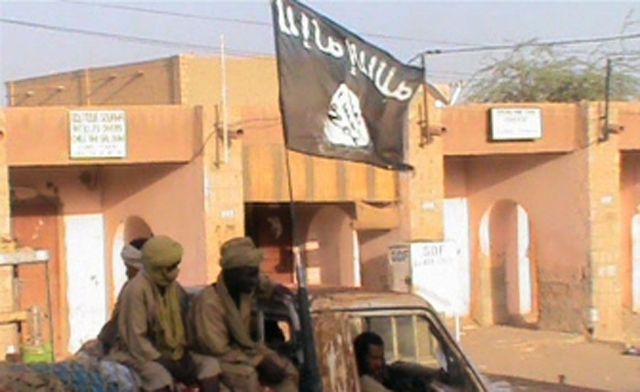
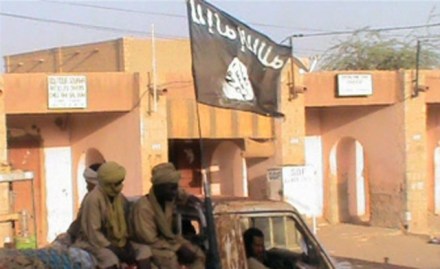
While the MNLA has forcefully denied being expelled from Timbuktu, Iyad’s statements and a number of eyewitness reports appear to confirm his takeover of the city and efforts to enforce the veiling of womenshutter shops and hotels selling alcohol, and even exact harsh punishment on looters and “vandals”. He is also said to have lowered and burned the MNLA’s flag, replacing it with a black “Islamist” flag.

Emerging from the shadows

One of the more startling elements of the reports out of Timbuktu is the aggressive emergence of AQIM on the scene. While AQIM and its predecessor groups, the Salafist Group for Preaching and Combat (GSPC) and the Armed Islamic Group (GIA) have long operated in the Sahara, and have attacked regional armed forces and other targets in Mauritania, Mali, and Algeria, AQIM is known much more for smuggling (drugs, cigarettes, weapons, and more) and the kidnapping of Westerners across the region, operations that may have netted the group tens of millions of dollars.

If true, reports of AQIM leaders appearing so openly in public – let alone this many of them, together – would be unprecedented. Yet it is extremely difficult even to assess these claims. While various accounts cite Timbuktu residents and participants at the Monday meeting identifying the AQIM leaders by sight, eyewitness accounts are notoriously unreliable. Moreover, it would be an extraordinary circumstance for so many key leaders to be in the same place, even if only for a short time. This is especially true given the reputed rivalry between Abou Zeid and Belmokhtar, though I have cast doubt on the extent of their supposed divisions in the past.

Nonetheless, it seems apparent that there is at the moment a sizeable AQIM presence in the city, operating openly alongside Ansar Al-Din and possibly searching for Westerners. Additionally, it makes at least anecdotal sense that AQIM would be both present in the city and useful in supporting Ansar Al-Din.

As I previously mentioned, many analysts believe blood ties exist between Iyad and the AQIM subcommander Abdelkrim el-Targui, who analysts believe is close to Abou Zeid and organized the kidnapping of two French men in the Malian town of Hombori last November. And the two groups share a broad worldview about the implementation of sharia and pursuit of jihad, though significantly less is known about Ansar Al-Din’s core ideology, having only given a small number of public statements.

More apparent, though, is the clear benefit AQIM brings Ansar Al-Din. On the one hand, AQIM can provide dedicated, hardened fighters, a significant factor if estimates that Ansar recently only possessed a few hundred men are correct. More importantly, AQIM may offer Ansar a bridge allowing the group to operate in Timbuktu; both Belmokhtar and al-Hammam have operated for several years in and around Timbuktu, and in particular to the north of the city. Just last month, Mauritanian aircraft struck a convoy they thought included al-Hammam less than 100 km north of the city. And Belmokhtar has, according to most accounts, married a Berabiche woman from a prominent family in or near Timbuktu. Given that Berabiche Arabs are predominant in the city, these longstanding transactional and personal ties – not to mention fear of the organization – could help the primarily Tuareg Ansar Al-Din avoid conflict and exert its influence in the city. It is too early to tell, however, if the tenuous calm in Timbuktu will hold for long.

Less easy to decipher are the gains to be reaped by AQIM or MUJWA from this arrangement. Reporting on the group since the Tuareg uprising has been scarce, though various unconfirmed reports placed Belmokhtar in Libya while others were believed to have fled into southern Algeria, perhaps to pursue business opportunities or simply wait until the instability settled and a clear winner emerged in the north.

The return of AQIM to the battlefield would indicate that they believe that a winner has emerged – though it is difficult to say if AQIM seeks a greater safe haven in which to operate, tighter control over smuggling routes in northern Mali, or simply the chance to spread its own version of Islamic practice. Still, this kind of active and open AQIM presence marks a serious break with past practice, and could herald a shift in AQIM’s behavior, goals, and operations.

This leaves us with MUJWA. The group announced that it had splintered from AQIM in December 2011, criticizing its predecessor organization’s lack of dedication to jihad and promising to spread its operations into West Africa. Interestingly, though, its only known leadership are from Mauritania and Mali, and the group’s only two operations before last week were in Algeria (the October 20 kidnapping of three aid workers from the Polisario-run Rabouni camp) and against an Algerian target (the suicide bombing of the gendarmerie headquarters in Tamanrasset).

The group’s self-proclaimed heavy involvement in the attack on Gao, like with AQIM in Timbuktu, represents a surprisingly overt involvement in the Mali conflict. Unlike AQIM, however, MUJWA has gone out of its way to show off its presence, even appearing before an Al Jazeera camera team in Gao.

We know significantly less about MUJWA, making it harder to discern their motives for playing such a purportedly important role in Gao. It is worth pointing out, however, that one of the group’s leaders, Sultan Ould Badi, is believed to be from north of Gao, which could again be a sign of MUJWA operating, like AQIM, where they have more local support or ties.

And we may get a better sense of MUJWA’s trajectory if allegations that the group was behind the ransacking of Algeria’s consulate in Gao, as well as the abduction of seven Algerian diplomats. Al Jazeera released a video Friday purporting to show MUJWA fighters taking the consul away, as well as shots of the group’s black flag flying over the consulate. This attack shows an unusual focus on Algeria for a group nominally committed to propagating jihad in West Africa, and might indicate that MUJWA remains close in important ways to AQIM.

Iyad and the MNLA

While the rapid expansion of Ansar Al-Din and other jihadist elements is a major concern to Western countries with a stake in the stability of the Sahel, they pose the most immediate threat to the MNLA’s efforts to secure an independent state in the Azawad.

Ansar’s growing public presence last month caused some to begin to doubt the control the organization said it possessed in the north, especially after a Red Cross convoy invited to Tessalit by the MNLA was turned back by armed men, widely believed to be Ansar Al-Din fighters. The MNLA’s failure to secure Kidal and Gao and the embarrassing loss of Timbuktu only reinforced for many this sense that the MNLA had perhaps exaggerated its fighting strength or leadership in the rebellion.

This fracturing of the Tuareg rebel movement has a few potential explanations. The first is simply that expert estimates of the size of the MNLA fighting force (perhaps as many as 3,000 men, according to Tuareg expert Pierre Boilley) were not accurate. The balance of forces also could have been impacted by the fact that Ansar Al-Din fighters have concentrated their forces on individual battles in Tessalit, Kidal, Gao, and now Timbuku, while MNLA fighters have ranged across northern Mali, from Ménaka in the east to Léré in the west, and from Tessalit in the north to Youwaru in the south.

Another possibility is that the MNLA, despite having a clear structure on paper and an impressive media organization centered primarily (but not exclusively) around Francophone Europe-based diaspora intellectuals, is not a truly coherent fighting organization on the ground. Unfortunately, there is not enough reporting to confirm or deny this theory, though it is telling that the MNLA has sought the help of Ansar Al-Din when engaging in most of its major battles or sieges since January. And in the face of clear affronts, the MNLA has thus far staunchly avoided any action that would lead to violence with Iyad.

In part, this is because taking on Iyad directly poses several potential problems for the MNLA. Setting aside questions about the relative strength of both groups (which we can’t answer at this time) attacking Iyad directly could further erode the MNLA’s cohesion. Despite having compromised with the Malian government after the 1990’s rebellions, Iyad remains an influential figure, owing both to his reputation as a former rebel leader and his position within the Ifoghas, the minority tribe that has nonetheless held sway in Kidal for several centuries (a fact aided by colonial France’s decision to maintain and entrench Ifoghas dominance). While the MNLA and its base of support is not just Ifoghas-based, an attack on such a prominent figure could undercut Ifoghas support.

However, I think the theses that privilege the MNLA’s apparent weaknesses ignore important mitigating factors that could help explain the group’s behavior.

For one thing, it is possible that the MNLA decided that it was better to finish its project of securing the borders of its new state, as it announced Thursday, before moving to solidify its internal position. While this is a risky proposition given the rapid and very public steps Iyad and his allies have taken, it may not be an entirely bad strategy; French Foreign Minister Alain Juppé on Thursday made a clear distinction between the MNLA and its erstwhile allies, calling for talks between Mali’s neighbors and Tuareg rebels combined with efforts to combat terrorism in Mali’s north. Reading between the lines, his remarks hold out the prospect of some sort of international recognition for the MNLA’s cause, especially when seen in the context of past vows by MNLA leaders to deal with AQIM if given an independent state.

Additionally, despite some very visible setbacks, the MNLA hasn’t actually left the field. Radio France Internationale reports, for instance, that the MNLA is quietly trying to restore order in Gao, and meeting with traditional and religious leaders in the city.  And despite being pushed out of central Timbuktu, the group still holds the airport, and is, according to some (admittedly pro-MNLA) reports, encircling the city. They have also entered Timbuktu since Ag Ghali’s takeover to spirit three Western expatriates to safety in Mauritania.

Time is running out

The situation in northern Mali remains fluid, and the MNLA may not have time for complicated machinations. Until today it had seemed increasingly possible that the Economic Community of West African States (ECOWAS) would send a peacekeeping detachment to Mali, though the contours and rules around an eventual deployment were never clear. Reports indicate that ECOWAS and the Malian junta reached a deal for Captain Amadou Sanogo to step aside in favor of an interim transitional government to be led by parliamentary speaker Diouncounda Traore. In return, ECOWAS will remove travel and trade sanctions put in place following the coup.

Regardless of what’s going on in the south, though, the north will likely remain unstable, and the MNLA must move quickly to reassert its position in northern Mali. If not, it may find itself shut out of the major power centers in the newly “liberated” Azawad, left to contend with an increasingly assertive and entrenched “desert fox.”

Who said Psychoanalysis is dead? Psychoanalysis, politics and culture in the twenty first century – Part I

In this interview, Carmen Gallano, an experienced psychiatrist and psychoanalyst, analyses the relevance of psychoanalysis and psychoanalytical philosophy in contemporary politics and culture.


4 April, 2012

This interview was conducted at the private practice of Ms Carmen Gallano in Madrid, Spain, in early March. Ms Gallano studied medicine and psychiatry and worked several years in hospitals and mental institutions before training in psychoanalysis at the Paris School of Jacques Lacan. She is a member of the International School of Psychoanalysis of the Forums of the Lacanian Field (EPFCL), and she has worked many years in her private practice in Madrid. Ms Gallano further combines her work with teaching and she has published extensively in Spain and abroad including two books titled “The feminine alterity” and “Desire, texts and conferences” (available only in Spanish: “La Alteridad Femenina” and “Deseo, textos y conferencias”). Photographs included in these series are courtesy of Ms Gallano.

Continue reading

The UN Human Rights Council Resolution on Sri Lanka’s Alleged War Crimes

In this article, the author explores the resolution’s impact on Sri Lanka, and its probable implications with reference to Sri Lanka.


By Rithika Nair, 3rd April, 2012

The United Nations Human Rights Council’s (UNHRC) judgment on Sri Lanka’s efforts at post-conflict reconstruction, invited an abundance of opinions and debate globally. Newspapers cried out country decisions to the US sponsored resolution with regard to their foreign policies, domestic policies and moral policies. In lending an ear to all the global justifications and rationalizations, the importance shifted away from what Sri Lanka had to say with regard to the resolution and its possible impact on the island.

In 2010, the Government of Sri Lanka created the Lessons Learnt and Reconciliation Commission (LLRC) suo moto, to look into the causes of the conflict, its consequences on the people, and to promote national unity and reconciliation. The LLRC, though criticized for overlooking the violations of human rights and humanitarian law committed by the Sri Lankan army, stated that there were “considerable” civilian casualties. This was opposed to the government claims, which insisted on a zero-casualty rate.

The international community had already begun to push Sri Lanka to begin its post-conflict reconstruction agenda.  The LLRC report increased this demand for the Sri Lankan government to act – prosecute those who were accountable for civilian massacres, and bring relief to those displaced and devastated by the war.

This never happened.

The disappointing LLRC report largely exonerating the government, and the subsequent government inaction to suggested accountability procedures encouraged the international community to act.

In March 2012, the US submitted a resolution at the 19th session of the UNHRC, urging the Sri Lankan government “to address serious allegations of violations of international law by initiating credible and independent investigations and prosecutions of those responsible for such violations.” The resolution, after being slightly amended to word that the implementation of any external advice or investigation by the Human Rights Commissioner or Special Procedures must unfold only “in consultation with and the concurrence of ” the Sri Lankan government, was passed with 24 votes in favour, 15 against, and 8 abstentions.

The closing of Sri Lankan embassies in Europe, the threats to human rights defenders and the anti-Americanism in Sri Lanka are some of the immediate effects of the resolution. But it’s long-term implications – constructive and destructive, are nothing but analytical renderings as of now.

The resolution with its honorouble intentions could be a possible check on the quasi-dictatorship of Mahinda Rajapaksa. It could be the warning hand on the back, reminding Sri Lanka of what it had promised to deliver three years ago, a paternal gesture offering assistance if needed. It could imply that dialogue and soft diplomacy may harden, and the whispers of a ‘South Asian Spring’ may jump to reality with an international demand for the removal of Rajapaksa from his throne. With the Sri Lankan Tamils still dissatisfied with their government’s empty promises of reconciliation, and Sinhalese human rights activists being called traitors if they stood up for the Tamils, it would not be long before Sri Lanka could walk the line with Maldives, Libya, Egypt and Tunisia. If such a future be predicted, then the precautionary resolution – a very fair and balanced one, has been passed at a very appropriate juncture.

The resolution may have been a UN step to avoid being blamed for not taking action. Perhaps the UN was guilty of its own lack of action while the crisis unfolded over 26 years. Then, the resolution is but a ticking pendulum, softly but notably reminding Sri Lanka of its obligations and responsibility – and in doing so, delivering rehabilitation and hopeful justice to the victims of the war – the people of Sri Lanka.

On the other hand, the resolution placed the ball back in the Lankan court, and it ordered the multi-faced Lankan king to finish what he had promised to do. It asked him to submit an action plan detailing what he had done, and will do to implement the LLRC recommendations, and to address all matters that violated international law.

The king, with all ten heads, rejected the resolution.

Neither he nor his court thought that it added any value to the humanitarian and justice implementation process in Sri Lanka. They felt the resolution was ‘counterproductive’, ‘ill-timed’, and ‘an unwarranted initiative’. They perceived the supporters and sponsors of the resolution to be LTTE sympathizers – those who underestimated the violence and trauma that the LTTE had unleashed upon them. They felt that the unpunished situations in Afghanistan, Iraq and India removed the moral legitimacy of the resolution.  Lobbying against the vote in Geneva transcended into anti-America lobbying, and human rights activists and defenders of the resolution were threatened in Sri Lanka. In such circumstances, the significance of the resolution is undermined.

This resolution should not and cannot be rejected by comparing them to conflict situations where deeds committed by the sponsors and supporters go unchecked. This matter pertains to and reflects on Sri Lanka, and Sri Lanka alone. This does not mean that this case supersedes any of the other situations, but the current context is Sri Lanka, and that should be respected. If the world and its leaders were to act and re-act following the policy of every eye for an eye, and every tooth for a tooth, the vicious cycle of blame and revenge would never stop spinning.

However, as the ambassador for Bangladesh very prudently stated at the Council session, if Sri Lanka is not on board, then the resolution will have a very limited impact. Without the Sri Lankan nod to implement efficient rehabilitation and accountability measures, the resolution is but an empty bell with no sound.

Reporting from Barcelona: general strike and social chaos

In this reportage the author, Alba Franco, shares photographs taken during Spain’s general strike on March 29 when thousands took to the streets in protest against the economic crisis and the decisions adopted by the recently elected government of Mr Rajoy. Though protests were essentially peaceful, Barcelona saw a significant rise in violence coming from urban groups whose rage was mostly directed at financial institutions, big chains and commerces. 


By Alba Franco, 31 March, 2012

1. V for Vendetta: structural violence vs visible violence

__________________________________________________________________________________________

2. Can Mr Rajoy clean up the mess?

__________________________________________________________________________________________

3. Rage against the banks

__________________________________________________________________________________________

4. Who said smoking was not permitted?

__________________________________________________________________________________________

5. Washing out the sins

__________________________________________________________________________________________

6. Women too are brave: ‘sick of cleaning up your f******* crisis’

__________________________________________________________________________________________

7. Street signs have proliferated since the emergence of the crisis

__________________________________________________________________________________________

8. Don’t kid with me

__________________________________________________________________________________________

9. In plain English: ‘People’s Party, f*** off’

__________________________________________________________________________________________

10. Barricading the city: urban guerrilla in the ascent

__________________________________________________________________________________________

Marriage Equality: What’s the Big Deal?

In this article, the author looks at how marriage equality has become one of the most popularized social issues du jour in American national politics. By examining racial attitudes and the Obama administration’s evolving stance on the matter, LGBT activists are brimming with hope that a reelection of Obama could pave the way for a repeal of the Defense of Marriage Act and the legalization of same-sex marriage on a federal level by 2016. 


By Matthias Pauwels, 31st March, 2012

‘They’re losing California. Inch by inch, sit back and watch it go.’ 

If film director Gus Van Sant ever decides to follow up on his critically acclaimed Harvey Milk biopic with a Proposition 8 film adaption, ‘Losing California’ by Canadian rock band Sloan could easily wind up on the film’s soundtrack, voicing the bitter and biggest defeat gay activists in California have faced since Milk’s unabashed activism of the 1970’s.

The United States has always liked to boast its much vaunted liberalism on social issues, but when Californians cast their ballot vote in favor of a state-wide constitutional ban on gay marriage in November 2008, it not only marked the end of same-sex unions in the Golden State, but also of the most expensive social-issue ballot in American national history. A triumph for social conservatism, Proposition 8 had crushed the LGBT community’s hopes that California would become one of the vanguards for the legalization of same-sex marriage across the nation, and turned liberal America into an emotional wasteland. To many, the actual passing of Proposition 8 defied all logic, especially in the context of  California’s rich history as a historical trailblazer in the fight for gay rights. And even though New York  fared a better deal with the passing of the Marriage Equality Act in a tight majority vote in 2011, it was a legislative tour de force fuelled only by a favorable power momentum in the New York Senate amongst Democrats and Republicans.

From a concept cradled by John Locke to the dominant political force in the Western hemisphere today, liberalism has triumphantly survived two world wars and major ideological challenges from fascism and communism. For several centuries now, a strong focus on human rights has been one of the paramount liberal tenets. But for gay men and women everywhere, the harsh reality of liberalism’s shadow side often revealed that human rights did not encompass gay rights, a perception which was publicly invalidated only last December by Secretary of State Hillary Clinton at International Human Rights Day in Geneva. The gay community has come a long way since New York’s Stonewall riots in the late 1960s or Harvey Milk’s assassination in 1978 but  nonetheless the 21st century was ushered in without absolute gender equality.

<

‘Don’t Ask, Don’t Tell’, a controversial military policy barring openly gay, lesbian, and bisexual soldiers from military service was only recently repealed under the Obama administration, setting the official end date of ‘Don’t Ask, Don’t Tell’ for September 20, 2011. Furthermore, the sodomy law in Texas, classifying consensual, adult homosexuality as illegal sodomy, was only struck down in 2003 in the landmark Lawrence vs. Texas Supreme Court case.

For the past five years, the intensifying debate over same-sex marriage has become the new social issue du jour, marking a clear and distinct cleavage between religious traditionalism and progressivism.  Widening the gap between social conservatives and liberals, the issue of marriage equality echoes the growing pains of gender equality in the 21st century. Its global legislative struggle fully testifies to the fact that it is still a deeply divisive and emotional issue on both sides of the fence. From the majestic Golden Gate Bridge to the Big Apple, the United States has been a perpetual arena of conflict and contention on the issue of marriage equality. The religiousness of America’s social conservatives and their moral objections have more than once provided a filibuster on the matter, but what the Rick Santorums or Kirk Camerons of this world fail to see is that gay people’s longings to be wedded is fundamentally conservative, as New York Times columnist Frank Bruni notes. Once denounced as sexual libertines who brazenly flouted society’s norms, the fundamental message of the LGBT community is that marriage is an institution worth aspiring and fighting for. In a time where more than half of births to American women under 30 happen outside marriage and the divorce rate estimate of first marriages flirts with the 50% mark, the LGBT community is surprisingly pleading for a return to conservatism – only to be told by many, including political leaders, that that’s not O.K. either. So is the only possible takeaway for gay couples then to remain outliers forevermore, unworthy of the experiences and affirmations accorded others?

Not recognized on a federal level due to the Defense of Marriage Act (DOMA) [1], same-sex marriages are state-bound with marriage rights granted in Massachussets, Connecticut, New Hampshire, New York, Vermont, Iowa, plus Washington D.C. and Oregon’s Coquille Indian tribe. Earlier this year, Maryland approved a draft bill to legalize same-sex marriage. The Maryland vote came one day after Washington became the seventh state to legalize same-sex marriage, adding to national momentum for gay nuptials across the States.

But why do some states succeed in legalizing gay marriage where others, such as New Jersey, have failed? In the end, does it all depend on a favorable Democrat vs. Republican power momentum in the State Senate? There are two main elements that are instrumental in gaining state-wide support for a gay marriage bill. Firstly, any bill  – especially those which touch upon the social fibres of society – trigger a period of lobbying to build support for the respective piece of legislation, which can be a long and tedious process. On the issue of same-sex marriage, New York saw its judicial system stymied by a political cat-and-mouse game between the Assembly and the Senate that eventually dragged on for seven years. Each time, a draft bill was approved in the Assembly but shot down consecutively in the New York State Senate. As Senators came and went and a long process of shadow diplomacy unfolded, it was eventually the adding of a discrimination clause for religious institutions, allowing them the freedom to refrain from performing same-sex marriages, that provided the much-needed swing vote in favor of the Marriage Equality Act. A similar clause was paramount to the legalization of gay marriage in Maryland and has also been added to a draft marriage bill introduced in the Illinois House of Representatives in February.

Across the pond, the United Kingdom faces the exact same challenge. The UK government has launched a 12-week consultation in support of a process that would legalize same-sex marriage by 2015 for England and Wales. And while Equalities Minister Lynne Featherstone said that the state should rejoice in people’s desire to marry, senior church figures, as well as a number of conservative MP’s, were getting in gear to oppose the measure. Here the inclusion of a discrimination act, regarding protection against discrimination lawsuits for ‘benevolent organisations or religious groups refusing to provide accommodations, advantages, facilities or privileges related to the solemnisation or celebration of marriage’ could appease members of the Church of England, giving the Cameron administration an incentive to unequivocally approve on the measure.

Gay people have a dream too: the racial minority vote on legalizing same-sex marriage

Another interesting factor relating to the perception of gay marriage is how the racial factor will play out. In the aftermath of the narrowly approved Proposition 8 in California and in the search for answers, it did not take long before another well-publicized story made national headlines, pointing the finger at a rather surprising culprit for swinging the ballot in favor of Proposition 8: California’s racial minorities. Exit polling indicated that roughly 70% of blacks had cast their ballots in favor of Proposition 8, together with 53% of Latino Californians, 49% of Asians, and 51% from those of other racial or ethnic identity.  The American media quickly dubbed this the ‘Obama effect’, since the 2008 presidential election happened to coincide with its Californian state counterpart, causing racial minorities to cast their votes in large numbers. These figures quickly sparked the debate that Latino and black Californians had backed the proposed same-sex marriage ban at rates higher than whites, aiding to provide the margin of victory. These results were disappointing to many gay rights activists who had hoped that the election of Barack Obama to the White House would usher in a new era of advances on gay rights, but gave cheer to Proposition 8 proponents who believed that the issue of same-sex marriage had been revealed to be a potent issue dividing liberal Californians on the basis of race and ethnicity. In California, the evangelical community was well aware of the black community’s sensitive stance on gay rights, and chose to target Californian African Americans in a manner they saw fit. Just days before the general election on the 4th November 2008, the ‘ProtectMarriage.com – Yes on 8’ campaign targeted African Americans in Oakland and the San Francisco Bay area with rather misleading mailers featuring Obama and several African American pastors, suggesting that Obama heavily favored a ban on same-sex marriage. Efforts to target the black and Latino community were primarily channeled via a clerical framework, and since both ethnic communities traditionally strongly identify themselves with Christian movements, the stakes were high for Evangelicals in reeling the Latino and black communities in to join their crusade against same-sex marriage.

Religion is a powerful tool that has been shown to structure attitudes across an array of issues, and it is particularly relevant to the discourse-framing dynamic investigated here, given the importance of gay issues to religious communities and churches. While Latino and African American communities tend to embrace traditionalism on matters of morality and are highly religious, they usually affect ballot voting in different ways, with strongly Latino districts traditionally enhancing support for gay issues, and strongly African American districts depressing support for them. However, this theory can easily be undermined. In the case of Proposition 8, registered Latino voters clearly did not support the concept of same-sex marriage as gay activists would have hoped.  Gay marriage has recently become legal in Maryland, but a draft bill on the issue died in the Maryland House of Representatives last year following strong opposition from several African-American lawmakers. In fact, race has proven to be a sharply divisive factor on the issue of same-sex marriage in Maryland. Maryland Democrats, who hold majorities in both chambers of the legislature, are sharply divided by race. A Washington Post poll published in January showed that among whites in Maryland, 71% back same-sex unions, while only 41% of blacks support it. Button, Rienzo, and Wald’s research [2] indicate that while African Americans tend to support the notion of equality opportunities for homosexuals, they tend to be less supportive of civil rights advancements or protections, which in the case of Propostion 8 could explain the alleged high number of African American proponents. Moreover, a recent NBC/Wall Street Journal poll released in March 2012 showed support for marriage equality amongst African Americans at 50% – which may prove that there still is a great deal of division amongst the black community on the issue.

But is the ethnic community really to blame for America’s sluggish and capricious advancements on gay marriage? Not really. A number of important characteristics that shape Americans’ view on many important political issues – including party identification, ideology, and religiosity – have simultaneously played strong and pivotal roles in determining the choices of individual votes. Research has shown that a thorough analysis of the structure of black, Latino and white attitudes on same-sex marriage finds that after accounting for differences among demographics, partisanship, and core values, interracial group differences in opinion on the issue are unsubstantial.

In California, all Latino, black and Asian registered voters were still a minority compared to its Caucasian counterpart. Even if all Latino, black and Asian registered voters had voted against the ballot initiative, Proposition 8 still would have passed due to the high number of Caucasian voters eligible to vote, and their high support for the same-sex marriage ban.

Earlier this week, confidential memos were made public in a courtroom in Maine, revealing the National Organizaton for Marriage’s attempt to drive a wedge between the LGBT and ethnic communities during its winning campaign to ban same-sex marriage in the US state of Maine. The documents detail the anti-gay organization’s active interest in fanning the hostility between the LGBT and the black and Latino communities in an attempt to stymie any advancement of gay civil rights in Maine. For anti-gay lobbying groups, the stakes remain high in targeting ethnic communities to endorse the crusade against same-sex marriage. But with the tides of time turning and support for same-sex marriage reaching an all-time high, how long will a conservative approach on the issue hold out?

The Obama administration and marriage equality

So where is marriage equality to go from here in the United States? As gay activists nationwide count their wins and losses, the only certainty they seem to have is that any advancement on LGBT rights is highly dependent on who is in the White House.

During his 2008 presidential election campaign, Obama took what many on both sides of the gay marriage debate viewed as a straddle. While publicly denouncing the California ballot proposition measure, he also communicated his opposition to same-sex marriage, leaving gay activists puzzled by his unwillingness to endorse gay marriage. And although Obama criticized the divisive and discrimatory nature of Proposition 8, the abstruseness of his argument was reflected in how he squared his position for overall equality with his refusal to embrace actual equality in marriage.

Once elected, Obama has upped the ante in conveying his equality message. Although having never publicly endorsed same-sex marriage, the Obama administration has been adamant towards communicating its progressive stance on equality in a post-Proposition 8 era. By repealing ‘Don’t Ask, Don’t Tell’, endorsing initiatives such as the ‘It Gets Better’ campaign, offering hope and support for LGBT youth who are struggling with being bullied, and hosting a high-profile LGBT event at the White House in 2011, the President of the United States has made no secret of his firm belief in equality for all. And for those willing to read between the lines, Obama’s opposition to a constitutional amendment defining marriage as a union between one man and one woman, indicates that his full endorsement of civil unions with federal benefits for all is similar to his understanding of the institution of marriage, although his Christian beliefs do not allow him to communicate this. Praising New York in 2011 on the legalization of same-sex marriage while tiptoeing around a public endorsement of the issue testifies to the aforementioned.

If anyone has taken the least equivocal stance on gay marriage, it has to be First Lady Michelle Obama. In March, while campaigning for her husband’s second term in the Oval Office, Michelle Obama reminded people twice that it is the president who makes appointments to the US Supreme Court and that those appointments could impact gay marriage.

Asked about the First Lady’s comments, White House Press Secretary Jay Carney later issued the following statement: ‘the president and first lady firmly believe that gay and lesbian Americans and their families deserve legal protections and the ability to thrive just like any family does. The first lady has said she is proud of his accomplishments, including the repeal of ‘Don’t Ask, Don’t Tell,’ ensuring hospital visitation rights and calling for the repeal of the Defense of Marriage Act (DOMA) and obviously our actions attached. Our decision not to defend DOMA is well known.’

Having famously remained neutral on the same-sex marriage issue throughout his first term, Obama has communicated he is ‘evolving’ on the issue. But what does evolving really entail? Is that just a clever word politicans throw around not to take a stance? An unexptected surge in support to place same-sex marriage on the Democratic Party platform at the August 2012 convention has energized LGBT advocates and complicated an already delicate situation facing Obama’s reelection campaign. Gay activists are brimming with hope that any evolvement which will affect their civil rights further on a federal level will happen in his second term in office. Obama has done reasonably well during his first term in office on gay rights, and a reelection could give him the political green card to further push for equality and possible tackle the Defense of Marriage Act.

____________________________________________________________________________

The issue of LGBT rights and marriage equality has already proven to be an important factor in the 2012 Republican presidential primaries, and it will be incredibly interesting to see how this social issue will play out in an Obama vs. Romney showdown.

[1] The Defense of Marriage Act (DOMA), enacted 21st September 1996, is a United States federal law that defines marriage as the legal union between one man and one woman. The law passed both houses of Congress by large majorities and was signed into law by then-President Bill Clinton on 21st September, 1996..

[2] Button, J.; Rienzo, B.; Wald, K., 1997. Sexual Orientation and Education Politics. Gay and Lesbian Representation in American Schools. In: APSA (American Political Science Association), 1999 Annual Meeting.

Essay: UNiversal – The UN, OIC and LGBT Rights

In this essay the author, William Clowes, addresses the contradictions of the Organisation of Islamic Cooperation when dealing with human rights. The OIC claim to be guardians, universalists and victims simultaneously to support their own traditions in the face of universal rights. This double standard is at its most obvious when dealing with the issue of discrimination on the basis of sexual orientation.

“When efforts are made to condemn a particular group to secondary status, nobody – not the OIC nor the Vatican – should remain unchallenged as they sing the hymns of universality and feign opposing oppression whilst they studiously gnaw away at those very principles and ignore (or excuse) the persecution carried out in the name of what they defend.”


By William Clowes, 20th March, 2012

Earlier this month the United Nations Human Rights Council (UNHRC) held its first ever session to specifically address the discrimination faced in many parts of the world by people on account of their ‘sexual orientation and gender identity’ – in effect, the LGBT community. The gathering in Geneva followed a resolution passed very narrowly by the Council last June which condemned this kind of discrimination. The resolution, strongly pushed by the USA and South Africa, also tasked Navi Pillay, the UN High Commissioner for Human Rights, with producing the UNHRC’s first report into the global extent of this persecution and committed the Council to hold this month’s session.

Despite this apparent progress, a sizeable block of countries either from Africa or members of the Organisation of Islamic Cooperation (OIC) absented themselves from the discussion and have refused to consider its recommendation. There has been much press in recent yearsdedicated to the deadly homophobia prevalent in much of sub-Saharan Africa – ironically (given the US’s role in backing the resolution) often funded by the dollars of US Christian groups – but the recalcitrance of the OIC should be unsurprising. This is not simply because all the OIC nations currently part of the UNHRC were amongst the 19 countries that voted against last June’s resolution but it is also symptomatic of their previous form at the UN.

The 57-member OIC, headquartered in Saudi Arabia and comprised of nations with large Muslim populations, has expended significant efforts through its UN delegation during this century trying to persuade the UNHRC and General Assembly to pass illiberal resolutions that would commit member states to combating the ‘defamation of religion’. Up until last year this affront to free speech was repelled by western nations and, in particular, the USA. In 2011 – once the OIC had agreed to omit the offending ‘defamation’ clause – both the UNHRC and General Assembly passed a resolution pithily titled, ‘Combating intolerance, negative stereotyping, stigmatisation, discrimination, incitement to violence, and violence against, persons based on religion and belief’.

The title and content of the resolution seem laudable enough, but as UN Watch, the NGO which exists ‘to monitor the performance of the United Nations by the yardstick of its own charter’, stated ‘the problem is not with the document per se, but with its sponsor’. The publications and rhetoric of the OIC tend to focus its disapproval solely on anti-Islamic and anti-Muslim happenings in the USA and Europe. They do not acknowledge the black irony that they target the very nations which are most likely to afford citizens the necessary legal protections to fight ‘incitement to violence, and violence against, persons based on faith’ and entirely overlook the manifold failures in their own states to protect the rights of religious minorities to practice their chosen religions. It is apparent from the manner in which the OIC went about sponsoring and lobbying the resolution at the UN that the conservative and autocratic leaderships of the group’s member states are far more interested in keeping their versions of state-sanctioned religion uncontested than protecting the individual’s right to practice their religion. As I have written previously, OIC member states generally have a lamentable record at protecting the most basic (supposedly universal) freedoms within their jurisdictions.

On this occasion too, although the circumstances of the situation differ, it is the character of the OIC that is the critical issue. The most conspicuous reason why the OIC members of the UNHRC should object to the recent Council session provides an illuminating parallel with their failings over last year’s resolution on religious freedom. Just as, according to the charity Open Doors, 38 of the top 50 countries where Christians face the ‘most severe’ persecution are OIC members, 39 of the 77 states that criminalise homosexuality and all seven that impose the death penalty are part of the OIC. That data, provided by the International Gay and Lesbian Human Rights Commission, merely surveys laws which criminalise same-sex relationships between consenting adults and does not even begin to assess other forms of stigmatisation and discrimination.

It might seem peculiar to be drawing parallels between an occasion on which the OIC sponsored a resolution it had no intention of honouring and an occasion on which it refused to sign up to a resolution it had no intention of honouring – but therein lies the consistency. In both incidences, the OIC has given religious and cultural justifications precedence over the universal rights they are (as UN members) bound to respect.  Both times they have also used the language of victimhood and rights to deflect scrutiny away from their own deficiencies.

Whereas last year the OIC’s devalued argument was manifest through sponsoring a resolution against a form of bigotry most prevalent amongst its own members, this year they have excused their reluctance to combat another ubiquitous kind of prejudice by accusing the UN itself of discrimination. In a letter sent to the UN by Zamir Akram, Pakistan’s Ambassador to the UN, in his role ‘as coordinator of the OIC Group on Human Rights and Humanitarian Issues in Geneva’, he sets out the group’s objections to the resolution and the subsequent session. The OIC, Akram asserts, are ‘deeply concerned at the attempt to introduce in the UN concepts that have no legal foundation in any international human rights instrument’. In the course of the letter he manages to play an array of roles: the guardian of human rights (since the resolution ‘seriously jeopardise[s] the entire international human rights framework’), the universalist (because he is ‘disturbed’ by the ‘attempt to focus on certain persons on the grounds of their abnormal sexual behaviour’) and the victim of oppression (for ‘cultural and religious backgrounds must be borne in mind’ by the UN).

A logical assumption is that OIC states – as members of the UN and often part of the rotating membership of the UNHRC – at least intend to pay lip service to the articles of the Universal Declaration of Human Rights (UDHR). Therefore, in order to adopt the letter’s stance, they have to argue that LGBT people are somehow excluded from the Declaration or that this resolution seeks to give them a privileged position.

Indeed, there is no reference to discrimination on the basis of sexual orientation and gender identity in the UDHR, but there are articles, for example, that prohibit torture and degrading treatment (Art. 5), arbitrary arrest (Art. 9) and the denial of the right to free assembly (Art. 20). OIC members and other states regularly deny these rights to people for reasons other than sexual orientation, but – given the OIC’s letter purports to be concerned about human rights and their universality – they should be able to better articulate why LGBT peoples are excluded from the declaration’s principle of universality without instinctive recourse to convenient cultural and religious justifications.

The OIC are not the only interest group to have attempted to present the resolution as ameans to offer LGBT peoples an exalted, privileged position rather than as an effort to level the playing field for a harried group. The Pope’s Permanent Observer to the UN even told the UNHRC that the Council was pressuring member states to support gay marriage, even though one could be forgiven for thinking that the right not to be executed would more of a priority for an Iranian or Mauritanian homosexual. This conspiratorial leap from an expression of ‘grave concern at acts of violence and discrimination’ against LGBT peoples to advocacy for same-sex marriage was accompanied by an assertion that the Catholic Church opposes attempts to ‘particularize or to develop special rights for special groups [which] could easily put at risk the universality of those rights’. Rick Perry, the erstwhile Republican candidate, was more candid than the slickly worded objections of the OIC and Vatican. He responded to Hilary Clinton’s speech last December arguing that ‘gay rights’ were human rights by declaring that ‘investing tax dollars to promote a lifestyle many Americans of faith find so deeply objectionable is wrong’. Integral to all these protestations is the idea that homosexuality is not natural (indeed Akram’s letter opposed the resolution’s ‘focus on certain persons on the grounds of their abnormal sexual behaviour’) and no number of appeals to universal rights will weaken this localised conviction. This creates an obvious problem at the UN – and one patently not confined to only the OIC and Catholic Church – when Navi Pillay says that ‘the balance between tradition and culture, on the one hand, and universal human rights, on the other, must be struck in the favour of rights’.

In what can be interpreted as an acknowledgment of the weakness of the OIC’s argument Akram’s letter claims to find it ‘disturbing’ that the UNHRC would focus on LGBT peoples and not ‘the glaring instances of intolerance and discrimination in various parts of the world, be it on the basis of colour, race, gender or religion’. This ‘whataboutery’ seems to be in keeping with previous efforts to divert attention from issues they find uncomfortable, but is easily rebuked. Firstly, there is no reason why focusing on one form of discrimination should avert attention from others and, secondly, discrimination ‘on the basis of colour, race, gender or religion’ is widespread in OIC states and they show little interest in combating that. Clearly it is important to recognise that in countries outside sub-Saharan Africa and the OIC there exists a great deal of discrimination against LGBT peoples, but one must also avoid the pernicious slippage into indifferent relativism. For example, a country where homophobic attitudes are too common and that is undecided about legalising gay marriage, but yet counts ‘sexual orientation’ and ‘gender identity’ amongst legally protected characteristics, is not the same as a country that criminalises homosexuality or has endemic discrimination against LGBT peoples in the work place or education system.

The UN is by no means the acme of progressive democracy and is often unconcerned with self-determination. There are cogent arguments against the NGO activism and supranational organisations, which the UN typifies, but those usually take a position in favour of more localised, sovereign democracy. A cursory glance at the membership of the OIC immediately reveals that more democracy is not a priority for many of the regimes currently in power. It would also be a point of inconsistency if the OIC were to object to the overbearing nature of external prescriptions when they are quite content to use the institutions of the UN to further causes close to their heart, such as last year’s farcical resolutions on religious freedom. The inevitable response from some ‘anti-imperial’ quarters that this resolution is just another example of cultural imperialism by the west is also easily countered, given that the country that introduced the resolutionand was the first in the world to provide constitutional protection to LGBT people is post-apartheid South Africa. Furthermore, there is the fact that all Latin American nations voted for last year’s resolution on LGBT discrimination and that a number of the laws defended by African and Islamic countries that criminalise homosexuality are relics from the colonial rule (although plenty are also based on Islamic justifications).

There is a final point of correspondence regarding the role of the OIC between the resolutions on religious freedom and LGBT discrimination. This is their stated intentions beyond the resolutions themselves. Despite removing the clause that would have committed UN member states to stopping their citizens ‘defaming’ religions, the OIC’s ‘Ten-Year Programme of Action’ from 2005 emphasises ‘the responsibility of the international community, including all governments, to ensure respect for all religions and combat their defamation’ and, during the 2010 meeting of the Council of Foreign Ministers, they adopted a strategy ‘to broaden support for its Resolution on “Combating Defamation of religions”’. Likewise, in spite of the alleged concern for the universality of human rights and that the leaderships of OIC nations are not monolithic; the organisation adopted the Cairo Declaration on Human Rights in Islam in 1990. Supporters of this document claim it ‘complement[s] the Universal Declaration [of Human Rights]’ whilst it stresses inter alia that ‘Everyone shall have the right to express his opinion freely in such manner as would not be contrary to the principles of the Shari’ah’. Given the interpretation of Islamic law in many OIC member states, this qualification unequivocally compromises the notion of universality for non-Muslims and the ‘wrong kind’ of Muslims and serves to particularise human rights under an Islamic, not a universal, overview.

This recent standoff has served to highlight an obstacle that is very difficult to surmount. A refusal to see same-sex preferences as something universal to all humanity, as something that does not threaten to tear asunder the very fabric of society is sadly too commonplace throughout the world. But this admission is not to say that some parts of the world are not moving in a much more positive direction than others or to conceal that there are monarchs, clerics, dictators and governments that seek to distinguish themselves by malignly endorsing such harassment as a form of cultural protectionism against external intolerance. There will always be a fractious relationship between those who support a basic level of fundamental human rights that is truly universal, trumping localised counter-attacks, and those who are unyielding in their commitment to the supremacy of their own cultural and religious justifications. In spite of this, it is worth remembering the Vienna Declaration, which the UN General Assembly adopted by consensus in 1993, when it states that ‘While the significance of national and regional particularities and various historical, cultural and religious backgrounds must be borne in mind, it is the duty of States, regardless of their political, economic and cultural systems, to promote and protect all human rights and fundamental freedoms’.When efforts are made to condemn a particular group to secondary status, nobody – not the OIC nor the Vatican – should remain unchallenged as they sing the hymns of universality and feign opposing oppression whilst they studiously gnaw away at those very principles and ignore (or excuse) the persecution carried out in the name of what they defend.

China in Afghanistan: Valuable Ally or Emerging Threat?

In this article, the author explores the competing US and Chinese discourses on China’s Peaceful rise strategy, using the PRC’s economic involvement in Afghanistan as a case study. It argues that although China’s interest in Afghanistan is perceived and framed as a threat by the US, it also represents a momentous opportunity for Afghanistan and its neighbors.


By Camille Maubert, 17th March, 2012

Karzai’s attempt to build an Afghanistan with American democratic characteristics and Chinese economic dynamism highlights the delicate positioning at play, whereby Afghanistan is subjected to different and sometimes contradictory foreign influences. Indeed, while the US is the biggest player in Afghanistan, China is also preparing to assume a long-term role in the country. In fact, the successful Chinese Metallurgical Corporation’s bid on the Aynak copper mine in Lowgar province, worth US$4 billion, promoted China as the largest single foreign investor in the country’s history. This had the West shudder by reminding it how powerful – and potentially threatening – a neighbor the People’s Republic of China (PRC) is.

“We do the heavy lifting and they pick up the fruits” – the American narrative

Since 2001, China’s involvement in the country shifted from disinterest to ever-growing investments in the country’s infrastructures, mineral wealth and agriculture. However, its expanding commercial interests are deeply controversial because of their political reach. Indeed, China, who has gained control of strategic assets without shooting a single bullet, has been accused of free-riding on the stability provided by the American troops in order to secure access to natural resources. In fact, American troops not only bring general security in the Logar province, but they also trained the 1500 Afghan National Police soldiers who are directly protecting the infrastructures.

This behavior is perceived as unacceptable because of China’s refusal to share the International Security Assistance Force (ISAF)’s burden. Indeed, the Chinese Foreign Ministry Spokesperson, Mr Gang, made it clear that it is “out of the question to send Chinese troops (…) in Afghanistan” and discounted NATO’s request to use the Wakhan corridor for logistical supplies. This is interpreted as an indirect confrontation with US interests and goals in the region; and seen with suspicion by the West. Arguably, it is assumed that there is a correlation between increased economic power and amplified political weight; that is to say that because China expands its economic assets in Afghanistan, it will inevitably increase its political influence by the same token. Some indeed fear that China’s business in Afghanistan and Central Asia could alter the balance of power in areas vital to the US’s strategic interests.

By shunning away from any major security role and distancing itself from ISAF, China conveys the image of a profit-focused actor who utilizes its powerful national companies to expand influence in Afghanistan and who doesn’t balk at dealing with rogue actors. Indeed, while China benefits from the US tackling transnational Islamic terrorism, it also adopts a very cautious and balanced diplomacy with both the United States and the Taliban: Being a direct target of terrorist activities because of its policy on Xinjiang’s Muslim minority, and Aynak being located in a potentially Taliban-controlled area, China is in effect willing compromise with all regional actors to maintain stability.

However, the depiction of China’s involvement in Afghanistan and the wider region as a threat to Western interests is biased by the widespread “China Threat theory” which impregnates Western analysis. Because Western interpretations of China’s role in Afghanistan derives from the way the West sees China –as a threat – and the way it sees itself – as liberal and benevolent – it is fair to assume that an examination of the Chinese discourse is needed in order to grasp the other side of the story.

Afghanistan and the Direct Investment Model – The Chinese narrative

What distinguishes China from other actors in the Afghan reconstruction is its outstanding ability to project funds into unstable and high-risk areas. Indeed, its national companies have the capability to deal with risks associated with investing in remote and unsecure regions where Western companies cannot – yet – penetrate. The China Metallurgical Group, by accepting the risks associated with such investment and adding incentives like the building of infrastructures – power plant, hospital, mosque – outbid the West.

The comparative advantage of China over American and European investors is rooted in its Direct Investment model, which offers loans below market rates and have the attractive feature of not associating economic development with political reforms. Indeed, while Western donors and investors condition aid on democratic and human rights improvements, for developing countries like Afghanistan, China’s policy of non-intervention in internal affairs is appealing because it allows them to prioritize economic development. This strategy has been criticized in the West because it is seen as providing support for authoritarian regimes; but, so far, it seems more successful in bringing stability to war-torn countries that Western humanitarian and counter-insurgency missions. Based on successful results in Africa, this macro-level system will have a positive impact on Afghan stability in that it will promote a virtuous circle of economic development in the wider region – Central Asia, Xinjiang, Afghanistan – and will reduce Afghanistan’s dependence on international aid, therefore advancing the wider American goal of stability.

The reason for and implication of such strategy resides in China’s primary security interest in its Western province of Xinjiang. The PRC is indeed most concerned about cross-border terrorism coming from its Western and Southern neighbors. Despite the militarization of its borders and the increased security cooperation with the Shanghai Cooperation Organization, China is very vulnerable to Islamic militancy spillovers from Afghanistan and the Pakistani safe havens. Hence the implementation of a cautious policy of economic development and support to Afghanistan’s reconstruction which enforces stability while at the same time remaining distant from the US initiatives to avoid being associated with the controversial War on Terror.

By providing training to the Afghan police and anti-drug factions, investing in local resources and promoting cooperation between Central Asian governments on the “three evils” – fundamentalism, terrorism and separatism – China aims to maintain dialogue and cooperation and consolidate its long-term presence. This calculation is based on the assumption that by developing a Central Asian economic sphere – in which the opening of the Wakhan corridor would play a crucial role in reviving the Silk Road – China will securely reinforce its economic rise while avoiding becoming the target of Islamic militantism.

One could safely assume from its involvement in Afghanistan that China is pursuing a narrow interpretation of its interests. Although the PRC officially adheres to the shared principles of the War on Terror such as anti-terrorism – from which it profits to legitimize its Xinjiang policy – or anti-narcotics, it also rejects the all-encompassing US strategy and rather prioritizes domestic security and development. Indeed, China claims that far from seeking regional hegemony, it wishes to preserve the international order and pursue its national interest within it.

Afghanistan at the cross-roads of the US-China agendas

What stems from those two conflicting narratives is that the stereotypical distinction between a disinterested West and a voracious China is not relevant in the sense that it stems from ideological perceptions rather than rational observation. Consequently, the idea of China as a threat doesn’t stem from the reality of it as an expanding power but rather from “perceptions, especially those regarding the potential that Beijing will become an example, source or model that contradicts Western liberalism as the reigning paradigm” (Stephen Chan 1999). Indeed, because China, by making profits in Afghanistan, doesn’t fit in the normative expectations of the US on how it should act, it is displayed as a threat to global peace. This means that the idea of China as a threat to the regional status quo is more a self-fulfilling prophecy than an actual reality in the sense that, by framing China as a menace, the US may not only push it towards brinkmanship but also lose its attractiveness to the Afghan government and people, and therefore further get bogged down.

Afghanistan is the place where two narratives and strategic cultures met – the Western fear of losing its hegemony and the Chinese confidence in expanding its economy. Because China’s domestic and economic concerns shape its approach to foreign policy, it is engaging with Afghanistan in its own terms, which is understood as a threat by the West but also as an unmatched opportunity by Afghanistan.

Hostage Crisis in Nigeria: Did the Terrorists Win?

In this article the author addresses the prevailing narrative that Boko Haram carried out the kidnapping and executions of two Europeans in northern Nigeria yesterday. By taking all of the evidence into account, the involvement of Boko Haram is one of several possibilities and to immediately place the blame on this group could be playing into the hands of the terrorists.


By Jack Hamilton, 9 March, 2012

In May 2011 two European construction workers were kidnapped in Kebbi, north-west Nigeria.  Yesterday both of these men were killed in a botched rescue mission in Sokoto, northern Nigeria.  Despite some bold assertions by the British and Nigerian governments, what exactly happened to the 28 year old Englishman, Christopher McManus and the 47 year old Italian engineer, Franco Lamolinara, and who they were taken by remains unclear.

First of all, regardless of who was responsible for the kidnapping and the rescue mission, the deaths of these two men is a tragedy.  The decision of the British Government to intervene in such a way must have had the primary objective of getting the hostages out alive.  Whether they were executed by the hostage takers or they were victims of crossfire in the ‘seven hour shootout’, their deaths represent a disastrous failure of British intelligence.

Now we must turn to the evidence of what happened to Mr. McManus and Mr. Lamolinara.  It is important that the narrative of ‘this was Boko Haram’ does not take hold as at this time it remains speculation.  As we will see, it is tenuous speculation.

In a statement today, a Boko Haram spokesperson announced: “We have never taken anyone hostage. We always claim responsibility for our acts”.  Boko Haram certainly have blood all over their hands but they also like to brag about it.  The fact that they have not done so in this case is revealing.

Sequence of Events Leading up to March 8

While kidnappings are common in the Niger Delta region of the country, they are not frequent in northern Nigeria and unheard of in the case of Boko Haram.  The kidnapping of the two Europeans was not accompanied by any ransom demand and the State Police Commissioner has reiterated that the terrorists never attempted to make contact with local security forces.

The kidnapping itself was amateurish for two reasons.  Firstly they allowed for some of their victims to escape and secondly they left a bag of money behind.

Nothing was heard from the kidnappers of their victims until a video was released in August of last year.  In this one-minute video the terrorists claim that they are members of al-Qaeda and show the hostages blindfolded and on their knees in front of their armed captors.

The video raises several possibilities.  Using such a technique is characteristic of al-Qaeda, as the group claim to be, and would provide the first evidence that the group is operating on Nigerian soil.  However, this does not mean that it was indeed al-Qaeda as there are several irregularities.

Firstly, the video did not come from the al-Qaeda in the Islamic Maghreb broadcasting centre, al-Andalus.  Seeing as the terrorists were so willing to prove that they are affiliated with al-Qaeda, it would make sense to go through the processes that the group tends to use.  Sending an amateurish video to AFP in Abidjan does not fall within this process.  AQIM tend to broadcast their kidnapping videos on jihadist websites with their al-Andalus watermark.

The second irregularity, pointed out by an expert on AQIM, Andrew Lebovich, is that they are not wearing the traditional attire of Salafis.  No Salafi organisation, with the exception of al-Qaeda in Iraq, dresses in the casual way the terrorists present themselves in the video.

This opens up the possibility that the organisation in question wishes to be seen as AQIM or Boko Haram to increase their bargaining stance.  Such a claim is pure speculation until the demands of the organisation are released but the lack of attention to detail is incongruous with the moniker they claim.  If they turn out to be pretenders, the media coverage reporting on the ‘Boko Haram’ kidnapping has fed directly into their hands.

What Happened on 8 March, 2012?

Location

The location of the hostages in Sokoto is highly significant.  If they had been taken to Kano or Maiduguri there would be little doubt that Boko Haram carried out the attacks.  Reporting from top news sources, including Sky News, is incorrect in implying that Sokoto is a Boko Haram base.

It is worth looking at Andrew Walker’s map of the instances of Boko Haram terrorism in comparison to the location of the Kebbi kidnapping and the shootout in Sokoto.  The operations of the organisation have not come anywhere near this part of Nigeria.

This is not to excuse Boko Haram.  There are two ominous possibilities.  Firstly, that Boko Haram has significantly expanded its geographical reach across Nigeria and has begun to undertake tactics that resemble those of al-Qaeda in the Islamic Maghreb.  Secondly, that there are now two of these groups in Nigeria.

What was the reason for the sudden raid? 

The Foreign Office has reported that they received intelligence saying that the hostages were about to be executed or moved.  This has been taken further by an article in The Guardian stating that the intelligence came following the arrest of a top Boko Haram official in Kaduna, northern Nigeria.  It also credits the British intelligence forces for training the Nigerian officials who were able to uncover this crucial information.  It remains unclear whether the arrest of these men in Kaduna was the trigger for the execution of the hostages.

For such a decision to have been taken it is clear that the lives of the men were in imminent danger.  A factor emphasised by David Cameron in his apologetic speech yesterday afternoon.

Cameron gave the go-ahead following meetings of the government emergency committee, Cobra.  The Italian Prime Minister, Mario Monti, was only made aware of the rescue operation after it had begun.  He was informed that “an unpredicted acceleration of events took place over the last hours. While fearing an imminent danger for the hostages, Nigerian authorities activated the rescue” by Cameron.

Various Italian MPs have demanded clarification for why Monti was not alerted earlier but this is not the big story.  It is clear that it was a rushed rescue operation conducted on a short time scale.  It is highly unlikely that the wisdom of the Italian Parliament, no matter how well versed they all were on the intricate security politics of north-western Nigeria, could have remedied this situation.

The events of the raid on the compound yesterday remain sketchy, hence the Italian demands for clarity on exactly what happened and why they were consulted so late in the day.

There are conflicting stories of how events unfolded.  The BBC states that “the British were the first at the door” while local sources, such as The World Today, state that the Nigerian state forces used a tank to break down the wall of the compound where the terrorists were holed up.  The lack of coherent information is most likely a result of journalists being kept one kilometre away from the shootout.

Sahara Reporters have released pictures of the compound after the attack.  WARNING: some of the pictures contain spatters of blood on the walls.  [pictures]

It is unclear how it came to be that the two hostages were killed but most sources agree that they were whisked deep inside of the compound as soon as the raid began and executed them immediately.  This would imply that the intervention had little chance of success to begin with if true.  It begs the question: why did foreign forces get involved?

The intervention of British forces on Nigerian soil seems now like a strange decision to have taken.  It is a clear sign that Britain did not trust the Nigerian forces, who they themselves had trained, to carry out the operation.  Instead it was led by the Special Boat Squadron (SBS) including Royal Marines in a mission which may have numbered twenty British personnel.

The Role of Nigerian State

Nigerian intelligence, according to President Goodluck Jonathan, has arrived at the definite conclusion that Boko Haram were behind the kidnappings and the attack.  This claim must be taken with a pinch of salt given the recent record of Nigerian intelligence, especially in dealing with Boko Haram.  It is in the interests of the Nigerian state to put forward a message that they are taking control of the deteriorating security situation in northern Nigeria.

If the narrative of the tragedy takes the form of ‘Nigerian forces kill eight members of Boko Haram following intelligence success’, it will reflect well.  If this was not Boko Haram, the intelligence reports from Kaduna must be looked at again to see if the tragedy was a result of a Nigerian intelligence failure.  For many in the north of Nigeria, the success and popularity of Boko Haram is down to the failings of the Nigerian State’s security.

Did the Terrorists Win?

The demands of the terrorists have not been stated.  If the intelligence reports from Kaduna are to be believed there must have been some hint at the ambitions of the organisation when these men were revealing the location of the hostages to the security services.  It has been reported that in the initial kidnapping, a large bag of money was left behind.  Perhaps the perpetrators believed that the ransom payout would be swift and bountiful.  Perhaps the kidnapping was for political rather than economic motivations.  To state a case for either based upon the bag of money would be pure speculation.  It is therefore more useful to look at the previous actions of Boko Haram to see if the terrorists were following a pattern.

The kidnapping of foreign nationals does not fit with the previous actions of Boko Haram.  Their demands have tended to be on religious institutions and local government with little violence reserved for international bodies (with the exception of the bombing of the UN in Abuja).  If the desire was, as with the UN, to gain international attention, the actions of British and Nigerian intelligence played straight into their hands by attempting what would be a futile rescue operation if it was carried out by Boko Haram.  The organisation could undoubtedly gain more attention from killing the hostages which begs the question: if British intelligence sources truly believe the aggressors to be Boko Haram, why did they play straight into their hands?

Below is my interview on Sky News as the news broke

Stop Kony and Stopping Joseph Kony – Relationship Status: It’s Complicated

In this article, the author addresses the criticisms of Invisible Children and the Kony 2012 campaign to highlight the success of the project as an advocacy movement.  Sharing a video on Facebook is not tantamount to donating to Invisible Children. Equally, discrediting a video on Facebook is not tantamount to providing a solution. The primary ambition of advocacy must be to highlight the issue. Invisible Children, and their detractors, have been successful in this respect.


By Jack Hamilton, 8th March, 2012

A new human rights campaign has spread across the internet with a solitary aim: make Joseph Kony famous. The idea is that fame will enable Kony, the leader of the brutal Lord’s Resistance Army (LRA) in Uganda, to be brought to justice.

The film was created by the group, Invisible Children, a charity set up to combat the use of child soldiers by raising awareness of the issue and making slick videos fit for popular consumption. This method, as well as the background of charity, has been questioned by other activists following the unprecedented social media success of the #Kony2012 and #StopKony campaign.

StopKony has been trending worldwide since Tuesday and to date ‘Kony 2012’ has over 32 million views on Youtube and Vimeo combined. This article outlines the intentions of the campaign before looking at the ripostes. The key message is, whatever the failings of Invisible Children and their campaign, the ‘tipping point’ of hope and inspiration rings true.

Here is the video for those who have somehow avoided it.

What was the intention?

In order to make sense of the criticism, the key aim of the campaign must be evaluated: make Kony famous. This is the mantra repeated throughout the film. From the reaction on social media sites, to say nothing of the news coverage, this has been a resounding success. It is a viral hit. Kony is famous.

The second aim of the video is to inspire. It is an attempt to arrange collective action on an issue which does not directly impact upon the viewers. Responding to the waves of criticism, Jedediah Jenkins, the director of idea development for Independent Children, called the film a ‘tipping point’ in this regard. It is difficult to refute that. The visceral impact of Kony 2012 and the message that social media can be used a catalyst for good help to explain the sensation that the video has become.

The third aim was to promote Invisible Children. This is where problems abound.

Responses to Invisible Children

There have been three waves of responses to the #Kony2012 campaign. First, there was the initial flood of admiration for the video: the viral success which made this thirty minute video about Uganda a global phenomenon. Second came the IR students flaunting their ‘early adapter’ credentials by pointing out that many had already heard of Joseph Kony long before now and that the campaign, while well presented, is now anachronistic. The third wave has been characterised by direct attacks on Invisible Children and the overt ‘White Man’s Burden’ overtones of the video. Having established that video is a viral success it is necessary to deal with the criticisms of the second and third waves.

1. It is already too late

The argument that the viral assault on Kony is too late carries some weight. As rightly pointed out in a Foreign Policy article, he has already been pushed out of Uganda and may be on his last legs. The fact that ‘Uganda’ is trending on Twitter demonstrates that Kony 2012 does indeed deal in misleading oversimplifications which have now been popularised. However, this does not detract from the power of the video to highlight the plight of child soldiers as well as the blight of the LRA across Central Africa rather than merely northern Uganda. Just because the worst of the atrocities were missed between 1999 and 2004 does not mean that the continued suffering should be ignored.

2. Sanitising Militarism

Direct attacks on Invisible Children carry more weight. Firstly, their proposed solutions sanitise foreign intervention through a viral marketing campaign. There was something a little uncomfortable about watching the scenes of unbridled celebration when Barack Obama announced that US military advisors would be sent into Uganda. It would not be conducive to a slick marketing campaign to evaluate the pros and cons of AFRICOM but the flagrant celebration seemed a little off. It cements the argument that the people of Uganda are portrayed as passive victims with little agency over their own voice, will or power. The support shown for local armies is not paralleled by support for local initiatives. Just ask Betty Bigombe.

The support for local armed forces is also complicated. Many detractors of Invisible Children point to the now famous (and idiotic) picture in which the leaders of the charity pose with Sudan People’s Liberation Army soldiers carrying weapons (see below).

The Last Kings of San Diego?

Critics have eviscerated the Invisible Children campaign on the basis that they support local forces that have also carried out atrocities. This is a failure of logic on two levels. Firstly, while it is clear that Ugandan forces have been guilty of rape and looting they are not on the same scale or systematic nature as the crimes of the LRA. Secondly, if foreign intervention is not the solution and local forces are not the solution then what is?

If the key aim of IC was militarisation, then they had already achieved it with the passing of the bill to send 100 US military advisors to find Kony. The mission, led by the Ugandan military, is not restrained by borders as it was in the past (allowing Kony to flee) but can now move into north-east Democratic Republic of Congo, southern Central African Republic and south-west South Sudan to find the LRA and their leader. That being said, the military commercialism of the UPDF remains a concern.

3. They are smug

Kony 2012 is sickeningly smug and self-congratulatory. There is no doubting this. It is about them and their role in stopping Kony with ‘your support’. In the words of the now viral riposte to IC, Visible Children, “it hints uncomfortably at the White Man’s Burden. Worse, sometimes it does more than hint”.

The movie is certainly more about the film-makers than the cause but it is a film which sets out to inspire people to action who would otherwise be wasting time on social networking sites. One only has to look at the snappy editing and photography to see the target audience and in this sense the video is a monumental success. It sets out to inspire and the response of the social networking community has been breathtaking.

4. Finances

The figures on the funding and expenses of IC have started to waver. There has been intense criticism of the way the charity spends vast amounts on salaries and filmmaking for an NGO. The organisation offers full disclosure of this in addition to positive ratings from Charity Navigator. However, the failure to submit to a full audit remains suspicious.  Until this is done the finances will continue to be questioned.

Solutions

The contrarian nature of the anti-Invisible Children articles frequently fail to outline a solution of their own. Attacking Invisible Children for their failings is necessary but it should come with the BBC-style qualification that other charities and solutions are available.

The pursuit of Kony may be anachronistic and many of the criticisms of IC are valid but do not let that detract from the inspirational nature of Kony 2012 and what it has achieved. People are discussing the LRA. People are discussing the pros and cons of intervention. People are discussing charity.

Sharing a video on Facebook is not tantamount to donating to Invisible Children. Equally, discrediting a video on Facebook is not tantamount to providing a solution. The primary ambition of advocacy must be to highlight the issue. Invisible Children, and their detractors, have been successful in this respect.

Three Myths about China and its Relationship with the US

In this article, the author busts three myths about China and its relationship with the United States. 


By Mikael Santelli-Bensouda, 5th March, 2012

Many things have been written regarding the relationship between China and America, most of which is founded upon a sense of speculation that emerges from a state of fear. The general assumption is as follows: China is acting unilaterally and belligerently to undermine and overtake the US, initially through economic means and later through traditional military means. This is not the case. The China threat perception has been, in recent times, blown out of proportion. This can be verified by examining what’s really going on between these two behemoths.

Myth 1

What we are told: China manipulates its currency at a low rate to provide it’s exported goods with an unfair advantage in the international arena. This leads to the assumption that the Chinese are callously stealing American jobs as part of a long-term strategy to control the entire US economy through debt absorption. Akin to a puppet master, China is positioning itself to both dominate and manipulate the American economy.

What’s really going on: Contrary to popular sentiment, $1.175 trillion of America debt in Chinese hands, does not necessarily leave America in a weak position. By holding such an absurd amount of debt, China too is exposed to an enormous risk. The much-sighted scenario’s regarding this toxic wealth largely unfolds like this: The Chinese recall their investment and the US economy crumbles. This will cause a chain reaction that severly impacts the global economy from which China’s export based economy will be hit hard. However, there is also an alternate, and more likely scenario; The US either refuse to pay the debt or default on the amount, leaving Beijing with a financial whole over $1 trillion dollar. Regardless of how cash rich China is, losing $1.175 trillion is a moral blow to any powerful nation. The most reassuring thing is that neither scenario is likely. Largely, this is because both nations understand the necessity of current state of affairs and there is a pragmatic acceptance that they are equally reliant on the other economically.

Talk of a currency war, especially during the republican candidate election is one of the foremost contentious issues in the relationship. The argument put forward is that the Chinese have pegged the Yuan to the Dollar to keep its value low and consequently manage Chinese exported goods uncompetitively low. Without question, this is true. It is also not illegal nor against ‘the rules’ of the international markets. In fact, the reason there has been so much furore regarding the matter is that this policy facilitates continuous Chinese economic growth in a time of American stagnation, much to Washington’s frustration. A simplistic reading of capitalism suggests that production will move to where is cheapest to maximise gains. This naturally will incur casualties and in America there have been plenty. Intriguingly, however, there is a strong argument to be shared that would question why should China readjust its currency at present? Especially given the historical precedent of Japan who did exactly that, allowed the Yen to float against the Dollar after a period of exceptional growth only to be outclassed by the Dollar and end up in perpetual economic stagnation. Beijing is aware that allowing the Yuan to rise will reduce the competitiveness of their exports and ultimately slow economic growth. This not only has a detrimental affect for China but also the US, who, as already explored, is dependent on Chinese cash to sustain it’s debt-laden hypercapitalist system. It borders on farcical to suggest that the argument boils down to expectations for China to ‘play fair’, after all, nobody really believes that capitalism equates to fairness.

So, given the necessity of economic cooperation, it is no stretch of the imagination to suggest that the two nations are economically symbiotic. They both share (in differing capacities) benefits and risks. Accordingly, greater cooperation and integration has been mooted as a viable option. An increased exchange of foreign direct investment (FDI) and bilateral trade that can form a foundation to increase bilateral economic productivity has been occasionally undermined by incidents that suggest, in fact, China is not the unfair, protectionist player it is so widely claimed to be. The much under publicised case of the UNOCAL incident, wherein a Chinese firm was agonisingly close to acquiring a large US energy company only to be federally overruled at the eleventh hour. The rationale for the move was for the preservation of state interests.

Essentially, this is the same rationale adopted by China and the Chinese Communist Party (CCP). The CCP’s raison d’etre is to ensure continued economic growth in order to sustain the ‘legitimacy’ it fractionally holds in China. This equates to pacification of large sections of the Chinese population (namely the burgeoning middle-classes) through participation in a, politically numbing, consumerist culture. Should the economy falter, it is not only the Chinese bank balance that takes a knock as the very political system is likely to come under intense pressure to reform and largely expected to democratise. The crux of the relationship between China and the US is based on this very fact: the CCP needs continued growth to sustain its fragile monopoly over authority whilst the US needs China to continue to fund its ever extravagant life-style.

Myth 2

What we are told: China is a revisionist player. Beijing has a deep-rooted interest in destabilising the current international system with the desire to supersede American hegemony and establish a new world order with Beijing assuming the helm. This is to be achieved through the establishment of alliance blocs comprising of both ‘rogue nations’ and the developing world.

What’s really going on: It seems illogical to suggest that China would benefit from the demise of the current international system. China, like many other emerging powers, benefits immensely from the systems relative stability. The US is heavily invested in ensuring the prosperity of global markets and undertakes security operations, which includes providing physical protection for energy shipments from the Persian Gulf and combating piracy in the Gulf of Aden. These actions leave Beijing free to pursue its own agenda without the burden of sacrifice and disruption. Restructuring the system would expose Beijing to a number of security and political headaches that, frankly, it is ill equipped to deal with. Additionally, an overhaul would require the CCP to renege on their key guiding principles of international relations. As already examined, China’s political preoccupation is to ensure sustained economic growth and this is evidently achieved under the current paradigm.

Additionally, to consider China as politically expansionist in the international arena (Taiwan and issues pertaining to ‘sovereignty’ should be considered a separate issue) is misguided, as this overlooks the CCP’s preoccupation with consolidating their domestic authority. Questions pertaining to Tibet and Xingjian provide a deep threat to the legitimacy enjoyed by the Chinese political party and cases of social discontent have proven, time and again, that they require immense policy consideration. Thus, this dictates that China is largely unable to divert attention away from its domestic concerns for fear of losing control in the fractious territories and by extension also have the potential inspire nationwide uprisings. In the perspective of Sino-US relations, no political issue is more controversial than Tibet. Constant claims of brutality, censorship and human rights abuses emanating from Washington are perceived from Beijing’s perspective as an attack on the legitimacy of the CCP by externally undermining its authority. This sentiment is exacerbated when American leaders meet with the Dalai Lama, who is considered an existential threat to the Chinese establishment. In America this is seen as a noble defence of human rights but to the Chinese it embodies a rather sinister undertone as it is considered both antagonising and undermining.

By and large, China has attempted to keep a low profile on the international stage. This is in accordance with its key principles, which pedestal mutual issues such as non-interference and respect for sovereignty, for it is these principles, accompanied with the active pursuit of securing state interests, that have directed its international interaction. Recently, China has been much scrutinised for its veto on the Syrian resolution in the UN Security Council (UNSC). As with any political action, it must be analysed within the wider framework of Chinese foreign policy and equally important, not judged alone. If the Chinese choose to exercise their right to veto a resolution based on protecting self-interest or in disagreement with the direction of the plan, it remains their choice. Understanding the motivational factors are a prerequisite for analysis and selective criticism should be avoided at all costs as it serves only to fan the flames of international friction between China, America and the West. Beijing could quite rightly point to the numerous examples of American acts of self-interest in the UNSC in defiance of humanitarian issues (as in the case of the recent veto for the Palestinian state).

Additionally, condemning China for conducting business with nations such as Iran and Venezuela is hypocritical, especially as it hardly encourages international instability. For Washington, the Saudi regime, both wholly repressive and undemocratic, is an acceptable business partner but democratic Venezuela is a rogue nation. China, as previously mentioned, is driven by the need to secure business opportunities and resources to sustain its hyperbolic growth. Accordingly, Beijing will court any suitable partner to secure their needs regardless of political persuasion. Whether it’s the United States, the European Union, Venezuela or Iran the central issue for the Chinese is based on national gains. China is simply pursuing a pragmatic business engagement that differs little from American policies.

Myth 3

What we are told: China is belligerent. The Chinese army is big, scary and will one day attempt Asian, then later world domination.

What’s really going on: Explicitly, China stands to gain little from starting or partaking in any act of conflict. Although the People’s Liberation Army is the largest standing army in the world, its technological capability remains years behind that of the United States. Again, the much sighted increased military budget, a substantial 12%, still pails in significance to the monumental US military budget. As a direct consequence, the parameters of the China threat are not manifest physically but oscillate around challenges to US strategic interests in the Pacific and Central Asia. What is largely missing in the security debate is Beijing’s perspective and the view from the Middle Kingdom is markedly different.

Beijing sees that permanent American military bases surround the Middle Kingdom, whether by sea or land and allies of Washington, dubbed the ‘democratic axis’, further acts to consolidate the feeling of encirclement; Huge military presences in Korea and Japan, bases throughout bordering Central Asian Republics, Vietnam and Australia’s emergence as vocal allies of Washington and a very powerful nuclear alliance across the Himalayas. It is clear that, with the exception of China’s northern border a tangible American presence can be felt in all directions.

Nonetheless, security tensions between China and the US remain relatively low. Only a couple of key areas, including the external influence in Pakistani-Indian affairs and the North Korean question, threaten to raise tensions. But nothing has the potential to boil the blood of the Chinese more than the issue of Taiwan. The generally accepted discourse on the matter is that Taiwan is an independent nation that needs protection from an aggressive behemoth who constantly espouses bellicose statements and threatens on regular occasion to illegally re-conquer the island. Characteristic of the Sino-American relationship, there is more to the story than just the American angle. For Beijing, Taiwan is an essential part of its territory stolen during its ‘century of humiliation’ and forms the final piece of the One Nation Policy. The completion of this policy, whether justified or not, has become almost insurmountable due to one simple fact: Taiwan has a military capability that is on par with European powers, which originates from the US. Arms sales between Washington and Taipei have increased in recent years culminating in the $6.4 billion deal by the Obama administration, which signals that the US are no longer adhering to the arms sales reduction agreements they agreed to in the 1982 Shanghai Communiqué. Make no mistake, in Beijing this is perceived as an act of both aggression and defiance. Nonetheless, due to rising levels of confidence in China, the CCP have begun exerting pressure on matters of integral importance, such as Taiwan, by leaning on the mutually dependent ties between Beijing and Washington.

The current state of affairs between China and the US is far from troublesome. Granted, they disagree on a number of issues from how to engage Syria to the most effect methods to combat climate change, but that does not mean they are on a course for destruction. After all, no relationship is perfect. It is also the case that China is less belligerent than conventionally assumed and that the US bares responsibility for some of the inconsistencies that are present in the relationship. To this end, both China and America are, at present, partners as much rivals and the general impression of the relationship between the two behemoths is highly misconstrued.