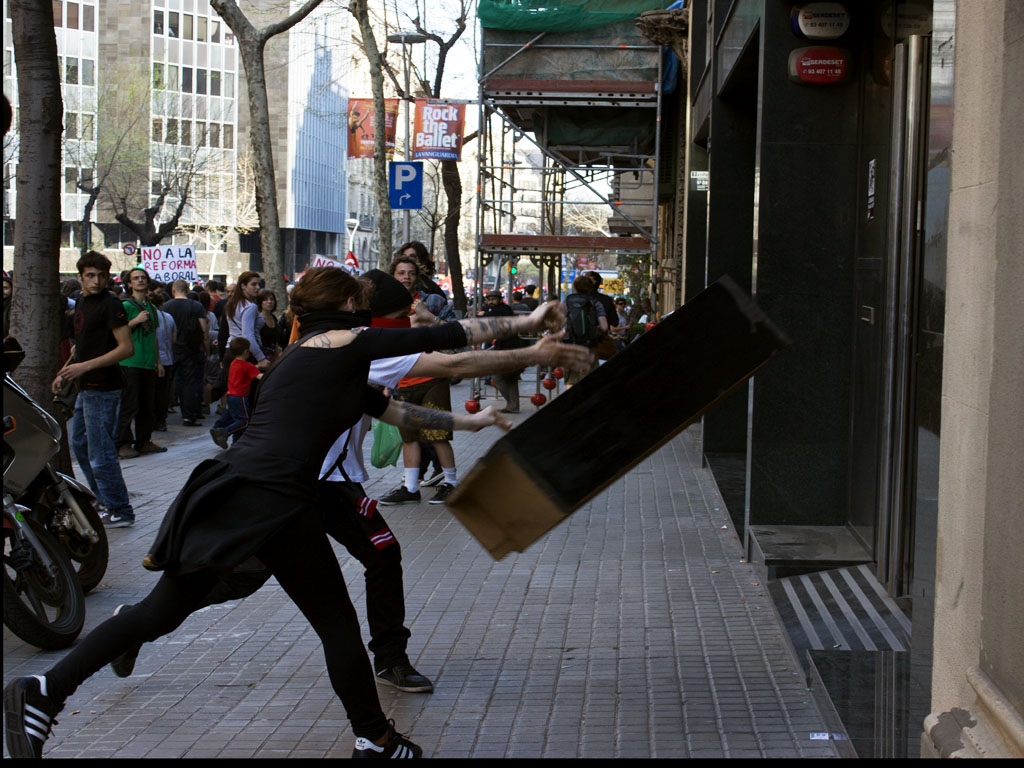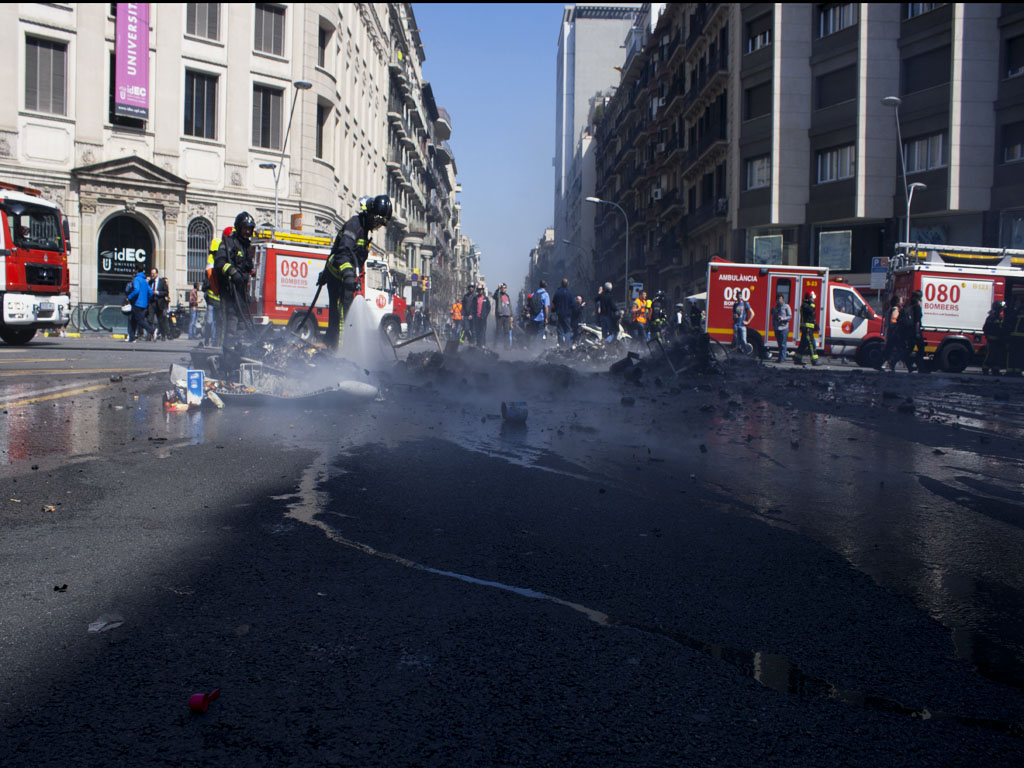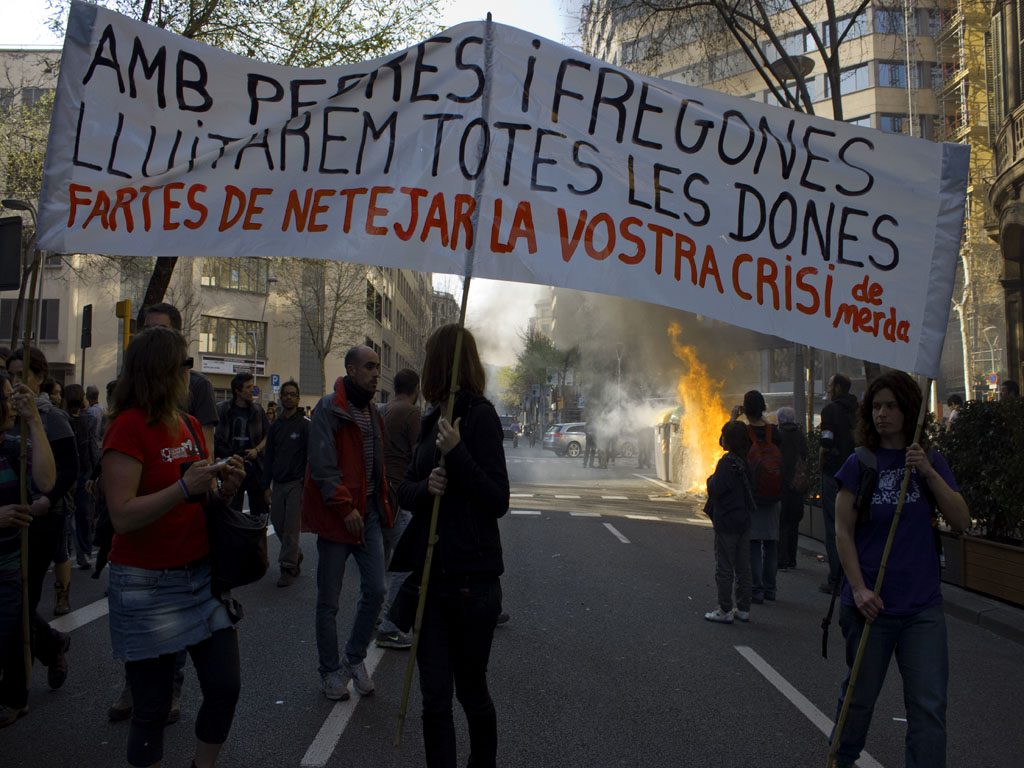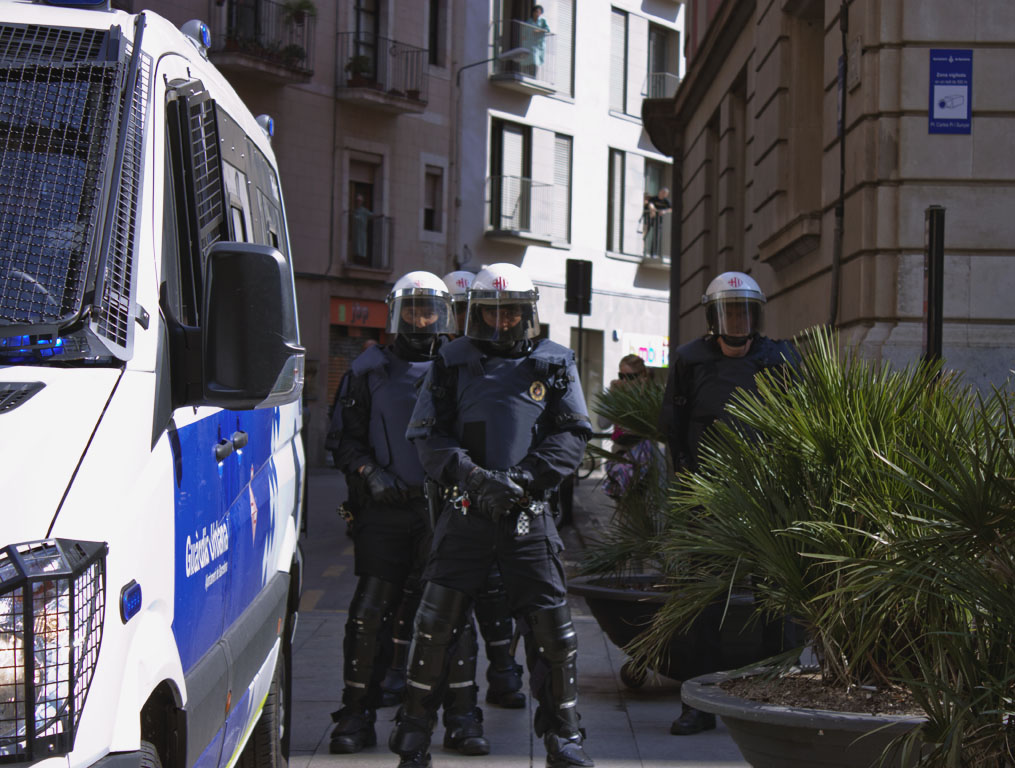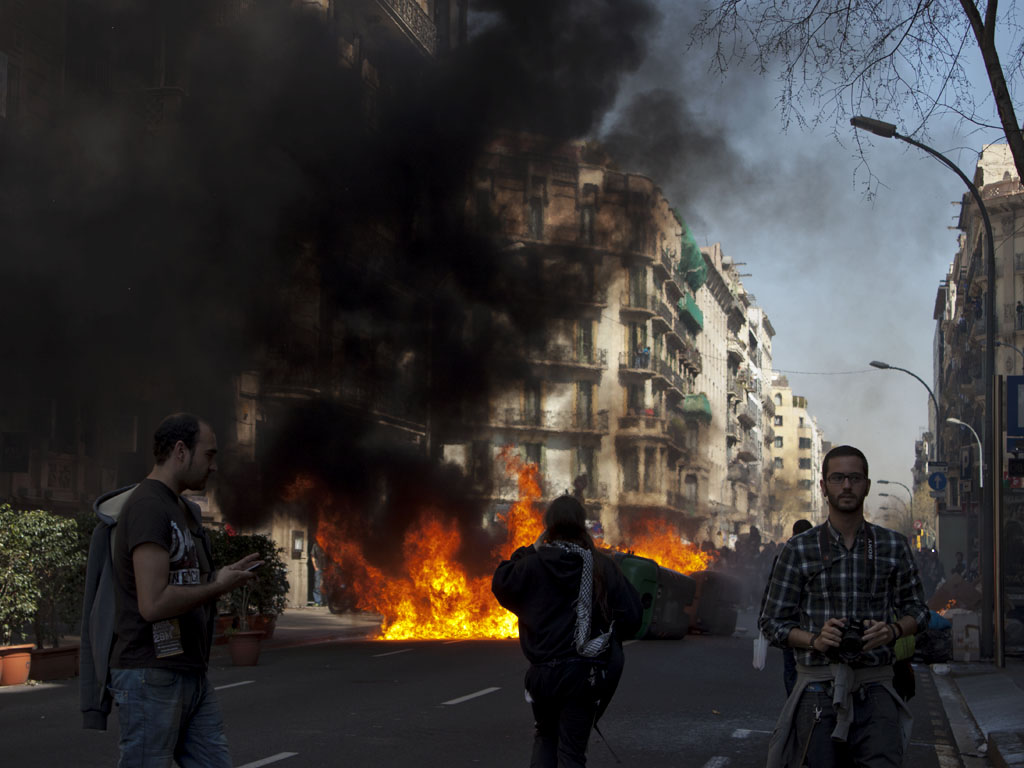
Reporting from Barcelona: general strike and social chaos

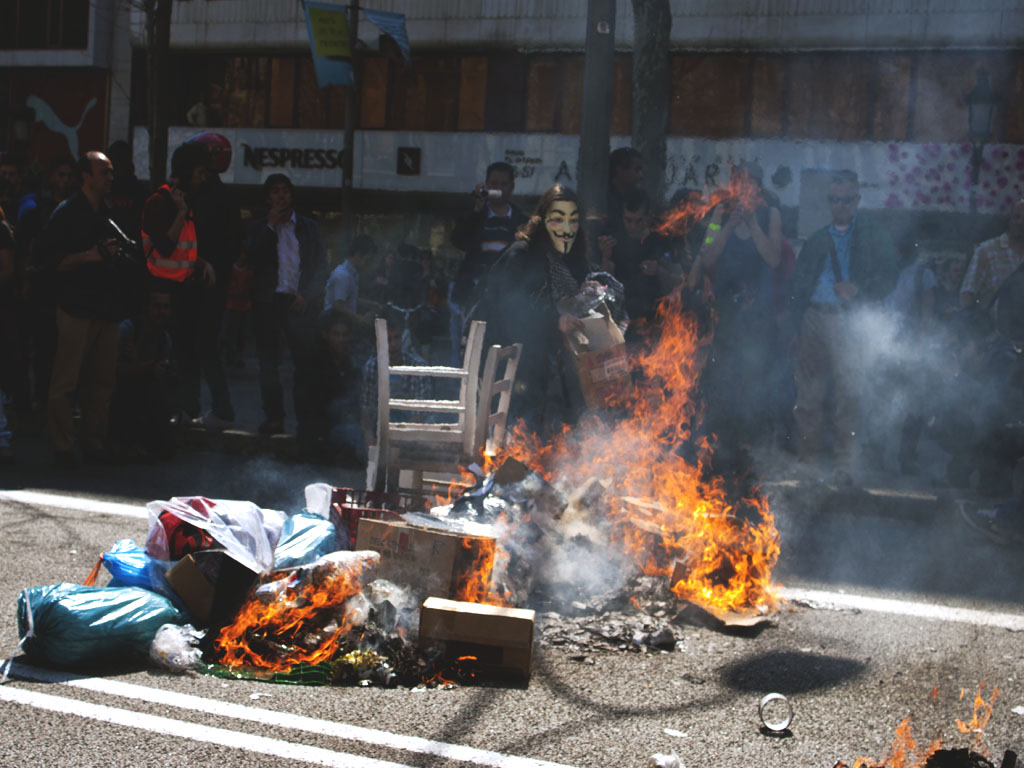
In this reportage the author, Alba Franco, shares photographs taken during Spain’s general strike on March 29 when thousands took to the streets in protest against the economic crisis and the decisions adopted by the recently elected government of Mr Rajoy. Though protests were essentially peaceful, Barcelona saw a significant rise in violence coming from urban groups whose rage was mostly directed at financial institutions, big chains and commerces. 


By Alba Franco, 31 March, 2012

1. V for Vendetta: structural violence vs visible violence

__________________________________________________________________________________________

2. Can Mr Rajoy clean up the mess?

__________________________________________________________________________________________

3. Rage against the banks

__________________________________________________________________________________________

4. Who said smoking was not permitted?

__________________________________________________________________________________________

5. Washing out the sins

__________________________________________________________________________________________

6. Women too are brave: ‘sick of cleaning up your f******* crisis’

__________________________________________________________________________________________

7. Street signs have proliferated since the emergence of the crisis

__________________________________________________________________________________________

8. Don’t kid with me

__________________________________________________________________________________________

9. In plain English: ‘People’s Party, f*** off’

__________________________________________________________________________________________

10. Barricading the city: urban guerrilla in the ascent

__________________________________________________________________________________________

Marriage Equality: What’s the Big Deal?

In this article, the author looks at how marriage equality has become one of the most popularized social issues du jour in American national politics. By examining racial attitudes and the Obama administration’s evolving stance on the matter, LGBT activists are brimming with hope that a reelection of Obama could pave the way for a repeal of the Defense of Marriage Act and the legalization of same-sex marriage on a federal level by 2016. 


By Matthias Pauwels, 31st March, 2012

‘They’re losing California. Inch by inch, sit back and watch it go.’ 

If film director Gus Van Sant ever decides to follow up on his critically acclaimed Harvey Milk biopic with a Proposition 8 film adaption, ‘Losing California’ by Canadian rock band Sloan could easily wind up on the film’s soundtrack, voicing the bitter and biggest defeat gay activists in California have faced since Milk’s unabashed activism of the 1970’s.

The United States has always liked to boast its much vaunted liberalism on social issues, but when Californians cast their ballot vote in favor of a state-wide constitutional ban on gay marriage in November 2008, it not only marked the end of same-sex unions in the Golden State, but also of the most expensive social-issue ballot in American national history. A triumph for social conservatism, Proposition 8 had crushed the LGBT community’s hopes that California would become one of the vanguards for the legalization of same-sex marriage across the nation, and turned liberal America into an emotional wasteland. To many, the actual passing of Proposition 8 defied all logic, especially in the context of  California’s rich history as a historical trailblazer in the fight for gay rights. And even though New York  fared a better deal with the passing of the Marriage Equality Act in a tight majority vote in 2011, it was a legislative tour de force fuelled only by a favorable power momentum in the New York Senate amongst Democrats and Republicans.

From a concept cradled by John Locke to the dominant political force in the Western hemisphere today, liberalism has triumphantly survived two world wars and major ideological challenges from fascism and communism. For several centuries now, a strong focus on human rights has been one of the paramount liberal tenets. But for gay men and women everywhere, the harsh reality of liberalism’s shadow side often revealed that human rights did not encompass gay rights, a perception which was publicly invalidated only last December by Secretary of State Hillary Clinton at International Human Rights Day in Geneva. The gay community has come a long way since New York’s Stonewall riots in the late 1960s or Harvey Milk’s assassination in 1978 but  nonetheless the 21st century was ushered in without absolute gender equality.

<

‘Don’t Ask, Don’t Tell’, a controversial military policy barring openly gay, lesbian, and bisexual soldiers from military service was only recently repealed under the Obama administration, setting the official end date of ‘Don’t Ask, Don’t Tell’ for September 20, 2011. Furthermore, the sodomy law in Texas, classifying consensual, adult homosexuality as illegal sodomy, was only struck down in 2003 in the landmark Lawrence vs. Texas Supreme Court case.

For the past five years, the intensifying debate over same-sex marriage has become the new social issue du jour, marking a clear and distinct cleavage between religious traditionalism and progressivism.  Widening the gap between social conservatives and liberals, the issue of marriage equality echoes the growing pains of gender equality in the 21st century. Its global legislative struggle fully testifies to the fact that it is still a deeply divisive and emotional issue on both sides of the fence. From the majestic Golden Gate Bridge to the Big Apple, the United States has been a perpetual arena of conflict and contention on the issue of marriage equality. The religiousness of America’s social conservatives and their moral objections have more than once provided a filibuster on the matter, but what the Rick Santorums or Kirk Camerons of this world fail to see is that gay people’s longings to be wedded is fundamentally conservative, as New York Times columnist Frank Bruni notes. Once denounced as sexual libertines who brazenly flouted society’s norms, the fundamental message of the LGBT community is that marriage is an institution worth aspiring and fighting for. In a time where more than half of births to American women under 30 happen outside marriage and the divorce rate estimate of first marriages flirts with the 50% mark, the LGBT community is surprisingly pleading for a return to conservatism – only to be told by many, including political leaders, that that’s not O.K. either. So is the only possible takeaway for gay couples then to remain outliers forevermore, unworthy of the experiences and affirmations accorded others?

Not recognized on a federal level due to the Defense of Marriage Act (DOMA) [1], same-sex marriages are state-bound with marriage rights granted in Massachussets, Connecticut, New Hampshire, New York, Vermont, Iowa, plus Washington D.C. and Oregon’s Coquille Indian tribe. Earlier this year, Maryland approved a draft bill to legalize same-sex marriage. The Maryland vote came one day after Washington became the seventh state to legalize same-sex marriage, adding to national momentum for gay nuptials across the States.

But why do some states succeed in legalizing gay marriage where others, such as New Jersey, have failed? In the end, does it all depend on a favorable Democrat vs. Republican power momentum in the State Senate? There are two main elements that are instrumental in gaining state-wide support for a gay marriage bill. Firstly, any bill  – especially those which touch upon the social fibres of society – trigger a period of lobbying to build support for the respective piece of legislation, which can be a long and tedious process. On the issue of same-sex marriage, New York saw its judicial system stymied by a political cat-and-mouse game between the Assembly and the Senate that eventually dragged on for seven years. Each time, a draft bill was approved in the Assembly but shot down consecutively in the New York State Senate. As Senators came and went and a long process of shadow diplomacy unfolded, it was eventually the adding of a discrimination clause for religious institutions, allowing them the freedom to refrain from performing same-sex marriages, that provided the much-needed swing vote in favor of the Marriage Equality Act. A similar clause was paramount to the legalization of gay marriage in Maryland and has also been added to a draft marriage bill introduced in the Illinois House of Representatives in February.

Across the pond, the United Kingdom faces the exact same challenge. The UK government has launched a 12-week consultation in support of a process that would legalize same-sex marriage by 2015 for England and Wales. And while Equalities Minister Lynne Featherstone said that the state should rejoice in people’s desire to marry, senior church figures, as well as a number of conservative MP’s, were getting in gear to oppose the measure. Here the inclusion of a discrimination act, regarding protection against discrimination lawsuits for ‘benevolent organisations or religious groups refusing to provide accommodations, advantages, facilities or privileges related to the solemnisation or celebration of marriage’ could appease members of the Church of England, giving the Cameron administration an incentive to unequivocally approve on the measure.

Gay people have a dream too: the racial minority vote on legalizing same-sex marriage

Another interesting factor relating to the perception of gay marriage is how the racial factor will play out. In the aftermath of the narrowly approved Proposition 8 in California and in the search for answers, it did not take long before another well-publicized story made national headlines, pointing the finger at a rather surprising culprit for swinging the ballot in favor of Proposition 8: California’s racial minorities. Exit polling indicated that roughly 70% of blacks had cast their ballots in favor of Proposition 8, together with 53% of Latino Californians, 49% of Asians, and 51% from those of other racial or ethnic identity.  The American media quickly dubbed this the ‘Obama effect’, since the 2008 presidential election happened to coincide with its Californian state counterpart, causing racial minorities to cast their votes in large numbers. These figures quickly sparked the debate that Latino and black Californians had backed the proposed same-sex marriage ban at rates higher than whites, aiding to provide the margin of victory. These results were disappointing to many gay rights activists who had hoped that the election of Barack Obama to the White House would usher in a new era of advances on gay rights, but gave cheer to Proposition 8 proponents who believed that the issue of same-sex marriage had been revealed to be a potent issue dividing liberal Californians on the basis of race and ethnicity. In California, the evangelical community was well aware of the black community’s sensitive stance on gay rights, and chose to target Californian African Americans in a manner they saw fit. Just days before the general election on the 4th November 2008, the ‘ProtectMarriage.com – Yes on 8’ campaign targeted African Americans in Oakland and the San Francisco Bay area with rather misleading mailers featuring Obama and several African American pastors, suggesting that Obama heavily favored a ban on same-sex marriage. Efforts to target the black and Latino community were primarily channeled via a clerical framework, and since both ethnic communities traditionally strongly identify themselves with Christian movements, the stakes were high for Evangelicals in reeling the Latino and black communities in to join their crusade against same-sex marriage.

Religion is a powerful tool that has been shown to structure attitudes across an array of issues, and it is particularly relevant to the discourse-framing dynamic investigated here, given the importance of gay issues to religious communities and churches. While Latino and African American communities tend to embrace traditionalism on matters of morality and are highly religious, they usually affect ballot voting in different ways, with strongly Latino districts traditionally enhancing support for gay issues, and strongly African American districts depressing support for them. However, this theory can easily be undermined. In the case of Proposition 8, registered Latino voters clearly did not support the concept of same-sex marriage as gay activists would have hoped.  Gay marriage has recently become legal in Maryland, but a draft bill on the issue died in the Maryland House of Representatives last year following strong opposition from several African-American lawmakers. In fact, race has proven to be a sharply divisive factor on the issue of same-sex marriage in Maryland. Maryland Democrats, who hold majorities in both chambers of the legislature, are sharply divided by race. A Washington Post poll published in January showed that among whites in Maryland, 71% back same-sex unions, while only 41% of blacks support it. Button, Rienzo, and Wald’s research [2] indicate that while African Americans tend to support the notion of equality opportunities for homosexuals, they tend to be less supportive of civil rights advancements or protections, which in the case of Propostion 8 could explain the alleged high number of African American proponents. Moreover, a recent NBC/Wall Street Journal poll released in March 2012 showed support for marriage equality amongst African Americans at 50% – which may prove that there still is a great deal of division amongst the black community on the issue.

But is the ethnic community really to blame for America’s sluggish and capricious advancements on gay marriage? Not really. A number of important characteristics that shape Americans’ view on many important political issues – including party identification, ideology, and religiosity – have simultaneously played strong and pivotal roles in determining the choices of individual votes. Research has shown that a thorough analysis of the structure of black, Latino and white attitudes on same-sex marriage finds that after accounting for differences among demographics, partisanship, and core values, interracial group differences in opinion on the issue are unsubstantial.

In California, all Latino, black and Asian registered voters were still a minority compared to its Caucasian counterpart. Even if all Latino, black and Asian registered voters had voted against the ballot initiative, Proposition 8 still would have passed due to the high number of Caucasian voters eligible to vote, and their high support for the same-sex marriage ban.

Earlier this week, confidential memos were made public in a courtroom in Maine, revealing the National Organizaton for Marriage’s attempt to drive a wedge between the LGBT and ethnic communities during its winning campaign to ban same-sex marriage in the US state of Maine. The documents detail the anti-gay organization’s active interest in fanning the hostility between the LGBT and the black and Latino communities in an attempt to stymie any advancement of gay civil rights in Maine. For anti-gay lobbying groups, the stakes remain high in targeting ethnic communities to endorse the crusade against same-sex marriage. But with the tides of time turning and support for same-sex marriage reaching an all-time high, how long will a conservative approach on the issue hold out?

The Obama administration and marriage equality

So where is marriage equality to go from here in the United States? As gay activists nationwide count their wins and losses, the only certainty they seem to have is that any advancement on LGBT rights is highly dependent on who is in the White House.

During his 2008 presidential election campaign, Obama took what many on both sides of the gay marriage debate viewed as a straddle. While publicly denouncing the California ballot proposition measure, he also communicated his opposition to same-sex marriage, leaving gay activists puzzled by his unwillingness to endorse gay marriage. And although Obama criticized the divisive and discrimatory nature of Proposition 8, the abstruseness of his argument was reflected in how he squared his position for overall equality with his refusal to embrace actual equality in marriage.

Once elected, Obama has upped the ante in conveying his equality message. Although having never publicly endorsed same-sex marriage, the Obama administration has been adamant towards communicating its progressive stance on equality in a post-Proposition 8 era. By repealing ‘Don’t Ask, Don’t Tell’, endorsing initiatives such as the ‘It Gets Better’ campaign, offering hope and support for LGBT youth who are struggling with being bullied, and hosting a high-profile LGBT event at the White House in 2011, the President of the United States has made no secret of his firm belief in equality for all. And for those willing to read between the lines, Obama’s opposition to a constitutional amendment defining marriage as a union between one man and one woman, indicates that his full endorsement of civil unions with federal benefits for all is similar to his understanding of the institution of marriage, although his Christian beliefs do not allow him to communicate this. Praising New York in 2011 on the legalization of same-sex marriage while tiptoeing around a public endorsement of the issue testifies to the aforementioned.

If anyone has taken the least equivocal stance on gay marriage, it has to be First Lady Michelle Obama. In March, while campaigning for her husband’s second term in the Oval Office, Michelle Obama reminded people twice that it is the president who makes appointments to the US Supreme Court and that those appointments could impact gay marriage.

Asked about the First Lady’s comments, White House Press Secretary Jay Carney later issued the following statement: ‘the president and first lady firmly believe that gay and lesbian Americans and their families deserve legal protections and the ability to thrive just like any family does. The first lady has said she is proud of his accomplishments, including the repeal of ‘Don’t Ask, Don’t Tell,’ ensuring hospital visitation rights and calling for the repeal of the Defense of Marriage Act (DOMA) and obviously our actions attached. Our decision not to defend DOMA is well known.’

Having famously remained neutral on the same-sex marriage issue throughout his first term, Obama has communicated he is ‘evolving’ on the issue. But what does evolving really entail? Is that just a clever word politicans throw around not to take a stance? An unexptected surge in support to place same-sex marriage on the Democratic Party platform at the August 2012 convention has energized LGBT advocates and complicated an already delicate situation facing Obama’s reelection campaign. Gay activists are brimming with hope that any evolvement which will affect their civil rights further on a federal level will happen in his second term in office. Obama has done reasonably well during his first term in office on gay rights, and a reelection could give him the political green card to further push for equality and possible tackle the Defense of Marriage Act.

____________________________________________________________________________

The issue of LGBT rights and marriage equality has already proven to be an important factor in the 2012 Republican presidential primaries, and it will be incredibly interesting to see how this social issue will play out in an Obama vs. Romney showdown.

[1] The Defense of Marriage Act (DOMA), enacted 21st September 1996, is a United States federal law that defines marriage as the legal union between one man and one woman. The law passed both houses of Congress by large majorities and was signed into law by then-President Bill Clinton on 21st September, 1996..

[2] Button, J.; Rienzo, B.; Wald, K., 1997. Sexual Orientation and Education Politics. Gay and Lesbian Representation in American Schools. In: APSA (American Political Science Association), 1999 Annual Meeting.

Essay: UNiversal – The UN, OIC and LGBT Rights

In this essay the author, William Clowes, addresses the contradictions of the Organisation of Islamic Cooperation when dealing with human rights. The OIC claim to be guardians, universalists and victims simultaneously to support their own traditions in the face of universal rights. This double standard is at its most obvious when dealing with the issue of discrimination on the basis of sexual orientation.

“When efforts are made to condemn a particular group to secondary status, nobody – not the OIC nor the Vatican – should remain unchallenged as they sing the hymns of universality and feign opposing oppression whilst they studiously gnaw away at those very principles and ignore (or excuse) the persecution carried out in the name of what they defend.”


By William Clowes, 20th March, 2012

Earlier this month the United Nations Human Rights Council (UNHRC) held its first ever session to specifically address the discrimination faced in many parts of the world by people on account of their ‘sexual orientation and gender identity’ – in effect, the LGBT community. The gathering in Geneva followed a resolution passed very narrowly by the Council last June which condemned this kind of discrimination. The resolution, strongly pushed by the USA and South Africa, also tasked Navi Pillay, the UN High Commissioner for Human Rights, with producing the UNHRC’s first report into the global extent of this persecution and committed the Council to hold this month’s session.

Despite this apparent progress, a sizeable block of countries either from Africa or members of the Organisation of Islamic Cooperation (OIC) absented themselves from the discussion and have refused to consider its recommendation. There has been much press in recent yearsdedicated to the deadly homophobia prevalent in much of sub-Saharan Africa – ironically (given the US’s role in backing the resolution) often funded by the dollars of US Christian groups – but the recalcitrance of the OIC should be unsurprising. This is not simply because all the OIC nations currently part of the UNHRC were amongst the 19 countries that voted against last June’s resolution but it is also symptomatic of their previous form at the UN.

The 57-member OIC, headquartered in Saudi Arabia and comprised of nations with large Muslim populations, has expended significant efforts through its UN delegation during this century trying to persuade the UNHRC and General Assembly to pass illiberal resolutions that would commit member states to combating the ‘defamation of religion’. Up until last year this affront to free speech was repelled by western nations and, in particular, the USA. In 2011 – once the OIC had agreed to omit the offending ‘defamation’ clause – both the UNHRC and General Assembly passed a resolution pithily titled, ‘Combating intolerance, negative stereotyping, stigmatisation, discrimination, incitement to violence, and violence against, persons based on religion and belief’.

The title and content of the resolution seem laudable enough, but as UN Watch, the NGO which exists ‘to monitor the performance of the United Nations by the yardstick of its own charter’, stated ‘the problem is not with the document per se, but with its sponsor’. The publications and rhetoric of the OIC tend to focus its disapproval solely on anti-Islamic and anti-Muslim happenings in the USA and Europe. They do not acknowledge the black irony that they target the very nations which are most likely to afford citizens the necessary legal protections to fight ‘incitement to violence, and violence against, persons based on faith’ and entirely overlook the manifold failures in their own states to protect the rights of religious minorities to practice their chosen religions. It is apparent from the manner in which the OIC went about sponsoring and lobbying the resolution at the UN that the conservative and autocratic leaderships of the group’s member states are far more interested in keeping their versions of state-sanctioned religion uncontested than protecting the individual’s right to practice their religion. As I have written previously, OIC member states generally have a lamentable record at protecting the most basic (supposedly universal) freedoms within their jurisdictions.

On this occasion too, although the circumstances of the situation differ, it is the character of the OIC that is the critical issue. The most conspicuous reason why the OIC members of the UNHRC should object to the recent Council session provides an illuminating parallel with their failings over last year’s resolution on religious freedom. Just as, according to the charity Open Doors, 38 of the top 50 countries where Christians face the ‘most severe’ persecution are OIC members, 39 of the 77 states that criminalise homosexuality and all seven that impose the death penalty are part of the OIC. That data, provided by the International Gay and Lesbian Human Rights Commission, merely surveys laws which criminalise same-sex relationships between consenting adults and does not even begin to assess other forms of stigmatisation and discrimination.

It might seem peculiar to be drawing parallels between an occasion on which the OIC sponsored a resolution it had no intention of honouring and an occasion on which it refused to sign up to a resolution it had no intention of honouring – but therein lies the consistency. In both incidences, the OIC has given religious and cultural justifications precedence over the universal rights they are (as UN members) bound to respect.  Both times they have also used the language of victimhood and rights to deflect scrutiny away from their own deficiencies.

Whereas last year the OIC’s devalued argument was manifest through sponsoring a resolution against a form of bigotry most prevalent amongst its own members, this year they have excused their reluctance to combat another ubiquitous kind of prejudice by accusing the UN itself of discrimination. In a letter sent to the UN by Zamir Akram, Pakistan’s Ambassador to the UN, in his role ‘as coordinator of the OIC Group on Human Rights and Humanitarian Issues in Geneva’, he sets out the group’s objections to the resolution and the subsequent session. The OIC, Akram asserts, are ‘deeply concerned at the attempt to introduce in the UN concepts that have no legal foundation in any international human rights instrument’. In the course of the letter he manages to play an array of roles: the guardian of human rights (since the resolution ‘seriously jeopardise[s] the entire international human rights framework’), the universalist (because he is ‘disturbed’ by the ‘attempt to focus on certain persons on the grounds of their abnormal sexual behaviour’) and the victim of oppression (for ‘cultural and religious backgrounds must be borne in mind’ by the UN).

A logical assumption is that OIC states – as members of the UN and often part of the rotating membership of the UNHRC – at least intend to pay lip service to the articles of the Universal Declaration of Human Rights (UDHR). Therefore, in order to adopt the letter’s stance, they have to argue that LGBT people are somehow excluded from the Declaration or that this resolution seeks to give them a privileged position.

Indeed, there is no reference to discrimination on the basis of sexual orientation and gender identity in the UDHR, but there are articles, for example, that prohibit torture and degrading treatment (Art. 5), arbitrary arrest (Art. 9) and the denial of the right to free assembly (Art. 20). OIC members and other states regularly deny these rights to people for reasons other than sexual orientation, but – given the OIC’s letter purports to be concerned about human rights and their universality – they should be able to better articulate why LGBT peoples are excluded from the declaration’s principle of universality without instinctive recourse to convenient cultural and religious justifications.

The OIC are not the only interest group to have attempted to present the resolution as ameans to offer LGBT peoples an exalted, privileged position rather than as an effort to level the playing field for a harried group. The Pope’s Permanent Observer to the UN even told the UNHRC that the Council was pressuring member states to support gay marriage, even though one could be forgiven for thinking that the right not to be executed would more of a priority for an Iranian or Mauritanian homosexual. This conspiratorial leap from an expression of ‘grave concern at acts of violence and discrimination’ against LGBT peoples to advocacy for same-sex marriage was accompanied by an assertion that the Catholic Church opposes attempts to ‘particularize or to develop special rights for special groups [which] could easily put at risk the universality of those rights’. Rick Perry, the erstwhile Republican candidate, was more candid than the slickly worded objections of the OIC and Vatican. He responded to Hilary Clinton’s speech last December arguing that ‘gay rights’ were human rights by declaring that ‘investing tax dollars to promote a lifestyle many Americans of faith find so deeply objectionable is wrong’. Integral to all these protestations is the idea that homosexuality is not natural (indeed Akram’s letter opposed the resolution’s ‘focus on certain persons on the grounds of their abnormal sexual behaviour’) and no number of appeals to universal rights will weaken this localised conviction. This creates an obvious problem at the UN – and one patently not confined to only the OIC and Catholic Church – when Navi Pillay says that ‘the balance between tradition and culture, on the one hand, and universal human rights, on the other, must be struck in the favour of rights’.

In what can be interpreted as an acknowledgment of the weakness of the OIC’s argument Akram’s letter claims to find it ‘disturbing’ that the UNHRC would focus on LGBT peoples and not ‘the glaring instances of intolerance and discrimination in various parts of the world, be it on the basis of colour, race, gender or religion’. This ‘whataboutery’ seems to be in keeping with previous efforts to divert attention from issues they find uncomfortable, but is easily rebuked. Firstly, there is no reason why focusing on one form of discrimination should avert attention from others and, secondly, discrimination ‘on the basis of colour, race, gender or religion’ is widespread in OIC states and they show little interest in combating that. Clearly it is important to recognise that in countries outside sub-Saharan Africa and the OIC there exists a great deal of discrimination against LGBT peoples, but one must also avoid the pernicious slippage into indifferent relativism. For example, a country where homophobic attitudes are too common and that is undecided about legalising gay marriage, but yet counts ‘sexual orientation’ and ‘gender identity’ amongst legally protected characteristics, is not the same as a country that criminalises homosexuality or has endemic discrimination against LGBT peoples in the work place or education system.

The UN is by no means the acme of progressive democracy and is often unconcerned with self-determination. There are cogent arguments against the NGO activism and supranational organisations, which the UN typifies, but those usually take a position in favour of more localised, sovereign democracy. A cursory glance at the membership of the OIC immediately reveals that more democracy is not a priority for many of the regimes currently in power. It would also be a point of inconsistency if the OIC were to object to the overbearing nature of external prescriptions when they are quite content to use the institutions of the UN to further causes close to their heart, such as last year’s farcical resolutions on religious freedom. The inevitable response from some ‘anti-imperial’ quarters that this resolution is just another example of cultural imperialism by the west is also easily countered, given that the country that introduced the resolutionand was the first in the world to provide constitutional protection to LGBT people is post-apartheid South Africa. Furthermore, there is the fact that all Latin American nations voted for last year’s resolution on LGBT discrimination and that a number of the laws defended by African and Islamic countries that criminalise homosexuality are relics from the colonial rule (although plenty are also based on Islamic justifications).

There is a final point of correspondence regarding the role of the OIC between the resolutions on religious freedom and LGBT discrimination. This is their stated intentions beyond the resolutions themselves. Despite removing the clause that would have committed UN member states to stopping their citizens ‘defaming’ religions, the OIC’s ‘Ten-Year Programme of Action’ from 2005 emphasises ‘the responsibility of the international community, including all governments, to ensure respect for all religions and combat their defamation’ and, during the 2010 meeting of the Council of Foreign Ministers, they adopted a strategy ‘to broaden support for its Resolution on “Combating Defamation of religions”’. Likewise, in spite of the alleged concern for the universality of human rights and that the leaderships of OIC nations are not monolithic; the organisation adopted the Cairo Declaration on Human Rights in Islam in 1990. Supporters of this document claim it ‘complement[s] the Universal Declaration [of Human Rights]’ whilst it stresses inter alia that ‘Everyone shall have the right to express his opinion freely in such manner as would not be contrary to the principles of the Shari’ah’. Given the interpretation of Islamic law in many OIC member states, this qualification unequivocally compromises the notion of universality for non-Muslims and the ‘wrong kind’ of Muslims and serves to particularise human rights under an Islamic, not a universal, overview.

This recent standoff has served to highlight an obstacle that is very difficult to surmount. A refusal to see same-sex preferences as something universal to all humanity, as something that does not threaten to tear asunder the very fabric of society is sadly too commonplace throughout the world. But this admission is not to say that some parts of the world are not moving in a much more positive direction than others or to conceal that there are monarchs, clerics, dictators and governments that seek to distinguish themselves by malignly endorsing such harassment as a form of cultural protectionism against external intolerance. There will always be a fractious relationship between those who support a basic level of fundamental human rights that is truly universal, trumping localised counter-attacks, and those who are unyielding in their commitment to the supremacy of their own cultural and religious justifications. In spite of this, it is worth remembering the Vienna Declaration, which the UN General Assembly adopted by consensus in 1993, when it states that ‘While the significance of national and regional particularities and various historical, cultural and religious backgrounds must be borne in mind, it is the duty of States, regardless of their political, economic and cultural systems, to promote and protect all human rights and fundamental freedoms’.When efforts are made to condemn a particular group to secondary status, nobody – not the OIC nor the Vatican – should remain unchallenged as they sing the hymns of universality and feign opposing oppression whilst they studiously gnaw away at those very principles and ignore (or excuse) the persecution carried out in the name of what they defend.

China in Afghanistan: Valuable Ally or Emerging Threat?

In this article, the author explores the competing US and Chinese discourses on China’s Peaceful rise strategy, using the PRC’s economic involvement in Afghanistan as a case study. It argues that although China’s interest in Afghanistan is perceived and framed as a threat by the US, it also represents a momentous opportunity for Afghanistan and its neighbors.


By Camille Maubert, 17th March, 2012

Karzai’s attempt to build an Afghanistan with American democratic characteristics and Chinese economic dynamism highlights the delicate positioning at play, whereby Afghanistan is subjected to different and sometimes contradictory foreign influences. Indeed, while the US is the biggest player in Afghanistan, China is also preparing to assume a long-term role in the country. In fact, the successful Chinese Metallurgical Corporation’s bid on the Aynak copper mine in Lowgar province, worth US$4 billion, promoted China as the largest single foreign investor in the country’s history. This had the West shudder by reminding it how powerful – and potentially threatening – a neighbor the People’s Republic of China (PRC) is.

“We do the heavy lifting and they pick up the fruits” – the American narrative

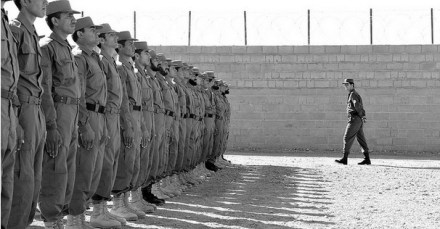
Since 2001, China’s involvement in the country shifted from disinterest to ever-growing investments in the country’s infrastructures, mineral wealth and agriculture. However, its expanding commercial interests are deeply controversial because of their political reach. Indeed, China, who has gained control of strategic assets without shooting a single bullet, has been accused of free-riding on the stability provided by the American troops in order to secure access to natural resources. In fact, American troops not only bring general security in the Logar province, but they also trained the 1500 Afghan National Police soldiers who are directly protecting the infrastructures.

This behavior is perceived as unacceptable because of China’s refusal to share the International Security Assistance Force (ISAF)’s burden. Indeed, the Chinese Foreign Ministry Spokesperson, Mr Gang, made it clear that it is “out of the question to send Chinese troops (…) in Afghanistan” and discounted NATO’s request to use the Wakhan corridor for logistical supplies. This is interpreted as an indirect confrontation with US interests and goals in the region; and seen with suspicion by the West. Arguably, it is assumed that there is a correlation between increased economic power and amplified political weight; that is to say that because China expands its economic assets in Afghanistan, it will inevitably increase its political influence by the same token. Some indeed fear that China’s business in Afghanistan and Central Asia could alter the balance of power in areas vital to the US’s strategic interests.

By shunning away from any major security role and distancing itself from ISAF, China conveys the image of a profit-focused actor who utilizes its powerful national companies to expand influence in Afghanistan and who doesn’t balk at dealing with rogue actors. Indeed, while China benefits from the US tackling transnational Islamic terrorism, it also adopts a very cautious and balanced diplomacy with both the United States and the Taliban: Being a direct target of terrorist activities because of its policy on Xinjiang’s Muslim minority, and Aynak being located in a potentially Taliban-controlled area, China is in effect willing compromise with all regional actors to maintain stability.

However, the depiction of China’s involvement in Afghanistan and the wider region as a threat to Western interests is biased by the widespread “China Threat theory” which impregnates Western analysis. Because Western interpretations of China’s role in Afghanistan derives from the way the West sees China –as a threat – and the way it sees itself – as liberal and benevolent – it is fair to assume that an examination of the Chinese discourse is needed in order to grasp the other side of the story.

Afghanistan and the Direct Investment Model – The Chinese narrative

What distinguishes China from other actors in the Afghan reconstruction is its outstanding ability to project funds into unstable and high-risk areas. Indeed, its national companies have the capability to deal with risks associated with investing in remote and unsecure regions where Western companies cannot – yet – penetrate. The China Metallurgical Group, by accepting the risks associated with such investment and adding incentives like the building of infrastructures – power plant, hospital, mosque – outbid the West.

The comparative advantage of China over American and European investors is rooted in its Direct Investment model, which offers loans below market rates and have the attractive feature of not associating economic development with political reforms. Indeed, while Western donors and investors condition aid on democratic and human rights improvements, for developing countries like Afghanistan, China’s policy of non-intervention in internal affairs is appealing because it allows them to prioritize economic development. This strategy has been criticized in the West because it is seen as providing support for authoritarian regimes; but, so far, it seems more successful in bringing stability to war-torn countries that Western humanitarian and counter-insurgency missions. Based on successful results in Africa, this macro-level system will have a positive impact on Afghan stability in that it will promote a virtuous circle of economic development in the wider region – Central Asia, Xinjiang, Afghanistan – and will reduce Afghanistan’s dependence on international aid, therefore advancing the wider American goal of stability.

The reason for and implication of such strategy resides in China’s primary security interest in its Western province of Xinjiang. The PRC is indeed most concerned about cross-border terrorism coming from its Western and Southern neighbors. Despite the militarization of its borders and the increased security cooperation with the Shanghai Cooperation Organization, China is very vulnerable to Islamic militancy spillovers from Afghanistan and the Pakistani safe havens. Hence the implementation of a cautious policy of economic development and support to Afghanistan’s reconstruction which enforces stability while at the same time remaining distant from the US initiatives to avoid being associated with the controversial War on Terror.

By providing training to the Afghan police and anti-drug factions, investing in local resources and promoting cooperation between Central Asian governments on the “three evils” – fundamentalism, terrorism and separatism – China aims to maintain dialogue and cooperation and consolidate its long-term presence. This calculation is based on the assumption that by developing a Central Asian economic sphere – in which the opening of the Wakhan corridor would play a crucial role in reviving the Silk Road – China will securely reinforce its economic rise while avoiding becoming the target of Islamic militantism.

One could safely assume from its involvement in Afghanistan that China is pursuing a narrow interpretation of its interests. Although the PRC officially adheres to the shared principles of the War on Terror such as anti-terrorism – from which it profits to legitimize its Xinjiang policy – or anti-narcotics, it also rejects the all-encompassing US strategy and rather prioritizes domestic security and development. Indeed, China claims that far from seeking regional hegemony, it wishes to preserve the international order and pursue its national interest within it.

Afghanistan at the cross-roads of the US-China agendas

What stems from those two conflicting narratives is that the stereotypical distinction between a disinterested West and a voracious China is not relevant in the sense that it stems from ideological perceptions rather than rational observation. Consequently, the idea of China as a threat doesn’t stem from the reality of it as an expanding power but rather from “perceptions, especially those regarding the potential that Beijing will become an example, source or model that contradicts Western liberalism as the reigning paradigm” (Stephen Chan 1999). Indeed, because China, by making profits in Afghanistan, doesn’t fit in the normative expectations of the US on how it should act, it is displayed as a threat to global peace. This means that the idea of China as a threat to the regional status quo is more a self-fulfilling prophecy than an actual reality in the sense that, by framing China as a menace, the US may not only push it towards brinkmanship but also lose its attractiveness to the Afghan government and people, and therefore further get bogged down.

Afghanistan is the place where two narratives and strategic cultures met – the Western fear of losing its hegemony and the Chinese confidence in expanding its economy. Because China’s domestic and economic concerns shape its approach to foreign policy, it is engaging with Afghanistan in its own terms, which is understood as a threat by the West but also as an unmatched opportunity by Afghanistan.

Hostage Crisis in Nigeria: Did the Terrorists Win?

In this article the author addresses the prevailing narrative that Boko Haram carried out the kidnapping and executions of two Europeans in northern Nigeria yesterday. By taking all of the evidence into account, the involvement of Boko Haram is one of several possibilities and to immediately place the blame on this group could be playing into the hands of the terrorists.


By Jack Hamilton, 9 March, 2012

In May 2011 two European construction workers were kidnapped in Kebbi, north-west Nigeria.  Yesterday both of these men were killed in a botched rescue mission in Sokoto, northern Nigeria.  Despite some bold assertions by the British and Nigerian governments, what exactly happened to the 28 year old Englishman, Christopher McManus and the 47 year old Italian engineer, Franco Lamolinara, and who they were taken by remains unclear.

First of all, regardless of who was responsible for the kidnapping and the rescue mission, the deaths of these two men is a tragedy.  The decision of the British Government to intervene in such a way must have had the primary objective of getting the hostages out alive.  Whether they were executed by the hostage takers or they were victims of crossfire in the ‘seven hour shootout’, their deaths represent a disastrous failure of British intelligence.

Now we must turn to the evidence of what happened to Mr. McManus and Mr. Lamolinara.  It is important that the narrative of ‘this was Boko Haram’ does not take hold as at this time it remains speculation.  As we will see, it is tenuous speculation.

In a statement today, a Boko Haram spokesperson announced: “We have never taken anyone hostage. We always claim responsibility for our acts”.  Boko Haram certainly have blood all over their hands but they also like to brag about it.  The fact that they have not done so in this case is revealing.

Sequence of Events Leading up to March 8

While kidnappings are common in the Niger Delta region of the country, they are not frequent in northern Nigeria and unheard of in the case of Boko Haram.  The kidnapping of the two Europeans was not accompanied by any ransom demand and the State Police Commissioner has reiterated that the terrorists never attempted to make contact with local security forces.

The kidnapping itself was amateurish for two reasons.  Firstly they allowed for some of their victims to escape and secondly they left a bag of money behind.

Nothing was heard from the kidnappers of their victims until a video was released in August of last year.  In this one-minute video the terrorists claim that they are members of al-Qaeda and show the hostages blindfolded and on their knees in front of their armed captors.

The video raises several possibilities.  Using such a technique is characteristic of al-Qaeda, as the group claim to be, and would provide the first evidence that the group is operating on Nigerian soil.  However, this does not mean that it was indeed al-Qaeda as there are several irregularities.

Firstly, the video did not come from the al-Qaeda in the Islamic Maghreb broadcasting centre, al-Andalus.  Seeing as the terrorists were so willing to prove that they are affiliated with al-Qaeda, it would make sense to go through the processes that the group tends to use.  Sending an amateurish video to AFP in Abidjan does not fall within this process.  AQIM tend to broadcast their kidnapping videos on jihadist websites with their al-Andalus watermark.

The second irregularity, pointed out by an expert on AQIM, Andrew Lebovich, is that they are not wearing the traditional attire of Salafis.  No Salafi organisation, with the exception of al-Qaeda in Iraq, dresses in the casual way the terrorists present themselves in the video.

This opens up the possibility that the organisation in question wishes to be seen as AQIM or Boko Haram to increase their bargaining stance.  Such a claim is pure speculation until the demands of the organisation are released but the lack of attention to detail is incongruous with the moniker they claim.  If they turn out to be pretenders, the media coverage reporting on the ‘Boko Haram’ kidnapping has fed directly into their hands.

What Happened on 8 March, 2012?

Location

The location of the hostages in Sokoto is highly significant.  If they had been taken to Kano or Maiduguri there would be little doubt that Boko Haram carried out the attacks.  Reporting from top news sources, including Sky News, is incorrect in implying that Sokoto is a Boko Haram base.

It is worth looking at Andrew Walker’s map of the instances of Boko Haram terrorism in comparison to the location of the Kebbi kidnapping and the shootout in Sokoto.  The operations of the organisation have not come anywhere near this part of Nigeria.

This is not to excuse Boko Haram.  There are two ominous possibilities.  Firstly, that Boko Haram has significantly expanded its geographical reach across Nigeria and has begun to undertake tactics that resemble those of al-Qaeda in the Islamic Maghreb.  Secondly, that there are now two of these groups in Nigeria.

What was the reason for the sudden raid? 

The Foreign Office has reported that they received intelligence saying that the hostages were about to be executed or moved.  This has been taken further by an article in The Guardian stating that the intelligence came following the arrest of a top Boko Haram official in Kaduna, northern Nigeria.  It also credits the British intelligence forces for training the Nigerian officials who were able to uncover this crucial information.  It remains unclear whether the arrest of these men in Kaduna was the trigger for the execution of the hostages.

For such a decision to have been taken it is clear that the lives of the men were in imminent danger.  A factor emphasised by David Cameron in his apologetic speech yesterday afternoon.

Cameron gave the go-ahead following meetings of the government emergency committee, Cobra.  The Italian Prime Minister, Mario Monti, was only made aware of the rescue operation after it had begun.  He was informed that “an unpredicted acceleration of events took place over the last hours. While fearing an imminent danger for the hostages, Nigerian authorities activated the rescue” by Cameron.

Various Italian MPs have demanded clarification for why Monti was not alerted earlier but this is not the big story.  It is clear that it was a rushed rescue operation conducted on a short time scale.  It is highly unlikely that the wisdom of the Italian Parliament, no matter how well versed they all were on the intricate security politics of north-western Nigeria, could have remedied this situation.

The events of the raid on the compound yesterday remain sketchy, hence the Italian demands for clarity on exactly what happened and why they were consulted so late in the day.

There are conflicting stories of how events unfolded.  The BBC states that “the British were the first at the door” while local sources, such as The World Today, state that the Nigerian state forces used a tank to break down the wall of the compound where the terrorists were holed up.  The lack of coherent information is most likely a result of journalists being kept one kilometre away from the shootout.

Sahara Reporters have released pictures of the compound after the attack.  WARNING: some of the pictures contain spatters of blood on the walls.  [pictures]

It is unclear how it came to be that the two hostages were killed but most sources agree that they were whisked deep inside of the compound as soon as the raid began and executed them immediately.  This would imply that the intervention had little chance of success to begin with if true.  It begs the question: why did foreign forces get involved?

The intervention of British forces on Nigerian soil seems now like a strange decision to have taken.  It is a clear sign that Britain did not trust the Nigerian forces, who they themselves had trained, to carry out the operation.  Instead it was led by the Special Boat Squadron (SBS) including Royal Marines in a mission which may have numbered twenty British personnel.

The Role of Nigerian State

Nigerian intelligence, according to President Goodluck Jonathan, has arrived at the definite conclusion that Boko Haram were behind the kidnappings and the attack.  This claim must be taken with a pinch of salt given the recent record of Nigerian intelligence, especially in dealing with Boko Haram.  It is in the interests of the Nigerian state to put forward a message that they are taking control of the deteriorating security situation in northern Nigeria.

If the narrative of the tragedy takes the form of ‘Nigerian forces kill eight members of Boko Haram following intelligence success’, it will reflect well.  If this was not Boko Haram, the intelligence reports from Kaduna must be looked at again to see if the tragedy was a result of a Nigerian intelligence failure.  For many in the north of Nigeria, the success and popularity of Boko Haram is down to the failings of the Nigerian State’s security.

Did the Terrorists Win?

The demands of the terrorists have not been stated.  If the intelligence reports from Kaduna are to be believed there must have been some hint at the ambitions of the organisation when these men were revealing the location of the hostages to the security services.  It has been reported that in the initial kidnapping, a large bag of money was left behind.  Perhaps the perpetrators believed that the ransom payout would be swift and bountiful.  Perhaps the kidnapping was for political rather than economic motivations.  To state a case for either based upon the bag of money would be pure speculation.  It is therefore more useful to look at the previous actions of Boko Haram to see if the terrorists were following a pattern.

The kidnapping of foreign nationals does not fit with the previous actions of Boko Haram.  Their demands have tended to be on religious institutions and local government with little violence reserved for international bodies (with the exception of the bombing of the UN in Abuja).  If the desire was, as with the UN, to gain international attention, the actions of British and Nigerian intelligence played straight into their hands by attempting what would be a futile rescue operation if it was carried out by Boko Haram.  The organisation could undoubtedly gain more attention from killing the hostages which begs the question: if British intelligence sources truly believe the aggressors to be Boko Haram, why did they play straight into their hands?

Below is my interview on Sky News as the news broke

Stop Kony and Stopping Joseph Kony – Relationship Status: It’s Complicated

In this article, the author addresses the criticisms of Invisible Children and the Kony 2012 campaign to highlight the success of the project as an advocacy movement.  Sharing a video on Facebook is not tantamount to donating to Invisible Children. Equally, discrediting a video on Facebook is not tantamount to providing a solution. The primary ambition of advocacy must be to highlight the issue. Invisible Children, and their detractors, have been successful in this respect.


By Jack Hamilton, 8th March, 2012

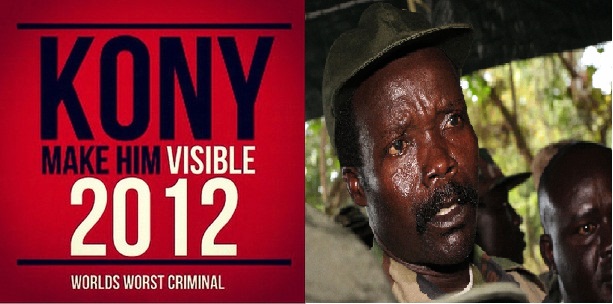
A new human rights campaign has spread across the internet with a solitary aim: make Joseph Kony famous. The idea is that fame will enable Kony, the leader of the brutal Lord’s Resistance Army (LRA) in Uganda, to be brought to justice.

The film was created by the group, Invisible Children, a charity set up to combat the use of child soldiers by raising awareness of the issue and making slick videos fit for popular consumption. This method, as well as the background of charity, has been questioned by other activists following the unprecedented social media success of the #Kony2012 and #StopKony campaign.

StopKony has been trending worldwide since Tuesday and to date ‘Kony 2012’ has over 32 million views on Youtube and Vimeo combined. This article outlines the intentions of the campaign before looking at the ripostes. The key message is, whatever the failings of Invisible Children and their campaign, the ‘tipping point’ of hope and inspiration rings true.

Here is the video for those who have somehow avoided it.

What was the intention?

In order to make sense of the criticism, the key aim of the campaign must be evaluated: make Kony famous. This is the mantra repeated throughout the film. From the reaction on social media sites, to say nothing of the news coverage, this has been a resounding success. It is a viral hit. Kony is famous.

The second aim of the video is to inspire. It is an attempt to arrange collective action on an issue which does not directly impact upon the viewers. Responding to the waves of criticism, Jedediah Jenkins, the director of idea development for Independent Children, called the film a ‘tipping point’ in this regard. It is difficult to refute that. The visceral impact of Kony 2012 and the message that social media can be used a catalyst for good help to explain the sensation that the video has become.

The third aim was to promote Invisible Children. This is where problems abound.

Responses to Invisible Children

There have been three waves of responses to the #Kony2012 campaign. First, there was the initial flood of admiration for the video: the viral success which made this thirty minute video about Uganda a global phenomenon. Second came the IR students flaunting their ‘early adapter’ credentials by pointing out that many had already heard of Joseph Kony long before now and that the campaign, while well presented, is now anachronistic. The third wave has been characterised by direct attacks on Invisible Children and the overt ‘White Man’s Burden’ overtones of the video. Having established that video is a viral success it is necessary to deal with the criticisms of the second and third waves.

1. It is already too late

The argument that the viral assault on Kony is too late carries some weight. As rightly pointed out in a Foreign Policy article, he has already been pushed out of Uganda and may be on his last legs. The fact that ‘Uganda’ is trending on Twitter demonstrates that Kony 2012 does indeed deal in misleading oversimplifications which have now been popularised. However, this does not detract from the power of the video to highlight the plight of child soldiers as well as the blight of the LRA across Central Africa rather than merely northern Uganda. Just because the worst of the atrocities were missed between 1999 and 2004 does not mean that the continued suffering should be ignored.

2. Sanitising Militarism

Direct attacks on Invisible Children carry more weight. Firstly, their proposed solutions sanitise foreign intervention through a viral marketing campaign. There was something a little uncomfortable about watching the scenes of unbridled celebration when Barack Obama announced that US military advisors would be sent into Uganda. It would not be conducive to a slick marketing campaign to evaluate the pros and cons of AFRICOM but the flagrant celebration seemed a little off. It cements the argument that the people of Uganda are portrayed as passive victims with little agency over their own voice, will or power. The support shown for local armies is not paralleled by support for local initiatives. Just ask Betty Bigombe.

The support for local armed forces is also complicated. Many detractors of Invisible Children point to the now famous (and idiotic) picture in which the leaders of the charity pose with Sudan People’s Liberation Army soldiers carrying weapons (see below).

The Last Kings of San Diego?

Critics have eviscerated the Invisible Children campaign on the basis that they support local forces that have also carried out atrocities. This is a failure of logic on two levels. Firstly, while it is clear that Ugandan forces have been guilty of rape and looting they are not on the same scale or systematic nature as the crimes of the LRA. Secondly, if foreign intervention is not the solution and local forces are not the solution then what is?

If the key aim of IC was militarisation, then they had already achieved it with the passing of the bill to send 100 US military advisors to find Kony. The mission, led by the Ugandan military, is not restrained by borders as it was in the past (allowing Kony to flee) but can now move into north-east Democratic Republic of Congo, southern Central African Republic and south-west South Sudan to find the LRA and their leader. That being said, the military commercialism of the UPDF remains a concern.

3. They are smug

Kony 2012 is sickeningly smug and self-congratulatory. There is no doubting this. It is about them and their role in stopping Kony with ‘your support’. In the words of the now viral riposte to IC, Visible Children, “it hints uncomfortably at the White Man’s Burden. Worse, sometimes it does more than hint”.

The movie is certainly more about the film-makers than the cause but it is a film which sets out to inspire people to action who would otherwise be wasting time on social networking sites. One only has to look at the snappy editing and photography to see the target audience and in this sense the video is a monumental success. It sets out to inspire and the response of the social networking community has been breathtaking.

4. Finances

The figures on the funding and expenses of IC have started to waver. There has been intense criticism of the way the charity spends vast amounts on salaries and filmmaking for an NGO. The organisation offers full disclosure of this in addition to positive ratings from Charity Navigator. However, the failure to submit to a full audit remains suspicious.  Until this is done the finances will continue to be questioned.

Solutions

The contrarian nature of the anti-Invisible Children articles frequently fail to outline a solution of their own. Attacking Invisible Children for their failings is necessary but it should come with the BBC-style qualification that other charities and solutions are available.

The pursuit of Kony may be anachronistic and many of the criticisms of IC are valid but do not let that detract from the inspirational nature of Kony 2012 and what it has achieved. People are discussing the LRA. People are discussing the pros and cons of intervention. People are discussing charity.

Sharing a video on Facebook is not tantamount to donating to Invisible Children. Equally, discrediting a video on Facebook is not tantamount to providing a solution. The primary ambition of advocacy must be to highlight the issue. Invisible Children, and their detractors, have been successful in this respect.

Three Myths about China and its Relationship with the US

In this article, the author busts three myths about China and its relationship with the United States. 


By Mikael Santelli-Bensouda, 5th March, 2012

Many things have been written regarding the relationship between China and America, most of which is founded upon a sense of speculation that emerges from a state of fear. The general assumption is as follows: China is acting unilaterally and belligerently to undermine and overtake the US, initially through economic means and later through traditional military means. This is not the case. The China threat perception has been, in recent times, blown out of proportion. This can be verified by examining what’s really going on between these two behemoths.

Myth 1

What we are told: China manipulates its currency at a low rate to provide it’s exported goods with an unfair advantage in the international arena. This leads to the assumption that the Chinese are callously stealing American jobs as part of a long-term strategy to control the entire US economy through debt absorption. Akin to a puppet master, China is positioning itself to both dominate and manipulate the American economy.

What’s really going on: Contrary to popular sentiment, $1.175 trillion of America debt in Chinese hands, does not necessarily leave America in a weak position. By holding such an absurd amount of debt, China too is exposed to an enormous risk. The much-sighted scenario’s regarding this toxic wealth largely unfolds like this: The Chinese recall their investment and the US economy crumbles. This will cause a chain reaction that severly impacts the global economy from which China’s export based economy will be hit hard. However, there is also an alternate, and more likely scenario; The US either refuse to pay the debt or default on the amount, leaving Beijing with a financial whole over $1 trillion dollar. Regardless of how cash rich China is, losing $1.175 trillion is a moral blow to any powerful nation. The most reassuring thing is that neither scenario is likely. Largely, this is because both nations understand the necessity of current state of affairs and there is a pragmatic acceptance that they are equally reliant on the other economically.

Talk of a currency war, especially during the republican candidate election is one of the foremost contentious issues in the relationship. The argument put forward is that the Chinese have pegged the Yuan to the Dollar to keep its value low and consequently manage Chinese exported goods uncompetitively low. Without question, this is true. It is also not illegal nor against ‘the rules’ of the international markets. In fact, the reason there has been so much furore regarding the matter is that this policy facilitates continuous Chinese economic growth in a time of American stagnation, much to Washington’s frustration. A simplistic reading of capitalism suggests that production will move to where is cheapest to maximise gains. This naturally will incur casualties and in America there have been plenty. Intriguingly, however, there is a strong argument to be shared that would question why should China readjust its currency at present? Especially given the historical precedent of Japan who did exactly that, allowed the Yen to float against the Dollar after a period of exceptional growth only to be outclassed by the Dollar and end up in perpetual economic stagnation. Beijing is aware that allowing the Yuan to rise will reduce the competitiveness of their exports and ultimately slow economic growth. This not only has a detrimental affect for China but also the US, who, as already explored, is dependent on Chinese cash to sustain it’s debt-laden hypercapitalist system. It borders on farcical to suggest that the argument boils down to expectations for China to ‘play fair’, after all, nobody really believes that capitalism equates to fairness.

So, given the necessity of economic cooperation, it is no stretch of the imagination to suggest that the two nations are economically symbiotic. They both share (in differing capacities) benefits and risks. Accordingly, greater cooperation and integration has been mooted as a viable option. An increased exchange of foreign direct investment (FDI) and bilateral trade that can form a foundation to increase bilateral economic productivity has been occasionally undermined by incidents that suggest, in fact, China is not the unfair, protectionist player it is so widely claimed to be. The much under publicised case of the UNOCAL incident, wherein a Chinese firm was agonisingly close to acquiring a large US energy company only to be federally overruled at the eleventh hour. The rationale for the move was for the preservation of state interests.

Essentially, this is the same rationale adopted by China and the Chinese Communist Party (CCP). The CCP’s raison d’etre is to ensure continued economic growth in order to sustain the ‘legitimacy’ it fractionally holds in China. This equates to pacification of large sections of the Chinese population (namely the burgeoning middle-classes) through participation in a, politically numbing, consumerist culture. Should the economy falter, it is not only the Chinese bank balance that takes a knock as the very political system is likely to come under intense pressure to reform and largely expected to democratise. The crux of the relationship between China and the US is based on this very fact: the CCP needs continued growth to sustain its fragile monopoly over authority whilst the US needs China to continue to fund its ever extravagant life-style.

Myth 2

What we are told: China is a revisionist player. Beijing has a deep-rooted interest in destabilising the current international system with the desire to supersede American hegemony and establish a new world order with Beijing assuming the helm. This is to be achieved through the establishment of alliance blocs comprising of both ‘rogue nations’ and the developing world.

What’s really going on: It seems illogical to suggest that China would benefit from the demise of the current international system. China, like many other emerging powers, benefits immensely from the systems relative stability. The US is heavily invested in ensuring the prosperity of global markets and undertakes security operations, which includes providing physical protection for energy shipments from the Persian Gulf and combating piracy in the Gulf of Aden. These actions leave Beijing free to pursue its own agenda without the burden of sacrifice and disruption. Restructuring the system would expose Beijing to a number of security and political headaches that, frankly, it is ill equipped to deal with. Additionally, an overhaul would require the CCP to renege on their key guiding principles of international relations. As already examined, China’s political preoccupation is to ensure sustained economic growth and this is evidently achieved under the current paradigm.

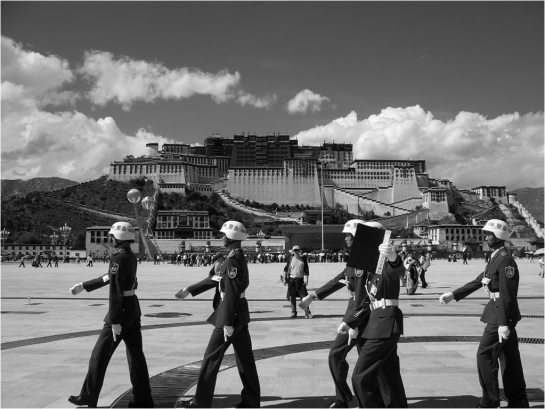
Additionally, to consider China as politically expansionist in the international arena (Taiwan and issues pertaining to ‘sovereignty’ should be considered a separate issue) is misguided, as this overlooks the CCP’s preoccupation with consolidating their domestic authority. Questions pertaining to Tibet and Xingjian provide a deep threat to the legitimacy enjoyed by the Chinese political party and cases of social discontent have proven, time and again, that they require immense policy consideration. Thus, this dictates that China is largely unable to divert attention away from its domestic concerns for fear of losing control in the fractious territories and by extension also have the potential inspire nationwide uprisings. In the perspective of Sino-US relations, no political issue is more controversial than Tibet. Constant claims of brutality, censorship and human rights abuses emanating from Washington are perceived from Beijing’s perspective as an attack on the legitimacy of the CCP by externally undermining its authority. This sentiment is exacerbated when American leaders meet with the Dalai Lama, who is considered an existential threat to the Chinese establishment. In America this is seen as a noble defence of human rights but to the Chinese it embodies a rather sinister undertone as it is considered both antagonising and undermining.

By and large, China has attempted to keep a low profile on the international stage. This is in accordance with its key principles, which pedestal mutual issues such as non-interference and respect for sovereignty, for it is these principles, accompanied with the active pursuit of securing state interests, that have directed its international interaction. Recently, China has been much scrutinised for its veto on the Syrian resolution in the UN Security Council (UNSC). As with any political action, it must be analysed within the wider framework of Chinese foreign policy and equally important, not judged alone. If the Chinese choose to exercise their right to veto a resolution based on protecting self-interest or in disagreement with the direction of the plan, it remains their choice. Understanding the motivational factors are a prerequisite for analysis and selective criticism should be avoided at all costs as it serves only to fan the flames of international friction between China, America and the West. Beijing could quite rightly point to the numerous examples of American acts of self-interest in the UNSC in defiance of humanitarian issues (as in the case of the recent veto for the Palestinian state).

Additionally, condemning China for conducting business with nations such as Iran and Venezuela is hypocritical, especially as it hardly encourages international instability. For Washington, the Saudi regime, both wholly repressive and undemocratic, is an acceptable business partner but democratic Venezuela is a rogue nation. China, as previously mentioned, is driven by the need to secure business opportunities and resources to sustain its hyperbolic growth. Accordingly, Beijing will court any suitable partner to secure their needs regardless of political persuasion. Whether it’s the United States, the European Union, Venezuela or Iran the central issue for the Chinese is based on national gains. China is simply pursuing a pragmatic business engagement that differs little from American policies.

Myth 3

What we are told: China is belligerent. The Chinese army is big, scary and will one day attempt Asian, then later world domination.

What’s really going on: Explicitly, China stands to gain little from starting or partaking in any act of conflict. Although the People’s Liberation Army is the largest standing army in the world, its technological capability remains years behind that of the United States. Again, the much sighted increased military budget, a substantial 12%, still pails in significance to the monumental US military budget. As a direct consequence, the parameters of the China threat are not manifest physically but oscillate around challenges to US strategic interests in the Pacific and Central Asia. What is largely missing in the security debate is Beijing’s perspective and the view from the Middle Kingdom is markedly different.

Beijing sees that permanent American military bases surround the Middle Kingdom, whether by sea or land and allies of Washington, dubbed the ‘democratic axis’, further acts to consolidate the feeling of encirclement; Huge military presences in Korea and Japan, bases throughout bordering Central Asian Republics, Vietnam and Australia’s emergence as vocal allies of Washington and a very powerful nuclear alliance across the Himalayas. It is clear that, with the exception of China’s northern border a tangible American presence can be felt in all directions.

Nonetheless, security tensions between China and the US remain relatively low. Only a couple of key areas, including the external influence in Pakistani-Indian affairs and the North Korean question, threaten to raise tensions. But nothing has the potential to boil the blood of the Chinese more than the issue of Taiwan. The generally accepted discourse on the matter is that Taiwan is an independent nation that needs protection from an aggressive behemoth who constantly espouses bellicose statements and threatens on regular occasion to illegally re-conquer the island. Characteristic of the Sino-American relationship, there is more to the story than just the American angle. For Beijing, Taiwan is an essential part of its territory stolen during its ‘century of humiliation’ and forms the final piece of the One Nation Policy. The completion of this policy, whether justified or not, has become almost insurmountable due to one simple fact: Taiwan has a military capability that is on par with European powers, which originates from the US. Arms sales between Washington and Taipei have increased in recent years culminating in the $6.4 billion deal by the Obama administration, which signals that the US are no longer adhering to the arms sales reduction agreements they agreed to in the 1982 Shanghai Communiqué. Make no mistake, in Beijing this is perceived as an act of both aggression and defiance. Nonetheless, due to rising levels of confidence in China, the CCP have begun exerting pressure on matters of integral importance, such as Taiwan, by leaning on the mutually dependent ties between Beijing and Washington.

The current state of affairs between China and the US is far from troublesome. Granted, they disagree on a number of issues from how to engage Syria to the most effect methods to combat climate change, but that does not mean they are on a course for destruction. After all, no relationship is perfect. It is also the case that China is less belligerent than conventionally assumed and that the US bares responsibility for some of the inconsistencies that are present in the relationship. To this end, both China and America are, at present, partners as much rivals and the general impression of the relationship between the two behemoths is highly misconstrued.